
What truth shall make you free?

John 8:32, Know the truth. “The truth shall set you free” is an often-quoted axiom, but few understand its deeper biblical implications.

We violate the sanctity of Scripture if we impose on it our own meanings. This is a cavalier and presumptuous approach to understanding the Bible and can hardly be called “rightly dividing the word of Elohim” (1 Tim 2:15).This practice often occurs with this verse. To do so is to twist the meaning of the Scriptures to fit our own vicissitudes and biases. This is humanism and insults the mind, will and sovereignty of the Almighty as divinely revealed in his Holy Word.

To properly understand this verse, we must look solely to the Bible for the keys to understanding it. We can start this process by first asking the question, what is truth?

The Bible defines its own terms when it calls the Torah truth (Ps 119:142 and 151). The truth of Torah (i.e. the law of Moses) will set a person free, for when one hears and obeys the Torah, one ceases sinning (i.e. violating YHVH’s Torah-law; 1 John 3:4), and therefore doesn’t come under the penalty of the Torah-law’s judgment for breaking it, which the Bible calls sin and which leads (ultimately) to eternal death (Ezek 18:4; Rom 6:23). When one is not under the judgment of sin, one is free. With freedom comes life.

Yeshua the Messiah himself is also the truth (John 14:6), for he is the Living Torah-Word of Elohim (John 1:1, 14). When we place our trusting faith in Yeshua and follow him, his spiritual life in the form of his Set-Apart Spirit will then flow through us and empower us to walk away from sin and follow the spiritual light of his Torah, which will keep us sin-free. This is the path that leads us toward the ultimate freedom from eternal death resulting in everlasting life (John 8:52). As such, sin will no longer have any legal claim on us, and thus we will not come into condemnation, but will pass from death into everlasting life (John 5:24). This is possible because Yeshua has taken upon himself our past sins (Rom 3:25), paid the legal penalty of them, and wiped our spiritual slate clean and has given us a fresh start in life (Gal 2:20; 1 Cor 5:17) to walk sin-free (in accordance with his standards of righteousness, which is the Torah). This is the result of knowing the truth and experiencing the freedom that comes therefrom.

It’s astounding how so many people have been taught to believe the exact opposite of the truth—that the laws of Elohim will place you under bondage instead of setting you free!

Now that you have been set free from the traditions of men, which make of none effect the word of Elohim, you now have the freedom to understand the fuller, biblical meaning of Yeshua’s statement, “And you shall know the truth and it shall make you free.”

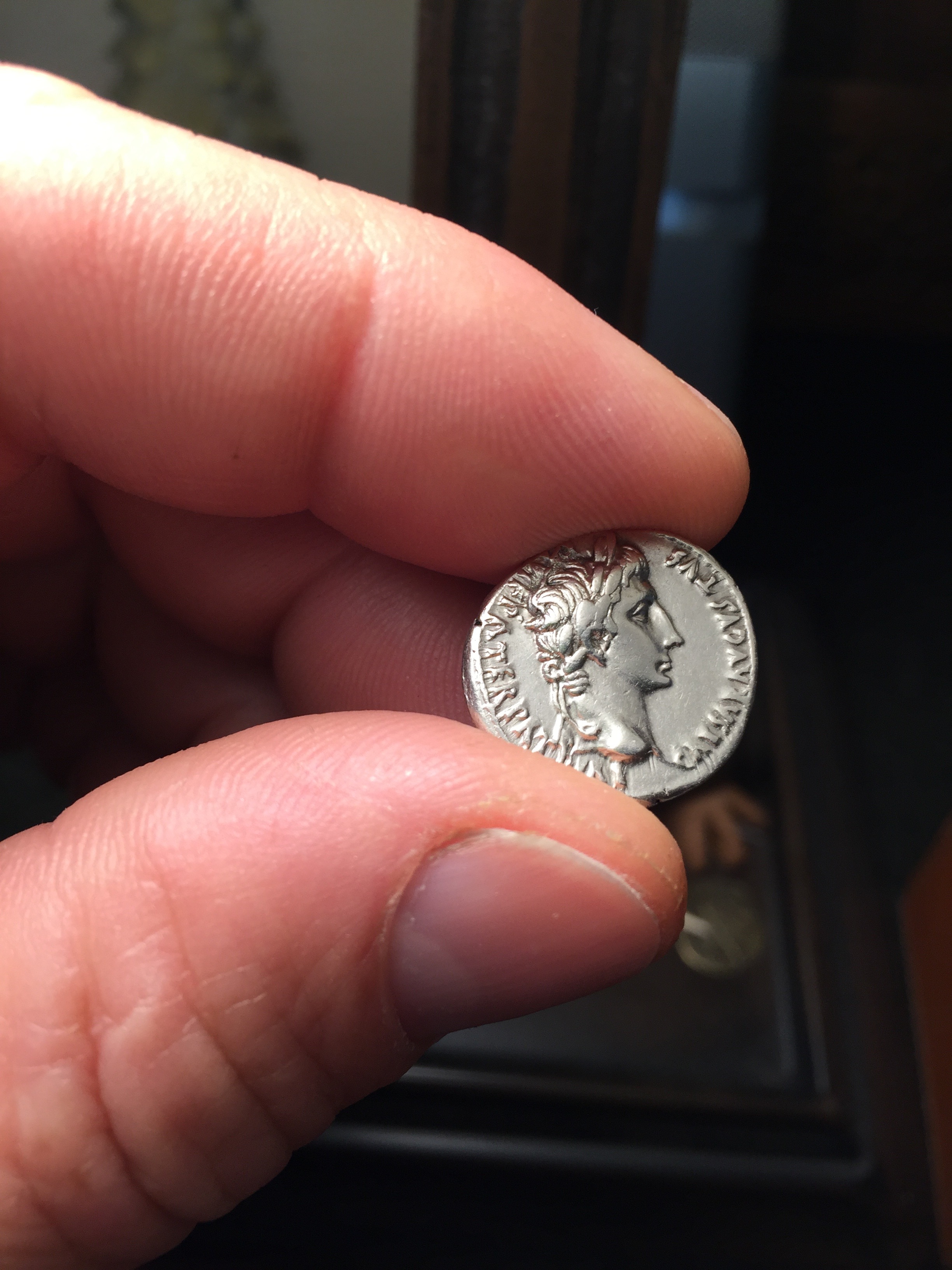
 

The Holy Half Shekel—Another Pointer to Yeshua!

Exodus 30:15 and 16, To make atonement for your souls. Some will read these verses and conclude that one can buy their redemption through charitable giving and therefore circumvent the need to place one’s faith in Yeshua’s atoning death on the cross. Does this passage suggest a theology where man can save himself from his sins by acts of charity? Let’s dig a little deeper to see what these verses are really teaching us.

In this passage, YHVH instructed the Israelites to pay an annual half-shekel temple tax. This money went, in part, toward, the service (verse 16) and constructing of the Tabernacle of Moses (e.g. Keil and Delitzsch Commentary on the OT, vol. 1, p. 459; Exod. 38:21–31), and later toward the purchase of the animals the priests sacrificed (The Temple and Its Service, by Alfred Edersheim, p. 48). In this way, the people were participating vicariously in the act of sacrificing an innocent animal as an offering or atonement for their sins. Again, the Scriptures reveal that this sacrificial system merely pointed prophetically toward the Greater Sacrifice that would come later in the Person of Yeshua, the Redeemer of Israel. (Read Isa 53.) On the point that the paying the half-shekel was a merely a temporary solution to the problem of man’s sin, Keil and Delitzsch say in their commentary on this passage,

As an expiation [atonement] for souls, it pointed to the unholiness of Israel’s nature, and reminded the people continually, that by nature it was alienated from God, and could only remain in covenant with the Lord and live in His kingdom on the ground of His grace, which covered its sin (ibid.)

Keil and Delitzsch’s point is further strengthened in Exodus 30:16, which says,

And you shall take the atonement money of the children of Israel, and shall appoint it for the service of the tabernacle of the congregation; that it may be a memorial unto the children of Israel before YHVH, to make an atonement for your souls. (emphasis added; ibid.)

The giving of the half-shekel was a memorial to what? The Hebrew word for memorial is zikrown (Strong’s H2146) meaning “reminder, token, record.” According to The TWOT, a zikrown is an object or act which brings something else to mind or which represents something else. It reminded them of their sinfulness and pointed prophetically to a Redeemer—Yeshua the Messiah— who would come and take away their sins once and for all (Heb 10:10). For a more detailed study of this subject, please see our teaching article entitled, “The Atonement: Bloody or Bloodless? Understanding the Concept of Atonement in the Torah” located on the Hoshana Rabbah website at http://www.hoshanarabbah.org/pdfs/atone.pdf.


What is the biblical age of accountability?

Exodus 30:14, From twenty years old and above. This passage gives us the first indication that the Torah viewed the age of accountability to be 20 years old (see also Num 1:3, 18, 20; 26:2). That is to say, those who died prior to age 20 were not held eternally accountable for their sins, and presumably might be given a second chance to live out their lives at some latter date, although there is no clear scriptural reference to confirm this notion.

The idea that YHVH held one accountable for their sins after the age of twenty is supported by the fact that all Israelites over age of 20 (with the notable exceptions of Caleb and Joshua) died in the wilderness prior to entering the Promised Land because of sins they had committed during their wilderness journey, while those under age 20 were allowed into the land, presumably because YHVH considered them to be guilt free (Num 14:29; 32:11).

If 20 is the age of accountability, then this begs the obvious question: what will happen to those who died before age 20? It is generally accepted by many in the church that babies or young children who have died before having had a chance to “accept Yeshua” will be given a second chance to do so. But what about those who died “unsaved” prior to age 20? Some have speculated that they may be resurrected at some time in the future and be allowed to live out their lives during the Millennium (see Isa 65:17–20).

Perhaps the reason Satan will be released at the end of the Millennium from the pit where he was held captive will be to give all those living on the earth at that time (including those who died under the age of accountability) a chance to accept or reject Yeshua. YHVH will use the devil to test the loyalties of this new crop potential saints (Rev 20:7–10). Those who remain faithful will inherit eternal life, while those whom Satan seduces into rebellion will have their part in the second death (Rev 20:11–15).

O, the merciful grace of Elohim!


Exodus 30:11–34:35 Parashat KiTisa

This is a gospel-oriented Torah study. Our goal is to connect the good news of Yeshua the Messiah (the gospel message) to its Hebraic, pro-Torah roots or foundations. The information given here is more than head knowledge. Understanding and wisdom (the right application of knowledge that is based on truth) is taught thus making biblical truth practical, relevant and applicable to your daily life. The truths of the Bible not only have the power to transform your life here and now for the better, but eventually to take you past the veil of death and into eternity.

This Torah study is subdivided in sections by topic in a magazine format thus making it easy to watch at several sittings.

May you be blessed as you watch this video.

For a free, printable adult and youth Torah study guide on this Torah portion (parashah), please go to http://www.hoshanarabbah.org/parshiot.html


Blog Scripture Reading Schedule for 3-12 Through 3-18-17

Aside

THIS WEEK’S SCRIPTURE READINGS FOR STUDY AND DISCUSSION:

Parashat Ki Tisa — Exodus 30:11 – 34:35
Haftarah — 1 Kings 18:1-39 | Numbers 19:1-22, Ezekiel 36:16-38**
Prophets — 2 Kings 21:1 – 25:30; Isaiah 1:1 – 2:22
Writings — Proverbs 4:1 – 10:32
Testimony — John 7:53 – 10:42

Our new Scripture Reading Schedule for 2016-2017 is available to download!

Most of this week’s blog discussion points will be on these passages. If you have general comments or questions on the weekly Scripture readings not addressed in a blog post, here’s a place for you to post those. Just use the “leave a reply” link below.

The full “Read Through The Scriptures In A Year” schedule, broken down by each day, can be found on the right sidebar under “Helpful Links.” There are 4 sections of scripture to read each day. One each from the Torah, the Prophets, the Writings, and from the Testimony of Yeshua. Each week, the Torah and haftarah readings will follow the traditional one-year reading cycle.

** A different Haftarah is read when it is a special sabbath in Jewish tradition. This week it is Shabbat Parah on the traditional calendar. Otherwise, only 1 Kings 18:1-39 would be read.

Weekly Blog Scripture Readings for 3/12/17 through 3/18/17.


The Altar of Incense and You—Gateway to the Throne Room

Exodus 30:1–10, Altar to burn incense. The golden incense altar was constructed of acacia wood covered in gold and was situated in front of the veil leading into the holy of holies (the most set-apart place) halfway between the menorah and the table of showbread. Like the table of showbread, it had a golden crown around the top of it, which points to Yeshua being the head of the body of believers. The priest burned incense on the altar twice daily, in the morning and the evening. Scripture reveals that incense represents the prayers of the saints rising up to heaven before the throne of Elohim (Ps 141:2; Rev 5:8), which in the tabernacle is pictured by the mercy seat in the most set-apart place or oracle (d’veer). The altar of incense was a place of deep prayer, praise, worship and intercession and speaks directly to the intimate twice daily prayer life and devotions of the born-again believer before the throne of the Father in heaven.

The Altar of Incense in More Detail

At the altar of incense, preparation was made to enter the most set-apart place (holy of holies). This altar was located just opposite the veil of the kodesh hakodashim (holy of holies) where the high priest offered up incense to the Father in heaven. This was the place of ultimate worship, prayer and intercession just before entering into the most intimate place of all: the d’veer (oracle) or kodesh hakodashim. Only a very thin veil exists between the altar and the kodesh hakodashim where the abode of YHVH’s actual manifest presence was. It was on the altar of incense that the high priest made atonement once a year with the blood of the sin offering (Exod 30:10). The blood was sprinkled on this altar seven times. This occurred on the Day of Atonement (Yom Kippur; Lev 16:18–19).

This altar was also constructed of acacia wood overlaid in gold. The high priest burned incense on this altar in the morning when he would clean the menorah, and in afternoon when he would light the menorah (Exod 30:6–8). This pictures the prayers of the saints going up to heaven (Ps 141:2; Rev 5:8) and suggests that it is pleasing to the Father that believers be praying, communing with him or otherwise attempting to bond with him twice daily: morning and afternoon.

The incense was comprised of sweet spices, with pure frankincense, stacte or balsamic resin, onycha and galbanum (Exod 30:34–38). According to Jewish tradition, there were eleven spices used in the incense. Galbanum has a foul aroma to remind us that everyone’s prayers were allowed to be uttered—even those of sinners.

This altar was higher than the other implements in the set-apart place, since prayer, worship and intercession is our highest calling and act of service to YHVH. We are to pray without ceasing (1 Thess 5:17; Eph 6:18). YHVH’s house was to be known as a “house of prayer for all people” (Isa 56:7).