Blog Scripture Reading Schedule for 3-19 Through 3-25-17

Aside

THIS WEEK’S SCRIPTURE READINGS FOR STUDY AND DISCUSSION:

Parashat Vayakhel-Pekudei — Exodus 35:1 – 40:38
Haftarah — 1 Kings 7:40-50 | Exodus 12:1-20; Ezekiel 45:16 – 46:18**
Prophets — Isaiah 3:1 – 10:34
Writings — Proverbs 11:1 – 17:28
Testimony — John 11:1 – 14:31

Our new Scripture Reading Schedule for 2016-2017 is available to download!

Most of this week’s blog discussion points will be on these passages. If you have general comments or questions on the weekly Scripture readings not addressed in a blog post, here’s a place for you to post those. Just use the “leave a reply” link below.

The full “Read Through The Scriptures In A Year” schedule, broken down by each day, can be found on the right sidebar under “Helpful Links.” There are 4 sections of scripture to read each day. One each from the Torah, the Prophets, the Writings, and from the Testimony of Yeshua. Each week, the Torah and haftarah readings will follow the traditional one-year reading cycle.

** A different Haftarah is read when it is a special sabbath in Jewish tradition. This week it is Shabbat HaChodesh on the traditional calendar. Otherwise, only 1 Kings 7:40-50 would be read.

Weekly Blog Scripture Readings for 3/19/17 through 3/25/17.


Parashat Ki Tisa Exodus 30:11-34:35 Outline & Study

Parashat Ki Tisa (when you take) Exodus 30:11-34:35 Outline & Study Sheet

Haftorah Reading

1 Kings 18:1–39

The Testimony of Yeshua

  • On the gifts of the Spirit: 1 Corinthians 12:1–31
  • On keeping the Sabbath: Hebrews 4:9
  • On the golden calf and idolatry: Acts 7:39–42; 17:29–31; 1 Corinthians 10:1–13
  • Come out wickedness; put on righteousness: 1 Corinthians 6:9–11; 2 Corinthians 6:14–7:1; Hebrews 10:22
  • On the Book of Life: Revelation 3:5; 17:8; 21:27; 22:19; Matthew 11:28
  • On seeing the Father: John 1:18
  • On the grace of Elohim: Titus 3:5
  • On YHVH’s Feasts: Acts 2:1; 20:16; 1 Corinthians 5:8; 16:8
  • On the greater glory of Yeshua, the Second Moses: Hebrews 3:1–6
  • On the letter versus the spirit; first glory versus the second and greater glory: 2 Corinthians 3:1–18; John 17:1–2
  • On the second coming: 2 Peter 3:3–4

Outline of This Week’s Parashah (Torah Portion)

— 30:11 The Census/The Sacred Half-Shekel

30:17 The Bronze Laver

30:22 The Sacred Anointing Oil: Its Contents and Uses

30:34 The Sacred Incense: Its Contents and Uses

31:6 Bezaleel and Oholiab Chosen to Be the Chief Artisans Over the Construction of the Tabernacle/Mishkan

31:12 The Sabbath: A Sign Between YHVH and His People, An Eternal Covenant

31:18 Moses Receives the Tablets

32:1 The Golden Calf Incident

32:7 YHVH’s Anger Against Israel for Their Idolatry

32:11 Moses’ Successful Prayer of Intercession

32:15 Moses Descends From Mount Sinai

32:19 Moses Smashes the Tablets, Grinds the Idol into Powder and Causes the Israelites to Drink It

32:30 Moses Intercedes to YHVH Again on Behalf of the People

33:1 Aftermath of the Golden Calf Incident

33:7 Moses Pitches the Tabernacle/Tent of Meeting Outside the Camp

33:12 Moses Pleads for YHVH’s Presence

33:19 Moses Sees the Glory of YHVH Through the Cleft of the Rock

34:1 The Second Set of Tablets

34:5 YHVH Reveals the Thirteen Attributes of His Mercy

34:8 Moses’ Request; YHVH Seals the Covenant With Israel and Forbids Israel to Make Covenants With the Pagans

34:17 Israel Is Forbidden from Making Idols and Is Commanded to Observe the Feast of Unleavened Bread and Shabbat, Feast of Weeks (Pentecost) and the Feast of Tabernacles (the Three Pilgrimage Festivals)

34:27 Renewal of the Covenant

34:33 The Radiance of Moses’ Face

Study Questions for This Week’s Midrash (Torah Discussion)

1— 30:11–16, Everyone was expected to contribute to the building of the mishkan (tabernacle). What can we learn from this passage about the Israelites’ spirit of giving? How are we about giving of our treasure to the work of YHVH?

2— 30:15 and 16, To make atonement for your souls. Some will read these verses and conclude that one can buy their redemption through charitable giving and therefore circumvent the need to place one’s faith in Yeshua’s atoning death on the cross. Does this passage suggest a theology where man can save himself from his sins by acts of charity? Let’s dig a little deeper to see what these verses are really teaching us.

In this passage, YHVH instructed the Israelites to pay an annual half-shekel temple tax. This money went, in part, toward, the service (verse 16) and constructing of the Tabernacle of Moses (e.g., Keil and Delitzsch Commentary on the OT, vol. 1, p. 459; Exod. 3— 38:21–31), and later toward the purchase of the animals the priests sacrificed (The Temple and Its Service, by Alfred Edersheim, p. 48). In this way, the people were participating vicariously in the act of sacrificing an innocent animal as an offering or atonement for their sins. Again, the Scriptures reveal that this sacrificial system merely Continue reading


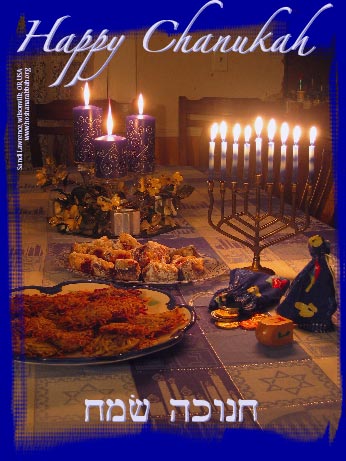
The Hidden Truth Behind Hanukkah and Yeshua’s Incarnation

John 10:22, The Feast of Dedication [or consecration].

To the casual observer, Hanukkah is a Jewish holiday that occurs around Christmas-time and has something to do with lighting a menorah-like candelabra, which somehow relates to some important event that occurred a long time ago in Jewish history. Some Bible teachers even claim that Hanukkah is pagan-based holiday that somehow honors the demonic sun god of antiquity. But as we shall see below, there is a hidden truth behind the Hanukkah holiday that the devil doesn’t want people to know about. In fact, by the end of this study, you will hopefully see that Hanukkah celebrates the truth of the Messiah’s incarnation better than Christmas ever did and without all the pagan trappings. You’ve probably never heard this before and wonder how this could be. Stay tuned.

Anyone who has barely scratched the surface of Christmas’ origins realizes that they are profane and unbiblical. Christmas is the Christianization of some vile pagan traditions based on celebrating the winter solstice in honor of the demonic sun god through lewd and drunken orgiastic satanic rituals. Though the tradition of the Christmas tree came later, it is rooted in pre-Christian sex worship rituals that come straight out of demonic sun god worship, and something the Bible in many places condemns and forbids the saints from practicing.

Hanukkah, on the other hand, doesn’t share Christmas’ pagan origins. Rather, this holiday links back directly to one of YHVH’s seven commanded biblical festivals. Though Hanukkah isn’t a commanded biblical holiday, and is of man’s creation, it still has prophetic implications that are worth noting. What’s more, it doesn’t carry the pagan baggage the Christian holidays like Christmas, Easter, Lent, All Saints Day (i.e. Halloween) and the others all do.

In our study of the origins of Hanukkah, let’s first prove that there is a link between the biblical fall festival of Sukkot or the Feast of Tabernacles (Lev 23:33–43) and Hanukkah. How is this? Interestingly, both Hanukkah and Sukkot along with the Eighth Day last for Continue reading


Grace…A New Testament Concept!? Really?

Exodus 33:12–13, Grace. The mainstream church places a great deal of emphasis on the message of grace. The biblical doctrine of grace finds its roots in this chapter in the Torah and not in the apostolic writings as the mainstream church teaches. The noun grace (Heb. chen) is found six times in chapters 33 and 34. The adjective gracious (Heb. chanan and channuwn)as an attribute YHVH’s character is found three times in chapters 33 and 34. Six is the number of man and three is the number of Elohim. That is to say, the grace of the entire Godhead covers man completely even when his children turn away from him and give into golden calf worship. His grace for his people rejoices or triumphs over his fiery and consuming judgments (Exod 33:4; Jas 2:13; Pss 85:10; 89:14; Mic 7:18; Eph 1:7; Rom 5:8) that they deserve for their stiff-neckness and sinful rebellion against his commands (Exod 33:3).

The Hebrew word for grace is chen/IJ meaning “favor, grace, charm, acceptance.” The Hebrew word chen (found 69 times in the Tanakh), which is translated as grace, in this verse is equivalent to the Greek word charis/cariV, which is found 156 times in the Testimony of Yeshua and is translated as grace 130 times in the KJV. The equivalency of these two words is confirmed by the translators of the Septuagint (the Greek Tanakh) who used charis in place of chen when translating the Hebrew Tanakh into Greek beginning in the third century b.c. According to The TWOT, in the vast majority of occurrences of chen in the Tanakh, the focus of attention is not on the giver, but on the recipient. The emphasis is on the relationship of the superior to an inferior (e.g. a king to his subjects). What this teaches us is that despite sin and rebellion against him, YHVH (the king) is gracious (to humans, his subjects). Contrary to what many in the church have been led to believe, the grace of Elohim is a very prominent theme in the Tanakh. Examples of this include Noah who found grace in YHVH’s eyes (Gen 6:8), or the children of Israel although dead in their sins in Egypt and deserving of YHVH’s wrath, they were saved by the blood of the lamb. There are a number of other references to the grace of Elohim in the Tanakh as well (Gen 18:3; Exod 3:21; 33:16,17; 34:9; Ps 84:11; Zech 12:10).

Exodus 34:6–7 lists various attributes of YHVH’s mercy. He is:

  • compassionate
  • gracious
  • abundant in kindness
  • abundant in truth
  • a preserver of kindness for thousands of generations
  • a forgiver of iniquity, willful sin (transgression) and error (sin)
  • cleanser of our sins

Merciful (verse 6) in Hebrew is the word rachuwm/ OUJR from the root word racham/ OJR meaning “to love, love deeply, have mercy, be compassionate, have tender affection, have compassion.” The TWOT explains that this word refers to a deep love (usually a superior individual for an inferior) rooted in some deep natural bond. It is used for the deep inward feeling we know as compassion, pity, or mercy. This word is found 47 times in the Tanakh, and frequently refers to the love of Elohim for his people (see Ps 103:13; Mic 7:17). Often Elohim’s mercy and grace are linked together (note Exod 33:19; 34:6; 2 Kgs 13:23; Pss 86:15; 111:4; 112:4; 145:8). His mercy and graciousness are at times unconditional upon those he chooses to favor (Exod 33:19), and is upon those who repent of their sins as well (Deut 13:17). The Tanakh elsewhere frequently exults in the attributes of YHVH’s mercy or compassion (see Deut 4:31; 2 Chron 3:9; Neh 9:17,31; Pss 78:38; 102:13; Joel 2:13; Jon 4:2.) Again, can there be any doubt that the “God of Old Testament” is just as loving and merciful as the “God of the New Testament?” It stands to reason that they are, for they are one in the same Divine Personage—and his character is unchangeable (review Mal 3:6; Heb 13:8)!

Numerous parallel passages in the Testimony of Yeshua can be found that are built on these foundational Torah principles of YHVH’s grace and mercy ( Heb 4:16; Rom 3:24; Eph 1:17; 2:4,8; Tit 1:4; 2:11; 3:5; 1 Pet 1:3; Jude 21).


How to Hear the Voice of YHVH

John 10:3, Hear his voice.

YHVH Wants to Commune With His People

From the beginning in the Garden of Eden, YHVH wanted to have a personal, communicative relationship with men.

And they heard the voice [Heb. kol] of the YHVH Elohim walking in the garden in the cool [Heb. ruach] of the day: and Adam and his wife hid themselves from the presence [Heb. panyim] of the YHVH Elohim amongst the trees of the garden. And the YHVH Elohim called unto Adam, and said unto him, Where art thou? And he said, I heard thy voice in the garden, and I was afraid, because I was naked; and I hid myself. (Gen 3:8–10)

You Can Hear the Voice of YHVH

Yeshua tells us that we can hear his voice.

To him the porter openeth; and the sheep hear his voice: and he calleth his own sheep by name, and leadeth them out. And when he putteth forth his own sheep, he goeth before them, and the sheep follow him: for they know his voice. And a stranger will they not follow, but will flee from him: for they know not the voice of strangers. … My sheep hear my voice, and I know them, and they follow me. (John 10:3–5, 27)

Throughout the Bible, there are many examples of YHVH’s servants hearing his voice. Here are a few examples from the book of Acts of people hearing YHVH.

Then the Spirit said unto Philip, Go near, and join thyself to this chariot. (Acts 8:29)

While Peter thought on the vision, the Spirit said unto him, Behold, three men seek thee. (Acts 10:19)

And the Spirit bade me go with them, nothing doubting. Moreover these six brethren accompanied me, and we entered into the man’s house. (Acts 11:12)

And finding disciples, we tarried there seven days: who said to Paul through the Spirit, that he should not go up to Jerusalem. (Acts 21:4)

It’s All About Spiritual Activation

To enter into a relationship with YHVH Elohim, our Creator and Father in heaven, and to become his sons and daughters, we must be spiritually activated.

Man is comprised of body, soul and spirit (1 Thess 5:23). Before being spiritually regenerated or born again, our soul (our mind, will and emotions) controls what we think, say and do. The Scriptures talk say this about the spirit in man.

But there is a spirit in man: and the inspiration of the Almighty giveth them understanding. (Job 32:8)

Who knoweth the spirit of man that goeth upward, and the spirit of the beast that goeth downward to the earth? (Eccl 3:21)

The burden of the word of YHVH for Israel, saith YHVH, which stretcheth forth the heavens, and layeth the foundation of the earth, and formeth the spirit of man within him. (Zech 12:1)

For what man knoweth the things of a man, save the spirit of man which is in him? even so the things of Elohim knoweth no man, but the Spirit of Elohim. (1 Cor 2:11)

Man can’t enter into a relationship with a YHVH who is a Spirit through his soul. Elohim is a Spirit, and we must relate to him through Continue reading


Golden Calf Worship Among YHVH’s People Today

Let’s look at the series of events that occurred as the children of Israel were leaving Egypt, which have major relevance to what is occurring in mainstream Christianity in our day. If we fail to learn the lessons of history, we’ll likely repeat the mistakes of history. It has to do with golden calf worship.

YHVH redeemed the children of Israel out of Egypt and set the slaves free. He blessed them not only by giving them their freedom, but by giving them the wealth (gold and silver) of Egypt as well. We read that the Israelites exited of Egypt with a high hand. They were victorious, free and wealthy.

YHVH led them into the wilderness en route to the Promised Land—normally an eleven day journey. They had some difficulties: Pharaoh tried to kill them at the Red Sea, they lacked clean drinking water, and they had food issues, but YHVH provided them deliverance from Pharaoh, gave them clean water, manna and meat, and they overcame these trials.

Next, YHVH led the Israelites to the foot of Mount Sinai, and on Shavuot he made a covenantal agreement with them and gave them his Torah as their national constitution. They agreed to obey him and to keep his commandments. He promised to bless them if they remained faithful to him.

Moses went up to Mount Sinai to receive the Torah-covenant on two tablets of stone. While he was gone for 40 days, the people grew worried and anxious and become weary of waiting for Moses to return.  This was a test they had to pass of their faithfulness. Would they be faithful to YHVH and keep his commandments, or would they stray spiritually from the path of righteousness YHVH had given them and they had agreed to follow?

The Israelites got tired of waiting, and took the gold from Egypt and turned it into a golden calf, and then they rose up to play (to party). They even called their revelry a feast to YHVH! They used religious verbiage like “YHVH” and “feast” to add legitimacy to their illegitimate activities, but this didn’t change the sin of their behavior. Sin is still sin regardless of how we attempt to cloak it in spiritual terms and costumes in an attempt to justify our wicked behavior.

Moses then came down from Sinai with the stone tablets, saw the people worshipping the golden calf and the people playing, and he brought judgment against those who were unfaithful to YHVH and rewarded those who had been faithful to him.

Let’s now analyze this story to see what spiritual lessons we can glean from it.

YHVH blessed the children of Israel by setting them free from Egypt, giving them honor as freedmen, taking them to himself to be his own special people, giving them a religion, a legal code and much material wealth. What was the first job assignment YHVH gave his people to do? It was to build a tabernacle so that YHVH might dwell in their midst.

YHVH gave the Israelites wealth from Egypt not only as a remuneration for their years of slavery in that nation (Torah teaches that a workman is worthy of his hire), but he gave them wealth so they could build him a home. Instead, what was the first thing the Israelites did with their wealth? They built a golden calf in honor of their past life in Egypt.

The golden calf represented the spiritual idols or strongholds of sin that were already in their hearts, and which they failed to leave behind in Egypt. Though the Israelites had physically come out of the idolatry of Egypt, they hadn’t gotten Egypt’s idols out of their own hearts. When the way of the wilderness became too tough and their faith was tested (i.e. would they remain faithful to YHVH in the time Continue reading