Conceptual image with the word Heal on wooden blocks or cubes protected by the hands of a man sheltering them from above.
Psalm 103:3, Heals all your diseases. The Word of YHVH Elohim including the promises made therein is true regardless of our lack of understanding thereof with regard it applies to our specific life circumstances. In the case of YHVH’s promise to heal us of all our diseases, the one missing element in this promise is the time factor.
The fact is that Elohim doesn’t tell us when he will heal us, just that he will. We may be healed instantly the moment we ask for it, or our healing occur sometime during this physical life, or we may obtain our physical healing when we receive our glorified bodies at the resurrection of the righteous dead. Either way, the Word of Elohim including the promises therein will have been true whenever we receive our healing.
Regardless of the timing of our healing, the righteous saint will have trust in Elohim no matter what that the Creator knows the best timing to bless us with our healing, and our attitude must be that of Job, “Though he slay me, I know that my Redeemer lives.”
More important than our physical healing, YHVH wants to form within us the character of Yeshua the Messiah—“to conform [us] to the image of his Son” (Rom 8:29), which is why we must believe with total faith that indeed “all things work together for good to those who love Elohim to those who are called according to his purpose” (Rom 8:28). This is also why we must be thankful to him in all things (1 Thess 5:18).
Exodus 9:31,The barley was in the head. Barley was cultivated as a grain crop in ancient Egypt, as well as in Israel, and grows wild like a weed throughout the region to this day. Several passages in the Scriptures witness to the fact that the barley was the indicator of which month was to be the first month of the year for the Israelites, so that they could determine when the biblical feasts were to be observed.
Observe the month of Abib, and keep the Passover unto YHVH your Elohim: for in themonth of Abib YHVH your Elohim brought thee forth out of Egypt by night. (Deut 16:1, emphasis added)
Please notice, the definite article the proceeding the phrase “month of Abib.” The state of the barley determined the name of a specific month in the spring on YHVH’s biblical calendar. Months in the biblical Hebrew calendar have always been determined by the first visible sliver of the new moon from antiquity. This specific month is to be the beginning the biblical new year (Exod 12:2). The state of the barley simply determines which month is to be the first month of the biblical year. The month of the Abib is not so much the name of a monthas it is a description of the month. Below are listed the other three places in the Scriptures where this phrase is found.
This day came you out in the month Abib. (Exod 13:4)
You shall keep the Feast of Unleavened Bread: (you shall eat unleavened bread seven days, as I commanded thee, in the time appointed of the month Abib; for in it you came out from Egypt: and none shall appear before me empty). (Exod 23:15)
The feast of unleavened bread shall you keep. Seven days you shall eat unleavened bread, as I commanded you, in the time of the month Abib: for in the month Abib you came out from Egypt. (Exod 34:18, emphasis added on all)
What does the word abib in the phrase “the month of the Abib (or Aviv)” mean? The Hebrew word abib is found only six times in the Bible and is transliterated into the English (in the KJV) as “abib,” meaning “in the ear,” or “green ears of grain.” TheTheological Wordbook of the Old Testament, defines the word abib or aviv as follows:
This noun refers to barley that is already ripe, but still soft, the grains of which are eaten either rubbed or roasted. The ASV and RSV agree (but see Lev 2:14). The seventh plague brought ruinous hail upon Egypt’s barley crop at least two weeks before it was fully ripened and ready for harvest (Exod 9:31). Abib was also the early name (later, Nisan) of the first month of the Jewish calendar (the month of Passover). In that month the barley came to ear, but the usual time of harvest was the second month (Iyyar). According to Lev 2:14 the grain offering was to consist of the firstfruits of abib.
So the barley being in its abib state eliminates the guesswork of determining which new moon begins the new year. The Scriptures are clear. It is the new moon that immediately follows the abib barley that determines the beginning of the year. This is important to know, since knowing the start of the new year determines the dates for the biblical moedim or appoint times—namely the biblical holidays and feasts.
After the abib barley is found and the first visible sliver of the new moon is sighted marking the first day of the first month of YHVH’s biblical calendar, 14 days later is Passover (Pesach) with the Feast of Unleavened Bread (Chag HaMatzot) immediately following on the fifteenth day of the first month. Then on the day after the weekly Sabbath that occurred during the seven-day Feast of Unleavened Bread, a sheaf of now-ripened barley was cut and waved heavenward by the high priest to be accepted by YHVH as the first of the first fruits offering of the upcoming barley harvest. I have written extensively on this subject in another teaching article relating to the spring feast days, which can be found on our website. Suffice it to say that the barley that was lifted heavenward and waved was a prophetic picture of Yeshua the Messiah’s ascension to heaven after his resurrection where he was accepted by the Father as the perfect sin offering covering the sins of mankind. Fifty days later to the day is the Feast of Pentecost (Heb. Shavuot) picturing the ripening of the larger wheat harvest, which was a prophetic picture of all Israel and the peoples of the nations coming to faith in Yeshua from the first century until the present time. As you can see, an understanding of the abib barley is essential not only in setting the biblical calendar for the year, but for knowing when to keep the biblical feasts, and for gaining a fuller understanding of the salvific implications of the death, burial and resurrection of our Master and Savior, Yeshua the Messiah from a Hebraic perspective.
Psalm 102:17, Destitute. Lit. naked; fig. poor or destitute. If we expect the Almighty Creator of the universe to hear our prayers, we must come before him naked and poor, devoid of all pride, facades and pretense. He sees us as we really are anyway, so why pretend that we’re otherwise?
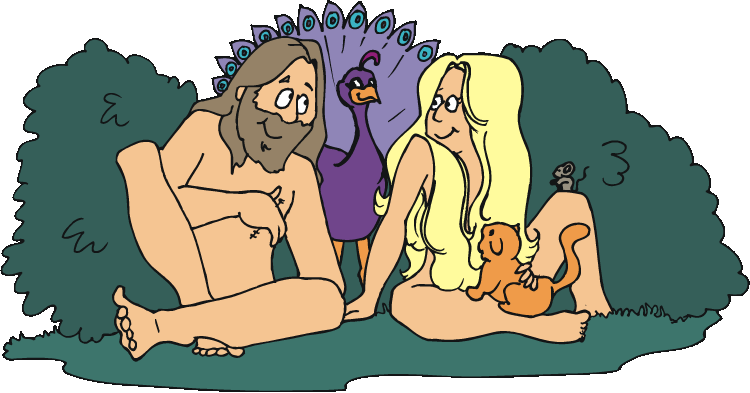
We’re really fooling no one but ourselves when we put on prideful pretenses. Adam and Eve were literally naked before Elohim and walked with him in perfect fellowship, until they sinned. After sinning, they clothed themselves to hide their nakedness.
When the first humans sinned, Elohim asked them, “Where are you?” In other words, they were hiding their true selves behind a covering of fig leaves because of their guilt and shame due to sin. Thus Elohim was really asking them, where are your true selves without the masks and cloaks?
Previous to their sinning, they were naked and unashamed. Afterwards, they were clothed and ashamed and separated from YHVH.
There’s a lesson here. YHVH wants us to be truthful, open, honest with ourselves and with him as if totally naked. Only then will he hear our prayers, otherwise we’re praying deceitful, empty and meaningless prayers, which is the Hebrew definition of the word vain as in vanity. The prideful and vain cannot stand before Elohim, for human pride is an abomination to him, which he hates the most of all human sins (Prov 6:16–17).
Exodus 8:22; 9:4, 26, Set apart the land of Goshen. YHVH separated the children of Israel from the Egyptians in that he spared them from the last seven plagues. What does this teach us about the judgments of Elohim? The Israelites were made to go through the first three plagues only. Do YHVH’s people ever experience trials and tribulations? Yes. (Read Deut 8:2–5; 2 Tim 3:12; Heb 11, the entire chapter; Rev 7:9–14.) Do the saints need spiritual refinement in order to help them become the chaste bride of Yeshua who is without the spot and wrinkle of sin? Yes. (Read Eph 5:27; 1 Cor 3:9–17.) The saints may go through tribulation, but they will not have to experience Elohim’s wrathful judgments unto death upon a wicked world (1 Thess 1:10; 5:9 cp. Rev 6:17; 7:2–3). Other examples of the saints going through tribulation, but then being delivered before Elohim poured out his final wrath upon the wicked include Lot in Sodom, and Noah at the flood.
Exodus 8:23, I will make a difference. As YHVH intensifies his judgments on a nation to get that nation’s attention, he, at the same time, will highlight his true servants by affording them special protection from the judgments. He delivered both Noah and Lot from his severe judgments upon the surrounding heathen rebels. This will occur in the end times when YHVH will allow some of his servants to escape his judgments (Ezek 9:4; Luke 21:36; Rev 7:4; 9:4). He will lead them through the flood and fire (Isa 43:2).
Exodus 7:14,The ten plagues. The ten plagues were Elohim’s judgment against the gods and idols of Egypt (Exod 12:12; 33:4; Num 33:4). Here are the list of plagues and possible suggestions as to which gods of Egypt YHVH was judging. Modern man worships these same false gods, and YHVH will bring his judgements against them in the last days.
The first plague was the water turning to blood. This may have been a judgment against abortion (the Egyptians threw their babies into the Nile for sacrificial purposes) and against materialism (since fewer children mean fewer expenses for a family, and the Nile River was the source of Egypt’s prosperity).
The second plague was frogs. This may have been a judgment against pride (frogs puff themselves before they croak) and environmentalism or animal worship. In America, for example, after 9/11, how many bumperstickers did we see that had the words “pride” on them, and “God bless America” as if YHVH is duty-bound to bless America? How can YHVH bless a nation that refuses to repent and turn from its arroant and wicked ways?
The third plague was lice. This may have been a judgment against pride and narcissism (self worship), since the Egyptians were highly focused on their personal appearance and hygiene, their appearance and in shaving of body hair.
The fourth plague was flies, which may have been a judgment against devil worship, occultism and witchcraft (i.e. the whole religious system of Egypt). A biblical name for Satan was Beelzebub, or lord of the flies (Matt 12:25–27; Luke 11:15–19).
The fifth plague was the death of the livestock. This may have been a judgment against transportation and commerce.
The sixth plague was boils, which may have been a judgment against the Egyptians obsession with their bodies and faith in medical science.
The seventh plague was hail, which may have been a judgment against their agriculture industry and earth worship.
The eighth plague was locusts. This may have been a judgment against Egypt’s food production. The Nile River and its delta was one of the bread baskets of the ancient world and a source of great wealth to Egypt.
The ninth plague was darkness. This may have been a judgment against Egypt’s intelligentsia and religious system, which was spiritually devoid of the light of truth.
The tenth plague was the death of the firstborn, which was a judgment against Egypt’s future and posterity.
The destruction of Pharaoh and his armies in the Red Seawas a judgment against Egypt’s political and military might.
Is YHVH Elohim bringing America and other “Christian” nations under judgment for the sins they have committed against him, even as he brought judgment against the gods of Egypt? What are the similarities between the gods of ancient Egypt and those of western and (formerly) Christian cultures? In America, for example, in recent years, there has been a marked increase in adverse weather conditions (e.g. droughts), natural disasters (e.g. wild fires, mass deaths of different kinds of animals, earthquakes in unlikely places), terrorism, bank and financial failures, personal and corporate bankruptcies, economic inflation, cost of living increasing, high foreclosure rates on homes, private and government financial debt, government scandals and corruption and, mass invasion by illegal and criminal, persecution of Christians, an invasion of demonic religions (e.g. Islam) just to name a few of the possible judgments against a nation that has turned its back on Elohim and the Bible.
Luke 9:1–2, Gave them power. (See also Luke 10:19.) Spiritual power and authority over demons and sickness is manifested in no greater way than when exercised in conjunction with the preaching of the gospel. It is here on the ragged edge between the kingdoms of light and darkness that YHVH wishes especially to demonstrate his power through his servants in an effort to draw outsiders into his spiritual kingdom. Healing from sickness and deliverance from demonic powers is a great enticement for those on the outside to become part of YHVH’s kingdom, where they will experience freedom resulting in joy, peace and hope and eventually eternal life.
Luke 9:28, Eight days. Eight is the biblical number of new beginnings and the symbol for infinity. When Yeshua comes back in power and glory to establish his kingdom universally on this earth of which the transfiguration was a prophetic foreshadow, it will be a new beginning lasting for eternity.
Luke 9:41, Faithless and perverse. Faithlessness and perversity go hand-in-hand with the ability to cast out demons and to heal the sick. To the degree that one is faithful to and has faith in YHVH and his Word and is in sync with it is the degree to which one will be able to exercise power over demon spirits and sickness.
The stage is set for Israel’s redemption in Exodus 5:22–23. Yet Moses’ first venture to Pharaoh was a disaster. The plight of the children of Israel had deteriorated instead of improved. Discouraged, Moses almost takes on an accusative tone toward YHVH (Exod 5:22–23). Graciously, YHVH doesn’t rebuke Moses, but as a loving Father encourages him to refocus on his word and the veracity and surety of his promises (Exod 6:2–5).
YHVH encouraged Moses upward and onward despite his discouraging first attempt at gaining the release of the children of Israel. Is it possible that YHVH allowed immediate success to elude Moses at his first encounter with Pharaoh to bring Moses “to the end of himself” with regard to any tendency he might have had to rely primarily on himself and on his own wisdom to accomplish Elohim’s plans? After all, Moses, as either Pharaoh’s adopted grandson or his nephew (depending on whether this was the Pharaoh of Moses’ childhood or his son), had an “in” with the monarch that could have been exploited for the benefit of securing the release of Israel. As YHVH wanted Moses to rely on him alone for Israel’s deliverance, even so YHVH wants us to rely on him alone to accomplish his purposes in our lives and not primarily on any human abilities that we may possess. We have to be totally emptied of ourselves before we’re ready for the Master’s use. This doesn’t mean he won’t use our natural abilities or what he have gained through life’s experiences, but we must learn to submit all that we have and are to his sovereign will. In this way, YHVH, not man, gets the glory when success occurs (Jer 9:22–23).
Additionally, YHVH reaffirmed his covenant promises to Moses using his covenant name, YHVH, three times (Exod 6:6, 7, 8). Here are some other examples of how Scripture usesYHVH’s covenant name along with modifying adjectives to describe his promise and ability to meet all our human needs:
Next, YHVH reveals to Moses the seven steps of Israel’s redemption, which are actually promises of what YHVH will do for Israel.
Wherefore say unto the children of Israel, “I am YHVH, and I will bring you out from under the burdens of the Egyptians, and I will rid you out of their bondage, and I will redeem [Heb. ga’almeaning “to buy back, ransom for money”] you with a stretched out arm, and with great judgments, and I will take you to me for a people, and I will be to you an Elohim, and you shall know that I am YHVH your Elohim, which brings you out from under the burdens of the Egyptians. And I will bring you in unto the land, concerning the which I did swear to give it to Abraham, to Isaac, and to Jacob; and I will give it you for an heritage: I am YHVH.” (Exod 6:6–8, emphasis added)
Here we find listed the seven steps of redemption YHVH lays out for Israel. YHVH uses his covenant name three times during the seven promises: at the beginning, middle and end. He wraps his covenant promises in his covenant name for emphasis.