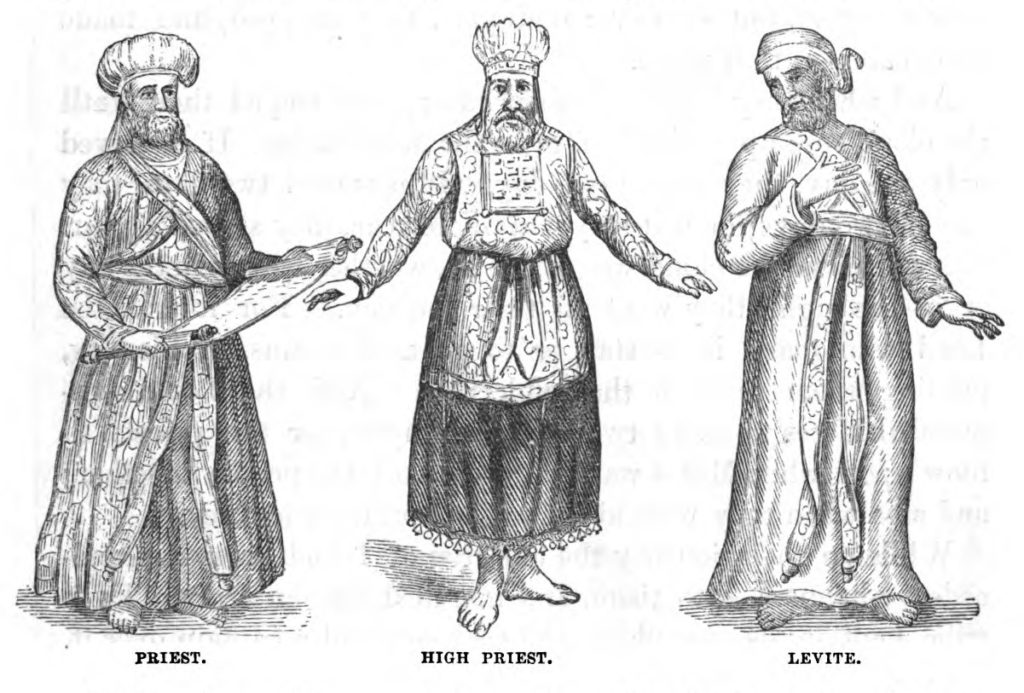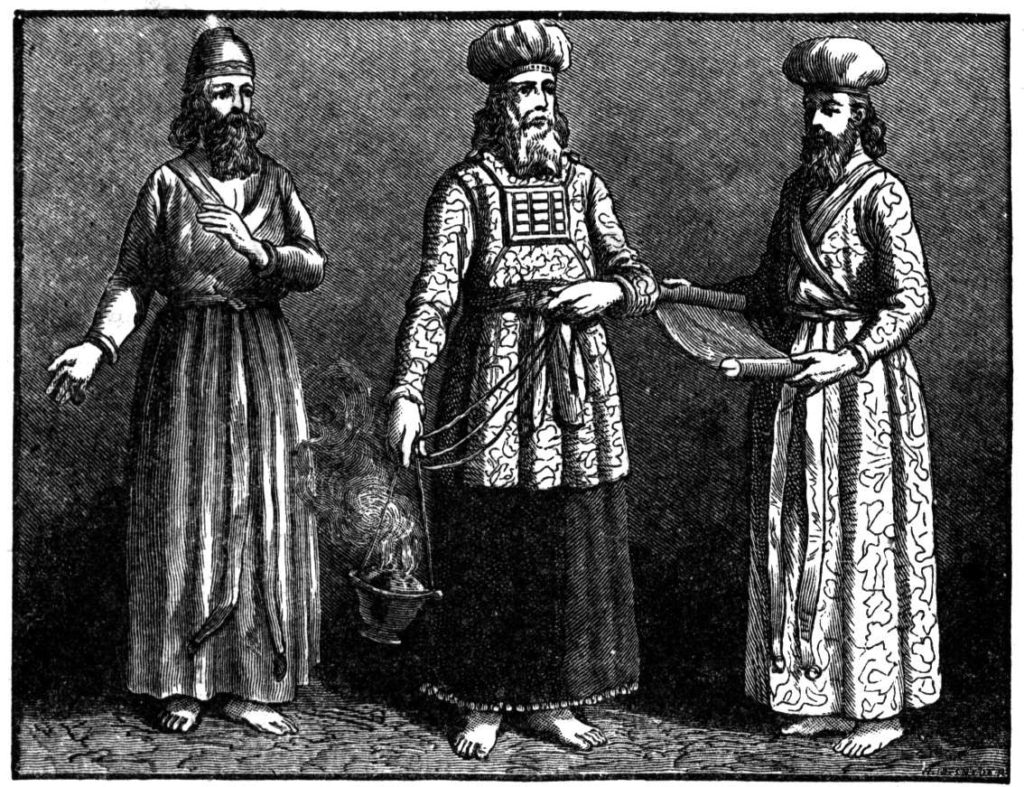
Who and what is a priest? YOU?!

Genesis 14:8, Priest. (Heb.cohen). The Meaning of the Term Cohen Explored. This is the first occurrence of this Hebrew word in Scripture. According to The Theological Wordbook of the Old Testament (or The TWOT), the exact etymological meaning of cohen is unknown since it underlying verbal root does not appear in the Tanakh. 

However, in light of the usage of the word cohen in the Bible, the verbal root is assumed to mean “serving as minister.” This is because the Bible uses cohen not only in reference to those who served in ecclesiastically (as in the Levitical priesthood), but also those who were the first born (or patriarchal) and spiritual heads of their families (Exod 19:22). A cohen could also refer to non-Levitical spiritual ministers (e.g. Melchizekek in Gen 14:8 and Jethro in Exod 2:16; 18:1). The word was also used of those holding ministry offices in a secular or civil government (1 Kgs 4:5; 20:26; 1 Chron 18:16, 17). Truthfully, it is not known whether some of these government officials were actual descendant of Aaron or not such as Ira the Jairite, who was David’s chief minister or cohen (2 Sam 20:26). In at least one case, cohen is used in reference to the sons of King David who served as officials in his administration (2 Sam 8:18), although, as The TWOT points out, the Hebrew of the MS may be in error since the LXX fails to include the term cohen in this verse. 

Moreover, in a sense, all Israel were priests (Exod 19:6), or at least that was to be their spiritual destiny presuming they served YHVH faithfully and did not forget his Torah-law (Hos 4:6). The Bible’s looser designation of the term priest to include non-Levites, and eventually and potentially all Israelites prefigures the eventual royal priesthood of all believers as predicted in Exodus 19:6 and Isaiah 66:21 and was carried forth to its prophetic fulfillment by the apostolic writers to include all Israelites (1 Pet 2:9; Rev 1:6; 5:10; 20:6). who are “the Israel of Elohim (Gal 6:16).


Below is an article that I wrote nearly 20 years ago as I was just starting out as a congregational pastor. This was one of the first article that I wrote and published on our near Hoshana Rabbah website. It is still as relevant now as it was then, for the Word of Elohim is timeless, his Truth and standards of righteousness never change and human nature remains the same.

If Yeshua Calls You a Priest, Then Act Like One!

Scripture reveals that the saints are to be a holy or set-apart (kadosh) priesthood, not a profane (worldly and polluted) one. Which are you? Kadosh or profane?

YHVH Is Preparing His Saints to Be a Kingdom of Priests

In the Bible, YHVH declared that it was the destiny of the Israelite nation to become a kingdom of priests (Exod 19:6). As such, he commissioned them to become a light to the heathen nations around them and to lead them to YHVH—the one true Elohim (Deut 4:6–8). This is why YHVH in his sovereignty positioned the nation of Israel at the crossroads of the major trade routes of the ancient world—between three continents: Africa, Asia and Europe. Israel did not fulfill this prophetic destiny because of sin and rebellion. They desired to conform their lives to the standards of the wicked nations around them rather than conform to YHVH’s standards of righteousness as revealed in the Torah-law. 

Those who come to faith in Yeshua the Messiah become children of Abraham and are thus Israelites (Rom 4:16; 9:8-11; Gal 3:7, 9, 14, 28-29) who have been grafted in to the olive tree of Israel (Rom 11:11–32); they are the current “Israel of Elohim” (Gal 6:16). Ancient Israel never fulfilled its divine calling to be a kingdom of priests and a light to the nations of the world. YHVH’s calling and purposes for Israel are without repentance (Rom. 11:29). What ancient Israel failed to accomplish because of disobedience, rebellion and faithlessness will be left to grafted in Israel—the one new man in Yeshua the Messiah—to accomplish. Yeshua commissioned his disciples to preach the good news (or gospel) of the kingdom of Elohim to the world (Mark 16:15; Acts 1:8). But more than that, his disciples were to become that kingdom of priests that ancient Israel missed the opportunity to become.

We read in the Testimony of Yeshua (or New Testament) that the saints of YHVH will be called kings and priests (or a kingdom of priests) of YHVH-Yeshua the Messiah and will reign with him during the 1000-year Millennium or Messianic Age.

…[T]o him, the one who loves us, who has freed us from our sins at the cost of his blood, who has caused us to be a kingdom, that is, cohanim [priests] for YHVH, his Father… (Rev 1:5–6, CJB)

…[At] the cost of blood you ransomed for YHVH persons from every tribe, language, people and nation. You made them into a kingdom for YHVH to rule, cohanim [priests] to serve him and they will rule over the earth. (Rev 5:9–10, CJB)

Blessed and set-apart is anyone who has a part in the first resurrection; over him the second death has no power. On the contrary, they will be cohanim [priests] of YHVH and of Messiah, and they will rule with him for the thousand years. (Rev 20:6, CJB)

During the Millennium, Messiah will be the King of kings. His government will be a theocracy with him, as the High Priest-King, at the head. The children of Israel operated under a theocratic from of government with Moses as the priest-king (he was from the priestly tribe of Levi and was called a king in Deut 33:4-5) as the human head of state. David Stern in his Jewish New Testament Commentary (p. 10) describes the role of the biblical priest to be like that of a prophet and to serve as spokesman and mediator between YHVH and man. The prophet speaks to man on behalf of YHVH, the priest to YHVH on behalf of man. In terms of practical job-description their primary duty was to offer sacrificial animals on the altar.

Continue reading
 

More Tools for Coping With the Craziness of the World Around Us—Meditations on Psalms 26 and 27

Psalm 26

Psalm 26:4–5, I have not sat. We must be careful about building friendship relationships with idolators (those who don’t put Elohim first in their lives) or hypocrites (those who claim to put Elohim first, but their actions speak otherwise), for in reality, they’re both idolators. Why must we carefully choose who our friends are? Because “evil company corrupts good habits” (1 Cor 15:33). The world doesn’t understand why the righteous want nothing to do with the wicked. As Scripture says, “In regard to these, they [the heathen] think it strange that you do not run with them in the same flood of dissipation, speaking evil of you”(1 Pet 4:4).

In the Bible and in reality, there are only two groups of people on earth: those who are part of the Israel of Elohim (Gsl 6:16) or the commonwealth or nation of redeemed Israel (Eph 2:11–19), and those who are Gentiles or heathens. This fact translates into two realities on the ground for the saint: those around us who are in a relationship with Yeshua the Messiah are our brethren and members of our spiritual, forever family, and those who are not. With regard to the latter group, those therein are part of the saints’ mission field, and it is our responsibility to share the gospel with them in hopes of bringing them into a relationship with Yeshua. In reality, they are not our spiritual family and therefore cannot be part of our inner circle of friends, otherwise, they will drag us down spiritually as 1 Corinthians 15:33 warns us against. James and John address this issue directly and succinctly:

Adulterers and adulteresses! Do you not know that friendship with the world is enmity with Elohim? Whoever therefore wants to be a friend of the world makes himself an enemy of Elohim. (Jas 4:4)

Do not love the world or the things in the world. If anyone loves the world, the love of the Father is not in him. (1 John 2:15)

Psalm 27

Psalm 27:1–14, The Jews traditionally read this psalm during the month of Elul (the sixth month) just before the fall biblical feasts of the seventh month, since they are eluded to therein. These elusions include

Verse 5: pavillion is suk, the root word for sukkah (relating to Sukkot or the Feast of Tabernacles).

Verse 5: ohel means “tabernacle” (also relating to Sukkot or the Feast of Tabernacles).

Verse 6: sacrifice [of joy]. Sacrifices of joy are the thanksgiving, love and peace offerings made to YHVH during the biblical pilgrimage feasts to the tabernacle of Elohim (ohel, v. 5; (this refers to all the fall feast of Atonement, Trumpets, Tabernacles and the Eighth Day).

Verse 6: joy is teruah (this directly refers to Yom Teruah or the Day of Trumpets and indirectly to the other fall feasts).

Psalm 27:1, My light…salvation…fear…strength of my life. What more does a person need? The saint has the light of Yeshua and the Word of Elohim (these are synonymous) to guide him in the gross or thick spiritual darkness of this world. He also has the divine promise of salvation or deliverance from any and every enemy that would come against him to kill, steal and destroy including death, which is the ultimate enemy. Finally he has the divine strength or power of the Creator at work in his life through the indwelling presence of the Spirit of Elohim in all areas of his life. Beyond this, there is nothing to fear in this life. In fact, many times I have quoted this verse and applied it to a particular part of my body that needed healing, and I have received divine healing. For example, as I was writing this, I humbly, yet boldly declared this promise over a pain in my back, and I was instantly healed. I now don’t have to go to the chiropractor. HalleluYah!

Psalm 27:2, Enemies…foes. Too often when reading scriptures that contains these words, we assign a person or name them. But consider this: Our foe or enemy may be a situation or condition (e.g. a health condition, emotional distress, financial problems, difficult life circumstances [e.g. flood, fire, drought, weather conditions]), or a demonic spirit entity that is behind a person or situation that is our enemy. Moreover, our enemy may be our own sinful condition or wrong attitudes, and we are now reaping the deleterious consequences thereof. So before automatically blaming someone else for our problems and the consequences thereof in our lives, let’s rethink who are what our enemies may really be.

Psalm 27:4, Dwell in the house of YHVH. How does one dwell in the house of YHVH all the days of one’s life? Is this merely hyperbolic, fanciful thinking and rhetoric on the part of the psalmist, or is it actually possible to do? Obviously as physical humans, we are confined to life on this earth while living in the earth suite of  our physical bodies. At the same time, we are seated with Yeshua in heavenly places (Eph 2:6), and our affections are on heavenly things (Col 3:2); therefore, we exist in two realities or dimensions at the same time: an earthly physical dimension and a heavenly or spiritual dimension. How? Simply this: We are a tripartite being of spirit, soul and body (1 Thess 5:23). Though the body part of is confined to this earth, our soul (mind, will and emotions) and spirit can operate from and in the spiritual dimension of heaven through our relationship with Elohim through Yeshua and through the power of his word and Spirit. We can allow the Spirit to operate through us and direct and guide everything that we do, say and think, and in so doing, we are dwelling in the house or family (Heb. bayith) of YHVH, while, in a sense, temporarily living abroad on this earth away from the real home of our Father’s heavenly house, which in due time at the end of this age is coming to this earth. Amein and halleluYah!

To behold. Literally to see as a seer in an ecstatic state, to perceive by experience or with intelligence. (See also Ps 63:12.) There is more than one way to come into contact with the beauty, favor, delightfulness or pleasantries of YHVH. 

To inquire in his temple. The psalmist talks about going into the tabernacle to encounter YHVH. Since there is no longer a physical tabernacle in which the saints can go to seek YHVH, where do they now go? 

The saint is the tabernacle or temple of the Spirit of Elohim (1 Cor 3:16; 2 Cor 6:16), and the Spirit dwells in one’s personal spirit. This means that one must go inside himself to seek and behold beauty of YHVH. Perhaps this is “the secret [or the covered, private, hidden or protected] place” to which the writer makes reference in v. 5.

Psalm 27:5, In the time of trouble. The house of YHVH (as discussed in my commentary on the previous verse) is the place where YHVH will hide his saints in the time of trouble. If one fails to make the house of YHVH a place of refuge during trouble-free times, how can expect to know anything about this secret place of YHVH much less go there or rely on it during troublesome times?

Set me high upon a rock. In the secret place of YHVH (which in other places I refer to as my “God-bubble” or “the spiritual force field” that surrounds me, or which the psalmist elsewhere refers to as taking refuge under the wings of the Almighty), we will find a mighty and solid rock on which to stand during times of trouble. That Rock is Yeshua our Savior, the Written and Living Word of Elohim.

Psalm 27:4, 8, Inquire…seek. Literally “look for, consider or reflect.” Such an effort takes time and energy to do, and to accomplish, one must quiet down the rambunctiousness of the soul (the mind, will and emotions), so that one’s inner man or personal spirit can rise up and speak as it is informed and directed by the Spirit of Elohim.


Without Holiness, No One Will See Elohim! Holiness Is YHVH’s Chief Quality

Our modern society has no concept of holiness. NONE whatsoever! This is because there is no fear—either reverential or dread—of Elohim. NONE! People, generally, are not only unaware of Elohim, but could care less. Live for them moment, make money and pursue the lusts of the flesh and eyes, and do what feels good is all most care people care about. And we wonder why society is ripping apart at the seams and lawlessness, anger, suicide, drug addictions, hatred and strife abound everywhere? Are we that clueless and lost as a society to be able to add two and two? Read on for the answer to these problems. 


Hebrews 12:14Holiness…see YHVH. 

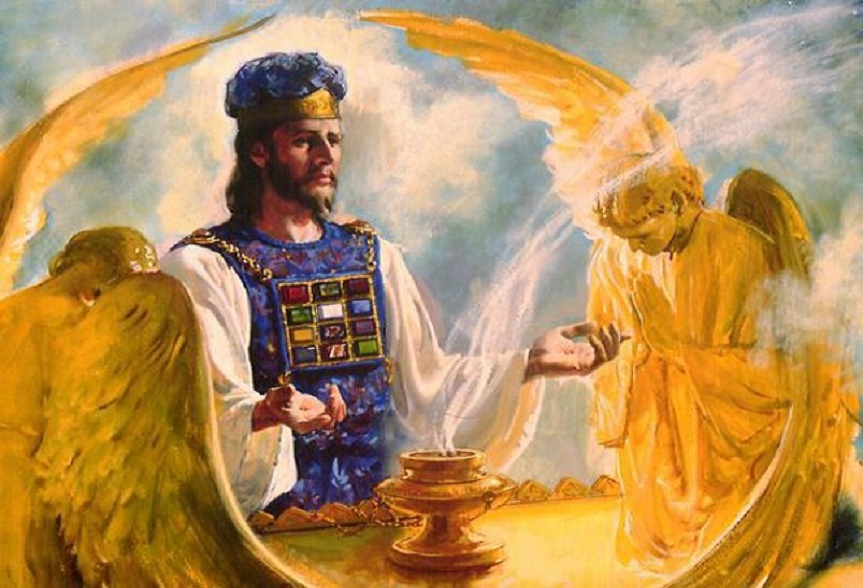
Holiness is the chief attribute of Elohim and the most defining aspect of his character. It has to do with the fact that Elohim is entirely good and without evil or moral defect and totally sinless. This is why the spiritual beings around his heavenly throne are constantly crying, “Holy, holy, holy” in his Presence (Isa 6:3Rev 4:8). This is why one of his titles is The Holy One of Israel,which is used more than thirty times in the Tanakh (e.g. 2 Kgs 19:22Ps 71:22Isa 1:4Jer 50:29). This is why the high priest who ministered in the Tabernacle of Moses and later in the temple wore a golden crown or headplate with the words inscribed on it, “HOLINESS TO YHVH.” Not only was this pointing upward to YHVH’s set-apartness, but man himself is to become holy or set-apart even as YHVH Elohim is set-apart, for we read in the Epistle to the Hebrews that the attribute of holiness is a prerequisite for a man coming into the Presence of Elohim (Heb 12:14).

YHVH Elohim made mankind in his own image (Gen 1:27), so that man could eventually become his glorified spirit children (John 1:12Rom 8:14–152 Cor 6:18Gal 4:5–61 John 3:1–2Rev 21:7). As part of the process of becoming an immortal child of Elohim, man must become holy as he is holy (Lev 11:444520:7261 Pet 1:16). This is the ultimate destiny of those who will submit to YHVH’s process of transforming man from profane or polluted, sin-ridden beings to becoming holy or set-apart. What does this process involve and how does it affect you?

YHVH Is Preparing His Saints to Be a Kingdom of Priests

In the Bible, YHVH declared that it was the destiny of the Israelite nation to become a chosen and peculiar people and a kingdom of priest—to be special and unique among the nations of the world—to reflect the character and nature of YHVH Elohim—to be holy (in Hebrew, kadosh) as he is kadosh. The Hebrew word kadosh means “sacredness, consecrated, set-apartness or separateness.” Set-apart or separate from what? From the sin, profaneness and pollutions of the world with all of its sin and rebellion against the Creator. YHVH Elohim is set-apart or kadosh in that he is transcendent or above the mundane with its sinfulness. He invites humans to transcend the pollutions of the carnal and the mundane and to come up to his level. The saints as the end times priesthood of Yeshua need to embrace and internalize this identity for themselves as we will discuss below.

Now therefore, if you will obey my voice indeed, and keep my covenant, then you shall be a peculiar treasure unto me above all people, for all the earth is mine and you shall be unto me a kingdom of priests, and a set-apart nation. (Exod 19:5–6)

For you are an set-apart people unto YHVH your Elohim. YHVH your Elohim has chosen you to be a special people unto himself, above all people that are upon the face of the earth. (Deut 7:6 cp. 14:2)

What does this have to do with me, you might ask? Everything, as we’ll see shortly.

The Israelites were unique because YHVH gave them his Torah-commandments—his instructions to show them how to live righteously and how to love him and their fellow man.

You have [distinguished] YHVH this day to be your Elohim, and to walk in his ways, and to keep his statutes, and his commandments, and his judgments, and to hearken unto his voice: and YHVH has [distinguished] you this day to be his peculiar people, as he has promised you, and that you should keep all his commandments and to make you high above all nations which he has made, in praise, and in name, and in honor; and that you may be a set-apart people unto YHVH your Elohim… (Deut 26:17–18 cp. Isa 43:1Tit 2:14)

As such, YHVH commissioned Israel to become a light to the heathen nations around them and by their good example to lead them to YHVH—the one true and holy or set-apart Elohim. 

Therefore be careful to observe them; for this is your wisdom and your understanding in the sight of the peoples who will hear all these statutes, and say, ‘Surely this great nation is a wise and understanding people. For what great nation is there that has Elohim so near to it, as YHVH our Elohim is to us, for whatever reason we may call upon him? And what great nation is there that has such statutes and righteous judgments as are in all this Torah-law which I set before you this day? (Deut 4:6–8). 

So that Israel could be a spiritual lighthouse to the world to lead them to the Creator, YHVH in his sovereignty positioned the nation of Israel at the crossroads of the major trade routes of the ancient world—between three continents: Africa, Asia and Europe. He hoped that Israel’s example as a righteous, set-apart and thus a blessed nation who possessed high moral and spiritual standards would favorably influence the foreign merchants and travelers who would pass through that country. Hopefully, they would carry news of this special nation back to their own countries. In this manner, Israel would become a kingdom of priests to the nations to teach them the ways of YHVH Elohim. Where has YHVH placed you in the crossroads of humanity, so that you can be a spiritual light to those around you? What are you doing to be that light?

Continue reading
 

Deuteronomy 30—”Return to Me!”

Deuteronomy 30:1, It shall come to pass. This is an end time prophecy concerning the people of YHVH.

Deuteronomy 30:1–5; 31:16, Returning to Elohim. Israel’s departure from her covenantal agreements with YHVH was assured. Moses prophesied it. But repentance (verse 2) was always an option—an open door of return back to right relationship with YHVH. Have you repented of straying from his Torah-commands whether out of ignorance or purposely?

Deuteronomy 30:2, You will return unto YHVH. The word return is shuv/CUA, which means “to come back, turn back.” Bear in mind that one cannot turn back to what one never had in the first place. This prophecy says that those who YHVH has scattered because of their disobedience to his Torah-covenants will return to him. To whom is this referring? In Hosea 3:4–5, we find similar language:

For the children of Israel shall abide many days without a king, and without a prince, and without a sacrifice, and without an image, and without an ephod, and without teraphim: afterward shall the children of Israel return, and seek YHVH their Elohim, and David their king; and shall fear YHVH and his goodness in the latter days. (emphasis added)

Relate this to Revelation 18:4 and Malachi 4:4–6 along with Jeremiah 16:19 (read verses 15–21 for context).

Let us not forget that, “Ideal repentance is motivated by the desire to return to [Elohim], not because one seeks to rid oneself of suffering, and benefit from Divine blessings” (The ArtScroll Stone Edition Chumash p, 1091).

With all your heart. Moses makes the heart of man a major focal point in this chapter (see also vv. 6, 10, 17. The subject here is about returning to Elohim after having turned away from him, but this can only happen when the heart of man is willing disposed to do so, and not a minute before that. Repentance is all conditional on the heart of each individual person.

This scriptural passage presents the view that if YHVH’s people will return to him with all their heart and soul from the places he has scattered them because of their disobedience and that of their forefathers (v. 2) that he will begin to gather them together in their foreign lands (vv. 3–4). Eventually this will result in his people returning to the promised land of their inheritance (v. 5). In the process, after his people have inclined their hearts to following YHVH, he will respond by circumcising their hearts and that of their children to love him more, so they can walk in harmony with him by keeping his Torah commands, so he can bless them. This is all predicated upon his people making a choice to obey him (v. 19). Once the choice is made, he will pour out his grace upon his people, so they can continue to obey him with all their hearts. 

Deuteronomy 30:3, From all the nations to which YHVH … has scattered you. The Scriptures over and over again record that the house of Israel (Ephraim) would be scattered over the face of the whole earth (Ezek 34:6, 12; 36:19; 37:21; John 11:52), and that YHVH will regather them in the end times and return them to the land of Israel (Deut 30:3–5). Deuteronomy 32:26 says, “I said, I would scatter them into the corners …” The ArtScroll Stone Edition Chumash comments, “This refers to the exile of the ten tribes who were scattered to an unknown place where they have never been heard from again.

On the phrase of the same verse, “I would make the remembrance of them to cease from among men. …” the same Chumash states, “This is a reference to the exile of Judah and Benjamin, the Davidic kingdom from which today’s known Jews are descended.” It goes on to say that though nations would seek to destroy Israel entirely, YHVH would never allow Israel to become extinct or disappear. Israel’s perpetual existence is a constant reminder of YHVH’s plan and eventually Israel will thrive and fulfill YHVH’s intention for it” (pp. 1105–1106). 

Nineteenth orthodox Jewish scholar S. R. Hirsch in his commentary on the same verse translates the phrase, “I would scatter them into the corners …” as, “I would relegate them into a corner …,” and then says that the Hebrew here refers to the “extreme end of a surface, the side or corner ….” He, too, relates this fate to the Ten Tribes who would be scattered “to some distant corner of the world, where, left entirely to themselves, they could mature towards serious reflection and ultimate return to Me …” (p. 650). 

Some in the Christians deny that these Scriptures passages pertain to the ten tribes of the Northern Kingdom of Israel and instead insist that they are speaking about Judah (the Jews) only. They insist that the return of the Jews to the land of Israel starting in 1948 is the fulfillment of these prophecies and the ten tribes of Israel are lost forever. How can this a correct understanding in light of the Scriptures and the Jewish sages interpretations of those scriptures that states again and again that the ten tribes will return at the end of the age to be reunited with the Jews under the reign of Messiah Son of David (Ezek 37:15–28)?

Deuteronomy 30:6, Circumcise your heart.Obedience to YHVH is all about the heart, all about love and relationship between him and us. Are his commandments too difficult to keep? (See verses 11–14.) Ultimately obedience is about our making choices. What are those choices and what are both the long-term and short-term results of those choices? (Compare verses 29:27–28; 30:9, 20 with 30:15–16, and relate this to what Yeshua told the rich, young ruler in Matthew 19:16–19.)

Deuteronomy 30:6, Will circumcise your heart…and of your seed. This is a prophecy concerning the Renewed Covenant, to which Jeremiah makes reference (Jer 31:31, 33) as does Ezekiel (Ezek 36:26–27), and the writer of Hebrews (Heb 8:8).


Deuteronomy 26—Giving Financially Brings Blessing and Promotion

Deuteronomy chapter 26 discusses the joy of giving financially to those who are called and ordained of YHVH to do his spiritual work on earth as well as to the poor among you and the blessings that come on the giver as a result (vv. 1–15, 19). Giving is a holy activity (v. 13), and when YHVH’s people obey him in this area and observe his other commandments as well, he proclaims them to be his special people and promises to promote them high above the nations of the world as his holy people (vv. 17–20). This YHVH did for ancient Israel when they obeyed him, and he promises to do the same for those who obey him now (2 Cor 1:20). These eternal and immutable principles of the Torah are for all people for all time and have not changed over time regardless of men’s traditions and religious doctrines that say otherwise. You may not feel like YHVH has presently exalted you above all those around you, but consider this: What is your salvation worth and what will your status be after you’ve received your glorified body and are ruling and reigning with King Yeshua over this earth after his return?

Deuteronomy 26:4–11, You shall answer.This was the prayer that one was to make when one brought their tithe to YHVH. Bringing one’s tithe to YHVH was an act of gratefulness and worship and was brought with a joyful heart for the blessing the Almighty had bestowed upon the tithe-giver.

Deuteronomy 26:11, You shall rejoice.Bringing one’s tithes and offerings to YHVH is to be a joyful event since it is a reflection of our gratitude to him for abundantly blessing us. (Compare this verse with 2 Corinthians 9:6–11.) Giving to YHVH is a form of worship since it allows us to put our treasure where our heart is (Luke 12:34). Please join me in praying this prayer: 

Father, help us to give to you out of the abundance of our hearts joyfully and with gratitude for your blessings and bounty in our lives. Help me not to be a fair-weather giver only, but to give out of obedience, even sacrificially, that we may learn to have faith in your promises of provision and to obey you no matter the circumstances. Amein.

(For a brief study on tithing and giving, please see my teaching entitled, “Is Tithing for Us Today?” which is available on our ministry website at http://www.hoshanarabbah.org/pdfs/tithing.pdf.)

Deuteronomy 26:12, You shall give to the Levite, to the proselyte, to the orphan, and to the widow.Throughout the Tanakh, YHVH has a special place in his heart for the “underdogs” of society, as did Yeshua in his ministry. There are those, who through no fault of their own, and some due to their own faults, need help and extra grace and mercy. What is your attitude toward those who fall into this camp? What are you doing to help them?

Deuteronomy 26:13–15, Prayer offered when giving. This is the prayer that the tithe-payer is to pray upon bringing his tithe to YHVH. Tithing leads to prosperity, but for whom? Just the individual? Notice in verse 15 the wording: “bless your people Israel…” The tithe-payer is praying for blessings not just upon himself, but upon the entire nation. What can we draw from this? Is there room for selfish prayers here? What happens when the whole community is tithing and everyone is praying for everyone else’s well-being and blessing?

Deuteronomy 26:17–19, You have distinguished YHVH…YHVH has distinguished you.What does this mean? What is YHVH’s attitude toward Israel? What does the word avouched or distinguished (some translations read: proclaimed or agreeing) mean here? What is transpiring here with the people distinguishing YHVH and YHVH returning the action in verse 18? The resulting action is in verse 19.


Deuteronomy 17 on Two or Three Witnesses, Spiritual (Congregational) Leadership

Deuteronomy 17:1–3, Sacrifice. Yeshua, for us, offered himself as a spotless Lamb without blemish. Do you give YHVH your best, or do you give him the crumbs and leftovers? For example, do you give YHVH the best part of the day (the morning) for prayer, Bible reading and devotion, or the end of the day when you are tired and ready for bed? Do you give YHVH the first fruits (tithe) of your income or the leftovers (or none at all)? How are you helping to advance his kingdom on earth by using the talents, time and abilities he has given you, or are you using your energies and abilities to satiate the lusts of your flesh?

Deuteronomy 17:6 (and 19:15), By the testimony of two or three witnesses. In the Bible, one could not be accused of a crime (i.e. a sin) without the testimony of two or three eyewitnesses. This admonition is repeated in the Testimony of Yeshua:

But if he will not hear you, then take with you one or two more, that in the mouth of two or three witnesses every word may be established. (Matt 18:16)

This is the third time I am coming to you. In the mouth of two or three witnesses shall every word be established. (2 Cor 13:1)

Against an elder receive not an accusation, but before two or three witnesses. (1 Tim 5:19)

He that despised Moses’ law died without mercy under two or three witnesses. (Heb 10:28)

Most gossip and slander would stop if this commandment were followed, and thus much division and strife within the congregation of believers. 

How many times have you repeated hearsay and gossip without checking the source? Even if you know it to be true, is it beneficial and righteous to repeat it to others? One Jewish sage goes so far as to say that Messiah has not come back because of all the gossip and slander of the people of Israel. Perhaps. At the very least, the Spirit of Elohim is greatly grieved, our intimacy with Elohim is diminished, and our marriages, families, friendships and congregations are fractured, hurt or destroyed because we speak things that should not be uttered.

How often do we accuse, slander and gossip about other people through use of the “evil tongue” (lashon hara) without going through proper channels and following proper biblical protocols to resolve interpersonal conflicts as Yeshua instructed in Matthew 18? How often do we attack others and spread our evil reports and accusations about others when we were not even eyewitnesses to what occurred or were not involved in the matter? How often do we attack YHVH’s leaders and accuse them of evil when there are no other witnesses (1 Tim 5:19)? YHVH hates those who sow discord among brethren and lying false witnesses, and calls this practice an abomination (Prov 6:16–17, 19). So let’s all be careful with our mouths!

Deuteronomy 17:2–5, Dealing with wickedness. Probably no one reading this is involved in any of the gross idolatrous practices listed here, but there are those little foxes (or little sins) that spoil the grapes (Song 2:15) and the little bit of leaven (tiny sins) that inflates or sours the whole loaf of bread. What ­idols or heathen practices, unrighteous world views, worldly attitudes, secular tendencies, profane habits and thought ­patterns, verbal expressions, etc. have you assimilated into your life that are keeping you from walking a higher, and hence, a more intimate and anointed walk with YHVH? Ask the Ruach haKodesh (the Set-Apart Spirit) to reveal these spiritual idols and strongholds to you so you can rid your life of them.

Deuteronomy 17:8–13, Matters of controversy. How respectful and obedient are you to the spiritual leaders YHVH has placed over you? Or do you follow their wise counsel only if and when it suits you? Nowadays if we don’t like a leader we simply leave our congregation and find a new one. In ancient Israel, this was not an option, nor was it an option in the first century. There was only one congregation in each town, and if there was a disagreement, people had to learn to work out their differences. What if we were in that situation today? How would that change your method of operation if you couldn’t just “cut and run” whenever things didn’t go your way or you got offended?

Deuteronomy 17:14–20, King over you. It is YHVH’s will for Israel to be ruled by a king. In the Messianic Era (Millennium), King Yeshua the Messiah, the Son of David, will rule not only over Israel but over the entire world from Jerusalem. YHVH ordained righteous leadership to help guide his people in the ways of truth and righteousness. 

When there is no leadership, everyone does what is right in his own eyes as occurred during the time of the judges. The Bible gives numerous examples of the chaos that results in a society or a group of people where there is no leadership. For example, The ArtScroll Stone Edition Chumash points out, “Two of the saddest episodes after Israel arrived in its Land—the graven image of Micah (Judg 17–18) and the atrocity involving the concubine at Gibeah (Judg 19–21)—are described by Scripture as having been possible only because there was no king in Israel (Judg 18:1; 19:1); had there been the leadership and discipline of a righteous king, he would never have permitted such outrages to take place” (pp. 1028–1029). 

Elohim is not the author of confusion (1 Cor 14:33). Nowhere in the Bible does Elohim permit his people to be leaderless whether it was patriarchal leadership, Levitical leadership, the leadership of judges and prophets, kingly leadership, the leadership of apostles and elders culminating in the leadership of King Yeshua and the glorified saints that will be ruling with him as kings and priests in his millennial kingdom. 

Numerous times in Scripture, YHVH not only expects his  people to obey the righteous leaders he has put in place, but even unrighteous civil leaders (at least until they demand that one disobeys the higher laws of Elohim).

Many times in the Hebraic Roots Movement, one encounters folks who have been emotionally traumatized and hurt in the past by ungodly church leadership. As a result, many of these people now refuse to come under any leadership at all godly or otherwise. They pride themselves in establishing congregations and fellowships “where no one is the leader.” This is a recipe for disaster. Get back to me in one, two or five years and let me know who your experiment in this ungodly venture went. Eventually division and strife will tear such groups apart! After all, if everyone has equal say and anything can go on, who is going to stand up and say “this is wrong” and “that is unbiblical”? When grievous wolves in sheep’s clothing come in to tear the flock apart, who is going to put these agents of Satan out of the fellowship? 

No, leaderless groups are not a good thing. Those who want this are either naive when it comes to the machinations of human nature, or are they are rebels themselves and really don’t Elohim to rule over them, since he is the author of godly, righteous leadership

Do you resist YHVH-ordained leadership? If you have been hurt or “burned” by unscrupulous and self-serving leaders in the past, do you now refuse to recognize YHVH-ordained leadership thus losing the blessings that such leadership could bestow on your life? Let’s not throw the proverbial baby of righteous leadership out with the bath water because of our past hurtful experience. 

Deuteronomy 17:18, He shall write. The king was to know the Torah so that he could rule righteously based on the Word of YHVH. The book of Revelation says that the saints will be kings and priest ruling with Yeshua in the Millennium. Do you want to rule with him? If so, what are you doing now to prepare yourself for that position of responsibility? Is the study of YHVH’s Word a priority in your life or does it get bumped to last place after you have completed all the physical things you feel you need to do? How we prepare now for the future will determine our level of reward in YHVH’s kingdom. Will you be the least or the greatest? This will be determined by your study and practice of Torah. (See Matt 5:19.)


What does it mean to be set-apart (kadosh or holy)?

Ezekiel 44:15–31

The following is a quick study on the subject of what it means to be a set-apart and sanctified people. It is the desire and purpose of YHVH, “to open the eyes of those who are without YHVH and without hope (i.e. Gentiles), and to turn them from darkness to light, and from the power of Satan unto YHVH, that they may receive forgiveness of sins, and inheritance among them which are sanctified by faith in Yeshua the Messiah” (Acts 26:18). The Apostle Paul in 1 Thessalonians 4:3–5, 7 further adds,

For this is the will of YHVH, even your sanctification, that you should abstain from [sexual immorality]: that every one of you should know how to possess his vessel in sanctification and honor; not in the [lustful sexual desires], even as the [pagans] which know not YHVH … For YHVH has not called us unto uncleanness, but unto being set-apart.

The words sanctification and set-apart (kadosh) are related words in the Greek language and have the same meaning, which is “to purify, to consecrate, morally blameless, sacred, pure.” Only One (i.e., YHVH) who is set-apart and morally pure can take something which is unholy and defiled (i.e., man) and make it pure.

Man cannot pull himself up by his own bootstraps. He cannot become set-apart or holy, blameless and pure through his own good works. As we just read in Acts 26:18, we are sanctified (made set-apart, morally pure, blameless) through faith in Messiah who washed away the sin in us that made us unholy in the first place. He wiped clean the slate that recorded our past sins and then deposited into our lives his Set-Apart Spirit to supernaturally empower us to walk sin-free.

But then we have to stay set-apart by keeping under the sin-cleansing blood of Yeshua, by turning away from sin daily and by living a righteous, Torah-obedient life. Such will keep us in the path of righteousness. And if we happen to sin, we must confess that sin and YHVH promises to forgive us of our sin and spiritually cleanses us and restores us to a state of being set apart (1 John 1:9).

Sadly, some mistakenly believe that the Torah of Elohim (YHVH’s standard for holiness or righteousness) is no longer for us today—that it was “done away with at the cross.” If this concept is valid, then what part of the Torah (YHVH’s instructions in righteousness) is no longer for us today? You shall not murder? You shall not steal or commit adultery? Do not worship idols? Do not have sex with an animal? Keep the Sabbath? How about tithing? Tithing is part of YHVH’s Torah-law, and most Christian churches strongly advocate adherence to that law! In reality, following all of these commandments show us how to love YHVH with all of our heart, soul, mind and strength and how to love our neighbor as ourselves. Keeping his divine laws helps us to walk in a sanctified manner, and to stay holy or set-apart (sanctified).

Sanctification involves coming out of the world, and getting the world out of us! It involves separating and cleansing ourselves from something that is unholy and profane (namely, the world, the flesh and the devil) and becoming a vessel that is set-apart and sacred (Yeshua-like). It is something that happens to us when we are born again, but it is also a lifelong process. Yeshua describes this in John 17:14, 17:

I have given them your word; and the world has hated them, because they are not of the world, even as I am not of the world … Sanctify them through your truth: your word is truth.

Paul in 2 Corinthians 6:17 exhorts YHVH’s people to,

“[C]ome out from among [the paganism of the world], and be you separate, says YHVH , and touch not the unclean thing; and I will receive you, and will be a Father unto you, and you shall be my sons and daughters,” says YHVH Almighty.

In summary, sanctification and being set-apart has several parts. First, there is a separation from the world, flesh, sin and darkness, which involves turning to YHVH through faith in the atoning blood of Messiah. At this point YHVH sanctifies or makes one set-apart for YHVH’s set-apart purposes and involves living a set-apart life and doing YHVH’s set-apart will. Sanctification takes something that is dirty, purifies it, and then dedicates it for a set-apart or godly use, and then commissions it to be used for that purpose. Remember the process this way: separation, purification, consecration leading to use or service with the end result being glorification and exaltation as kings and priests in YHVH’s eternal kingdom ….

To read the rest of this teaching article go to http://www.hoshanarabbah.org/pdfs/holy_pr.pdf. In this article we discuss the following subjects: 

  • YHVH’s people are called to live a set-apart (holy) or sanctified life.
  • YHVH’s people are commissioned to make a difference between the set-apart and the profane.
  • How can that which is set-apart by YHVH return to that which is filthy??
  • What are some examples in Scripture of what can be profaned?
  • What keeps a person from becoming a set-apart priest of YHVH?

But you are a chosen generation, a royal priesthood, a set-apart nation, a peculiar people, that you should show forth the praises of him who has called you out of darkness into his marvelous light. (1 Pet 2:9)

And [Yeshua] has made us kings and priests unto Elohim and his Father, to him be glory and dominion forever and ever. … and we shall reign on the earth … with [Messiah] a thousand years. (Rev 1:6; 5:10; 20:6)