1 Peter 1:2, Sprinkling of blood. Also see Matt 26:28; Eph 1:7; Heb 9:12;10:19–22; 12:24; 1 Pet 1:19; 1 Jhn 1:9; Rev 1:5.
1 Peter 1:5,Salvation…revealed in the last time. Likely Peter has Yeshua in view here, since the name Yeshua means “salvation.”
1 Peter 1:11,Spirit of Messiah…He. This is a faulty if not disingenuous translation. Spirit in the Greek is a neutered gender noun, so He should properly be translated as It. This is not the only place where the NT translators, trying to push the masculine gender of the Ruach haKodesh, have mistranslated Scripture. See also Acts 8:16 and 1 Cor 12:11.
1 Peter 1:16,Be holy, for I am holy. See Lev 11:44; see also Exod 22:31; Lev 11:45; 19:2; 20:7, 26; 21:28; 1 Pet 1:16
How Do YOU Become Holy?
How does a person become holy? Does holy water make you holy? Does a robed priest sporting a goofy headdress and wearing a giant charm around his pencil thin neck while waving his gaunt and delicate hand over you make you holy? Does stepping into a gilded and ornately decorated church and performing some religious mumbo-jumbo exercise make you holy? NO! The Bible declares how a person becomes holy, and it is NOT what most people think! It has to do with lifestyle and obedience, NOT religiosity!
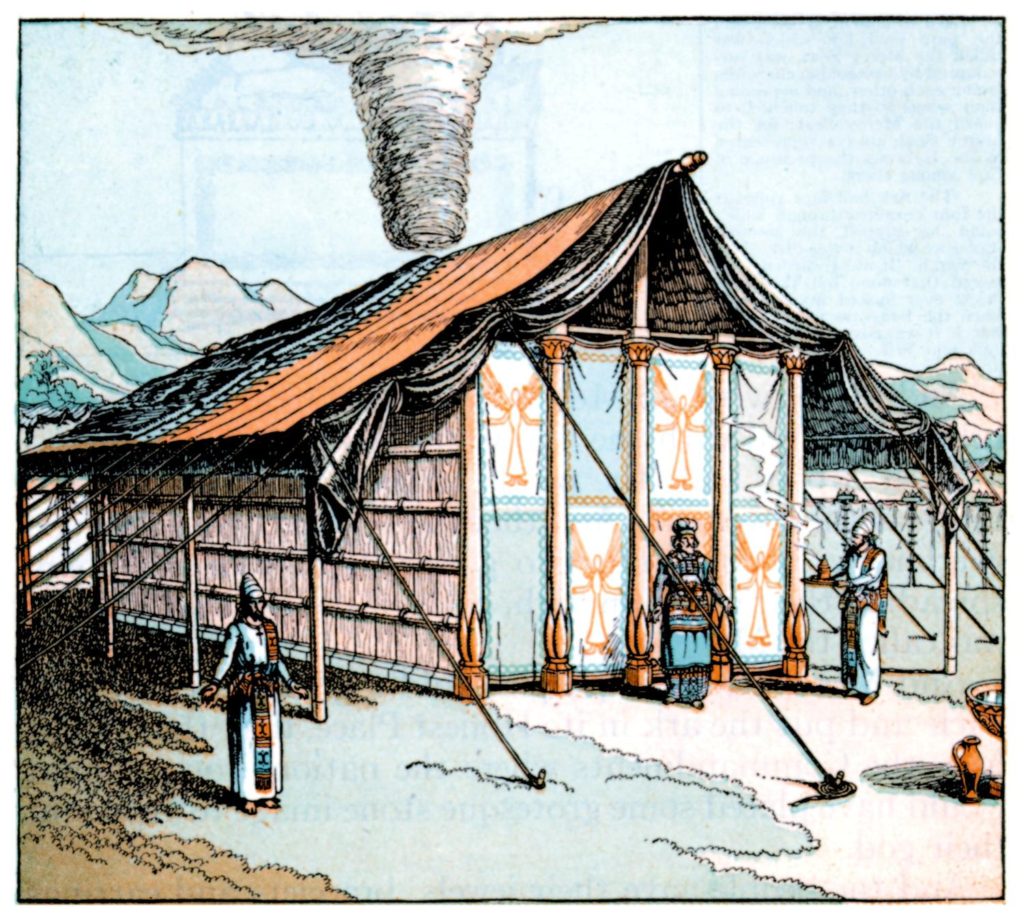
For starters, most well-meaning but deceived folks do not even know what the word holy means. It comes from the Hebrew word kadash, a verb meaning “to be pure, undefiled, unpolluted, set-apart or sanctified.” The Hebrew word kodesh is the biblical adjective to describe Elohim who is totally pure and sinless and without any pollution or defilement. Kodesh also describes those things which YHVH has made holy or declared to be holy such as certain times (such as his Sabbath and feasts), certain places (such as the Tabernacle of Moses), and certain people (such as his priests and saints). No matter how elaborate and convincing the efforts humans cannot make or declare anything holy regardless of the ceremonialism and religious activities. These efforts are merely futile, vain and, quite frankly, laughable! Many unbelieving pagans see this religious charade for what it is and are not convinced. Some even mock and scorn such efforts. Religiosity is NOT the way to bring people to Elohim—to bring unholy man into the presence of a holy Elohim.
James 2:20–24, Faith without works is dead. James is referring here to the works of faith, not the works of the law. No man can live a good enough life to be saved by his Torah-obedience or the works of the law (Rom 3:20, 28; Gal 2:16; 3:11).
At the same time, faith in Elohim is more than just mental ascent—“a knowing in your heart.” It has to be backed up by action (and we’re not talking about the works of the law). For example, when Elohim told Abraham to leave Babylon or to sacrifice Isaac, he obeyed by leaving that country and moving to Canaan.
Moreover, many were healed in Yeshua’s ministry because they had faith in the Master and backed that faith up with corresponding action, which was the evidence of their faith. This faith-action continuum had nothing to do with Torah-obedience per se, but had everything to do with “putting your money where your mouth is” by backing up your faith or belief with action.
It is this kind of faith that James is talking about here, and this in no wise contradicts the teachings of Paul who said that no man is justified by the works of the law. When Paul declares in Ephesians 2:8–9, “For by grace you are saved through faith, and that not of yourselves; it is the gift of Elohim, not of works…,” he was correct and not opposed to James. What’s more, Paul goes on to say in verse 10, “For we are [Elohim’s] workmanship, created in Messiah Yeshua for good works…that we should walk in them.” These good works (i.e. obedience to the Torah) are the fruits, evidence or proof of our salvation and are the works that back up our faith.
So, in summary, the Bible teaches that we need the faith (a heart that believes and wants to obey Elohim) to lead us to salvation, as well as the works of faith after we have received Elohim’s free gift of salvation as evidence that we are saved. This fact in no way contravenes the reality of salvation by grace through trusting belief in Yeshua the Messiah, which is apart from the works of the Torah-law.
Exploring the Concepts of Sacrifice, Blood-Letting and Eating Blood
The sacrificing of animals as an act of worship or for any reason is a foreign concept in our modern, secularized society, but this was not the case in the ancient biblical world. Concomitant with sacrifices is the idea of freewill offerings,which, in the ancient world, were often made together as an act of worship to various deities.
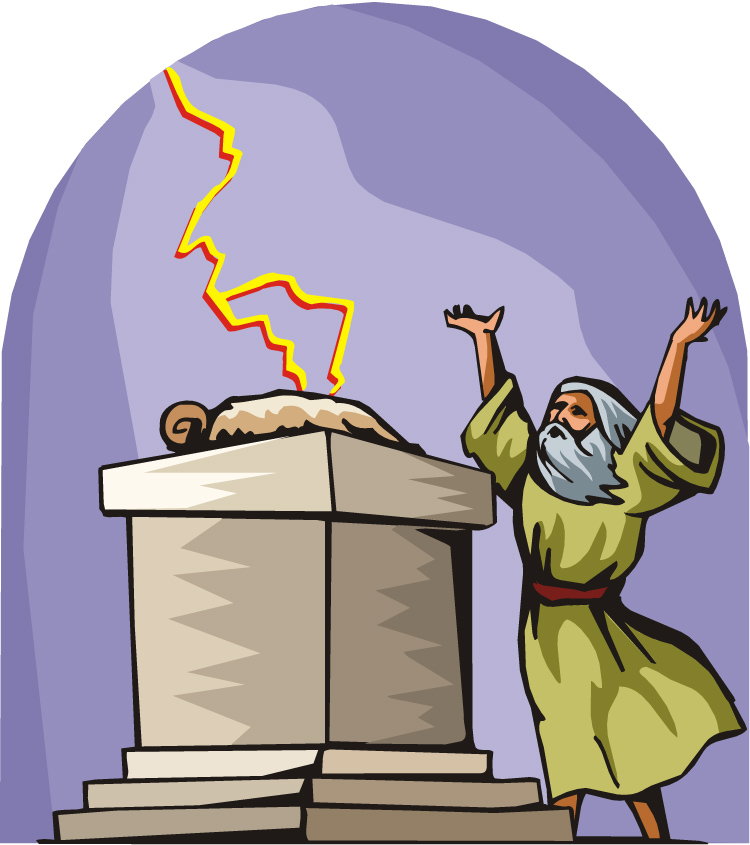
With regard to sacrifices, man’s first act of worship outside the Garden of Eden was to make offerings and sacrifice to Elohim (Gen 4:1–4). Making a sacrifice to Elohim was also Noah’s first act of worship after the flood (Gen 8:20). The same is true of Abraham upon receiving the covenant from Elohim (Gen 12:6). At key points in his spiritual journey, Abraham repeated this same act of worship (Gen 12:8; 13:3, 18). The same is true of the Israelites who after having received the Torah at Sinai made a sacrifice to Elohim as they entered into a covenantal agreement with him (Exod 24:4). Subsequently, YHVH instructed the Israelites to establish an entire sacrificial system as a means to be reconciled to him. Similarly, animal sacrifices and offerings being made to various deities was an important aspect of the heathen cultures of the biblical world. Even in the first century, the Greeks were still sacrificing animals in their pagan temples to their gods and goddesses (1 Cor 8:1–13; 10:20) as were the Jews prior to the destruction of their temple in A.D. 70 (Acts 21:24 cp. Num 6:13–21).
So, in the mind of the ancients, what was the purpose of sacrifice? The ritual killing and offering of an animal was part of a religious ritual either to appease or to gain the favor of a deity.
With this concept in mind, several points should be noted. Man’s rebellion and sin against Elohim in the Garden of Eden caused man to be cut off from his Creator and incur his judgment against man’s sin. The Garden of Eden and the fall of man event is part of the mythos of many ancient civilizations (e.g. Mesopotamian, Summerian, Greek, Indians, Moslem and apparently the Babylonians, Chaldeans, Persians, Egyptians, Assyrians, Ethiopians, Mexicans and Chinese as well), and thus this idea of man’s separation from deity because of his sin informed the ancients of their need to be reconciled to a deity or deities.
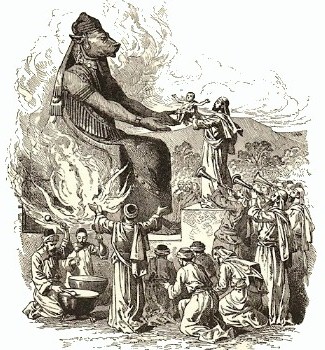
However, it stands to reason that as we move forward in human history and away from the original sin of man in Garden of Eden, where YHVH revealed to man his need for an atoning blood sacrifice, the pure worship of Elohim through sacrifice at the same time became blurry in men’s minds and corrupted by demonic incursions and influences (e.g. Gen 6:2–5). Through subversive activities of Satan the Adversary and his minions, the practice of Elohim’s true religion became perverted and even counterfeited. As a result, men began to worship counterfeit deities of their own concoction that ran cross grain to or were in outright antithetical rebellion to the commandments of YHVH Elohim with regard to the making of offering and sacrifices. Instead of men making sacrifices and offerings to be reconciled to Elohim because of sin, the heathens exchanged the worship of the true Elohim for that of Satan and his evil minions. This resulted in men making sacrifices to appease the anger of their false demon-gods and, at the same time, to curry their favor (for fortune, fame, spiritual power and long life). Over time, man’s sin and his need to be reconciled to the Creator was no longer the focal point of the sacrifice or offering at all. The Israelites, under YHVH’s guidance, on the other hand, kept the true purpose of sacrifice in view. It was for the purpose of atonement for sin in order to reconcile sinful and fallen man to his Creator as Leviticus 17:11 states.
As the biblical narrative reveals, the ancient Israelites were all too easily swayed by the heathen, Canaanite, Baal-worshipping cultures around them whose gods had moral stringencies much less demanding than those of Elohim, and who instead of forbidding sinful acts not only tolerated but often promoted them, even incorporating them into their cult rituals (e.g. ritual temple prostitution and other forms of sexual deviancy including homosexuality). This is why YHVH’s Torah included strict commands against Israel’s fraternizing in any way with the neighboring Canaanites or adopting any of their religious rituals—especially those involving blood and sacrifice, since the Creator originally designed these rituals only for worship, atonement and reconciliation purposes. With this historical backdrop in view, it hopefully should be easier to see why YHVH was so adamant that the Israelites adhere to his strict protocols with regard to making animal sacrifices, while at the same time he prohibited them from following the heathen’s perverted versions of these rituals—rituals that had devolved into outright demon worship (Lev 17:7).
Leviticus 12:2, Unclean.One may rightly ask why new life begins in tumah or spiritual impurity? Could this have anything to do with David’s statement in Psalms 51:5, “Behold, I was shaped in iniquity; and in sin did my mother conceive me.” The basic premise of all the false religions and humanistic philosophies of the world is that man is innately good and that any evil attributes he may possess are largely due to his evil environment. Do you believe this? Or have you taken responsibility or ownership of your own sin and the sin nature in you?
Leviticus 12:4, Come into the sanctuary/miqdash. The miqdash referred to the tabernacle or temple and denotes that which has been devoted to the sphere of the sacred. An area was sacred since it was the place where YHVH dwelt among his people (Exod 25:8) and it was not to be profaned (Lev 12:4; 19:30; 20:3; 21:12, 23; q.v. The TWOT). The command that a woman was forbidden from entering the sanctuary when in an impure state begs this question: When then could a woman enter the tabernacle? The ArtScroll Vayikra/Leviticus Commentary doesn’t answer this question nor do Rashi or Hirsch in their commentaries. Keil and Delitzsch suggest that she would have come into the sanctuary to partake of sacrificial meals (e.g. the peach or fellowship offerings (Lev 3:1–17; 7:11–21) although the Torah doesn’t specifically state this. Lev 7:20–21 does state that anyone eating this offering in a ritually impure state would be cut off from Israel, thus implying that this meal might have been eaten within the confines of the tabernacle or temple sanctuary—or at least the outer courtyard where the altar of sacrifice was located. But do we know this for sure? No. For example, in 1 Samuel chapter one, we read that Hannah, after offering her sacrifice, prayed outside the door of the tabernacle where she met Eli the high priest (1 Sam 1:9). Later, in the history of the Jerusalem temple, the Woman’s Court was constructed. This separate court for women, located just outside of the temple itself, was where women prayed and offered their sacrifices, and was, according to Jewish tradition, constructed in the time of King Jehosophat (2 Chron 20:5; Carta’s Illustrated Encyclopedia of the Temple in Jerusalem, p. 93, by Airel and Richman). Also according to Jewish tradition, women were allowed to go past the Women’s Court and enter the temple sanctuary itself to offer up sacrifices although no scriptures are given to support this assertion (ibid.)
Leviticus 12:5,Two weeks. One may also ask why a woman remains in a state of ritual impurity only seven days for a male child and two weeks for a female child? To some of our minds that may have been “leavened” by the “women’s rights” agenda of the 1960s, this may seem sexist. One thing is certain, YHVH is not a respecter of persons. He does not value one gender above the other. Both male and female were made in his image (Gen 1:27). Therefore, Elohim is both male and female. For Elohim to view women as inferior, he would be showing favoritism to one part of himself over another, and this is not possible.
One explanation the Jewish sages give for the eight-day compared to the 14-day period of ritual impurity is that a male child has to be circumcised on the eighth day. A brit m’lah is to be a joyous occasion. If a woman were still in a state of ritual impurity she would not be able to participate in her son’s circumcision (The ArtScroll Tanach Series Vayikra, p. 187).
Leviticus 12:6,She shall bring. Why did the new mother have to bring a sin offering for her newborn child—after all isn’t childbirth a glorious and joyous event? To answer this question we will ask a question. What was one of the curses Elohim placed on Eve for her part in bringing sin into the world? (Gen 3:16) Labor pains were decreed upon woman for punishment for her part in original sin. The Jewish sages teach that the sin offering Torah demands her to give after giving birth is to atone for that. As believers in Yeshua, we might rather see this offering as pointing to ancient Israel’s need for atonement from sin in the Person of Yeshua the Messiah, who was yet to come. Does this not underscore the seriousness YHVH places on sin and that all have sinned and fallen short of his glory (Rom 3:33), and that we are all in desperate need of a Redeemer who would deliver us from that “certificate of sin debt that was against us” and nail it to his cross (Col 2:14)?
Leviticus 13
Leviticus 13:2, Leprous sore [Heb. tsaraath].This was an infectious skin disease and not necessarily leprosy.
The Biblical Dietary Laws Are Primarily About Holiness NOT Just Health!
What is the chief attribute of Yehovah Elohim? It is holiness, for this is what Scripture revealed that the spirit beings in his heavenly throne room are chanting day and night.
In the year that King Uzziah died, I saw the Lord sitting on a throne, high and lifted up, and the train of His filled the temple. Above it stood seraphim; each one had six wings: with two he covered his face, with two he covered his feet, and with two he flew. And one cried to another and said: “Holy, holy, holy is the YHVH of hosts; The whole earth full of His glory!” (Isa 6:1–3)
The four living creatures, each having six wings, were full of eyes around and within. And they do not rest day or night, saying: “Holy, holy, holy, YHVH Elohim Almighty, Who was and is and is to come!” (Rev 4:8)
What is holiness? The Bible defines it is as those things, people, times and practices that YHVH himself has determined are to be set apart or are above or are transcendent. Set apart from or transcendent above what? From those things that are mundane or earthly, defiled or polluted by sin or by that which is unholy and ungodly.
Why is it important to know that the chief character attribute of Elohim is holiness? Because he wants his children to be holy as he is holy (Lev 11:44, 45). Why is this? Because he wants to spend eternity with his redeemed and glorified children, for without holiness no one will see Elohim (Heb 12:14). It’s really that simple! Therefore, it’s important that his children learn now the difference between what YHVH considers to be the holy and the profane (Lev 11:47), so we can hang out with him in his holy presence for eternity.
Leviticus11:1–47, The biblical dietary laws are about holiness. Let’s briefly discuss the subject of clean and unclean meats. The focal point of biblical dietary laws are holiness and separation. There are other issues here that need to be explored as well. How serious are you about obedience to YHVH’s commands, or is your belly your god? (See Phil 3:19; Rom 16:18.) Do your taste buds or the Word of YHVH rule your life? Remember, Torah covers all aspects of life: physical, spiritual, emotional, relational, civil, agricultural, political, jurisprudence, religious and economic. Torah is a very holistic handbook on life. Are you one who takes the (humanistic) pick-and-choose approach to Torah-obedience? “I’ll obey only the biblical laws that suit me.” Such an approach is akin to what the serpent told Adam and Eve when he said, “You can have it your way … YHVH didn’t really mean what he said when it comes to obedience.”
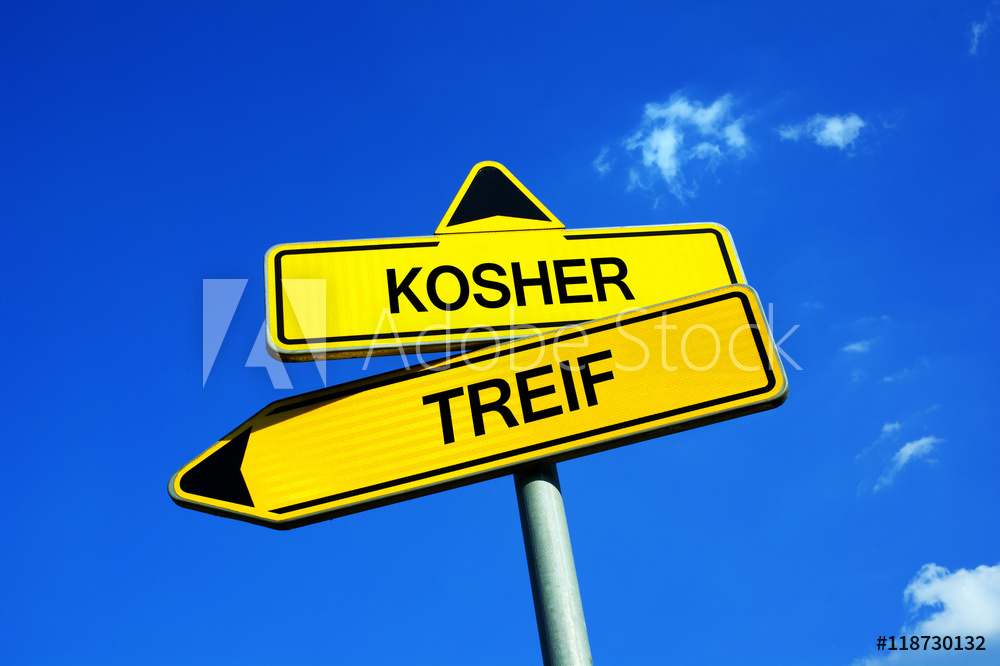
When most people think of word kosher, the biblical dietary laws come to mind. This is only part of the picture that the Bible presents when it comes to the subject of kashrut. The biblical kosher laws involve not only clean and unclean meats, but many other areas as well such as health issues, holiness (not defiling the body, the temple of YHVH’s Set-Apart Spirit), and separation issues—how we’re to act, live, eat, worship, think, dress and talk differently than the heathens around us. The word kosher derives from the Hebrew word kasher meaning “to be straight, right, acceptable” (see Est 8:5; Eccl 11:6; 10:10). YHVH has called his people out of this world and sanctified (set-apart) them to be “straight, right and acceptable” to him. Therefore, YHVH hasn’t give us the liberty to act, speak, dress, eat and live the way the heathens do. He has called us to a higher moral and spiritual standard. We can’t expect to be called the children of the Most High, and still live like the children of the world. We must choose whom we are going to serve (see Josh 24:15): YHVH or mammon and this world (Matt 6:24).
Leviticus 11:4, 47,Unclean.The word unclean is the Hebrew word tameh meaning “defiled, impure, polluted ethically, ritually or religiously” and the word clean is the Hebrew word tahor meaning “pure physically, ceremonially, morally, ethically.” In verse 43, YHVH says that in eating unclean meats one becomes abominable (or detestable, filthy). In Ezekiel 22:26, YHVH rebukes his people because, “Her priests have violated my Torah-law, and have profaned my set-apart [Heb. kadosh] things: they have put no difference between the set-apart and profane, polluted or common, neither have they shown difference between the unclean and the clean, and have hid their eyes from my sabbaths, and I am profaned among them.” In Leviticus 11:45, the Torah states, “For I am YHVH that brought you up out of the land of Egypt, to be your Elohim. You shall therefore be set apart, for I am set apart/holy.”
This is an important question that has dangerous implications. Why? Because truth is like a sharp sword that cuts. It separates good from evil, light from darkness, sin from righteousness; it differentiates between those who are of Elohim and those who are of the world, the flesh and devil; that is, those who are of the kingdom of the god of this world—Satan the devil. Oooh, that hurts! But the fact remains: we are either in Elohim’s kingdom or the devil’s kingdom. To ignore or renounce the former is to acquiesce knowingly or unknowingly, it makes no difference, to the latter. For these reasons, most people flee from answering the question “What is truth.” This is because their deeds are evil and they do not want the glorious light of YHVH’s Truth to shine into their lives and to expose their evil deeds as John declared about Yeshua in John 3:18–21.
He who believes in [Yeshua] is not condemned; but he who does not believe is condemned already, because he has not believed in the name of the only begotten Son of Elohim. And this is the condemnation, that the light has come into the world, and men loved darkness rather than light, because their deeds were evil. For everyone practicing evil hates the light and does not come to the light, lest his deeds should be exposed. But he who does the truth comes to the light, that his deeds may be clearly seen, that they have been done in Elohim.”
Not only that, let us not forget an important fact: there are two kinds of truth. Truth with a capital T and truth with a small t. The former is divinely revealed Truth, while the latter is truth at a physical level (e.g. 2 + 2 = 4 or the law of gravity). To acknowledge the former means that one has to accept not only the idea of divine revelation, but a Divine Revealer. If so, then there is a Divine Judge who determines right and wrong. If this is true, then that Judge will bless those who live up to that divine Truth, and curse those who do not.
To acknowledge the existence of divinely revealed Truth carries with it serious implications regarding one’s lifestyle. That is why most humans choose the downward path (call Baalism or feeding from the tree of the knowledge of good and evil) of sin and succumb to the notion that God is dead or irrelevant. Not only that, they attack those who believe in Elohim (the Jews and the Christians), they attack the Bible—the Word of Elohim, they attack the Holy Land where Elohim placed his name, and they attack anything that remotely represents any of these things (e.g. morality, marriage, the family, church, male and female genders and so on). This is the spirit of Antichrist, which we see rising up like a tidal wave of evil in these last days all over the world. But the reality is that these are only the death throes of Satan and his kingdom of darkness, for he knows that his time as the ruler and god of this world is short, and that King Yeshua is coming soon to dethrone him. That is why the devil is pulling out the all the proverbial organ stops in a vain attempt to prevent the inevitable and inexorable march of Truth!
For these reasons, it is important that you understand the answer to the question, “What is Truth?”
John 18:38, What is truth?
In this age of moral relativism or situational ethics, it is unpopular to believe in, much less purport, that there is one single truth. Most humans live under the notion that every person can determine their own truth for themselves. The problem with this delusion is that when your truth conflicts with my truth there will inevitably be conflict. Ultimately, there will be a breakdown in law and order leading to anarchy resulting in unending theft, murder and wars. This was the case in primeval and medieval societies like Europe before strong central governments evolved to enforce law and order. The history of British Isles alone before there was a strong king in London was one series of blood baths after another by various raping and pillaging parties.
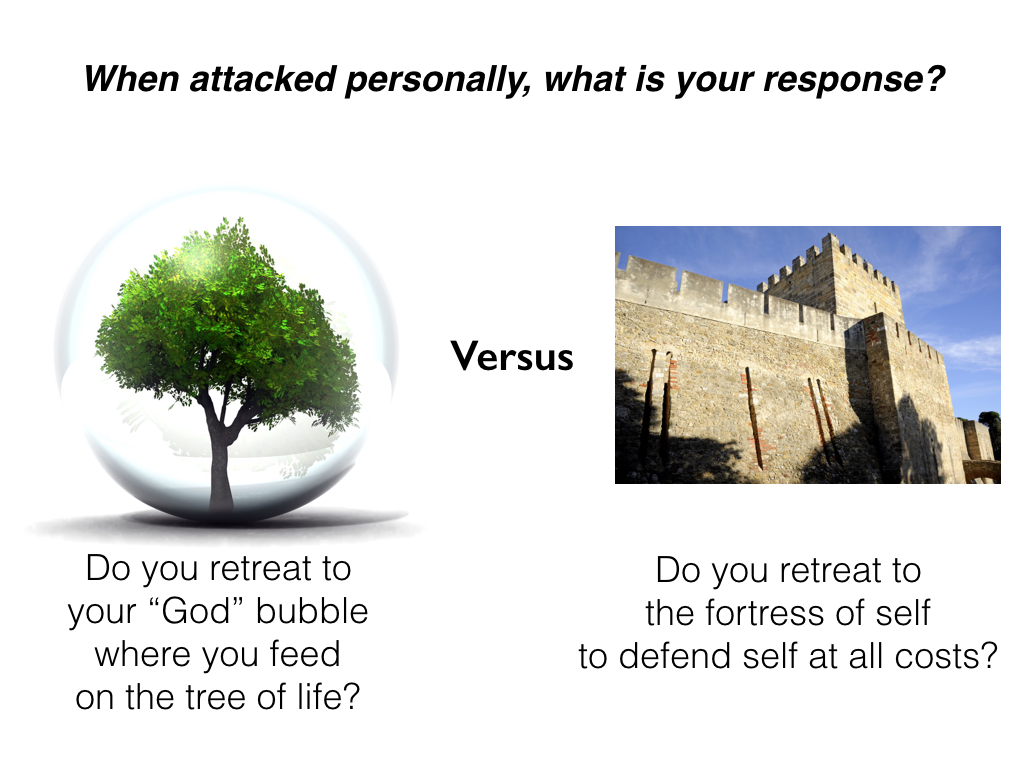
When I first wrote this article a few years ago, I viewed the idea of creating and living in one’s own so-called “God (or Elohim) bubble” as a defensive mechanism for dealing with the attacks from the world and the devil around us: One could slip into one’s own God bubble as a refuge in the time of trouble. While this is still a true concept, there is, perhaps, a greater principle at play here that needs mentioning: Perpetually living in one’s “God bubble” is not only a defensive strategy, but are lifestyle and offensive strategies as well. First, it is a way to stay continually abiding in Yeshua who is the vine and we are the branches (as per John 15) as well as a way to stay in his river of life constantly.
Second, it is also an offensive strategy. There is very little that the ordinary person can do about the evil plans of the Babylon the Great New World Order’s spirit of Antichrist to takeover the world and also our lives. By living in a perpetual God-bubble day-by-day as a lifestyle and mindset, we will not only be making the world around us a better place, but we will be radiating the love and truth of Elohim outward to those living in the darkness of hopelessness and despair. This is a way for us to fulfill Yeshua’s command to be salt and light.
Create You Own “God” Bubble to Deal With Life’s Attacks
May everyone reading this take careful note and pay close attention to the following: Creating a “God”-space bubble around you is a biblical strategy to protect yourself from the attacks of one’s spiritual enemies. Without it, you may not survive theses attacks.
Who is the main enemy of our soul that is hell-bent on turning each of us into a spiritual casualty and a notch in his gun belt? Who is the one who is inexorably determined to pull you off the straight and narrow path that leads to Yeshua and his eternal kingdom? Who works tirelessly to pull your spiritual focus off Yeshua and his Word? Actually, the Bible reveals that the disciple of Yeshua the Messiah has three such enemies: the world, the flesh and the devil.
How do we deal with such rabidly determined enemies? There is the natural way and the supernatural way.
Most people choose the natural way to deal with adversity. It’s the default mode that, because of man’s fallen sin nature, one automatically and involuntarily chooses. It’s the way of self and flesh. The natural reactive tendency of humans when attacked is to create around themselves a fortress of pride, self-justification, self-righteousness where they blame others and seek pity as a form of defensive protection. The focus of this self-defensive strategy is on self and simply yields to path of least resistance dictated by one’s sinful nature. It is merely a natural, automatic and thoughtless default response of man’s fallen sin nature. If we don’t catch ourselves, we will automatically find ourselves doing this.
When attacked, instead of creating a defensive fortification where a focus on self forms the foundation stones in our defensive fortress wall, we need to run to the Rock of our Salvation who is our High Tower in times of trouble. David, a man after Elohium’s heart, writes about this many times in his psalms. David shows us to make YHVH and not self the focus when our enemies attack us, and how to find refuge in our personal “God” bubble. A bubble seems a fragile, an almost invisible thing with a very thin wall—something that pops easily. So get that image out of your mind. Instead, think of an invisible force-field that can easily repel any incoming projectile no matter its size, speed or destructive capabilities.
Such a bubble or spiritual force field will shield and protect us from any of our enemy’s attacks. It will insure that we weather the ferocious storms of life that blow against us. In that place, we are relying on the unlimited power and wisdom of YHVH to aid us in our time of need instead of the weak, faulty and deceptive arm of the flesh. The former leads to light and life; the latter leads to darkness and death. The former brings healing and strength; the latter glosses over pain and is merely weakness feigning as strength.
Since each person is different, each one will furnish their “God” bubble differently depending their spiritual orientation and makeup, tastes and interests. In my times of trouble, and most of other times as well, I maintain a spiritual force field around me by which I’m able to repeal spiritual attacks. When attacks happen, I then take refuge in my own personal spiritual bubble. This involves turning to the Scriptures for guidance, wisdom and encouragement. Prayer—talking to Elohim—is a vital component of my spiritual bubble or force field. Often I visualize myself either at the foot of Yeshua’ cross or before the throne of my Heavenly Father. Often I will myself involve hard physical work (to settle my emotions and to help clear my mind, which helps to me to destress and get my mind off the problem, so I can think and pray clearly). Many times, I listen to beautiful and spiritually uplifting music, which again helps me to elevate my spiritual focus. Often I find my own Garden of Eden in nature where I can imbibe in the beauty of Elohim’s creation. There I can talk with the Creator and find healing. To accomplish this, often I will work in my garden. Sometimes I write Elohim-centered psalms and poetry. David wrote many of his psalms in times of distress—even when his life was in danger. This helped him to get his mind off of his circumstances and onto YHVH, who was is salvation and deliverer. Whatever I do, in all cases, I try to get my mind off myself and onto Elohim who is my source of wisdom, hope and guidance, and my ultimate Savior and Deliverer. Often, I imagine myself falling down at the foot of the cross where I find my strength at the feet of Yeshua. I tell myself that if he endured that for me, then I can endure this for him.
For other people, their “God bubble” might be spending time with cherished and caring family members and friends, their spouse, their spiritual family, at church or during the Sabbath and biblical festivals.
This is what my “God” bubble looks like and what helps me to deal with spiritual attacks. What does your “God” bubble look like?
If you don’t have your own “God” bubble, how about making one to help you deal with the pain, stressors and attacks of life?