The Passover and the Seder Demystified

This is a long teaching (a little over 6 standard pages), but it will help you to understand the Passover holiday, how it relates to you as a redeemed believer in Yeshua, and the importance, relevance and blessing of celebrating it. 

Personally, I’ve been celebrating the Passover for almost 50 years. It is my privilege to share with you a few things I’ve learned along the way about the biblical festival.

I hope you enjoy the following teaching. It covers a lot of ground in a short space, so buckle your seat belts and hold on!
Passover

Isn’t your life already busy enough? Who has time for a six-hour Passover Seder commemorating something that happened thousands of years ago? What could this possibly have to do with my life here and now, you may ask? How can a 3500-year-old Biblical ritual in any way relate to those living in the age of the laser, satellites, the worldwide web and computers? Well, let’s see!

The Preacher said in Ecclesiastes 3:15, “That which is has been already and that which will be has already been.…” Life is full of paradoxes. Do advancements in technology, science, economics, medicine, religion, and world government really promise to give men the rest for their weary souls for which they long?

How about a different approach to the questions and problems facing modern man? Is it possible to go forward by going backwards? This is a thesis that the ancient prophet Yermeyahu (Jeremiah) proffered to those who had ears to hear. He said, “Thus says YHVH, ‘Stand by the ways and see and ask for the ancient paths, where the good way is, and walk in it; and you will find rest for your souls. But they said, we will not walk in it’” (Jer 6:16). What were those ancient paths to which this white-haired Jewish prophet referred? This question is answered three verses later: “Because they have not listened to My words, and as for My Torah, they have rejected it also” (verse 19). YHVH through his prophets has been showing men the way of rest for their souls for thousands of years, yet men consistently refuse to listen. They always have a better way, so it seems!
The festival of Passover is one of the most ancient paths to be found in all of the Scriptures. In it are contained clues that will help the partakers of it to understand the past, present and the future. Continue reading

 

How the First Passover Perfectly Pictured Yeshua the Messiah

For I am not ashamed of the gospel of Messiah, for it is the power of Elohim to salvation for everyone who believes, for the Jew first and also for the Greek. (Rom 1:16)

For the preaching of the cross is to them that perish foolishness; but unto us which are saved it is the power of God. (1 Cor 1:18)

Neither is there salvation in any other: for there is none other name under heaven given among men, whereby we must be saved [except the name of Yeshua the Messiah]. (Acts 4:12)

According to the laws of statistical probability, what are the chances of an event happening and then fifteen hundred years later another event occurring bearing an uncanny resemblance to the first one? Now suppose that not only did fifteen hundred years separate the two events, but that they occurred in two different countries several hundred miles apart, which in the ancient world considering the difficulties of travel and communications may as well have been halfway around the globe. Now suppose that the second event involved the death of a person, and that the events leading up to their death including the manner and timing of that death was beyond the control of the individual dying so that in no way could the person dying stage his death to mirror the first event. In fact, those killing the individual possessed no foreknowledge of the event that had occurred fifteen hundred years earlier. What are the chances of this occurring? Well beyond the laws of possibility!

Lamb sacrifice

This is not a fictional story! Truth is sometimes stranger than fiction. The details of these two events are chronicled in the pages of the Bible. The first event occurred in ancient Egypt and is recorded in the Book of Exodus chapters eleven and twelve. There we find recorded the details of the children of Israel’s first Passover while they were yet slaves in the land of Egypt. A whole series of events led up to this first Passover, which culminated with each family’s ritual killing of a lamb, smearing its blood on the frame of their doors, roasting the lamb, and then eating it. Doing this insured that YHVH would pass over their homes leaving those inside alive. The firstborn of those whose homes did not have the blood on them were killed.

The second event involved a descendant of those ancient people who was born in a different land fifteen hundred years later. His name was Yeshua of Nazareth, a Jew, and viewed by many of his day as the long-awaited Messiah of Israel. One of the proofs of his Messiahship would be whether he would fulfill the many prophecies that had been foretold Continue reading


Yeshua in the Passover Lamb

A miraculous occurrence and a physical impossibility, 1500 years, two continents, and several hundred miles separated the Israelites’ first Passover in Egypt and Yeshua’s (Jesus’) death on the cross, yet the first Passover lamb perfectly foreshadowed Yeshua’s sacrificial death to take away our sins.
This video will either help you to find faith in Yeshua the Messiah, who has come to save you from your sins and to grant you eternal life, or it will substantially strengthen your existing faith.
 

Moses Prophesies His Own Resurrection and Glorification—and Ours Too

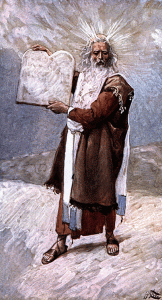
Exodus 34:1–35, Moses’ second ascension of Mount Sinai is a prophetic picture of the saints’ resurrection and glorification at the second coming of Yeshua the Messiah.

According to Jewish tradition, Moses ascended Mount Sinai to receive the second set of stone tablets containing the Ten Commandments on the first day of the sixth month or 30 days before Yom Teruah, which occurs on the first day of the seventh month. Forty days later on Yom Kippur he descended from the mountain carrying with him the second set of tablets as a sign of YHVH’s forgiveness of the children of Israel after the golden calf incident. This signaled YHVH’s renewed relationship with Israel after they had repented of golden calf worship.

Moses' shining face

We know that a biblical Israelite bride, while waiting for her betrothed to arrive from his father’s house, would hear the sound of the shofar in the distance as her bridegroom approached. If she were alert and not asleep (as were the ten virgins in Matt 25), she would have had time to put on her wedding robes, trim her lamp’s wick, and have it filled with oil and ready to light as soon as he arrived.

Prophetically, the Scriptures tells us that the saints of Yeshua are to be resurrected and to  Continue reading


How Much Do You Love Yeshua? A Year’s Wages Worth?

John 12:5, Three hundred denarii. This large sum is equal to 300 days’ wages for a common laborer.

Devotion for El-19158646 3To the natural mind, Judas’ objection to the use of this expensive spice (worth between $30,000 and $50,000 in today’s money) to anoint someone’s feet seems logical. It seems like a total waste of something very valuable. By contrast, from our perspective, we can look backwards historically with perfect 20–20 hindsight and realize that for Yeshua, the Messiah and Savior of the world, he was worth every penny of the spikenard and much more. Yet, from the perspective of Yeshua’s followers, Yeshua’s true identity and mission still weren’t clear. This confusion wouldn’t clear up until after his resurrection and glorification (v. 16). So for some of them, Mary’s act of faith in anointing Yeshua’s feet with a year’s wages of spice seemed to be illogical folly.

This spice, most likely was originally intended for use on Lazarus’ body, whom Yeshua had just resurrected and so was no longer needed for that purpose, at least. It is likely that it was out of gratefulness for resurrecting her brother that Mary performed this act of love and devotion to Yeshua, not realizing that her actions were prophetic in that she was pre-anointing Yeshua’s body for his own burial ten days from that night (v. 7).

Now let us consider the following. We know that YHVH Elohim the Father gave us his greatest love gift by sending Yeshua, his Son, to this earth to live, die and resurrect for our redemption and ultimate glorification (John 3:16). How much do we love Yeshua, and what is the greatest gift we could ever give him, even if those around us thought we were crazy to do so? Have you given him all your heart? Does all that you own belong to him including your life? Would you give away all of your possessions in devotion to him if he asked it of you? Would you literally lay your life down for him as he did for you? How much do you love Yeshua?


The Twice Daily Sacrifice—A Picture of Our Daily Prayer and Praise

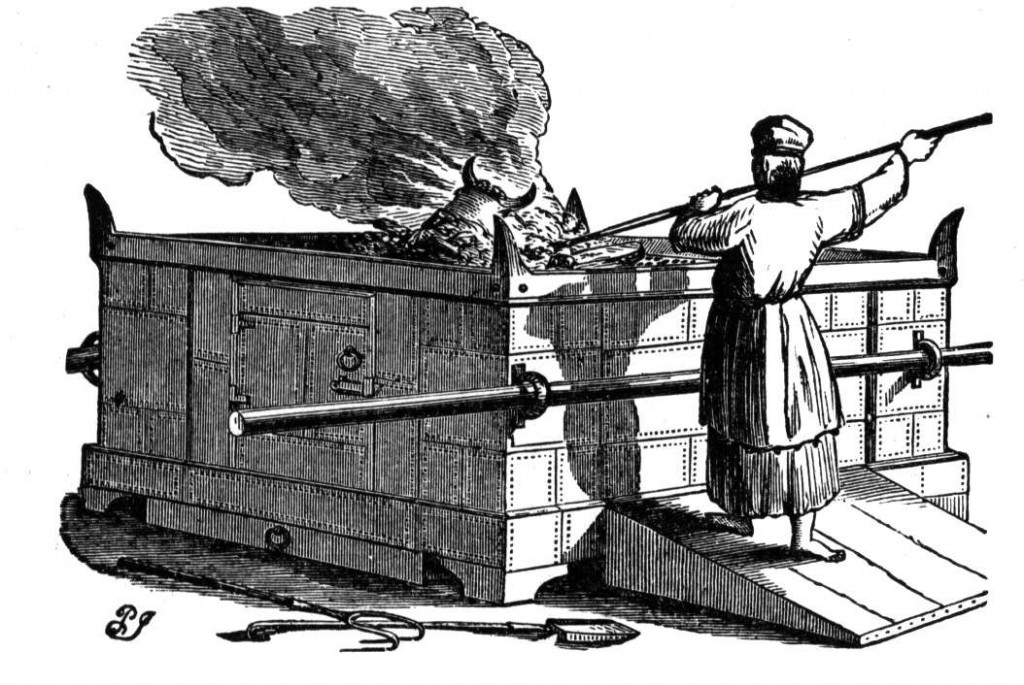
Exodus 29:38–42, In the morning…at twilight. (See also Lev 1:1–17 and Num 28:1–15.) This twice daily offering was known as the continual burnt offering (Heb. olah tamiyd), and was offered at the door of the tabernacle (verse 42). The word continual (Heb. tamiyd) means “continually.” The Hebrew word for burnt offering is olah meaning “ascent, stairway or steps,” and derives from the basic Hebrew verb, alah, meaning “to go up, climb or ascend.”

Altar fo Sacrifice -1 632195

In this offering, the fire consumes the entire animal, and the word olah refers to the smoke of this whole burnt offering ascending to heaven, which is a “sweet aroma” to YHVH (verse 41). The olah was an offering or gift (Lev 1:2, Heb. qorban) to YHVH and could be a bull, goat, ram, turtle dove or a pigeon as long as it was a perfect specimen without defect (Lev 1).

If an Israelite sinned, he could bring this gift-offering to the door of the tabernacle where he would place his hands upon the head of the animal, after which the priests would slaughter it, and sprinkle its blood around the altar of sacrifice just inside the door of the tabernacle (Lev 1:2,4,5). The meat was then prepared and arranged on the altar and entirely burnt (Lev 1:6–17). When the sinner laid his hands on the animal, it was as if he were transferring his sins onto the innocent, blemish-free animal, where upon YHVH accepted it as an atonement for the person’s sin (Lev 1:4).

The writer of Hebrews clearly teaches that this offering (along with all the other offerings in the sacrificial system) pointed to Yeshua, our Great High Priest, whose atoning death on the cross fulfilled all the types and shadows of the Levitical, sacrificial system (Heb 4:14–5:7; 7:1–10:18).

Besides the obvious antetypes pointing to Yeshua’s death on the cross, what else can we Continue reading