The Ancestry of Modern Arabs
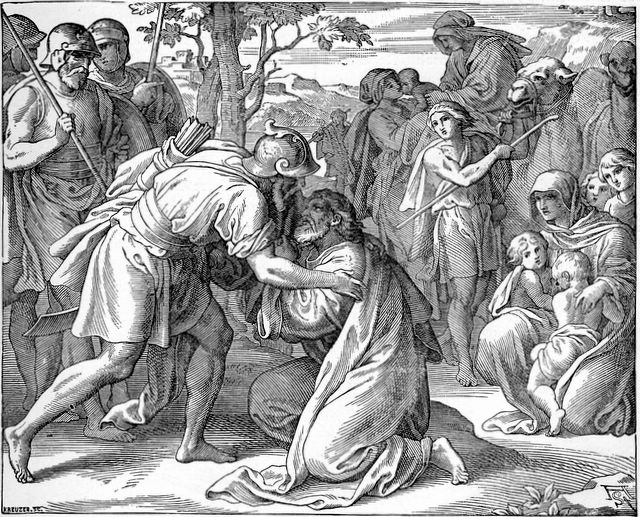
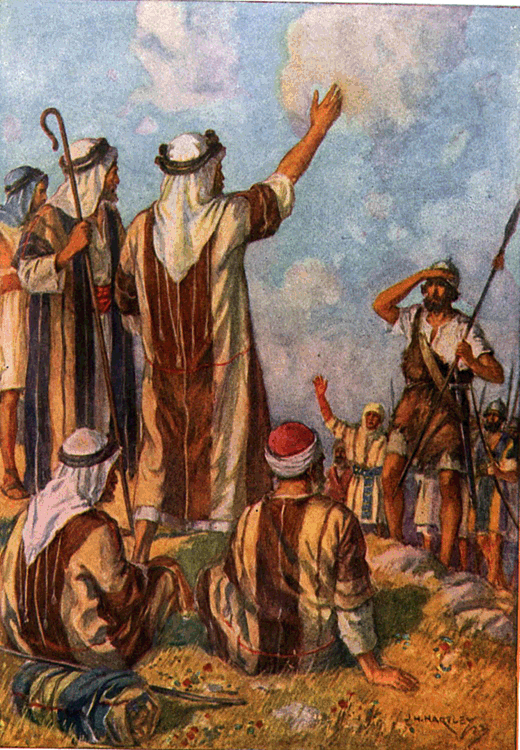
The conflict between the Jews (and Christians) and the Arabs has ancient roots. In Genesis 32, Esau (the father of many of the modern Palestinians) and his army stood in the way preventing Jacob (the father of Jews and Israelites) and his descendants from returning to their homeland—the land YHVH had promised to them. This historical event is prophetic of what will happen in the end times as the Jews and the rest of the Israelites endeavor to receive their promised inheritance and the kingdom of Elohim.
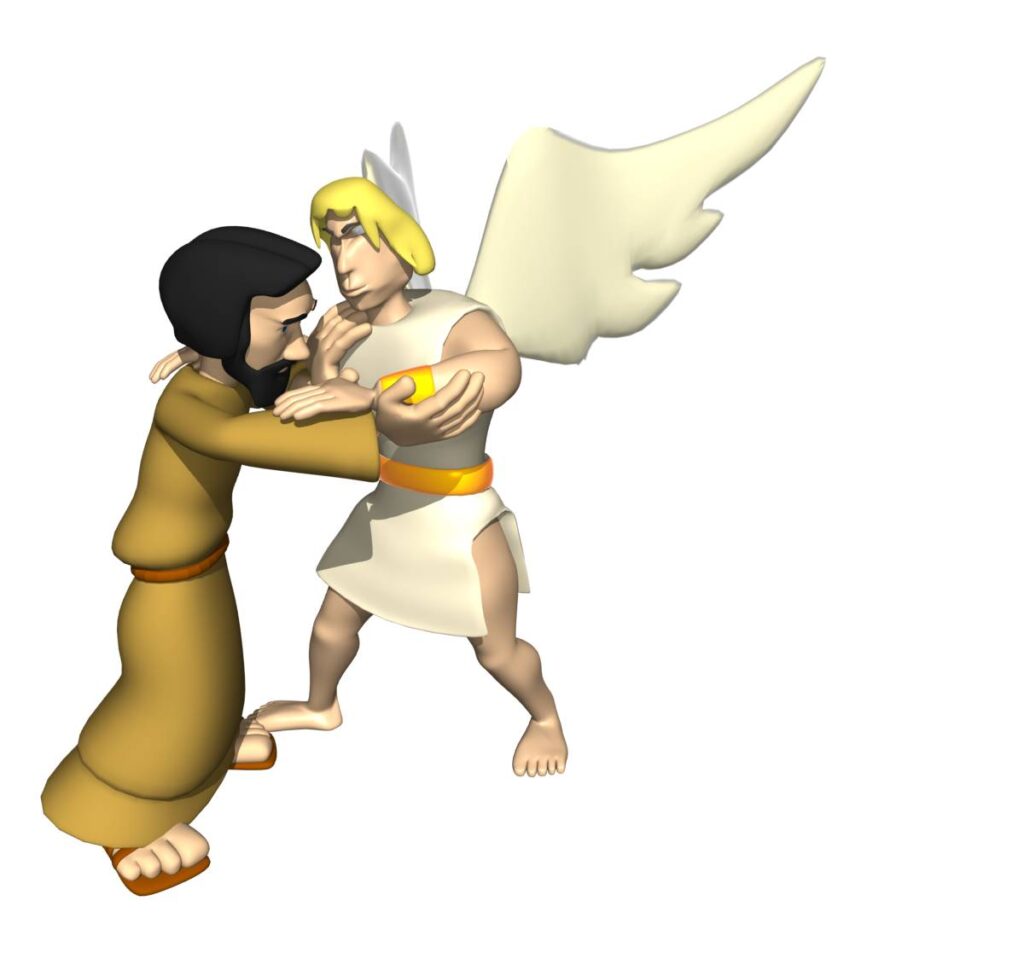
Not only that, YHVH used Esau to test Jacob, who had grown overly self-confident due to his business acumen, wealth and his ability to produce a large family clan. In the ancient world and in a tribal sense, he had reached the pinnacle of wealth and power. However, what mattered to YHVH more than these things was the character of a man. Would Jacob have faith in his Creator, or would he trust in his own abilities to outwit his adversaries and come out on top as he had done twice previously with his brother Esau and Uncle Laban? Jacob’s confrontation with his brother at the threshold of the land of Israel and his wrestling with the Messenger from heaven were the two tests that he had to pass. The Bible calls this Jacob’s Trouble and prophesies that something similar will occur in the end times to Jacob’s descendants(Jer 30:7).
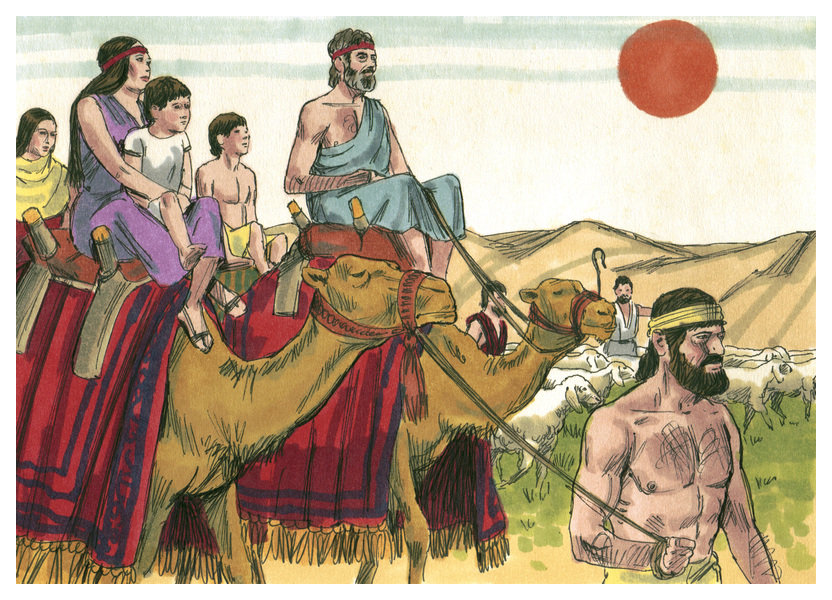
As we read in Genesis 32, Jacob divided his wives and children into two camps (Gen 32:1, 7). This was prophetic of what would eventually occur to the nation of Israel after the death of King Solomon. The one nation of Israel became two houses or kingdoms—the Northern Kingdom of Israel (Judah) and the Southern Kingdom of Israel (or the northern ten tribes). The descendants of these two kingdoms are presently—loosely speaking—the Jews and the Christians (we have discussed and proven this point biblically elsewhere). But who are the descendants of Esau historically and, more importantly, today, and why is it important to know?

Many, if not most of the modern Moslems (especially the Arabs) trace their lineage back if not biologically then spiritually to Ishmael, the son of Abraham by Hagar. Islam in its religious book, the Koran, claims that it was Abraham and Ishmael who founded the religion of Islam and built the Kaaba, which is the small building containing a stone that supposedly fell from heaven. This shrine is located in the midst of great mosque in Mecca, Saudi Arabia. Of Ishmael and his descendants, the Bible prophesies in Genesis 16:11–12,
The angel of YHVH said to her further, “Behold, you are with child, and you shall bear a son; and you shall call his name Ishmael, because YHVH has given heed to your affliction. And he will be a wild donkey of a man, his hand will be against everyone, and everyone’s hand will be against him; and he will live to the east of all his brothers.”
The Koran has further twisted the biblical account to declare that the patriarchs (i.e., Abraham, Isaac and Jacob) were actually Muslims, and that Abraham gave the birthright blessing to Ishmael instead of Isaac. Both Israelites and Arabs, therefore, believe that they have a right to the Promised Land of Canaan, and, hence, this disagreement is at the roots of the modern Arab-Israeli conflict.
The Scriptures further record that Esau (or Edom), the disinherited son of Isaac, also had ought against his brother Jacob, who, in a sense, stole the birthright promise from him. Furthermore, Esau married the daughter of Ishmael (Gen 28:9). Thus, some of Ishmael’s and Esau’s descendants merged becoming a people-group, who continued the jealous feud with the sons of Jacob or Israel.
The Bible has more to say prophetically about the descendants of Esau, who scripturally are referred to as Edom (Esau’s nickname) than about those of Ishmael. Edom is portrayed as an aggressive and bloodthirsty people, who are opposed to Israel at every step. We will discover what the Scripture have to say about this below.
In the mean time, let’s take a closer look at Edom.
- Esau and Edom (meaning “red”) are synonymous (see Gen 25:25, 30; 36:1, 8–9, 19, 43).
- Esau intermarried with the descendants of Ishmael (Gen 28:9).
- Seir is another name for the land of Edom (Gen 32:3; 33:16; 36:8).
- Esau intermarried with the people of Canaan (Gen 36:2), the Hittites, the Hivites, as well as the Ishmaelites.
- His descendants included the Amalekites (Gen 36:12, 16), who fought against the children of Israel upon leaving Egypt and as soon as they had entered the wilderness en route to the Promised Land (Exod 17:1).
- Esau’s sons were dukes or chieftains (or leaders of clans) and became kings (Gen 36:15–16, 40–43).
- Although Esau’s direct lineage was confined to the area of the traditional land of Edom, it is clear from the biblical record that he and his descendants intermarried with many of the neighboring nations, so that his descendants were scattered far and wide over the region that later became known as the Holy Land.
The entire one-chapter Book of Obadiahis a prophecy against Edom. Let’s note several key points in Obadiah’s prophecy that give us insights who the modern descendants of Edom are in light of end-time Bible prophecy. This will in turn help us to understand end-time world politics and give us a further clue to identifying America in prophecy. Let’s analyze some key verses in Obadiah in light of end-time events.
Verse 2, The descendants of Edom are greatly despised (scorned, held in contempt, disdained).
Verse 3, They dwell in the clefts (places of concealment, retreats) of the rocks. They are proud and view themselves as invincible.
Verse 4, YHVH promises to bring Edom down.
Verse 7, Edom has a confederacy (league, alliance) of nations, which include many of the modern Moslem and Arab nations.
Verse 11, Edom’s eyes are on Jerusalem. Edom along with his foreign allies will cast lots for Jerusalem (seek to divide it among the nations/religions of the world as an international city under the control of the United Nations?).
Verse 13, Edom has entered into the gates of the land of Israel in the day of her calamity or disaster.
Verse 14, Edom will kill Jewish refugees trying to escape the land of Israel in her time of distress.
Verse 15, The time frame of the fulfillment of these prophecies is “near” the day of YHVH, when he will judge Edom and the other heathen nations that have come against his people.
Verse 16, Edom will be drinking (celebrating?) on the Temple Mount or YHVH’s “holy mountain,” and, as a result, they shall drink the cup of YHVH’s wrath.
Verse 17, The house of Jacob will eventually retake possession of the Temple Mount.
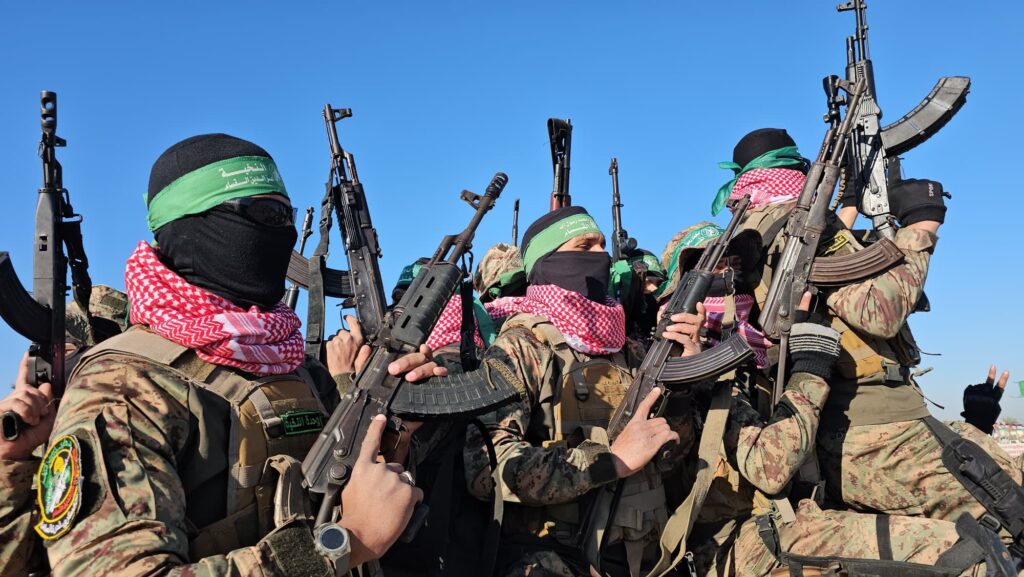
How many descriptions of the modern Palestinian and other Islamic terrorists do we see in prophecies of Obadiah? What other people-group fits this description? Is Edom not a picture of many modern-day Palestinians and their Moslem backers who hate the Jews, the state or nation of Israel and America as well as Christians and Jews in general?
Elsewhere have discussed who Jacob represents in end-time Bible prophecy. Now we are discovering from the Scriptures who the arch-enemy of Jacob’s biological and spiritual descendants will be, and who will attempt to prevent them from returning to the land of Israel. This will happen in the end times before the coming of the Messiah. (I discuss this issue in more detail in my commentary on Genesis chapter 32 about “Jacob’s Trouble” as he encountered Esau when returning to the land of Canaan.)
Edom Has a Perpetual Hatred for Jacob (Judah and Ephraim)
As we have noted, Edom’s hatred for Israel has its roots in the antagonism between Ishmael and Isaac, and then afterwards between Esau and Jacob. The hatred that Esau had for Israel has been passed on down to successive generations of Edomites to modern times. The biblical prophets discusses this murderous antagonism on Edom’s part as being carried down generation to generation to the very end times. Let’s review some of these biblical prophecies.
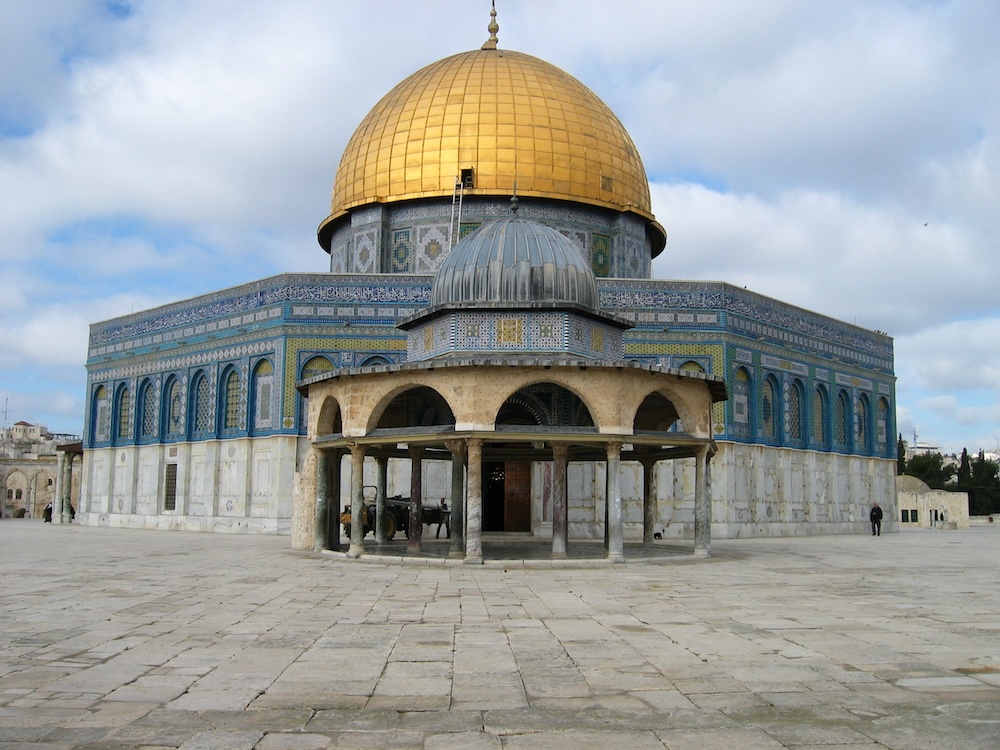
Ezekiel 36 speaks about the conflict between end-times Edom and end-times Israel. In verse two, we see that the enemies of Israel have regarded the “ancient high [or declared, promised] places” of Israel as “ours in possession.” This is a clear reference to the holy places in Israel (e.g., the Temple Mount for the Jews and Bethlehem for the Christians—only in recent years have the Palestinians taken Bethlehem and forced—out of persecution and intimidation—the majority of the large Christian population of that city to leave). “High places” can also refer to the militarily strategic high places such as the Golan Heights, Mount Hermon and the ridges surrounding the eastern shores of the Sea of Galilee.
Next, let’s look at Ezekiel 35, which is another prophecy against Edom. In verses four through five, we see that end-times Edom will be devastated because of its perpetual hatred for the children of Israel. They have killed their enemies by the power of the sword. This is how Islam has traditionally spread—by the curved scimitar sword. Advancing Moslem armies force its captives to leave, covert or die. According to Ezekiel 35:5, this will be occurring during the time of the punishment (of the children of Israel?) at the time of the end (NAS) or the end of time (lit. Hebrew). This is another example of YHVH’s using Edom (Esau) to bring Ephraim and Judah to its knees in the time of the end.
Continue reading