What is pharmakeia and how does it affect you?

Drugs Concept Watercolor Word Art

Revelation 9:21, Sorceries. Gr. pharmakeia. Pharmakeia is a methodology to circumvent Elohim and to open the doorways into the supernatural. It is the mix of science along with magical arts, occultic or hidden, demonic, angelic or paranormal realm and medicine, potions, or herbs for sorcerous reasons to open the mind so you can put yourself in contact with what is beyond the gate or the boundaries YHVH has established between the natural and supernatural (including the demonic) realm.

The Satanic spirits in Revelation chapter nine inhabit the pit, and those who resort to pharmakaia are coming into contact with spiritual entities either from the pit, or from realm of darkness beyond this earth. Satan is both the angel of the bottomless pit (Rev 9:11) and the prince of the power of the air (Eph 2:2).

There are gateways or portals down to the pit and out into the universe in either case to contact beings from other dimensions. There are good and evil portals. YHVH revealed to Jacob a good portal or gateway to heaven at the site of the future Temple Mount when he dreamed of the ladder to heaven. Yeshua is the gateway or doorway to the Father in heaven (John 1:51). But there are evil gateways that men an open up illicitly through pharmakeia or drug induced states.

Biblical examples of individuals illicitly opening up gateways into the evil realm beyond man’s perception include the witch of Endor who summoned the dead (1 Sam 28:3ff). We also see this with the slave girl who was possessed with a spirit of divination and who followed Paul in Macedonia (Acts 16:16–18).

Those who come under the influence of pharmakeia put themselves into a drug-induced state to activate gateways into the supernatural. It’s a form of rebellion against YHVH’s established boundaries that man is not supposed to cross. Witchcraft is also taking something holy and exploiting it for personal purposes. This is what Samuel accused Saul of doing when he kept the cattle he was supposed to kill, so that he could at a later time offer up an illicit sacrifices without going through the proper levitical protocols. Samuel equated this act of rebellion with witchcraft (1 Sam 15:23). Saul had this proclivity, for he had offered up a witchcraft sacrifice once before (1 Sam 13:9–13). Samuel rebuked him for it, yet Saul was willing knowingly to repeat the same mistake again, which was strictly forbidden.

Taking that which YHVH has ordained to be used legally one way and defiantly using it another way for one’s own selfish purposes is an act of rebellion and witchcraft.


What Is the Day of YHVH’s Wrath?

0bd0cdb1-0ce2-474e-a07c-5bff789cef39

The Day of YHVH’s Wrath

There comes a time in the chronology of end times events that accompany the return of Yeshua when YHVH will pour out his wrath upon rebellious men. The Bible refers to this as “the day of YHVH” or “the day of his wrath” — a phrase which occurs more than two dozen times in prophetic writings of Isaiah, Ezekiel, Joel, Amos, Obadiah, Zephaniah, Zechariah and Malachi. What is this day?

Is the “day of YHVH’s wrath” a literal day, or a time period, since the Hebrew word for day (Heb. yom) can mean both? The prophet Isaiah may give us a clue. In several places, he mentions “the day of YHVH’s vengeance” (or words to this effect). This is the time period when YHVH will judge the nations including Babylon the Great, which is in existence at Yeshua’s second coming (see Rev 17, 18 and 19). In three places, Isaiah indicates that the day of YHVH will last for one year (Isa 34:8; 61:2 and 63:4). Interestingly, in Isaiah 63:4, the prophet couples the idea of the day of YHVH’s vengeance being a year long with the jubilee year — “the year of my redeemed has come.” This occurs as the Messiah (the subject of Isa 63:1–6) judges the enemies of Israel (notably Edom) as he is at the same time about to redeem (i.e., regather and return scattered Israel to its Promised Land inheritance.) It appears that while Yeshua is judging Israel’s enemies at his second coming, he will at the same time begin regathering the lost and scattered 12 tribes of Israel in a major way. Yeshua seems to allude to this in Matthew 24:31

What Is the Wrath of YHVH/Elohim?

In the Book of Revelation, the term wrath of God/Elohim or similar language is found ten times in reference to YHVH’s fierce judgments against unrepentant and rebellious sinners. It is my belief that these judgments are yet to occur and are connected with the end times Continue reading →


Don’t get spit out of Yeshua’s mouth!

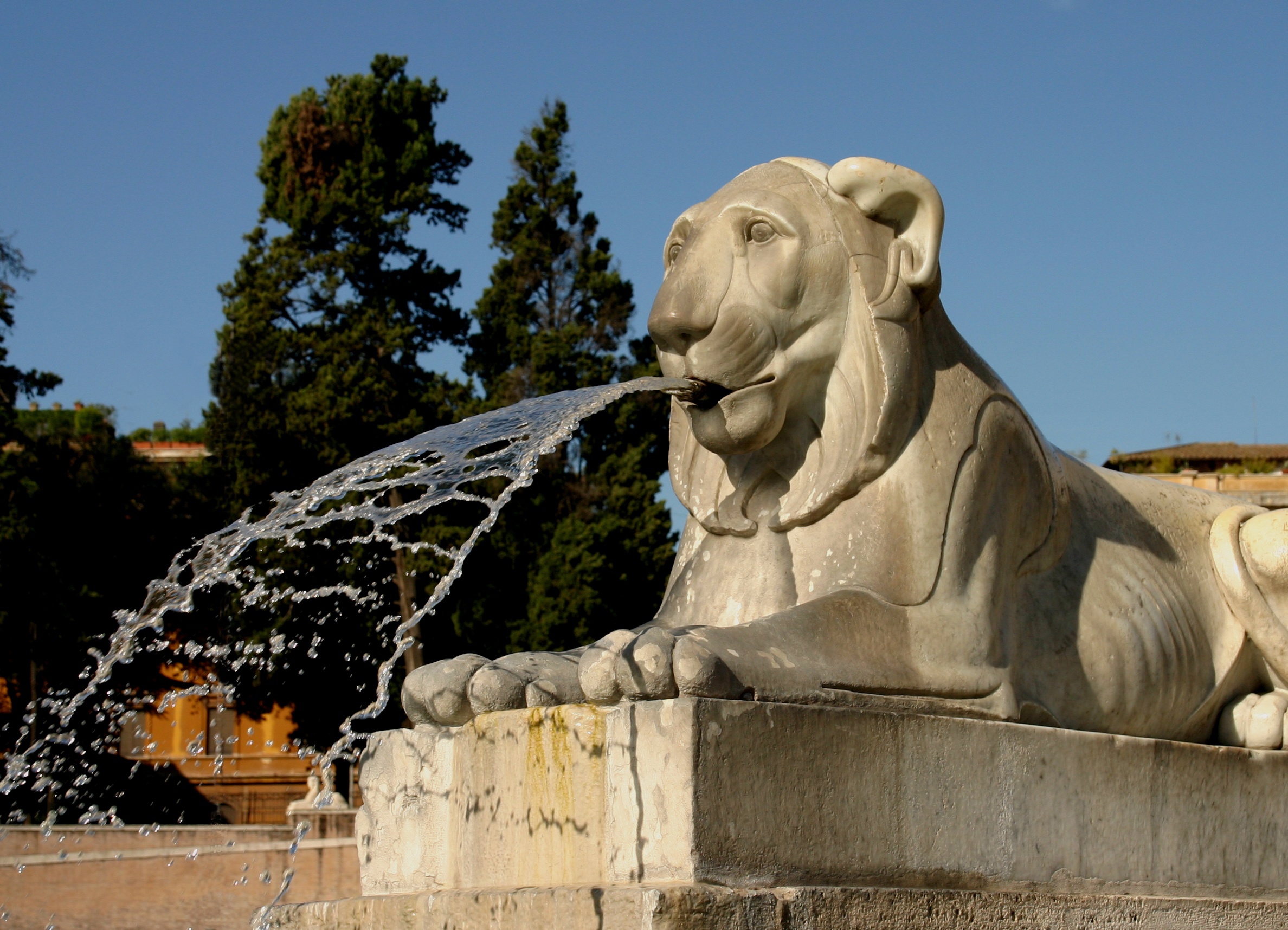
Lion crachant de l'eau  Rome

Revelation 3:14, The church at Laodicea.

Will you pass the test and make it into YHVH kingdom? 

Life is a series of tests. We either pass or fail them. YHVH is the school teacher who determines whether we will pass or fail, not us. His Word is our text book that tells us how to pass. If we learn the lessons and put to practice the things we have learned, we will pass. If not, we will fail.

The problem is that we’re not just in a regular school classroom where if we fail, it’s really not a big deal in the bigger scope of life. Our classroom is this life. Whether we pass or fail will determine not only whether we will obtain eternal life or eternal damnation, but if we pass, the grade we get will determine our level of rewards in YHVH’s eternal kingdom. There are a couple of things going on here.

When YHVH calls us with his holy calling and we respond, we have a choice. The choice we make will determine Continue reading →


Ezekiel 37, Matthew 24, Revelation 6–7: Putting Pieces of the Prophetic Puzzle Together

Ezekiel 37 Explained: On Bones, Earthquakes, Wind, Angels, Revival and the Second Coming

Ezekiel 37, The Reunification of Israel and The Return of the Messiah. Before we start studying this passage, let’s identify and define the key players who are mentioned in Ezekiel 37. They are:

20431779

  • Judah: This name refers to both the tribe of Judah and to the southern kingdom. Scriptural context will determine which is meant.
  • Children of Israel: This term is found 603 times in the Scriptures and is used 472 times from Genesis through Second Samuel in obvious reference to the united kingdom (prior to the split of the northern ten tribes from the southern two tribes [in addition to the Levites]). There are times, however, when, after the division of the kingdom, this term refers specifically to either the kingdom of Israel (i.e., the northern kingdom) or the kingdom of Judah (i.e., the southern kingdom), but not to both (e.g. in reference to the southern kingdom only see 1 Kgs 18:20; 19:10, 14; 20:15,  27,  29; and in reference to the northern kingdom only see 2 Kgs 17:7,  8,  9,  22,  24).
  • Joseph: He was the eleventh son of Jacob and the father of Ephraim and Manasseh, who fathered two tribes of their own (i.e., the tribes of Ephraim and Manasseh). These two tribes took the place of what might otherwise have been known as the “tribe of Joseph.”
  • Ephraim: This name is used 180 times in the Tanakh (Old Testament) and is referring to this specific Israelite tribe or as a metaphor for the northern kingdom of which the tribe of Ephraim was the leading and largest tribe (Isa 7:9, 17; 9:9; 11:13; Ezek 37:19; Hos 4:17; 5:12,  13,  14; 6:4; 7:1; 10:11: Zech 9:13). When blessing the two sons of Joseph, Jacob placed his right hand of power and strength upon the head of Ephraim signifying the position of primogeniture for him and his descendants (Gen 48:17).
  • House of Israel: This term is used 146 times in the Scriptures. Prior to the division of the united kingdom after the death of Solomon, this phrase referred to all twelve tribes of Israel. Afterwards (during the time of the prophets) it was used in contradistinction to the phrase “house of Judah” in reference to the northern kingdom. In the Testimony of Yeshua (the NT), Yeshua makes reference to the “lost sheep of the house of Israel” (Matt 10:6; 15:54). In some references in the Testimony of Yeshua, this term refers to all twelve tribes of Israel (Acts 2:36; 7:42; Heb 8:10), while in some biblical passages it refers to just the northern kingdom (Heb 8:8). The context of the passage of the scriptures surrounding this phrase determines its meaning.
  • Mountains of Israel: This is a poetic metaphor referring to the twelve tribes of Israel (Ezek 34:13, 14; 36:1,  4,  8; 37).

Ezekiel 37:1–14, The vision of the valley of dry bones. Ezekiel 37 continues where chapter 36 left off by giving us two prophetic visions focusing on the (spiritual) rebirth and reunification of the nation of Israel. The first part of the chapter recounts Ezekiel’s vision of the Valley of Dry Bones, while the second half of the chapter is his vision of two sticks or trees being reunited and becoming one tree.

Both prophetic visions concern the same people: the whole house of Israel comprised of Continue reading →


New Video: Moses, Aaron & the Two Witnesses of Revelation

In this video we explore the prophetic parallels between Moses and Aaron’s confrontation with Pharaoh and the confrontation of the two witnesses of Revelation 11 with the end times Babylon the Great new world order system as a presucrsor to the second exodus.


Some thoughts on Revelation 17 (from my Bible commentary)

Revelation 17:1, Great harlot. This seems to be referring to a system that is larger than the Roman Catholic church and her Protestant daughters, or even a revived Islamic state or caliphate. How about a merging of the two: Chrislam? The Catholic Church has been making ecumenical overtures to Islam for years. The only way for the New World Order to achieve world peace may be to unite the world’s major religions at some level (how about the United Nations of Religions, which the Roman Catholic Church is now considering?). If Catholicism and Islam can unite in some bizarre way, then, no doubt, the Hindus and Buddahists (and the other smaller major world religions) will want to join in on the game as well. The great harlot “sits on many waters” or peoples, and so this religious system involves many nations of the world.

Revelation 17:3, Seven heads and ten horns. The political and economic beast system that the religious system rides has seven heads and ten horns, which represent its political and economic power base. The beast the woman sits astride is devoted to devil worship (or Luciferianism, Rev 13:2, 4).

Revelation 17:6, Saints…martyrs of Yeshua. Are these two different  groups of people? The set-apart ones (those who keep YHVH’s commandments and have the testimony of Yeshus (or love Yeshua by keeping his commandments) as opposed to those who just “believe in Jesus” (your standard cultural Christian)?

Revelation 17:9, Seven mountains. Since Rome is built on seven hills, some have speculated that this is a reference to the Roman Catholic Church. There are also seven continents. Additionally, there are seven main economic powers on earth according to the International Monetary Fund called the G-7 (Canada, France, Germany, Italy, Japan, the United Kingdom and the United States).These are the world’s wealthiest nations that represent 63 percent of the world’s net global wealth. Or,  from a historical perspective, these seven hills could be referring to the seven manifestations of world-ruling Babylonian system (Babylon one, Egypt, Babylon two, Persia, Greece, Rome, the end times Babylon the Great New World Order). The latter interpretation makes the most sense in light of what John says in the latter part of this verse. From his perspective, five of these kingdoms were past and the Roman Empire presently was ruling, and one was yet to come (v. 10).

Revelation 17:10, Five have fallen, one is. When John wrote this, Babylon one, Egypt, Babylon two, Persia, Greece had fallen, Rome was in power, and the one worldwide end times system was yet to come.

Revelation 17:12, Ten horns…ten kings. This appears to be referring to ten global regional kingdoms into which the New World Order Babylon the Great system is subdivided. These ten kingdoms will last for a very short time (“one hour”) before they, along the Babylon the Great beast system to which they swear allegiance is destroyed at Yeshua’s second coming (v. 14).

Revelation 17:16, These will hate the harlot. The ten horns will hate the whore. This is likely since the goals of religious leaders are different and thus conflict with those of the global business and political leaders. The religious goals of the former will likely tend to obstruct the business interests of the latter. The political and economic leaders owe their power and allegiance to the devil, as do the religious leaders (although they may fail to realize this). This may be what causes the ten horns of the political system to hate the harlot. This verse says the ten horns (not the beast that she rides) will hate the harlot. The harlot is likely tied into the beast spiritually, politically and economically at the highest levels, but, perhaps, the ten regional global governments will, out of jealousy, see the woman as a threat to them because of her power and influence in their respective regions resulting in their opposing her. Perhaps this explains the unstable mixture of clay and iron of the ten toes of the Babylon the Great, antichrist New World Order system that Daniel saw in his vision of the great image of the man, which Yeshua, the uncut stone from heaven (a metaphor for the Torah-word of Elohim) destroys at his coming (Dan 2:31–35).


Who are the 144k and innumerable multitude?

The 144,000 Saints Versus the Great and Innumerable Multitude
There are two groups of believers mentioned Revelation chapters seven and 14. They are Yeshua’s 144,000 bride-priests and the carnal or lukewarm believers who get spiritually refined in great tribulation.

The 144,000 are spiritual virgins who follow the Lamb wherever he goes. They are redeemed believers and first fruits of Elohim (Rev 14:4).
The 144,000 are without deceit or fault (i.e., sin) before YHVH’s throne of judgment (Rev 14:5). How can it be said that someone is without fault without being Torah-obedient, since the Torah defines sin (1 John 3:4)? Indeed, those who are the saints that make up the 144,000 must be Torah-observant and be walking under the blood of Yeshua (Rev 12:17; 14:12).

The meaning of the names of the patriarchs of the 12 tribes have a hidden message pertaining to the bride of Yeshua, which is more proof that the 144,000 are the bride.

  • Judah means “Now I will praise YHVH.” (Gen 29:35)
  • Reuben means “Surely YHVH has looked upon my affliction.” (Gen 29:32)
  • Gad means “What good fortune.” (Gen 30:11)
  • Asher means “Happy am I.” (Gen 30:13)
  • Naphtali means With great wrestlings have I wrestled.” (Gen 30:8)
  • Manasseh means “For Elohim [said he], ‘has made me foreget all my toil.’” (Gen 41:51)
  • Simeon means “ Because YHVH has heard that I was hated.” (Gen 29:33)
  • Levi means “ Now this time will my husband be joined to me.” (Gen 29:34)
  • Issachar means “Elohim has given me my wages.” (Gen 30:18)
  • Zebulon means “Elohim has endowed me with a good gift, now my husband will dwell with me.” (Gen 30:20)
  • Joseph means “YHVH shall add to me.” (Gen 30:24)
  • Benjamin means “You shall have this son. (Gen 35:17–18)

Combined the names tell the following story:

Now will I praise YHVH. Surely YHVH has looked upon my affliction. What good fortune. Happy am I. With great wrestlings have I wrestled and I have prevailed. For Elohim has made me forget all my toil because YHVH has heard that I was hated. Now this time will my husband be joined unto me. Elohim has given me my wages. Elohim has endowed me with a good gift. Now my husband will dwell with me. YHVH shall add to me. You shall have this son.

What is the seal of God (Rev 7:3)? A seal is a signature, stamp, sign, brand or identification mark signifying ownership. A seal in the forehead symbolizes that one has the mark is completely yielded and subservient to the one who placed the mark.

It seems that there are two groups within Christianity or redeemed Israel: Ephraim and Manasseh. Manasseh means “forgetful.” Could this prophetically represents those Christians who have forgotten their heritage, the Hebrew roots of their faith, namely the Torah? Ephraim means “doubly fruitful.” Could this be a prophetic reference to believers who have both the Torah commands of YHVH and who have the testimony or the faith of Yeshua (Rev 12:17; 14:12) — the two identifying marks of the end time saints or bride of Yeshua in Revelation?

There are other references in Revelation to the non-bride, carnal or lukewarm believers (see Rev 3:14–22). This could include the great multitude of Revelation 7:9–15 who came out of great tribulation who are before the throne of Yeshua, but are not necessarily kings and priests and are different than the 144,000. There may be those still coming out of Babylon the Great just prior to her destruction (Rev 18:4). Revelation 16:2 may hint at a group of people who refuse to take the mark of the beast and who are on earth during the bowl judgments. Revelation 14:4 mentions first fruits. If there are first fruits, there must be second fruits—others who will be part of a later spiritual harvest.

Who Are the Great and Innumerable Multitude (Rev 7:9–17)?

Who comprise this great and innumerable multitude? It’s unlikely that they’re the 144,000 bride, since they are a larger number than the 144,000 and since Yeshua has to “lead” (lit., to show the way, teach, guide) them to the fountains of living water (Rev 7:17), which is the Torah (see Ps 36:2 [iniquity or sin is lawlessness or Torahlessness, see 1 John 3:4], 6 [righteousness is Torah obedience, see Ps 119:172; judgments is a biblical synonym for Torah, since the Torah’s standards form the basis for the judgments of Elohim], 9 [fountain of life, light are biblical metaphors for the Torah], 12 [iniquity or sin is lawlessness or Torahlessness, see 1 John 3:4]). Who will help to teach this innumerable multitude (those who were lukewarm believers), but who became spiritually hot during the fiery trials of the great tribulation (see Rev 3:17–18)? It will likely be the 144,000 righteous priest-king brides of Yeshua who had known Yeshua all along, and who had been keeping his Torah-commands (Rev 12:17; 14:12).

Revelation 16:15 (cp. 3:14–22) speaks of two categories of believers: those who watch and keep their garments clean, and those walked in nakedness and shame (who presumably aren’t watching or keeping their garments clean). There are garments of righteousness that YHVH clothes us with at the time of our initial salvation (Isa 61:10), but the garments of good works or righteousness are a result of our good works of Torah-obedience and which will determine the saint’s level of rewards in YHVH’s kingdom (Rev 19:7–9 cp 3:17–18; 2 John 1:8).