Overview of the Book of Exodus (Main Themes)
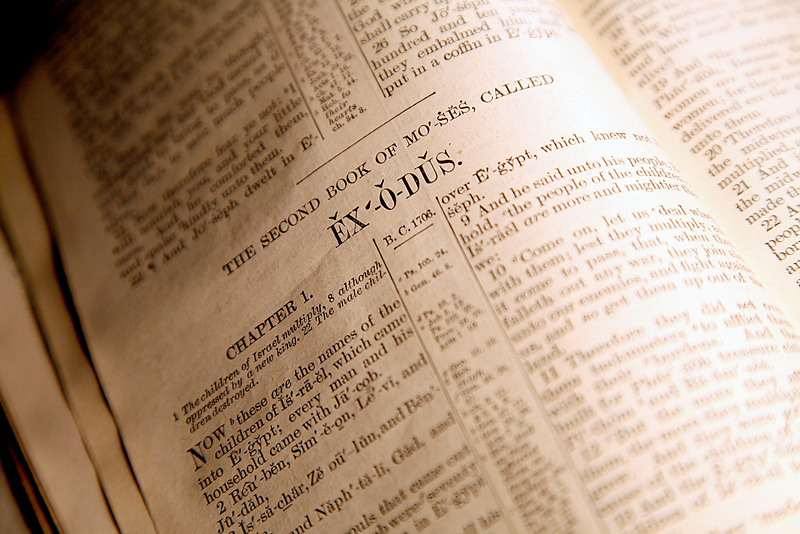
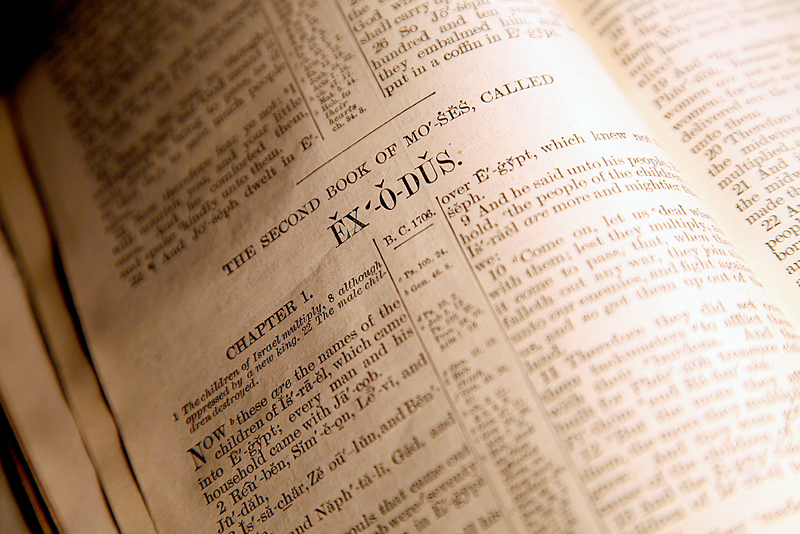
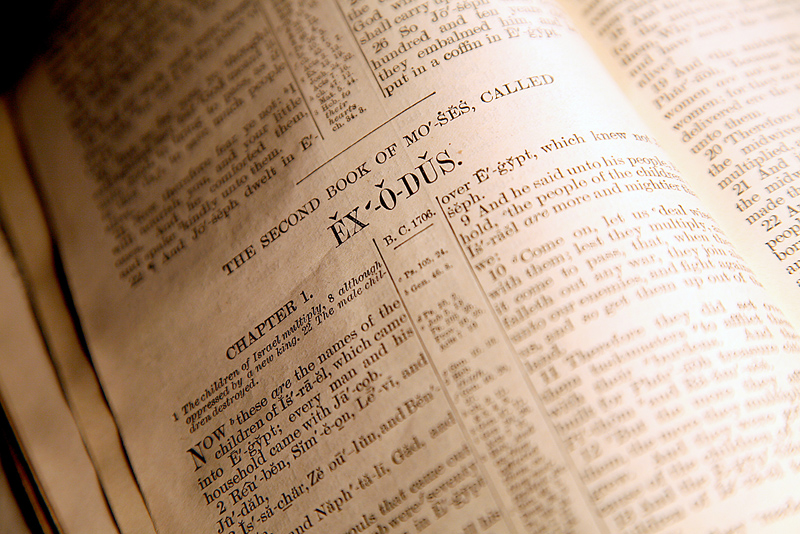
Exodus is the book whose principle theme is redemption—Israel’s deliverance from Egypt. Here we learn how YHVH saves his people and we are shown that his people are redeemed in order to worship him. The traditional Jewish name for Exodus is the Hebrew word Shemot meaning “names.” This is based on the fact that this word is the first noun that appears in the first verse in Exodus. The Jews name all the books of the Torah or Pentateuch based on the first verb or noun that occurs at the beginning of each book.
The Theme of Redemption
The first major theme in Exodus is idea of redemption of YHVH’s people from enslavement in Egypt. Egypt is a biblical symbolic metaphor for the world, the flesh and the devil. This speaks to the larger and overall biblical theme of redemption or salvation of those people who put their trust in YHVH Elohim, who promises to deliver them from all the influences of evil. The aspects of divine redemption are delineated in Exodus chapter six.
Say, therefore, to the sons of Israel, “I am YHVH, and I will bring you out from under the burdens of the Egyptians, and I will deliver you from their bondage. I will also redeem you with an outstretched arm and with great judgments. Then I will take you for My people, and I will be your Elohim; and you shall know that I am YHVH your Elohim, who brought you out from under the burdens of the Egyptians. I will bring you to the land which I swore to give to Abraham, Isaac, and Jacob, and I will give it to you for a possession; I am YHVH.” (Exod 6:6–8, emphasis added)
Worshipping and Obeying YHVH Elohim
Once YHVH has delivered and redeemed those who trust him from enslavement to the evil influences of “Egypt,” if people are to stay delivered from the powers of evil or the dark kingdom of Satan, then people must be will to enter the kingdom of Eohim, which involves obeying and worshipping YHVH Elohim, who delivered them from death and spiritual darkness into life and spiritual lght.
And he said, “Certainly I will be with you, and this shall be a token unto you, that I have sent you, when you have brought forth the people out of Egypt, you shall serve Elohim upon this mountain.” (Exod 3:12, emphasis added)
And I say unto you, “Let my son go, that he may serve me, and if you refuse to let him go, behold, I will slay your son, even your firstborn.” (Exod 4:23, emphasis added)
And you shall say unto him, “YHVH Elohim of the Hebrews has sent me to you, saying, ‘Let my people go, that they may serve me in the wilderness, and, behold, until now you would not hear.’” (Exod 7:16, emphasis added)
The Basic Outline of Exodus
Chapters 1–6 show us the need for redemption.
Chapters 7–11 show us the power or might of the Redeemer as he pours out the ten plagues on Egypt as symbolic of his divine judgment against this world in general and man’s sin in particular.
Chapters 12–18 show us the character of redemption, and how sinful man is redeemed by blood of a lamb and is emancipated from heaven’s judgment against the sins of the world by the blood of an innocent life, which prophetically points to Yeshua the Redeemer, who would be the Lamb of Elohim to redeem man from sin.
Chapters 19–24 teaches us the duty of the redeemed to obey and worship YHVH Elohim.
Chapters 25–40 gives further instructions on how to be redeemed and how to stay redeemed. Provisions are also made for the failures of the redeemed to be restored back into a right relationship with their Creator when they fall spiritually.
The Prophetic Metaphors in Exodus
Egypt is a biblical metaphor for the world, the place of sin and bondage where one is held captive before being delivered or redeemed by the power of YHVH and the blood of Yeshua, the Lamb of Elohim. It is interesting to note that although Egypt was the land of science and art, it was simultaneously the land of death in that their religion was morbidly fixated with the theme of death.
Pharaoh is a metaphor for Satan, a merciless taskmaster who opposes the people of YHVH in every way.
Pharaoh’s magicians symbolically represents the demonic spirits that are active in the world and are doing Pharaoh’s (Satan’s) bidding in opposing Israel, the people of Elohim, and Elohim himself and his plans to redeem his people.
Moses is a prophetic metaphor for and antetype of Yeshua the Messiah (at his first coming). Both Moses and Yeshua acted as deliverers of the people from the bondage and power of sin, death and hell, which is the power of the enemy, Satan.
The blood of the lamb on the door posts is a metaphor for Yeshua, the Redeemer, whose death on the cross atoned for man’s sins causing YHVH’s judgment death penalty against sin to pass over or to be lifted off of his people.
The crossing of the Red Sea is a metaphor the saint’s union with Messiah Yeshua in his death, burial and resurrection via the ritual of tevilah (immersion or baptism) at a mikvah (a gathering of waters).
The journey through the wilderness is a metaphor for the trials and testing that occur during the redeemed believer’s spiritual walk through this physical life with YHVH’s provision to meet every need and his protection from every attack of the adversary.
The giving of the Torah represents one’s spiritual walk after having exited spiritual Egypt. This teaches YHVH’s people the importance of obedience and submission to him as they learn to love and to obey in gratitude for freeing them from Satan and the world. He is now their new loving Father and Master in place of Satan the slavemaster.
The Tabernacle of Moses with its furnishings is a pictorial layout or blueprint of the steps in YHVH’s plan of redemption (salvation) for mankind and the steps in man’s spiritual maturation into intimate relationship with the Father through Yeshua the Messiah. The tabernacle, in reality, is like a giant gospel tract where Yeshua the Messiah is the over-arching, central theme, for the tabernacle points to Yeshua in every detail!