
The Midterms R Not Our Hope—Make America Holy Again!
Reply


Joyous Shavuot (the Feast of Weeks or Pentecost) to everyone everywhere who loves YHVH Elohim the Father and YHVH-Yeshua the Son by keeping his commandments (John 14:15, 21).
My wife and I will be celebrating this day in our home with a few family members and several of our close Hebraic-minded friends who are part of greater Israel.
Shalom to all!
In this video, we tie together the seven-branched, the importance of Shavuot or the biblical Feast of Pentecost in the context of the Tabernacle of Moses as it relates to the seven steps in the biblical plan of salvation. That’s a mouthful, but we inter-relate these seemingly disparate pieces of the puzzle to form a beautiful picture as it relates to new covenant followers of Yeshua (Jesus) the Messiah. Please enjoy this brief, power-packed presentation. For more intriguing information on the Tabernacle of Moses as it relates to YHVH’s plan of salvation, go to https://www.hoshanarabbah.org/teaching.html#tabernacle and https://www.youtube.com/playlist?list=PL5EzE5DQnrHdQZElQKo70hpY9b4a4dqOb, https://www.youtube.com/watch?v=v9z1y-RI-sY&list=PL5EzE5DQnrHdQZElQKo70hpY9b4a4dqOb&index=2.

Psalm 77:1–6, I cried out to Elohim. This is the expression of frustration, despair and anguish on the part of the troubled saint, who is crying out to heaven for help, comfort, understanding in the midst of his trying circumstances of life.
Psalm 77:4, You hold my eyelids open. From the perspective of the anguish-ridden saint, he feels that YHVH is partially to blame for the his condition.
Psalm 77:5, I consider the days of old. In the midst of anguish and a troubled soul, it is constructive to reflect over one’s past history. What lessons can be learned from history? It is impossible to learn lessons from the future, since it has not happened yet, so one can only go back in history to seek wisdom and understanding.
Psalm 77:6, Song in the night. Night is a biblical metaphor or Hebraism for evil, distress, obscurity, and uncertainty about the future. Even in such times, joy is to be found if one looks for it.
Meditate within my heart. In the midst of this anguish, the saint goes inward or inside himself (into his personal spirit to hear the still small voice of YHVH from within in search of answers to his woes. Meditation in the eastern religious and new age sense involves, among other things, “becoming mindful” via deep breathing, relaxation or various bodily exercises and configurations, while focusing one’s mind intently on some object, a sound or mental image, or by blanking out the mind totally, so to speak, thus opening up one’s inner being, so that revelation can come from the outside through some supernatural source. This is a slick but perverse counterfeit of biblical meditation. Yes, biblical meditation involves quieting down one’s soul (the furtive anxiousness and easily distracted tendencies of one’s mind, will and emotions; see Ps 131:2), but this is so that one can hear from the Spirit of Elohim free of outside distractions. True biblical meditation involves, “breathing in” the Spirit of Elohim, who will then give one divine revelation (John 16:7–14). Whereas the Hindus and Buddhist relax themselves and focus on breathing to receive “divine revelation,” the saint relaxes himself (often deep breathing can help in this process), and then focuses on the Word of Elohim and “breathes in” or invites the Spirit of Elohim to give oneself true divine revelation.
My spirit. In difficult times, it is time to search deeply for answers and direction. One goes upward by going inward—into the spirit and then up to the Spirit of Elohim to which one’s spirit is connected.
Psalm 77:7–10, Will YHVH cast off forever? The psalmist expresses more anguish and despair concerning his situation.
Psalm 77:10–11, My anguish…I will remember.In times of personal anguish when YHVH, the Most High or Elyon seems far away and that he has turned a deaf ear to one’s cries, this is the time to encourage oneself by remembering his mighty right hand works that he has performed for us in past and how he has answered blessed and delivered us by answering our prayers, intervened in our lives amazing and supernatural ways.
Psalm 77:12, Meditate on all your works. The psalmist spends more time meditating on the goodness and greatness of Elohim. This is guaranteed to elevate one’s soul out of the psycho-emotional pit in which one finds oneself.
Psalm 77:13, Your way O Elohim is in the sanctuary [Heb. kodesh].This is a reference to the holy place of Tabernacle of Moses, which reveals the seven steps in YHVH’s plan of salvation for mankind, and to bring us to the Father through Yeshua the Messiah, which is the basic good news, gospel message. The tabernacle is literally a three-dimensional gospel tract designed to engage and inspire people physically, emotionally, mentally and spiritually to step onto the path and begin the journey that leads us to our Father in heaven. By studying the Tabernacle of Moses we learn the glorious mysteries of heaven’s plan of salvation, the wonder of the gospel message and the central that Yeshua the Messiah plays in the process of redeeming mankind and uniting him with the Elohim.
This can be referring to the sanctuary or holy place of the Tabernacle of Moses where Moses encountered the divine presence and received instructions from Elohim. However, since Scripture now views the saint as the temple of the Holy Spirit, and since the temple in Jerusalem is long gone, the term sanctuary can also refer to going into the inner sanctum of one’s personal spirit through biblical meditation, listening prayer and studying the written word from Elohim. When we commune with Elohim on this deep and intimate level, he reveals himself to us in powerful ways and confirms to us that he is an Elohim who performs wonders on behalf of his people, even in times of distress, anguish and despair.
Psalm 77:14–20, Your arm redeemed your people. YHVH redeems his people from the hands of their enemies as he did with the children of Israel at the Red Sea. When the floods of the evil one are about to overtake the saints, YHVH will deliver them miraculously one way or another. The people of YHVH must never lose sight of this. Even as YHVH delivered his people from Pharaoh’s armies and the water floods of the Red Sea before, so he will do so again in the end times (see Rev 12:13–17). Yeshua the Messiah is the arm of YHVH Elohim that has redeemed his people in the past, and continues to do so.
Shavuot (the biblical Feast of Weeks or Pentecost) is fast approaching. Actually, it is this coming Sunday, June 12, 2022 the ancient, biblical abib barley, visible new moon calendar.
Here are some free study materials from Hoshana Rabbah by Nathan Lawrence that will help you understand, appreciate and celebrate this important and YHVH-commanded biblical festival.
May YHVH Elohim bless you as you love him and Yeshua the Messiah, his Son, by walking out his ancient Torah-paths of Truth and righteousness. YHVH’s river of life is waiting for you to jump into it! Be blessed…Enjoy the journey to Elohim through Yeshua our Lord and Savior.
Teaching articles on Shavuot
Blog articles on Shavuot
YouTube videos on Shavuot
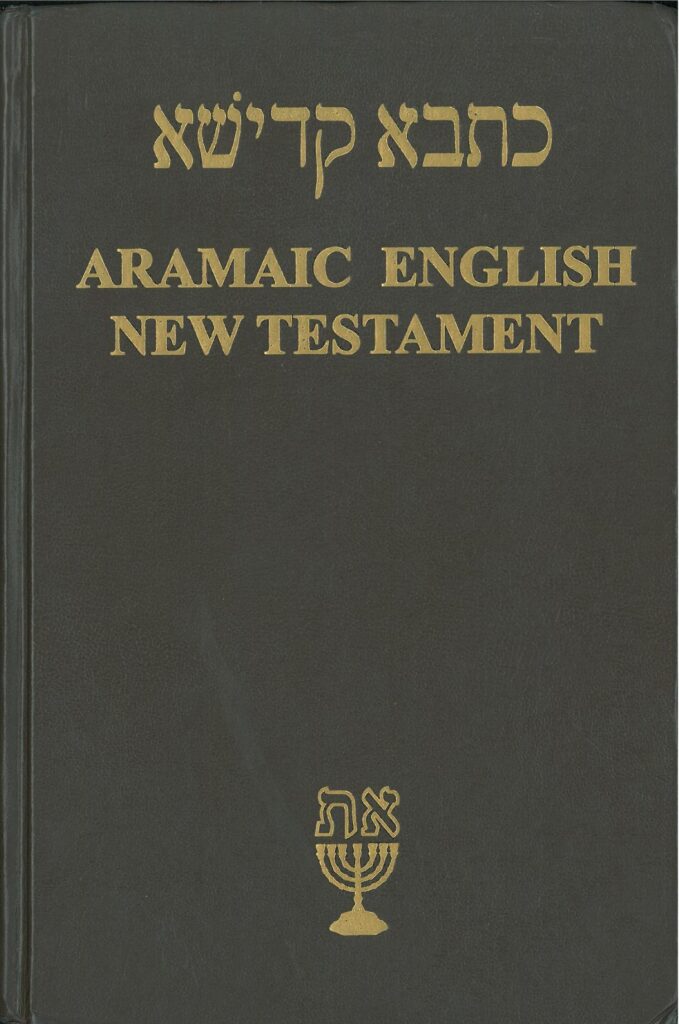
In this discussion, Nehemia Gordon gives proof that the Aramaic Peshitta New Testament was translated from the Greek, not the other way around. For the video version of Nehemia Gordon’s discussion with Michael Rood, go to:
The following is the transcript of this discussion between Nehemia Gordon and Michael Rood:
Michael: And then I was talking to him about the Peshitta, he said, “We don’t use the Peshitta. The Peshitta, Aramaic text…”
Nehemia: Let me stop you. This is the head scholar of the Aramaic…
Michael: Syrian Orthodox…
Nehemia: Aramaic-speaking church in Jerusalem.
Michael: And the head scholar of the Syrian Orthodox Church.
Nehemia: In Jerusalem.
Michael: In Jerusalem.
Nehemia: Wow.
Michael: He is the top of the entire school, okay? He is an old man, he’s in his 80s. And he said, “We don’t use the Peshitta. The Peshitta is a later Aramaic translation from the Greek.
Nehemia: Look, I’ve spoken to scholars about this. In fact, I sat down with a scholar at the Hebrew University of Jerusalem and I told him, “You know, people have suggested that this Aramaic Peshitta is the original Aramaic that Jesus, that Yeshua, spoke and taught, and the Greek is a translation from the Aramaic,” and this guy was an Aramaic scholar, specifically of Syriac-Aramaic, which the Peshitta’s written in. Actually, when I walked into his office, he was looking at this giant… it was like this big, this dictionary of Peshitta Aramaic. And I asked him for some proof, so I said, “Well, how can we know? You’re telling me…” I mean, look, people will tell you that this Hebrew Matthew, that this isn’t the original Matthew, it was written in Greek, so why would I believe you when you tell me that the Aramaic isn’t the original? The Greek is the Aramaic? I said, “I need some proof. I can’t trust your word for it.”
And this was just for me, I don’t think I’ve ever even shared this. I really just wanted to know for myself. And so, he started off, he told me a bunch of linguistic things about how the Aramaic that Yeshua spoke was completely different than the Aramaic that the Peshitta is written in. It’s a completely different dialect of Aramaic. He said, “It would be like the difference between German and Dutch.” Dutch is the language they speak in Holland. I don’t speak either of those languages, I read a little German. German is called in their language, “Deutsch”, and you have “Dutch”, which is the language of Holland. Originally, they were obviously a single language, but now they’re incomprehensible to one another, unless you’re from the border area there. But the German people can’t understand Dutch. But they’re that similar. The Aramaic that Yeshua spoke and the Aramaic the Peshitta is written in are similar, but they’re also different enough to be, essentially, he said if it was any other language, they’d be called two different languages. But for Aramaic, we consider all these different, very vastly different dialects, one language.
And he gave me specific examples I won’t go into, but you could look up at any Peshitta grammar, it’ll tell you what those differences are. They’re profound differences. But then he gave me some really powerful examples. I’m like, “This is it, it’s the end of the story. We’re done.” I wanted to know, and he answered me. Here’s an example of one of the things he showed me.
So, the Hebrew word for “covenant” is “brit”. Now, in American Jewish-speak we call it a “bris”, and that’s because the Hebrew letter Tav when it has a dot in it, it’s a tuh. When it doesn’t have a dot, it’s a thuh or in some dialects, suh. So, “brit, bris, brees.” It’s the same word, different pronunciations of Hebrew. So, the word is “brit” or “bris”, like I had my “bris” on the eighth day, the covenant, the circumcision, in that case.
Genesis 6:18 says, “I will establish My covenant with you.” The word is “diatheke”. “Diatheke” is the Greek word for “covenant”. Aramaic has a perfectly good word for covenant. The Aramaic word for covenant is “kiyam”. It comes from the Hebrew word, the Semitic root, “lakum, lehakim”, “to establish”. That word also appears, a form of that, in the Hebrew connected to covenant, but the actual word for covenant is “brit”, and you say, “lehakim brit”. And so, Aramaic takes that and it’s “kyam”, that’s the word for “covenant”.
So let’s look in the Targum, that’s the ancient Jewish translation of the Tanakh. And there, in the very same verse, Genesis 6:18 it says, “Ve’akeim yatkiami,” “And I established My kiyam,” “My brit, My covenant”. If you looked in the Peshitta, if it was the original Aramaic, you would expect the word “kiyam” to be used all over the place as the word for “covenant.”
Michael: Yeah, look in the…
Nehemia: In the New Testament.
Michael: Right, the New Testament, in Matthew, etc.
Nehemia: Right. So Matthew 26:28, I’m just choosing a verse here that has the word “covenant”. It says, Yeshua says here, “For this is My blood of the covenant.” Okay, so in the Greek, it has for covenant, “diatheke”, same word as when it translated “brit” in the Tanakh. So, we have Hebrew, “brit”, Aramaic, “kyam”, Greek, “diatheke”. What do you think you have in the Peshitta? The Peshitta’s Aramaic. Some people say it’s the original Aramaic that Yeshua spoke. Surely, you have the word “kiyam”, the Aramaic word for “brit”. And that would be a great word, because also, you get from that the word “lakum”, which means “to rise up”.
So, if the word “covenant” were connected to “rise up”, and Yeshua’s saying, “This is the blood of My rising up, of My covenant,” that would be a powerful message. But in the Peshitta, you don’t have “kiyam”, you have “diatheke”.
Michael: It’s Greek.
Continue reading