Don’t Ever, Ever, Ever Lose Faith and Give Up!

Genesis 45:5, 7, 8, Elohim sent me. Joseph was sold into slavery at age 17, was freed from prison and made ruler of Egypt at age 30, then seven years of plenty followed, and two years of famine had passed by the time he was reunited with is brothers. Only after 22 years in Egypt did Joseph finally figure out Elohim’s grand and wonderful plan for his life, and how it involved the saving of his family.

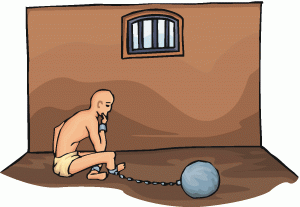
Joseph in prison

Had Joseph lost faith along the way, become embittered over his misfortunes, and turned from Elohim, the nation of Israel may have never been preserved.

Keeping one’s eyes on Elohim, and refusing to lose faith during the dark times can yield some amazingly triumphant outcomes, as we learn from the life of Joseph.


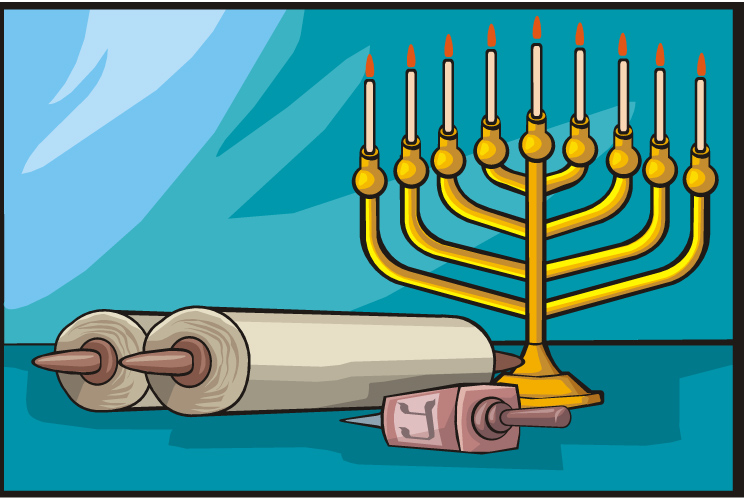
New Video: Hanukkah—The Deeper Meaning

Though Hanukkah is a non-commanded man-made biblical holiday, it is still rich in spiritual meaning for the redeemed follower of Yeshua. Though it falls during the Christmas season, it, in many ways is the opposite of Christmas, yet shares a common theme with Christmas. Learn about these and more in this video.


Blog Scripture Readings for 12/1 through 12/7/13

Aside

Parashat Vayigash — Genesis 44:18 – 47:27
Haftarah — Ezekiel 37:15 – 37:28
Prophets — 1 Samuel 25:1 – 31:13
Writings — Psalms 69:1 – 75:10
Testimony — Mark 10:35 – 10:52

Most of this week’s blog discussion points will be on these passages. If you have general comments or questions on the weekly Scripture readings not addressed in a blog post, here’s a place for you to post those. Just use the “leave a reply” link below.

The full “Read Through The Scriptures In A Year” schedule, broken down by each day, can be found on the right sidebar under “Helpful Links.” There are 4 sections of scripture to read each day. One each from the Torah, the Prophets, the Writings, and from the Testimony of Yeshua. Each week, the Torah and haftarah readings will follow the traditional one-year reading cycle.

Weekly Blog Scripture Readings for 12/1 through 12/7/13.


More on Hanukkah (aka Chanukkah or Chanukah) — part 2 or 3 or whatever…

Hanukkah is a traditional, non-biblical Jewish holiday that falls in December and commemorates the Jews’ military defeat of the pagan Greeks and their dedication of the temple in Jerusalem after the heathens had desecrated it through idolatry and forbidden biblical practices. According to tradition, as part of the rededication ceremonies,  some holy olive oil was needed to light the temple’s menorah, yet none could be found, until someone found a small vessel containing only enough oil to last for a day. This oil was poured into the menorah, and miraculously the oil burned for eight days, which is why Hanukkah is celebrated for eight days. The historical events behind Hanukkah are chronicled in the apocryphal Book of First Maccabees (chapters one and two). These events occurred about 160 years before the birth of Yeshua (Jesus).

19972353

Though Hanukkah is a minor holiday, and is not a commanded biblical festival, there is record in the Testimony of Yeshua (New Testament) that Yeshua was at the temple in Jerusalem during Hanukkah (a Hebrew word meaning “to dedicate”), also known as the Feast of Dedication (John 10:22).

Hanukkah should not be viewed as a replacement for Christmas and in fact pre-dates the Christian Christmas by hundreds of years. It is a stand-alone holiday that has nothing to do with Christmas. In reality, Christmas is the melding together of some Biblical beliefs (i.e., the birth of Yeshua, although he wasn’t born in December!) with many traditions that are undeniably pagan in origin (see any encyclopedia on the subject of the origins of Christmas), including the biblically forbidden and idolatrous heathen practice of cutting, setting up and decorating a tree (Jer 10:1–8), which Scripture refers to as a vanity tree and regards as a foolish heathen activity (Jer 10:8). On the other hand, Continue reading →


Joseph, Ephraim, Manasseh & Benjamin in End Times Prophecy

Here are a few of my thoughts on who Joseph, Ephraim, Manasseh and Benjamin represent in end times Bible prophecy.

In studying the Jewish sages of old, I am amazed at how prescient they were about end time events. They gained this understanding often as they studied the lives of notable biblical characters.The sages had the strong sense that history would repeat itself— often again and again for the people of Elohim. This they observed in the cyclical patterns of Israel’s own history where YHVH gave them the truth, they remained faithful to it for a while, and turned from it, were punished and then returned to Elohim only to have the cycle repeat itself again and again.

As I have studied their method of predicting the future based on past events in Israel’s history, this has led me to some of my own speculations, which I present to you below.
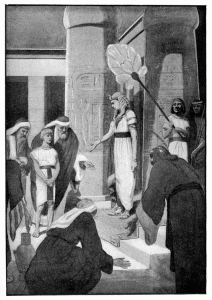
Joseph as ruler1

There is much more to learn on this subject and I try to remain teachable.

Joseph, Ephraim and Manasseh Antetypical of Christianity

Joseph’s wife was the daughter of an Egyptian priest. Jospeh married into the religious system of Egypt. He is a picture of Christian church, which has married itself to Babylon by syncretizing itself with certain pagan traditions and belief systems. Joseph is a picture of the end time lukewarm church. Ephraim and Manasseh were products of the union of Joseph (an Israelite) and Potifera (an Egyptian). Though they were Israelite, they were genetically a mixture of both Israelite and Egyptian blood. In fact, they resembled Egypt so much that Jacob, when blessing them, didn’t even recognize who they were. They were strangers to him. Though they were spiritual mulattos, their spiritual destiny was to identify wholly with their Israelite heritage, which would necessitate their renunciation of their Egyptian ties. In the end times, YHVH is calling Christians to renounce the pagan ties they Continue reading →

 

On Starting a Fellowship and Raising Up Leaders

Recently I received an excellent question from the reader of this blog. This is the question:

I am part of a small congregation that started out as a Bible Study
group.  At the current time, the leader has full control of all aspects
of the group/congregation, from time and place of worship/study, music,
finances, etc.  Maybe I’m wrong, but I have suggested that I do not
believe that to be a healthy situation.  As we continue to grow, I
believe we should have a form of leadership structure besides one person
being solely responsible.  Would you share with me your leadership
structure model and also your Shabbot worship schedule.  Thank you for
your time.

What follows is my answer this question.

Like a slow moving yet intense grass fire, interest in the biblical or Hebrew roots of the Christian faith is spreading globally. Sadly, suppression of this movement’s pro-Torah message has become institutionalized in traditional Christianity since the fourth century onward. Additionally, many non-biblical, even pagan traditions have mixed into mainstream Christianity. What’s more, most churches refuse to detach themselves from these unbiblical doctrines of men and to reorientate themselves along purely biblical lines, which the biblical roots movement purports to embrace. Because of prevailing conditions in the church system, many people are exiting the churches in search of a religious experience that is truer to the biblical truth. These factors are the impetus behind the spread of the biblical or Hebrew roots movement. This is a fulfillment of Malachi’s prophecy that in the end times before the second coming of Yeshua YHVH’s people would remember the Torah of Moses they had forgotten, and turn their hearts back to the spiritual (biblical) fathers of their faith (Mal 4:1–6). Continue reading →


Video: Back to Eden

This is a must-see video that will edify you spiritually and give you hope. The video promotion includes the following description:

After years of back-breaking toil in ground ravaged by the effects of man-made growing systems, Paul Gautschi has discovered a taste of what God intended for mankind in the garden of Eden. Some of the vital issues facing agriculture today include soil preparation, fertilization, irrigation, weed control, pest control, crop rotation, and PH issues. None of these issues exist in the unaltered state of nature or in Paul’s gardens and orchards.

This method of gardening can help to feed your family and neighbors during hard times. It’s rather funny to me, since I’m an arborist and own a tree service company and have been making wood chips for nearly 30 years, and I’ve never heard this before. If any of you want to try this method of gardening, let me know and I’ll dump you a load of wood chips for free (providing you live within ten minutes from me).

For a quick description of this video, watch this video review, and then watch the whole movie at the link below.

The Back to Eden website where you can watch the whole movie is at http://www.cultureunplugged.com/documentary/watch-online/play/11883/Back-to-Eden