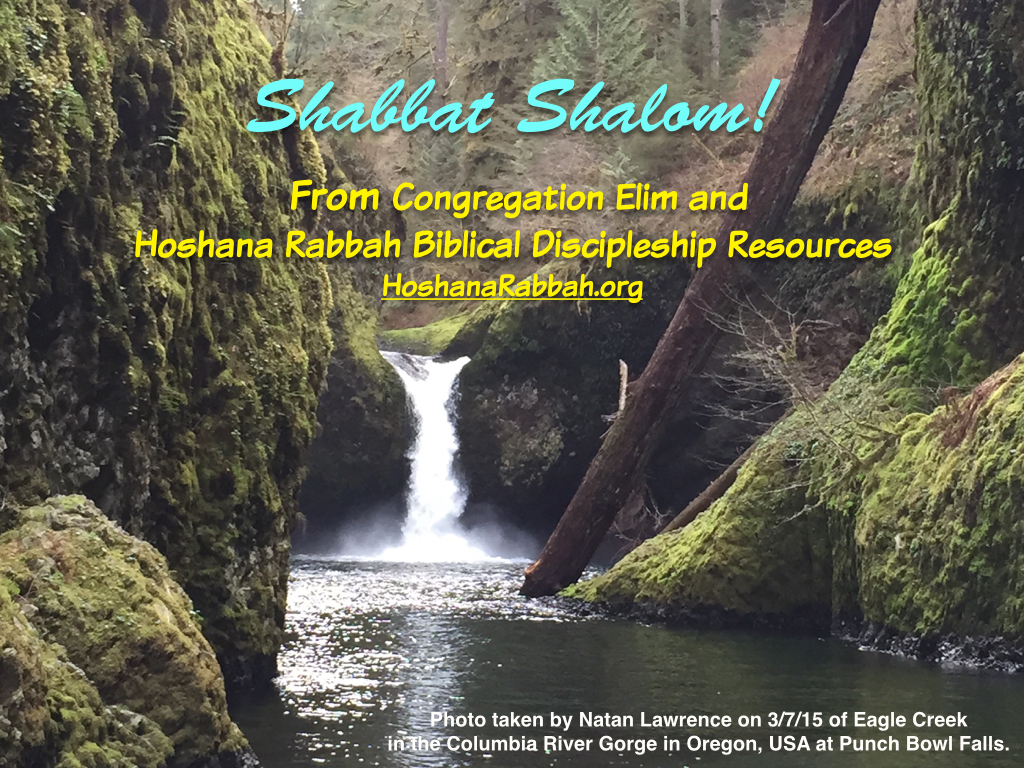
Please give a Shabbat shalom shout-out from wherever you are to your brothers and sisters around the world in the comments section of this blog. Tell us your name and where you’re from. Thank you! Natan


Please give a Shabbat shalom shout-out from wherever you are to your brothers and sisters around the world in the comments section of this blog. Tell us your name and where you’re from. Thank you! Natan
John 8:32, Know the truth. “The truth shall set you free” is an often-quoted axiom, but few understand its deeper biblical implications.

We violate the sanctity of Scripture if we impose on it our own meanings. This is a cavalier and presumptuous approach to understanding Bible and can hardly be called “rightly dividing the word of Elohim” (1 Tim 2:15).This practice often occurs with this verse. To do so is to twist the meaning of the Scriptures to fit our own vicissitudes and biases. This is humanism and insults the mind, will and sovereignty of the Almighty as divinely revealed in his Holy Word.
To properly understand this verse, we must look solely to the Bible for the keys to understanding it. We can start this process by first asking the question, what is truth? The Bible defines its own terms when it calls the Torah truth (Ps 119:142 and 151). The truth of Torah (i.e., the law of Moses) will set a person free, for when one hears and obeys the Torah, one ceases sinning (i.e., violating YHVH’s Torah-law; 1 John 3:4), and therefore doesn’t come under the penalty of the Torah-law’s judgment for breaking it, which the Bible calls sin and which leads (ultimately) to eternal death (Ezek 18:4; Rom 6:23). When one is not under the judgment of sin, one is free. With freedom comes life. Yeshua the Messiah himself is also the truth (John 14:6), for he is the Living Torah-Word of Elohim (John 1:1, 14).
When we place our trusting faith in Yeshua and follow him, his spiritual life in the form of his Holy Spirit will then flow through us and empower us to walk away from sin and follow the spiritual light of his Torah, which will keep us sinfree. This is the path that leads us toward the ultimate freedom from eternal death resulting in everlasting life (John 8:52). As such, sin will no longer have any legal claim on us, and thus we will not come into condemnation, but will pass from death into everlasting life (John 5:24). This is possible because Yeshua has taken upon himself our past sins (Rom 3:25), paid the legal penalty of them, and wiped our spiritual slate clean and has given us a fresh start in life (Gal 2:20; 1 Cor 5:17) to walk sin-free (in accordance with his standards of righteousness, which is the Torah). This is the result of knowing the truth and experiencing the freedom that comes therefrom.
This is the full, biblical meaning of this verse.
Be strengthened with these words as you go forward walking in true freedom from sin and death!
John 7:5, Even his brothers. Most don’t believe a thing until after the fact. For them, seeing is believing. This was the case with Yeshua’s brothers three of whom became apostles after Yeshua’s resurrection. It takes great faith to believe in a “God-thing” before it happens, and it also takes great faith to believe it afterwards, since the biblical record reveals that most people don’t believe either before or afterwards.
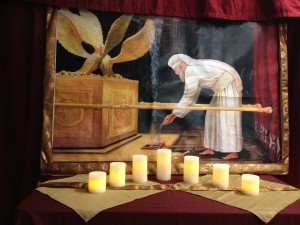
Exodus 30:34–38, Sweet spices. According to Jewish tradition (b. Talmud Keritot 6a), there were eleven sweet spices (Heb. ketoret bisamim) in the tabernacle incense, four of which are mentioned here. They were balsam, clove, galbanum, frankincense, myrrh, cassia, spikenard, saffron, costus, aromatic bark (a type of cinnamon), and cinnamon. Four thousands of years, ancient cultures relied on the medicinal properties of aromatic plants. Only in recent years, has the West rediscovered the salutary benefits of these plants. Listed below are the suggested healing properties of several of these herbs. In modern times, the oils from these plants are being extracted for use in various ways. (Sources of information is from various online sources and Aromatherapy Workbook by Marcel Lavabre.)
Galbanum (Ferula gummosa or Ferula galbaniflua) is an antiseptic (prevents the growth of disease-causing microorganisms), and helps to treat asthma, acne, coughs, cramps, scar tissue, wrinkles. Apparently, the smoke from burning the resin of this plant was used in ancient times to keep flies and snakes away.
Onycha may by cloves, which is an antiseptic, analgesic (pain relief), carminative (for relieving flatulence) or Styrax officinalis, which is a resin from this tree and is great for kidney support (edema), bronchitis, colds, sinusitis, skin conditions, and is said to relieve stress.
Frankincense is a skin tonic, heals infected wounds and is an anti-inflammatory. It helps to reprogram cellular memory thus promoting permanent healing. It is used against typhoid, allergies herpes, tonsillitis, head injuries, depression, and cancer. Research shows that it will lower cortisol by 40 percent just by deep inhalation. Elevated cortisol contributes to weight problems.
Myrrh (stacte) is a skin tonic or conditioner, anti-inflammatory, cough expectorant, vulnerary (heals wounds), fungicide, antiseptic, astringent (causes the contraction of body tissues—notably the skin). It is especially useful for mouth ulcers and throat infections. In ancient times, pregnant mothers anointed themselves with myrrh for protection against infectious diseases, and they used myrrh during labor to stretch the perineum and on umbilical cords. Myrrh has a long history of use in skin health and hygiene products, and it prolongs the life and scent of other oils. Myrrh helps to combat wrinkles, is antiseptic, aids in balancing the thyroid, clearing athletes foot, ringworm, viral hepatitis, thrush in babies, inflammation and bronchitis.
Cassia (Cinnamomum cassia)is an antiseptic, antibiotic, and immune system builder.
Spikenard is a skin tonic or conditioner.
Aromatic Bark is an antiseptic (against flu and infectious disease), stimulant (circulation, nervous system).
Cinnamon (leaf) is an antiseptic (against infectious disease), relieves skin irritants (e.g., poison oak).
Is every born again believer automatically the bride of Yeshua? Will all believers get to abide in the holy of holies with Yeshua in his everlasting kingdom? What are the levels of rewards in Yeshua’s kingdom? Who will be the least and the greatest according to what Yeshua said in Mathew 5:19? Watch this video to learn the answers.
People actually want Karl Marx for President of the U.S.
You gotta see this short video. Talk about low information and brainwashed voters!
In light of these facts, this emphasizes the fact why we Torah-loving and Yeshua following saints must all the more endeavor to be salt and light in the societal darkness around us. Be strong and carry on! And now the video:
http://www.infowars.com/video-obama-supporters-endorse-karl-marx-as-next-potus/

Parashat Ki Tisa — Exodus 30:11 – 34:35
Haftarah — 1 Kings 18:1 – 39
Prophets — 2 Kings 19:1 – 25:30
Writings — Proverbs 1:1 – 7:27
Testimony — John 7:1 – 9:41
Most of this week’s blog discussion points will be on these passages. If you have general comments or questions on the weekly Scripture readings not addressed in a blog post, here’s a place for you to post those. Just use the “leave a reply” link below.
The full “Read Through The Scriptures In A Year” schedule, broken down by each day, can be found on the right sidebar under “Helpful Links.” There are 4 sections of scripture to read each day. One each from the Torah, the Prophets, the Writings, and from the Testimony of Yeshua. Each week, the Torah and haftarah readings will follow the traditional one-year reading cycle.
Weekly Blog Scripture Readings for 3/1 through 3/7/15.