A Tithe on War Booty and the Holy Half Shekel — A Memorial Pointing to Yeshua’s Atoning Death

Numbers 31:50, Make atonement. 

Exploring the Concept of Atonement as It Relates to the Tabernacle and Salvation

In this verse we read, “We have therefore brought an oblation for YHVH, what every man has gotten, of jewels of gold, chains, and bracelets, rings, earrings, and tablets, to make an atonement for our souls before YHVH.” In a similar passage in Exodus 30:15–16, we read, “The rich shall not give more, and the poor shall not give less than half a shekel, when they give an offering unto YHVH, to make an atonement for your souls. And you shall take the atonement money of the children of Israel, and shall appoint it for the service of the tabernacle of the congregation; that it may be a memorial unto the children of Israel before YHVH, to make an atonement for your souls” (emphasis added). The question before us is this: Do these passages in the Torah imply that YHVH grants man absolution based something other than the shedding of blood, and by logical extension, does this call into question our redemption from sin through our faith in Yeshua the Messiah’s blood atonement?
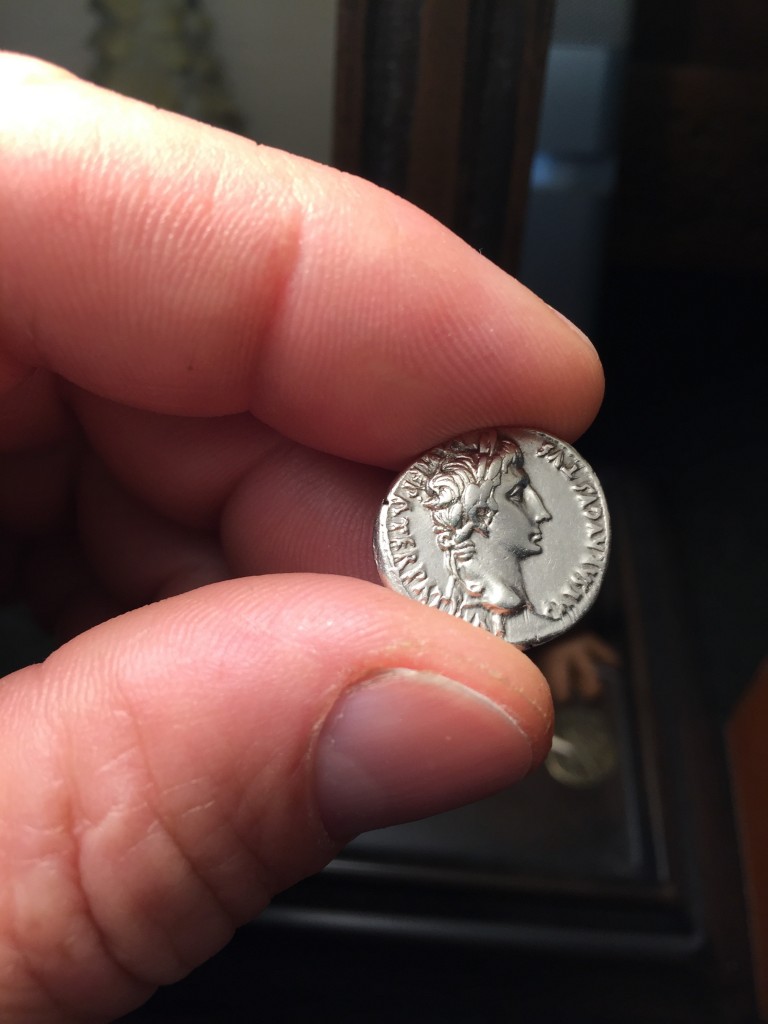
Natan holding an actual 2000 year old silver half-shekel from his biblical antiquities collection. This actual coin likely passed through the temple treasury in Jerusalem.

Natan holding an actual 2000 year old silver half-shekel from his biblical antiquities collection. This actual coin likely passed through the temple treasury in Jerusalem. YHVH commanded the Israelites to a pay yearly temple tax of a half-shekel of silver to help fund the sacrificial system that  was a prophetic picture of Yeshua’s atoning death on the cross.

The concept of atonement can be a confusing one. Some in rabbinic Jewish circles teach that the Torah (i.e., the first five books of the Bible) does not require the shedding of blood for atonement of one’s sin to occur. According to the above scripture, this could appear to be the case. Before briefly discussing the subject of atonement, let us not forget the stern warnings of the Apostle Peter when he warned end-time saints against false teachers who would lure people away from the simple truth of the gospel:

But there were false prophets also among the people, even as there shall be false teachers among you, who privily shall bring in damnable heresies, even denying the Lord that bought them, and bring upon themselves swift destruction. And many shall follow their pernicious ways; by reason of whom the way of truth shall be evil spoken of. And through covetousness shall they with feigned words make merchandise of you: whose judgment now of a long time lingers not, and their damnation slumbers not…. But these, as natural Continue reading →


New Video: Congregation Elim Shabbat Services July 11, 2015

This video includes live praise and worship, prayer and praise reports, teachings on the prophetic implications of the Sabbath, what the Bible says about sexual lust, the spiritual zeal of Phinehas, and the duties of the Levites along with congregational discussion.


Sun Tzu’s “The Art of War” and the Biblical Principles of Spiritual Warfare

Okay, this is a big one. I wrote what’s below on Sunday under the inspiration of the Spirit of Elohim.

This week we’re reading in 2 Corinthians 10:4–6 on spiritual warfare. It says,

For the weapons of our warfare are not carnal but mighty in Elohim for pulling down strongholds, casting down arguments and every high thing that exalts itself against the knowledge of Elohim, bringing every thought into captivity to the obedience of Messiah, and being ready to punish all disobedience when your obedience is fulfilled.

I got inspired to read Sun Tzu’s The Art of War. The Ruach nudged me to then do a commentary on it in light of what the Bible has to say about spiritual warfare. Perhaps I could learn something from an expert on physical warfare and then apply it spiritually to us. Needless to say, the saints are in a battle for their lives worldwide against the forces of evil. The Bible prophesied this would be the case in the end times. Largely, the church in the West is asleep! It’s time to wake up. I for one refuse to be caught unprepared. I refuse to lie down for the enemy of YHVH Elohim. As a watchman on the wall, I must sound the alarm and help prepare the troops. So here’s my latest contribution to this effort. I hope it helps someone! 

Enjoy…

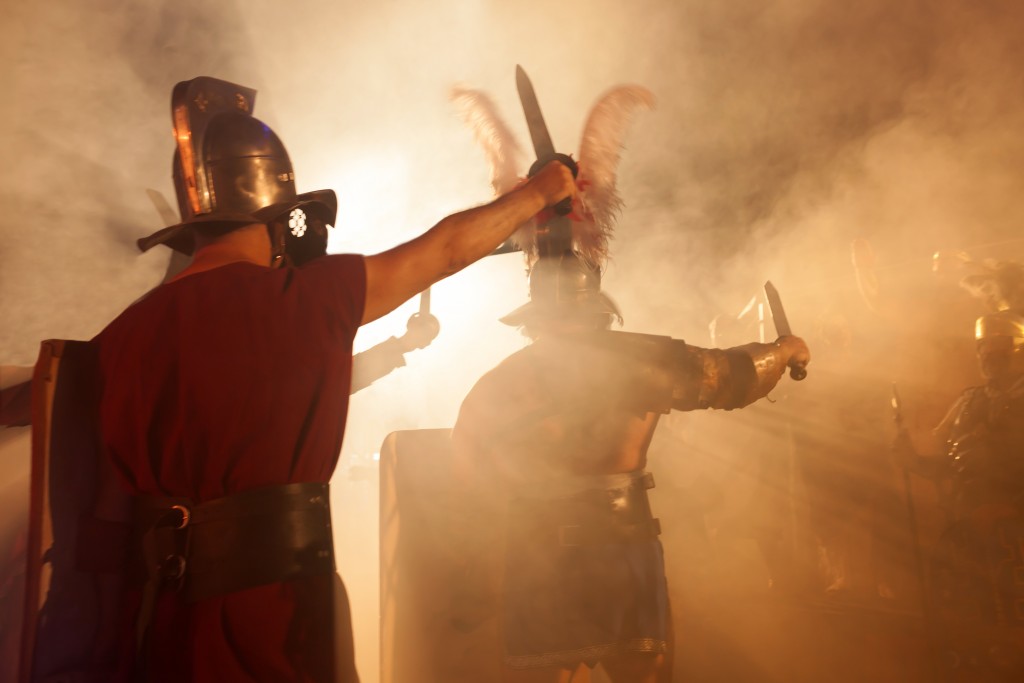
Roman soldiers at attack with swords in the right hand.

A Guideline to Spiritual Warfare

Natan Lawrence’s The Art of War — An Analysis of and Commentary on Sun Tzu’s The Art of War

Based on the Biblical Principles of Spiritual Warfare

The extracts below of The Art of War are taken from Lionel Giles Translation (www.artofwarsuntzu.com)

Sun Tzu was a Chinese military general, strategist, and philosopher who lived between the sixth and fifth centuries B.C. in ancient China. His work, The Art of War was unearthed in 1972, and since then has become a classic on the art of warfare. It is even used by the U.S. military.

The following are excerpts from this ancient work along with commentary from a biblical perspective giving the spiritual warrior in YHVH Elohim’s (the LORD God’s) army guidelines on how to be victorious over YHVH’s spiritual enemy.

I. — LAYING PLANS

1. Sun Tzu said: The art of war is of vital importance to the State.

2. It is a matter of life and death, a road either to safety or to ruin. Hence it is a subject of inquiry which can on no account be neglected.

3. The art of war, then, is governed by five constant factors, to be taken into account in one’s deliberations, when seeking to determine the conditions obtaining in the field.

4. These are: (1) The Moral Law; (2) Heaven; (3) Earth; (4) The Commander; (5) Method and discipline.

5,6. The Moral Law causes the people to be in complete accord with their ruler, so that they will follow him regardless of their lives, undismayed by any danger.

Comment: The moral law is the biblical Torah and the rest of the Word of Elohim as contained in the Bible. The Torah-word of YHVH Elohim (the God of the Bible) are his instructions, precepts, teachings or laws. The Torah is the foundation of truth for the rest of the Scriptures that follow. YHVH Elohim is the Creator and Supreme Ruler of the universe and is thus the originator of moral law. Since Elohim is the Creator and Sovereign Ruler of all the universe, it is the require of every human (and all the more so of those who claim to be his followers) to follow and obey him regardless of their lives, undismayed by any external threats or danger. Continue reading →


Trying to Catch Flies With Vinegar — Let’s Stop Bashing Christians!

I’d like to take this opportunity to make my dear readers aware of some important facts about our Christian brothers and sister.

Close up of a man hand pointing at camera on a white background

First, let me say that I’m not angry at Christians, I don’t hate them, and I try not to speak disparagingly of them. There for the grace of YHVH go I. Until YHVH opens their eyes to the truth of the rest of Torah, they will remain where they are, even as most people reading this blog post once were smugly blind in the Christian church to the deeper truths of the Torah until YHVH opened their eyes. So let’s have mercy on them! Please!!!

Next, the ones I have a real problem with in the Christian church are the hireling leaders. They should know better, since they purport to be Bible experts. However, many of them are trapped in a harlot, secular humanistic religious system that has elevated the mind of man over that of the Creator. This is a classical definition of secular humanism. Go read Continue reading →


A globalist insider describes the Babylon the Great New World Order without knowing it

In this must-see video, Globalist insiderJohn Perkins explains how the Babylon the Great New World Order enslaves nations economically through debt owed to the international bankers via the corporate oligarchs with the help of the U.S. government. This is a perfect examples of what John saw coming on the end-times world as he describes it in Revelation 18 where he says that the merchants (corporate elite) are the rich men of the world, who have enslaved the inhabitants of earth for financial gain and power.

Perkins was a pawn of the global elite before becoming a whistle blower. The video is based on a best-selling book he wrote entitled, “Confessions of an Economic Hit Man.”


Failure to keep YHVH’s sabbaths — NOT okay with Him!

Ezekiel 20:12, 13, 16, 20, My Sabbaths. YHVH cites Israel’s failure to keep his sabbaths as a prime reason for the older generation’s not entering the Promised Land. Judah’s not keeping the land sabbaths determined the length of her captivity in Babylon; namely, 70 years. The writer of the Epistle to the Hebrews brings up the Sabbath issue in chapter four of that book. What is the connection between keeping YHVH’s sabbaths and entering the spiritual rest of his Promised Land? (Read Heb 4:1–11.)

The Sabbath was the eternal sign between YHVH and his people, and it was one of the first Torah laws YHVH called upon Israel to practice. As noted, the failure of YHVH’s people to keep his sabbaths prevented the Israelites from going forward into their spiritual destiny.

Likewise, the fourth or Sabbath commandment of the Ten Commandments is the only one of the ten where YHVH instructs his people to “remember” it implying that they would eventually forget to keep his Sabbaths. History records that the Sabbath was the first so-called Jewish law that the early church left replacing it with Sunday (in the second century a.d.). In the modern Hebrew Roots Movement, YHVH’s people are beginning to leave the non-biblical religious traditions of men by returning to a more true-to-Scripture spiritual walk (a fulfillment of Malachi’s prophecy about the heart of the children being turned back to their fathers in the end days in preparation for Messiah’s arrival [Mal 4:4–6]).

How prominently does the Sabbath figure in the lives of those believers who are returning to the Hebrew roots of their Christian faith? How significant is this prophetically? Is history repeating itself in reverse? Instead of YHVH’s people leaving the Sabbath, they are returning to it. The keeping of the Sabbath is an acknowledgment of YHVH’s sovereignty as the Creator of all, and of his sovereignty over our time, work and lives. Keeping the Sabbath is a direct assault on idolatry, materialism, selfishness, rebellion, and assimilation into the surrounding pagan culture that occurred when Israel forsook the Sabbaths of YHVH. Notice how Ezekiel ties the idolatry, rebellion and general apostasy of Israel with her desecration of YHVH’s Sabbaths. What was Israel’s heart condition that caused her to rebel against this commandment of YHVH? What are the excuses used by many today in order to justify themselves in desecrating YHVH’s Sabbaths?

In Ezekiel 20, we see that YHVH’s feasts (or sabbaths) are a covenantal sign between YHVH and his people (Ezek 20:12) that they were to live by (Ezek 20:11), yet which Israel, in rebellion, refused to do while in the wilderness. Instead they defiled his sabbaths by, presumably, not doing them and doing other things on those holy days (Ezek 20:13). Israel’s rebellion against YHVH with regard to their refusal to keep his sabbaths brought upon them YHVH’s judgments (Ezek 20:13). In other words, it was YHVH’s will for the Israelites to keep his sabbaths in the wilderness, but because of their idolatrous rebellion, they refused to do so.  In fact, YHVH calls refusing to observe his sabbaths idolatry and for this sin (along with other sins), the Israelites had to wander in the wilderness for forty years (Ezek 20:15–16). In profaning his sabbaths, YHVH accuses the Israelites of despising his Torah (Ezek 20:16). YHVH then goes on to urge his people to not follow the example of their rebellious forefathers, but rather to walk in all of his Torah commands (including his sabbaths, Ezek 20:18–20). Because of their profaning his sabbaths, he punished them by scattering them in exile among the heathens. Those modern saints who refuse to keep YHVH’s Sabbath and feasts are walking in the same sin as the ancient Israelites. Often people who refuse to keep YHVH’s  feast days holy do so because the feasts conflict with their secular activities (such as their jobs). YHVH calls this idolatry and being like the heathen (Ezek 20:30, 32). In the end times, YHVH is going to separate his people out from the heathen and bring them back into covenantal agreement with him including obedience to his sabbaths (Ezek 20:33–38). He will purge from his people those rebels who refuse to obey him including keeping his sabbaths (Ezek 20:38), which are a sign of his covenantal relationship with them.


Escape YHVH’s judgment …come out of her my people!

Numbers 31:7, 17, They slew all the males … every male among the little ones … and kill every woman that has known man by lying with him. Do you suppose that every Midianite who was slain was directly culpable for causing Israel to fall into idolatry and sexual immorality? If not, why were they slain?

We see a similar situation with Korah and his malcontents where the earth swallowed up not only Korah, Dathan and Abiram, but their families as well (Num 16:31–33).

Even those who are not directly culpable for a particular sin, if they maintain company with sinners they will become morally tainted (1 Cor 5:6; 15:33; Gal 5:9). If the righteous dwell near the wicked is it possible for YHVH’s judgments against the wicked to overlap onto the righteous? If this were not possible then why did YHVH instruct the righteous Israelites to separate themselves from the environs of Korah’s camp (Num 16:23–27), and why does YHVH call his people to come out of Babylon the Great in the end times? (Read Rev 18:4 for the answer.)

How do we separate from the wicked? In the examples just cited, we see two kinds of separation from evil: physical and spiritual. We can start by separating spiritually without separating physically, but will there ever come a time when YHVH’s people will have to separate physically? (See Rev 12:14.) How will the spiritual woman of Revelation 14 know when to do this and where to go? Will the Good Shepherd abandon or lead his sheep in the day of trouble? (Note John 10:1–5.)

May we always be pressed into Yeshua, our spiritual Shepherd, so that we will always hear his voice concerning what to do and where to go and when.