Blog Scripture Readings for 9-20 Through 9-26-15

Aside

THIS WEEK’S SCRIPTURE READINGS FOR STUDY AND DISCUSSION:

Parashat Ha’Azinu — Deuteronomy 32:1–52
Haftarah — 2 Samuel 22:1–51
Prophets — Haggai; Zechariah 1:1 – 8:23
Writings — 2 Chronicles 23:1 – 29:36
Testimony — Revelation 9:1 – 15:8

Most of this week’s blog discussion points will be on these passages. If you have general comments or questions on the weekly Scripture readings not addressed in a blog post, here’s a place for you to post those. Just use the “leave a reply” link below.

The full “Read Through The Scriptures In A Year” schedule, broken down by each day, can be found on the right sidebar under “Helpful Links.” There are 4 sections of scripture to read each day. One each from the Torah, the Prophets, the Writings, and from the Testimony of Yeshua. Each week, the Torah and haftarah readings will follow the traditional one-year reading cycle.

Weekly Blog Scripture Readings for 9/20 through 9/26/15.


Is America Mystery Babylon the Great?

Is America Mystery Babylon the Great, the mother of whores and of the abominations of the earth? Since Mystery Babylon will be destroyed in one hour (Rev 18:8, 10, 17, 20, 21), and since YHVH warns his people (all the saints, not just the Jewish people) to “Come out of her…” (Rev 18:4) it’s important to know who she is. Is Mystery Babylon a city or an entire country or what? It’s important to know the answer, so YHVH’s people will know how to prepare for the end time judgments against Mystery Babylon.

United States 21080711

Understanding Bible Prophecy

To properly understand biblical prophecy, we must understand some fundamental concepts relating to properly interpreting biblical prophecy.

Let’s look at the various types of prophecies in the Bible. First, there are long range, short range and mid-range prophecies. Second, there are prophecies that have been fulfilled, one’s that haven’t been fulfilled, and ones that have dual or even multiple fulfillments.

There are several standard viewpoints people hold when interpreting Bible prophecy. Some believe that all Bible prophecy has been fulfilled (the preterist view). Some believe that all prophecy is yet to be fulfilled (the futurist view). Some believe that some prophecy has been fulfilled, and some is yet to be fulfilled (the partial preterest view). I hold to the latter view.

To know whether a prophecy has been fulfilled already, one must have an understanding of historical events. If the prophecy has already been fulfilled, it may or may not have any future prophetic fulfillments.

  • How do we know whether it has any future fulfillments?
  • If the prophecy contains end times prophetic language, it probably has a future fulfillment.
  • If the prophecy hasn’t been fulfilled yet historically, it’s still a future one.
  • Some prophecies contain language relating to events that have already been fulfilled historically, and also contain language involving future events that haven’t been fulfilled yet.
  • We know the prophecy has future or multiple fulfillments when other biblical authors make references to a past prophecy having future or multiple fulfillments.

Some people assume that just because a prophetic event has been fulfilled in the past to one people-group it will automatically happen again to another people group in the future simply because “history repeats itself” or because “what has been will be again.” To make these assumptions and apply them to any prophecy runs the risk of succumbing to faulty Continue reading →


The Four Harvest of Souls

Revelation 14:15, The harvest of the earth. In the land of Israel, there are four main harvests:

34946369

  • the early spring barley harvest
  • the late spring wheat harvest
  • the early fall grape harvest
  • the late fall, early winter olive harvest

Each of these harvest are prophetic symbols of YHVH’s harvest of men’s souls. Here are some suggestions as to what each of these harvests may picture prophetically.

  • The barley harvest speaks of Yeshua’s resurrection from the dead as the first of the first fruits and relates to Passover and the Feast of Unleavened Bread.
  • The wheat harvest speaks of those who have been redeemed from the time of Yeshua until the present time and relates to the Feast of Weeks or Pentecost.
  • The grape harvest speaks of those who will be redeemed at the end of the age prior to and immediately after the second coming and relates to the Feast of Tabernacles.
  • The olive harvest speaks of those who will be redeemed toward the end of the millennium and relates to Hoshana Rabbah or the last great day of the Feast of Tabernacles.
 

Are You a Spiritual Mugwump?

A mugwump is one who tries to sit on both sides of the fence at the same time. There are many spiritual mugwumps out there including some of us as the piece below discusses.

Deuteronomy 31:10–13, You shall read this Torah before all Israel. Verses like this tend to expose the theological confusion that occurs in the minds of many Christian Bible teachers. For example, Christian commentator Matthew Henry on this verse writes about the need to read the Word of Elohim and that doing so will “help us to keep his commandments.” Yet elsewhere he says in the same commentary about the same laws that the commandments or laws of YHVH “are done away with.”

Duck on a fence

Statements like this are representative of a split and incongruous, double-speak thinking on the part of many Christian Bible teachers and people when it comes to the commandments or laws of Elohim. Some laws, they say, we are to keep (e.g., thou shalt not murder, lie, commit adultery, etc.), but other laws we can disobey (e.g., the Sabbath, dietary laws, and biblical feasts). Is it possible to have it both ways: to believe that we need to keep his commandments, yet teach they are done away with? If so, then what is the meaning of such biblical phrases pertaining to YHVH’s Torah or Word as “forever,” “for a thousand generations,” “the same yesterday today and forever,” “till heaven and earth pass away,” “I change not,” and “think not that I came to destroy the Torah-law?” Is ­YHVH’s Word inconsistent and contradictory, or is this, instead, the case with the thinking of men? Is YHVH’s immutable character flawed with regard to keeping his Word, promises and standards or is man the one at fault?

Do we have a high enough view of YHVH Elohim and fear him and tremble at his Word (Isa 66:2), or have we tried to demote him and the veracity of his Word by contorting YHVH and his Word to fit the mindset of changeable and inconsistent man (which the Scriptures define as idolatry)? Have we bought into the lie that the serpent proffered at the tree of knowledge in the Garden of Eden when he told the man and the woman that YHVH really did not mean what he said and that humans can take the “have it your own way” and “pick and choose” approach when it comes to obeying the Word of YHVH (a philosophy that forms the basis for the religious movement called secular humanism, which is at the heart of all the religions of the world—including much of Christianity—except the true religion of the Bible)?

How many aspects of Christian theology are no more than a thinly veiled version of the religion of humanism in disguise? These are tough questions that we as redeemed Israelites need to ponder seriously. Let’s not forget the words of Yeshua in John 14:15, “If you love me, keep my [Torah] commandments” and the words of the apostle in 1 John 2:5–5, “He that says, ‘I know him,’ and does not keep his [Torah] commandments is a liar and the truth is not in him. But whosoever keeps his Word in him truly is the love of Elohim perfected: hereby know we that we are in him.”

The bottom line of why man has a hard time submitting to all of YHVH’s commandments is nowhere stated more concisely in the Bible than in Romans 8:7,

[T]he carnal mind is enmity against Elohim: for it is not subject to the law of Elohim, neither indeed can be.


Yom Teruah Videos


Happy Yom Teruah! Happy Resurrection Day!

A Chronological Analysis of Scriptures on the Resurrection of the Dead

Gen 3:2–3, The question of what happens in the afterlife goes back to the very beginning of man’s tenure on this earth as we can see from Eve’s discussion with the serpent. Out of fear of death, Adam and Eve chose not to eat of the tree of knowledge, until the serpent tricked them to disobey YHVH and eat of it. The serpent lied to them by telling them that they could have immortal life and still violate Elohim’s commandments. Most men have believed this lie to this day.

16958554

Job 14:12–15,  Job is likely the oldest book in the Bible, and we see that from early times until now, man has had a perennial interest in the afterlife. Job wonders what his fate will be when he dies. Will he die and that’s all there is, or is there an afterlife?

Job 19:25–27, Job came to a place in his life where he obtained a faith about his fate in the afterlife. He knew that it hinged on his faith in his Redeemer. Biblically speaking, what was the mission of the Redeemer (i.e., Yeshua the Messiah)? It was to redeem man from the sting of death brought on by sin.

Ps 16:9–10,  Though this is usually viewed as a messianic prophecy, it isn’t confined to this interpretation. Who are YHVH’s holy, kadosh or set apart ones? The Messiah fits this catergory, of course, but so also do YHVH’s saints. As the apostolic writers teach us, as Yeshua died and rose again, so the saints who are in Yeshua will die and rise again.

Ps 17:15, The term “awake” as in “awake from the sleep of death” is a Hebraism referring to the resurrection. David knew that YHVH created man in his own image for a purpose. If so, then why? It’s deductive reasoning. The creation of man wasn’t a pointless, dead-end endeavor on the Creator’s part. David knew the heart and character of YHVH well enough Continue reading →


Tonight is the first day of the seventh month…

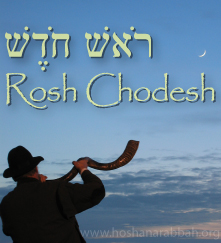
The new moon was not spotted in the land of Israel yesterday (Monday, Sept 14), which means tonight (Tuesday, Sept 15) will mark the beginning of the seventh month on the biblical calendar. This day also marks the beginning of the fall biblical feast season. HalleluYAH! Time to celebrate. It’s all good news, which we need in these dark times!

Yom Teruah (or the Day of Shouting/Shofar Blasts) is the biblical name for the traditional the Jewish holiday of Rosh Hashanah) is on the first day of the seventh month (Lev 23:23–25). This is a high holy sabbath day.
rosh_chodesh 2

On the tenth day of the seventh month will be Yom Kippur (the Day of Atonement, Lev 23:26–32).This year, it will be on Friday, Sep 25. This too is a high holy sabbath day.

Next, from the 15th to the 21st day of the seventh month (Sept 30 to Oct 6) will be Sukkot (the Feast of Tabernacles, Lev 23:33–43).

Finally, at the end of Sukkot will be an additional holiday called Shemeni Atzeret (or the Eighth Day, Lev 23:36, occurring on Oct 7). Hebrew roots and messianic people often overlook this high holy day sabbath, but it’s part of the Torah, and so we celebrate it.

All of these festivals are significant spiritually for the redeemed believer and are steps in YHVH’s plan of salvation. The fall feasts are also prophetic of events that will happen prior to and after the second coming of our beloved Messiah Yeshua.

For written instructional materials on these feasts, please go to http://www.hoshanarabbah.org/teaching.html#feast. For videos teachings about these feasts, go to our YouTube channel at https://www.youtube.com/user/HoshanaRabbah.

You may wonder why some people are celebrating these feasts on other days than the ones mentioned above. There are several reasons for this. I’ll briefly explain.

The rabbinic and orthodox Jews will be celebrating their feasts two days earlier. This is because their calendar is usually incongruent with occurrence of the visible new moon. How did they get off the biblical calendar, you might ask? For the answer to this questions, please read my article at http://www.hoshanarabbah.org/pdfs/new_moons.pdf.

Some people keep the biblical feasts on the astronomical new moon conjunctions, which is not the biblical way to determine the months. I explain this in the following article at http://www.hoshanarabbah.org/pdfs/vis_moon.pdf.

If you want a comprehensive understanding of the biblical calendar please read the following article at http://www.hoshanarabbah.org/pdfs/cal_demyst.pdf.

It’s important that we understand the biblical calendar issues, since there is a lot of confusion out there on the subject. Also, YHVH calls his feasts moedim or divine appointments, for it is then that he meets with his people. It’s important to do so when he has told us to do so, not when we choose to so.

Get a cup of tea  or coffee, find a comfortable chair and prop up your feet and get to reading on the subject of the biblical calendar. We have provide you some simple to understand resources to understand this subject. You’ll need to concentrate though and have your Bible handy so you can look up the verses yourself and prove that what we’re saying is the truth. You might need to read over some of the material a couple of times to wrap your brain around the concepts. I’ve tried to make it as simple as possible. It’s really not that bad. Once you understand it, you’ll have a firm foundations from which to go onward and upward in YHVH’s truth.

Understanding the biblical calendar and knowing when to keep the biblical feasts is part of the restoration of all things that must occur in conjunction with Yeshua’s second coming (Acts 3:21). By obeying YHVH and keeping his feasts on the calendar he established, you are part of the fulfilling of Bible prophecy and are helping to hasten Yeshua’s coming.