Blog Scripture Readings for 9-13 Through 9-19-15

Aside

THIS WEEK’S SCRIPTURE READINGS FOR STUDY AND DISCUSSION:

Parashat Vayelekh — Deuteronomy 31:1–30
Haftarah — Hosea 14:2-10; Micah 7:18-20; Joel 2:15-27**
Prophets — Nahum 3:1–19; Habakkuk; Zephaniah
Writings — 2 Chronicles 16:1 – 22:12
Testimony — Revelation 2:1 – 8:13

Most of this week’s blog discussion points will be on these passages. If you have general comments or questions on the weekly Scripture readings not addressed in a blog post, here’s a place for you to post those. Just use the “leave a reply” link below.

The full “Read Through The Scriptures In A Year” schedule, broken down by each day, can be found on the right sidebar under “Helpful Links.” There are 4 sections of scripture to read each day. One each from the Torah, the Prophets, the Writings, and from the Testimony of Yeshua. Each week, the Torah and haftarah readings will follow the traditional one-year reading cycle.

** A different haftarah is read when it is a special sabbath in traditional Judaism. The sabbath occurring between Yom Teruah (Trumpets) and Yom Kippur (Atonement) is called Shabbat Shuvah or Shabbat T’Shuvah (Sabbath of Return or Sabbath of Repentance).

Weekly Blog Scripture Readings for 9/13 through 9/19/15.


Mikveh Vs. Baptism for the Remission of Sins

Just got this excellent question about mikveh from someone on this blog:

Doesn’t the blood of Yeshua cleanse us? I am a newbie so please bear with me.

My answer:

Yes, absolutely. Good question.

Hebrews 6:2 talks about the doctrine of baptisms (plural). The Greek word baptism means “full immersion in water.” Baptism for the remission of sins which one does at the beginning of one’s spiritual walk with Yeshua is but one type of baptism. It’s the most important one, but not the only one. There’s the baptism of the Holy Spirit and of fire as well. There’s also the baptism of repentance that John the Baptist did. Once we’re baptized for the remission of sins, do we ever sin again? Obviously yes. What do we do? We repent, ask Yeshua to forgive us, to cleanse us by his blood, and then we turn away from our sin (1 John 1:9). But sometimes it’s good to rehearse the ritual again even as we do communion every year at Passover, even as we do the Sabbath every week and biblical feasts every year. These are memorials of important things past, present and future. Same with the mikveh. It’s not a replacement for baptism for the remission of sins. It’s a rededication of oneself to YHVH.

Each time the priests came into the Tabernacle of Moses to minister, they had to cleanse themselves to be set-apart or holy unto YHVH. It wasn’t for Yah’s benefit. He looks at things from a heart and spirit perspective. It’s for our benefit, so we can better appreciate the difference between the common, profane, physical, polluted, and the earthly compared to the holy, set-apart, spiritual and heavenly realm. When we cross from one realm into the other, we need to stop and take note of it, and enter into the higher realm carefully and slowly through prayer, repentance and spiritual and even physical cleansing. This shows a good and willing heart attitude on our part before our YHVH Elohim, our Heavenly King.

Most us would take more care to come into the presence of the president of the U.S. or the queen of England than we do to come into the Presence of the King of the universe. Think about this for a moment. It’s true isn’t it! This is one of the big problems with modern Christianity. Most believers are too casual when it comes to spiritual things. We don’t take coming into the Presence of the Almighty seriously enough.

Yeshua our Bridegroom is coming back soon, and he expects his bride (that’s us — redeemed Israel) to get ready. That’s what the Parable of the Ten Virgins is all about in Matthew 25. In Revelation 19:7-9, the bride of Yeshua is to be adorned in clean and white garments, not filthy one. What are those white garments? The righteous deeds of the saints (verse 8). Go read it for yourself.

So when I do mikveh, it represents a lot of things to me. Try doing it yourself. See if this one ceremony doesn’t bring you great blessings and bring you closer to Yeshua!


The Lost Sheep of Israel Regathered in the Last Days

Deuteronomy 30:3, From all the nations to which YHVH … has scattered you. The Scriptures over and over again record that the house of Israel (Ephraim) would be scattered over the face of the whole earth (Ezek 34:6, 12; 36:19; 37:21; John 11:52), and that YHVH will regather them in the end times and return them to the land of Israel (Deut 30:3–5). Deuteronomy 32:26 says, “I said, I would scatter them into the corners …” The ArtScroll Stone Edition Chumash comments, “This refers to the exile of the Ten Tribes, who were scattered to an unknown place where they have never been heard from again.
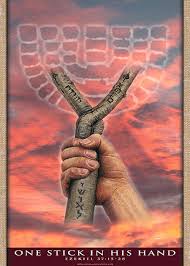
Unknown

On the phrase of the same verse, “I would make the remembrance of them to cease from among men. …” the same Chumash states,

This is a reference to the exile of Judah and Benjamin, the Davidic kingdom from which today’s known Jews are descended.” It goes on to say that though nations would seek to destroy Israel entirely, YHVH would never allow Israel to become extinct or disappear. Israel’s perpetual existence is a constant reminder of YHVH’s plan and eventually Israel will thrive and fulfill YHVH’s intention for it (pp. 1105–1106).

Nineteenth orthodox Jewish scholar S. R. Hirsch in his commentary on the same verse translates the phrase, “I would scatter them into the corners …” as, “I would relegate them into a corner …,” and then says that the Hebrew here refers to the “extreme end of a surface, the side or corner ….” He, too, relates this fate to the Ten Tribes who would be scattered “to some distant corner of the world, where, left entirely to themselves, they could mature towards serious reflection and ultimate return to Me …” (p. 650).

Some in the Christians deny that these Scriptures passages pertain to the ten tribes of the Northern Kingdom of Israel and instead insist that they are speaking about Judah (the Jews) only. They insist that the return of the Jews to the land of Israel starting in 1948 is the fulfillment of these prophecies and the ten tribes of Israel are lost forever. How can this a correct understanding in light of the Scriptures and the Jewish sages interpretations of those scriptures that states again and again that the ten tribes will return at the end of the age to be reunited with the Jews under the reign of Messiah Son of David (Ezek 37:15–28)?

Who are these lost and scattered sheep of the house of Israel? Whoever they are, Yeshua said that he came to regather them, and sent out his disciples on the same mission (Matt 10:6; 15:24. Yeshua then commissioned his disciples not only to go to the Jews in Jerusalem and to Judea, but to all the tribes of Israel scattered through the earth and anyone else who YHVH was calling into his eternal kingdom (Acts 2:8).

The following is a list of references in the Testimony of Yeshua about regathering the lost sheep of the house of Israel.

References in the Testimony of Yeshua to the Regathering of the Tribes of Israel

Yeshua himself made several references to the fact that it was his mission to regather the Continue reading →

 

“The Lord’s Day” — Sunday or Sabbath?

Revelation 1:10, The Lord’s Day. This verse is one of the cliche biblical passages that mainstream church scholars use to “prove” Sunday’s replacement of the Sabbath. The problem with this position is that there’s no clear scriptural proof that the apostles ever changed the Sabbath to Sunday. What’s more, to view this passage as referring to Sunday is to take a phrase the early church fathers used as a euphemism for Sunday when pushing for Sunday in place of Sabbath observance and to retroactively apply this meaning to John’s use of the phrase. Frankly, it is biased and dishonest scholarship to take the phrase “the Lord’s day” with its second century colloquial meaning and then to back-apply this meaning to John’s use of the phrase when there’s no reason to believe this was John’s intended meaning.

Alternatively, the phrase, “the Lord’s day, can be a reference to the biblical term “the day of the Lord’s wrath” when YHVH, in the end times, will judge the nations for their wickedness. This is a point that several biblical scholars have made (see From Sabbath to Sunday, by Samuele Bacchiochi, p. 111; E. W. Bullinger’s Companion Bible footnote on Rev 1:10; The Jewish New Testament Commentary on this verse, p. 791, by David Sterns).

There is actually more scriptural proof that the phrase “the day of the Lord” is a reference to the seventh day Sabbath than to the first the week. In Isaiah 58:13, the prophet YHVH refers to the Sabbath as “my holy day…the holy day of the Lord.” So conceivably, it could have been on the Sabbath day itself that John received his vision on the island of Patmos about that great and terrible day of YHVH’s wrath that is to come on the earth just prior to the Messiah’s second coming.


New Video: Is the Torah the Ministry of Death & the Letter That Kills?

Many in the mainstream church have been led to believe that the Torah or law of Moses is the ministry of death and the letter that kills, and now that we’re under grace, we are free from haveing to obey the letter of the law as 2 Corinthians 3:7–17 would seem to suggest. Is this a correct understanding of these verses? What is the truth? This video explains this difficult Bible passage.


Mikveh anyone?

Shabbat shalom everyone!

Yesterday I quit work early, jumped in my truck and headed to a nearby mountain river for my annual fall feast days mikveh (ritual immersion). I like to do a ritual cleansing immersion, pray, repent and prepare my heart just before the upcoming fall biblical feasts. I like to do it in the spring, as well, just before Passover, but the river water is too icy cold around here at that time of the year! In can even be snowing.

While there, YHVH gave me my second teaching that I will be presenting on Yom Teruah this coming week. Of course, I will post the study notes and video on this blog. It’s on the subject of the resurrection of the dead. With all the bad news going on in the world, the Ruach prompted me to give a message on a subject that will hopefully encourage YHVH’s people and inspire great hope and joy in them during these dark times in which we are living.

I wish I could have shared my mikveh experience with you, but hopefully the photo, at least, will bless you.

You might  consider finding a mikveh spot where the water is clean and pure to do your own ritual cleansing. This is what John the Baptist (aka Yochanon the Immerser) was doing at the Jordan River to help prepare the people for the the Messiah’s coming. We’re living in the times of John the Baptist again as we’re preparing for Yeshua our Bridegroom’s coming.

My Mololla River mikveh hole.

My Mololla River mikveh hole.


The Levitical and Melchizedek Priesthoods Compared

Hebrews 7:12, Priesthood being changed…a change also of the law [Torah]. The Greek words for being changed and a change are respectively metatithemi (a verb) and metathesis (a noun). The root of the noun is the verb, which means “to transpose, to transfer, to go or pass over, to fall away or desert from one person or thing to another.” Many people interpret this verse to mean that YHVH’s Torah-law was changed (i.e., invalidated or annulled) by the new covenant, but is this what the author is saying here?

Before going further in our discussion, let’s lay out some basic truths of the Scriptures.

YHVH doesn’t change (Mal 3:6; Heb 13:8; Jas 1:17). The word torah [in English, translated as law] means “instructions, principles, teachings” and came directly from YHVH to his people. The Torah teaches men how to love YHVH and love one’s fellow man. It is YHVH’s instructions in righteousness and reflects his very character and nature. Who YHVH is doesn’t change.

It is a sin (a violation of the Torah) to change the Torah (Deut 4:2; 12:32).

So in this light, what is this verse really saying? It declares that the priesthood was changed. The Levitical priesthood that was temporarily and parenthetically inserted into the Melchizedek priesthood (both priesthoods are revealed in the Torah, see Exod 19:2, 4 cp. 28:1; 32:29). In the former priesthood, a father acted as the priest over his family interceding for them before Elohim via sacrifices and offerings (Gen 8:20; 12:7,8; 13:18; 22:9; 26:25; 33:20; 35:1, 3, 7; Exod 17:15; Job 1:5). In the latter priesthood, YHVH Continue reading →