New Video: When Does the Biblical Month Begin? Crescent Moon or Conjunction?

To know when to celebrate the biblical feasts, the Bible believer must know when the month on the biblical calendar begins. Does the biblical calendar begin at the moon’s crescent or conjunction? In this video, we refute 14 pro-conjunction arguments in favor of the first visible cresenct new moon.


Blog Scripture Readings for 1-17 Through 1-23-16

Aside

THIS WEEK’S SCRIPTURE READINGS FOR STUDY AND DISCUSSION:

Parashat Beshalach — Exodus 13:17 – 17:16
Haftarah — Judges 4:4 – 5:31
Prophets — 1 Kings 4:1 – 10:29
Writings — Psalms 102:1 – 106:48
Testimony — Luke 9:43 – 12:21

Most of this week’s blog discussion points will be on these passages. If you have general comments or questions on the weekly Scripture readings not addressed in a blog post, here’s a place for you to post those. Just use the “leave a reply” link below.

The full “Read Through The Scriptures In A Year” schedule, broken down by each day, can be found on the right sidebar under “Helpful Links.” There are 4 sections of scripture to read each day. One each from the Torah, the Prophets, the Writings, and from the Testimony of Yeshua. Each week, the Torah and haftarah readings will follow the traditional one-year reading cycle.

Weekly Blog Scripture Readings for 1/17 through 1/23/16.


Flat Bread, A Flattened Egypt and Flattened Pride

Exodus 13:3, Went out of Egypt…no leavened bread. What is the spiritual connection between coming out of Egypt and the memorial (v. 9) of eating unleavened flat bread? The keeping of the Feast of Unleavened Bread and the command to eat flat bread was to be an object lesson for successive generations Israelites as a sign and a memorial of what YHVH did against Egypt and of Israel’s deliverance (vv. 8–9).
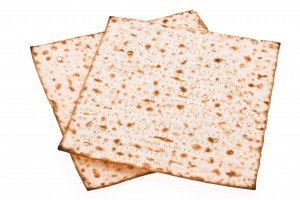
matzot

As the strong right arm of YHVH’s judgments (v. 3) pressed down upon proud and exalted Egypt until it was flattened as a nation, even so, YHVH’s judgment against the sin and idolatry in our lives demands that we become flattened, deleavened and contrite before him. He desires to squeeze or press out of us all the leaven of sin and pride that we have inherited from spiritual Egypt.

In the Scriptures, since leavening puffs up and sours bread, it is a biblical metaphor for sin, which does the same to the human heart and mind. It causes bitterness, pride, insincerity, hypocrisy and giving rise to false teachings and doctrines of men. We must put out the leaven of sin from our lives and from our spiritual assemblies, as Paul admonishes.

The Feast of Unleavened Bread pictures this process. The saints are to keep the feast not with the old leaven of malice and wickedness, but with the unleavened bread of sincerity and truth (i.e., the Torah, 1 Cor 5:8, read vv. 1–11 for context).

 

One Law for All People for All Time!

Exodus 12: 49, One law. (Other “one law” passages include Lev 24:22; Num 9:14; 15:16, 29.) The context of this verse regards the observance of Passover (also Num 9:14). There was to be only one law pertaining to the observance of the Passover for both the native Israelite and for the stranger who sojourns with the Israelite. Leviticus 24:22 says that there is one law for the Israelite and the stranger in the areas of blasphemy, murder, slaying another man’s animal, and harming one’s neighbor in any way. Pertaining to the law about the various offerings for sin (i.e, despising the instructions or Torah of Elohim, verse 31), Numbers 15:15–16 and 29 states there is one law for both the Israelite and the sojourner forever throughout their generations.

Torah Scroll  21075453

Some will say that these “one Torah-law for everyone” passages pertain only to the specific Torah laws mentioned in these passages. In numerous places, Israel was to take the Torah (the whole Torah) to the nations of the world, not just parts of the Torah (e.g., Deut 4:6–8; Isa 60:1–3; Zech 8:22–23; Matt 28:18–20; Luke 24:47). Moreover, during the Messianic Age (or Millennium), the Torah will go forth to all the nations (Isa 2:3; Mic 4:2). What’s more, there are numerous places in the Testimony of Yeshua that speak of Torah as the standard of righteousness for all believers for all time (e.g., Matt 5:17–19; John 14:15; Rom 3:31; 7:12, 14, 22; 1 John 2:3–6; 3:4; Rev 22:14). Hundreds of more citations could be added to this list from the apostolic writings alone!

So the Torah was not for Israel only, but ultimately was to be for all the peoples of the earth. This includes you and me.


New Video: The Bible Vs. Marijuana—Genesis 1:29-31 Explained

Many marijuana users think that Genesis 1:29-31 is the Bible’s stamp of approval on pot use. In this video, we discuss whether or not this is a correct understanding of this verse.


The first exodus is past, the second exodus is coming

Exodus 12:31, 33, Rise up, get you forth. YHVH was leading Israel out of Egypt, while Egypt was, at the same time, thrusting Israel out of that nation.

This verse marks the beginning of Israel’s exodus from Egypt. The later biblical prophets speak about end times Israel being scattered and enslaved in the nations of the world (i.e., Babylon the Great). However, as a result of a series of miraculous events and YHVH’s judgments against their captor nations, end times Israel is finally set free. Released, they will return to the Promised Land of Israel where Yeshua the Messiah will rule and reign over them. Many biblical prophets predict this glorious event happening, and the Jewish sages have tenaciously clung to this hope for two millennia. This event (actually, a series of events) has euphemistically been referred to as “the second exodus.”

Many scriptures (e.g., Isa 11:1012:6; Jer 16:14–15; 23:7) refer to this when they prophesy of another exodus of Elohim’s people to occur in the last days which will be much larger in scope and will involve many more nations than the first exodus from Egypt.


Who is the One who killed the firstborn of Egypt?

Exodus 12:23, 27 cp. 6:6 (also Deut 5:15; 7:19), The destroyer…who passed over…he smote the Egyptians cp. Will redeem you with an outstretched arm. Who is the outstretched arm or YHVH? It is Yeshua (Isa 53:1 cp. Isa 52:10; 40:10; Ezek 20:34–35) who is at the right hand of Elohim (e.g., Rom 8:34; Col 3:1; etc.). We know that the preincarnate Yeshua, the Malak (mistranslated in most Bibles as Angel) or Messenger of YHVH led Israel through the wilderness. Likely, the preincarate Yeshua was the arm of YHVH’s judgment against Egypt’s firstborn, even as he will be the hand of Elohim’s judgment against the wicked in last days and at his second coming (Rev 19:15, 21).