The Book of Deuteronomy: of Moses’ Farewell Address

Deuteronomy 65289264

Outline of Sefer Devarim/The Book of Deuteronomy

Chapter 1:1–5, Introduction

Chapters 1:6–4:40, First Discourse

Moses gives a veiled rebuke for sin and disobedience, and gives a review of the journey from Mount Sinai to Kadesh with exhortations to obedience.

Chapters 4:44–11, Second Discourse, Part 1

The religious foundations of the covenant, the spirit in which it is to be kept and the motives to right obedience are discussed. Moses shows how the covenant defines the relationship between YHVH and Israel and emphasizes the basic spiritual demands that such a relationship imposes upon Israel.

Chapters 12–26, Second Discourse, Part 2

The code of law dealing with:

Worship, Chapters 12:1–16:17

Government, Chapters 16:18–18

Criminal Law, Chapters 19:1–21:9

Domestic Life, Chapters 21:10–25

Rituals and the Sanctuary, Chapter 26

Chapters 27–30, Third Discourse

The enforcement of the Torah-law with its blessings and curses; establishment of a fresh covenant between YHVH and Israel (i.e., the younger generation).

Chapters 31–34, The Last Days of Moses

Chapter 31, Committal of the law to the keeping of the priests.

Chapter 32, The Song of Moses (a prophecy about Israel’s future).

Chapter 33, Moses’ patriarchal blessing over the tribes of Israel.

Chapter 34, The death of Moses.

Overview of the Book of Deuteronomy/Devarim from Various Commentators

This last book of the Torah starts out with “These are the words which Moses spoke ….” The Hebrew name for Deuteronomy is Devarim meaning “words,” which is the plural form of devar meaning “word, speech, a matter or thing, a commandment, a report, a Continue reading →


Blog Scripture Readings for 8-7 Through 8-13-16

Aside

THIS WEEK’S SCRIPTURE READINGS FOR STUDY AND DISCUSSION:

Parashat D’varim — Deuteronomy 1:1 – 3:22
Haftarah — Isaiah 1:1-27
Prophets — Ezekiel 39:1 – 45:25
Writings — Nehemiah 5:1 – 11:36
Testimony — Galatians 6; Ephesians 1:1 – 5:33

Most of this week’s blog discussion points will be on these passages. If you have general comments or questions on the weekly Scripture readings not addressed in a blog post, here’s a place for you to post those. Just use the “leave a reply” link below.

The full “Read Through The Scriptures In A Year” schedule, broken down by each day, can be found on the right sidebar under “Helpful Links.” There are 4 sections of scripture to read each day. One each from the Torah, the Prophets, the Writings, and from the Testimony of Yeshua. Each week, the Torah and haftarah readings will follow the traditional one-year reading cycle.

Weekly Blog Scripture Readings for 8/7 through 8/13/16.


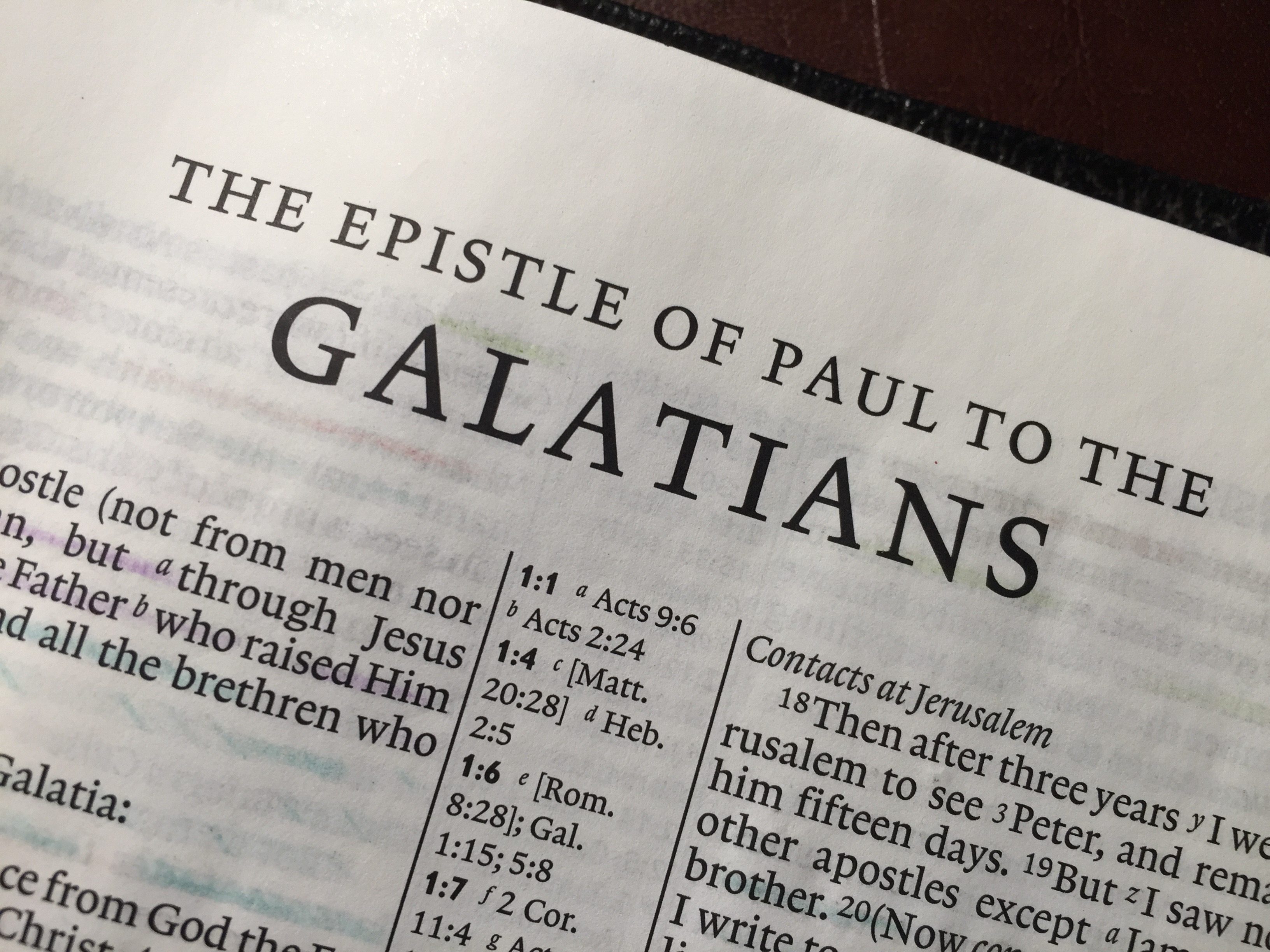
Galatians Explained Simply from a Hebraic Perspective (Pt 2)

IMG_4516

A Quick Overview Commentary on Galatians (explained section-by-section):

This analysis of Galatians won’t be exhaustive, detailed or comprehensive. It will be a quick overview—a skimming over the theological waves. We’ll save the details for another time.

Gal 1:6–10, Paul opens his epistle up by claiming that the Galatian believers have turned away from the basic gospel message “to another gospel” (vv. 6–7).  He is so opposed to this that he places a double curse on those who are teaching this other gospel (vv. 8–9). So what is this other gospel?

Gal 1:6–7, This could be a confusing passage the way it reads in some of our Bibles until you get into the Greek. Here it is in the KJV:

I marvel that ye are so soon removed from him that called you into the grace of Christ unto another [Gr. heteros] gospel: which is not another [Gr. allos]; but there be some that trouble you, and would pervert the gospel of Christ. (KJV)

How do we make sense of what Paul is saying here? It is only understood by looking at the Greek words. The English word for another is two different words in Greek with two slightly different meanings. According to Moulton and Milligan (quoting Lightfoot in Vocabulary of the Greek NT) “the primary distinction between allos and heteros is that the Continue reading →


Just For Laughs…

On our way back from camping at Diamond Lake, Oregon, Sandi and I stopped at a restaurant to get lunch. This sign was posted over the sink in the men’s room. I kid you not!

IMG_4505


Shabbat Shalom Everyone! Wildflower Pics from Diamond Lake

During our camping  trip to Diamond Lake, Oregon last week, I took pictures of the wildflowers that grew along the shores and meadows around the lake. Wash your minds from the disgusting filth of the world around you with these pics from Yehovah’s lovely and pristine creation. Enjoy! Shabbat shalom.

Columbine

Columbine

Fireweed

Fireweed

Fireweed up close

Fireweed up close

A meadow of  fireweed

A meadow of fireweed

Indian paint brush

Indian paint brush

Goldenrod

Goldenrod

Spirea

Spirea

Cow parsnip and fireweed

Cow parsnip and fireweed

Penstemon

Penstemon

Water hemlock—the most poisonous plant in North America!

Water hemlock—the most poisonous plant in North America!

Pearly everlasting

Pearly everlasting

Aster

Aster

Not sure what this flower is. It's in the sunflower family.

Not sure what this flower is. It’s in the sunflower family.


What Is the Biblical Definition of Legalism?

A Wild and Crazy Place to Be

The spiritual Babylon of the church system is a warm and comfortable place in which to live. Within its comfort zones, it has fixed boundaries and clear delineations. When one steps out of the mainstream church system, however, and into a more Hebraic and Torah-pursuant spiritual orientation, it can becomes the shooting gallery of the wild, wild west of doctrines and ideas.

Outside the so-called organized church system, or churchianity for short, t’s a free-for-all wilderness of every man doing what’s right in his own eyes. In this wilderness outside of organized religion, one has to determine which church beliefs to hold on to and which ones are lies and unbiblical traditions our spiritual fathers have passed on down to us. Here one must learn to separate the spiritual wheat from the chaff. As one’s eyes are opened to the pro-Torah Hebrew roots of the Christian faith, there are many new ideas and doctrines to consider. When coming onward and upward to a fuller knowledge of the truth, one must determine priorities without falling prey to more false doctrines and legalism. This includes determining which biblical truths are the trunk of the tree issues, and which areas are the twigs and the branches.

In the midst of this confusion, there are many winds of doctrines blowing around capturing people’s attention. People often get sidetracked from the trunk of the tree issues and get hung up on nonessential issues. Paul warned about this.

That we henceforth be no more children, tossed to and fro, and carried about with every wind [violent agitation, very strong tempestuous wind] of doctrine [teaching, instruction], by the sleight [deception] of men, and cunning craftiness, whereby they lie in wait to deceive [to delude, lead astray from the right way]. (Eph 4:14)

If one is not grounded firmly on the foundation of essential biblical truths, one can get hung up on side-issues that can become nonessential pet doctrines. Those who fall prey to this tendency will often gravitate toward biblical teachers who agree with them. A pet doctrine Continue reading →