Deuteronomy 11:26–28, A blessing and a curse. This passage begins with the words, “Behold, I set before you this day a blessing and a curse; a blessing, if you will obey the commandments of YHVH your Elohim, which I command you this day; and a curse, if you will not obey the commandments of YHVH your Elohim, to go after other gods, which you have not known” (Deut 11:26–28).
After this, in verse 29, YHVH instructs the Israelites that upon entering the Promised Land, they are to stop between the mountains of Gerizim and Ebal, which are located at the entry point of the land. The former mountain represents a blessing, while the later represents a curse. The town of Shechem is located between the two mountains. The Hebrew word Shechem means “shoulder” or “back”(Strong’s H7927). The shoulder supports the head, which through the disposition of the mind and the direction in which the head is pointed, determines the path a person will walk whether good or evil.
It was at Shechem, between the two mountains representing good and evil, that Israel renewed its covenant with YHVH before entering the Promised Land (Josh 8:30–35). The power of the covenant that the people made with YHVH on that day thousands of years Continue reading →
Most of this week’s blog discussion points will be on these passages. If you have general comments or questions on the weekly Scripture readings not addressed in a blog post, here’s a place for you to post those. Just use the “leave a reply” link below.
The full “Read Through The Scriptures In A Year” schedule, broken down by each day, can be found on the right sidebar under “Helpful Links.” There are 4 sections of scripture to read each day. One each from the Torah, the Prophets, the Writings, and from the Testimony of Yeshua. Each week, the Torah and haftarah readings will follow the traditional one-year reading cycle.
** A different Haftarah is read when it is a special sabbath in Jewish tradition. This week it is Shabbat Rosh Chodesh on the traditional calendar. Otherwise, Isaiah 54:11 – 55:5 would be read.
Weekly Blog Scripture Readings for 8/28 through 9/3/16.
There is still time to register for Sukkot Northwest 2016 on the wild and scenic Rogue River in warm and pristine Southwest Oregon. We have rented an entire campground with full camping and RV facilities, and several camp sites are still available.
After seeking YHVH Elohim, the theme for this year’s Feast is, “Get in the River of Life…Be a River of Life!” Our cornerstone scripture passages are:
In the last day, that great day of the feast, Yeshua stood and cried, saying, If any man thirst, let him come unto me, and drink. He that believeth on me, as the scripture hath said, out of his belly shall flow rivers of living water. (John 7:37–38)
But whosoever drinketh of the water that I shall give him shall never thirst; but the water that I shall give him shall be in him a well of water springing up into everlasting life. (John 4:14)
In the midst of the street of it, and on either side of the river, was there the tree of life, which bare twelve manner of fruits, and yielded her fruit every month: and the leaves of the tree were for the healing of the nations. (Rev 22:2)
We were led by the Spirit of Elohim to choose this theme unaware of its broader prophetic implications until Brother Bill who is from Washington State and is one of our speakers pointed out to us, “This is a wonderful theme to have this year, just having come off of last year’s theme of ‘Coming out of Babylon.’ Babylon is known by several names, one of which is the ‘Land Between Two Rivers.’ One river speaks of death, and the other river speaks of life. Babylon is a mixture of the two. ‘Come out of (the river of death)” was last year’s theme. ‘Get into the River of Life!’ (and then be a river of life) is this year’s theme. A natural progression!” Thank you Bill for this encouraging confirmation.
Our primary motivation for choosing this theme is a response to the times in which we are living. Evil in the form of secular humanism, the rise in false and demonic religions, the moral and the spiritual decline of our society, the rise of the spirit of Antichrist, the rapid expansion of the police state and the move toward one-world government is coming upon us like a tidal wave! What should be our response? What can we possibly do about it? Very simply this: Do what Yeshua and the apostles did. Be a menorah on a hill boldly proclaiming the light of gospel message in the power of the Spirit of Elohim through our lifestyle and our words. This is the one weapon that we possess that makes all the powers of death, hell and darkness tremble. So, it’s time to saddle for battle!
A theme running through this year’s Sukkot will be learning to operate in the gifts of the Spirit to be a river of life to those around us as we help to gather in the lost sheep of the house of Israel in preparation for Messiah Yeshua’s second coming. Everyday, we will be having short teachings followed by group discussions (where we can learn from each other) on the gifts of the Spirit including prophecy, healing, deliverance, dreams and visions, signs and wonders, and the baptism of the Spirit. These will be followed by a workshop the following day in the prayer tent where we can learn to minister and be ministered to in these areas.
Nearly every day, we will have live praise and worship, Torah reading, and teachings from anointed speakers from several West Coast states.
We will also have workshops and several fun group activities including our annual erev Shabbat dinner, river immersion and water pouring ceremony.
For specific information and details on Sukkot NW 2016, please visit sukkotnw.org.
For a sense of what to expect at Sukkot NW 2016, we invite you to watch a fun video of excerpts from Sukkot NW 2015.
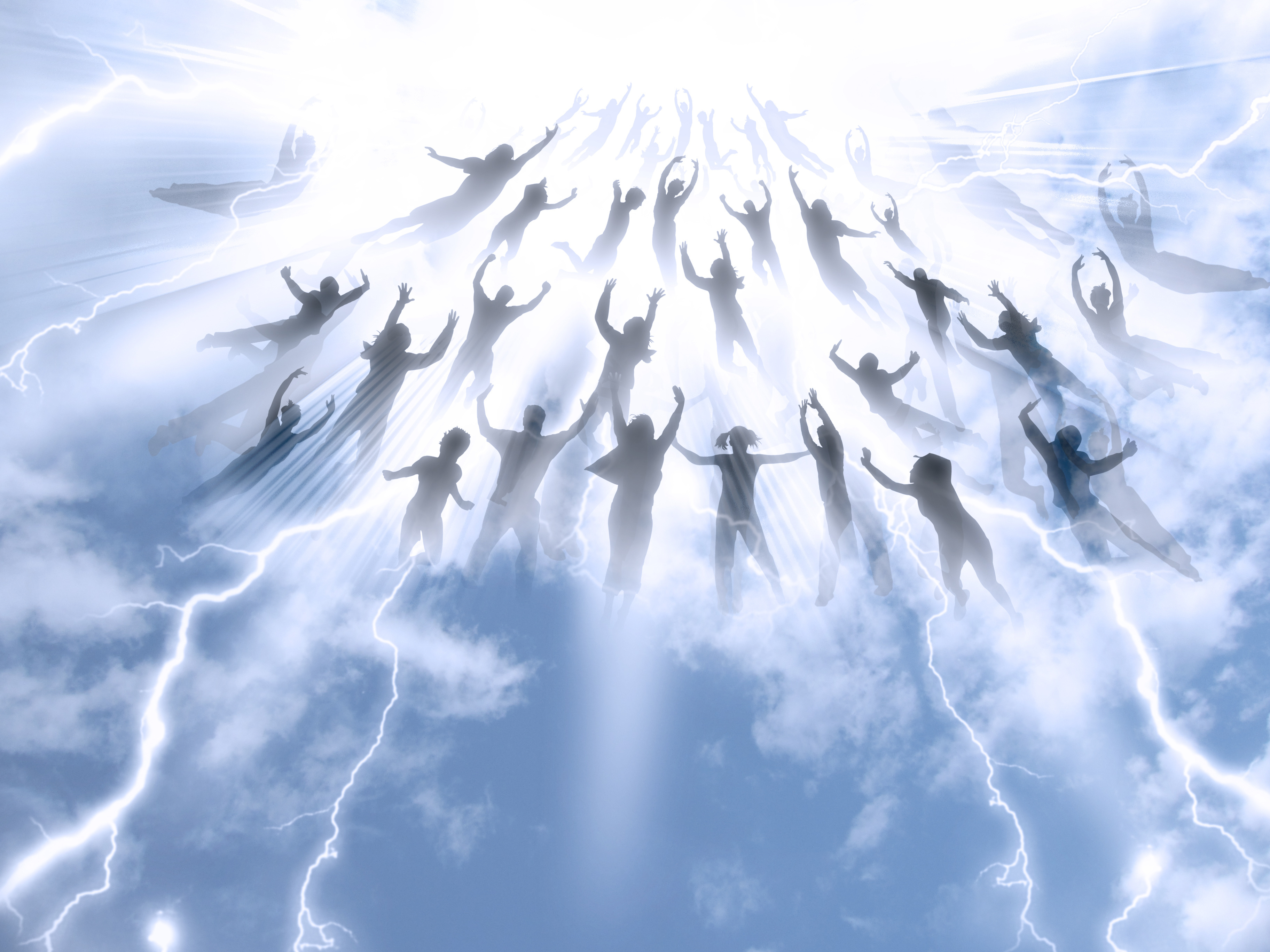
1 Thessalonians 4:17,Be caught up.Do I believe in the rapture? Yes, but not as many in the Christian church teach it. For them, the resurrection of the righteous dead occurs before the great tribulation — called the pre-trib rapture.
As you probably know, the word “rapture” is from a Latin word for being “caught up” (or resurrected) as found in 1 Thess 4:17 — “Then we which are alive and remain shall be caught up together with them in the clouds to meet the Lord in the air …” Therefore, a better question to ask would be, do I believe in the resurrection of the dead? Most emphatically I do. The only question is when do I believe the resurrection will occur? As far as I can tell, there are only three obvious answers to that question: before the great tribulation (as much of the Christian church teaches), after the great tribulation, but before the wrath of Elohim is poured out on the earth (what I believe) or after the great tribulation and the wrath (which is what some believe, including some Messianics), which is called the “post trib” position.
The word “caught up” is the Greek word harpazo (Strong’s 726/TDNT 1:472) which is Continue reading →
Deuteronomy 11:13, If you will hearken.In the Hebrew, this phrase literally reads, “If hearken, you will hearken….” Rashi interprets the double usage of this verb to mean, “If [you] listen to the old, you will listen to the new” meaning that if one listens to what one has already learned by taking care to review and understand it, one will gain new insights or fresh insights into the Torah (The ArtScroll Sapirstein Edition Rashi—Devarim, p. 110; The ArtScroll Stone Edition Chumash, p. 995).
What does this teach us about studying YHVH’s Word consistently and regularly? YHVH gave the Israelites fresh (not stale) manna every day and watered the land of Israel with the early and latter rains so that it would be fruitful without the need of man-made irrigation systems.
Manna and rain both came from heaven and are used as figures of speech Hebraically to represent Torah-truth. Is your life being renewed regularly with fresh revelation and insights into the Word of YHVH, into his very heart and character? Does this not refresh, nourish and sustain the ground of your life so that it yields an abundant spiritual crop of joy, shalom, intimacy with the Father and anointing? Is your life a place of fresh manna and constant rain, or a place of stale bread and drought? If so, what changes do you need to make in your life to change this situation?
Hosea 5:15–6:3, I will go and return to my place. This passage is a clear prophecy concerning the resurrection of the righteous dead of which Messiah Yeshua is the first to raise.
Verse two contains a Hebrew parallelism, which is a Hebraic literary device where the same thought is expressed differently back-to-back. The word revive is the Hebrew word chayah and is the basic Hebrew root verb meaning “to live or to have life.” The word raise up is the Hebrew word quwmmeaning “to rise, arise, stand, stand up.” According to TheTWOT, the basic meaning of this word “denotes rising up from a prostrate position (e.g. Josh 3:16).”
YHVH is speaking here in the broader context of this passage concerning his Messianic role as the lion of Judah (Rev 5:5). After presenting himself as such to both houses of Israel (Ephraim [i.e., the Christians] and Judah [i.e., the Jews]) at his first coming, verse 14 states that Messiah would “go away … and none shall rescue him.”
Then in verse 15 we read that, “I [Messiah speaking] will go and return to my place till they [Ephraim/the Christians and Judah/the non-believing Jews] acknowledge their offense and seek my face ….” (This refers to Yeshua’s absence from the earth between his first and second comings.) What is their offense? Isaiah 8:14 states that that which offends both houses of Israel is “the stone of stumbling and … rock of offence.” Who is this Rock of offense? Verses 8 and 10b identifies it as Immanuel (El with us), which is one of the Continue reading →