Are you spiritual naked and unprepared for Yeshua’s coming?

Mark 14:51, A certain young man…naked. The reason for the inclusion of this detail in the Gospel record has puzzled many commentators. For example, Matthew Henry suggests that it was added to show the barbarous nature of the Jewish gang that arrested Yeshua, and how narrow was the disciples’ escape from their hands.

There seems, however, to be a greater spiritual lesson to be learned from this story.

Previous to this, Yeshua, as he and his disciples were coming into the Garden of Gethsemane, admonished them to sit and pray with him (v. 32), to stay and watch (v. 34), to watch and pray so as not to fall into temptation because of the weakness of the flesh (v. 38). Instead, the disciples slept (vv. 37, 40). Elsewhere, Yeshua instructs the elect saints of the last days to endure tribulation and spiritual apostasy to the end (Matt 24:13), and to watch vigilantly and be ready for his second coming (Matt 24:42, 44; 25:13). These warnings are in the context of his Parable of the Ten Virgins. All slept while awaiting the bridegroom’s arrival. While five were spiritually prepared, five were not. Those who were unprepared were dubbed as foolish and weren’t allowed into the wedding. Likewise, in the end times, there will be believers who YHVH views as wretched, miserable, poor, blind, and naked because they have grown lukewarm spiritually (Rev 3:14–17).

The point of this discussion is this: If the disciples of Yeshua fail to maintain a state of spiritual preparedness (by watching, praying, keeping oil in their spiritual lamps, enduring to the end) while awaiting his return, they, like the young man in Gethsemane and the Laodiceans in the Book of Revelation, will be found to be spiritually naked lacking robes of righteousness on the day of his return and thus unprepared to meet him (Rev 19:7–9 cp. Matt 22:2, 11–12).


The Story of Joseph Is a Prophetic Antitype of End Time Events

Joseph and Judah (the Two Houses of Israel)

In what follows, we will see types and shadows that point to the end-time reunification of the two houses of Israel (Joseph/Ephraim and Judah/the Jews), and to Yeshua the Messiah whose role it would be to regather and reunite the two houses of Israel by laying his life down as a ransom or substitute for his brothers. In this study, we will discuss the following themes:

  • reuniting lost family members
  • reconciliation and healing of wounds and offenses between families
  • forgiveness of past wrongs, offenses and misunderstandings
  • prophetic shadows of Yeshua the Messiah

Let’s now analyze the events in the life of Joseph (and to a lesser degree, Judah) as they occurred chronologically to see how they pointed forward to events that would occur in the future including the end times.

Joseph Taken as Captive to a Gentile Nation (Gen 37)

Joseph was sold into slavery and taken as a captive to Egypt. Similarly and prophetically, Joseph’s descendants (Ephraim and Manasseh), along with their fellow tribesmen of the northern kingdom of Israel (or house of Israel), were taken as captives into Assyria (ca. 723 B.C.). From there they were scattered around the world (into spiritual “Egypt,” ) where the biblical prophets predicted they would remain until the final regathering at the end of the age (just prior to and at the coming of Messiah). We will understand this more as we proceed.

Joseph: From Slave to Ruler (Gen 37, 41)

At first, Joseph was a slave and a prisoner in Egypt, but then he prospered and was elevated to a position of leadership there. Likewise, in the future, Joseph’s descendants (Ephraim, Manasseh, and the rest of the house of Israel) would start out as slaves and captives in Assyria (in the eighth century b.c.), but would later become leaders and rulers Continue reading →


Are you close, but not there yet?

Mark 12:34, You are not far from the kingdom. Yeshua makes this complimentary statement to the scribe who had correctly and succinctly summarized the message of the Torah (both its letter and spirit intent) in verses 32–33.

However, note that Yeshua didn’t say, “You are in the kingdom of Elohim (i.e. you have eternal life).”

What was the one thing that kept the scribe from being in the kingdom?

It was doubtless the same thing that kept the rich young ruler from obtaining the eternal life that he sought (Matt 19:16). After having obeyed the Torah the best he could, the young ruler still needed to surrender all to Yeshua the Messiah, and to follow him unreservedly (Matt 19:18–22).

Not only is it difficult for humans to surrender all to the Master, and then to follow him wherever he leads, but having followed the Torah the best we can, we must still humbly recognize that without the righteousness of Yeshua in the equation, our best efforts at Torah-obedience will still miss the mark of YHVH Elohim’s acceptable standard of righteousness, thus leaving us maybe not far from the kingdom, but definitely not in the kingdom of Elohim.


Genesis 42–46 Two Brothers and the Two Houses of Israel in End-Time Prophecy

Biblical Types and Antetypes

A major key to understanding biblical prophecy is to recognize the relationship between antetypes and types in the Scriptures. This means that an event or a series of events occurred once, was recorded in the Scriptures, and then at a later time a similitude of the event repeats itself, but with different characters and scene.

An antetype is a type or pattern of something that occurs before the actual event occurs (sometimes incorrectly referred to as an antitype, which means opposite rather than before). In other words, the first event predicts or points prophetically to the future event. This is a way for the Creator to give clues and hints about future events that will come to pass. Those who are ardent students of his Word and those “who have (spiritual) ears to hear” will pick up on these clues and be able to have a sense of what the Creator is going to do at some future date. In this way, those who diligently seek him are rewarded with understanding or “inside information” about what he is planning to do in the future. At the same time, his divine plans and purposes will be obscured from those who don’t have a diligent heart to seek him and his truth, and who could possibly misuse the truth, if they were to discover it, for selfish purposes if they were to learn it.

Similarly, the Gospels record that Yeshua explained deep spiritual truths via parables not to make the meaning clear to the general public, but rather to obscure it. His teachings were Continue reading →


Gen 41–44:17 Parashat Miketz pt 1

This is a gospel-oriented Torah study. Our goal is to connect the good news of Yeshua the Messiah (the gospel message) to its Hebraic, pro-Torah roots or foundations. The information given here is more than head knowledge. Understanding and wisdom (the right application of knowledge that is based on truth) is taught thus making biblical truth practical, relevant and applicable to your daily life. The truths of the Bible not only have the power to transform your life here and now for the better, but eventually to take you past the veil of death and into eternity.

This Torah study is subdivided in sections by topic in a magazine format thus making it easy to watch at several sittings.

May you be blessed as you watch this video.

For a free, printable adult and youth Torah study guide on this Torah portion (parashah), please go to http://www.hoshanarabbah.org/parshiot.html


Blog Scripture Readings for 12-25 Through 12-31-16

Aside

THIS WEEK’S SCRIPTURE READINGS FOR STUDY AND DISCUSSION:

Parashat Miketz — Genesis 41:1 – 44:17
Haftarah — Numbers 7:48-59; Zechariah 2:14 – 4:7**
Prophets — 1 Samuel 19:1 – 25:44
Writings — Psalms 72:1 – 78:39
Testimony — Mark 11:19 – 14:52

Our new Scripture Reading Schedule for 2016-2017 is available to download!

Most of this week’s blog discussion points will be on these passages. If you have general comments or questions on the weekly Scripture readings not addressed in a blog post, here’s a place for you to post those. Just use the “leave a reply” link below.

The full “Read Through The Scriptures In A Year” schedule, broken down by each day, can be found on the right sidebar under “Helpful Links.” There are 4 sections of scripture to read each day. One each from the Torah, the Prophets, the Writings, and from the Testimony of Yeshua. Each week, the Torah and haftarah readings will follow the traditional one-year reading cycle.

** A different Haftarah is read when it is a special sabbath in Jewish tradition. This week it is the 7th day of Chanukah on the traditional calendar. Otherwise, I Kings 3:15 – 4:1 would be read.

Weekly Blog Scripture Readings for 12/25/16 through 12/31/16.


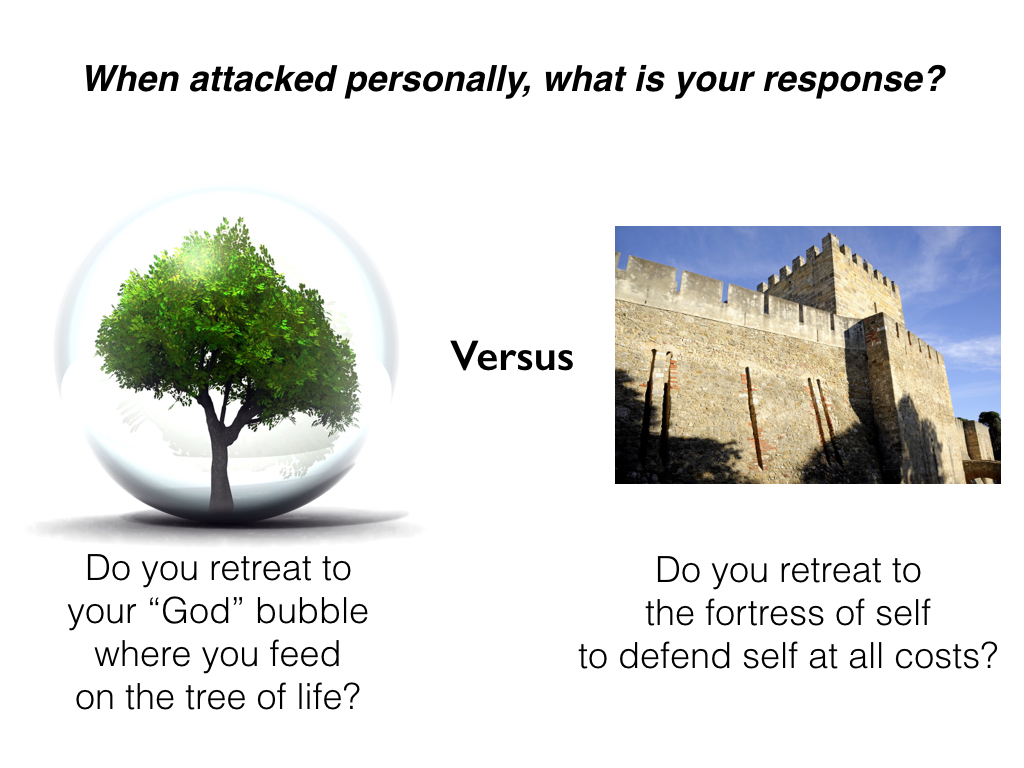
Do you live in a “God” bubble or a fortress of Self?

How to Create Your Own “God” Bubble to Deal With Life’s Attacks


May everyone reading this take careful note and pay close attention to the following: Creating a “God”-space bubble around you is a biblical strategy to protect yourself from the attacks of our spiritual enemy. Without it, you may not survive theses attacks.

Who is the enemy of our soul that is hell-bent on turning each of us into a spiritual casualty and a notch in his gun belt? Who is the one who is inexorably determined to pull you off the straight and narrow path that leads to Yeshua and his eternal kingdom? Who works tirelessly to pull your spiritual focus off Yeshua and his Word? Actually, the Bible reveals that the disciple of Yeshua the Messiah has three such enemies: the world, the flesh and the devil.

How do we deal with such rabidly determined enemies? There is the natural way and the supernatural way.

Most people choose the natural way to deal with adversity. It’s the default mode that, because of man’s fallen sin nature, one automatically and involuntarily chooses. It’s the way of self and flesh. The natural reactive tendency of humans when attacked is to create around themselves a fortress of pride, self-justification, self-righteousness where they blame others and seek pity as a form of defensive protection. The focus of this self-defensive strategy is on self and simply yields to path of least resistance dictated by one’s sinful nature. It is merely a natural, automatic and thoughtless default response of man’s fallen sin nature. If we don’t catch ourselves, we will automatically find ourselves doing this.

When attacked, instead of creating a defensive fortification where a focus on self forms the foundation stones in our defensive fortress wall, we need to run to the Rock of our Salvation who is our High Tower in times of trouble. David, a man after Elohium’s heart, writes about this many times in his psalms. David shows us to make YHVH and not self the focus when our enemies attack us, and how to  find refuge in our personal “God” bubble. A bubble seems a fragile, an almost invisible thing with a very thin wall—something that pops easily. So get that image out of your mind. Instead, think of an invisible force-field that can easily repel any incoming projectile no matter its size, speed or destructive capabilities.

Such a bubble or force field will shield and protect us from any of our enemy’s attacks. It will insure that we weather the ferocious storms of life that blow against us. In that place, we are relying on the unlimited power and wisdom of YHVH to aid us in our time of need instead of the weak, faulty and deceptive arm of the flesh. The former leads to light and life; the latter leads to darkness and death. The former brings healing and strength; the latter glosses over pain and is merely weakness feigning as strength.

Since each person is different, each one will furnish their “God” bubble differently depending their spiritual orientation and makeup, tastes and interests. In my times of trouble, I take put up a spiritual force field and take refuge in my won spiritual bubble. This involves turning to the Scriptures for guidance, wisdom and encouragement. Prayer—talking to Elohim—is a vital component of my spiritual bubble or force field. Often I visualize myself either at the foot of Yeshua’ cross or at the before the throne of my Heavenly Father. Often I will myself involve hard physical work (to settle my emotions and to help clear my mind, which helps to destress and get my mind off the problem, so I can think and pray clearly). Many times, I listen to beautiful and spiritually uplifting music, which again helps me to elevate my spiritual focus. Often I find a Garden of Eden in nature where I can imbibe in the beauty of nature. There I can talk with the Creator and find healing. To accomplish this, often I will work in my garden. Sometimes I write Elohim-centered psalms and poetry. David wrote many of his psalms in times of distress—even when his life was in danger. This helped him to get his mind off of his circumstances and onto YHVH, who was is salvation and deliverer. Whatever I do, in all cases, I try to get my mind off myself and onto Elohim who is my source of wisdom, hope and guidance, and my ultimate Savior and Deliverer. Often, I imagine myself falling down at the foot of the cross where I find my strength at the feet of Yeshua. I tell myself that if he endured that for me, then I can endure this for him.

This is what my “God” bubble looks like and what helps me to deal with spiritual attacks. What does your “God” bubble look like?

If you don’t have a “God” bubble, how about making one to help you deal with the pain, stressors and attacks of life?