Blog Scripture Readings for 4-22 Through 4-28-18

Aside

THIS WEEK’S SCRIPTURE READINGS FOR STUDY AND DISCUSSION:

Parashat Achrei Mot-Kedoshim — Leviticus 16:1 – 20:27
Haftarah — Amos 9:7-15
Prophets — Isaiah 60:1 – 66:24; Jeremiah 1:1 – 2:37
Writings — Job 26:1 – 32:22
Testimony — Acts 20:1 – 24:27

Our annual Scripture Reading Schedule for 2017-2018 is available to download and print.

Most of this week’s blog discussion points will be on these passages. If you have general comments or questions on the weekly Scripture readings not addressed in a blog post, here’s a place for you to post those. Just use the “leave a reply” link below.

The full “Read Through The Scriptures In A Year” schedule, broken down by each day, can be found on the right sidebar under “Helpful Links.” There are 4 sections of scripture to read each day: one each from the Torah, the Prophets, the Writings, and from the Testimony of Yeshua. Each week, the Torah and haftarah readings will follow the traditional one-year reading cycle.

Weekly Blog Scripture Readings for 4/22/18 through 4/28/18. This week is the third week of seven complete weeks of the count of the omer.


 

New Video: Winter in Hawaii—Nathan & Sandi’s 2018 Trip


Thankfully, YHVH will have the last word!

Think of all the evil schemes that wicked men and women from their high and powerful positions in politics, the military, finance, education, religion, the media and entertainment are perpetrating upon the human race.

Now consider the daily sewage and filth that calls itself the news headlines, but is usually not much more than mean-spirited and destructive gossip, libel, salaciousness, innuendo, hearsay, false accusations, invasion of privacy, perversion of morals, attacks on biblical values, the promotion and elevation of all that the Bible denounces as evil and corrupt, and the attack on and persecution of Bible believers and Elohim himself. Are you sickened and disgusted already? So am! I!

Now encourage yourself and wash your brain out with these words from Psalm chapter three.

A Psalm of David, when he fled from Absalom his son. LORD, how are they increased that trouble me! many are they that rise up against me.

Many there be which say of my soul, There is no help [Hebrew: Yeshua]  for him in God. Selah.

But thou, O LORD, art a shield for me; my glory, and the lifter up of mine head.

I cried unto the LORD with my voice, and he heard me out of his holy hill. Selah.

I laid me down and slept; I awaked; for the LORD sustained me.

I will not be afraid of ten thousands of people, that have set themselves against me round about.

Arise, O LORD; save me, O my God: for thou hast smitten all mine enemies upon the cheek bone; thou hast broken the teeth of the ungodly.

Salvation[Hebrew: Yeshua] belongeth unto the LORD: thy blessing is upon thy people. Selah.

Folks, our day is not only here, but it’s also coming! Don’t forget that one person standing with Elohim MAKE A MAJORITY. So stay strong in Him, and keep looking upward. As I like to say, the outlook is bleak, but the uplook is glorious.

Thankfully, when all is said and done, YHYVH Elohim will have the last word, not men!

A new day is coming. Get ready…


Shabbat Shalom Beloved Fellow Saints!

As I often do early on the Shabbat morning, I strolled around my garden clutching my cup of organic coffee admiring the flowers in my personal Garden of Delight (the Hebrew meaning of Eden). As I talk to Elohim, I thank him for the wondrous beauty of his creation and praise him for his majesty. Remember what Yeshua said about the riches and wealth in this world?

Consider the lilies of the field, how they grow; they toil not, neither do they spin: And yet I say unto you, That even Solomon in all his glory was not arrayed like one of these. (Matt 6:28–29)

Well, by Yeshua’s standards (and they are the true values to judge life by, NOT man’s artificially contrived ones based on pride and lust), I must be an exquisitely wealthy man: I currently have 16 species of flowers blooming in my garden!!! I praise Yah for this. My Eden brings me much joy, pleasure and delight. I carefully tend, protect and nourish my garden just like Elohim commissioned us to do at the beginning, and it blesses me back. Tending and keeping the garden was Elohim third Torah command to Adam and Eve (Gen 2:15).

And the Yehovah Elohim took the man, and put him into the garden of Eden to dress it and to keep it. (Gen 2:15)

Think about this for a moment. There’s something really deep, mystical and spiritual about gardening. For starters, it connects us to something beyond ourselves, which has a whole host of physical, emotional, mental and spiritual benefits.… But we’ll save that sermon for another time.

In the meantime, here are some photos I snapped this morning. (Remember the days of  film cameras where you had to wait days or weeks between the taking of and sharing photos with others?)

So turn your eyes away from the sewage dump called the news headlines, take a break and think about the majesty of our great Almighty Elohim and his splendiferous creation for a moment. Please enjoy as you feast your eyes on these.


The Similarities Between Sin and Germs 

How Leviticus chapters 12, 13 and 14 relate to you

These several chapters are some of the most difficult ones in the Torah for us to wrap our brains around spiritually. What is the relevance of these arcane laws of ritual impurity and “leprosy” to modern people? With a little thought, we can see that there are some deep and relevant spiritual truths contained in these biblical passages!

As Matthew Henry points out in his classic gospel-oriented commentary on the Bible, after the laws concerning clean and unclean foods in Leviticus 11 come the laws concerning clean and unclean persons. As germs are contagions causing physical disease, so man is infected with the spiritual contagion of a sin nature that brings about spiritual disease ultimately leading to death. Henry explains that man imparts his depraved sin nature to his offspring at conception, which is why the woman needed to go through ritual cleansing after childbirth. Similarly, the Bible teaches us that the plague of leprosy (Heb. tsaraas referring to a generic skin disease) was a judgment by Elohim against the sins of rebellion, greed and misuse of the tongue (e.g. Miriam, Gehazi and King Uzziah).

The spread of and cure for spiritual diseases is similar to those of physical diseases, as we’ll discuss below. First, however, let’s compare and contrast how physical germs are similar to spiritual sin “germs.”

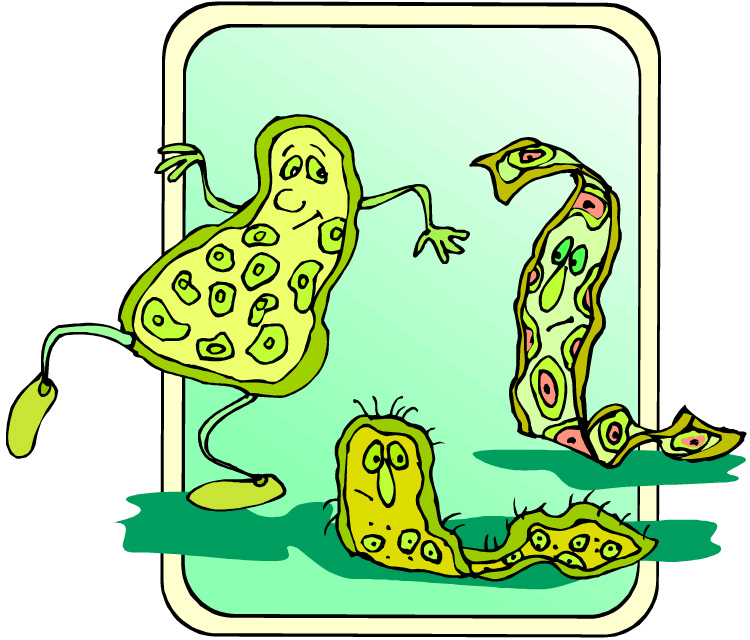
What are germs?

With the help of several modern health care professionals, we first need to learn about germs. 

“Our bodies are pretty amazing. Day after day, they work hard—digesting food, pumping blood and oxygen, sending signals from our brains and much more.

“But there is a group of tiny invaders that can make our bodies sick—they’re called germs.

“Some kids may think that germs are bugs or cooties or other gross stuff. Actually, germs Continue reading →


Leviticus 12–15: Dealing With Contagious Sin Pathogens in Oneself and in the Church

Overview of Parshiot Tazria-Metzora (Lev 12–13 and 14–15)

Often these two parshiot are combined in the yearly Torah reading cycle depending on how the biblical calendar falls for the year. Their combining is likely due to the fact that each is relatively short and deals with related subjects: namely, the ritual purity laws. 

As we shall see, the causes of ritual impurity involve sin issues. As a remedy to this problem, the Torah prescribes procedures that the afflicted person had to follow in order to be deemed cleansed and thus be readmitted into the camp of Israel after having been temporarily expelled. All the rituals prophetically pointed to Yeshua’s atoning death on the cross.

These two parshiot dealing with diseased and unclean persons immediately come after the laws concerning clean and unclean meats (Lev 11). What the Israelites ate as well as the state of their physical bodies was an important aspect of holiness in the eyes of YHVH.

From these two parshiot, we learn that an unclean person could only become clean through the atoning blood of a sacrificed animal or through ritual cleansing of water by which he was reconciled to Elohim and brought back into the camp of Israel. 

What can we learn from the juxtapositioning of these subjects (i.e. the laws pertaining to unclean meats and unclean people) in the Torah? Simply this. Man can easily become impure and defiled because of his innately depraved, crooked, and wicked heart that is at enmity with the laws of Elohim (Jer 17:9; Rom 8:7). 

Since the fall of Adam, man has been in a state of impurity from Elohim. Thus, sin separates him from the presence of Elohim and from his fellow Israelites. Only the sin- Continue reading →


Blog Scripture Readings for 4-15 Through 4-21-18

Aside

THIS WEEK’S SCRIPTURE READINGS FOR STUDY AND DISCUSSION:

Parashat Tazria-Metzora — Leviticus 12:1 – 15:33
Haftarah — 2 King 7:3-20
Prophets — Isaiah 51:1 – 59:21
Writings — Job 19:1 – 25:6
Testimony — Acts 15:22 – 19:41

Our annual Scripture Reading Schedule for 2017-2018 is available to download and print.

Most of this week’s blog discussion points will be on these passages. If you have general comments or questions on the weekly Scripture readings not addressed in a blog post, here’s a place for you to post those. Just use the “leave a reply” link below.

The full “Read Through The Scriptures In A Year” schedule, broken down by each day, can be found on the right sidebar under “Helpful Links.” There are 4 sections of scripture to read each day: one each from the Torah, the Prophets, the Writings, and from the Testimony of Yeshua. Each week, the Torah and haftarah readings will follow the traditional one-year reading cycle.

Weekly Blog Scripture Readings for 4/15/18 through 4/21/18. This week is the second week of seven complete weeks of the count of the omer.