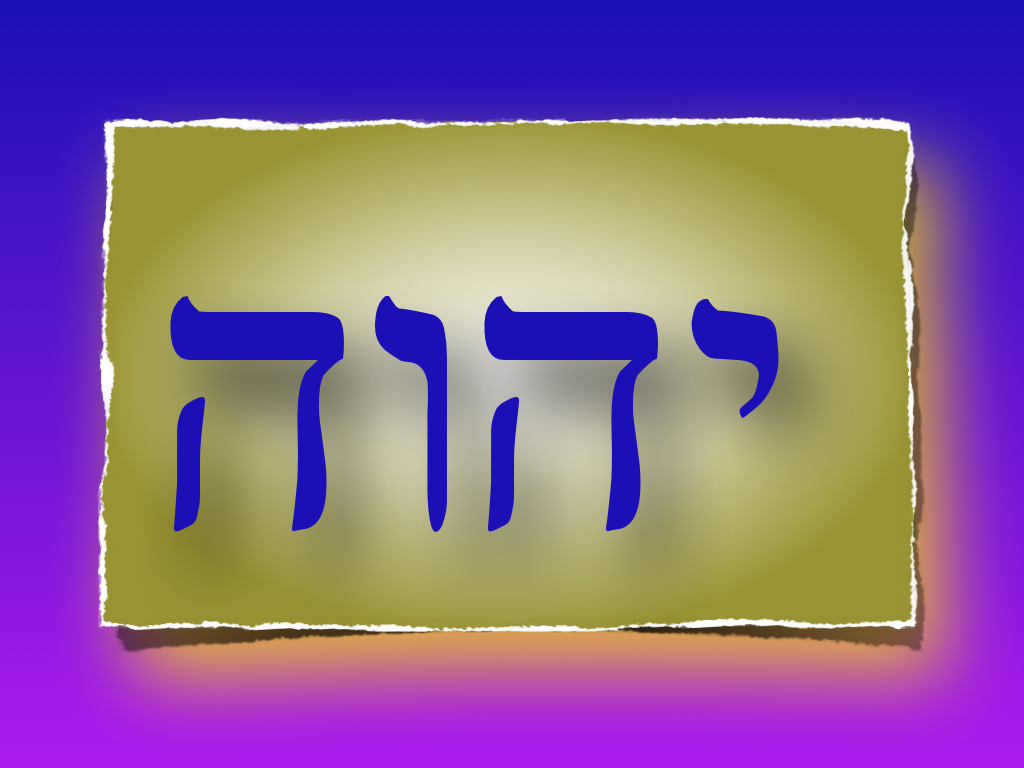
Exodus 23:13, Make no mention of the name of other gods, neither let it be heard out of your mouth. (See also Ps 16:4.) Not only is YHVH against the worship of pagan deities and wants their names to be destroyed (Deut 12:3), but he says that he will take from the lips of his people the names of pagan deities (Hos 2:17), and eventually, he will restore a pure language (presumably one that is free of pagan names) to his people (Zeph 3:9).
Obeying this Torah principle today is difficult, since so many common words such the days of the week and some of the months of the year are named for pagan deities making normal communication without using these names difficult. Nevertheless, the redeemed righteous of YHVH will endeavor to be mindful of this command and speak as cleanly as possible.
Since this commandment immediately follows commands regarding the weekly Sabbath and the biblical feasts, which are times YHVH has commanded his people to assemble, this is a clear remez or hint that YHVH’s saints should guard against mentioning the names of pagan gods when they gather together to worship Elohim. To mention the names of pagan deities is a slap in the face of the one and only true Elohim!
If one trains ones mind and mouth to use the biblical Hebrew names of “God,” then one will be fulfilling this command. Here is a list of the common English names for deity and their biblical Hebrew equivalents:
Luke 23:34,Father, forgive them.Yeshua said this for his and our benefit, and not because it made any difference in the lives of those who crucified him. It was for his benefit, so that the sin of bitterness and unforgiveness wouldn’t take root in him. It is for our benefit, so that we’d have his example to follow when dealing with our enemies.
There is a deep and transformative truth in the power of forgiveness. When we forgive our offender (it doesn’t matter whether they know about it or not), it prepares the way for the relationship to be restored. The miracle and beauty of the forgiveness process is that now we get to help those who have sinned against us in the healing of their own sin.
Like so many of Elohim’s truths and Yeshua’s practices, this is counter intuitive to the natural way man thinks. When sinned against, man’s natural, knee-jerk response is to hold on proudly to bitterness and offense in hopes the other person will recognize their error and humbly repent of their sin to us, the offended party. This is delusional thinking on the part of the one sinned against, since it seldom works this way.
Because of human pride, both the sinner and the one sinned against—if each follows their own natural and self-defensive inclination—will usually dig in and fortifies the position of their own self-rightness. The sinner is certain he is justified in his actions against the one he sinned against, while the offended party feels it is his right to walk in offense until the sinner admits his sin and repents. As such, each party remains frozen and polarized in his position and the break in the relationship is never resolved. Division and strife becomes the etched-in-stone norm. This is all based on human pride, which heads the list of the seven deadly sins that YHVH hates the most and views as an abomination (Prov 6:16) resulting in division between brethren (Prov 6:19).
It is the devil who is our adversary, is the one who destructively divides (John 10:10) and accuser of the brethren (Rev 12:10), and the one who comes to kill, steal and destroy loves this. When we hold on to bitterness and unforgiveness against someone, we become their adversary and accuser. This results in strife and division between people.
This prideful division between people is not resolved until one of the parties chooses to follow the instructions and example of Yeshua to become a blessed peacemaker (Matt 5:9) and humbles himself and forgives his neighbor, so that the healing process can occur. On the cross, Yeshua initiated this process of relationship restoration in preparation for his role in heaven as our Great High Priest to act on our behalf before his Father to reconcile sinful man through himself to Elohim.
Psalm 123:1,Unto you I lift my eyes. How many people in our post-Christian era lift their eyes to Elohim anymore for anything? Not many. Even most so called believers put their trust in just about everything else besides Elohim in their time of need whether it’s in medical doctors, money, .self-help psychology, the government, or themselves. For example, when they are sick, most people instinctively call their doctors first before praying to Elohim for wisdom and healing. They seldom seek YHVH when making major decisions in their lives. They rarely seek YHVH’s guidance, direction, wisdom and counsel on anything. They spend more times lifting their eyes up to their electronic devices (a modern version of the tree of the knowledge of good and evil) instead of to YHVH and his Word, and they are to addicted to the things of this world and, at the same time, blind to their own idol-worshipping habits to even recognize it. We are a lukewarm and idolatrous people. This was a concern of John, which is why he ended his first epistle with these words, “Little children, keep yourselves from idols” (1 John 5:21). If this was true then, how much more so now? YHVH help us!
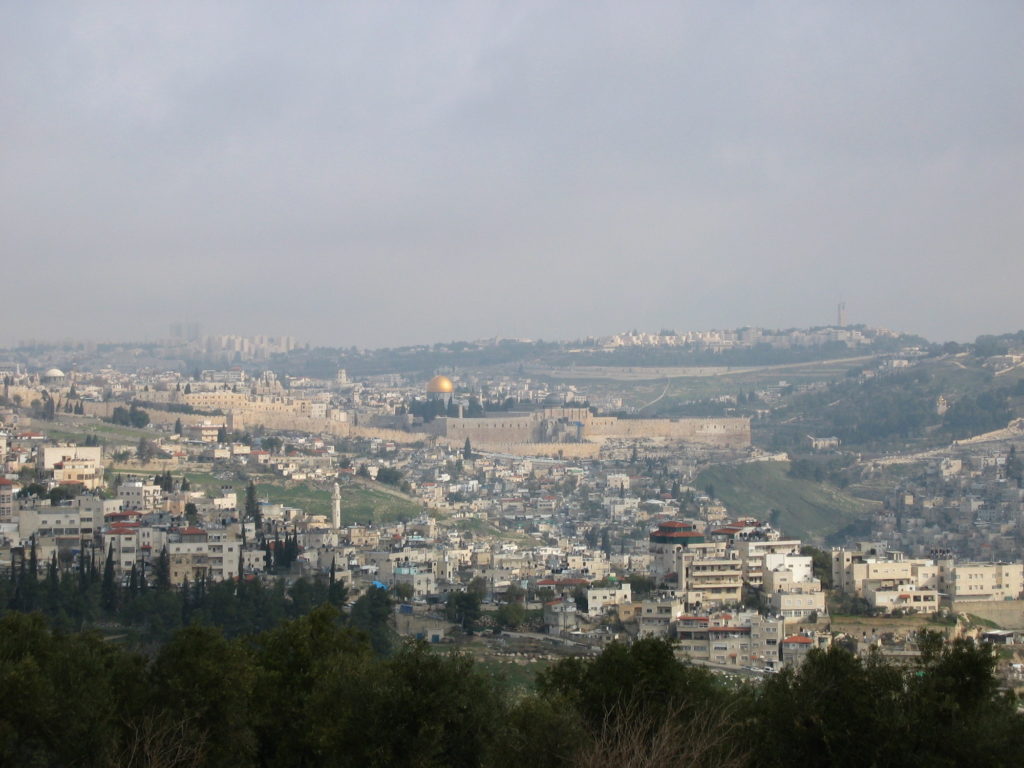
Psalm 122:6,Pray for the peace. In the past, yes, and also in the future, but now? What is there now in Jerusalem to pray for? The temple is gone and an abomination sits atop Mount Moriah, and Jerusalem is full of Yeshua-deniers, atheist, agnostics, secular humanists and misguided religious zealots of one stripe or the other, not to mention sexual perverts and deviants of all kind. The book of Revelations refers to last days Jerusalem as spiritual Sodom and Egypt (Rev 11:8), and it is the city that will kill the two witnesses (Rev 11:7–8).
There is hope for Jerusalem, though. Many Jews will look up Yeshua at his second coming whom they pierced and put their faith in him. It is also the city to which Yeshua is returning and from which he will rule the world as the King of kings during the Millennium.
So there is hope for Jerusalem’s future, but presently, it’s a spiritual mess and what is there to pray for?
Psalm 121:1,Lift my eyes to the hills. Hills is the Hebrew word har and also mean “mountain.” This psalm is a Song of Ascents. Ascents is the Hebrew word ma’alah meaning “elevation, that is, the act (literally a journey to a higher place, figuratively a thought arising), or (concretely) the condition (literally a step or grade mark, figuratively a superiority of station); specifically a climactic progression (in certain Psalms).” There are 15 ascent songs recorded in the psalms (from Psalm 120 through 134) that were song as the priests were climbing the steps to the temple; there was one song for each step. This first verse along with its title teaches us several things.
First, for the Israelites, coming into the set-apart or kadosh presence of Elohim was viewed as an upward, progressive movement, one step at a time like climbing a mountain. This was a slow, reverent, thoughtful and deliberate process accompanied by songs of worship and praise at each step. They literally “enter[ed] into His gates with thanksgiving, and into His courts with praise. Be thankful to Him, and bless His name” (Ps 100:4).
Second, YHVH Elohim’s kadosh presence was metaphorically represented as being located on a mountain, which is the highest place on earth that represents heaven. This is why the temple was located in Jerusalem, which was the located on the highest geographical point in the land of Israel (with the exception of Mount Hermon in the extreme north). For this reason, when traveling to Jerusalem, Scripture almost always refers to it as “going up to Jerusalem,” for this is where the physical dwelling place of Elohim among his people was locate—at the highest point in the land of Israel.
The laborious act of going up, like climbing a mountain, required physical exertion—especially since travel in ancient times was by foot. Whichever direction the Israelite pilgrim was traveling to Jerusalem from whether coming from the western coastal plains along the Mediterranean Sea or from Jordan Valley at the Dead Sea—the lowest point on earth, or from any other direction, the journey required hard work, perseverance, determination and endurance; all physical obstacles and gravity and fleshly limitations had to be overcome one step at a time.
This journey to Jerusalem is an apt symbolic picture of the saints spiritual journey against the downward pulls of the world, the flesh and the devil that is required come into the heavenly presence of Elohim. Yeshua likens it to climbing a ladder—Jacob’s ladder (John 1:51).
The idea of Elohim’s presence being on a mountaintop was not lost on the heathens, who, in their perennial attempt to counterfeit the truth of Elohim and subvert humans to their own devilish religious systems, typically located the temples to their demon gods on mountains.
This psalm, by contrast, enjoins YHVH’s people to lift their eyes up to him and view his presence as symbolically being on a mountain, rather than looking to demon gods, false religious systems and men’s governments and human institutions, which are often also located on hills or mountains. In this light, think of the Vatican located on its seven hills of Rome, or Mount Olympus, the Acropolis in Athens, the mountains of Tibet for those into Buddhism, the stereotypical guru is perched on some mountain top somewhere, Capital Hill in Washington D.C. as well as many churches and hospital complexes. These can all serve as false gods to which many people lift their eyes instead of the one true God of the Bible, YHVH Elohim.
Exodus 21:22,Hurt a woman with child.This passage is one of the strongest pro-life, anti-abortion verses in the Scriptures. Clearly, this passage teaches that life begins in the womb. The penalty for a man who is responsible for the death of an unborn child is death (v. 23.) Could any clearer statement be made about how the Creator feels about the sanctity of life? Here are some statistics about abortion:
42 million abortions occur worldwide each year (that’s 115,000 per day).
In 2008, 1.21 million abortions occurred in the U.S.
From 1973 to 2008, 50 million legal abortions occurred in the U.S.
22 percent of all U.S. pregnancies end in abortion.
In 2007, 84% of all abortions were performed on unmarried women.
At current rates, nearly one-third of American women will have an abortion.
(Sources of information: abortionno.org/Resources/fastfacts.html; guttmacher.org/pubs/fb_induced_abortion.html; abort73.com/abortion_facts/us_abortion_statistics/ — this is now a dead link).
Thankfully, as of this writing, the abortion rate in the US is slowly, but steadily dropping. In 2000 according to the National Right to Life (NRL), 1.36 million babies were aborted. The Center for Disease Control (CDC) puts the number at 857,475. In 2014 according to the NRL the number of abortions in the US dropped to 926,240. According to the NRL the total number of abortions performed in the US from 1973 to 2013 was nearly 58.6 million, while the CDC puts the number at nearly 51.9 million.
The murder of the innocent children is perhaps the greatest sin that a nation can commit. Abortion is a form of child sacrifice, which is something many ancient cultures practiced (e.g. the Aztecs, Incas, Phoenicians, pre-Islamic Arabs, and the biblical Canaanites). In the Bible, YHVH condemns the practice of the heathens and apostate Israelites who made their children pass through the fire in the worship of the demon-god Moloch (see Lev 18:21; 20:2–5; Deut 12:30–31; 18:10). YHVH placed on the nation of Israel a severe judgment for sacrificing its children to Moloch. He promised that their cities would be destroyed and that their nation be conquered by foreigners and that the Jews would be taken captive (see Jer 7:30–34; 32:35–36).
Exodus 21:22 clearly delineates the Creator’s position that human life begins at conception (see also Ps 139:13–16; Jer 1:5; Luke 1:15, 41, 44), not at birth.
Exodus 21:26–27,Eye…Tooth.This is the well known “eye for an eye and tooth for a tooth passage.” This is a remez meaning that these verses lay out a principle that’s broadly applicable to many situations. That is to say, what this verse is teaching us is that justice is properly served when the crime fits the punishment—when the criminal is himself deprived of that which he deprived his victim. To be sure, such a punishment is a strong deterrent to criminality! In the case of one causing another an injury for which one can’t recompense the victim (in the case of a loss of an eye or tooth), the criminal must suffer the same fate as his victim. In the case where a criminal causes harm to another (such as theft), which can be repaid, it is the criminal’s responsibility to make restitution.
Exodus 21–23, Basic principles of morality and righteousness. After having given the ten statements (or “ten commandments”), which forms the basic cornerstone of the whole Torah and out of which all the other Torah commands branch, Elohim now expands on these ten basic principles in chapters 21 to 23. This passage contains the basics of how to love YHVH Elohim and one’s neighbor as oneself (the golden rule). Exodus chapters 20 to 23 contain the basic laws and principles for a society to function smoothly at a high level spiritually. They form the foundation of societal governance, which the new nation of Israel needed in order to survive spiritually (in right relationship with Elohim) and to survive physically and morally as a holy or set-apart nation surrounded by heathen nations.
It is also interesting to note that YHVH didn’t give Israel all 613 Torah laws at once, but introduced them to Israel little-by-little on an as-need basis and so as not to overwhelm them all at once. It was like a parent teaching a child one step at a time on how to act like an adult. YHVH started with the ten statements of Exodus 20, then expanded these ten into the basic laws of chapters 21 through 23, and he then goes from there instructing the Israelites in ways of righteous living. This teaches us another truth about how YHVH operates with men: He reveals himself to those who seek him slowly, methodically over time. He and his ways are too transcendently great and expansive for the mind of man to encompass all at once.
For my thoughts are not your thoughts, neither are your ways my ways, saith YHVH. For as the heavens are higher than the earth, so are my ways higher than your ways, and my thoughts than your thoughts. (Isa 58:8–9)
This measured method of divine revelation is exactly how the apostles chose to reveal YHVH’s truth to the new Gentile converts in Acts 15—little by little. First they heard the gospel message and came to Messiah, then they were given basic rules to follow in order to enter into the fellowship of the saints, then they would learn the laws of Moses over time each Shabbat.
Learning the divinely revealed truths of Elohim and his ways of righteousness as found in the Bible is a step-by-step process that will last a lifetime.