
https://hoshanarabbah.org/blog/?s=biblical+dietary+laws&submit=Search


What is the chief attribute of Yehovah Elohim? It is holiness, for this is what Scripture revealed that the spirit beings in his heavenly throne room are chanting day and night.
In the year that King Uzziah died, I saw the Lord sitting on a throne, high and lifted up, and the train of His robe filled the temple. Above it stood seraphim; each one had six wings: with two he covered his face, with two he covered his feet, and with two he flew. And one cried to another and said: “Holy, holy, holy is the YHVH of hosts; The whole earth is full of His glory!” (Isa 6:1–3)
The four living creatures, each having six wings, were full of eyes around and within. And they do not rest day or night, saying: “Holy, holy, holy, YHVH Elohim Almighty, Who was and is and is to come!” (Rev 4:8)
What is holiness? The Bible defines it is as those things, people, times and practices that YHVH himself has determined are to be set apart or are above or are transcendent. Set apart from or transcendent above what? From those things that are mundane or earthly, defiled or polluted by sin or by that which is unholy and ungodly.
Why is it important to know that the chief character attribute of Elohim is holiness? Because he wants his children to be holy as he is holy (Lev 11:44, 45). Why is this? Because he wants to spend eternity with his redeemed and glorified children, for without holiness no one will see Elohim (Heb 12:14). It’s really that simple! Therefore, it’s important that his children learn now the difference between what YHVH considers to be the holy and the profane (Lev 11:47), so we can hang out with him in his holy presence for eternity.
Natan’s Commentary Notes on Leviticus Chapter Eleven
Leviticus 11:1–47, The biblical dietary laws are about holiness.
Let’s briefly discuss the subject of clean and unclean meats. The focal point of biblical dietary laws are holiness and separation. There are other issues here that need to be explored as well. How serious are you about obedience to YHVH’s commands, or is your belly your god? (See Phil 3:19; Rom 16:18.) Do your taste buds or the Word of YHVH rule your life? Remember, Torah covers all aspects of life: physical, spiritual, emotional, relational, civil, agricultural, political, jurisprudence, religious and economic. Torah is a very holistic handbook on life. Are you one who takes the (humanistic) pick-and-choose approach to Torah-obedience? “I’ll obey only the biblical laws that suit me.” Such an approach is akin to what the serpent told Adam and Eve when he said, “You can have it your way … YHVH didn’t really mean what he said when it comes to obedience.”
When most people think of word kosher, the biblical dietary laws come to mind. This is only part of the picture that the Bible presents when it comes to the subject of kashrut. The biblical kosher laws involve not only clean and unclean meats, but many other areas as well such as health issues, holiness (not defiling the body, the temple of YHVH’s Set-Apart Spirit), and separation issues—how we’re to act, live, eat, worship, think, dress and talk differently than the heathens around us. The word kosher derives from the Hebrew word kasher/RAF meaning “to be straight, right, acceptable” (see Est 8:5; Eccl 11:6; 10:10). YHVH has called his people out of this world and sanctified (set-apart) them to be “straight, right and acceptable” to him. Therefore, YHVH hasn’t give us the liberty to act, speak, dress, eat and live the way the heathens do. He has called us to a higher moral and spiritual standard. We can’t expect to be called the children of the Most High, and still live like the children of the world. We must choose whom we are going to serve (see Josh 24:15): YHVH or mammon and this world (Matt 6:24).
Leviticus 11:4, 47, Unclean.The word unclean is the Hebrew word tameh meaning “defiled, impure, polluted ethically, ritually or religiously” and the word clean is the Hebrew word tahor meaning “pure physically, ceremonially, morally, ethically.” In verse 43, YHVH says that in eating unclean meats one becomes abominable (or detestable, filthy). In Ezekiel 22:26, YHVH rebukes his people because, “Her priests have violated my Torah-law, and have profaned my set-apart [Heb. kadosh] things: they have put no difference between the set-apart and profane, polluted or common, neither have they shown difference between the unclean and the clean, and have hid their eyes from my sabbaths, and I am profaned among them.” In Leviticus 11:45, the Torah states, “For I am YHVH that brought you up out of the land of Egypt, to be your Elohim. You shall therefore be set apart, for I am set apart/holy.”
Continue reading

Leviticus 10:1–7, Nadab and Abihu…profane fire.
Nadab and Abihu were executed by the fire of YHVH for not following his commandments. This disobedience was induced by the consumption of alcohol, which impaired their ability to follow YHVH’s protocols for the tabernacle service (Lev 10:9). What can we learn from this tragic story of the disobedience of YHVH’s servants who should have known better, and how will this story repeat itself at the end of this present age upon some of YHVH’s unfaithful servants? We will now discuss the prophetic implications of this story and how history will repeat itself shortly.
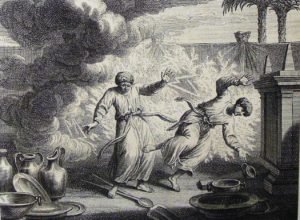
Nadab and Abihu were unfaithful to Elohim in that they neglected to take his commandments seriously. Perhaps they thought that his instructions in righteousness didn’t apply to them but to someone else, or that his laws were done away with, or that YHVH Elohim simply didn’t really mean what he said. Whatever the case, they became lukewarm and profaned the holy things of Elohim through their excessive use of alcohol and careless indifference to the Word of Elohim. Because they were in leadership as priests and sons of Aaron the high priest, their example of unrighteousness like a spiritual contagion could have infected the children of Israel and destroyed that new nation at its inception. Therefore, YHVH Elohim had to deal quickly and forcefully with the erring and rebellious sons of Aaron. In answer to their sin of not obeying YHVH’s laws, the holy fire of Elohim came out (presumably from the tabernacle—a picture of Elohim’s heavenly tabernacle and throne room) and killed Nadab and Abihu then and there.
What are the lessons that we can learn from this horrific story, and what are the end time prophetic implications of it?
We learn from the book of Revelation that at end of the Messianic Age (or Millennium) unrepentant sinners will be executed by the fire of YHVH in the lake of fire (Rev 20:15) because they have been made drunk by the false religious teachings of the whore system of religious spiritual Babylon and Satan (Rev 18:3–4).
We are now living in an age where, thankfully, most of our sinful actions are not met with instant divine judgment (the case of Ananias and Sapphira in the Book of Acts would be a notable exception). Does knowing that YHVH will not instantly “zap” us with the proverbial lightning bolt from heaven when we sin cause us to become lax and even calloused toward sin in our lives? Do we truly walk in the fear of YHVH? Do we fear the consequences of sin even though the results may not be immediate? How loose is your spiritual walk? How many hidden sins that no one knows about do you have that you are failing to deal with?
The path of righteousness is becoming narrower and narrower. Moreover, there are levels of rewards in Yeshua’s kingdom. Not everyone will be “the greatest in the kingdom of heaven.” Some will be the least, and many will not even be there at all (Matt 5:19 cp. 1 Pet 4:18). Remember that the tares that were mixed in with the wheat were culled out and burned (Matt 13:24–30). This is a picture of the true versus false converts coexisting in the spiritual body of Yeshua or the church to the very end!
It is time for the people of Elohim to wake up from their spiritual lethargic and drunken stupor, repent of their sin of taking a careless and even indifferent view of YHVH’s commandments.
“And to the angel of the church of the Laodiceans write, ‘These things says the Amen, the Faithful and True Witness, the Beginning of the creation of Elohim: I know your works, that you are neither cold nor hot. I could wish you were cold or hot. So then, because you are lukewarm, and neither cold nor hot, I will vomit you out of My mouth. Because you say, ‘I am rich, have become wealthy, and have need of nothing’—and do not know that you are wretched, miserable, poor, blind, and naked—I counsel you to buy from Me gold refined in the fire, that you may be rich; and white garments, that you may be clothed, that the shame of your nakedness may not be revealed; and anoint your eyes with eye salve, that you may see. As many as I love, I rebuke and chasten. Therefore be zealous and repent. Behold, I stand at the door and knock. If anyone hears My voice and opens the door, I will come in to him and dine with him, and he with Me. (Rev 3:14–20)
And I heard another voice from heaven saying, “Come out of her, my people, lest you share in her sins, and lest you receive of her plagues.” (Rev 18:4)
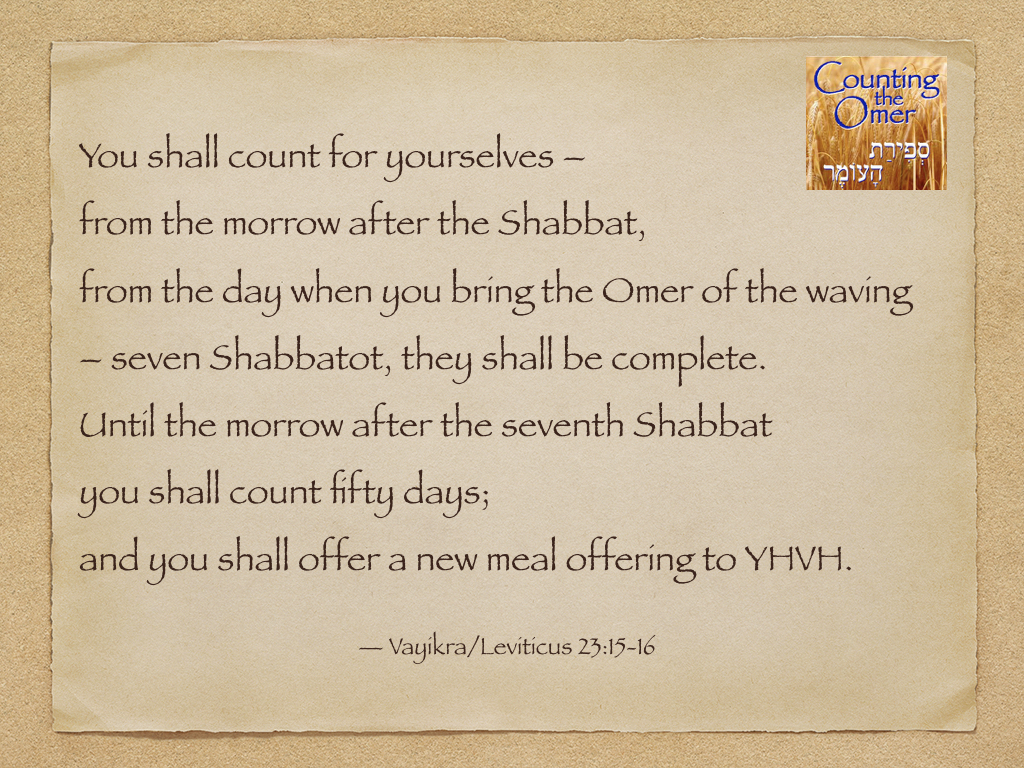
There are 49 days between First Fruits Day, which occurs during the Feast of Unleavened Bread, and the Feast of Weeks (or Pentecost). Why does YHVH in the Torah command us to count the seven weeks or 49 days between these two events, with Pentecost occurring on the fiftieth day? The short answer is that Yeshua doesn’t want to marry a spiritual baby. For the long answer, keep reading…
From the Depths of Slavery to a Kingdom of Priests
Every detail in Scripture is for our learning and edification. All the examples of the past are for our learning upon whom the ends of the world are come (1 Cor 10:11; Rom 15:4). Everyday, YHVH is uncovering the prophetic mysteries hidden in the Scriptures that are being revealed to those who diligently seek him by diligently studying to show themselves approved as a workman rightly dividing YHVH’s Word (2 Tim 2:15).
YHVH’s command for us to count the omer as a countdown to the Feast of Weeks (Heb. Shavuot; Gr. Pentecoste, Lev 23:15–16) memorializes the Israelites’ journey from spiritual babyhood to adulthood. During this 49-day count, Israel ascended from out of the depths of slavery and suffering in Egypt, was baptized in the Red Sea, and then arrived at Mount Sinai—a place of a spiritual standing before YHVH as a kingdom of priests (Exod 19:6). It was there that YHVH gave them his instructions in righteousness—the Torah on Shavuot.This period represents Israel’s passage from slavery to freedom. They came out of slavery permeated with the leaven—the sins, values, and pagan concepts—of Egypt leaving it all behind as pictured by the Feast of Unleavened Bread. YHVH gave Israel 49 days to overcome and to get rid of the impurities of Egypt, and to become the nation of Israel—a holy priesthood and the bride of YHVH. There, at the foot of Mount Sinai, YHVH wanted them to become his ambassadors to this world of the truths of his heavenly kingdom.
The counting of the omer is the story of our lives also. It pictures our going from bondage to the world, the flesh and the devil and coming to a place of spiritual standing before YHVH, so that we can be used of him to advance his kingdom.
It’s a process ordained of YHVH and it’s his pattern that we must follow. There is no escape from this process if we are to be groomed and prepared for use in YHVH’s service.
Why Fifty Days Between the Wave Sheaf Offering and Shavuot?
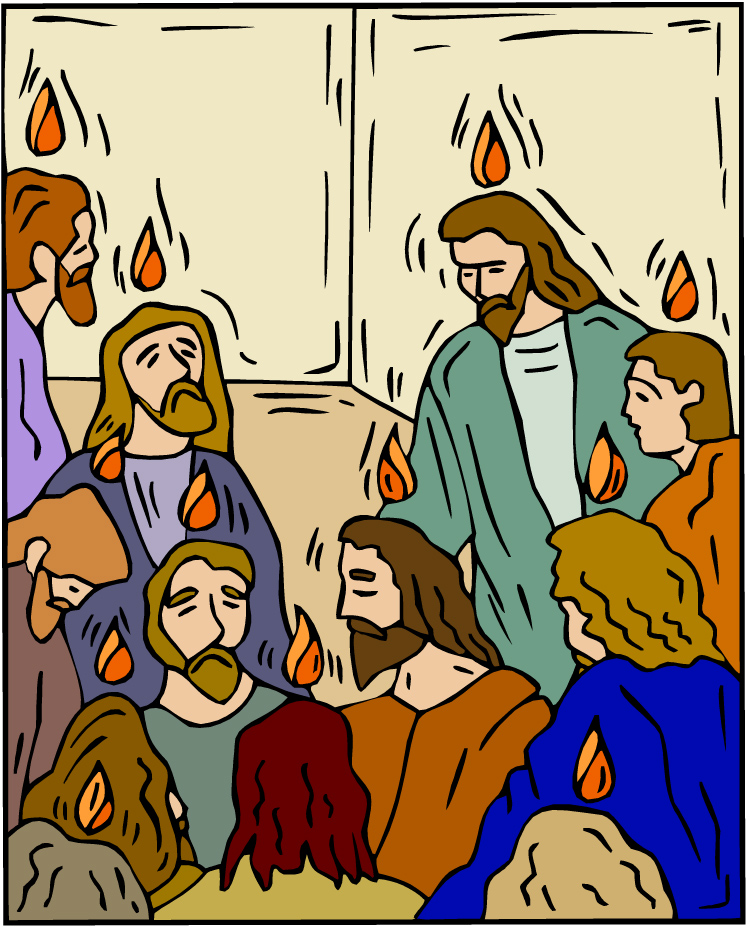
Fifty is the biblical number signifying complete redemption or liberty. In ancient Israel, all debts were forgiven every seven years. This was called the seven-year cycle. Every seven years, one had to let their land rest; no crops were planted. This was called the land Sabbath. Seven seven-year cycles equaled 49 years. In the Scriptures, we see that seven is the number YHVH uses to signify completion or perfection. Therefore, seven sevens, or 49 years, signified total completion. Seven Sabbaths represents redemption, liberty or rest in its fullest or ultimate sense. The fiftieth year was therefore the year of jubilee when all slaves were set free, all land was returned to its original owners and when all debts were forgiven. If Passover and the Feast of Unleavened Bread signified deliverance from sin (Egypt), then Shavuot, occurring 50 days after the wave sheaf offering during the week of the Feast of Unleavened Bread, symbolizes total redemption, deliverance and victory over sin. How? For us, this occurs through the divine gift and glorious power of the indwelling presence of the Ruach HaKodesh (the Set-Apart Spirit), which Yeshua poured out upon his disciples on the day of Pentecost.
We must recognize this YHVH-ordained process, submit to it and realize what he wants to accomplish in our lives as a result. As we are going through the process, we must keep our eyes on the end goal and keep heading in that direction. Yeshua is that end goal. He is the “end” or “final aim, goal of the Torah” (Rom 10:4). He is “the fulfillment of the law” or full manifestation or fruition of the Torah (Matt 5:17). As such, he is our example to follow. Paul says we are to imitate him—to do what he did (1 Cor 11:1).
The 49 Days Represent a Time of Overcoming and Spiritual Development
Continue reading
Acts 1:5, Baptized with the Holy Spirit.
We Need Spiritual Activation
To enter into a relationship with YHVH Elohim, our Creator and Father in heaven, and to become his sons and daughters, we must be spiritually activated.
Man is comprised of three parts: body, soul and spirit (1 Thess 5:23). Our soul (our mind, will and emotions) controls what we think, say and do. The spirit part of man is what connects to the Spirit of YHVH Elohim. About the man’s spirit, the Scriptures talk say this:
But there is a spirit in man: and the inspiration of the Almighty giveth them understanding. (Job 32:8)
Who knoweth the spirit of man that goeth upward, and the spirit of the beast that goeth downward to the earth? (Eccl 3:21)
The burden of the word of YHVH for Israel, saith YHVH, which stretcheth forth the heavens, and layeth the foundation of the earth, and formeth the spirit of man within him. (Zech 12:1)
For what man knoweth the things of a man, save the spirit of man which is in him? even so the things of Elohim knoweth no man, but the Spirit of Elohim. (1 Cor 2:11)
Man can’t enter into a relationship with a YHVH who is a spirit through his soul (his mind, will and emotions). Elohim is a Spirit, and we must relate to him through the Spirit.
But the natural man does not receive the things of the Spirit of God, for they are foolishness to him; nor can he know them, because they are spiritually discerned. (1 Cor 2:14)
But the hour cometh, and now is, when the true worshippers shall worship the Father in spirit and in truth: for the Father seeketh such to worship him. Elohim is a Spirit: and they that worship him must worship him in spirit and in truth. (John 4:23–24)
For man to relate to Elohim, he must do so through his spirit. This means man’s spirit must be activated, which occurs at the time of his spiritual birth — when a man is “born again” or born of the spirit (John 3:5) at the time of his spiritual conversion. When this occurs, a man receives in himself the Spirit of Elohim, which activates and controls the spirit in man, which in turn controls the soul (the mind,will and emotions), which in turn tells the body what to think, say and do.
When we are spiritually born again, our spirit man is activated by the Spirit of Elohim.
The spirit of a man is the lamp of YHVH, Searching all the inner depths of his heart. (Prov 20:27)
But there is a spirit in man, and the breath of the Almighty gives him understanding. (Job 32:8)
The Spirit Himself bears witness with our spirit that we are children of Elohim (Rom 8:16)
That He would grant you, according to the riches of His glory, to be strengthened with might through His Spirit in the inner man, that Messiah may dwell in your hearts through faith (Eph 3:16–17)
Now we have received, not the spirit of the world, but the Spirit who is from Elohim, that we might know the things that have been freely given to us by Elohim. These things we also speak, not in words which man’s wisdom teaches but which the Holy Spirit teaches, comparing spiritual things with spiritual. But the natural man does not receive the things of the Spirit of Elohim, for they are foolishness to him; nor can he know them, because they are spiritually discerned. (1 Cor 2:12–14)
But you have an anointing from the Holy One, and you know all things. … But the anointing which you have received from Him abides in you, and you do not need that anyone teach you; but as the same anointing teaches you concerning all things, and is true, and is not a lie, and just as it has taught you, you will abide in Him. (1 John 2:20, 27)
And every spirit that does not confess that Yeshua the Messiah has come in the flesh is not of Elohim. And this is the spirit of the Antimessiah, which you have heard was coming, and is now already in the world. (1 John 4:3)
Born of the Spirit Versus Baptized in the Spirit
What’s the difference between being born of the Spirit and being baptized in the Spirit?
Continue reading

Matthew 28:1, When did the early Christians first celebrate a day commemorating the resurrection of Yeshua?
Although the resurrection of Yeshua the Messiah is a biblical and historical fact, it’s celebration (known as Easter), is neither commanded in the Scriptures, nor was it celebrated by the original disciples of Yeshua. It is purely an invention of the church, which eventually replaced Passover! Here are the facts:
In A History of Christianity (vol. 1), Kenneth Scott Latourette states that notice of Easter as a festival occurs in the middle of the second century, but that festivals commemorating the resurrection of Messiah were presumably observed by at least some Christians from much earlier times (p. 137). Church historian, Philip Schaff, also attributes the beginning of the Easter festival to the middle of the second century (History of the Christian Church, vol. 2, p. 207). He states that the Christian Passover naturally grew out of the Jewish Passover, as the Lord’s Day (Sunday) grew out of the Sabbath. “It is based on the view that Christ crucified and risen is the centre of faith. The Jewish Christians would very naturally from the beginning continue to celebrate the legal Passover, but in the light of its fulfillment by the sacrifice of Christ, and would dwell chiefly on the aspect of the crucifixion. The Gentile Christians, for whom the Jewish Passover had no meaning except through reflection on the cross, would chiefly celebrate the Lord’s resurrection as they did on every Sunday of the week.” He notes that the early Christians commemorated the entire period between the death and resurrection of Yeshua with vigils, fasting, special devotions, meetings culminating in a resurrection feast celebrating the whole work of redemption. The feast of the resurrection gradually became the most prominent aspect of the Christian Passover (Easter celebration), but the crucifixion continued to be celebrated on Good Friday” (ibid., pp. 207–208).
Christians universally kept the Passover on the biblical date of Abib (also known as Nisan) 14/15, irrespective of the day of the week until A.D. 135 according to leading Sabbath scholar Prof. Samuele Bacchiocchi quoting the fourth century Christian historian Ephiphanius (From Sabbath to Sunday, p. 81). “This conclusion,” continues Bacchiocchi, “is supported indirectly by the two earliest documents mentioning the Passover celebration, since both emphasize the commemoration of the death rather than the resurrection of Christ. The Ethiopic version of the apocryphal Epistle of the Apostles [or Didache] says, ‘and you therefore celebrate the remembrance of my death, i.e., the Passover’ (ch. 15). In the Coptic version the passage is basically the same, ‘And you remember my death. If now the Passover takes place …’ (chap. 15)’ (ibid., p. 82).
The second document that attests to the early church’s emphasis on the death rather than the resurrection of Yeshua is the Sermon on the Passover, by Melito, Bishop of Sardis (died ca. A.D. 190). According to Bacchiocchi, Melito provides a most extensive theological interpretations of the meaning of the Passover for early Christians. “Though Melito makes a few passing references to the resurrection, it is clear from the context that these function as the epilogue of the passion drama of the Passover. The emphasis is indeed on the suffering and death of Jesus which constitute the recurring theme of the sermon and of the celebration” (ibid., p. 83).
“The resurrection,” Bacchiocchi admits, “however, did emerge in time as the dominant reason for the celebration not only of the annual Easter-Sunday, but also of the weekly Sunday. The two festivities, in fact,… came to be regarded as one basic feast commemorating at different times the same event of the resurrection.” Bacchiocchi concludes,
It would seem therefore that though the resurrection is frequently mentioned both in the New Testament and in the early patristic literature, no suggestion is given that primitive Christians commemorated the event by a weekly or yearly Sunday service. The very fact that Passover, which later become the annual commemoration of the resurrection held on Easter-Sunday, initially celebrated primarily Christ’s passion [death] and was observed on the fixed date of Nisan [Abib] 15 rather than on Sunday, makes it untenable to claim that Christ’s resurrection determined the origin of Sunday worship during the lifetime of the Apostles. (ibid. p. 84)

Leviticus Chapter Nine Insights
Leviticus 9:1, 9, 15, 18, Take for yourself…sons of Aaron…the people’s offering. Redemption (along with obedience to YHVH’s commands leading to righteousness and holiness) starts with the individual (Aaron the high priest)—especially the head or priest of the home (the husband or father) and then ripples out to the immediate family (“the sons of Aaron”) and then spreads to those around us (“the people”).
Leviticus 9:2–4, YHVH will appear. It is impossible to appear before YHVH Elohim without the shedding of innocent blood for the atonement of man’s sins. Man is too sinful and unholy to be able to come before his perfect and holy Creator. The sooner human’s realize their sinfulness and unworthiness, and the need to deal with the sorry state their live is in, the sooner they will be able to fill their inner (some say the “God-shaped) void and the unmet need of having an intimate relationship with their Creator.
Leviticus 9:6, This is the thing. When atonement for sin is made, and a person comes to their Creator on that basis, YHVH and his glory will appear in one way or another in that person’s life.
Leviticus 9:6, 23, The glory [kobowd] of YHVH. Kobowd means “glory, honour, glorious, abundance, riches, splendour, dignity, reputation, reverence.” The root word of kobowd is the verb kabad or kabed meaning “to be heavy, be weighty, be grievous, be hard, be rich, be honourable, be glorious, be burdensome and be honoured.” According to The TWOT, the literal meaning of kabad/kabed is rarely used in Scripture; rather, its figurative meaning (e.g. to be heavy with sin) is more commonly used. As such, in Scripture it often refers to a weighty, impressive or prominent person in society who is worthy of honor and respect.
Continue reading