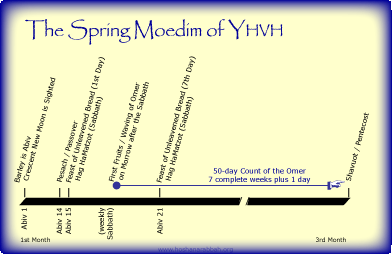
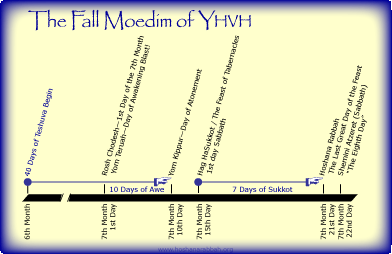
Over the years, I have published probably hundreds of written and video resources on the biblical feasts, which are all available to you free of charge. There are too many to list here, so I will provide links to where you can find them.
Isaiah 61:10,He has clothed me with garments of salvation … robes of righteousness.The Hebrew word for salvation is Yesha (Strong’s H3468), which forms the root for the word yeshua meaning “salvation,” which, of course is the derivation of the Messiah’s personal name, Yeshua. How does Scripture define the word righteousness? (For the brief answer, reference Ps 119:172.) We see in this verse an interplay between the concepts of being clothed in Messiah’s salvation and works of righteousness, which is Torah obedience. Now relate these two concepts to Ephesians 2:8–9, which describes how we are saved spiritually, and then to Ephesians 2:10, which describes the proof of our salvation.
Now let’s take the next step in our line of logic by turning to Revelation 12:17 and 14:12 to discover what are the identifying marks of the end-time saints. Now relate this to the robes of righteousness the bride of Yeshua will be wearing in Revelation 19:7–9 with special emphasis on verse 8. The KJV reads, “for the fine linen is the righteousness of the saints,” while both the NIV and NAS read “righteous acts” for “righteousness.” What are the righteous acts of the saints? (Again read Ps 119:172 along with John 14:15 and 1 John 2:3–6. Now read 2 Pet 3:14; Eph 5:27; Heb 12:14; Matt 5:48 and John 12:48.) As a famous radio personality of our time likes to say, “Now go and do the right thing!”
Isaiah 62:2,The Gentiles shall see your righteousness. Compare this verse with Isaiah 60:1–3. How will the heathens see your righteousness if you dress, act, speak, live like a heathen and follow the heathen religious customs and doctrines that have made their way into the church system? Remember (from the comments on Isaiah 61:10 above) how Scripture defines righteousness?
Isaiah 62:6,I have set watchmen upon your wall.Who are these watchmen? (Read Isa 21:6, 11, 12; Ezek 3:17; 33:2, 6, 7; Hos 9:8.) What is the current state of many of the spiritual watchmen? (Read Isaiah 56:9–12 compared to John 10:7–13.) Other than guarding the sheep, what are the watchmen to be doing? Read Jeremiah 6:16–19 where we learn that they are to be turning YHVH’s people back to the ancient paths of YHVH’s instructions and precepts in righteousness—the Torah.
Isaiah 62:10,Lift up a standard.The Hebrew word for standard is nec, pronounced nace (Strong’s H5251/TWOT 1379a) meaning “signal pole, banner, ensign, sign or sail.” According to The Theological Dictionary of the Old Testament, nec generally refers to “a rallying point or standard, which drew people together for some common action or for the communication of important information.” A standard, banner or flag is usually placed at a high or conspicuous place within the camp or community. There, a signal pole, sometimes with a flag attached, would be raised as a point of focus or object of hope. In Exodus 17:15, we discover that one of YHVH’s covenant names is YHVH-Nissi or YHVH My Banner. Isaiah prophetically declares that Yeshua, the Root of Jesse, would be “an ensign to the nations” (Isa 11:10) signifying the lifting up of Israel’s messianic king around whom all men would gather (TWOT, vol. 2, p. 583). In Isaiah 62:10–12, the prophet declares that a standard will be lifted up over the nations for the daughter of Zion (the land of Israel) signalling their return to Israel from the nations among which they have been scattered. What makes this end-time remnant of Israel holy (set-apart) and redeemed? What is this standard or rallying point that YHVH will lift up over the nations causing them to return to their land and spiritual roots? How is this being fulfilled today among YHVH’s people? Who is that banner? The answer to this question can be found in some of the neighboring verses:
Verse 8, Who is “the arm of his strength” (see Isa 53:1).
Verse 10, Who is the One who is likened to a gate that people are to go through? (See Ps 24:9; John 10:7, 9.)
Verse 10, Who is “the way for the people? (See John 14:6.)
Verse 10, Who is like a banner that literally gets lifted up causing eyes to look at him? (See John 3:14.)
Verse 11, Who is the salvation that Isaiah prophesied was coming? To answer this question, what is the Hebrew word for “he will save” and “salvation”? To find the answer, if you have a Strong’s Concordance, look up H3442 and H3444. (Hint: it’s the Hebrew word for Jesus.)
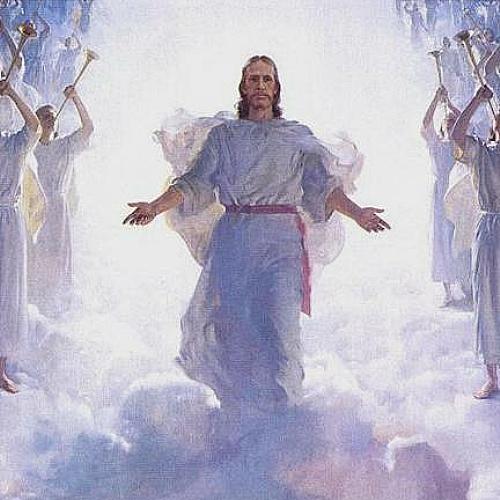
Verse 11, Who is the One coming who is bringing rewards with him? Rewards for both the righteous and the wicked?
Isaiah 63:1–6,Comes from Edom. Who is Edom? Both Christian and Jewish Bible commentators see this passage referring to YHVH avenging Israel for Edom’s perpetual hatred and persecution of Israel. The Jews relate Edom not only to the literal descendants of Esau, but see Edom as a metaphor for all those who have persecuted the Israelites down through the ages including the Babylonians, Greeks, Assyrians, Romans, and even the Germans. (Relate this passage to the parallel passages in Rev 14:14–20.) Even as Esau and his small army stood blocking the way of Jacob’s return to the Promised Land in Genesis 32, so Edom will attempt to prevent Jacob’s descendants from doing the same in the end days. How is this being fulfilled in the land of Israel today? Who is attempting to thwart Israel’s every attempt to re-establish itself in its homeland today? Isaiah 63 shows us how YHVH will eventually deal with Edom for their antagonism against YHVH’s people. Other Scriptures that deal with Edom’s demise and punishment at YHVH’s hands because of their perpetual hatred for Israel include Jeremiah 49:7–22; Ezekiel 25:12–14; 35 (entire chapter); 36:5 (where Idumea is another reference to Edom) Joel 3:19; Amos 1:6, 9, 11; 2:1; the entire Book of Obadiah, and Malachi 1:4.
Isaiah 63:9,The angel of his presence saved them. This is another one of those short prophetic passages that could be easily passed over, but which is significant. The word angel is malak (Strong’s H4397) meaning “messenger” or “representative” and can refer to both an earthly or human messenger, as well and a heavenly or divine/supernatural messenger. With regard to the latter, Scripture reveals that some are angelic messengers (e.g., Gen 19:1; Pss 91:11; 103:20), as well as a singular divine messenger who comes in the name of Elohim, from the Presence of Elohim acting as Elohim, and revealing himself to be Eohim, while presenting himself in humanesque form (e.g., Gen 22:11; 31:11; 48:16; Exod 3:2; 23:20, 23; etc.) The word presence in Isaiah 63:9 is panyim (Strong’s H6440) meaning “face.” To whom is this a reference? Compare Genesis 32:30 (Peniel means face of El/God) with Hosea 12:3–4. Most Christian Bible commentators see this messenger as a preincarnate appearance of Yeshua, which in theological terms is referred to as a theophany, or more specifically, a Christophany. In Isaiah 63:9, what does this Messenger from YHVH’s Presence or face of Elohim do for Israel? Discuss the concepts of salvation and redemption relating this to the work of Yeshua the Messiah as revealed in the Testimony of Yeshua (New Testament).
Acts 21:23–27, Vow. When Paul offered a sacrifice, is this proof that the sacrificial system is still in force today, even after the death of Yeshua the Messiah on the cross? Some people say yes despite what the writer of Hebrew’s lengthy discussion about how Yeshua’s death replaced the sacrificial and Levitical systems (Heb chapters 8–11; 10:10).
The rituals that Paul and his fellow Israelites did in Acts 21 actually fits the description of one who is coming out of a Nazirite vow (see Num 6:1–21). This was a sin offering and was the only way that the Torah allows one who has taken a Nazirite vow legally to terminate his vow to Elohim. A sacrifice was to be made at the door of the tabernacle (later the temple) by a priest.
Today, one can’t technically do a Nazarite vow, since there is no way legally to come out of it unless, of course, one stays a Nazirite until he dies. This is because there is no tabernacle or temple, and there is no Aaronic priest who is available to make the sacrifice. However, in Paul’s day, the priesthood still existed, and the temple still stood.
The sacrifice for coming out of a Nazarite vow is the only example of a disciple of Yeshua performing any sacrifice after Yeshua’s resurrection. Therefore, this sacrifice was a special exception for believers doing a sacrifice, else how could one legally come out of a Nazarite vow?
Why would Paul involve himself in a sin-sacrifice in Acts 21:24 after the death of Yeshua? We mustn’t read too much into the text. It is true that coming out of a Nazarite vow involved a sin offering. However, Acts doesn’t say that Paul was coming out of his own Nazarite vow. What the text says is that he was acting as a wealthy patron—an act of charity—for four individuals who, presumably were unable to afford the costs of paying for the necessary sacrifices to exit a Nazarite vow.
Admittedly, this is a perplexing passage. None of the Bible commentaries I examined on this text could give an adequate explanation as to why Paul would involve himself in this particular ceremony to prove to the Jerusalem mob that he was Torah-observant. The Acts text just doesn’t give us enough background information on the subject. One thing seems certain though. Paul was not making a sin offering for himself. His paying for the sacrifices of the Nazarites seems to have been a public relations gesture to appease those in the Jewish mob who were slandering him. It is a logical overreach and reading into the text to take Paul’s act of charity as him making a doctrinal statement favoring the continued validity of the sacrificial system after the death Yeshua, especially in light of what the other apostolic writers had to say about Yeshua’s fulfilling that system by his death. Certainly, the writer of Hebrews makes this point abundantly clear.
Acts 21:25, Observe no such thing. The phrase “that they should observe no such thing, except” is a dubious one and is not found in all the oldest and reliable Greek NT manuscripts. I suspect this is an example where the KJV got it wrong. My NKJV has a footnote attached to this phrase saying that it’s not found in the Alexandrian family of NT texts. Furthermore, it’s not in the Aramaic Peshitta. Therefore, I suspect that this phrase was a scribal addition and was not in the original autographs, especially since it is inconsistent with the rest of the Scriptures including the writings of Paul.
Leviticus 22:1–31, Profane Vs. Holy. In this section of the Torah, YHVH makes some strong delineations between that which is profane, polluted or contaminated and that which is kadosh or literally to be clean, consecrated, set-apart in service to YHVH. To come into his presence demands that men follow high and exacting standards. Why? It is to teach sinful man that although YHVH is high and lifted up above the mortal and mundane plane in his set-apartness and righteousness, he is not unapproachable by men if they will prepare themselves properly to come into his presence (see Eccl 5:1–2). He wanted to impress this upon the Israelites as they began the service of the tabernacle.
Therefore, YHVH specifies that certain offerings brought to his altar that are contaminated will be rejected if (a) the offerer is in a state of physical contamination, (b) he is contaminated through improper marriage, or (c) he is offering a blemished animal. What can we learn from this? What offerings do we bring to YHVH’s altar now? Our time, our money, our energy, our talents and spiritual gifts, our devotion? Do we give him the best? Do you pray to him and study his Word in the morning when you are the freshest, or do you give him the crumbs of your day after a hard day’s work just before bed when you offer up “sleepy time” prayers and read the Scriptures as your drifting off to sleep? Are your tithes the crumbs and leftovers after all the bills are paid, the government has taken out its portion and your play money has been set aside?
If you are a young person, are you serving YHVH while you have the health and vigor of youthfulness, or are you planning on playing now and serving YHVH after you have sated the lusts of the flesh, if at all? (Read Eccl 11:9–10; 12:1–14 and Matt 6:24.) Examine your life. Are you giving YHVH the best in all areas? If not, repent and change your priorities, and then see what happens in your spiritual walk and relationship with him!
The Bible reveals that there are many aspects relating to the concept of holiness or purity. One thing is for certain: without holiness, no one will ever see YHVH (Heb 12:14). Holiness or purity is not only a mindset, but a lifestyle—a way of living, acting and speaking. Holiness is much more than just acting religious!
Leviticus 22:2 and 32,Profane not my set-apart [kodesh] name. Chapter 22 opens and closes with YHVH commanding his people to not desecrate his kodesh name, but to sanctify or to keep it set-apart. In Hebrew thought, a name is not only what we verbally call a person, but it is also a reflection of one’s character and identity. Why does YHVH stress the importance of revering and sanctifying his name? How does having a proper understanding of his name help humans to not offer profane, polluted or contaminated offerings to YHVH? In Exodus 20, we find the Ten Commandments. The Jews teach that the first word or command is not “You shall have no other gods before me …” but rather “I am YHVH your Elohim …” Why is knowing his identity and his name so vital to a righteous walk? Do you use his name carelessly or utter it with great fear and reverence?
This chapter contains the regulations for the conduct of priests. YHVH’s standards are high, and a priest could easily be disqualified from service for failing to measure up. YHVH demands higher standards of righteousness, obedience and holiness for those in leadership over his people.
The higher up in leadership one desires to go, the more one’s walk must characterize service, sacrifice, self-deprecation and holiness (see 1 Tim 3:1–13; Tit 1:5–9). The standards of holiness rise as one seeks to attain a deeper and more intimate relationship with YHVH, for as he entrusts a person with greater spiritual responsibility he gives a greater level of anointing commensurate with the responsibilities of the ministerial office. Spiritual responsibility and divine anointing aren’t things to be trifled with or taken for granted.
Yeshua condemned the religious leaders of his day for not practicing what they preached (i.e. hypocrisy), for living lives of pretense and show (he called such ones “whited sepulchers full of dead man’s bones”), and for greediness and pride.
Check your walk in these areas. Do you want to “go places” with YHVH in service to him and his people? Are you willing to pay the price of self-sacrifice and self-deprecation? The sacrifices necessary to be Yeshua’s bondservant comes at a high price (especially for the flesh), but the spiritual rewards are priceless!
Leviticus 10:17–23, Physical defects on the priests.The priests who ministered before YHVH Elohim in the tabernacle were to be completely without physical defect. Why? Because they were a prophetic foreshadow of Yeshua the Messiah who is our perfect and Great High Priest.
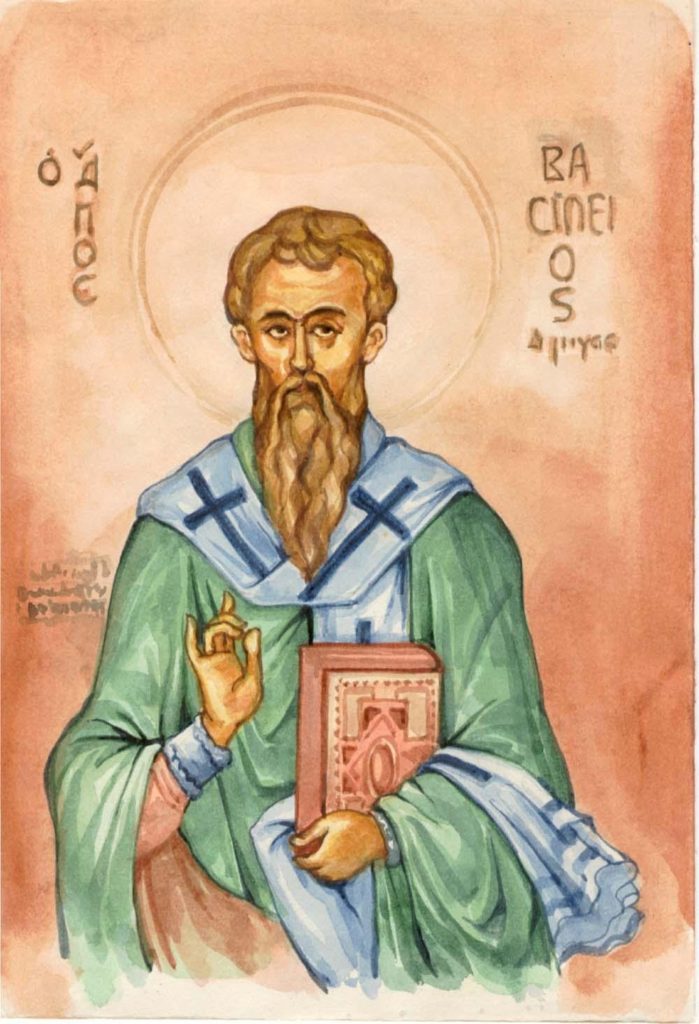
The word bishop is the Greek word ἐπίσκοπος (pronounced episkopos) and means “an overseer, patron, one who watches or protects, one who cares for others, a man charged with the duty of seeing that things to be done by others are done rightly, any curator, guardian or superintendent; the superintendent, elder, or overseer of a Christian church” (TDNT, vol. 2, p. 608). This word or related cognates occur only several times in the NT (Luke 19:44; Acts 1:20; 1 Tim 3:1, 2; 2 Tim 4:22; Tit 1:7; 3:15; 1 Pet 2:12, 25).
Yeshua is the Chief Shepherd and Bishop over his people (1 Pet 2:25), with those holding those earthly offices under his authority.
The TDNT notes that the role of the episkopos is to strengthen that of the pastor in watching over the flock (e.g. Acts 20:28; 1 Pet 5:2). The NT with regard to the congregation in Ephesus seems to equates the episkopos with the presbuteros (or elders-leaders of a congregation, see Acts 20:28) indicating that there is more than one leader or overseer over a congregation—literally, a group of leader-elders. Elders (presbuteros), pastors (poimen) and bishops (episkopos) are again viewed as equivalent in regards to local leadership in 1 Peter 5:1 and 2. In this passage, the leadership terms are in the plural, thus not indicating a central lead figure per se although it is the scriptural norm from the time of the patriarchs, through the priesthood, judges and kings of Israel to have a human who exercises ultimate authority. Such leaders can be elected (Acts 1:21ff; 6:3ff) or be appointed by an apostle (Acts 14:23; ibid., p. 615f).
Read Isaiah 60. How many of the prophecies contained in this chapter have been fulfilled? Can you think of any time in Israel’s troubled history when the blessed promises of Isaiah 60 had been fulfilled in any kind of a meaningful way? The answer to all of these questions is obviously, no! If YHVH’s Word is true, then a time is yet to come when these prophecies will become a reality. These prophecies will be fulfilled during the Millennium and in the New Heaven and the New Earth when the New Jerusalem comes down from heaven (or “heaven on earth,” see Rev 21 and 22).
What Scripture Says About the Messianic Era or Millennium
The Millennium or Messianic Era lasts for a 1000 years. (Rev 20:2–7)
The regathering back into the land of Israel (the Promised Land) of Israelites who have been scattered throughout the earth in fulfillment of YHVH’s promises to Abraham is to occur. (Jer 32:36–38; Isa 14:1–2; Isa 60: 4, 9)
Ancient Israel entering the Promised Land is a type of believers entering into the Millennium. (Heb 3–4)
During the Millennium the following is to occur:
Elohim will live with his people. (Ezek 37:26–28)
David will rule as King over Israel. (Ezek 37:24–25)
YHVH’s annual feasts will be kept by all people. (Ezek 46:3–6; cf Col 2,16–17)
YHVH’s government will be established on Mount Zion in Jerusalem. Torah will go forth from Mount Zion and the nations will go up to Mount Zion to worship YHVH in the house (temple) of YHVH. (Mic 4:1–2)
A highway of YHVH, or a highway of holiness will lead to Zion. (Isa 35:8–10)
Whether literal or spiritual, living waters will flow from Jerusalem and Yeshua’s throne. In Ezekiel’s vision, water was flowing from under the threshold of the temple toward the east. (Ezek 47:1; also Zech 14:8)
On the banks of this river, there were very many trees on each side. (Ezek. 47:6–9)
People will live to a very old age. (Isa 65:20)
Crowds of people will flock to Jerusalem. (Zech 2:1–4; Isa 49:14)
The temple in Jerusalem will be rebuilt. (Zech 6:15; 14:20–21; Hag 2:6–9)
The Messiah will be king over the whole world. (Zech 6:9–13; Isa 11:1–5; Rev 20:6; 5:9–10)
The nations that do not want to serve and obey YHVH will be destroyed. (Isa 60:12; Zech 14:16–19; Isa 9:5–7)
The Millennium is the fulfillment of many glorious prophetic promises YHVH has made concerning his people of Israel (including Christians). Many Christians see the Millennium as the place where the righteous Israelites (i.e. Jews) will reign with Messiah, while the Christians will be reigning spiritually in heaven. In other words, the Jews have a physical inheritance or kingdom on this earth, while the Christians have a spiritual inheritance and kingdom in heaven. For those who believe this way, the Millennium is a symbolic metaphor for heaven.
For those who believe that the Millennium is merely a symbolic metaphor, the 70 or so scriptures in the Tanakh dealing with the Messianic Age are assigned to the “church.” To interpret Scripture in this manner is a form of spiritualization of the peshat or plain meaning of these prophecies and a form of replacement theology where the church as replaced the Jewish people. Much of this confusion stems from not knowing who Israel is as opposed to the Jews (descended primarily from the tribe of Judah, which is only one of the twelve tribes of Israel).
In my understanding of the Millennium, we take literally the words of Yeshua when he said that the meek would inherit the earth (Matt 5:5), not heaven. For us, this means that YHVH’s people, the saints, made up of both the Jews and those of the nations who combine in Yeshua to become the one new man and nation of Israel (Eph 2:11–19) and part of the olive tree of Israel (Rom 11:17ff), and are the seed of Abraham (Rom 4:16; 9:8–11; Gal 3:7, 8, 14, 28–29). These people will rule with Yeshua as kings and priests in his kingdom on earth for a thousand years during his millennial kingdom on earth (Rev 1:6; 5:10).