Revelation 1:1, Must shortly take place/come to pass. John expected that the prophecies that followed were about to occur. This seems to be proof that the Book of Revelation (at least up to Rev 10:11) was written before A.D. 70. The second half of this book was John prophesying again (see Rev 10:11) and must have been written after the fall of Jerusalem at the hand of the Romans.
Revelation 1:2, Testimony. In the NT or Testimony (marturia) of Yeshua (as compared to the Old Testament, also known in the book of Revelation as the Word of Elohim), the word testimony (as found in many places) is either the Greek word marturia or marturion meaning “testimony, witness, or one who testifies.” Interestingly, our English word martyr comes from these Greek words. A martyr is one who testifies to their faith and is killed for it. These Greek words refer to both one who shares their testimony of the good news of Yeshua or the gospel message including their personal testimony. It can also refer to one who as a prophet testifies of future events, but the word is not confined to that meaning only. Consider this. One doesn’t have to be a prophet to testify to the future events that the Bible already tells us are coming such as the second coming, the establishment of Elohim’s kingdom on earth, punishment for the wicked and rewards for the righteous, the glorification of the saints as well as inclusion in the family of Elohim as his glorified and spiritual children. These are all future events and are part of the gospel message.
Marturia and marturian come from the root word martus which is “a witness in a legal or historical sense, a spectator to anything.” As born again believers in Yeshua, we are witnesses to the power of Yeshua in our lives and the validity of the gospel message. For example, Stephen was a martus or martyr (Acts 22:20) as he was preaching the gospel to those who stoned him (see also Rev 2:13 where Antipas was slain for his faith as well). In the Gospel of John, John the apostle writes (marturia) the record John the Baptist in John 1:19. In John 1:32, John the Baptist records or bears witness (martureo) of what he saw pertaining to Set-Apart Spirit coming down upon Yeshua. A little later, John the Gospel writer testifies (martureo) that Yeshua is the Son of Elohim (John 1:34). The word martureo is also used of those who viewed the miraculous resurrection of Lazaurs (John 12:17), and of John who was witness to or who bore record of (martureo) the death of Yeshua (John 19:35). Many more examples could be given, but you get the idea. Marturia and its cognates can have several meanings that include the gift of prophecy, but is not limited to that.
Revelation 1:7, Even they who pierced him. How will those who killed Yeshua see him at his second coming if they are dead? Only those alive on earth and the righteous dead will be resurrected at his second coming will see him. Perhaps, they will see him descending from the New Jerusalem in his power and glory at the end of the Millennium when he will resurrect all the unrighteous dead who then must appear before him on bent knew at the white throne judgment before being cast into the lake of fire.
Revelation 1:10, The Lord’s Day. This verse is one of the cliche biblical passages that mainstream church scholars use to “prove” Sunday’s replacement of the Sabbath. The problem with this position is that there’s no clear scriptural proof that the apostles ever changed the Sabbath to Sunday. What’s more, to view this passage as referring to Sunday is to take a phrase the early church fathers used as a euphemism for Sunday when pushing for Sunday in place of Sabbath observance and to retroactively apply this meaning to John’s use of the phrase. Frankly, it is biased and dishonest scholarship to take the phrase “the Lord’s day” with its second century colloquial meaning and then to back-apply this meaning to John’s use of the phrase when there’s no reason to believe this was John’s intended meaning.
Alternatively, the phrase, “the Lord’s day, can be a reference to the biblical term “the day of the Lord’s wrath” when YHVH, in the end times, will judge the nations for their wickedness. This is a point that several biblical scholars have made (see From Sabbath to Sunday, by Samuele Bacchiochi, p. 111; E. W. Bullinger’s Companion Bible footnote on Rev 1:10; The Jewish New Testament Commentary on this verse, p. 791, by David Sterns).
There is actually more scriptural proof that the phrase “the day of the Lord” is a reference to the seventh day Sabbath than to the first the week. In Isaiah 58:13, the prophet YHVH refers to the Sabbath as “my holy day…the holy day of the Lord.” So conceivably, it could have been on the Sabbath day itself that John received his vision on the island of Patmos about that great and terrible day of YHVH’s wrath that is to come on the earth just prior to the Messiah’s second coming.
Revelation 2
Revelation 2:17, A white stone. The Romans of biblical times exchanged a token of friendship between friends that could be passed on down from one generation to another. The ritual consisted of two friends writing their names on a tile of wood or stone, which was then divided in half and each took the piece containing name of their friend. To produce the counterpart of the one of the pieces to the other friend (or his heirs) guaranteed friendship and hospitality. The white stone with a new name on it is likely a reference to this first century practice (Manners and Customs, p. 70).
Revelation 2:27, A rod of iron. Yeshua’s rod of iron is similar to the scepter of a king, which was taken from the shepherds rod, since a king was viewed as the shepherd of his people. The scepter was not only a symbol of protection, but of power and authority.
Revelation 2:28, The morning star. In the Latin Vulgate Bible (translated by Jerome in about A.D. 400 for the Roman Catholic Church) is the official Latin Bible of the Catholic Church the biblical term morning start is translated into Latin as lucifer. According to the Catholic Encyclopedia, when morning star is translated as lucifer, it is not referring to the devil, but rather denotes the exalted state from which he fell. That exalted state refers to the glory of heaven or the morning star (Rev 2:28), and to Yeshua himself who Peter and John refer to as the Morning Star (2 Pet 1:19; Rev 22:16) (http://www.newadvent.org/cathen/09410a.htm). The name Lucifer appears in some Catholic liturgy. It would seem that this is not a reference to the devil, but to Elohim or to Yeshua.
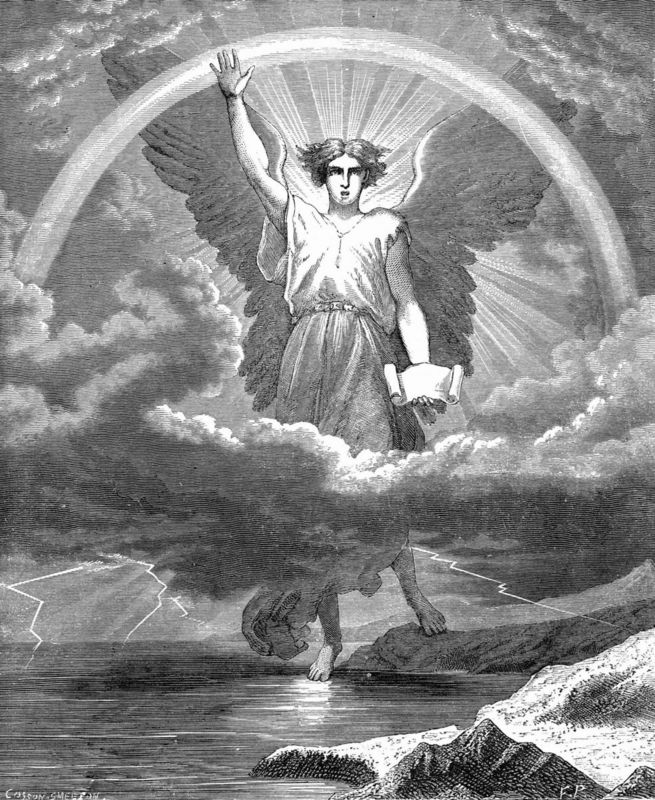
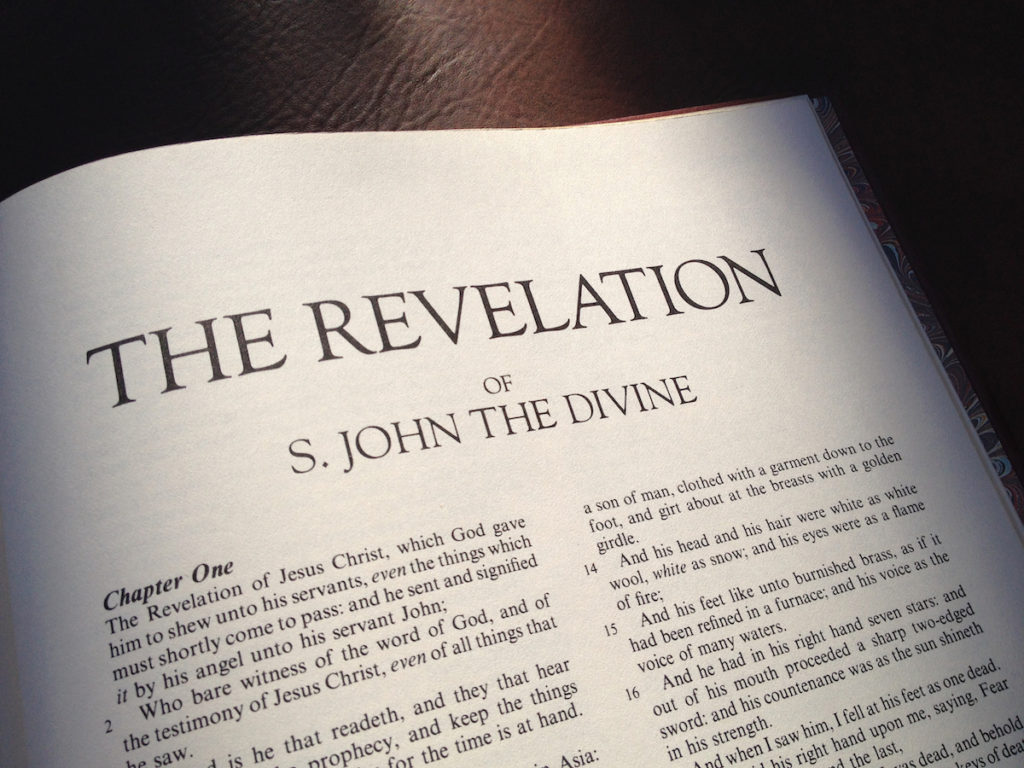
The Koine Greek name for the Book of Revelation is apokalupsis from which our English word apocalypse derives, is a word that in the minds of most people conjures up visions of horrific and cataclysmic events in which there is war, political and environmental upheaval involving mass death and destruction. This idea is a misnomer however. Though the Book of Revelation indeed foretells of a cataclysmic end times scenario, the Greek word apokalupsis literally means “laying bear, making naked; a disclosure of truth, instruction concerning things before unknown, manifestation, appearance,” and hence our English name for this book: Revelation. This meaning is made clear in the first verse of this same book.
The Revelation of Yeshua the Messiah, which Elohim gave unto him, to shew unto his servants things which must shortly come to pass; and he sent and signified it by his angel unto his servant John.
The Book of Revelation is just that—a revelation of things to come to pass, which Yeshua is making known to his servants (plural). This includes you and me.
Although, I don’t claim to have all or even much understanding pertaining to this book, I here share with you what I enlightenment I have been given to this point on several key topic. This is simply my understanding to this point until YHVH by his Spirit gives us more understanding. Until then, may we remain as little children, pale in hand, on the seashore of the vast ocean of YHVH’s unfathomable wisdom and knowledge in faith waiting for him to fill our buckets with more of his divine revelation.
What Should Be Our Perspective on the Book of Revelation?
On another note, there are those who champion the view that events of the Book of Revelation are primarily in the past tense. That is to say, Revelation records the events leading up to and following the destruction of the Jewish temple and Jerusalem in A.D. 70. The view that the events of Revelation were mostly fulfilled in the first century is called the preterist view, and those who support this position draw our attention to verses which point to the immediacy of the prophecies of the book being fulfilled—to events which must “shortly take place” (i.e. Rev 1:1, 3; 22:6, 10).
The problems with this view are several. To make it work, most of the prophecies of the book have to be allegorized. As such, preterists believe that little if anything Revelation says can be taken literally. The purpose of Revelation, they say, was to comfort the churches in Asia Minor in light of the persecutions they were enduring (Rev 1:4). While much in Revelation is obviously allegorical, to say that it all is, is simply applying a broad brush approach and, in my opinion, denies some of the basic rules of biblical interpretation. My approach is to take what the book says to be literal, unless the context or passages elsewhere in the Scriptures give us reason to interpret it symbolically.
The second major objection I have to the preterist view is that since most scholars agree that John wrote this book in the last decade of the first century, this view would make John’s Book of Revelation a record of history, as opposed to a prophecy “of things which must shortly come to pass,” which is contrary to the book’s purpose as the first verse of the book clearly states. The preterist view cannot accommodate this reality unless scholars can prove that John wrote all of his book before A.D. 70, a date which is at odds with the records of the early church fathers, which place the date of the books writing in the 90s.
Why I’m Not a Preterist
Preterism is the Christian eschatological (understanding of end time events) concept that all Bible prophecy has already been fulfilled including Yeshua’s Matthew 24 Olivet Discourse and those prophecies in the book of Revelation.
Our modern society has no concept of holiness. NONE whatsoever! This is because there is no fear—either reverential or dread—of Elohim. NONE! People, generally, are not only unaware of Elohim, but could care less. Live for them moment, make money and pursue the lusts of the flesh and eyes, and do what feels good is all most care people care about. And we wonder why society is ripping apart at the seams and lawlessness, anger, suicide, drug addictions, hatred and strife abound everywhere? Are we that clueless and lost as a society to be able to add two and two? Read on for the answer to these problems.
Holiness is the chief attribute of Elohim and the most defining aspect of his character. It has to do with the fact that Elohim is entirely good and without evil or moral defect and totally sinless. This is why the spiritual beings around his heavenly throne are constantly crying, “Holy, holy, holy” in his Presence (Isa 6:3; Rev 4:8). This is why one of his titles is The Holy One of Israel,which is used more than thirty times in the Tanakh (e.g. 2 Kgs 19:22; Ps 71:22; Isa 1:4; Jer 50:29). This is why the high priest who ministered in the Tabernacle of Moses and later in the temple wore a golden crown or headplate with the words inscribed on it, “HOLINESS TO YHVH.” Not only was this pointing upward to YHVH’s set-apartness, but man himself is to become holy or set-apart even as YHVH Elohim is set-apart, for we read in the Epistle to the Hebrews that the attribute of holiness is a prerequisite for a man coming into the Presence of Elohim (Heb 12:14).
YHVH Elohim made mankind in his own image (Gen 1:27), so that man could eventually become his glorified spirit children (John 1:12; Rom 8:14–15; 2 Cor 6:18; Gal 4:5–6; 1 John 3:1–2; Rev 21:7). As part of the process of becoming an immortal child of Elohim, man must become holy as he is holy (Lev 11:44, 45; 20:7, 26; 1 Pet 1:16). This is the ultimate destiny of those who will submit to YHVH’s process of transforming man from profane or polluted, sin-ridden beings to becoming holy or set-apart. What does this process involve and how does it affect you?
YHVH Is Preparing His Saints to Be a Kingdom of Priests
In the Bible, YHVH declared that it was the destiny of the Israelite nation to become a chosen and peculiar people and a kingdom of priest—to be special and unique among the nations of the world—to reflect the character and nature of YHVH Elohim—to be holy (in Hebrew, kadosh) as he is kadosh. The Hebrew word kadosh means “sacredness, consecrated, set-apartness or separateness.” Set-apart or separate from what? From the sin, profaneness and pollutions of the world with all of its sin and rebellion against the Creator. YHVH Elohim is set-apart or kadosh in that he is transcendent or above the mundane with its sinfulness. He invites humans to transcend the pollutions of the carnal and the mundane and to come up to his level. The saints as the end times priesthood of Yeshua need to embrace and internalize this identity for themselves as we will discuss below.
Now therefore, if you will obey my voice indeed, and keep my covenant, then you shall be a peculiar treasure unto me above all people, for all the earth is mine and you shall be unto me a kingdom of priests, and a set-apart nation. (Exod 19:5–6)
For you are an set-apart people unto YHVH your Elohim. YHVH your Elohim has chosen you to be a special people unto himself, above all people that are upon the face of the earth. (Deut 7:6 cp. 14:2)
What does this have to do with me, you might ask? Everything, as we’ll see shortly.
The Israelites were unique because YHVH gave them his Torah-commandments—his instructions to show them how to live righteously and how to love him and their fellow man.
You have [distinguished] YHVH this day to be your Elohim, and to walk in his ways, and to keep his statutes, and his commandments, and his judgments, and to hearken unto his voice: and YHVH has [distinguished] you this day to be his peculiar people, as he has promised you, and that you should keep all his commandments and to make you high above all nations which he has made, in praise, and in name, and in honor; and that you may be a set-apart people unto YHVH your Elohim… (Deut 26:17–18 cp. Isa 43:1; Tit 2:14)
As such, YHVH commissioned Israel to become a light to the heathen nations around them and by their good example to lead them to YHVH—the one true and holy or set-apart Elohim.
Therefore be careful to observe them; for this is your wisdom and your understanding in the sight of the peoples who will hear all these statutes, and say, ‘Surely this great nation is a wise and understanding people. For what great nation is there that has Elohim so near to it, as YHVH our Elohim is to us, for whatever reason we may call upon him? And what great nation is there that has such statutes and righteous judgments as are in all this Torah-law which I set before you this day? (Deut 4:6–8).
So that Israel could be a spiritual lighthouse to the world to lead them to the Creator, YHVH in his sovereignty positioned the nation of Israel at the crossroads of the major trade routes of the ancient world—between three continents: Africa, Asia and Europe. He hoped that Israel’s example as a righteous, set-apart and thus a blessed nation who possessed high moral and spiritual standards would favorably influence the foreign merchants and travelers who would pass through that country. Hopefully, they would carry news of this special nation back to their own countries. In this manner, Israel would become a kingdom of priests to the nations to teach them the ways of YHVH Elohim. Where has YHVH placed you in the crossroads of humanity, so that you can be a spiritual light to those around you? What are you doing to be that light?
Over the years, my wife Sandi and I have developed many free resources to help disciple YHVH’s people in a more Hebraic understanding of the Scriptures, while, at the same time, keeping the message of the gospel front and center.
Here is a list of those free, downloadable resources including the current calendar with dates for the upcoming biblical feasts as well as anticipated dates for next year’s biblical feasts.
Sandi and I work very had to serve you through keeping this information up to date and relevant. We make it available for you for free. If it is helpful to you, please share it with others.
Calendars
New moon updatesfrom Israel—check the front page of our website at http://www.hoshanarabbah.org or follow us on Facebook or Twitter (see links below).
Dates for the fall biblical feasts in 2020—https://www.hoshanarabbah.org/pdfs/moedim-dates-2020.pdf (For this year’s feasts, the expected dates on the list are the actual date of the feasts. When we made the list, we still didn’t know the exact dates until the new moon marking the first day of the seventh month was spotted in Israel, which it has now been spotted.)
Our new annual Scripture Reading Schedule for 2020-2021 with daily readings that begins 10/11/20 is now available to download and print. The link to the current 2019-2020’s Scripture Reading Schedule will still be available on the right sidebar under “Helpful Links” into next year. If you are using a mobile device or tablet, the link may be below, meaning you’ll need to scroll down instead.
Most of this week’s blog discussion points will be on these passages. If you have general comments or questions on the weekly Scripture readings not addressed in a blog post, here’s a place for you to post those. Just use the “leave a reply” link or the “share your thoughts” box below.
The full “Read Through The Scriptures In A Year” schedule, broken down by each day, can be found on the right sidebar under “Helpful Links.” There are 4 sections of scripture to read each day: one each from the Torah, the Prophets, the Writings, and from the Testimony of Yeshua. Each week, the Torah and haftarah readings will follow the traditional one-year reading cycle.
** A different Haftarah is read when it is a special sabbath in Jewish tradition. This week it is Shabbat Shuva on the traditional calendar. Otherwise, 2 Samuel 22:1–51 would be read.
Weekly Blog Scripture Readings for 9/20 through 9/26/2020.
And God said, Let there be lights in the firmament of the heaven to divide the day from the night; and let them be for signs, and for appointed times, and for days and years. (Gen 1:14) Dear Friends,
The new moon was sighted from Israel this evening, Friday, 18 September 2020!
* From Tiberias by Denis and Maureen Chkolnik at 7:06pm. * From presumably the Zevulun Valley by Yoel Halevi and his son at 7:13pm.
This means sunset on 18 September 2020 marks the beginning of the new month. Be sure to keep track what number month this is, based on when you started the new year!On behalf of all of us who rely on these observations, we wish to thank everyone in Israel who looked for the new moon this evening and sent in their observations in a timely manner. We are also extremely grateful to those of you who have stepped up and are supporting our efforts from afar, your support helps us be able to collect the observations and share these reports around the world.
If reliable first-hand New Moon and Aviv Reports from Israel are of value to you, please consider supporting our efforts. We could really use your support in restoring the Biblical Calendar.
The Sound of the Shofar Is Calling Us to Spiritual Revival
There are only two verses in the Bible that command the keeping of Yom Teruah.
And YHVH spake unto Moses, saying, Speak unto the children of Israel, saying, In the seventh month, in the first day of the month, shall ye have a sabbath, a memorial of blowing of trumpets, an holy convocation. Ye shall do no servile work therein: but ye shall offer an offering made by fire unto YHVH. (Lev 23:23–25)
And in the seventh month, on the first day of the month, ye shall have an holy convocation; ye shall do no servile work: it is a day of blowing the trumpets unto you. And ye shall offer a burnt offering for a sweet savour unto YHVH; one young bullock, one ram, and seven lambs of the first year without blemish: And their meat offering shall be of flour mingled with oil, three tenth deals for a bullock, and two tenth deals for a ram, and one tenth deal for one lamb, throughout the seven lambs: And one kid of the goats for a sin offering, to make an atonement for you: Beside the burnt offering of the month, and his meat offering, and the daily burnt offering, and his meat offering, and their drink offerings, according unto their manner, for a sweet savour, a sacrifice made by fire unto YHVH. (Num 29:1–6)
The Breath of Life and Yom Teruah
Without the life-giving breath of YHVH we are dead both physically and spiritually. As YHVH breathed the breath of life into Adam who then became a living being (Heb. nephesh), so when Yeshua breathed on his disciples (John 20:22), they came alive spiritually. Similarly, YHVH breathed on the first century redeemed believers through the wind of the Ruach HaKodesh (the Set-apart Spirit) on the Day of Pentecost in Acts 2:2, and the congregation of renewed covenant believers was birthed. Similarly, on the day of Messiah’s second return (Yom Teruah), the shofar (called the last trumpet in Hebraic thought, which comes just prior to the final or the great trumpet/shofar hagadol of Yom Kippur) will sound and the dead in Messiah will be resurrected (1 Cor 15:51–53; 1 Thes 4:16). It is the breath of YHVH that will revive the righteous dead. This is similar to the breath of YHVH blowing over the Valley of Dry Bones in Ezekiel 37, which some see as a prophetic picture of the resurrection of the saints.
What can we learn from this? When YHVH breathes or blows on man, the power of the supernatural pierces the natural dimension and the supernatural breaks the status quo of the natural and supernaturally empowers one to do that which he could not do in his own power naturally. We need YHVH’s divine breath to blow on us to empower us with his power and his ability to be and act supernaturally in a natural world for his glory and the advancement of his kingdom!
When the shofar sounded in ancient Israel, it signaled that heaven and earth were about to meet, that divine power, the supernatural forces of heaven were about to break into the human realm. It signaled that Elohim was about to do great things!
Are you ready for this to happen again?
When Was the Shofar Blown in Ancient Israel?
The shofar is an instrument unique to the ancient Hebrews and their descendants. In the Scriptures, we see that the shofar played a highly significant role in Hebraic culture. Below are some examples this instrument’s importance:
The History of the Shofar and the Three Trumpets
The ram’s horn shofar is first alluded to in the Scriptures in Genesis 22 at the binding of Isaac and known in Hebrew as the akeidah.
The symbolism in this historical event is tremendously significant. The ram represents Yeshua the Lamb of Elohim who died to redeem man from sin. The thicket is a biblical poetic symbol of human sinfulness. Humanity is entangled in the thicket of sin from which it needs to be freed. Yeshua the Messiah is the Lamb (or ram) slain from the foundation of the world (Rev 13:8), who, while hanging on the cross, wore a crown of thorns. Is this not a picture of the “ram caught in the thicket” (Gen 22:13) of the man’s sins? After all, the Scriptures say that the sins of man were laid upon Yeshua (Isa 53:6). The crown of thorns is a picture of this. Furthermore, in Matthew 13, in Yeshua’s Parable of the Sower, we see that some of the seed was cast into the thorns, which Yeshua explained represents the cares of this world and the deceitfulness of riches that choke out the word of YHVH. These references to thorns and thicket are a picture of sin. The wages of sin is death.
In Genesis 22, Isaac was about to die, but the ram caught in the thicket that YHVH provided was a prophetic picture of Yeshua (a Hebrew word meaning “salvation”) that became a substitute sacrifice for Isaac. Isaac was set free and the ram was sacrificed instead. This ram was a prophetic picture of Yeshua’s death on the cross for man’s sins.
In Hebraic thought, the left horn of the ram signifies mercy and grace. This is also a picture of the left (or weaker) hand of YHVH, which symbolizes grace, or the feminine side of Elohim. Furthermore, the left horn of the redemptive ram signifies the purpose of the first coming of Messiah Yeshua as the Suffering Savior, as one bringing mercy and grace, and who refused to quench a smoking flax or breaking a bruised reed as a meek and quiet lamb going to its slaughter (Matt 12:20; John 12:47; Isa 53:7).
The right horn of the ram caught in the thicket represents judgment picturing Elohim’s stronger right hand of power, might and judgment (Ps 89:10,13–14). Thus, this horn represents the second coming of Messiah, who is seated at the right hand of the Father (Acts 2:32–33), and who will come this time in power as King of kings to rule with a rod of iron and to judge the living and the dead, and to destroy all his enemies (Rev 17:14; 19:15).
That is why the first trumpet (representing the left horn of the ram) is sounded on Shavuot representing YHVH’s grace and mercy upon his people from Abraham until the Yeshua’s second coming—a time for his people to repent and return to him.
The second trumpet occurs on Yom Teruah (called the last trumpet) and the third or final shofar blast occurs on Yom Kippur and is called the final trumpet.
Let’s now discover when the shofar was blown In ancient Israel.
Shofar Blown on Yom Teruah: A memorial day for blowing the shofar
The shofar was blown to usher in Yom Teruah. This was a call to Sabbath rest, a memorial of blowing trumpets, a set-apart convocation and marked the beginning of a ten-day period of self-examination and repentance culminating with the Day of Atonement (Lev 23:23–25; Num 29:1).
Lesson for us: What are we to memorialize when we sound the shofar on this day? The Scriptures don’t specifically tell us. All we can do is to study how and when the shofar was sounded in ancient times, and from this deduce its significance and hence what it is we are to remember about our past and our future.
The Shofar Announced YHVH’s Presence
The shofar was blown to announce YHVH’s presence and our need to praise and worship Him (Exod 19:16,19 and 20:18; Pss 47:5, 98:6; 150:3; Isa 18:3; 27:13; Rev 1:10).
Lesson for us: Get yourself ready for his presence to come upon us.
A Call to Worship
Shofars were blown to welcome the Ark of the Covenant (representing the anointed and glorious presence of YHVH among his people) while David danced with all his might (2 Sam 6:15; 1 Chron 15:14).
Lesson for us: It is time to worship YHVH with unhindered and unrestrained passion as David, a man after El’s own heart did. It’s time to take off those things that bind and hinder us from freely worshipping El. What limits you from worshipping and serving Yah? Let go of them now!
A Call to Prepare to Receive the Torah
The very first time Scripture records the blowing of the shofar occurring was to herald YHVH’s giving of the Torah at Mount Sinai (Exod 19:16,19 and 20:18).
Lesson for us: Yom Teruah is a time for us to prepare to receive the Torah. We must put off the rudiments of this world and align ourselves within our heavenly calling as a kingdom of priest as our fathers did in Exod 19 when preparing to meet their Creator at Mount Sinai.
A Call for Israel to Renew Its Marriage Vows to Elohim
The sound of the shofar was a call to Israel to prepare their hearts and minds to meet their Creator/Bridegroom to make marriage vows to him (Exod 19:8). Under Ezra and Nehemiah, Israel began the process of rededicating themselves to love and obey YHVH and his Torah on Yom Teruah (Neh 8:1–11).The shofar was blown when the Israelites swore an oath of allegiance to YHVH under King Asa (2 Chron 15:14).
Lesson for us: Let us not be like the five foolish virgins in Yeshua’s parable who were unprepared when the bridegroom came and were thus unable to enter into the wedding supper (Matt 25:1ff), or like those who made excuses why they couldn’t come to the great supper of the Master (Luke 14:16ff). Let us rededicate ourselves to our high and heavenly calling that we will set aside the things of this world and the flesh and reaffirm or commitment to consecrate ourselves to love and obey our Creator as our ancient fathers did.
A Call for Spiritual Consecration of the Temple
It was on Yom Teruah that the Israelites dedicated the temple of Solomon. When Solomon’s Temple was dedicated, a choir of 120 priests sounded 120 silver trumpets (2 Chron 5:12; 6:6). When this occurred, all Israel stood at attention and the glory of Yah filled the house of El (2 Chron 5:14). The ark was brought into the temple on Yom Teruah, and the glory of El filled the temple or house of El (2 Chron 5:3–14).
Lesson for us: You and I are now that temple, the body of Yeshua. He is our head, and by his strength we can follow his Torah, and his power, presence and glory will fill us when we are filled with his Set-Apart Spirit. Let us now rededicate ourselves to our Creator, YHVH Elohim, the Elohim of Israel, and resolve by his grace and glory living in us through his Set-Apart Spirit to serve and love him by obeying his Torah with all of our heart, soul, mind and strength.
A Call to Anoint a King
The shofar was blown when a king was anointed (1 Kgs 1:34,39,41; 2 Kgs 9:13).
Lesson for us: Is Yeshua the undisputed king over your life? Let’s proclaim Yeshua as king and rededicate ourselves to serve our King and Master! Our king is coming. Are we ready to meet him? Don’t be too quick to answer yes.
A Call to Welcome the Bridegroom/King and Our Being Raised Up in Glory
The shofar was blown to announce the coming of a Jewish bridegroom to fetch his betrothed — a picture of Yeshua returning for his bride, the saints. All the righteous living and the righteous dead will receive glorified, resurrected bodies and will meet him in the air at the sound of the shofar. (Compare Matt 24:31; 25:6; 1 Cor 15:52; 1 Thess 4:16; Rev 11:15–18).
Lesson for us: Again, are we ready to meet Yeshua?
A Call to New Beginnings
It marked the beginning of the monthly cycle/Rosh Chodesh: a time for a fresh start (Ps 81:3).
Lesson for us: Let this Yom Teruah the first day of the seventh month, the beginning of the fall feast season, be a new beginning for you. It is time to take stock of our lives, and to make a new start if necessary. This occurs as we make teshuvah (repentance) before our Creator, call out to him for forgiveness and mercy and realign our hearts and minds with his Word and Yeshua, our Master, King and Bridegroom. We must be set free from all those things of the world, flesh and the devil that are holding us down spiritually.
A Call to Set the Captives Free
The shofar was blown to herald the Day of Atonement (Yom Kippur) to announce the Year of Jubilee. Every fifty years slaves were freed, debts were forgiven and land returned to the original owner (Lev 25:9–10 [verse 10 says, “Proclaim liberty throughout all the land to all its inhabitants” and is inscribed on the Liberty Bell.”])
Lesson for us: Have you been set free from the things of the world, the flesh and the devil that are holding you down spiritually? What are the spiritual, mental and emotional strongholds that still keep you captive from which you need to be set free?
A Call to Repentance and Fasting
The shofar was blown to call people to repentance or fasting (Isa 58:1; Hos 8:1; Joel 2:1)
The shofar was blown by YHVH (Zech 9:14).
The shofar was blown by the angels (Matt 24:31; Rev 8:2,3; 9:1,13–14; 10:7; 11:15).
Lesson for us: Freedom from the world, the flesh and the devil comes only as we pray, fast and repent of sin, and then seek him with all of our hearts. Sometimes, we won’t experience victory over our enemies and freedom unless we first pray and fast (Matt 17:21).
A Call to Warfare
Israel sounded the shofar in the time of war to be remembered by YHVH, to be saved from its enemies, and rout the enemies of Israel by sending fear into their hearts and confusion into their camps (Num 10:9–10; Judg 7:20–22).
Shofars were blown continually by seven priests before the Ark of the Covenant, as part of the battle plan to take the city of Jericho as the Israelites were entering the Promised Land (Josh 6:4–20).
The shofar was blown to sound the alarm of war (Jer 4:19,21; 6:1;17; 51:27; Joel 2:1,15).
The shofar was blown to sound the warning of danger (Amos 2:2; 3:6; Zeph 1:16; Hos 5:8, 8:1; Ezek 33:2-9; Isa. 58:1). The sound of the shofar is compared to a prophet’s voice.
Shofars were blown by Gideon to rally the Israelites soldiers against the Midianites and again by his 300 soldiers in their battle against Midian (Judg 6:34 and 7:8,16,20).
The shofar was blown to rally the troops (Num 10:9–10; Neh 4:18, 20).
Lesson for us: Yom Teruah is a time to engage in spiritual warfare. The end times prior to Yeshua’s coming will be a time of physical and spiritual warfare against the forces of Satan who are committed to preventing Yeshua from taking his place as King of kings. As Yeshua’s emissaries, we are Satan’s chief targets on earth. We must not be ignorant of his devises, so that when he attacks we will a) recognize it as such, and b) be spiritually strong and prepared to oppose him spiritually. As Satan attempted to prevent the children of Israel under Joshua from possessing their promised inheritance in the land, history will repeat itself in the last days.
Conclusion
When the righteous hear the sound of the shofar these things should be called to remembrance. The shofar is a powerful reminder of the powerful right arm of YHVH outstretched on behalf of his people. The sound of the shofar sends tremors of fear throughout the camp of the enemies of YHVH and his people and rallies the righteous to take courage and to rise up against evil knowing they will be victorious through faith in YHVH Elohim.
Living Out the Garden of Eden in a Chaotic and Desolate World
Elohim created an idyllic, paradise garden and put the first humans into it. Sadly, man sinned and got kicked out of the garden. We now have the world as it is; it’s anything but a garden of peace! The world is a mess and what decent and loving person doesn’t know this? There is meanness, ugliness, combativeness, strife, contention, division, hatred, suffering, persecution, greed, lust, murder, hatred for what is good and righteous, unholiness, evil and darkness all around us, and it seem to be overtaking us like a tsunami. What can be done about this?




 On behalf of all of us who rely on these observations, we wish to thank everyone in Israel who looked for the new moon this evening and sent in their observations in a timely manner. We are also extremely grateful to those of you who have stepped up and are supporting our efforts from afar, your support helps us be able to collect the observations and share these reports around the world.