Natan’s Commentary on Revelation Chapters 8–12

Revelation 8

Revelation 8:11, Wormwood. There is much speculation as to what this wormwood star is. One consideration is that Satan is the star who fell from heaven (Luke 10:18 cp. 12:9 and Isa 14:12). He is the archenemy of YHVH who has led men into rebellion against his Torah by perverting the Word of Elohim as he did at the tree of knowledge with Adam and Eve. In the Tanakh, the term wormwood is used as a poetic metaphor for the curses that come upon the people of YHVH when they forsake his Torah (Jer 9:13–15; Deut 29:18). The star in this verse falls upon one-third of the fresh waters. Waters can be taken as a metaphor for the peoples of the earth (Rev 17:15). Interestingly, one-third of the earth’s population professes to be Christian, which holds as a fundamental tenet the rejection of the Torah.

Revelation 9

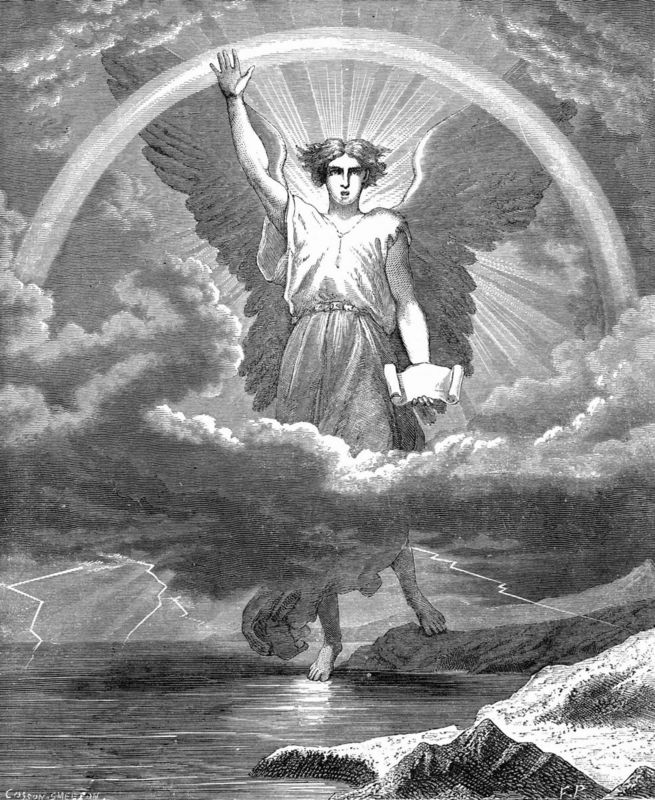
Revelation 9:1, A star fall from heaven. Likely this is referring to Satan when he is finally, once and for all, cast out of heaven. Yeshua spoke of this in Luke 10:18 when he likens Satan’s fall from heaven to a streak of lightening or a shooting star coming out of heaven.

Key to the bottomless pit. In the end times just prior to the second coming of Yeshua the Messiah, Elohim will give Satan the freedom to release evil spirits imprisoned in the abyss who will go forth to torment men as part of YHVH’s wrath against rebellious men. Perhaps this relates to the perennially enigmatic and troubling passage found in Jude 6 (cp. 1 Pet 3:18–20; 2 Pet 2:4). It seems that the evil, locust-like spirits may be the fallen angels that either rebelled with Lucifer and or were the ones who interacted with humans in the antediluvian world (Gen 6:4–6; Jude 6; 1 Pet 3:18–20; 2 Pet 2:4).

Revelation 9:1, Bottomless pit. (See notes at Deut 32:22; 2 Pet 2:4.) This Greek term (abussos phrear) indicates a large, cavernous hole, pit or abyss with a small opening or orifice like a well and is found several other places in the book of Revelation (Rev 9:2, 11; 11:7; 17:8; 20:1, 3). The bottomless pit is analogous to the deepest sheol in the Tanakh (Deut 32:22; Ps 86:13; Isa 14:15) or tartaroo (2 Pet 2:4), and is the place where the angels who rebelled in the time of Satan’s rebellion are being held in chains of restraint awaiting their judgment day (see 2 Pet 2:4). This is also where Satan will be cast at the beginning of the Millennium (Rev 20:1–3), and is to be distinguished from the lake of fire where Satan (and presumably his demons) will be cast at the end of the Millennium to be tormented forever (Rev 20:10).

This passage indicates that YHVH will open the bottomless pit and allow the evil spirits imprisoned therein to torment men for a period of time as part of his judgments against wicked men.

Revelation 9:2, Smoke. Wherever this pit is, it appears to be a place of fire, heat and smoke. The opening of the pit by Satan first releases so much smoke that it darkens the sun and air, if the terminology here is to be taken literally rather than figuratively. If the latter, then the smoke reference cold refer to the global spiritual obfuscation that will occur. This phenomenon is the first sign that the demons of the pit are about to be released. After this follows their release and their tormenting of unredeemed humans. This is the wrath of Satan against humanity that precedes the wrath of Elohim. Since Elohim is permitting these demons to torment humans, it is, in reality, an extension of his judgment or wrath against the wicked. Since unsaved humans have rejected Elohim, and more and more are becoming enamored with and turning to outright Satan worship, Elohim his turning them over to the powerful forces of darkness they are seeking over him. These humans will discover what it’s like to live in a hellish world where those they wish to serve have full reign to torment them—a world devoid of the protective grace of a merciful Creator. 

Revelation 9:3, Locusts. These locusts don’t fit the description of the Joel 1 locusts, which destroy all vegetation. These locusts do not (v. 4). Perhaps the vegetation of Joel 1 is a symbolic metaphor. If so, then is the vegetation of Rev 9:3 also symbolic? If so, how do we still reconcile these two passages, since the symbolic analogy of the one would be opposite the other?

These locusts are likely hybridized theriomorphic or animal-shaped descriptions of demonic spirits that have been released from the abyss where they have been kept imprisoned since their rebellion (see 1 Pet 3:19; 2 Pet 2:4), but who will be released to torment rebellious men as part of Elohim’s end time judgments.

Revelation 9:3, Power. (Gr. exousia) These scorpion, humanoid demons have the divine permission, physical and mental power, the authority and right, the ability and strength to torment unredeemed men.

Continue reading
 

Yom Kippur Meditations—Going Deeper…

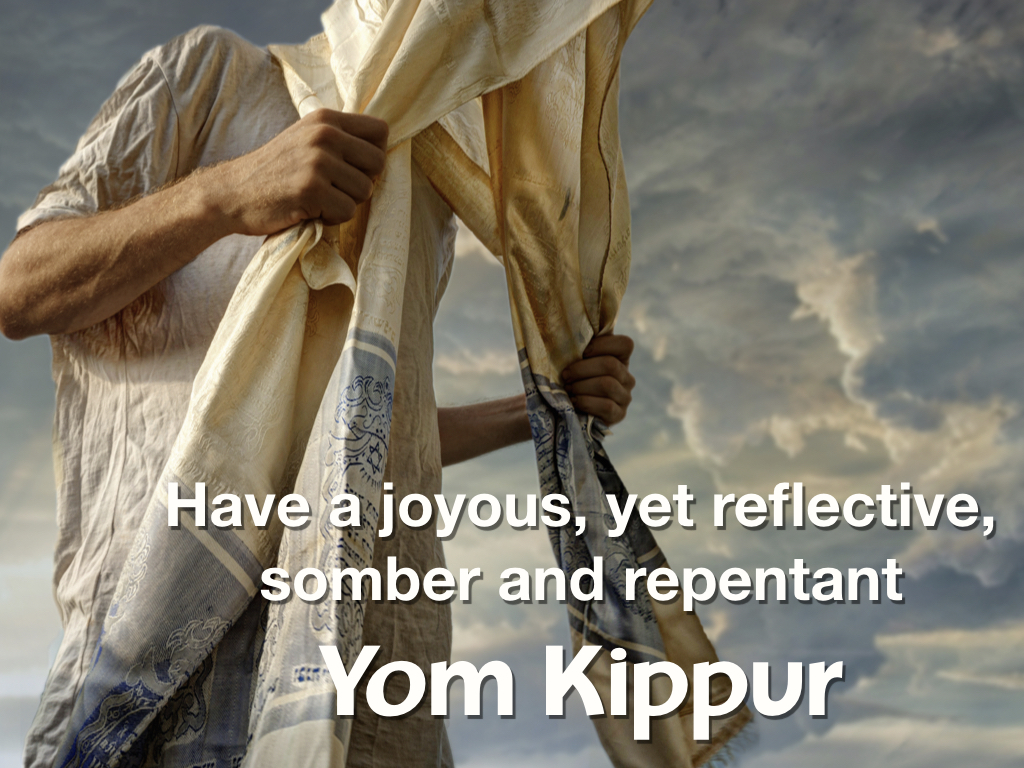
Yom Kippur—A Journey Through Past History and on Into the Future

Yom haKippurim (literally, the Day of Atonements, plural) is not a one-time thing. The redeemed believer is covered by the blood of Yeshua at the time of their initial salvation, but needs additional covering every time they sin. We need this covering of blood on an individual and collective basis. 

This pattern was set in Leviticus 16 when on the Day of Atonement, the high priest made atonement for his sins, those of his family, of the nation and even the Tabernacle of Moses itself due to defilement cause by men’s sins. 

We’re all in this thing together. My sin affects you and vice versa. My sins are passed on down to successive generations, and unless I break the sin cycle through the means that YHVH has provided, this sin cycle will continue as it has from Adam to this day bringing corruption, ruination, division, strife and death to all men.

Atonement and At-One-Ment—It’s About Healing Broken Relationships

The English word atone means “to make amends or reparation of wrong or injury.” Atonement biblically means “to cover, purge, make an atonement (Heb. kaphar), make reconciliation, cover over with pitch.” As with many Hebrew words, kaphar means not only to cover over sin (by the blood of the Lamb), but it means “to reconcile and purge.” When we sin, we need the forgiveness of Yeshua and his blood to pay for or to cover over our sin debt. We also need to get purged of the inclination to sin in the first place. We also need to make amends with those we’ve injured in the process of sinning—to reconcile with them, to repair the damage, and to mend the breach in the relationship. When we sin, a breach occurs both on the vertical level (with Elohim) and  on the horizontal level (with our neighbor). Each of us is a broken, damaged and hurt person, and we have a hard time mending the damage we’ve caused to others, which is a painful process, but one which yields rich results in healing wounded relationships including the wounds and brokenness of our own heart. We must humble ourselves to do this. Pride and self protection prevents most us from repenting and asking forgiveness of Elohim and of others. To come into the presence of YHVH, we must take the step. Yom Kippur pictures our taking this step.

Some Bible teachers have taken the word atonement and have made a word play out of it by turning it into at-one-ment. This play of words isn’t totally without merit, since the word atone comes from a Middle English word meaning “to make or become united or reconciled” or literally “to become at one with someone else.” There’s a lot of at-one-ment that needs to occur between people and their Heavenly Creator! The older I get, the more I realize this!

Continue reading
 

Join Hoshana Rabbah in Celebrating Yom Kippur 2020!

Tomorrow (for some people reading this, it is already tomorrow), Monday, September 27, 2020 it is Yom Kippur or the Day of Atonement. This year both the biblical new moon calendar and the traditional Rabbinic Jewish calendar match up, so that Yom Kippur falls on the same day on both calendars. So regardless of which calendar you follows here are some free resources to help you to celebrate this day with a heart and mind of purposeful intent.


The new moon in Israel was spotted ten days ago, and according to the Torah, the Day of Atonements is to be kept on the tenth day of the seventh month (Lev 23:26).

Biblical months always start on rosh chodesh when the first visible crescent of the new moon is spotted in the land of Israel. As a point of reference, those who follow the traditional rabbinic or Hillel II calendar (invented in ca. AD 360 and was approved by Roman emperor Constantine) are celebrating Yom Kippur today, which is two days too early, according to the new moon sighting in Israel. In reality, they are are celebrating Yom Kippur on the eighth day of the new month, not the tenth day according to the Scriptures (Lev 23:26).

While those who are celebrating Yom Kippur today are following the spirit of the law, they’re not following the letter of the law, since, technically, today is NOT Yom Kippur. In his Sermon on the Mount, Yeshua clearly states that all of the Torah is to be followed (Matt 5:17–19), and  that our righteousness is to exceed of that of the Pharisees, which includes their modern day descendants (the rabbinic or Orthodox Jews, Matt 5:20), and that we are to follow not only the spirit, but also the letter of the law (Matt 5:21–48).

Moreover, Yeshua enjoined his disciples (and us) to follow the Word of Elohim and to reject any manmade traditions that in any way contravene Elohim’s Written Word (Matt 15:6–9and Mark 7:6–913). Sadly, both our Christian and rabbinic Jewish brethren have, in too many areas, not followed the instructions of the Messiah instead preferring obedience to their manmade traditions instead of Elohim’s Word.

In Romans 12:1–2, Paul the apostle of Yeshua the Messiah states that each disciple of Yeshua must discern what is the perfect will of Elohim based on his Written Word and then must willingly lay down his or her life as a living sacrifice and do that will. In reality and quite honestly, very few people achieve walking out the perfect will of Elohim consistently in their lives. Most of us are walking out Elohim’s good or the better will, and only from time to time his perfect will. While celebrating the biblical feasts on the manmade traditional Jewish Hillel II calendar is certainly a step in the right direction, and may, indeed, be the good will of Elohim, it’s not his perfect will according to his Written Word. May the reader honestly ponder these truths and evaluate his or her walk and heart before Elohim. Are we really willing to lay down our lives as living sacrifices and to say, “Yes Lord, thy will be done, not mine!”? Or is it more convenient to just follow men’s traditions and the convenient inclinations of our fallen natures?

Enter ye in at the strait gate: for wide is the gate, and broad is the way, that leadeth to destruction, and many there be which go in thereat: Because strait is the gate, and narrow is the way, which leadeth unto life, and few there be that find it. (Matt 7:13–14)

In this ministry, as truth seekers no matter the cost and in an effort to follow the Scriptures—the Written Word of Elohim, we chose many years ago to follow the Word of Elohim instead of men’s unbiblical traditions. That’s why we’re celebrating Yom Kippur on Friday instead of Wednesday.

For more informations on why we do what we do and what the Bible and history both have to say about the biblical calendar, I invite you to read my three well-researched and referenced teaching articles on the subject, which are available for free downloads at https://www.hoshanarabbah.org/teaching.html#feast. There you can find my articles on Yom Kippur as well (https://www.hoshanarabbah.org/pdfs/yom_kippur.pdfand https://www.hoshanarabbah.org/pdfs/goat.pdf).To watch my teaching videos on Yom Kippur, go to https://www.youtube.com/playlist?list=PL5EzE5DQnrHfWWbczzkRo6IOnglxhbRfM.

Love and blessings in the glorious name of Yeshua the Messiah.

Natan


Yom Kippur Videos


Yom Kippur—Past, Present and Future

Yom Kippur—The Historical Roots of Our Faith,
Present Relevance for believers & Prophetic End Time Implications

Ya’acov Natan Lawrence
Hoshana Rabbah Biblical Discipleship Resources, Portland, OR

Introduction

Yom Kippur is a day of contradictions and contrasts: Joy and sorrow. Rewards for the righteous and judgments for the wicked rebels. Joy for the righteous when Satan and his demons, death and Babylon are destroyed by the King of kings.

Continue reading
 

Blog Scripture Readings for 9-27 Through 10-3-20

Aside

(No Parasha This Week)
Haftarah —
Prophets — Haggai 1:1 – 2:23; Zechariah 1:1 – 8:23
Writings — 2 Chronicles 23:1 – 29:36
Testimony — Revelation 9:1 – 15:8

Our new annual Scripture Reading Schedule for 2020-2021 with daily readings that begins 10/11/20 is now available to download and print. The link to the current 2019-2020’s Scripture Reading Schedule will still be available on the right sidebar under “Helpful Links” into next year. If you are using a mobile device or tablet, the link may be below, meaning you’ll need to scroll down instead.

Most of this week’s blog discussion points will be on these passages. If you have general comments or questions on the weekly Scripture readings not addressed in a blog post, here’s a place for you to post those. Just use the “leave a reply” link or the “share your thoughts” box below.

The full “Read Through The Scriptures In A Year” schedule, broken down by each day, can be found on the right sidebar under “Helpful Links.” There are 4 sections of scripture to read each day: one each from the Torah, the Prophets, the Writings, and from the Testimony of Yeshua. Each week, the Torah and haftarah readings will follow the traditional one-year reading cycle.

Weekly Blog Scripture Readings for 9/27 through 10/3/2020.


The Book of Revelation and the Olivet Prophecy (Matt 24 and 25) Compared

Not unlike treasure hunters examining a map for clues leading to a buried treasure, or an archeologist carefully scrutinizing ancient artifacts for information about lost civilizations, or an engineer diligently studying blueprints in order to construct a mechanical device or a building, we have briefly examined some of YHVH’s spiritual blueprints found in the Scriptures to give us clues about the nature and order of end-time events. Understanding the seven biblical feasts, the seven stations in the tabernacle of Moses and the various steps of the biblical wedding will help us to decode the mysteries surrounding the events pertaining to the second coming of our Master, Yeshua the Messiah.

Introducing the Olivet Prophecy 

Now let us carefully investigate another set of spiritual blueprints: Yeshua’s prophecy in Matthew 24 and 25, commonly called the Olivet Prophecy.

Having a working knowledge of all these “blueprints” will help us to discover who we are as a people in the eyes of YHVH, where we have come from, where we are presently, and where we are going—that is, what the future holds for us, and what our spiritual destiny or divine inheritance is. Only then will we understand the end-time prophetic events leading up to the second coming of Yeshua, and we will learn what our role will be to play in them.

As we begin to examine Matthew 24 and 25, it is important first to note the chronological positioning of this prophecy in the context of the passages before and after this pivotal chapter. The chapters that precede Matthew 24 prophetically speak of precursory events leading up to the second coming of Yeshua, while those that follow Matthew 24 prophetically delineate events that occur after his return.

Matthew 24 sits like a diamond in the midst of a brilliant gold setting. It speaks of the order of end time events pertaining to the second coming of Yeshua the Messiah, our beloved King, Redeemer and Savior. Listed below is a chronology of events as Matthew lays them out, more or less, in the order in which they will occur prophetically. Many of these passages will be elucidated upon later in this book. It is important that we present the overall layout of end-time events here and now before studying the individual components in detail later.

Continue reading
 

Deuteronomy 32—A Poetic Prophecy for US

Deuteronomy 32

Deuteronomy 32:1–2, Words of my mouth…rain. Note the phrases: “words of my mouth,” “my doctrine,” “rain,” “my speech shall distill as the dew,” “small rain” and “showers.” Now read compare these phrases with Eph 5:26. What is Scripture talking about here? Israel spent 40 years in a dry wilderness. By contrast, the Promised Land was a land flowing with milk and honey and was well-watered. Immediately before and after the giving of the Torah at Mount Sinai (Exod 20), there are references to human thirst and YHVH providing water for his people (Exod 15:22–27; 17:1–7 Num 20:2–13). During the Messianic Age (the Millennium), living waters will flow from Jerusalem (Zech 14:8) and those who refuse to come up to Jerusalem for the Feast of Tabernacles (Sukkot) will receive no rain on their land (Zech 14:16–19). As you relate all these scriptures together, what is the bigger lesson YHVH is trying to teach us here pertaining to water and the word of YHVH?

Deuteronomy 32:8, Children of Israel. The Septuagint (LXX) has “angels of God,” the ESV has “sons of God,” and the Dead Sea Scrolls (DSS) has “children of God.” The LXX and ESV references could be a reference to the fallen angel, demon-nephilim or sons of Elohim reference found in Genesis 6:2 who along with their descendants founded kingdoms and empires that were opposed to Elohim. This alternate rendering possibly makes more sense, since Israel was not yet a nation when the Almighty assigned the nations to the heathens and the demon-gods or elohim that he placed over them and that they worshipped in place of the true YHVH Elohim. On the other hand, perhaps YHVH arranged the heathen in their countries around the future land of Israel, and those heathen living therein were merely squatters illegally inhabiting the Promised Land before the children of Israel were a nation.

Deuteronomy 32:14, Blood of the grapes. What is Torah referring to in this interesting, rather arcane phrase? Compare this with a parallel passage found in Genesis 49:11, which is clearly Messianic in nature. Now add into the mix Leviticus 17:11; Revelation 1:5; 7:14; Matthew 26:27–28; Romans 3:25; Ephesians 1:7; Colossians 1:14; John 15:1–5 and finally John 6:53–56. In the last passage listed, is Yeshua advocating some bizarre cultic rite involving cannibalism, or is he relating back to these Torah passages that are Messianic in nature and relating them to his redemptive work at the cross, which believers commemorate when they take communion at Passover?

Deuteronomy 32:15, Yeshurun. The name Yeshurun is a poetic name for Israel and means “upright, straight or just.” YHVH ascribed this august title to Israel indicating that Israel was not to deviate from the high standards demanded by YHVH (The ArtScroll Stone Edition Chumash, p. 1103). This is a prophecy about what would happen to Israel once in the Promised Land. They forsook the one who had redeemed them and blessed them. Compare this with Yeshua’s admonition to the Laodicean believers in Revelation 3:14–21 (especially note verse 17), which is a description of the contemporary American Christian church, much of which preaches an “easy-believism,” health and wealth, pop-psychology, “come to Jesus and everything will be all right” “gospel” message. Just because you now a part of a more Hebraically oriented congregation does not mean that you have shed off this kind of thinking and its accompanying lifestyle and that this prophecy does not apply to you. Selah (ponder and reflect).

Continue reading
 

Revelation 3-4: Natan’s Commentary Notes

Revelation 3

Revelation 3:9, Worship/bow down before your feet. This scripture has puzzled many. Who are these saints before which those who are of the synagogue of Satan will at some time in the future bow down in worship? Who are those who are of the synagogue of Satan? First, the saints are wearing crowns (verse 11) and they have the name of Elohim written upon them (verse 12). We know that a group of saints will be ruling with Yeshua in his millennial kingdom (Rev 1:6; 5:10). These same saints will be part of the first resurrection (Rev 20:6), which occurs at Yeshua’s second coming. Not all saints will be kings and priests. There are levels of rewards (and responsibilities) in YHVH’s kingdom depending on how obedient one has been to his Torah-commandments. This Yeshua teaches in Matthew 5:19. Some saints will be the least in his eternal kingdom, while some will be the greatest depending on their level of Torah-obedience. Similarly, Yeshua identifies two groups of saints in his Parable of the Ten Virgins (Matt 25:1–13)—the wise saints and the foolish saints. The wise virgins will go into the wedding supper of Yeshua, and presumably will become his bride, while the foolish ones will be left outside. In Revelation chapter three, Yeshua further identifies two groups of believers: those who are spiritually lukewarm and those who are spiritually hot (Rev 3:14–22). It is not a stretch to connect those who are spiritually on fire in Laodicea with those in Philadelphia who have been faithful to his commands, who will be given a crown and who will be worshipped.

Can we further identify these faithful saints who will be worshipped (or before whom the knees of lower order saints will bend, which is the actual meaning in the Greek of the word worship) in Yeshua’s kingdom? They have crowns and are thus ruling as kings and have the name of Elohim written on them. Similarly, the 144 thousand have the seal of YHVH’s name on them (Rev 7:3–4 and 14:1), and they keep his Torah commandments and have the testimony or faith of Yeshua (Rev 14:12). These are the likely candidates for being those Yeshua describes in Matthew 5:19 who will be the greatest in the kingdom of Elohim, and who others will worship (Rev 3:9). 

Why would people be worshipping (or bending the knee before) these glorified, resurrected and kingly saints? There are several possible explanations here for this. First, the bride of Yeshua will be ruling and reigning with Yeshua as a queen (in ancient Jewish thought) or like a king (under Yeshua, who is the King of kings, as presented in the book of Revelation). Second, Paul teaches us that those saints who will be resurrected will be literally adopted (Rom 8:15, 23; 9:4; Gal 4:5; Eph 1:5) into the family of Elohim as sons or children of YHVH Elohim. 

In Galatians, Paul speaks of redeemed believers being both Abraham’s seed and being adopted as sons of Elohim (Gal 3:29; 4:5). Elsewhere where the term adoption is used in the Testimony of Yeshua, it is in reference to our relationship with our Heavenly Father, not with our earthly father, Abraham. The redeemed are therefore, sons or the seed of Abraham, yet adopted into the family of Elohim as spiritual sons (Rom 8:15, 23; Eph 1:5). In other words, the saints are literal sons or seed (physically) of Abraham, yet adopted sons (spiritually) of YHVH. This adoption will be finalized or completed at the resurrection when the saints receive their spiritual bodies (Rom 8:23), for then they will be like him for they shall see him as he is (1 John 3:2).

Elohim is a plural word in Hebrew and can mean many things, and has many usages in the Scriptures. It is used to refer to the Creator, YHVH Elohim, as well as to angels, kings, judges and humans in authoritative capacities. When the saints are resurrected, they will be as Elohim and will be part of the family of Elohim, though they will not be Elohim, who has existed forever and is the Creator of all things. It appears that these saints will be worshipped, not as YHVH Elohim, but as his created sons who have been elevated through the process of redemption, sanctification, glorification and adoption into members of the family of Elohim.

Revelation 3:14, The church at Laodicea.

Will you pass the test and make it into YHVH’s kingdom? 

Continue reading