John Chapter 1–3: Natan’s Commentary Notes

John 1

John 1:1, The Word was Elohim.Is Yeshua or the Father the God (Elohim) of the Old Testament (Tanakh)? For many believers in Yeshua, there is confusion as to who it was in the Godhead who interacted with the Israelites in the Tankah. Was it the Father or the Son? In the minds of the apostolic writers, there was no confusion about this. Yeshua, in his preincarnate state, was the One that YHVH Elohim the Father used to both create (John 1:3; Col 1:16; Heb 11:3), and then to interact with mankind. He was the Word of YHVH Elohim, the Father, who become flesh and dwelt among men (verse 14). This truth is easily confirmed in several passages in the Testimony of Yeshua (New Testament).

First, Yeshua himself claims to be YHVH or the I Am of the burning bush (see John 8:58 cp. Exod 3:14). The Jews viewed Yeshua’s claim to be deity as blasphemous, which is why they picked up stones to kill him (John 8:59). Next, Yeshua in declaring to the Jewish religious leaders that “I send you prophets, wise men and scribes: some you will kill…” (Matt 23:34), he is claiming the rights and prerogatives of YHVH — a right and role that solely belonged to YHVH in the Tanakh.

Yeshua also declared that no man has seen the face of Elohim the Father (John 5:37). Yet in the Torah, we have several instances of men seeing YHVH (e.g. Gen 17:1; 18:1; 26:2; 48:3). If we are to take what these scriptures say literally, then it could not have been YHVH the Father these individuals saw, but rather YHVH the Son who later become Yeshua. Not only that, Yeshua even goes so far as to say that the Israelites of old not only never saw the Father’s face, but neither at anytime even saw his form nor heard his voice (John 5:37). Therefore, it becomes evident that while on Mount Sinai, Moses didn’t see the backside of the Father, but rather that of the pre-incarnate Yeshua (Exod 33:18–23).

What’s more, in John 14:15, Yeshua, speaking to his disciples, declares, “If you love me, keep my commandments.” When Yeshua says commandments here, we know from Luke 18:20 that he has the Torah in mind. In this statement, Yeshua is actually quoting himself when he made the same statement to the children of Israel while he was delivering to them the Oracles or Torah of Elohim at Mount Sinai (Exod 20:6; Deut 11:1).

Stephen, in agreement with John, clearly demonstrates that Yeshua was the prophesied “prophet like Moses” who was to come (see Deut 18:15), and who was the Angel, or more correctly, the Divine Messenger from Elohim, who gave the Torah to the Israelites (Acts 7:37–38). Paul goes on to say in enigmatic terms that Yeshua was the spiritual rock from which the Israelites drank and that followed them (1 Cor 10:4). And finally, Paul equates Yeshua, “the Word of Elohim made flesh and that dwelt among us” (John 1:14) with the Written Torah which YHVH gave through Moses to the Israelites. This he does when he quotes Deuteronomy 30:11–14 and substitutes the word Torah for Yeshua (see Rom 10:5–13). In Paul’s mind, Yeshua was not only synonymous with the Torah, but he was very much present with the children of Israel.

The Word was Elohim. Numerous scriptures in the Testimony of Yeshua clearly show that the apostolic writers believed in the deity of Yeshua (see Matt 1:23; Luke 24:52; John 5:18; 8:58–59; 9:38; 10:33; 19:7; 20:28; Phil 2:6; Col 2:9; 1 Tim 3:16; Tit 2:13; Rev 21:3, 6, 23; 22:1–5). Amazingly, even James (Heb. Ya’acov), the writer of the epistle that bears his name and believed to be the biological half brother of Yeshua equates Yeshua with YHVH of the Tanakh (Jas 5:7, 8, 10, 11 cp. 1:1). This is evident in his usage of the word “Lord” where he equates the Lord Yeshua (verses 8 and 10) with the LORD (or YHVH) of the Tanakh (verses 10 and 11).

The Word was Elohim.The Greek grammar of this statement is very specific. It says, “and the Word was God/Elohim.” It doesn’t say, “And the Word was the God,” which is Sabellianism or modalism, which is the belief that the Heavenly Father, Resurrected Son and Holy Spirit are different modes or aspects of one monadic Elohim. It also doesn’t say, “and the Word was a god,” which is Arianism, which is the belief that Yeshua the Son of God did not always exist, but was created by and is therefore distinct from and inferior to Elohim the Father (Basics of Biblical Greek, pp. 27–28, by William Mounce).

All things were made through him.Yeshua is the Creator. (See also Col 1:16; Heb 11:3.)

What Is the Word/word of Elohim from a Hebraic Perspective?

Continue reading
 

A Tabernacle Tour—The Gospel Message Acted Out

Exodus 25

Exodus 25:10–22, Ark. The ark of the covenant was a small box of acacia wood overlaid in gold, which contained the golden pot of manna, Aaron’s rod that budded and the two tablets of stone containing the ten statements of Elohim—commonly called the Ten Commandments. Against the ark was leaned a scroll of the complete Torah (Deut 31:26).

Covering the ark was a golden cap called the mercy seat or kapporet and is related to the word kippur as in Yom Kippur, the Day of Atonement. Both share a common Hebrew root, which is the word kapar, which according to The Theological Wordbook of the Old Testament (TWOT) means “to make an atonement, make reconciliation, purge”) and the mercy seat—the golden “lid” covering the ark of the covenant located in the D’veer (i.e. the inner shrine of the Tabernacle of Moses)­—which in Hebrew is the word kapporet was “the place of atonement or the place where atonement was made.” The TWOT defines what happened at the kapporet as follows:

“It was from the … mercy seat that [YHVH] promised to meet with the men [of Israel] (Num 7:89). The word, however, is not related to mercy and of course was not a seat. The word is derived from the root ‘to atone.’ The Greek equivalent in the LXX is usually hilasterion, “place or object of propitiation,” a word which is applied to [Messiah] in Rom 3:25. The translation ‘mercy seat’ does not sufficiently express the fact that the lid of the ark was the place where the blood was sprinkled on the day of atonement. ‘Place of atonement’ would perhaps be more expressive.”

The mercy seat covering the ark that contained the Torah is a vivid symbolic picture of YHVH’s mercy triumphing over his judgment (Jas 2:13). We all deserve death for violating his commandments, for the wages of sin is death (Rom 6:23) and sin is the violation of YHVH’s Torah commands (1 John 3:4). However. Yet when we repent of our sins and place our faith in Yeshua’s atoning death on the cross as payment for those sins, YHVH forgives us and grants us his merciful grace.

Everything in, on and around the ark pointed to Yeshua. Inside the ark was the golden pot of manna, which points to Yeshua who the bread of life—the Word of Elohim made flesh. Aaron’s rod that budded speaks of Yeshua’s role as the ultimate high priest due to his atoning and life-giving work at the cross. The two stone tablets and the Torah scroll speak of the Yeshua who was the Word of Elohim from the foundation of the world (John 1:1,14), and whose words or instructions in righteousness the saints are instructed to follow (John 14:15; 1 John 2:3–6; Rev 12:17; 14:12).

Overshadowing the mercy seat were two golden cherubim with outstretched wings. This is a picture of YHVH’s throne in heaven, which is surrounded by cherubim and other living creatures that sing his praises and minister to him (Rev 4).

The Ark of the Covenant in More Detail

The ark of the covenant is the gold-covered acacia wood box with the pure gold crown or mercy seat upon which are the two gold cherubim that represented the very throne and glorious Presence of YHVH himself. Inside the box were the tables of the Torah, Aaron’s rod that budded (Num 16) and the golden pot of manna (Exod 16:32–34). Against the ark was leaned a scroll of the complete Torah (Deut 31:26).

Once a year, on the Day of Atonement, the high priest entered this part of the tabernacle to make atonement for his sins and those of the nation of Israel (Exod 16:14–19). The most set-apart place was also called the oracle (D’veer), for it was here that YHVH often met with and talked to Moses giving him instructions on how to govern the Israelites (Exod 25:21–22).

The gold-covered wooden box pictures resurrected and glorified humanity raised to that place by the work of Yeshua and the mercy of YHVH. Two realities identify the bride of Yeshua: Spirit and truth (John 4:23); namely, the truth of Torah of the Written Torah (the box contained the two stone tablets) and that of the Living Torah who is the Manna or Bread of Life. In addition, Aaron’s rod that budded (also in the box) pictures the authority and fruitfulness of the priesthood of believers (2 Pet 2:5-9) through the work of Yeshua on the cross (see also Rev 11:17; 12:14). Additionally, the Torah scroll leaning up against the ark illustrates to us that without total dependence on Yeshua (his work at the cross and partaking of the spiritual manna of Yeshua’s broken body we cannot properly keep the Torah. Only with Yeshua living in the heart of a regenerated believer by the power of his Spirit can one keep the Torah. Without the Torah leaning on Yeshua, the Torah becomes the dead letter of the law (2 Cor 3:6)!

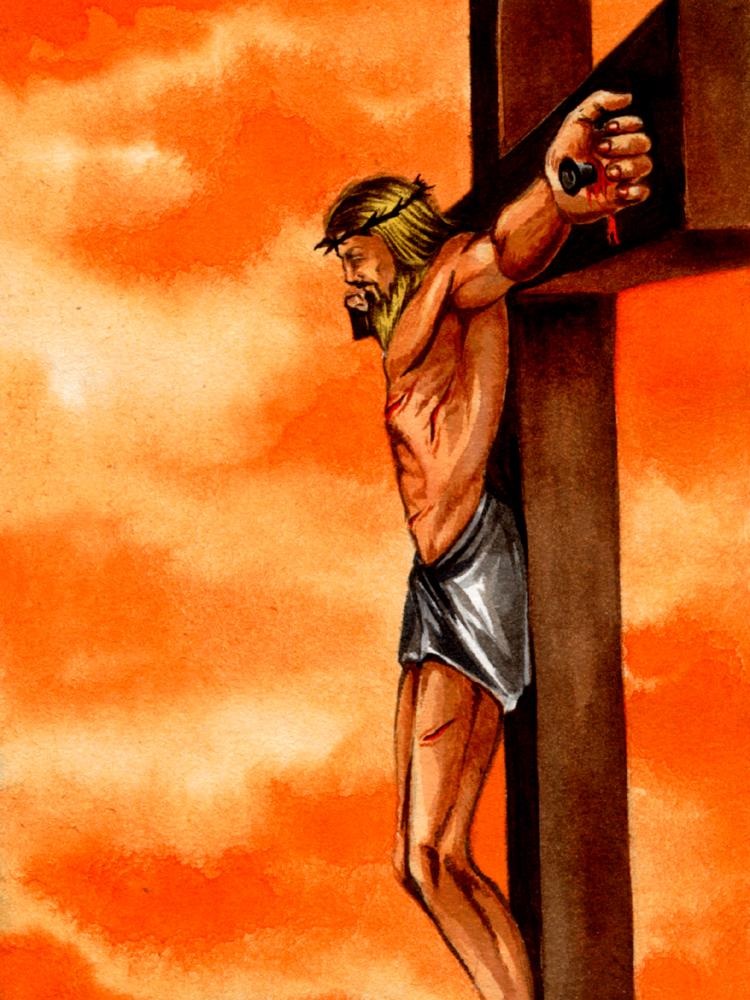
As the high priest sprinkled the mercy seat with blood seven times on Yom Kippur so Yeshua bled seven times: at Gethsemane, from the scourging, the crown of thorns, nail in the left hand, nail in the right hand, nail in the feet and the spear in his side.

Exodus 25:21, The testimony. This is the Torah in codified form or what became known as the law of Moses. Prior to this, the Torah was YHVH’s oral instructions to men passed on down generationally from teacher to student, from father to son. Moses, under instructions from Elohim, wrote this oral Torah down as it was transcribed to him on Mount Sinai (Exod 24:12) and to which additions were made on an as-need basis as YHVH subsequently spoke to Moses from his earthly throne of the tabernacle (Exod 25:22).

Continue reading
 

May the Force Be With YOU in 33 Ways!

Yeshua told his disciples in Luke 24:49—

Behold, I send the Promise of My Father upon you; but tarry in the city of Jerusalem until you are endued with power from on high.”

Luke 24:49, Endued with power from on high. 

What is the most powerful Force in the Universe? It is Holy Spirit of YHVH Elohim—the Almighty Creator God of the Bible! 

By the force of Spirit and Word of Elohim, the universe and earth were created. With his hands, Elohim shaped man out of earth and by the Force of the breath of his Spirit, he breathed life into that lump of earth and man became a living being. That same spiritual Force impregnated the womb of the virgin Mary and Yeshua the Messiah, the Son of Elohim, was clothed in humanity and became the Elohim-Man and Savior and Redeemer of humanity. 

Yeshua the Messiah promised to send that same Force of the Spirit of Elohim to live inside of all those who seek him and put their trusting faith in him and choose to follow and obey him as he leads them on the path of righteous living leading to a life of immortality in Elohim’s kingdom of heaven on earth. This same Force has the power to resurrect the dead from their graves. So how can this Force help you? 

Here’s are 33 ways the Force, which is the of the Spirit of Elohim, can empower you:

  • The Force of Elohim is a free gift to those who ask for it (Luke 11:13).
  • The Force of Elohim will lead you where to go and what to do (Matt 4:1; Mark 13:11).
  • The Force of Elohim will speak through you, that is, put words in your mouth and tell you what to say when you’re in a difficult, potentially life-threatening, situation (Matt 10:20; Luke 12:12).
  • The Force of Elohim will give you power over the evil forces of Satan the devil (Matt 12:28). 
  • The Force of Elohim will reveal to you things that are to come in the future (Luke 2:25–27; John 16:13).
  • The Force of Elohim will give you supernatural and miraculous powers (Luke 24:49; Acts 1:8; Rom 15:19; Heb 2:4).
  • The Force of Elohim will bring spiritual and immortal life (John 6:63; Gal 6:8; 1 Pet 3:18).
  • The Force of Elohim will fill you up and make a river of life to flow from you (John 7:38–39).
  • The Force of Elohim will live inside of you (John 14:17; 1 Cor 3:16).
  • The Force of Elohim will teach you about all divine things and help you to remember things (John 14:26).
  • The Force of Elohim will point you to Yeshua the Messiah, the Savior of the world (John 15:26).
  • The Force of Elohim will convict you of sin and help bring you to righteousness (John 16:8).
  • The Force of Elohim will bring judgment against the world because of sin (John 16:8).
  • The Force of Elohim will bring judgment against Satan the devil who is the evil ruler of this world (John 16:11).
  • The Force of Elohim will guide you into all truth (John 16:13).
  • The Force of Elohim will reveal spiritual mysteries to you (John 16:14).
  • The Force of Elohim will give you boldness in difficult situations (Acts 4:31).
  • The Force of Elohim will bring comfort to your life (Acts 9:31).
  • The Force of Elohim will impart many supernatural gifts and abilities to you (1 Cor 12:3–11).
  • The Force of Elohim will fill you with joy (Acts 13:52; Rom 14:17).
  • The Force of Elohim will raise the righteous dead from their graves (Rom 8:11; 1 Pet 3:18).
  • The Force of Elohim in you confirms that you are a child of Elohim (Rom 8:14–17).
  • The Force of Elohim helps you in your times of weakness (Rom 8:26).
  • The Force of Elohim will give you hope (Rom 15:13).
  • The Force of Elohim will produce wonderful fruits of love in your life (Gal 5:22–25).
  • The Force of Elohim will give you wisdom and revelation in the knowledge of Elohim (Eph 2:12–14).
  • The Force of Elohim will give you a great inner strength (Eph 3:16).
  • The Force of Elohim will protect you from your enemies (Isa 59:19).
  • The Force of Elohim will anoint you to preach the gospel (Isa 61:1; Luke 4:16–18).
  • The Force of Elohim will help you to walk in Elohim’s paths of righteousness (Ezek 36:27).
  • The Force of Elohim will cause you to have dreams, visions and to prophesy (Joel 2:28–29).
  • The Force of Elohim will help you to do mighty things for Elohim (Zech 4:6).
  • The Force of Elohim will write the Torah-laws of Elohim on your heart (Jer 31:33; Heb 8:10; 10:15–16).
 

What does the Tabernacle of Moses have to do with YOU?

Exodus 25

Exodus 25:1–7, An offering is collected for the tabernacle. All Israel contributed to the building of the tabernacle (Exod 25:1–7), yet YHVH chose only two Israelite artisans, Bezalel and Aholiab (Exod 31:1–6), filled them with the Spirit of Elohim “in wisdom, understanding, knowledge an in all manner of workmanship …” to oversee the building of the tabernacle. This teaches us that the work of YHVH is a joint effort of the every member of the body of YHVH-Yeshua, but that YHVH will endow certain individuals with unique gifts of the Spirit in order to accomplish his specific plans and purposes (Eph 2:22; 4:11; Rom 12:4–8; 1 Cor 12 and 14).

Exodus 25:2, That they may bring me an offering.Interestingly, this is the only place in the Scriptures where an offering was taken of YHVH’s people to support the work of the ministry. In one other place in the Bible, a collection was taken, but what was its purpose and who was it for? (See 1 Cor 16:1–3 and Acts 11:27–30.) This is not to say that the saints should not give of their substance to help support their spiritual leaders. What did Paul teach about the saints supporting the work of the ministry—especially those who are spiritually feed them? (Read 1 Cor 9:1–18; 1 Tim 5:17–18; Gal 6:6–9.) The main point we wish to make here is that the taking of offerings or the passing of the plate isn’t a biblical norm. People were expected to give, but of their own freewill and without pressure or coercion from their spiritual leaders. What did Yeshua say about giving? (Note Acts 20:35; Luke 6:38.) What did Paul say to those who do not share their substance with (or sow sparingly to) those who teach them? (Look at 2 Cor 9:6.) What should be our heart attitude when giving to the ministry of Elohim? (See 2 Cor 9:7.) What are the blessings from Elohim that one can expect from giving cheerfully? (Read 2 Cor 9:8–11.)

Exodus 25:8–9, A sanctuary…tabernacle

The Tabernacle of Moses

If you were the Creator of the universe, what means would you use to communicate with those that you had created through love in your likeness and image? In a remote way, it’s like a human standing over an anthill trying to communicate with the ants. How do you do it? Similarly, how does an all powerful, Spirit Being, loving Father in heaven relate to his mortal children who are but mere specks of dust without vaporizing them with his raw power? The difficulty is compounded when fearful humans don’t want to hear the voice of Elohim, which is what happened when YHVH Elohim’s voice thundered from Mount Sinai. The children of Israel begged him not to talk to them, lest they die. They asked the Almighty One to speak to them instead through Moses (Exod 20:19). 

Continue reading
 

Responding to the “Rabbi’s” Daughter Again…

I found another terse comment from the so-called “Rabbi’s” daughter. Here is what she said followed by my comments:

The messiah is not Hashem the Father


Here is my comment:

You are correct. Yeshua is NOT HaShem because HaShem is a non-existent entity and a silly made up name by the rabbinic Jews as a result of a false, pagan doctrine they plagiarized from the Babylonians called the ineffable name doctrine. Scripture reveals nearly 7,000 times in the Tanakh that the name of the Elohim the Father is YHVH or Yehovah. Scripture also reveals that the name of Elohim the Son or Yeshua the Messiah is also YHVH. This is Bible 101.

Moreover, Scripture reveals that the Father is Elohim and that Yeshua is also Elohim. Elohim is a compound unity (the Hebrew word for this, in case you didn’t learn this in schul is echad) comprised of the Father, the Son and Holy Spirit.

The sephirotic “tree of life” in rabinic Jewish mysticism.

Doesn’t the sephirotic tree as your own “rabbis” teach define Elohim not just as being three entities but as being, what, ten entities of which the Father, Son and Ruach are only three? Do you deign to toy with me thinking that I don’t know these things that you rabbinic Jewish folks keep so well hidden from the Christians? The Trinity doctrine has nothing on you guys! You teach that the Godhead is ten!!!

Yes, Yeshua is not the Father, yet he and the Father are one. He said if you’ve seen him, you’ve seen the Father. Make of this what you will. Neither your brain nor mine is capable of comprehending the exact nature of the “Godhead,” so let us leave it there before we get into water that’s way over both of our collective heads.

Besides why to you care who Yeshua is? You don’t believe that he’s the Messiah anyway, so take a hike and stop trolling this blog. The gate here is now shut to you unless you show a genuine change of heart. Be blessed…


Answering the “Rabbi’s” Daughter

The following comment came into this blog’s comment section today. I permitted it to be posted as an opportunity to comment. The writer purports to be the daughter of a “rabbi” whatever this is supposed to mean. By her comments, she is not a believer in Yeshua the Messiah, but proffers arguments against Yeshua’s Messiahship from the Orthodox Rabbinic Jewish perspective. Her arguments, though seemingly convincing on the surface, are actually quite shallow and easily refuted. Her knowledge of Scripture is superficial and of Jewish history is lacking, I point out in my rebuttal.

The reason I post this is for your education, so that you can help any fellow believers you know who are being swayed by the Antimissionary arguments of the rabbinic Jews.

Elsewhere, I have written extensively on some of the subjects she brings up. At the end of this post, I will post some links for those who care to go further.

Now here is the comment from the “rabbi’s” daughter:

Most people dont realize the role of Messiah, who have come o/o christianty and into a melting pot of teachings of which most only hold partial truth. Take into account the original language in which the Scriptures were written i.e. Hebrew, Aramaic… There are some words that were not translated but transliterated. The world “Messiah” is one of those words, from the Hebrew Mashiach. In Greek it is Christos. I know I’m preaching to the choir on this but let me explain to help you understand. So what does Messiah or Christ mean? It means someone who was anointed or SELECTED by YHVH ELohim, the Father, as ruler, king (1Kings 2:10-12). Hence, in the bible there are many Messiah’s. Examples: The temple priest Lev. 4:3, 6, 16, 6:22; The patriarchs Ps. 105:15; 1 Chron. 16:22; King Saul 1 Sam. 12:3, 5; 24:6, 10; 26:9, 11, 16, 23; 2 Sam. 1:14, 16, 21; King David 2Sam. 19:21; 22:51; 23:1 Ps. 18:50, 20:6, 28:8; King Solomon once in 2 Chron. 6:42, the pagan king Cyrus Isa. 45:1, the future messianic figure 1 Sam. 2:10, 35, Ps. 2:2, 89:51; 132:10, 17; Dan, 9:25-26; Hab. 3:13. AS you can see there are many “christs/messiahs” who preceded Y’shua. The title Messiah can not mean Hashem ELohim Himself, because Messiah or Christ (anointed) is the AGENT of the One True God (John 17:3) As messiah Y’shua/jesus, who is prophet, priest and king. That’s because The Father anointed him above all predecessors i.e. his companions Heb. 1;9. It is for this reason that Y’shua taught men to pray each day for the coming Kingdom of his ELohim, YHVH, and Father (Matt. 6:10)
The role of the Messiah(s) throughout all of the ages was to point mankind BACK to the FAther and to His Torah.

None of the prophecies of Daniel nor any other biblical prophet relate to Yeshua/Jesus nor to the Christian writings.

Allow me to be more clear:
Jesus never reigned as King of Israel. Messiah will.
Jesus never ruled as judge of Israel. Messiah will.
Jesus did not rebuild the Temple. Messiah will.
Jesus did not bring all Jews Home to Israel. Messiah will.
Jesus did not establish world peace. Messiah will.
Jesus did not end warfare. Messiah will.
Jesus did not oversee the Torah being written on the consciousness of the world. Messiah will.
Jesus’ followers increased antisemitism, he did not destroy it. Messiah will end it.

Jesus did not end world hunger. Messiah will.
Jesus did not bring idolatry to an end. Messiah will.
Jesus not bring global justice. Messiah will.
Jesus not restore the Ten Houses. Messiah will.
Jesus did not end all diseases. Messiah will.
Jesus never sat on the throne of David. Messiah will.
David was not his paternal father/anscetor as required of Messiah, Messiah will will be a paternal descendant of David haMelech.
Jesus did not lead all Jewish into becoming Torah observant.
Without a Jewish father Jesus had no Land Rights in Israel. Messiah will.
Jesus was not accepted by our sages and rabbis. Messiah will be.

There are SOOO many prophecies and conditions Jesus did not meet! Several people have come much closer than he. David Ben-Gurion came MUCH closer and he was not even religious! This is why the Christian apologists had to draw on the baseless claim of a “second advent.” Nothing in Scripture supports that. Messiah, when he comes, will establish Israel and meet all of the requirements and be accepted by our people as foretold. The you guys of the other nations will come to us as Noahidim (Zechariah 8:23).
I do not care if people choose to worship a god-man our father’s did not (read Deuteronomy 13) but as me, my household and this group, we worship HaShem alone. Missionary activities are not permitted here.
Y’shua may or may not be the returning Messiah, we will have to see, only Hashem knows. Y’shua even said that himself.


Natan’s response:

Let me be blunt, which you will probably not like. A serious disease requires a strong medicine. In this case, we are talking about the disease spiritual blindness based on bigotry and ignorance of the Truth of the full counsel of the Bible, the Word of Elohim and aquiescence and submission to the traditions of men by which the Word of Elohim is made of none-effect. Moreover, this is my blog, and I am duty-bound to point out many things that you have said that are not true biblically. Your comments, though containing some truths, are also full of a number of egregious and unbiblical errors, and are evidence of the fact that spiritual blindness has come upon (some of) Israel and the Jews as Paul the apostle, the Jewish Torah scholar par excellence, who was discipled by Gamaliel the First, the grandson of Hillel the Great, stated in his epistle to the Romans (Rom 11:25).

On this blog, we take a strong and firm stand against those who deny the Messiahship of Yeshua the Messiah—against the so-called Jewish “anitmissionaries.” Frankly, the only reason I have not deleted your anti-biblical, Antimessiah spiel is because your comments give me an excuse and an opportunity to address some important fallacies in what you say. So thank you. From now on, however, you will not be able to make posts to my blog quite so freely no that I know your heretical biblical position.

Continue reading
 

Exodus Chapters 21 to 24—Natan’s Commentary Notes

Exodus 21

 Exodus 21:1, These are the judgments [mishpatim]. Mishpat(im) means “judgment, justice, ordinance, sentence, legal decision or seat of judgment.” Most of these laws (as listed in chapters 21 through 23) are civil in nature and relate to our relationship with our fellow man (as summarized by the phrase, “you shall love your neighbor as yourself,” Lev 19:18). Therefore, most of these laws would correspond to the second half (the fifth through tenth) of the ten statements of Exodus 20. Some, however, relate to the first four commandments, which show man how to love Elohim (e.g. the seventh day Sabbath, and the prohibition of worshiping idols and pronouncing the names of pagan deities, tithing, obeying the Messenger of Elohim, and celebrating YHVH’s feasts). 

In reality, chapters 21 to 23 are simply an expansion or extension of the fundamental principles laid down in YHVH’s ten statements of chapter 20. This makes the ten statements to be a remez or “a hint” suggesting that there are additional laws that form the larger body of YHVH’s Torah. The ten statements of Exodus 20 simply springboards us toward the larger body of YHVH’s legal structure that is laid out in his full Torah. The ten statements are like the cornerstone of the building of Torah. Each of these judgments can be traced back to a fundamental principle laid out in the ten statements. For example, the laws pertaining to servitude are to prevent men from stealing from his neighbor via debt and the consequences of one’s inability to pay one’s debts. The laws pertaining to physical violence against one’s neighbor are an extension of the law against murder, fornication and bestiality is an extension of the law against adultery, sorcery is an extension of the law against idolatry, afflicting the widows or fatherless is from the law against theft, slander comes out of the prohibition to lying, the biblical feasts or annual sabbaths spring out of the weekly Sabbath, and being obedient to the Messenger of YHVH comes out of the first and second statements about YHVH being the Elohim of Israel and following no other gods. Moreover, the death a person by someone’s animal is an expansion of the “thou shalt not murder” command. The charging of usury on loaned money is an expansion of the commands not to covet or steal. The land sabbath and annual sabbaths (appointed times or moedim) are an expansion of the weekly Sabbath. 

It should be obvious to see how all of YHVH’s Torah commands spring from the original ten, which form the foundation for the rest of the Torah. Additionally, the approximately 1056 imperative commands found in the Testimony of Yeshua all spring from the original 613 commandments found in the Torah. YHVH’s Word would be in opposition to itself if any of the 1056 were to contradict or nullify any of the 613. If they did, that would make YHVH into a liar and his word inconsistent with itself. This cannot be (Mal 3:6; Heb 13:8; John 10:35)!

Exodus 21:6, Bore his ear. The servant who of his own freewill and out of love for his master chose to remain in his household forever was permanently marked in this manner to signify that he was willing to hear and obey all his master’s commands punctually. This is a spiritual picture of the disciples of Yeshua who chose to become his bond servants (e.g. Rom 1:1; Gal 1:10; Col 4:12; Tit 1:1; Jas 1:1; Jude 1; Rev 1:1; 15:3). Not only do the true disciples of Yeshua accept him as their Savior, but they submit to him as their Lord or Master. They accept the fact he has purchased them with his blood, and that they now owe their lives to him. They willing choose to dwell in his spiritual house forever, to serve him and to hear and to do all that he commands of them.

Forever. The Hebrew word olam translated as “forever throughout the Scriptures means “as long as the conditions exist” and not necessarily “for eternity” as the meaning of the English word “forever” often implies. In this verse, forever obviously means “as long as the servant shall live” and not “for eternity.” When the Hebrew word v’ad translated as “and ever” is added to olam (forever), the concept of eternity is connoted (e.g. YHVH’s reign as king is for eternity, Exod 15:18; Ps 10:16; the resurrected righteous will live for eternity, Pss 21:4; 45:6; Dan 12:3; during the millennium, righteous redeemed Israelites will walk with YHVH for eternity, Mic 4:5; the righteous will keep YHVH’s Torah for eternity, Ps 119:44; the righteous will praise YHVH for eternity, Ps 145:1, 2, 21).

Exodus 21:22, Hurt a woman with child. This passage is one of the strongest pro-life, anti-abortion verses in the Scriptures. Clearly, this passage teaches that life begins in the womb. The penalty for a man who is responsible for the death of an unborn child is death (v. 23.) Could any clearer statement be made about how the Creator feels about the sanctity of life? Here are some statistics about abortion:

  • 42 million abortions occur worldwide each year (that’s 115,000 per day).
  • In 2008, 1.21 million abortions occurred in the U.S.
  • From 1973 to 2008, 50 million legal abortions occurred in the U.S.
  • 22 percent of all U.S. pregnancies end in abortion.
  • In 2007, 84% of all abortions were performed on unmarried women.
  • At current rates, nearly one-third of American women will have an abortion.

(Sources of information: abortionno.org/Resources/fastfacts.html; guttmacher.org/pubs/fb_induced_abortion.html; abort73.com/abortion_facts/us_abortion_statistics/ — this is now a dead link).

Thankfully, as of this writing, the abortion rate in the US is slowly, but steadily dropping. In 2000 according to the National Right to Life (NRL), 1.36 million babies were aborted. The Center for Disease Control (CDC) puts the number at 857,475. In 2014 according to the NRL the number of abortions in the US dropped to 926,240. According to the NRL the total number of abortions performed in the US from 1973 to 2013 was nearly 58.6 million, while the CDC puts the number at nearly 51.9 million.

The murder of the innocent children is perhaps the greatest sin that a nation can commit. Abortion is a form of child sacrifice, which is something many ancient cultures practiced (e.g. the Aztecs, Incas, Phoenicians, pre-Islamic Arabs, and the biblical Canaanites). In the Bible, YHVH condemns the practice of the heathens and apostate Israelites who made their children pass through the fire in the worship of the demon-god Moloch (see Lev 18:21; 20:2–5; Deut 12:30–31; 18:10). YHVH placed on the nation of Israel a severe judgment for sacrificing its children to Moloch. He promised that their cities would be destroyed and that their nation be conquered by foreigners and that the Jews would be taken captive (see Jer 7:30–34; 32:35–36).

Exodus 21:22 clearly delineates the Creator’s position that human life begins at conception (see also Ps 139:13–16; Jer 1:5; Luke 1:15, 41, 44), not at birth. 

Exodus 21:26–27, Eye…Tooth.This is the well known “eye for an eye and tooth for a tooth passage.” This is a remez meaning that these verses lay out a principle that’s broadly applicable to many situations. That is to say, what this verse is teaching us is that justice is properly served when the crime fits the punishment—when the criminal is himself deprived of that which he deprived his victim. To be sure, such a punishment is a strong deterrent to criminality! In the case of one causing another an injury for which one can’t recompense the victim (in the case of a loss of an eye or tooth), the criminal must suffer the same fate as his victim. In the case where a criminal causes harm to another (such as theft), which can be repaid, it is the criminal’s responsibility to make restitution.

Exodus 22

Exodus 22:26, Take your neighbor’s garment. The standard clothing for a Hebrew peasant farmer was a tunic and loincloth. A cloak was added for colder weather and doubled as a sleeping blanket. These articles of clothing may have been the only ones a peasant possessed, since the Torah mandated that a cloak taken from a man in pledge by a creditor had to be returned to him by day’s end, so he would have a blanket with which to cover himself at night (see also Deut 24:12–13, 17).

Continue reading