Update on Natan’s Mother’s Condition

Thank you for your prayers for my 84 year-old mother. She is not doing well.

She was taken to the hospital the other day where she was diagnosed with advanced liver cancer. We just found out that the cancer is also in her lungs and stomach.

She has no pain, but is extremely weak. She is conscious, and cognitive, but due to the weakness in her body is sleeping most of the time. Shortly, she will be moved into a care facility where she will be receiving end of life care.

Her spirits are good, her faith is strong and thankfully she is not suffering—an answer to prayer and a gift from heaven for a woman who has loved and served YHVH Elohim all of her life.

I am still dazed and in a state of disbelieving shock at Mom’s current condition considering her excellent health and her all natural and organic lifestyle including following the biblical dietary laws since she was a child. It all seems so surreal to me. Her health was such that she visited a medical doctor only twice in her long life—once in the 1940s when she had a broken arm, and two years ago when she suddenly came down with a medical condition that we now suspect was the precursor to her present condition. Because of the advanced stage of the cancer that is currently ravaging her body, it is unlikely that she will live much longer.

Mom has been the closest thing to the virtuous woman as delineated in Proverbs 31 that I know, and because of her, and my father, I am what I am today.

My parents just celebrated their sixty-second anniversary of marriage last month.

Again, thank you for your prayers for my mother and family.


The YHVH Method of Teaching Truth

Exodus 21–23, The basic principles of morality and righteousness

After having given the ten statements (or ten commandments), which forms the basic cornerstone of the whole Torah and out of which all the other Torah commands branch, Elohim now expands on these ten basic principles in chapters 21 to 23. This passage contains the basics of how to love YHVH Elohim and one’s neighbor as oneself (the golden rule). 

Exodus chapters 20 to 23 contain the basic laws and principles for a society to function smoothly at a high level spiritually. They form the foundation of societal governance, which the new nation of Israel needed in order to survive spiritually (in right relationship with Elohim) and to survive physically and morally as a holy or set-apart nation surrounded by heathen nations.

It is also interesting to note that YHVH did not give Israel the 613 Torah laws at once, but introduced them to his people little-by-little on an as-need basis and so as not to overwhelm them to quickly. He led and taught the children of Israel as a loving and patient parent teaches their child educating them in small doses as the child is able to receive it so as not to overwhelm them. This is the same method that the Spirit of Elohim use to this day to teach new disciples of Yeshua about the Truth of the Bible little-by-little and step-by-step. In this same manner, wise and godly Bible teachers will teach their disciples the principles of godly living.

YHVH started with the ten statements of Exodus 20, then expanded these ten into the basic laws of chapters 21 through 23, and he then goes from there instructing the Israelites in ways of righteous living. This teaches us another truth about how YHVH operates with his human children: He reveals himself to those who seek him slowly, methodically over time. He and his ways are too transcendently great and expansive for the mind of man to encompass all at once.

For my thoughts are not your thoughts, neither are your ways my ways, saith YHVH. For as the heavens are higher than the earth, so are my ways higher than your ways, and my thoughts than your thoughts. (Isa 58:8–9)

This measured method of divine revelation is exactly how the apostles chose to reveal YHVH’s truth to the new Gentile converts in Acts 15—little by little. First they heard the gospel message and came to Messiah, then they were given basic rules to follow in order to enter into the fellowship of the saints, then they would learn the laws of Moses over time each Sabbath in the instructional setting of the local synagogue.

Learning the divinely revealed truths of Elohim and his ways of righteousness as found in the Bible is a step-by-step process that will last a lifetime.


Natan’s Commentary Notes on the Ten Commandments

Exodus 20:2, I am YHVH your Elohim.In Jewish reckoning, the first “commandment” (better translated: “word”) is found in 20:2 with verses 3 through 6 forming the second word and verse 7 the third and so on. YHVH wrote the first five words on the right side of the two tablets of stone and the last five words on the left side. The Jewish sages teach that the first word (commandment) corresponds with the fifth, the second with the sixth and so on—the first set of words governing our relationship with YHVH and the second parallel set of words governing our civil relationships. The two are related and linked. One can’t be fulfilled without the other. (Discuss this.) Relate this to what the Apostle John wrote in 1 John 2:3–7,9–11; 4:7–11, 19–21; 5:1–3. Also look at Mark 12:30 and John 14:15 in this regard. Love for Elohim must always be our primary motivation for keeping his commandments! 

The Jews (as do I) view Exod 20:2 as the first command. Actually, the term “ten commandments” is a man-made term and misnomer. Look at it, and there are closer to 14 commandments if you look at all the imperative commands. Actually, Exod 20:1 calls these “the words” of Elohim. Hebrew for “words” is “devarim” meaning “words or statements.” This has led the Jews to refer to these as the ten statements, not the ten commandments. This is a more accurate way of describing them.

Exodus 20:3–4, No other gods…carved image. Cp. Deuteronomy 7:25 and 12:3 (also Ps 97:7; Isa 21:9; 42:17), Carved images of their gods. Carved imageis the Hebrew word pehsel in all the listed scriptures. The Deuteronomy verses shows the link between the two commands in Exod 20:3–4 relating to idolatry. The prohibition against the worshipping of false gods and making graven or carved images is actually one command with two parts. Men tend to worship idolize what they can see or make and if they can’t see it, they construct something that conceptualizes or represents their idol. Not every carved image is necessarily an idolatrous image, but it can become so.

Exodus 20:3, Before me.Lit. “before my presence” or “in my face.” When anything in our lives (a belief, a person, something we do, something we own) becomes more important to us than Elohim and his word, we are creating a false god, and are literally throwing that false god into the face of the Living Creator of the universe. Is YHVH Elohim a part of everything we do, say and think? Is the love of Elohim the chief aim of every aspect of our life? Or do we have some dark closet in our heart or mind from which we have excluded him? It is there that we need to begin our search for idols!

Those who love me. Read the last part of this verse, then compare it with what Yeshua said in John 14:15. In Yeshua’s statement, he is claiming to be the deity who gave the Torah to the Israelites at Mount Sinai.

Continue reading
 

What is the difference between the Torah and the Law of Moses?

In this blog, we ask and answer the hard questions that few Bible teachers ever ask much less answer including the topic of discussion below. Why is this? For one thing, I have an inquisitive mind and I want answers. Second, I trust the Word of Elohim, and I know that it is the divinely revealed Truth of Elohim and it contains no contradictions; everything in Scripture perfectly dovetails with everything else to form a glorious, unified and indivisible grand picture of YHVH’s plan of salvation for fallen humans. Therefore, I am not afraid to ask the hard questions, because I am assured that I will not be disappointed or disillusioned when the answers are revealed. The Truth will only strengthen our faith in and our understanding of the will of the Almighty Elohim, not weaken it. So I keep asking the questions and seeking the answers. So please enjoy the following study.

Ask, and it will be given to you; seek, and you will find; knock, and it will be opened to you. For everyone who asks receives, and he who seeks finds, and to him who knocks it will be opened. (Matt 7:7–8)


Is there a difference between the Torah and the law of Moses? Technically, no, since the Scriptures use the terms law of Moses and the law (i.e. Torah) interchangeably in many places.

However, many people think that the law of Moses or the Torah originated with Moses. I have emphatically taught over the years, and the Scripture is clear on the fact, that the Torah did not originate with Moses, but from eternity or from heaven where Elohim exists. How can we assert this? This is because the Torah is a reflection of the heart, mind, will and righteous character of Elohim. It is spiritual and is thus eternal as Paul states in Romans 7:14. Moreover, Scripture reveals that the voice of Elohim from heaven gave the ten commandments to the Israelites (Exod 20:1–22), and the finger of Elohim wrote them on stone (Exod 31:18; 32:16), and the rest of the Torah was dictated to Moses directly by Elohim (Exod 13:1; 25:1; 30:11, 17, 22; 31:1, 12 and dozens or more references could be given). Therefore, no one except an ignorant fool or a deceiving, disingenuous liar can ever say that the Torah-law originated from human source or sources.

At the same time, and in a sense, Moses is the originator (by the hand of Elohim) of the law of Moses as opposed to the eternal principles of the Torah, which, again, are a reflection of the heart, will, character, holiness and righteousness of Elohim. What do I mean? Moses is the first person to have written the Torah down in Exodus 24:7 (perhaps that is one reason he needed to be educated in Egypt, so that he was capable of such a task requiring literary skills). He put the Torah into a form that had not existed before: a national constitution for a physical nation state in written form. For the first time, he codified the Torah or turned it into a written legal code. This was necessary because Israel was now a nation with physical borders and not just a large nomadic family or tribe. As such, Israel needed a system of written laws by which to govern their nation. Therefore, Torah had to be expanded and more clearly defined, if you will, to meet the legal requirements of governing a physical nation. The laws of Elohim had to be specifically spelled out and put into a written form. In this form, political leaders, judges, priests and people would know what the law was, so that could be studied, obeyed and adjudicated. Furthermore, the nation could pass no new laws that in any way would contradict the Written Torah, which was the supreme law of the land. 

Consider this. The principles of the Torah are eternal, spiritual and endless because Torah is a reflection of the eternal and infinite mind of the Creator, so it has many applications and possibilities and can be expanded to meet the legal exigencies of a physical nation. None of those applications, however, violate the basic principles of the eternal principles of Torah. For example, the Sabbath is a rest day. Though rules and regulations may be enacted that tell us how to keep the Sabbath, nothing can violate the basic principle of resting on the seventh day of the week.

The eternal principles of the Torah may also be likened to the Constitution of the U.S., which is the overarching law of that nation; no state, county or city government can pass a law that violates the U.S. Constitution. They can pass many additional laws, but nothing that goes against or supersedes the Constitution is permitted. This is akin to the law of Moses, which was based on or sprung out of the eternal principles of the Torah. It could contain additional legal requirements that would help to rightly govern a physical nation, but the nation could never pass a law that would contradict or invalidate any principle of Torah. For example circumcision was a sign of the Abrahamic Covenant, but under the law of Moses, it became a proof of citizenship, like a passport, in the physical nation of Israel. It was necessary for the protection of the nation and to prevent aliens from coming in and taking over. Those people who went through the physical ordeal of circumcision were likely serious about wanting to part of Israel. This was a test of the seriousness of their intent. The problem with the believing Pharisees of Acts 15:1 who believed that circumcision was to be a precursor for salvation is that they took the concept of circumcision both as a sign of the Abrahamic Covenant and as a physical act of faith in Elohim, mixed it with the proof of citizenship requirements of the law of Moses and then conflated the two and now made it a salvational requirement for inclusion in the spiritual nation (or body of Messiah) of Israel. Paul corrects this theological error in Romans four and addresses it in Galatians (and elsewhere), and the apostles made a ruling on this issue in Acts 15, as well. Contrary to what many in mainstream Christianity erroneously teach, Acts 15 was not a verdict on the validity of Torah, rather it was a verdict on whether circumcision was a prerequisite for salvation. It was a prerequisite to be a member of the physical nation of Israel, but not for salvation, as Paul states in Romans chapter four.

Another example where the Torah had to be expanded under the law of Moses was in the area of the inheritance laws. Traditionally, the firstborn son received the lion’s share of his father’s inheritance and was responsible for carrying on the family lineage. That’s following Torah in at its ideal level. However, what if your first born son was out of Elohim’s will (such as Ishmael), or was a profane, rebellious and godless man (such as Esau), or was an immoral and power hungry person (like Reuben who slept with his father’s concubine to affirm the his status as the firstborn leader of his tribe), then what? The birthright would then go to the next best male candidate for the position. Now what if one had no sons? Then what? This is what the daughters of Zelophehad faced in Numbers 36. The Torah had to be amended or expanded to accommodate this situation. Moses sought YHVH on the matter, who gave him instructions on what to do. So ideally, and according to the overarching principles of Torah, the birthright would go to the firstborn son, but humans don’t live in an ideal or perfect world, so sometimes adjustments or exceptions were made and the Zeloophehad’s daughters were able to inherit their father’s estate with certain provisos made. The same thing is true with marriage. Ideally, it’s between one man and one woman for life. Period. But what if you were the leader of a tribe or a king and your wife was barren and she couldn’t bear you a son? Then what? You had to get a son somehow or your tribe and lineage would die out or be destroyed or subsumed by a more powerful neighboring enemy tribe. Today the same conditions don’t exist where if one childless, that’s not the end of the world; they’re nomadic or kingly lineage dies out. As nomads in the ancient Near East, one’s tribe was one’s life and security. One couldn’t exist without that community support and protection; without this, one died. So if one’s wife was barren, what did one do? A man had to take another wife who could bear him a son to continue his lineage. The same was true of a king who had a barren wife. Was having multiple wives (polygamy) YHVH’s ideal situation for marriage? Absolutely not. It caused no end to familial problems, as the Bible so poignantly chronicles in a number of instances. Yet, polygamy became a reality for some men, and the law of Moses accommodated this practice and addresses this issue.

The same is true of divorce and remarriage. Yeshua states that, again, marriage was between a man and a woman for life from the beginning. Yet because of the hardness of the human heart, some people simply couldn’t continue to live together in marriage, and so the law of Moses permitted divorce and even allowed for remarriage (Mark 10:2–9, cp. Deut 24). This was not the perfect will of Elohim for marriage, but his permissible will, if you will.

In conclusion, Paul alludes to the good, better and perfect will of Elohim in Romans 12:2. All three are in the will of Elohim, but how much of the time are we ever in his perfect will? What is the perfect will of Elohim? It is the Torah, which reflects his perfect, holy or pure and righteous character. Are even the best intended humans capable of always walking in the perfect will of Elohim, or walking at the highest level of Torah all of the time or even most of the time? Hardly! Nevertheless, we should always be striving to do our best as much as possible. Let’s face it. Life is just plain difficult. That is where YHVH’s grace comes in! If our hearts are right and we are doing the best that we can, then YHVH’s merciful grace will cover us, as long as we do not turn his grace into licentiousness or license to sin (i.e. the violation of YHVH’s Torah, 1 John 3:4), which is what the church has largely done through its misguided and false teaching about the Torah being abrogated. The Bible is clear: there is no grace for willful and knowing disobedience!


The 18 Benefits of Studying and Obeying YHVH’s Torah

The Scriptures reveal that the Torah is much more than a list of dos and don’ts as many people have been led to believe, and is therefore, in their mind, a negative thing. Deuteronomy 4:6 says that the Torah is our wisdom and understanding before the nations of the world. In Deuteronomy 11:8, we learn that the Torah makes us strong. The word strong in Hebrew is chazaq meaning “to be strong, grow strong, to prevail, to be firm, be caught fast, be secure, to grow stout, grow rigid, to restore to strength, give strength, sustain, encourage, make bold, encourage, to repair or to withstand.” This sounds like a good thing!

Here is a list of the other benefits of studying and obeying YHVH’s Torah:

  • The Torah defines what sin (1 John 3:4) and righteousness are (Ps 119:172).
  • The Torah shows us what YHVH expects from man (Deut 10:12–13). 
  • The Torah convicts man of sin or lawlessness and brings us to Yeshua by way of the cross (Gal 3:24).
  • The Torah brings temporal and spiritual rewards; life and blessing when followed; curses when disobeyed (Deut 28; Matt 5:19).
  • Obeying the Torah helps deepen a loving and intimate relationship with YHVH-Yeshua and helps us to abide in Yeshua (John 14:15; 1 John 2:3–6).
  • Obeying the Torah helps us to stay spiritually pure (1 John 3:3–6).
  • Obeying the Torah protects us from the influence of the devil (1 John 3:8).
  • The Torah provides a framework or basis for YHVH’s divine justice or judgment (Deut 17:11; John 12:48; Heb 4:12 cp. Rev 1:16; 2:16; 19:15, 21).
  • The Torah forms the basis for the jurisprudence system of civil government (Deut 17:11).
  • The Torah is heaven’s revelation of divine grace. It reveals how sinful man can be reconciled to a righteous Elohim; it reveals the path of redemption or salvation from slavery to sin through the idea of substitutionary sacrifice. This all points to Yeshua the Messiah, the Redeemer or Savior of the world.
  • The Torah reveals the concept of covenant between YHVH and man involving YHVH’s chosen people—the nation of Israel. Only through covenantal relationship with the Elohim of Israel and by being grafted into the Israel of Elohim can one have eternal life (Eph 2:11–19). 
  • The Torah will guide and keep us on the path of righteousness and lead us into YHVH’s everlasting kingdom and spiritual divine family. It acts as a protective guardrail to keep us on the road leading to eternal life. It keeps man from falling into the spiritual ditches or off the spiritual cliff along the side of the road of life.
  • The Torah is our light in a dark world; the answer to life’s questions and dilemmas (Ps 119:99, 105; Prov 6:23).
  • Through Yeshua the Living Torah, the Torah helps us to become the person that YHVH wants to live with forever. It prepares us to be the spiritual bride of Yeshua (Rev 19:7–8).
  • Obeying the Torah brings us eternal rewards (not eternal life, which is by grace through faith alone, see Eph 2:8) in the world to come (Matt 5:19).
  • Obeying the Torah helps deepen a loving and intimate relationship with YHVH-Yeshua and helps us to abide in Yeshua (John 14:15; 1 John 2:3–6).
  • Obeying the Torah-Word of YHVH helps to perfect YHVH-Yeshua’s love in us (1 John 3:6).
  • The Torah shows us how to love Elohim and our neighbor (Mark 12:29–31).

What Are the 15 Enemies of Torah-Obedience? 

Continue reading
 

The Mighty Ten

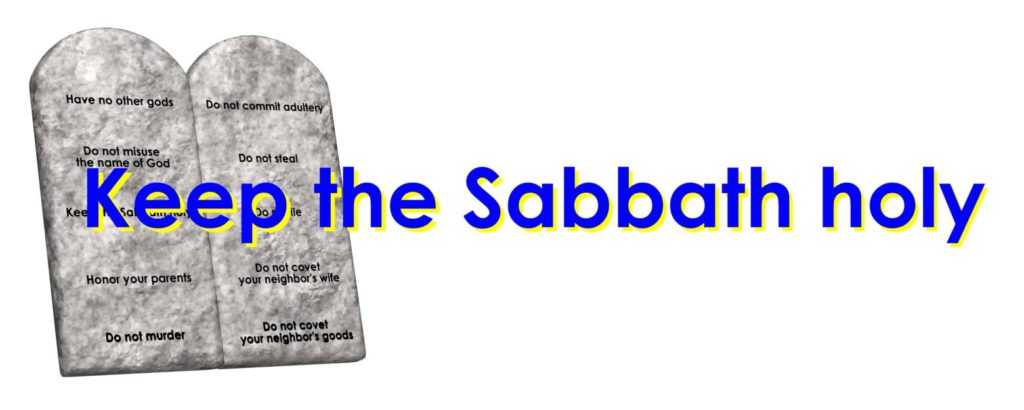
Exodus 20—An Overview of the Ten Statements (or Commandments

The Ten Statements or The Ten Commandments by which they are more commonly known are but the mighty cornerstone of the 613 commandments of the Torah. From these ten statements, all the biblical commands, both in the Old Testament or Tanakh and the New Testament or Testimony of Yeshua emanate.

The Jewish sages teach that all 613 are implied in the Ten; or that the Ten can be expanded into 613. The Tanakh (Old Testament) and Jewish writings contain a number of phrases that express the quintessential essence of the Torah. One of these best-known passages naming several of these phrases is in the Jewish Talmud: “[R.] Simlai said, ‘613 commandments were given to Moses—365 negative mitzvot (commandments), the same as the number of days in the year, and 248 positive mitzvot, the same as the number of parts in a man’s body. David came and reduced them to eleven (Ps 15), Isaiah to six (Isa 33:15), Micah to three (Mic 6:8), Isaiah again to two—“Observe and do righteousness” (Isa 56:1). Then Amos came and reduced them to one, “Seek me and you shall live” (Amos 5:4)—as did Habakkuk, “The righteous one will attain life by his trusting [or by faith] faithfulness (Hab 2:4)”’ (Makkot 23b–24a, abridged, from the Jewish New Testament Commentary, by David Stern, p. 565). 

We see some of these same Torah summation-type statements in the Testimony of Yeshua. For example, the phrase, “the just shall live by faith” is found in three passages of the Testimony of Yeshua (Rom 1:17; Gal 3:11; Heb 10:38); In Leviticus 19:18, we find the phrase, “you shall love your neighbor as yourself,” which is the summation of the last five of the famous Ten Commandments. This in itself is a summation of all of the 613 Torah commandments that relate to human relationships, which we see in Yeshua’s famous “Golden Rule” passage of Matthew 7:12, “Therefore all things whatsoever you would that men should do to you, do you even so to them, for this is the law and the prophets.” Paul echoes this concept in Romans 13:8, “Love does not do harm to a neighbor; therefore love is the fullness of the Torah.” Love is the foundation and quintessential concept behind the Torah-law of Elohim. Yeshua states this in Mark 12:29–31, 

“And Yeshua answered him, ‘The first of all the [Torah] commandments is, Hear, O Israel; YHVH our Elohim is one Master: And you shall love YHVH your Elohim with all your heart, and with all your soul, and with all your mind, and with all your strength. This is the first commandment. And the second is like, namely this, you shall love your neighbor as yourself. There is none other commandment greater than these.’”

Love must be the motive behind all our righteous deeds or else our actions count for nothing (1 Cor 13:1–13). The concept of love and the keeping of YHVH’s Torah-law are codependent actions. One cannot exist without the other. John, in his epistle, discusses this idea at length in 1 John 2:7–11; 3:11–24; 4:7–21 where he states that “Elohim is love” (1 John 4:8, 16), and that one’s love of Elohim and man is linked to obedience to the Torah commandments (1 John 2:3–11; 3:11–18). As YHVH first loved us, we should love our fellow man (1 John 4:7–11), in word, deed and in (Torah) truth (1 John 3:18). This relates to Yeshua’s admonition to his disciples in John 14:15, “If you love me, keep my Torah-commandments.”

Lest one recoil at the thought of having to keep 613 commandments of the Torah please be advised of the fact that there are approximately 1050 commandments in the Testimony of Yeshua!


What’s So Special About the Shofar?

Exodus 19:16, 19 Voice of the trumpet [shofar].

The Ram’s Horn Shofar and Its Spiritual Significance 

In Jewish thought, the Scriptures speak of three great shofar blasts that have historical and prophetic significance: the first, last and great or final shofar blasts.

The First Trump (or shofar blast) occurred on Shavuot at the giving of the Torah (Matan Torah) at Mount Sinai (Exod 19:16, 19). This shofar blast was of heavenly origin and is the first time the Bible records the sound of the shofar being heard.

The Last Trump (or shofar blast) occurs on Yom Teruah (the Day of Trumpets/Shofar Blasts, commonly called Rosh Hoshana) is the day of the awakening blast calling the saints to prepare their spiritual garments in preparation for the coming Messiah or Bridegroom. This shofar blast corresponds to the last trumpet blast of Revelation 11:15 after which the resurrection of the righteous occurs (1 Cor 15:51–53).

The Great Trumpet or Final Trumpet (or shofar blast called the Shofar HaGadol) is blown on Yom Kippur (Day of Atonement) signifying the Elohim’s day of judgment and the return of Messiah Yeshua as the King and Judge of the earth. At this time, it seems likely that he will destroy Babylon the Great with its new world order religious, political and economic system (Rev 19:1–21 cp. Rev 18) just before the establishment of his millennial kingdom (Rev 20:1–10). Historically on the Day of Atonement, the jubilee trumpet sounded in Israel on the fiftieth year. At this time, the captives were set free, debts were forgiven and all land was returned to its original owners. Matthew says that Yeshua the Messiah will return with a great sound of a shofar (trumpet, Matt 24:30–31; 1 Thess 4:16). Perhaps this is a reference to the shofar ha-gadol when Yeshua returns to earth, will set the spiritual captives free from enslavement to the enslaving economic, religious and political tentacles of end time Babylon the Great.

What’s So Special About the Sound of the Shofar?

The Shofar

The ram’s horn shofar is a uniquely biblical instrument. Although the enemies of Elohim’s truth have misappropriated, counterfeited or perverted much of what is found in the Bible, so far as this author knows, the shofar is one thing that Satan, the adversary of all that is good, and his followers have left alone. Amazingly, the shofar is like the proverbial “hot potato” that it too hot for the devil and his followers to touch. Why is this? What is it about the shofar that causes Elohim’s enemies to leave well it alone? Let’s explore the mystical qualities of this biblical instrument of divine origination that has the ability to stir the human heart at its deepest level, to pierce the heavens, to bring man back to Elohim and vice versa, and to send spiritual shock waves through the devil’s camp.

The Word Shofar Defined

The Hebrew word shofar (pl. shafarot) occurs 72 times in the Tanakh (Old Testament) and is usually translated into English as trumpet and simply means “ram’s horn.” What could possibly be so special about a ram’s horn? The answer possibly lies in root word from which shofar derives—shapar meaning “to be pleasing.” Derivatives of this word include sheper, which is translated as beauty in Genesis 49:21, and shipra meaning “fairness or clearness (of sky)” (Job 26:13). The root shapar is found only once in the Scriptures in Psalm 16:6 where David, filled with praise to Elohim, describes the blessings from above that have fallen on him as most beautiful or pleasant

Continue reading