Is eating biblical kosher a doctrine of demons as some in the Church teach?

1 Timothy 4:1–3 Doctrines of demons…forbidding to marry…abstain from foods [Gr. broma]. 

Asceticism—A Doctrine of Demons

When Paul speaks of “doctrines of demons” and then goes on to mention “to abstain from foods which Elohim created” is he referring to the biblical dietary laws as many Christians scholars assert? If not, that what social and cultural forces of that day were affecting the saints such that Paul had to instruct them to beware of “doctrines of demons” that were encouraging them not to marry and to abstain from eating certain types of food? 

To answer this question, we must first define some terms. Is the Greek word food (Gr. broma) as used in verse three a reference to “articles allowed or forbidden by the Jewish law” (i.e. Elohim’s Torah-law or law of Moses) as the well known Strong’s Concordance claims? Is The Theological Dictionary of the New Testament (The TDNT)correct in its definition of this Greek word, when it declares that broma relates to the “cultic and ascetic prescriptions of Judaism which are declared to be religiously indifferent by Jesus and early Christianity…[thus the] distinction between clean and unclean meats is done away” (vol 1. p. 642)—a claim that Arndt and Gingrich do not even make in their touted Greek lexicon (nor do the lexicons by Vine or Thayer)? 

Clearly, contrary to what some biblical scholars assert, Paul cannot be referring to the Torah here, since the Torah-law of Elohim neither prohibits marriage, but encourages it, nor does it command the abstention of eating biblically approved meats. In fact, the whole Levitical and tabernacle system revolved around the sacrifice and eating of kosher animals. To say these are doctrines of demons (as some Christian teachers claim) is blasphemy against YHVH Elohim’s Torah, which is the Creator’s very instructions to humans on how to live righteously and without sin (Ps 119:172; Deut 10:12; 1 John 3:4; 2:3–6; John 14:15) .

The word foods or meats as found in 1 Tim 4:3 is the Greek word broma referring to “food in general.” However, contextually, Paul is using a narrower definition of foods or meats based on his statement in verse four where he refers to “every creature of Elohim” (v. 4). Creature is the Greek word ktisma, which literally means “creature,” and, as used in the NT, refers to living and breathing creatures as opposed to all other creations of Elohim such as plants and rocks (i.e. ibid.; also see Jas 1:18; Rev 5:13; 8:9). Therefore, Paul is not referring to food in general (plants and animals) but specifically to food which edible animal meat as biblically defined. 

Once again, if Paul is not referring to the Torah when he is condemning these doctrines of demons that are calling for celibacy and the abstention of meat eating, then to what is he referring?

Continue reading
 

Deuteronomy 20 Commentary—A Sword in One Hand, A Tree in the Other

Deuteronomy 20

Deuteronomy 20:1, Battle against your enemies. Scripture tells us to oppose the enemies of YHVH, who should also be our enemies. Today, our enemies are spiritual (2 Cor 10:3–5; Eph 6:12). This is because every physical enemy is an evil spiritual entity. Let’s face it, we are living in a time when the forces of evil are attacking and attempting to eradicate any vestiges of righteousness everywhere. Do you have the will to fight for what is right? 

The Bible calls us to be warriors—spiritual warriors. Paul talks about the spiritual battle in which we are all engaged (ibid.). One aspect of this battle is to cry aloud for the sake of truth, to be like a light on a hill, and to be a watchman on the wall warning those around you about what is coming. What are you doing in this regard or who are you in some way supporting those who are? One way to accomplish this is to support those who are trying to get the truth out, who are in the front lines fighting evil while attempting to promote righteousness. You can do this by helping them financially and through your prayers.

Deuteronomy 20:19, Do not destroy its trees. In its commentary on this passage, A Torah Commentary For Our Times states, “While the commandment deals specifically with cutting down trees during a siege, Jewish interpreters extend it to cover all forms of wasteful destruction under the principle of bal tashchit, or ‘do not destroy’…[all w]asteful destruction is condemned. ‘Anyone who deliberately breaks dishes, tears clothing, wrecks a building, clogs up a fountain, or wastes food violates the law of bal tashchit’” (various rabbinical sources are cite vol. 3, p. 143). 

In Genesis 2:15, Elohim commissioned Adam and Eve to “tend [or dress] and keep the garden.” The word tend literally means “to serve, work, dress, labor”in the sense of a servant or steward. The word keep means “to observe, guard, watch over, or preserve.” This was one of Elohim’s first Torah-commands to humans—to take care of or nurture the planet. Gardening is the oldest and noblest profession and was given to man by Elohim. Caring for trees and plants is a major aspect of this.

Do you view yourself as a steward with a divine mandate to help preserve, watch over, and guard all that YHVH has given you responsibility over including your body, your marriage, your children, your gifts and talents, your car, your job, your home and garden and everything else in your life? Do you view doing this as a good witness to those around you, as leaving a legacy for future generations, and as glorifying your Father in heaven?


Sen. Rand Paul: Mask mandates and lockdowns from petty tyrants? No, not again. Choose freedom

Resist. They can’t arrest us all. They can’t keep all your kids home from school

Sen. Rand Paul

 By Sen. Rand Paul| Fox News (https://www.foxnews.com/opinion/mask-mandates-lockdown-choose-freedom-sen-rand-paul)

Rand Paul says he is against vaccine mandates because he believes in a free society

Resist. 

They can’t arrest us all. They can’t keep all your kids home from school. They can’t keep every government building closed – although I’ve got a long list of ones they should.

We don’t have to accept the mandates, lockdowns, and harmful policies of the petty tyrants and feckless bureaucrats. We can simply say no, not again. 

Speaker Nancy Pelosi — you will not arrest or stop me or anyone on my staff from doing our jobs. We have all either had COVID, had the vaccine, or been offered the vaccine. We will make our own health choices. We will not show you a passport, we will not wear a mask, we will not be forced into random screening and testing so you can continue your drunk with power rein over the Capitol. 

President Biden — we will not accept your agencies’ mandates or your reported moves toward a lockdown. No one should follow the CDC’s anti-science mask mandates. And if you want to shutdown federal agencies again — some of which aren’t even back to work fully — I will stop every bill coming through the Senate with an amendment to cut their funding if they don’t come to work. 

No more.

Local bureaucrats and union bosses — we will not allow you to do more harm to our children again this year. Children are not at any more risk from COVID than they are for the seasonal flu. Every adult who works in schools has either had the vaccine or had their chance to. There is no reason for mask mandates, part time schools, or any lockdown measures.

Children are falling behind in school, and are being harmed physically and psychologically by the tactics you have used to keep them from the classroom last year. We won’t allow it again.

If a school system attempts to keep the children from full-time, in-person school, I will hold up every bill with two amendments. One to defund them, and another to allow parents the choice of where the money goes for their child’s education.

RAND PAUL HITS NIH DIRECTOR FOR MASK-AT-HOME COMMENTS: HOW CAN PEOPLE WHO ARE SO SMART SAY SUCH STUPID THINGS?

Do I sound fed up to you? That’s because I am. 

I’m not a career politician. I’ve practiced medicine for 33 years. I graduated from Duke Medical School, worked in emergency rooms, studied immunology and virology, and ultimately chose to become a surgeon. 

 We are at a moment of truth and a crossroads. Will we allow these people to use fear and propaganda to do further harm to our society, economy, and children?

I have been telling everyone for a year now that Dr. Anthony Fauci and other public health officials were NOT following science, and I’ve been proven right time and time again. 

But I’m not the only one who is fed up. I can’t go anywhere these days — from work, to events, to airports and Ubers, restaurants and stores, without people coming up to me thanking me for standing up for them.

For standing up for actual science. For standing up for freedom. For standing against mandates, lockdowns, and bureaucratic power grabs.

I think the tide has turned, and more and more people are willing to stand up. I see stories from across the country of parents standing up to teacher unions and school boards.

I see members of Congress refusing to comply with Petty Tyrant Pelosi. 

We are at a moment of truth and a crossroads. Will we allow these people to use fear and propaganda to do further harm to our society, economy, and children?

Or will we stand together and say, absolutely not. Not this time. I choose freedom. 


Ecclesiastes 5 and 6—Natan’s Commentary Notes

Ecclesiastes 5

Ecclesiastes 5:1, Walk prudently [keep thy foot, KJV]. Once again, the Preacher teases the reader by inserting another “God principle” into his monologue on the ultimate meaninglessness of life. It is as if he is toying with us by, on the one hand, repeatedly demonstrating to his reader the vanity of life, yet, on the other hand, giving his reader a glimpse into another reality, another dimension that is outside of this time-space continuum—this prison spaceship called life on earth. He is telling us in bits and pieces that there is a bigger picture, a better way, but one has to factor Elohim into the equation for that picture to come into view. As long as one does not, then there is no hope, purpose or meaning to life. If one does, however, then a whole new picture begins to emerge out of the obscurity of the dark fog of this physical existence.

So how does one walk prudently, or keep one’s foot, so that one does not stumble over the conundrums of trying to squeeze meaning out of one’s physical, seemingly pointless life? 

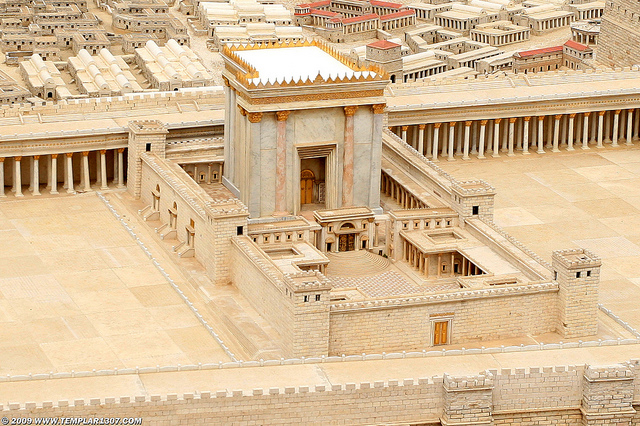
Go to the house of Elohim. When we think of the “house of God” what immediately comes to mind? Probably the ancient temple of Elohim in Jerusalem. But that temple is long gone. So what is the house of Elohim now? A church? A cathedral? Some manmade chapel somewhere where one is surrounding by religious icons and an artist’s conception of God that somehow stirs the emotions of man into a state of worship and awe? Or is it something much deeper and simpler than that? What if one does not have a church building to go to? Then what? Is it impossible to find Elohim because some man or men somewhere have not constructed a physical building and placed a label on it called “a church”? 

The fact is that if one digs deeply into the meaning and purpose of the biblical concept of “the house of Elohim” one will find that the Tabernacle of Moses and the Temple of Solomon were representations of the composite human being comprised of a physical body housing a soul (the mind, will and emotions) and a spirit (the deep, inner part of man that is immaterial and connects us to Elohim who is a Spirit). In the Testimony of Yeshua, we learn that the saint is now the temple of the Spirit of Elohim or “the house of God.” As the ancient Israelite temple was “the house of Elohim” on this earth housing the glory of Elohim’s presence within its inner most chamber (the holy of holies), even so the presence of Elohim now resides in the innermost part of man—his personal spirit.

Draw near to hear. So when the Preacher tells us to go into the house of Elohim and “to draw near to hear,” he is telling us to go carefully, prudently and not to rush in. Stop, quiet down one’s continuos roiling thoughts and emotions, and listen. Listen to the Spirit of Elohim speaking to us through our personal spirit. 

Ecclesiastes 5:2, Do not be rash. Once again, the Preacher continues to give us more clues on how to find Elohim­—how to escape the endless hamster wheel called life which ends in death, which is vanity or ultimately meaningless emptiness. Slow down! Think before you speak. Say less. Stay humble and small before Elohim. These are keys to finding Elohim. These instructions seem overly simplistic, yet how elusive they really are in this modern world—especially for those who live and work in urban settings.

Ecclesiastes 5:3, Dreams. Anyone can dream big ideas and con people into thinking that they are on track to achieving great things. In reality, many words and a multitude of dreamy ideas mean little or nothing.

Ecclesiastes 5:4–5, Do not make a vow. Elohim is not impressed by talkers; he wants doers. It is better not to open one’s mouth, to give one’s word and to make commitments, than to spout off grandiose promises and ideas that will never come to fruition.

Ecclesiastes 5:6–7, Do not let your mouth. The proper control and use of one’s mouth is a key to finding Elohim, for it is the mouth’s misuse that engenders much grief and conflict that makes this somewhat life on this earth even more difficult, stressful, full of conflict and ultimately meaningless. Moreover, as stated elsewhere, in the multitude of words there is no lack of sin, which only takes us further away from Elohim and our only escape from this wearisome and tedious physical existence. A foolish and godless person gives little thought to the words that come from his mouth, which only leads him little-by-little deeper into the pit of despair of this physical life. 

Fear Elohim. The Preacher continues to give us clues in the form of a trail of delectable bread crumbs that will lead us upward and out of the vanity of vanities of this physical existence. In the Psalms and Proverbs we learn that the fear of Elohim is the beginning of both knowledge and wisdom. Fear is a safety mechanism that preserves life. The fear of death keeps one from stepping off a tall ledge or from ingesting a poisonous substance. Likewise, the fear of Elohim will keep us on the straight and narrow path morally and spiritually, so that we are less likely to sin and bring the miserable consequences thereof upon ourselves in this life and the next life.

Ecclesiastes 5:8–9, The oppression of the poor. Do not be overly worked up over the oppression of the poor and social injustice. , for these are part of the human condition. It always has been and always will be, and there is little or nothing one can do about it, so why stress yourself out over it and make your already vain life more meaningless? After all, it is to the advantage of government officials to address oppression and injustice , or else they will lose their lofty and lucrative positions of power from which they rule their people. Disgruntled people eventually rise up and overthrow their rulers.

Ecclesiastes 5:10–17, He who loves silver. In this section of his discourse, the Preacher continues to demonstrate the ultimated empty meaninglessness of making the acquisition of wealth and material possessions one’s chief goal. While such a person pursues riches, he is actually impoverishing himself in many ways. On the other hand, the one who humbly labors in his profession will sleep well at night, for he has worked hard and honestly and can feel good about it (v. 12).

Ecclesiastes 5:18–20, Here is what I have seen. At this point in his discourse, the Preacher gives a summary of what he has learned and preliminary conclusion to finding some measure of happiness in life without factoring in Elohim. Work hard and enjoy the fruits of your labor including good food and drink. These are gifts from Elohim to all humans to blunt the ultimately reality of the meaninglessness of this life. So rejoice in these things and be grateful. Even thought the Preacher does not spell this exactly, perhaps one can read between the lines and surmise that a few thoughtful and grateful individuals will stop for a moment form their labors, and in gratitude look upward to heaven and discover Elohim. In so doing, they have taken a first step to finding an escape from the endless and seemingly pointless cycles of life on this earth.

Ecclesiastes 6

Ecclesiastes 6:1–12, More hopeless despair over the seeming pointlessness of life. The next twelve verses are a continuation of the main theme of Ecclesiastes: the pointlessness of life without Elohim.

Ecclesiastes 6:9, Better is the sight of the eyes. One in the hand is worth two in the bush. Enjoy and be thankful for what you have now instead of always wanting more and never being satisfied.


Deuteronomy 18 on Modern Baal Worship; True Vs. False Prophets; The Biblical Yeshua Vs. the Christian Jesus

Moses Prepares the Israelites for Future Prophets

Before his death, Moses, the great prophet who spoke face to face with Elohim, prepares the children of Israel and their succeeding generations for the ministry of the prophet to come, as well as warns them against false prophets. The Theological Wordbook of the Old Testament (pp. 544–545) lays out Moses’ instructions to YHVH’s people in five steps. In Deuteronomy 18:9–22, YHVH formally proscribes any involvement with the bogus mantic (i.e. relating to divination or prophecy) practices of the surrounding nations (vv. 9–14). Then having stated that a line of prophets would speak or write with the same authority of Moses, he commanded the Israelites to render the prophet the same obedience he had commanded them to give Moses (vv. 9–14). Five certifying signs of a true prophet (Ps 74:9; Matt 12:38; Acts 2:22) were then were then given:

  • The prophet must be an Israelite or “of the brethren” (vv. 15, 18).
  • He must speak in name or voice of YHVH (vv. 16, 19, 20), and the death penalty being for those who falsely claimed to do so (v. 20; 18:1ff; 1 Kgs 18:20–40).
  • Supernatural knowledge of the near future was to be a sign of the authenticity of the prophet’s divine appointment (vv. 21–22; 1 Kgs 22; Jer 28, esp. v. 17).
  • The prophet might perform some other miraculous signs (Deut 13:1ff; 1 Kgs 18:24, esp. v. 36).
  • The final test was strict conformity to or agreement with the previously certified revelations by Moses at first and by the prophets to follow (Deut 13:1–18). The fifth requirement is emphatic, since the entire thirteenth chapter is devoted to it.

Deuteronomy 18:10, One who causes his son or daughter to pass through the fire.

The Abominable and Idolatrous Practice of Abortion Is Modern Baal Worship!

The ancient Canaanite practice of child sacrifice was done in honor of the Canaanite deity Moloch (see Lev 18:21 and 20:1–6). The name moloch Hebrew means “king”with the root of the word meaning “to rule or reign.” Child sacrifice (the ancient form of modern abortion or infanticide) though a pagan practice that YHVH abhorred, was practiced by both houses or kingdoms of Israel after they had drifted into spiritual syncretism with the heathen cultures around them (see 1 Kgs 11:7; 2 Kgs 16:3; 21:6; 23:10,13; Jer 7:31; 19:5; Ezek 16:20; 23:37). 

Baal appears to be a synonym of Molach or Moloch (see Jer 19:5 and the Ency. Britan. eleventh edit., vol. 18, p. 676). After the children were sacrificed to this demon entity, the dead bodies were thrown into the garbage dump of the Valley of Hinnom or Tophet just below the Temple Mount in Jerusalem (Jer 7:31; 19:5–6). Apparently, the children were not burned alive, but were slain (by knife) like any other sacrifice before being thrown into the fire and then into the garbage dump (ibid.). The ancients sacrificed their children to appease their bloodthirsty gods of prosperity, sensuality and fertility (The Story of Civilization, vol. 1, by Will Durant, pp. 66–67, 297). 

What can we learn from these random pieces of historical information concerning the ancient practice of child sacrifice? It was done in honor of their deity; in other words, their idol was the king that ruled their lives. What is the chief deity in modern America and most everywhere else in the world? Money and wealth? Sex and pleasure? Fun and entertainment? In ancient times, children were killed by a knife, thrown into the fire and then into the garbage dump. Today, what happens in America and many other countries with unwanted children? Parents abort their babies or have them murdered while being born (partial birth abortion) by using burning solutions to kill the baby in the womb and scalpels and scissors to hack the baby to pieces to aid in its extraction. Afterwards the dead baby is tossed into a dumpster or body parts are sold for “medical” purposes.

What reasons do parents give for killing their children? “It will cost too much to raise them and it’s too much trouble” (greed, hedonism and selfishness). “It will interfere with my career” (selfishness and greed). “I want to have pleasure ­without ­responsibility” (selfishness, hedonism and greed). Regardless of the excuses, the reasons today are the same as those of the ancients: prosperity, greed, hedonism, selfishness and so on. Are we any different or any more “civilized” than the ancients? YHVH called abortion an abomination (which means he viewed the practice as “disgusting, abominable,abhorrent, detestable or loathsome,” Deut 18:12). 

Make no mistake about it. The modern practice of abortion is still the worship of the ancient murderous demon-god Moloch or Baal whether those practicing abortion know it or not. The reasons for engaging in this abominable practice are still the same, and the evil, murderous and demonic spirit motivating people to do it is still the same. Humans are no different today than they were thousands of years ago. Only the actors, costumes and venues have changed. The actions and evil heart of man remains the same without the transforming power of Word and Spirit of Elohim at work to convert sinful humans from the kingdom of darkness and the worship of and obedience to Baal (Satan) to the kingdom of light and the worship of and obedience to YHVH Elohim.

Do you abhor that which YHVH calls an abomination? In Scripture, does YHVH call children and fertility a curse … or a blessing? (See Deut 28:11 and Ps 127:3–5.)


Deuteronomy 18:15, A prophet from your midst, like me, shall YHVH your Elohim raise up for you. 

Jewish and Christian Opposition to Moses’ Messianic Prophecy 

Moses—A Prophetic Type of the Messiah

Obviously, Moses’ Deuteronomy 18 prophecy concerning the Messiah was fulfilled in the person of Yeshua. Who else in the history of the world could have fulfilled this prophecy? Despite this, the non-believing religious Jews, to their discredit, run around in philosophical circles attempting to prove that this verse does not apply to Yeshua. Similarly, the Christian church, in its own way, also disbelieves this prophecy. Let us examine some of the arguments attempting to circumvent the simple truth of this messianic prophecy.

Continue reading
 

Nuggets from Deuteronomy 17

Deuteronomy 17

Deuteronomy 17:1–3, Sacrifice.Yeshua, for us, offered himself as a spotless Lamb without blemish. Do you give YHVH your best, or do you give him the crumbs and leftovers? For example, do you give YHVH the best part of the day (the morning) for prayer, Bible reading and devotion, or the end of the day when you are tired and ready for bed? Do you give YHVH the first fruits (tithe) of your income or the leftovers (or none at all)? How are you helping to advance his kingdom on earth by using the talents, time and abilities he has given you, or are you using your energies and abilities to satiate the lusts of your flesh?

Deuteronomy 17:6 (and 19:15), By the testimony of two or three witnesses. In the Bible, one could not be accused of a crime (i.e. a sin) without the testimony of two or three eyewitnesses. This admonition is repeated in the Testimony of Yeshua:

But if he will not hear you, then take with you one or two more, that in the mouth of two or three witnesses every word may be established. (Matt 18:16)

This is the third time I am coming to you. In the mouth of two or three witnesses shall every word be established. (2 Cor 13:1)

Against an elder receive not an accusation, but before two or three witnesses. (1 Tim 5:19)

He that despised Moses’ law died without mercy under two or three witnesses. (Heb 10:28)

Most gossip and slander would stop if this commandment were followed, and thus much division and strife within the congregation of believers. 

How many times have you repeated hearsay and gossip without checking the source? Even if you know it to be true, is it beneficial and righteous to repeat it to others? One Jewish sage goes so far as to say that Messiah has not come back because of all the gossip and slander of the people of Israel. Perhaps. At the very least, the Spirit of Elohim is greatly grieved, our intimacy with Elohim is diminished, and our marriages, families, friendships and congregations are fractured, hurt or destroyed because we speak things that should not be uttered.

How often do we accuse, slander and gossip about other people through use of the “evil tongue” (lashon hara) without going through proper channels and following proper biblical protocols to resolve interpersonal conflicts as Yeshua instructed in Matthew 18? How often do we attack others and spread our evil reports and accusations about others when we were not even eyewitnesses to what occurred or were not involved in the matter? How often do we attack YHVH’s leaders and accuse them of evil when there are no other witnesses (1 Tim 5:19)? YHVH hates those who sow discord among brethren and lying false witnesses, and calls this practice an abomination (Prov 6:16–17, 19). So let’s all be careful with our mouths!

Deuteronomy 17:2–5, Dealing with wickedness. Probably no one reading this is involved in any of the gross idolatrous practices listed here, but there are those little foxes (or little sins) that spoil the grapes (Song 2:15) and the little bit of leaven (tiny sins) that inflates or sours the whole loaf of bread. What ­idols or heathen practices, unrighteous world views, worldly attitudes, secular tendencies, profane habits and thought ­patterns, verbal expressions, etc. have you assimilated into your life that are keeping you from walking a higher, and hence, a more intimate and anointed walk with YHVH? Ask the Ruach haKodesh (the Set-Apart Spirit) to reveal these spiritual idols and strongholds to you so you can rid your life of them.

Deuteronomy 17:8–13, Matters of controversy. How respectful and obedient are you to the spiritual leaders YHVH has placed over you? Or do you follow their wise counsel only if and when it suits you? Nowadays if we don’t like a leader we simply leave our congregation and find a new one. In ancient Israel, this was not an option, nor was it an option in the first century. There was only one congregation in each town, and if there was a disagreement, people had to learn to work out their differences. What if we were in that situation today? How would that change your method of operation if you couldn’t just “cut and run” whenever things didn’t go your way or you got offended?

Deuteronomy 17:14–20, King over you. It is YHVH’s will for Israel to be ruled by a king. In the Messianic Era (Millennium), King Yeshua the Messiah, the Son of David, will rule not only over Israel but over the entire world from Jerusalem. YHVH ordained righteous leadership to help guide his people in the ways of truth and righteousness. 

When there is no leadership, everyone does what is right in his own eyes as occurred during the time of the judges. The Bible gives numerous examples of the chaos that results in a society or a group of people where there is no leadership. For example, The ArtScroll Stone Edition Chumash points out, “Two of the saddest episodes after Israel arrived in its Land—the graven image of Micah (Judg 17–18) and the atrocity involving the concubine at Gibeah (Judg 19–21)—are described by Scripture as having been possible only because there was no king in Israel (Judg 18:1; 19:1); had there been the leadership and discipline of a righteous king, he would never have permitted such outrages to take place” (pp. 1028–1029). 

Elohim is not the author of confusion (1 Cor 14:33). Nowhere in the Bible does Elohim permit his people to be leaderless whether it was patriarchal leadership, Levitical leadership, the leadership of judges and prophets, kingly leadership, the leadership of apostles and elders culminating in the leadership of King Yeshua and the glorified saints that will be ruling with him as kings and priests in his millennial kingdom. 

Numerous times in Scripture, YHVH not only expects his people to obey the righteous leaders he has put in place, but even unrighteous civil leaders (at least until they demand that one disobeys the higher laws of Elohim).

Many times in the Hebraic Roots Movement, one encounters folks who have been emotionally traumatized and hurt in the past by ungodly church leadership. As a result, many of these people now refuse to come under any leadership at all godly or otherwise. They pride themselves in establishing congregations and fellowships “where no one is the leader.” This is a recipe for disaster. Get back to me in one, two or five years and let me know who your experiment in this ungodly venture went. Eventually division and strife will tear such groups apart! After all, if everyone has equal say and anything can go on, who is going to stand up and say “this is wrong” and “that is unbiblical”? When grievous wolves in sheep’s clothing come in to tear the flock apart, who is going to put these agents of Satan out of the fellowship? 

No, leaderless groups are not a good thing. Those who want this are either naive when it comes to the machinations of human nature, or are they are rebels themselves and really don’t Elohim to rule over them, since he is the author of godly, righteous leadership

Do you resist YHVH-ordained leadership? If you have been hurt or “burned” by unscrupulous and self-serving leaders in the past, do you now refuse to recognize YHVH-ordained leadership thus losing the blessings that such leadership could bestow on your life? Let’s not throw the proverbial baby of righteous leadership out with the bath water because of our past hurtful experience. 

Deuteronomy 17:18, He shall write. The king was to know the Torah so that he could rule righteously based on the Word of YHVH. The book of Revelation says that the saints will be kings and priest ruling with Yeshua in the Millennium. Do you want to rule with him? If so, what are you doing now to prepare yourself for that position of responsibility? Is the study of YHVH’s Word a priority in your life or does it get bumped to last place after you have completed all the physical things you feel you need to do? How we prepare now for the future will determine our level of reward in YHVH’s kingdom. Will you be the least or the greatest? This will be determined by your study and practice of Torah. (See Matt 5:19.)


Blog Scripture Readings for 8-1 Through 8-7-21

Aside

Parashat Re’eh — Deuteronomy 11:26 – 16:17
Haftarah — Isaiah 54:11 – 55:5 | I Samuel 20:18-42**
Prophets — Ezekiel 44:1 – 48:35; Hosea 1:1 – 2:23
Writings — 1 Chronicles 9:1 – 15:29
Testimony — 1 Thessalonians 2:1 – 5:28; 2 Thessalonians 1:1 – 3:18

Our annual Scripture Reading Schedule for 2020-2021 with daily readings that began on 10/11/20 is available to download and print. The link to the previous 2019-2020’s Scripture Reading Schedule will still be available on the right sidebar under “Helpful Links” into next year. If you are using a mobile device or tablet, the link may be below, meaning you’ll need to scroll down instead.

Most of this week’s blog discussion points will be on these passages. If you have general comments or questions on the weekly Scripture readings not addressed in a blog post, here’s a place for you to post those. Just use the “leave a reply” link or the “share your thoughts” box below.

The full “Read Through The Scriptures In A Year” schedule, broken down by each day, can be found on the right sidebar under “Helpful Links.” There are 4 sections of scripture to read each day: one each from the Torah, the Prophets, the Writings, and from the Testimony of Yeshua. Each week, the Torah and haftarah readings will follow the traditional one-year reading cycle.

** A different Haftarah and/or Maftir is read when it is a special sabbath in Jewish tradition. This week it is Shabbat Machar Chodesh (Shabbat that is immediately followed by Rosh Chodesh) on the traditional calendar. Otherwise, Isaiah 54:11 – 55:5 would be read.

Weekly Blog Scripture Readings for 8/1 through 8/7/2021.