The Parable of the Talents Explained Prophetically

Matthew 25:14–30 (also Luke 19:11–27), In this parable concerning the kingdom of Elohim, a man travels to a far country leaving his belongings in the hands of his servant. Each was given a responsibility according to his ability. To one was entrusted five talents of silver, to another two and to the third one. The first two invested their talents and doubled their investment while the third servant buried his talent with no increase gained. Upon his return, the Master rewarded the first two servants for their faithfulness and fruitfulness, while the third servant was rebuked for his slothfulness and was cast into outer darkness.

Prophetic Points to Analyze

  • verse 14—talents
  • verse 15— five talents, two talents, one talent
  • verse 16— he that received five talents made five more talents
  • verse 17— he that received two gained two more
  • verses 18 and 25— hid his one talent in the earth
  • verse 25— I was afraid
  • verse 30— cast into outer darkness

Also immediately after his return to this earth, Yeshua will hand out rewards to the saints, which will be positions to be held in his kingdom during the Millennium. Some servants will be the least in his kingdom and some will be the greatest (Matt 5:19). What determines one’s level of rewards (not one’s salvation) in YHVH’s kingdom will be one’s level of faithfulness and obedience to the Master’s instructions; i.e., the Torah as this parable teaches: by one’s works. Yeshua says in Matthew 16:27, “For the Son of man shall come in the glory of his Father with his angels; and then he shall reward every man according to his works [deeds, mode of acting]” (see also Rev 20:12–13).

The number five in Jewish thought is significant because it represents the five books of the Pentateuch or Torah of Elohim. The servant that was given five talents and increased them allegorically means he flourished in obeying YHVH’s Torah commands. The Scriptures say that Torah is our wisdom and understanding (Deut 4:6), our righteousness (Deut 6:25), our blessing (Deut 28:1–14) and our life (Deut 30:16). The wise servant with the five talents recognized this and saw the blessing of Torah in his life and abounded in the loving instructions of YHVH and was rewarded accordingly. He took the five and turned them into ten. Ten signifies completion or entirety, a whole comprising of ten units such as the Ten Commandments or ten men as a representative cross section of Israel to form a minyan (or “number”) in a synagogue for the purpose of reading the Torah. 

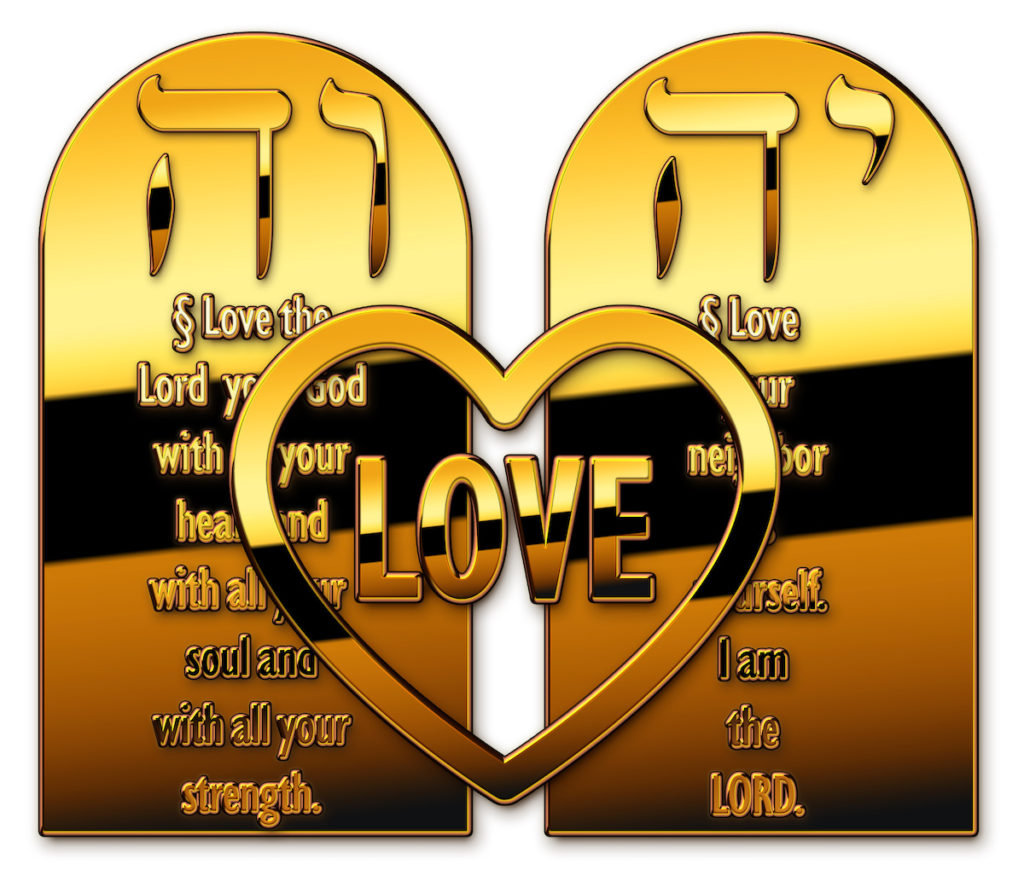
In Hebraic thought, two stands for the two tablets of stone upon which the Ten Commandments of YHVH were written. Two is also the number of the shema, which Yeshua stated is the summation of YHVH’s Torah commandments. When asked which is the greatest commandment in the Torah he responded,

You shall love YHVH your Elohim with all your heart, and with all your soul, and with all your mind. This is the first and great commandment. And the second is like unto it, you shall love your neighbor as yourself. On these two commandments hang all the law and the prophets.” (Matt 22:37–40)

The servant that had two talents wisely invested them and turned them into four. Four in Hebraic thought pictographically represents the four directions of the compass and corresponds with dalet, the fourth letter in the Hebrew alphabet signifying “a door.” A door has right and left post, a lintel and a threshold. YHVH-Yeshua created this earth with its four directions and he is also the spiritual door leading into the next world, as the Scriptures teach. Additionally, the number two represents the Hebrew letter beth that pictographically represents a house with four being the door of that house. Yeshua is the door to our spiritual house (or mansion, our eternal reward).

The servant that was given one talent buried his in the ground. It was valueless and dead to him. One is the number of self and selfishness. He cared only about himself and walked in fear instead of faith. The number one represents Torah as well, for the Jewish sages teach that all of Torah can be summed up in the phrase, “The just shall live by faith” (Hab 2:4). The slothful servant lived under the control of fear, which is why he buried his talent. The Scriptures teach that without faith it is impossible to please YHVH (Heb 11:6). The wicked servant lacked faith and was rewarded by being cast into of outer darkness (where the light of Torah-truth and the Sun of Righteousness that will light up the New Jerusalem will not shine). This is what we can learn from the Parable of the Talents.


Are YOU ready for the third day?

Exodus 19:1, 11, In the third month…the third day. 

The Third Day—End Times Prophetic Significance

In Exodus 19:1 we read that the Israelites arrived at Sinai in the third month, and according to Jewish tradition, a very significant event occurred on the third day of the third month (Exod 19:15) that was not only pivotal in the history of the Israelite people, but has profoundly influenced YHVH’s people, including you and me to this very day.

The third day was when YHVH give the Israelites the ten commandments (Exod 19:15), and it occurred on Shavuot, the Feast of Weeksalso known as the day of Pentecost. Let us now connect some dots or put some pieces of the puzzle together to form a prophetic picture of an amazing biblical truth regarding the third day and explore the past, present and future implications of this. 

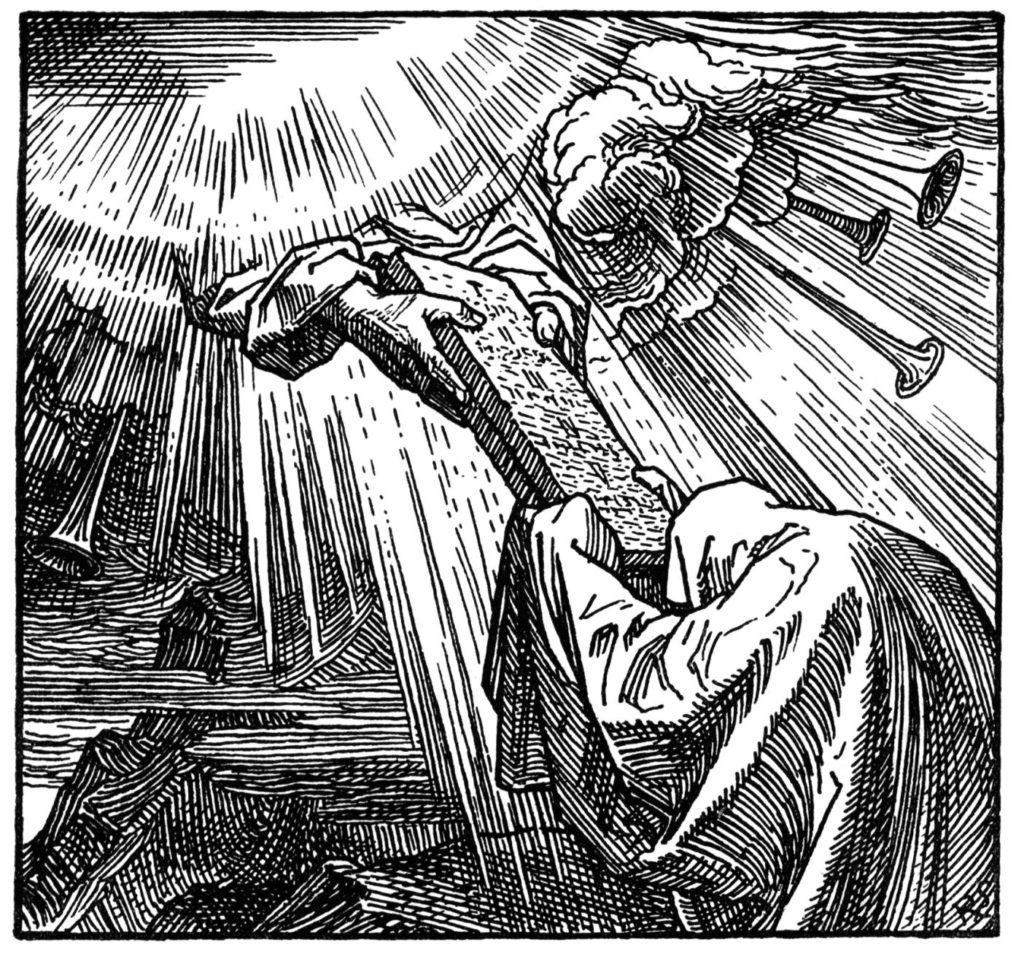
The biblical feast of Shavuot, when YHVH gave the ten commandments to Israel and the world, was also when YHVH, for the first time in recorded biblical history, sounded the heavenly shofar—in Jewish thought this is referred to as the first trumpet. Amazingly, this shofar event relates back to Abraham’s willingness to offer up Isaac as an offering to YHVH and to the ram that was caught in the thicket by his horns. Let us now quickly review that historical event and relate it to Shavuot, Yeshua, the cross and his second coming.

While en route to the place where YHVH had instructed Abraham to offer up his only beloved son (Gen 22:2), he could see “the place” (or Mount Moriah) afar off in three days (Gen 22:4). As we shall see later, this prophetically points to Messiah’s sacrificial death at the same location three millennia later. 

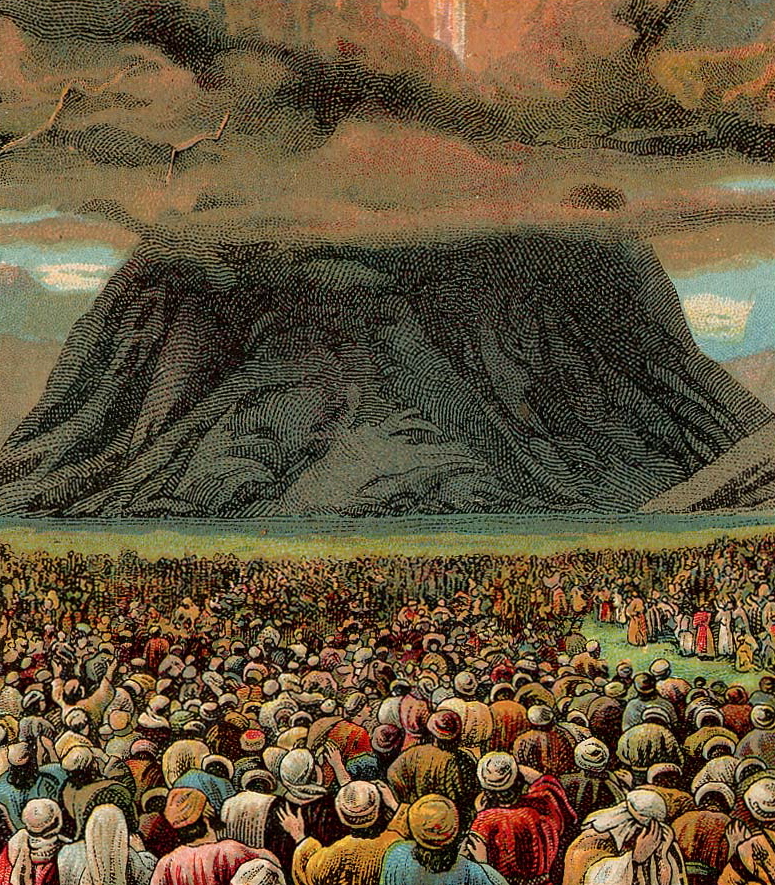
As we have just read in Exodus 19, the Israelites were to be ready “on the third day” (Exod 19:15) to receive the Written Torah thundered from the lips of the pre-incarnate Yeshua the Messiah (Acts 7:38; 1 Cor 10:4) at Mount Sinai. 

But the term the “third day” in Exodus chapter 19 also occurs in reference to Abraham and the akeidah or the binding of Isaac (Gen 22:1–18). 

What is the connection between the giving of the Torah on Shavuot and the akeidah on Mount Moriah? Namely this. The near death of Isaac on Mount Moriah (the Temple Mount in Jerusalem) and YHVH providing Abraham a ram to sacrifice instead of his only beloved son prophetically pointed to the death of the Yeshua the Messiah the Redeemer at the same spot about 2,000 years later. Similarly, the Israelites, on the day of Pentecost, when they received the ten commandments, were living out their own prophecy that also pointed to the same time when Messiah would come as the Living Torah culminating on the day of Pentecost or Shavuot. At that time of in the future, YHVH promised to write his Torah-laws on their hearts (Jer 31:33; Heb 8:10; 10:16 cp. Acts 3:37). Therefore, the “third day” reference for both Abraham and the Israelites had a similar relevance, for both were living in the second millennia B.C. or before the birth of Yeshua the Messiah, who was born near the beginning of the first century A.D. or in the third millennia, or on third day prophetically, from both the time of Abraham and the Israelites.

Continue reading
 

Divine Healing and Sickness—When and Why?

Exodus 15:26, I will put none of the diseases.Some Bible teachers quote this verse to mean that a Christian is immune from all sickness and disease. Is this what this verse is really saying?

On the contrary, the Bible teaches us that sometimes YHVH puts judgments upon people to either (a) bring them to repentance, or (b) because they are so evil, reprobate and past redemption, to impose the death penalty upon them. 

Other times, people put judgments such as sickness upon them because of their own wrong choices. Such judgments are the consequences of their own actions; it is a function of the laws cause and effect. 

Sometimes sickness comes upon people because YHVH takes his hand of protection away from people and they are left open as victims of the consequences of their own wrong doings, of other people (trials and persecution) or of Satan (spiritual attack). 

Finally, according to the Scriptures and the laws of biology, every person will eventually die , for it is appointed for every one to die. Sometimes healthy people simply die quietly in their sleep. Most times, people die of sickness or disease as their body grows old, runs down and finally wears out.

What this verse is saying is that YHVH will not put diseases upon people as a judgment against sin if they obey his commandments. However, if they obey him, but have an unhealthy diet, live an unhealthy life, have a negative attitude, make foolish life decisions that open them up to suffering the negative consequence (or curses) brought on by their own foolish decisions, this is not YHVH putting the consequences of their action on them, but the people doing so to themselves.

I am YHVH that heals you. This is the first place in the Scriptures where YHVH promises to heal his people of sickness. Here is a list of other biblical verses containing similar promises: Deut 7:12 and 15; Pss 30:2–4; 34:18–19; 41:1;91 (entire chapter); 103 (entire chapter); Isa 40:28–31; 53:4–5; Jer 17:13–14; Mal 4:2; Mark 11:23–24; Luke 10:19; John 14:13; 15:7; 15:16; 16:23–24; Rom 8:31; 8:37; Phil 4:13; Jas 5:14–16; 1 Pet 2:24. Read these Scriptures when you are sick and believe YHVH’s promises for your divine healing.

Notice the stipulations that YHVH makes for his promise of healing to be fulfilled upon his people. His people must “diligently heed [Heb. shema meaning “to hear and to do”] the voice of YHVH by doing what is upright [Heb. yashar meaning “right, righteous, correct, straight] in his sight by obeying his Torah.

Is There a Connection Between Sin and Sickness?

What if any is the connection between the sins we commit and the sicknesses and diseases that come upon us? Much, as the Bible teaches.

Continue reading
 

YHVH Instills the Concept of Torah Into the Day-To-Day Lives of the Israelites—A Lesson for US

In this brief study, we will see how YHVH was using various experiences in the Israelites’ lives to instill obedience to his Torah-law as a way of blessing and life for them, and how his Torah-Word would guide them safely to the Promised Land. Torah is the Hebrew word found throughout Scripture that means “YHVH’s instructions, teachings, or precepts in righteousness.” We will discover how these lessons apply to us as we move forward in our spiritual walk to our promised spiritual inheritance. 

Please note how the bolded phrases below a) relate to YHVH’s Torah-law, and b) relate to our everyday spiritual walk. 

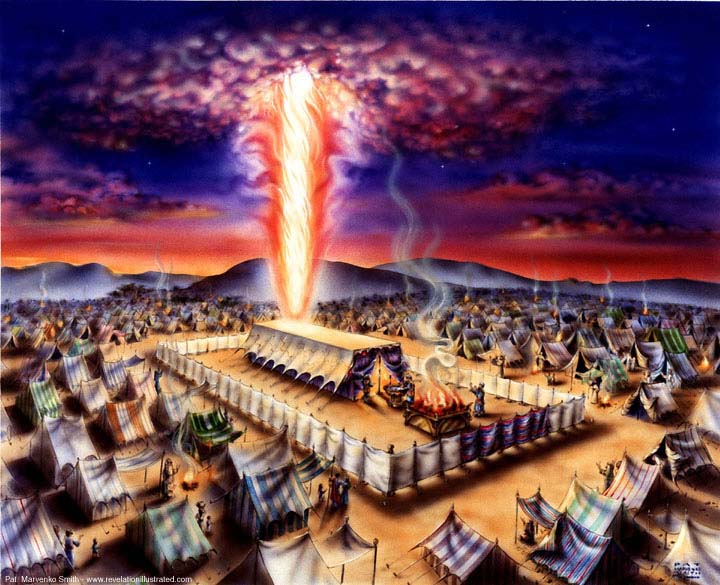
  • Exodus 13:21, “And YHVH went before them by day in a pillar of a cloud, to lead them the way, and by night in a pillar of fire, to give them light; to go by day and night. He took not away the pillar of the cloud by day, nor the pillar of fire by night, from before the people.” How does YHVH guide his people today? (Read Ps 119:105; John 16:13; Rom 8:14.)
  • Exodus 14:20, “And it came between the camp of the Egyptians and the camp of Israel; and it was a cloud and darkness to them, but it gave light by night to these: so that the one came not near the other all the night.” (Study 1 Cor 1:18; 2:14; Matt 10:16–25 to see how YHVH’s spiritual light guides and protects the righteous and, at the same time, is darkness or foolishness to the wicked.)
  • Exodus 15:25–26, “And he cried unto YHVH; and YHVH showed him a tree, which when he had cast into the waters, the waters were made sweet: there he made for them a statute and an ordinance, and there he proved them, and said, If thou wilt diligently hearken to the voice of YHVH thy Elohim, and will do that which is right in his sight, and wilt give ear to his commandments, and keep all his statutes, I will put none of these diseases upon thee, which I have brought upon the Egyptians, for I am YHVH that heals you.” Here we see that diligent obedience to YHVH and his Torah brings life and health and protects us from devastating diseases. (Consider Pss 91 and 103.)
  • Exodus 15:27, “And they came to Elim, where were twelve wells of water, and seventy palm trees, and they encamped there by the waters.” Water in Scripture symbolically represents the Torah-Word of Elohim (Deut 32:2; Eph 5:26). This oasis in the wilderness symbolically and prophetically represented many things. Twelve wells represents spiritual leadership (e.g. the 12 tribes of Israel and the 12 apostles), whose responsibility it is to proclaim the good news message of salvation, and to teach YHVH’s Torah to show people how to walk in righteousness after being redeemed from enslavement to sin. The 70 palms symbolize the elders that ruled Israel (later called the Sanhedrin), who made judicial rulings based on YHVH’s Torah (see Exod 18:20–26; Deut 17:8–13). Yeshua established his own Sanhedrin when he appointed 12 disciples (later, apostles) and then 70 more disciples and sent them out to spread the gospel message, and to advance the kingdom of Elohim at the devil’s expense (Luke 10:1–11, 17).
  • Exodus 16:4, “Then said YHVH unto Moses, ‘Behold, I will rain bread from heaven for you; and the people shall go out and gather a certain rate every day, that I may prove them, whether they will walk in my Torah-law, or not.’” In Scripture, bread from heaven often symbolizes the Word of Elohim and points to Yeshua the Word of Elohim made flesh and the spiritual bread of life. When we feed on the spiritual bread from heaven, we will be spiritually nourished and energized (see John 1:1–2, 14; 6:25–58). 
  • Exodus 16:23, “And he said unto them, This is that which YHVH has said, ‘Tomorrow is the rest of the set-apart Sabbath unto YHVH. Bake that which you will bake today, and boil that you will boil; and that which remains over lay up for you to be kept until the morning.’ And Moses said, ‘Eat that today; for today is a Sabbath unto YHVH. Today you shall not find it in the field. Six days you shall gather it; but on the seventh day, which is the Sabbath, in it there shall be none.’” The seventh-day Sabbath or in Hebrew, the Shabbat, was, and still is, pivotally foundational in the life of YHVH’s people. It was a major spiritual stepping stone or portal into a deeper walk with Elohim. The Shabbat was literally the covenantal sign between YHVH and his people that distinguished them from the heathen nations around them. It was a set-apart or holy time of fellowship, communion and spiritual instruction, and part of the societal glue that held the people of Elohim together and kept them on the straight and narrow path of holiness. YHVH intended the Sabbath to a great blessing to his people forever (Isa 58:11–14) including during the future millennial reign of Yeshua (Isa 66:23).
  • Exodus 16:28–30, “And YHVH said unto Moses, ‘How long refuse ye to keep my commandments and my laws? See, for that YHVH has given you the Sabbath, therefore he gives you on the sixth day the bread of two days; abide ye every man in his place, let no man go out of his place on the seventh day.’ So the people rested on the seventh day.” Again, we see the central role the Sabbath played in the life of Elohim’s people. The Sabbath is not only a specific day at the end of each week that YHVH blessed and sanctified and when he commands us to rest from our creative activities as he did (see Gen 2:2–3; Exod 20:8–11), but the Sabbath has future prophetic implications as well. It pictures the spiritual Promised Land of Elohim’s eternal kingdom into which Yeshua will lead his redeemed, faithful and glorified saints when he returns (read Heb 4:1–11).
  • Exodus 17:6, “Behold, I will stand before thee there upon the rock in Horeb; and thou shalt smite the rock, and there shall come water out of it, that the people may drink. And Moses did so in the sight of the elders of Israel.” Who and what is that rock? It all points to the Torah-Word of Elohim, both the Written Torah and Yeshua (note Isa 8:14; Matt 7:24–27; 1 Cor 10:4), for Yeshua is the rock our salvation (see Deut 32:15; Pss 18:46; 62:2, 6; 89:26; 95:1). 
  • Exodus 17:12, “But Moses’ hands were heavy; and they took a stone, and put it under him, and he sat thereon; and Aaron and Hur stayed up his hands, the one on the one side, and the other on the other side; and his hands were steady until the going down of the sun.” What does the stone spiritually represent? (See Deut 32:15; Pss 62:2; 95:1; Isa 17:10; 44:8; Matt 7:24–27; Rom 9:33.)
 

Hold on to Yeshua—He Will Guide and Protect You Through the Wilderness of Life

Steps In a Redeemed Believer’s Walk

In this study, we will examine the spiritual stages of growth and development that a redeemed believer goes through while crossing the wilderness of life en route to our spiritual promised land—the kingdom of Elohim. We will see how the Torah (YHVH’s instructions in righteousness) plays a pivotal role in the believer’s life that keeps us on the straight and narrow path, and that will eventually bring us safely to our spiritual destination, which is YHVH’s kingdom of heaven. In view will be the oft-quoted verse from Proverbs 29:18 which says, “Where there is no vision [or prophetic revelation], the people perish [i.e. cast off restraint, become lawless, unloosened, and unbridled], but he that keeps [or hedges about, guards, protects] the Torah, happy is he.” Many Bible students are familiar with the first part of this verse, but not its second part, where we see that Torah plays a vital role in guiding us to our spiritual or prophetic and eternal destiny. 

From the beginning to the end of the Bible, Elohim is directing his people into the path of Torah righteousness, and he is continually exposing us to the greater message of the everlasting gospel message (Rev 14:6), which involves salvation through faith in the shed blood of the Lamb of Elohim at the cross. 

What’s more, Yeshua, the Living Torah-Word of YHVH incarnate (or in flesh form, John 1:1–4, 14), was the one who, as the arm of YHVH (Isa 53:1), delivered the Israelites from Egypt. He was also the one who, as the Angel (or Messenger) of YHVH, led the ancient Israelites in the pillar of fire, who spoke to them from Mount Sinai and gave them his Torah-instructions. Yeshua also was the rock that gave them water, and was the bread of life to them. Yeshua himself (as well as the apostolic writers) tells us that he was the “God” of the Old Testament, who was with the Israelites throughout their tenure in the wilderness (John 8:58 cp Exod 3:14; John 6:32–58; Acts 7:35–39; 1 Cor 10:4). The point is this: Yeshua is still leading his saints as he was then. He is the one who revealed his Torah-law to them then, and his standards of righteousness have not changed from then until now, for he is the same yesterday, today and forever and he does not change (Heb 13:8; Mal 3:6)! What does this mean for you and me today? Don’t stop reading unless knowing the truth of the Word of Elohim scares and intimidates you, and unless you love spiritual darkness more than light. In what follows, we will let the Word of Elohim speak to us, even if it is different than what you have learned in your man-made church systems.

As you read this study, note how little-by-little, like a parent training his child, Elohim was training his people to walk in his Torah commandments, all the while revealing to them the truth of the redemptive work of Yeshua. Please note that obedience to the Torah and belief in Yeshua go hand-in-hand. The two are completely compatible and indivisible. One cannot believe in, love, and even know Yeshua without obeying his commands (John 14:15, 21; 1 John 2:3–6). Belief in Yeshua and walking in his waysYeshua are two sides of the same coin.

 Interestingly, this message of the gospel (that is, walking in YHVH’s Torah-law, the Written Word of Elohim, and having faith in Yeshua, the Living Torah-Word of Elohim) has never changed. How do we know this? The last book of the Bible which predicts conditions on earth just prior to Yeshua’s second coming identifies the end time saints of Elohim as keeping his Torah-commandments as well as embracing the testimony, faith or gospel of Yeshua (Rev 12:17; 14:12 cp. 22:14). These are the words of Elohim, and not men’s words or traditions!

One’s Pre-Redemption (pre-Salvation) State

We will now identify the steps or stages of spiritual growth and development through which YHVH leads his people as they trek through the bleak wilderness of this physical life en route to glories of immortal life in the promised inheritance of Elohim’s eternal kingdom. Keeping this prophetic vision in view will insure that one does not perish in this life before reaching the end goal. Remember,

Where there is no prophetic revelation [or vision], the people cast off restraint [or perish]; but happy is he who keeps the Torah-law. (Prov 29:18)

1— Slavery to Sin: Israel, while in Egypt, was in bondage, slavery or servitude to the world, flesh and the devil. The Hebrew word Egypt, Mitzraim, is related to matzowr meaning “something hemming in, distress, besieged, bulwark and defense.” Matzowr is from the Hebrew word tzur meaningto cramp, confine, beset, besiege, bind up, enclose and lay siege.”Do these words not describe the state of one’s pre-redemption state or one’s spiritual enslavement to the world, the flesh and the devil before being saved? As a slave to sin and living under the penalty of death and burdened with guilt and shame, how does this make one feel? If Mitzraim doesn’t express one’s spiritual condition, then what does?

2— Despair: While enslaved in Egypt, the Israelites cried out to YHVH in anguish from under the burden of their bondage. YHVH heard their cries and stretched out his strong arm and delivered them with a mighty hand. Their world shook and literally fell apart as he dislodged them from those things that confined them as helpless and enslaved captives in their place of distress, confinement and besiegement. The Egyptian world around them was judged, and Israel experienced some of these judgments, as well, (to arouse their attention, to shake them out of their sinful comfort zones and to awaken them to look heavenward), although YHVH graciously spared them from the most severe judgments that would have otherwise destroyed them. Before you were saved, did YHVH have to do something similar in your life to dislodge you from your enslavement to a life of sin and idolatry, and to awaken you to your spiritual state? Does he not still have to do this from time to time in our spiritual walk to move us to a higher level of spiritual maturity, so that we become more like him and become a more qualified and efficacious worker in his kingdom? Even at this moment, YHVH is urging his people, the saints, to come to a higher level in their spiritual walk by exiting the confused mixture of good and evil that exists in the spiritual Babylon of the world’s religious systems and churches (Rev 18:4).

Redemption

Continue reading
 

The Purpose of the Epistle of Hebrews—Lift YOUR Eyes Upward to Our Heavenly High Priest

Let the Truth of YHVH’s Word ring clearly like a bell in the hearts and minds of Truth-seekers everywhere!

What follows you have probably never heard before. Hopefully the truth of it will ring loudly like a bell in your heart and mind!


What is the main theme of the Epistle to the Hebrews? For certain, The the author is not debating about the validity of the Torah-law of Elohim. To say that he is to miss the whole point of the book. Rather he is discussing whether the Levitical system with its sacrifices and various rituals involving the Tabernacle of Moses (and later the temple in Jerusalem) is still valid or not.

Why is this such an important issue in the author’s mind? Simply for this reason: the temple is about to be destroyed or has already been destroyed along with its Levitical and sacrificial systems. This begs the question: How are the saints of Yeshua now to view the temple with its rites?

There is debate among scholars as to when this epistle was written, but it is commonly accepted that it dates to around A.D. 70, which is when the Romans destroyed the temple in Jerusalem along with its sacrificial system and Levitical priesthood. Therefore, of paramount importance in the mind of the author is the issue of the relevance, if any, the Levitical and sacrificial systems had in the life of the disciple of Yeshua. We see throughout this epistle that it is the author’s position that these systems in every way pointed to Yeshua and were thus fulfilled by his life, death, resurrection and current intercession on behalf of the believer at the right hand of his Father’s throne in heaven. 

Again, what is not an issue in the author’s mind is whether YHVH’s Torah-law is valid or not. This was never the issue in this epistle, even though the mainstream church has erroneously and traditionally made it the issue as its advocates twist and mangle the Scripture to say what they want it to say instead of what it actually says. Just because a thousand, million or billion people scream in unison that two plus two equals five, that man descended from the cousins of apes or that the earth is flat does not make it so. The same is true when Christian theologian existing in an echo chamber of their own construction scream and declare that the book of Hebrews is in some way invalidating the Torah.

True, the Levitical system was an aspect of Torah, but it was given to the children of Israel after YHVH had initially revealed his Torah-law to them at the foot of Mount Sinai. The Levitical and sacrificial systems were temporarily added to the overall Torah (Gal 3:19) after the golden calf incident as a way to help the Israelites spiritually by preventing them from falling into idolatry again. It was designed to guide them in the path of righteousness. The Levitical system was, therefore, a temporary parenthetical subordinate subset of the Torah in place until the Messiah would come to which the whole system pointed. Whether it was no permissible to steal, murder, lie, commit adultery, worship idols, practice witchcraft, have sex with animals, keep the Sabbath and biblical feasts was never the issue of this book or anywhere else in the Bible including Paul’s epistles. 

At issue in the author’s mind is whether the temple service was still needed some forty years after the death and resurrection of the Messiah, who himself predicted the demise of the temple along with its sacrificial system. Was the impending destruction at the hands of the Romans the  fulfillment of Yeshua’s prophecy? Until that time, the temple in Jerusalem had played such a central role in the lives of religious Jews everywhere including, to some degree, the apostles (as the book of Acts indicates) that the idea of its irrelevance is an issue of extreme importance and to be carefully considered. The author of Hebrews is wrestling with this whole idea and because the temple’s destruction is imminent (assuming Hebrews was written before A.D. 70), or had just happened (if the epistle was written just after A.D. 70), he has to convincingly make the point, from Scripture, that the temple and its rites are now irrelevant for the disciple of Yeshua. Therefore, in ana effort to prove that the Levitical and sacrificial systems are now longer needed, the whole book of Hebrews is about transferring the believers’ focus away from a physical and earthly temple with its rites and ceremonies and, instead, to lift the focus of the saints’ collective gaze into the heavens where the true and eternal temple of Elohim exists (after which the earthly tabernacle and temple were patterned) and where Yeshua the Messiah is currently ministering as our Great High Priest. This is the whole purpose of the Epistle to the Hebrews—to glorify Yeshua the Messiah and to fix our attention on him and him alone!


Hebrew 7:19—Which law? The Torah or the Levitical system law?

The Word of Elohim is a river of life constantly yielding fresh revelation and Truth for those who are seeking it!

These are my updated notes on this verse. Like most serious Bible students, I am constantly going over the same Scriptures again and again that I have read many times before. As we grow in our understanding of the Word of Elohim, the Spirit constantly gives us new understanding. This makes the Bible continually fresh and alive—a veritable river of life from YHVH’s throne.

Upon reading my old, previously published notes from this passage, I realized what I had written before was based on the translations of some other Bibles, but didn’t really make sense in light of the author of Hebrews larger context of this passage. Below is my updated understanding. Hopefully you will find it enlightening and affirming the greater biblical truths upon which our faith and spiritual foundation rests.


Hebrews 7:19, The law made nothing perfect. In the Greek, the word perfect is teleioo meaning “complete, carry through, accomplish, bring to an end, add what is yet wanting inn order to render a thing full.” In the Aramaic this verse reads, “For we maintain that the Torah is not able to complete us which are otherwise without the coming of a greater hope through which we approach Elohim” (HRV). What is this verse really saying? We can view it in two ways. The law can either refer to the whole of the Torah, or to the Levitical and sacrificial systems that were a parenthetical subordinate subset of the greater overall and over-arching Torah.

If this verse is referring to the Torah in general (which I do not believe it is), it is not saying that the Torah was abolished, but only that it doesn’t have the capacity to bring us to spiritual completion or maturity and into intimate relationship with Elohim. Something more is needed. 

In reality, the Torah points us to the one who will lead us to the Father (it was the “tutor” [NAS] or “child-conductor” [YLT] that led us to Yeshua, Gal 3:24 )—that greater hope. 

Through Yeshua’s sacrifice, our sins are forgiven once and for all. Through Yeshua’s life one earth, we have an example to follow of how to live the Torah. Through Yeshua’s Spirit living in us, we have the internal strength to die to the flesh and live out YHVH’s Torah. Through Yeshua’s intercession as our Great Heavenly High Priest, we have an advocate in heaven to plead our case before the heavenly court of justice. Through Yeshua, our righteousness is made complete despite our failed efforts to love him by following his commands perfectly.

It makes more sense from the surrounding context that the reference to the law here is referring to the Levitical priesthood with its sacrificial system. This is clear from this passage’s larger context where the author is discussing not the Torah in general, but the Levitical priesthood with its sacrificial system that was temporarily instituted until the time of Yeshua at which time the greater and former Melchizedek priesthood took over again of which Yeshua is the head and believers are a part. In this light, it make more sense that the former commandment that was annulled because of its weakness which the author refers to in verse 18 is the Levitical and sacrificial system and not the greater Torah itself. Scripture again and again from beginning to end asserts that the Torah is immutable and perfect, for it is YHVH’s instructions in righteousness and a reflection of his very character and nature, and Yeshua, who is the Living Torah-Word of Elohim incarnate was the living and perfect embodiment of that Torah. These things cannot change for they were and are perfect and unimprovable.