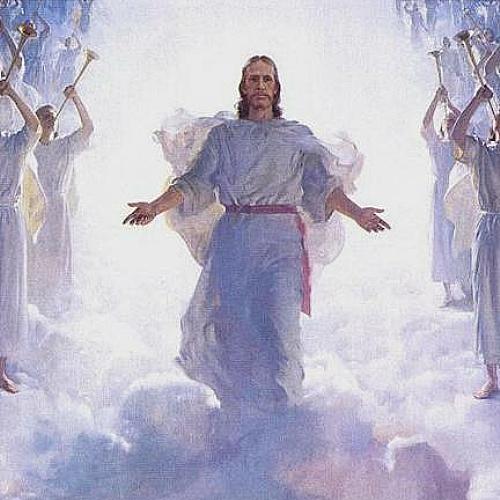
In Acts chapter seven verse 35 and the following several verses, Stephen makes a reference to an Angel. To whom is he referring: to YHVH the Father or YHVH the Son who became Yeshua the Messiah?
Angel is the Greek word angelos which has several meanings including the stereotypical meaning of the word angel. But the word angelos as well its Hebrew equivalent malak can also refer to a human messenger as well as to a divine messenger such as YHVH, the Word of Elohim or the preincarnate Yeshua the Messiah, as was the case with the “Angel” or Divine Messenger or YHVH who spoke to Moses from the burning bush in Exodus chapter three.
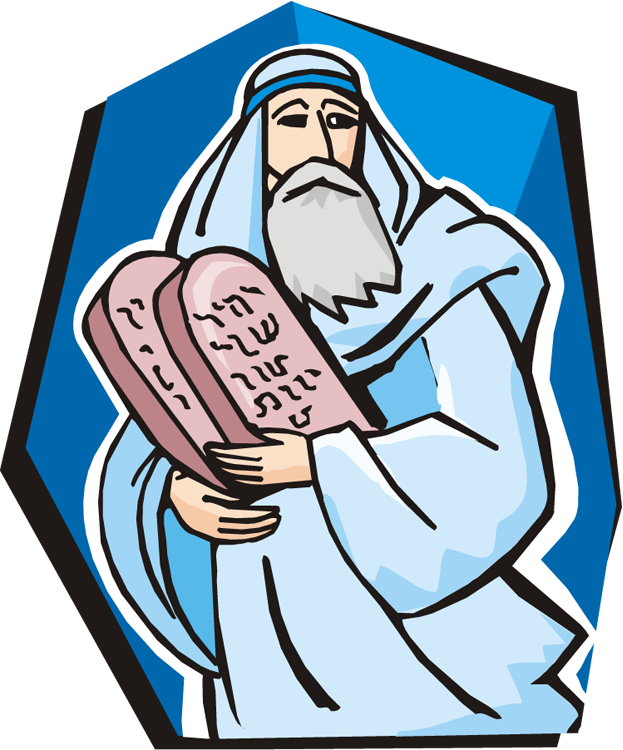
This same Divine Messenger or YHVH spoke to the Israelites from Mount Sinai when giving the children of Israel the Torah-law as Stephen state in verse 38.
Elsewhere, Paul goes on to say that the same Divine Entity, who later came to be known as Yeshua the Messiah, was the One who lead the Israelites in the wilderness and gave them water from the rock (1 Cor 10:4).
Moreover, Yeshua clearly states in John 5:37 that the Israelites did not hear the voice of his Father, YHVH the Father, in the wilderness. Thus, whose voice did they hear? Who was the Messenger or “Angel” to which Stephen makes reference in this verse? It was none other than the preincarnate Yeshua the Messiah who was the Word of Elohim to which John makes reference at the beginning of his Gospel (John 1:1) who become the Messiah (John 1:14).
Finally, in John 8:58, Yeshua states that he was the I AM of Exodus 3:14 that spoke to Yeshua out of the burning bush; Yeshua is YHVH the Son as opposed to YHVH the Father. The fact Yeshua was making the connection between himself and the I AM of Exodus is the reason that the Jews picked up stones in an attempt to kill Yeshua; they viewed his statements as blasphemous, since he was claiming to be deity.
Thus, when we connect all of these statements together by Stephen, Paul, John and Yeshua, we see that Yeshua in his preincarnate state, and not YHVH Elohim the Father, who was the God of the Old Testament who spoke to the patriarchs, to Moses as well as to the prophets.
The fact that Yeshua was the part of the Godhead who was the God of the Old Testament and not the Father (per se or directly) is contrary to what the mainstream church teaches and what most Christians believe.
With this in mind, how does the fact that Yeshua or Jesus in his preincarnate state as the One who gave the Israelites the Torah-law from Mount Sinai challenge the idea that the same Divine Being who later came as Yeshua the Messiah came to do away with the same Torah-law as the mainstream Christian church teaches? Is this prevalent teaching in Christianity not incongruent with the facts of the Bible? How does the fact that Yeshua in his preincarnate state gave the law to the Israelites change how one views “the Law of Moses?” Similarly, does YHVH’s statement in Malachi 3:6 that “I am YHVH, I do not change” as well as the statement in Hebrews 13:8 that “Yeshua the Messiah is the same yesterday, today and forever” not make more sense with respect to YHVH’s Torah-law, which is his unchanging and immutable standard of righteousness for all people for all time?
It is time for honest and truth-seeking Bible students and disciples of Yeshua to question and challenge many long held church traditions that are contrary to the plain and simple Truth of the Bible, and to bring their thinking and lifestyles into alignment with Truth!
Acts 7:37, A Prophet. Stephen is pointing out to the Jews that Yeshua was the fulfillment of Moses’ Deuteronomy 18:15 prophecy that “YHVH will raise up for you a Prophet like me from your midst, from among your brethren. Him you shall hear….”
Acts 7:38, He. Who is the “he” that Stephen is referring to here: the Prophet or Moses? The antecedent of he must be Moses, since in the same sentence he is juxtaposed with “the Angel.” As we discuss in our notes in verse s 35 and 37, that “Angel” was none other than the preincarnate Yeshua the Messiah.
Acts 7:53, Angels. Or human messengers, since this can be the meaning of the Greek word angelos.
This is an important question that has dangerous implications. Why? Because truth is like a sharp sword that cuts. It separates good from evil, light from darkness, sin from righteousness; it differentiates between those who are of Elohim and those who are of the world, the flesh and devil; that is, those who are of the kingdom of the god of this world—Satan the devil. Oooh, that hurts! But the fact remains: we are either in Elohim’s kingdom or the devil’s kingdom. To ignore or renounce the former is to acquiesce knowingly or unknowingly, it makes no difference, to the latter. For these reasons, most people flee from answering the question “What is truth.” This is because their deeds are evil and they do not want the glorious light of YHVH’s Truth to shine into their lives and to expose their evil deeds as John declared about Yeshua in John 3:18–21.
He who believes in [Yeshua] is not condemned; but he who does not believe is condemned already, because he has not believed in the name of the only begotten Son of Elohim. And this is the condemnation, that the light has come into the world, and men loved darkness rather than light, because their deeds were evil. For everyone practicing evil hates the light and does not come to the light, lest his deeds should be exposed. But he who does the truth comes to the light, that his deeds may be clearly seen, that they have been done in Elohim.”
Not only that, let us not forget an important fact: there are two kinds of truth. Truth with a capital T and truth with a small t. The former is divinely revealed Truth, while the latter is truth at a physical level (e.g. 2 + 2 = 4 or the law of gravity). To acknowledge the former means that one has to accept not only the idea of divine revelation, but a Divine Revealer. If so, then there is a Divine Judge who determines right and wrong. If this is true, then that Judge will bless those who live up to that divine Truth, and curse those who do not.
To acknowledge the existence of divinely revealed Truth carries with it serious implications regarding one’s lifestyle. That is why most humans choose the downward path (call Baalism or feeding from the tree of the knowledge of good and evil) of sin and succumb to the notion that God is dead or irrelevant. Not only that, they attack those who believe in Elohim (the Jews and the Christians), they attack the Bible—the Word of Elohim, they attack the Holy Land where Elohim placed his name, and they attack anything that remotely represents any of these things (e.g. morality, marriage, the family, church, male and female genders and so on). This is the spirit of Antichrist, which we see rising up like a tidal wave of evil in these last days all over the world. But the reality is that these are only the death throes of Satan and his kingdom of darkness, for he knows that his time as the ruler and god of this world is short, and that King Yeshua is coming soon to dethrone him. That is why the devil is pulling out the all the proverbial organ stops in a vain attempt to prevent the inevitable and inexorable march of Truth!
For these reasons, it is important that you understand the answer to the question, “What is Truth?”
John 18:38, What is truth?
In this age of moral relativism or situational ethics, it is unpopular to believe in, much less purport, that there is one single truth. Most humans live under the notion that every person can determine their own truth for themselves. The problem with this delusion is that when your truth conflicts with my truth there will inevitably be conflict. Ultimately, there will be a breakdown in law and order leading to anarchy resulting in unending theft, murder and wars. This was the case in primeval and medieval societies like Europe before strong central governments evolved to enforce law and order. The history of British Isles alone before there was a strong king in London was one series of blood baths after another by various raping and pillaging parties.
The Gospel of John contains many deep spiritual insights that are found in none of the other three Gospels. John wrote this Gospel probably in the AD 90s when he was very old and likely after all the other apostles were already dead, and some 60 years after the death and resurrection of Yeshua. By that time, he had seen a lot of water go under the bridge—both good and bad, so to speak, and had developed many keen and unique insights that come only with time, experience, understanding and wisdom. Please enjoy a few of the golden nuggets in John’s writings that this disciple of Yeshua has discovered over the years and is now sharing with you below.
John 5:2, In Hebrew. (Gr. Hebraisti) This phrase indicates that either John was originally written in Greek, or it was written in Hebrew, then translated into Greek with the insertion of this editorial comment.
John 5:4, Troubled/stirred the waters. The Greek word for stir or trouble can mean “to agitate, disquiet, make restless, cause inward commotion, to strike one’s spirit with fear, perplex the mind, render anxious or distressed or to cause dread.” The troubling of the waters at the Bethesda Pool was more than just a breeze causing some riffles over the waters. Those at the pool’s edge must have sensed something supernatural when the angel troubled waters—that something supernatural was about to occur. Perhaps they sensed the presence of Elohim in their spirit. The outward stirring of the waters (with the inward stirring of the spirit?) coupled with their acting in faith to get to the waters to be healed brought about healing. What is the lesson here for us? When we sense the presence of the Almighty to heal us, we must step forth in faith seeking Elohim’s healing touch in our lives. Our seeking might result in our finding heaven’s miracle for our lives at that exact moment.
John 5:12, Sin no more. Sometimes our physical infirmity is a result of sin was case in this verse, and sometimes sin is not the cause of the infirmity as was the case with the man who was born blind (John 9:2–3). Only by divine revelation (or by the Holy Spirit gift of the word of knowledge) was Yeshua able know the cause of an ailment when praying for someone’s healing. Yeshua’s healing of the man at the Bethesda Pool was an act of divine grace by Yeshua. Yeshua didn’t require the man to repent of his sin before healing him, although he advised him sin no more, so that a worse judgment wouldn’t come on him later.
John 5:18, [Yeshua]…broke the Sabbath. (Also see notes on Matt 12:1–14.) Allow me to share an interesting and sad, but true story from my life about a false Christian teacher that I went head-to-head with. Many years ago, I was in a meeting where a Christian Bible teacher was giving a message on the end times. In the middle of his teaching and totally out of context, he quoted this passage from John and claimed that Yeshua broke the Sabbath. There was a rustle in the audience of about 300 people. A little later, he made the same statement again and began to deride the Sabbath. This time there was an audible moan from some in the audience—many of whom were Sabbath keepers. A feeling of being hit in the gut went through me. A little later, he made the same statement again, and continued to bash Sabbath observance. This time, I could hold my peace no longer, and I stood up and challenged him in the middle of the meeting. I told him that to say that Yeshua had broken the Sabbath was to call Yeshua a sinner, and that Yeshua had not broken the Sabbath, but some Jewish legal traditions (or halakhah) pertaining to the Sabbath. The speaker was flustered and had no response, and the host of the meeting decided to take an intermission.
A year later, it was announced that this Bible teacher had suddenly and unexpectedly dropped dead in the pulpit while preaching. One can’t help but wonder if he had come under divine judgment for blasphemously teaching that Yeshua was a sinner by supposedly breaking the fourth commandment.
Had this false teacher simply pulled down a concordance from his bookshelf and looked up the word broke in the Greek, and had read John’s statement in verse 12 in the context of verses 8–10, he wouldn’t have been teaching this blasphemous heresy about our Master and Savior!
Here is the explanation of this passage: The word broke is the Greek word luo meaning “to loose, untie someone or something bound, to dissolve, destroy.” According to The Theological Dictionary of the NT, luo means “to free from prison, open something closed; destroy fetters, foundations, walls; to release.” What Yeshua was breaking was the Jews’ extra-Torah legal traditions that made the Sabbath a burden by prohibiting the alleviation of human suffering and need on this day (John 5:8–10). He was in no way violating the actual Torah, since there is no Torah-law prohibiting healing on the Sabbath or carrying one’s bed role. In attempting to follow the Torah through men’s traditions, many of the Jews of Yeshua’s day had actually omitted the weightier matters of the Torah (justice, mercy and faith, see Matt 23:23), and had forgotten that YHVH is more concerned with heart issues rather than religious legalism, since he desires mercy over sacrifice, and the knowledge of Elohim over burnt offerings (Hos 6:6).
Any tradition of man that violates the letter and the spirit of the Torah is an illegal tradition. Yeshua was only violating an illegal tradition of men. Therefore, in the eyes of the Jews he was breaking the Torah. In reality, he was loosing (not breaking) the Torah from the traditions of men that had corrupted the true intent of the Sabbath law. A better translation of this verse would be, “he…loosened/untied the Sabbath [from men’s legalistic traditions].” Yeshua didn’t come to set men free from the Sabbath. He came to set the Sabbath free from men’s unbiblical traditions.
Did Yeshua Break the Law?
According to most of our English Bibles, Yeshua broke the Torah-law of Moses. For example, we read in John’s Gospel,
Therefore the Jews sought all the more to kill Him, because He not only broke the Sabbath, but also said that God was His Father, making Himself equal with God. (John 5:18, NKJV)
Exodus 21:1, These are the judgments [mishpatim]. Mishpat(im) means “judgment, justice, ordinance, sentence, legal decision or seat of judgment.” Most of these laws (as listed in chapters 21 through 23) are civil in nature and relate to our relationship with our fellow man (as summarized by the phrase, “you shall love your neighbor as yourself,” Lev 19:18). Therefore, most of these laws would correspond to the second half (the fifth through tenth) of the ten statements of Exodus 20. Some, however, relate to the first four commandments, which show man how to love Elohim (e.g. the seventh day Sabbath, and the prohibition of worshiping idols and pronouncing the names of pagan deities, tithing, obeying the Messenger of Elohim, and celebrating YHVH’s feasts).
In reality, chapters 21 to 23 are simply an expansion or extension of the fundamental principles laid down in YHVH’s ten statements of chapter 20. This makes the ten statements to be a remez or “a hint” suggesting that there are additional laws that form the larger body of YHVH’s Torah. The ten statements of Exodus 20 simply springboards us toward the larger body of YHVH’s legal structure that is laid out in his full Torah. The ten statements are like the cornerstone of the building of Torah. Each of these judgments can be traced back to a fundamental principle laid out in the ten statements. For example, the laws pertaining to servitude are to prevent men from stealing from his neighbor via debt and the consequences of one’s inability to pay one’s debts. The laws pertaining to physical violence against one’s neighbor are an extension of the law against murder, fornication and bestiality is an extension of the law against adultery, sorcery is an extension of the law against idolatry, afflicting the widows or fatherless is from the law against theft, slander comes out of the prohibition to lying, the biblical feasts or annual sabbaths spring out of the weekly Sabbath, and being obedient to the Messenger of YHVH comes out of the first and second statements about YHVH being the Elohim of Israel and following no other gods. Moreover, the death a person by someone’s animal is an expansion of the “thou shalt not murder” command. The charging of usury on loaned money is an expansion of the commands not to covet or steal. The land sabbath and annual sabbaths (appointed times or moedim) are an expansion of the weekly Sabbath.
It should be obvious to see how all of YHVH’s Torah commands spring from the original ten, which form the foundation for the rest of the Torah. Additionally, the approximately 1056 imperative commands found in the Testimony of Yeshua all spring from the original 613 commandments found in the Torah. YHVH’s Word would be in opposition to itself if any of the 1056 were to contradict or nullify any of the 613. If they did, that would make YHVH into a liar and his word inconsistent with itself. This cannot be (Mal 3:6; Heb 13:8; John 10:35)!
Exodus 21:6,Bore his ear. The servant who of his own freewill and out of love for his master chose to remain in his household forever was permanently marked in this manner to signify that he was willing to hear and obey all his master’s commands punctually. This is a spiritual picture of the disciples of Yeshua who chose to become his bond servants (e.g. Rom 1:1; Gal 1:10; Col 4:12; Tit 1:1; Jas 1:1; Jude 1; Rev 1:1; 15:3). Not only do the true disciples of Yeshua accept him as their Savior, but they submit to him as their Lord or Master. They accept the fact he has purchased them with his blood, and that they now owe their lives to him. They willing choose to dwell in his spiritual house forever, to serve him and to hear and to do all that he commands of them.
Forever. The Hebrew word olam translated as “forever” throughout the Scriptures means “as long as the conditions exist” and not necessarily “for eternity” as the meaning of the English word “forever” often implies. In this verse, forever obviously means “as long as the servant shall live” and not “for eternity.” When the Hebrew word v’ad translated as “and ever” is added to olam (forever), the concept of eternity is connoted (e.g. YHVH’s reign as king is for eternity, Exod 15:18; Ps 10:16; the resurrected righteous will live for eternity, Pss 21:4; 45:6; Dan 12:3; during the millennium, righteous redeemed Israelites will walk with YHVH for eternity, Mic 4:5; the righteous will keep YHVH’s Torah for eternity, Ps 119:44; the righteous will praise YHVH for eternity, Ps 145:1, 2, 21).
Exodus 21:22,Hurt a woman with child. This passage is one of the strongest pro-life, anti-abortion verses in the Scriptures. Clearly, this passage teaches that life begins in the womb. The penalty for a man who is responsible for the death of an unborn child is death (v. 23.) Could any clearer statement be made about how the Creator feels about the sanctity of life? Here are some statistics about abortion:
42 million abortions occur worldwide each year (that’s 115,000 per day).
In 2008, 1.21 million abortions occurred in the U.S.
From 1973 to 2008, 50 million legal abortions occurred in the U.S.
22 percent of all U.S. pregnancies end in abortion.
In 2007, 84% of all abortions were performed on unmarried women.
At current rates, nearly one-third of American women will have an abortion.
(Sources of information: abortionno.org/Resources/fastfacts.html; guttmacher.org/pubs/fb_induced_abortion.html; abort73.com/abortion_facts/us_abortion_statistics/ — this is now a dead link).
Thankfully, as of this writing, the abortion rate in the US is slowly, but steadily dropping. In 2000 according to the National Right to Life (NRL), 1.36 million babies were aborted. The Center for Disease Control (CDC) puts the number at 857,475. In 2014 according to the NRL the number of abortions in the US dropped to 926,240. According to the NRL the total number of abortions performed in the US from 1973 to 2013 was nearly 58.6 million, while the CDC puts the number at nearly 51.9 million.
The murder of the innocent children is perhaps the greatest sin that a nation can commit. Abortion is a form of child sacrifice, which is something many ancient cultures practiced (e.g. the Aztecs, Incas, Phoenicians, pre-Islamic Arabs, and the biblical Canaanites). In the Bible, YHVH condemns the practice of the heathens and apostate Israelites who made their children pass through the fire in the worship of the demon-god Moloch (see Lev 18:21; 20:2–5; Deut 12:30–31; 18:10). YHVH placed on the nation of Israel a severe judgment for sacrificing its children to Moloch. He promised that their cities would be destroyed and that their nation be conquered by foreigners and that the Jews would be taken captive (see Jer 7:30–34; 32:35–36).
Exodus 21:22 clearly delineates the Creator’s position that human life begins at conception (see also Ps 139:13–16; Jer 1:5; Luke 1:15, 41, 44), not at birth.
Exodus 21:26–27,Eye…Tooth.This is the well known “eye for an eye and tooth for a tooth passage.” This is a remez meaning that these verses lay out a principle that’s broadly applicable to many situations. That is to say, what this verse is teaching us is that justice is properly served when the crime fits the punishment—when the criminal is himself deprived of that which he deprived his victim. To be sure, such a punishment is a strong deterrent to criminality! In the case of one causing another an injury for which one can’t recompense the victim (in the case of a loss of an eye or tooth), the criminal must suffer the same fate as his victim. In the case where a criminal causes harm to another (such as theft), which can be repaid, it is the criminal’s responsibility to make restitution.
Exodus 22
Exodus 22:26, Take your neighbor’s garment. The standard clothing for a Hebrew peasant farmer was a tunic and loincloth. A cloak was added for colder weather and doubled as a sleeping blanket. These articles of clothing may have been the only ones a peasant possessed, since the Torah mandated that a cloak taken from a man in pledge by a creditor had to be returned to him by day’s end, so he would have a blanket with which to cover himself at night (see also Deut 24:12–13, 17).
Exodus 21–23, The basic principles of morality and righteousness.
After having given the ten statements (or ten commandments), which forms the basic cornerstone of the whole Torah and out of which all the other Torah commands branch, Elohim now expands on these ten basic principles in chapters 21 to 23. This passage contains the basics of how to love YHVH Elohim and one’s neighbor as oneself (the golden rule).
Exodus chapters 20 to 23 contain the basic laws and principles for a society to function smoothly at a high level spiritually. They form the foundation of societal governance, which the new nation of Israel needed in order to survive spiritually (in right relationship with Elohim) and to survive physically and morally as a holy or set-apart nation surrounded by heathen nations.
It is also interesting to note that YHVH did not give Israel the 613 Torah laws at once, but introduced them to his people little-by-little on an as-need basis and so as not to overwhelm them to quickly. He led and taught the children of Israel as a loving and patient parent teaches their child educating them in small doses as the child is able to receive it so as not to overwhelm them. This is the same method that the Spirit of Elohim use to this day to teach new disciples of Yeshua about the Truth of the Bible little-by-little and step-by-step. In this same manner, wise and godly Bible teachers will teach their disciples the principles of godly living.
YHVH started with the ten statements of Exodus 20, then expanded these ten into the basic laws of chapters 21 through 23, and he then goes from there instructing the Israelites in ways of righteous living. This teaches us another truth about how YHVH operates with his human children: He reveals himself to those who seek him slowly, methodically over time. He and his ways are too transcendently great and expansive for the mind of man to encompass all at once.
For my thoughts are not your thoughts, neither are your ways my ways, saith YHVH. For as the heavens are higher than the earth, so are my ways higher than your ways, and my thoughts than your thoughts. (Isa 58:8–9)
This measured method of divine revelation is exactly how the apostles chose to reveal YHVH’s truth to the new Gentile converts in Acts 15—little by little. First they heard the gospel message and came to Messiah, then they were given basic rules to follow in order to enter into the fellowship of the saints, then they would learn the laws of Moses over time each Sabbath in the instructional setting of the local synagogue.
Learning the divinely revealed truths of Elohim and his ways of righteousness as found in the Bible is a step-by-step process that will last a lifetime.
Exodus 20:2, I am YHVH your Elohim.In Jewish reckoning, the first “commandment” (better translated: “word”) is found in 20:2 with verses 3 through 6 forming the second word and verse 7 the third and so on. YHVH wrote the first five words on the right side of the two tablets of stone and the last five words on the left side. The Jewish sages teach that the first word (commandment) corresponds with the fifth, the second with the sixth and so on—the first set of words governing our relationship with YHVH and the second parallel set of words governing our civil relationships. The two are related and linked. One can’t be fulfilled without the other. (Discuss this.) Relate this to what the Apostle John wrote in 1 John 2:3–7,9–11; 4:7–11, 19–21; 5:1–3. Also look at Mark 12:30 and John 14:15 in this regard. Love for Elohim must always be our primary motivation for keeping his commandments!
The Jews (as do I) view Exod 20:2 as the first command. Actually, the term “ten commandments” is a man-made term and misnomer. Look at it, and there are closer to 14 commandments if you look at all the imperative commands. Actually, Exod 20:1 calls these “the words” of Elohim. Hebrew for “words” is “devarim” meaning “words or statements.” This has led the Jews to refer to these as the ten statements, not the ten commandments. This is a more accurate way of describing them.
Exodus 20:3–4, No other gods…carved image.Cp.Deuteronomy 7:25 and 12:3 (also Ps 97:7; Isa 21:9; 42:17), Carved images of their gods. Carved imageis the Hebrew word pehsel in all the listed scriptures. The Deuteronomy verses shows the link between the two commands in Exod 20:3–4 relating to idolatry. The prohibition against the worshipping of false gods and making graven or carved images is actually one command with two parts. Men tend to worship idolize what they can see or make and if they can’t see it, they construct something that conceptualizes or represents their idol. Not every carved image is necessarily an idolatrous image, but it can become so.
Exodus 20:3, Before me.Lit. “before my presence” or “in my face.” When anything in our lives (a belief, a person, something we do, something we own) becomes more important to us than Elohim and his word, we are creating a false god, and are literally throwing that false god into the face of the Living Creator of the universe. Is YHVH Elohim a part of everything we do, say and think? Is the love of Elohim the chief aim of every aspect of our life? Or do we have some dark closet in our heart or mind from which we have excluded him? It is there that we need to begin our search for idols!
Those who love me. Read the last part of this verse, then compare it with what Yeshua said in John 14:15. In Yeshua’s statement, he is claiming to be the deity who gave the Torah to the Israelites at Mount Sinai.
In this blog, we ask and answer the hard questions that few Bible teachers ever ask much less answer including the topic of discussion below. Why is this? For one thing, I have an inquisitive mind and I want answers. Second, I trust the Word of Elohim, and I know that it is the divinely revealed Truth of Elohim and it contains no contradictions; everything in Scripture perfectly dovetails with everything else to form a glorious, unified and indivisible grand picture of YHVH’s plan of salvation for fallen humans. Therefore, I am not afraid to ask the hard questions, because I am assured that I will not be disappointed or disillusioned when the answers are revealed. The Truth will only strengthen our faith in and our understanding of the will of the Almighty Elohim, not weaken it. So I keep asking the questions and seeking the answers. So please enjoy the following study.
Ask, and it will be given to you; seek, and you will find; knock, and it will be opened to you. For everyone who asks receives, and he who seeks finds, and to him who knocks it will be opened. (Matt 7:7–8)
Is there a difference between the Torah and the law of Moses? Technically, no, since the Scriptures use the terms law of Moses and the law (i.e. Torah) interchangeably in many places.
However, many people think that the law of Moses or the Torah originated with Moses. I have emphatically taught over the years, and the Scripture is clear on the fact, that the Torah did not originate with Moses, but from eternity or from heaven where Elohim exists. How can we assert this? This is because the Torah is a reflection of the heart, mind, will and righteous character of Elohim. It is spiritual and is thus eternal as Paul states in Romans 7:14. Moreover, Scripture reveals that the voice of Elohim from heaven gave the ten commandments to the Israelites (Exod 20:1–22), and the finger of Elohim wrote them on stone (Exod 31:18; 32:16), and the rest of the Torah was dictated to Moses directly by Elohim (Exod 13:1; 25:1; 30:11, 17, 22; 31:1, 12 and dozens or more references could be given). Therefore, no one except an ignorant fool or a deceiving, disingenuous liar can ever say that the Torah-law originated from human source or sources.
At the same time, and in a sense, Moses is the originator (by the hand of Elohim) of the law of Moses as opposed to the eternal principles of the Torah, which, again, are a reflection of the heart, will, character, holiness and righteousness of Elohim. What do I mean? Moses is the first person to have written the Torah down in Exodus 24:7 (perhaps that is one reason he needed to be educated in Egypt, so that he was capable of such a task requiring literary skills). He put the Torah into a form that had not existed before: a national constitution for a physical nation state in written form. For the first time, he codified the Torah or turned it into a written legal code. This was necessary because Israel was now a nation with physical borders and not just a large nomadic family or tribe. As such, Israel needed a system of written laws by which to govern their nation. Therefore, Torah had to be expanded and more clearly defined, if you will, to meet the legal requirements of governing a physical nation. The laws of Elohim had to be specifically spelled out and put into a written form. In this form, political leaders, judges, priests and people would know what the law was, so that could be studied, obeyed and adjudicated. Furthermore, the nation could pass no new laws that in any way would contradict the Written Torah, which was the supreme law of the land.
Consider this. The principles of the Torah are eternal, spiritual and endless because Torah is a reflection of the eternal and infinite mind of the Creator, so it has many applications and possibilities and can be expanded to meet the legal exigencies of a physical nation. None of those applications, however, violate the basic principles of the eternal principles of Torah. For example, the Sabbath is a rest day. Though rules and regulations may be enacted that tell us how to keep the Sabbath, nothing can violate the basic principle of resting on the seventh day of the week.
The eternal principles of the Torah may also be likened to the Constitution of the U.S., which is the overarching law of that nation; no state, county or city government can pass a law that violates the U.S. Constitution. They can pass many additional laws, but nothing that goes against or supersedes the Constitution is permitted. This is akin to the law of Moses, which was based on or sprung out of the eternal principles of the Torah. It could contain additional legal requirements that would help to rightly govern a physical nation, but the nation could never pass a law that would contradict or invalidate any principle of Torah. For example circumcision was a sign of the Abrahamic Covenant, but under the law of Moses, it became a proof of citizenship, like a passport, in the physical nation of Israel. It was necessary for the protection of the nation and to prevent aliens from coming in and taking over. Those people who went through the physical ordeal of circumcision were likely serious about wanting to part of Israel. This was a test of the seriousness of their intent. The problem with the believing Pharisees of Acts 15:1 who believed that circumcision was to be a precursor for salvation is that they took the concept of circumcision both as a sign of the Abrahamic Covenant and as a physical act of faith in Elohim, mixed it with the proof of citizenship requirements of the law of Moses and then conflated the two and now made it a salvational requirement for inclusion in the spiritual nation (or body of Messiah) of Israel. Paul corrects this theological error in Romans four and addresses it in Galatians (and elsewhere), and the apostles made a ruling on this issue in Acts 15, as well. Contrary to what many in mainstream Christianity erroneously teach, Acts 15 was not a verdict on the validity of Torah, rather it was a verdict on whether circumcision was a prerequisite for salvation. It was a prerequisite to be a member of the physical nation of Israel, but not for salvation, as Paul states in Romans chapter four.
Another example where the Torah had to be expanded under the law of Moses was in the area of the inheritance laws. Traditionally, the firstborn son received the lion’s share of his father’s inheritance and was responsible for carrying on the family lineage. That’s following Torah in at its ideal level. However, what if your first born son was out of Elohim’s will (such as Ishmael), or was a profane, rebellious and godless man (such as Esau), or was an immoral and power hungry person (like Reuben who slept with his father’s concubine to affirm the his status as the firstborn leader of his tribe), then what? The birthright would then go to the next best male candidate for the position. Now what if one had no sons? Then what? This is what the daughters of Zelophehad faced in Numbers 36. The Torah had to be amended or expanded to accommodate this situation. Moses sought YHVH on the matter, who gave him instructions on what to do. So ideally, and according to the overarching principles of Torah, the birthright would go to the firstborn son, but humans don’t live in an ideal or perfect world, so sometimes adjustments or exceptions were made and the Zeloophehad’s daughters were able to inherit their father’s estate with certain provisos made. The same thing is true with marriage. Ideally, it’s between one man and one woman for life. Period. But what if you were the leader of a tribe or a king and your wife was barren and she couldn’t bear you a son? Then what? You had to get a son somehow or your tribe and lineage would die out or be destroyed or subsumed by a more powerful neighboring enemy tribe. Today the same conditions don’t exist where if one childless, that’s not the end of the world; they’re nomadic or kingly lineage dies out. As nomads in the ancient Near East, one’s tribe was one’s life and security. One couldn’t exist without that community support and protection; without this, one died. So if one’s wife was barren, what did one do? A man had to take another wife who could bear him a son to continue his lineage. The same was true of a king who had a barren wife. Was having multiple wives (polygamy) YHVH’s ideal situation for marriage? Absolutely not. It caused no end to familial problems, as the Bible so poignantly chronicles in a number of instances. Yet, polygamy became a reality for some men, and the law of Moses accommodated this practice and addresses this issue.
The same is true of divorce and remarriage. Yeshua states that, again, marriage was between a man and a woman for life from the beginning. Yet because of the hardness of the human heart, some people simply couldn’t continue to live together in marriage, and so the law of Moses permitted divorce and even allowed for remarriage (Mark 10:2–9, cp. Deut 24). This was not the perfect will of Elohim for marriage, but his permissible will, if you will.
In conclusion, Paul alludes to the good, better and perfect will of Elohim in Romans 12:2. All three are in the will of Elohim, but how much of the time are we ever in his perfect will? What is the perfect will of Elohim? It is the Torah, which reflects his perfect, holy or pure and righteous character. Are even the best intended humans capable of always walking in the perfect will of Elohim, or walking at the highest level of Torah all of the time or even most of the time? Hardly! Nevertheless, we should always be striving to do our best as much as possible. Let’s face it. Life is just plain difficult. That is where YHVH’s grace comes in! If our hearts are right and we are doing the best that we can, then YHVH’s merciful grace will cover us, as long as we do not turn his grace into licentiousness or license to sin (i.e. the violation of YHVH’s Torah, 1 John 3:4), which is what the church has largely done through its misguided and false teaching about the Torah being abrogated. The Bible is clear: there is no grace for willful and knowing disobedience!