Amos—A Famine of Hearing (i.e. Doing) YHVH’s Word in the Last Days

Amos 8:11, A famine…of hearing. Hearing is the Hebrew word shema, which has the compound meaning of both hearing and doing. In our modern world, the word of Elohim is more proliferated than ever before, especially with the advent of the internet. Many people have access to Elohim’s word and hear it, but very few actually do it. There are many people who are religiously active following the traditions and doctrines of men, but very few who actually read, study and then actually bring their lives into conformity with the actual word of Elohim. To do so is the biblical definition of hearing

Amos 8:12, Run to and fro. Not only was there a famine “of hearing the words” of YHVH, but the prophetic word of Elohim is also scarce, and people are running to and fro seeking it in ancient times, but presently as well. Why is this and what is going on?

Earlier in the book of Amos, YHVH promises to do nothing except that he reveals it first to his servants the prophets (Amos 3:7). The prophet throughout his little book rebukes the people of his day for their greed, idolatry, injustice, pride and their refusal to repent of their errant spiritual ways. Perhaps it was because of Israel’s state of spiritual apostasy that prophets were so scarce in that day, which is why people were having to run to and fro over long distances seeking a true prophetic word from Elohim. 

We read in Proverbs that without a prophetic vision from Elohim that is based on a solid foundation of Torah, YHVH’s people perish or become spiritual unloosened or unrestrained (Prov 29:18). 

At the same time, there are plenty of carnal or profane prophets in the modern church who prophesy out of the dictates of their own hearts without any understanding of the Torah and do little good for the spiritual well-being of YHVH’s people (see Jer 23; Isa 28; Ezek 13; 28) unless you consider their enriching their bank accounts at the people’s expense to be a good thing. 

Moreover, in Amos’ day as is the case today, when a true prophet would speak, Amos complained that the people hated hearing such a prophet (Amos 5:10). The same is true today. People are people. Why should YHVH send one of his prophets to such people? The people won’t hear him anyway. 

It’s ironic and sad how YHVH’s people have this strong yearning to hear a prophetic word from YHVH (probably because of the human yearning to divine the future), but when he sends one of his true prophets to deliver it, the people refuse to hear it (because with future predictions of YHVH’s prophets comes the message of repenting of sin,which people don’t want to hear). Ezekiel noted this proclivity of YHVH’s people and complained about the problem (Ezek 33:30–33). The people want to hear the prophet’s words, but they don’t want to obey the word of YHVH because it goes against their carnal desires (Ezek 33:31). Ezekiel goes on to predict that eventually, though each generation tends to reject the prophets YHVH sends to them, once the prophets are dead, subsequent generations would recognize them as true prophets (Ezek 33:33). Indeed this was the case, for later generations of Jews accepted those rejected prophets as divinely sent and put their writings into the canon of Scripture. Yeshua noted this phenomenon in the Gospels (Luke 112:46–51 cp. Matt 23:31–36). That generation now accepted the prophets of old that their forefathers had rejected, but following in the same path as their forefathers,and in their own day, they rejected Yeshua—the greatest Prophet of all.


Deuteronomy 27—Ye stiffnecked “Christian” rebels, why do you refuse to obey the Word of Elohim?

Deuteronomy 27:2–10, Set up for yourselves. Immediately upon crossing the Jordan and upon entering the Promised Land, YHVH instructed the Israelites to set up a stone monument containing the Torah and to construct an altar for burnt sacrifices. What is the significance of these and why was it so important that this be Israel’s first order of business upon entering the Land of Promise? Matthew Henry states in his commentary that the Word of YHVH (the Torah) and prayer (the altar) must always accompany each other. Discuss this and relate it to Psalms 51:16–19 and Hosea 6:6 and the believer’s spiritual walk. Also, why did YHVH command the Israelites to construct the altar of uncut and whole stones? To whom does this prophetically point? (Read Dan 2:35, 45; Ps 118:22; Matt 21:42; Luke 20:17.) The stones of the altar were rough and uncut. To whom does this point who became our Living (spiritual) Altar and Sacrifice? (See Isa 53:2.)

Mount Ebal

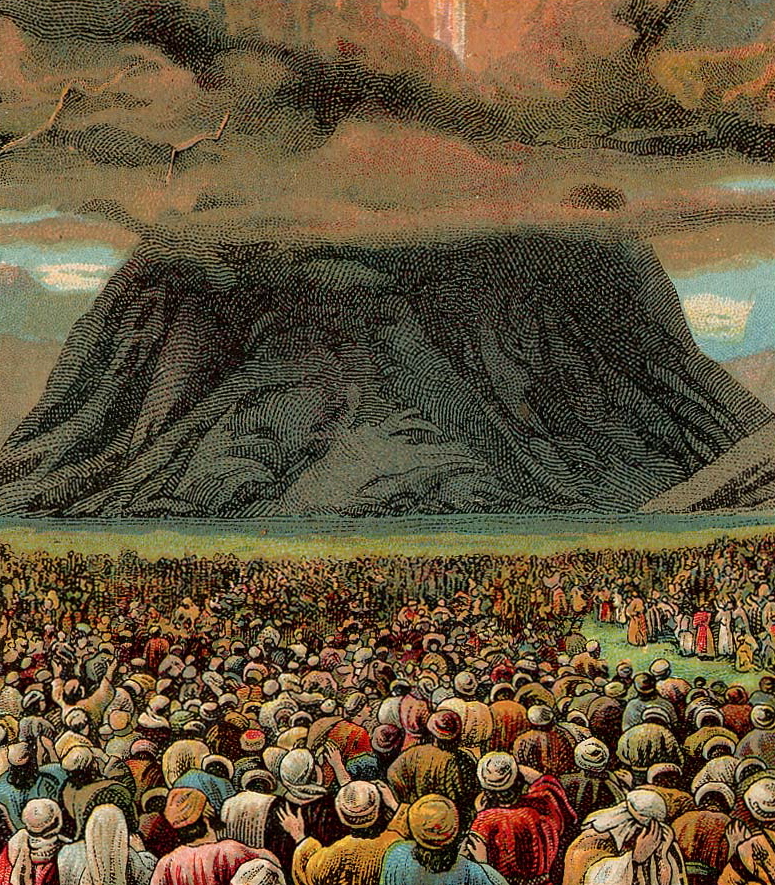
Deuteronomy 27:2, 4, 8, Set up great stones. On Mount Ebal on whole, un-cut stones, the Israelites were to write the Torah-law and then coat these stones with lime plaster. Elohim also told them to build an altar there where they were to make burnt and peace offerings. Why was the Torah written on stones on Mount Ebal—the mountain of the curses? Why not on Mount Gerizim, the mountain of blessing? Certainly this cannot mean that the Torah is a curse, for Paul calls it kadosh (holy), just and good in Romans 7:12. What could these stones represent symbolically? First, this symbology tells us that those who don’t follow the Torah will come under a curse, for to violate it is sin (1 John 3:4) and the wages of sin is death (Rom 6:23) and all have sinned (Rom 3:23). Second, Who is the Chief Cornerstone, the Stone the builders rejected (Ps 118:22; Matt 21:42; Acts 4:11; Eph 2:20), and the stone cut without hands (Dan 2:34)? What was the purpose of these offerings and to whom do the burnt and peace offerings point? Could white lime plaster symbolically represent the saints, the bride of Messiah, being clothed in robes of righteousness (see Rev 19:7–8)? Who is  the King of Righteousness through whom redeemed sinners become righteous? Who is clothed in robes of righteousness once their sins have been atoned for? (Read Heb 7:2, 20–28 cp. Rev 19:7–8 cp. 3:5, 18; Isa 61:10.) Who was wounded for our ­transgressions and bruised for our iniquities, had laid on him the iniquities of us all, and was made an offering for sin (Isa 53:5,  6,  10)? Who was the Living Torah, the Word of Elohim made flesh (John 1:1, 14)? Who redeemed us from the curses of the law (Gal 3:13), which came upon us as a result of our sinning (sin is the violation of YHVH’s law, 1 John 3:4), and thus bringing a death penalty upon us (the wages of sin is death, Rom 6:23)? Is it now making sense why the Torah and the altar were placed on Mount Ebal? This is another one of the many prophetic shadow pictures in the Torah pointing to the redemptive work of Yeshua at the cross. Give glory to Elohim who knows the beginning from the end and to Yeshua the Messiah, the Lamb of Elohim, who was slain from the foundation of the world! Does this strengthen your faith that Yeshua is indeed the Messiah, the Lamb of Elohim slain from the foundation of the earth? Who else could have fulfilled these prophecies?

Continue reading
 

Titus 1—”Jewish Fables” and the Torah

Titus 1:12–13, Cretans are. In today’s politically correct speech climate, this statement would be considered racist, even if it were a totally accurate statement. The word Crete may mean “fleshly.”

Titus 1:14, Jewish fables. Many people in the mainstream church are content to dismiss the Torah merely as a Jewish fable having little or no relevance to Christians. Yet, at the same time, the same preachers will passionately promote Christmas trees, Santa Claus and Easter bunnies. So what’s wrong with this picture? 

Moreover, many Bible teachers in the mainstream church teach that this verse refers to the Torah. They use it in attempting to prove that the commandments of the Torah are no longer valid for believers. Is this correct? You mean, since the Torah has been “done away with” it is now acceptable to steal, murder, commit adultery, lie and worship idols among other things? 

In reality, Paul can’t be referring to the Torah here without contradicting himself elsewhere. In numerous places, he strongly upholds and defends obedience to the Torah (Rom 3:31; 7:7, 12, 14; 13:8–10; 1 Cor 7:19; 9:21; Gal 3:10; 6:2; 2 Tim 6:14; Tit 2:14) and even claims to follow it himself (Acts 21:24; 24:1425:8; 28:17; 1 Cor 9:21). He must be talking about the Jewish traditions of men, which Yeshua said in Matthew 15:3–9 and Mark 7:7–9 make of non-effect the word of Elohim. 

In fact, this is exactly what Paul is referring to here in this verse when he says “Jewish fables and commandments of men.” This is not a reference to the Torah the commandments which, in truth, came from YHVH Elohim and not from men. In the same verse, Paul contrasts these commandments of men with “the truth” from which men have turned away. 

So what is this truth that Paul references here? Since Bible defines its own terms, we must look to it for the definition of the word truth. Elohim is the source of truth (Deut 32:4 cp. Pss 86:11; 89:14; 117:2), he is truth (Ps 25:10; 31:5; 33:4), and his Torah is truth (Ps 119:142, 151). 

Truth is the opposite of a fable. One example of a Jewish fable and a commandment of men would be the idea that one can’t be saved unless they’re first circumcised (Acts 15:15:1, 5), which was the subject of the Acts 15 council. Paul vehemently fought this Jewish fable, and the whole Book of Galatians, for example, largely deals with this issue. If Paul had meant the Torah when mentioning “Jewish fables” then this makes Paul into a schizophrenic liar (since he promotes and lauds the Torah and claims to follow it elsewhere), while elsewhere he views the Torah as irrelevant and not necessary to be obeyed. Were Paul against the Torah, this would put Paul at odds with Yeshua who upheld the Torah (Matt 5:17–19) and with himself when he said to imitate Yeshua the Torah-keeper as he himself did (1 Cor 11:1). 

From this brief discussion, it should be obvious to a logical minded person that Paul doesn’t have the Torah in view when he mentions fables in this verse.

Titus 1:15, Mind and conscience. Mind is the Greek word noos meaning “the intellect, that is, mind (divine or human; in thought, feeling, or will.” Conscience is the Greek word suneidesis meaning “co-perception, that is, moral consciousness.” Though the conscience or spirit of man is the candle of YHVH (Prov 20:28; Ps 18:28) and is what the Spirit of Elohim activates at the time of one’s spiritual regeneration, the spirit of man can be defiled (stained, polluted or contaminated) obviously by the corrupting influences of the world, the flesh and the devil. Since the spirit of man can be influenced or informed negatively it needs to be made perfect (complete). (See notes at Heb 12:23.)


Deuteronomy 21–25—The Torah pertains to everyone in all areas of life

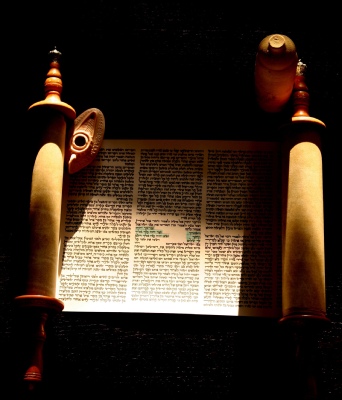
Boy reading from a gevil parchment scroll. This one is written on goat skin.

This section of the Torah (Deut 21:10–25:19) contains 72 commandments, which is more than in any other Torah portion. In this passage there are rules pertaining to all aspects of human relations showing that the “Torah deals with the real world. It does not present a world where all people get along with one another or rush to take care of one another’s property. Instead, it ‘takes into account the grim reality that people do not achieve the desired observance of “you shall not hate others in your heart”’” (A Torah Commentary For Our Time vol. 3, p. 150). 

In studying this portion, one can easily miss the point of a particular command if one views it strictly in its pashat (most literal) meaning. For these commands to have relevance in our day, one must view them as principles that have a broad range of applications. The specific examples Torah gives are merely representative of one of but many life situations to which the principle behind the example could apply. Keeping this in mind, this Torah portion will give you much to ponder pertaining to your day-to-day walk (or halakhah).

In these chapters we see a plethora of laws concerning many seemingly small details regarding human life. Many people in the church have the tendency to broadly sweep away these commandments with such dismissive cliches as, “We’re now under grace …” or “We’re not under the law anymore …..” But please observe how many of the civil laws of our nation regulating actions between various members of society are based upon YHVH’s laws found in the Torah. 

As many of us make our way back to a more biblically-based lifestyle and orientation, we begin to see that (a) YHVH cares about the details of our lives and (b) these laws, while sometimes hard to understand, are for our own well-being and blessing. Do you still nurse a “pick and choose” or “have it your own way” mentality with regard to YHVH’s biblical commandments choosing to follow the ones you want and making excuses why you can’t (or don’t want to) follow the rest? By doing so, what blessings are you depriving yourself of, and how are you hindering your love relationship with YHVH?

Some of the laws in these chapters may be hard to observe nowadays. With others, due to our church background, we may have the tendency to spiritualize them away, thus, in essence, rendering them of non‑effect in our lives and thereby placing ourselves above YHVH’s Torah-law and thus becoming a law unto ourselves. Is this not humanism: every man doing what is right in his own eyes instead of obeying YHVH whatever the cost? Who is the Master of your life? You or YHVH? 

How do you view laws about women wearing men-type clothing, wearing fringes on the corners of your garments, mixed certain types of fibers in clothing, lending without interest, caring for the widows and orphans, personal hygiene, family purity laws (e.g. men not having sexual relations with their wives during their monthly cycles), removing blood from all meat before eating it, men wearing beards, faithfully tithing, following the biblical dietary laws, and observing YHVH’s Sabbaths (weekly and annual), etc.? These are lifestyle-changing laws, many of which go contrary to the mores of our society. 

Are we not called to be a kadosh, set-apart, special and peculiar (i.e. treasured) people before YHVH? Following these laws to the best of our ability will help us to be the people that YHVH has called us to be. What progress are you making to bring your life into conformity to his standards of righteousness?


From the Mailbag: “Are the Hebrew Scriptures for the Jews only?”

I just received this comment on one of our Hoshana Rabbah YouTube channel videos from a Jewish fellow:

It is interesting to see how Christians have interpreted the Hebrew scriptures. I think it’s great that you are interested in our faith, but adopting traditions that aren’t yours is not respectful. Talk to a rabbi, you might find new perspective.

Natan addressing the points one by one:

A) The Hebrew Scriptures including the Written Torah were given to ALL people starting with the children of Israel who YHVH commanded to take to all the nations of the world as per Deuteronomy/D’varim. That’s why Elohim placed Israel and Jerusalem at the center of the trade routes of the ancient world between three continents, so that they could be a light to the nations. Isaiah also talks about this as I’m sure you must know. So the Written Torah (Genesis to Deuteronomy) is not just for the Jews who are primarily descended from one of 12 tribes—Judah. In fact, the Written Torah itself says that there was to be one Torah-law for the native born and the one and same Torah-law for the alien and/or sojourner. So the modern Jews DO NOT have exclusive rights over the Hebrew Scriptures. To say they do is unbiblical and a manifestation of ethnic or racial superiority, i.e. a form of racism. I reject racism in all of its permutations.
B) The Hebrew Scriptures IS NOT your faith only. My previous point addresses this. Now if by “your faith” you mean rabbinic Judaism, yes then I will concede to your point. You see, rabbinic Judaism is not strictly comprised of the Written Torah, but many, additional and even unbiblical traditions of the elders that are now found in the so-called Oral Torah or Talmud. You are welcome to your extra-biblical, second temple and post-second temple traditions. They are, for the most part, of little or no interest to me. I follow the Hebrew Scriptures of which the Written Torah is the cornerstone foundation.
C) As noted above, the Jews are primarily descended from the tribe of Judah as per Scripture and as per rabbinic tradition. There are still 11 other tribes out there that are scattered worldwide. Your own morning shacharis/t prayers call for the regathering of the tribes. The Hebrew Scriptures prophesy this to occur over and over again as well. Your own sages call this regathering of the tribes to the land of Israel “the final redemption,” and which is to occur at the end of the “Messianic Era” and which is part of the beginning of “the Messianic Age.” So how do know that the Christians who are taking an interest in the Hebrew Scriptures, which by the way is part of their Bible as well, aren’t some of those “lost” and returning tribes that the Hebrew Scriptures and your own Jewish sages predict will return to their spiritual heritage?
D) Talk to a Jewish rabbi? There is only one Rabbi (a word which in strict Hebrew means “my great one”), and that is Yeshua the Messiah whom the Christian call Jesus. All other “rabbis” though highly learned sages, with all due respect, are not rabbis by technical biblical definition. And frankly, the only perspective I care about is that of Scripture, and not that of some man or woman be they Christian, Jewish or any other faith. It is the Word of Elohim/God that will judge every human in the last days, not unbiblical man-made traditions as ancient or was widely accepted as they may be.

This has been a strong dose of medicine presented in a way you’ve likely never heard before. I pray that at least a point or two contained therein will cause you to ponder the truth-basis of your cherished religious position. In the mean time, I bless you and call you my brother as I am one your tribal brothers who is returning to the Hebraic roots of our faith even as Malachi prophesied would happen in the last days (Mal 4:3–6) and as your own Medieval Torah scholars predicted and observant Orthodox Jews pray every morning will happen. Therefore, you should rejoice that Bible prophecy is being fulfilled meaning Messiah’s coming is imminant rather than decry our videos for encouraging Christians to make teshuvah and come back to the Torah. Shalom aleichem!


Jewish and Christian Opposition to Moses’ Messianic Prophecy

Deuteronomy 18:15, A prophet from your midst, like me, shall YHVH your Elohim raise up for you. 

Moses—A Prophetic Type of the Messiah

Obviously, Moses’ Deuteronomy 18 prophecy concerning the Messiah was fulfilled in the person of Yeshua. Who else in the history of the world could have fulfilled this prophecy? Despite this, the non-believing religious Jews, to their discredit, run around in philosophical circles attempting to prove that this verse does not apply to Yeshua. Similarly, the Christian church, in its own way, also disbelieves this prophecy. Let us examine some of the arguments attempting to circumvent the simple truth of this messianic prophecy.

For example, the Orthodox Jewish Torah translation The ArtScroll Stone Edition Chumash in its commentary states, “Moses told the nation that just as he was one of them, so God would designate future prophets [plural] from among the people to bring them his word” (p. 1033, emphasis added). What is wrong with this statement? Is the verse quoted accurately? Moses said “prophet” singular, not “prophets” plural, as the commentary says. So in this manner, the Jewish commentators switch the focus off of one single prophet who would arise, and make it appear as if all the prophets recorded in the Scriptures helped to fulfill this prophecy. This is dishonest biblical interpretation.

On another note, does the “Jesus” of the mainstream church who, it is taught by many church leaders, broke the Sabbath and came to do away with the Torah-law of Moses fulfill this prophecy? Didn’t Moses say that the prophet would speak only the words that Elohim would give him (and the implication is that those words would not contradict what was given at Mount Sinai)? So did Yeshua come to do away with the Torah-law or not? (Read Matt 5:17–19.) In commissioning his disciples in Matthew 28:20, didn’t Yeshua tell them to do and to pass on to others all that he had commanded them? Didn’t Paul tell us to, “Follow me as I follow the Messiah” (1 Cor 11:1)? So how is it that so many people in the mainstream church believe otherwise about Messiah Yeshua and Paul relative to their teachings on the Torah-law? The point we are trying to make here is that the “Jesus” of the Sunday church who, it is taught, came to annul the Torah, does not fit the criteria of this prophecy of Deuteronomy 18:15–19. Either the Torah is correct and the mainstream church is wrong or it is the other way around. We choose the former to be the truth, not the latter!

A prophet…like unto me. Let’s now study the parallels between Moses (Heb. Moshe) and Yeshua the Messiah (Heb. Machiach)to see how Yeshua perfectly fulfilled this prophecy.

Moses’ early life seems to foreshadow some details of Yeshua’s life and ministry. This really should not surprise us when we consider the words of the book of Hebrews (10:7 from Ps 40:7), which attributed to YHVH-Yeshua, who said, “The volume of the scroll was written of me.” Yeshua himself, when confronting the Pharisees in John 5:46, said “For had you believed Moses, you would have believed me, for he wrote of me.”

Continue reading
 

Allusions to Torah-Obedience in the Book of Second Thessalonians

Connecting the Gospel to Its Pro-Torah Hebrew Roots

When I was taking a college level biblical Greek class a few years back, the Christian professor and I had a few discussions about the Torah. It was his belief that the epistles in the New Testament contained very few references to the Torah. In his mind, therefore, the Torah wasn’t a very prominent idea in the minds of the apostolic writers. I tried to enlighten him otherwise.

While the epistles might not contain very many outright references to the Torah—especially direct commands to be obedient to the Torah’s standards of righteousness, the apostolic writers weave the fundamental concepts of the Torah through their writings and make countless allusions to the Torah as we shall see in the study below. The Torah was just part of their spiritual and social fabric and background. It was their spiritual foundation, and to them Yeshua the Jewish, Torah-obedient Messiah, who was the Living Word of Elohim incarnate, was simply an extensions or expression of this basic idea of Torah truth and righteousness, and whose example they expected the saints to follow as his disciples.

Similar words studies as I have done in First Thessalonians can be done to any book of the Bible including every book of the Testimony of Yeshua or New Testament. The fundamental principles of YHVH’s Torah-instructions in righteousness can to be found throughout the entire Bible from Genesis to Revelation.

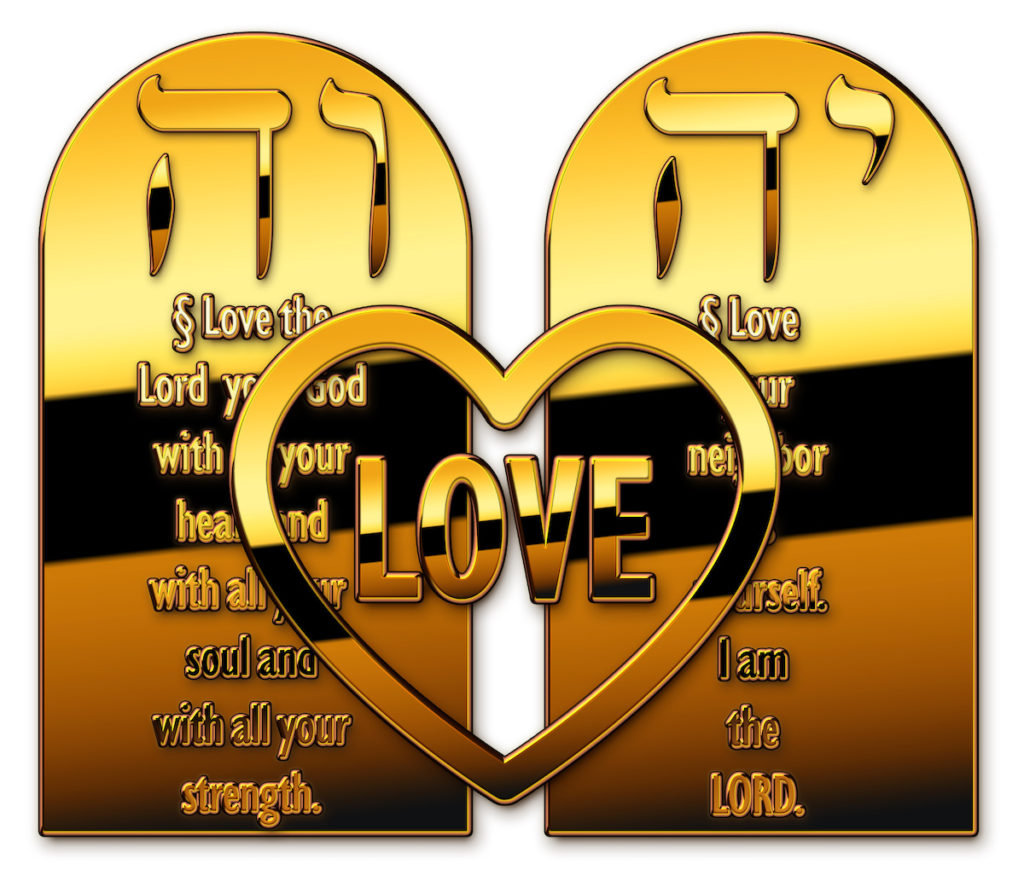
2 Thess 1:3, Love.The Torah defines how a man is to love Elohim and his neighbor. Biblically speaking, is love merely an emotion, or is it something more? The Bible presents love as an action. Yeshua said, “If you love me, keep my commandments” (John 14:15). This action involves obedience to YHVH’s Torah-commandments. Elsewhere, Yeshua sums up the Torah when he quotes the biblical shema, which states that the duty of man is to love YHVH with all one’s heart, soul, mind and strength and one’s neighbor as oneself (Mark 12:28–31 cp. Deut 6:4 and Lev 19:18). The shema is a summation of the ten commandments the first four of which show us how to love YHVH, while the last six how to love our neighbor. These ten statements form the foundation or cornerstone of the entire Torah, which expand out of them.

2 Thess 1:5, Righteous judgments of Elohim.As the just judge of the universe, YHVH Yeshua will judge all men at his second coming based on his word — the Torah (Rev 19:11, 15 cp. Isa 11:3–5 and Ps 119:172). He will then offer rewards to his servants based on how well they followed his Torah or not (Matt 5:19).

Continue reading