Nathan’s Commentary on Parashat V’zot HaBerachah (Deuteronomy 33:1–34:12)

Deuteronomy 33

Deuteronomy 33:1–5, Spiritual attributes of Israel. In the opening remarks of this chapter, we note three outstanding qualities of Israel: (a) Elohim dwelt among them through the presence of his divine glory; (b) they accepted his Torah; (c) they acknowledged his sovereignty. Can these things be said of you?

Deuteronomy 33:1, Now this blessing. One of the most important things a righteous saint can do before he or she dies is to leave a prophetic blessing and some words of wisdom with their loved ones—especially children and grandchildren—that one is leaving behind. It is one thing to gift one’s loved ones with a legacy of righteous living, but it is another thing, at such a crucial, tender and poignant moment as the end of one’s life to plant one’s last verbal will and testament into the tender ground of the hearts, minds and emotions of those who are about to grieve the loss of a family member. This is what Moses did for the children of Israel before he passed from the scene.

Deuteronomy 33:2, From his right hand. Yeshua as the Living Torah-Word of Elohim is at the right hand of the Father. As the Word of Elohim, he is the one who gave the Torah to the children of Israel before he was incarnated as the Messiah.

A fiery law. There are two main aspects of YHVH’s Torah-law. This is implicated in the cloven tongues of fire that fell on the saints on Shavuot (the Day of Pentecost) in Acts 2:3), and relates to a curious statement that Yeshua made in John 4:23–24,

But the hour is coming, and now is, when the true worshipers will worship the Father in spirit and truth; for the Father is seeking such to worship Him. God is Spirit, and those who worship Him must worship in spirit and truth.” 

Spirit and truth are two aspects of the Torah that may be characterized as law and grace, judgment and mercy, or letter of the law and spirit of the law. Our Father in heaven is seeking those who will understand his Torah in both of its aspects—Spirit and Truth—and then worship and obey him accordingly. 

Additionally, YHVH’s Torah-law is like a fire which both consumes and purifies. Of the fiery law, Matthew Henry says in his commentary on this verse, “If received, it is melting, warming, purifying, and burns the dross of corruption; if rejected, it hardens, sears, causes pain, and destroys.” 

The Jewish sages have another explanation for the two-part aspects of YHVH’s Torah. The ArtScroll Kestenbaum Edition Tikkun—The Torah Reader’s Compendium states, “This verse contains an example of a keri uchesiv, that is, a word spelled one way in the Torah scroll, but pronounced differently. Here we find…eshdote, waterfalls…[pronounced] as two words, esh daht, literally, fire of law. The Torah states that when [Elohim] presented the Torah to Israel, all of Mount Sinai was smoking because [YHVH] had descended upon it in fire (Exod 19:18). Additionally, King David writes of that event: “The earth trembled, even the heavens dripped…this is Sinai…A generous rain did You pour down, of [Elohim],” (Ps 68:9–10). Thus the Torah was given through fire and rain” (p. 495). Discuss the implications of YHVH’s Word being like both water and fire. (See Eph 5:26; Deut 5:5; Isa 5:24; Jer 5:14; 23:29 for further insights.)

Deuteronomy 33:3, All his saints. In verse two, the right hand of Elohim (i.e., Yeshua) that gave the Israelites the Torah is mentioned. In this verse we read that “all his saints are in your right hand.” This seems to be allusion to two components of the Godhead: the Father and the Son who is the Father’s right hand and who is also the Word of Elohim, and from whom came the Torah-law. Moreover, when the Torah was given at Mount Sinai, the children of Israel were at the foot of that mountain, or that is to say, they had sat “down at your feet.” That is to say, they were literally sitting at the feet of YHVH-Yeshua was speaking to them from the mountian. Similarly, when we sit at the feet of Yeshua to learn of him, he will teach us his Torah—both the spirit and Truth aspects of it with the help of his Spirit, the Comforter or Helper who will lead and guide us into all Truth.

An alternate translation of this verse reads: For they planted themselves at [YHVH’s] feet bearing [the yoke] of [YHVH’s] utterances. This is speaking of the children of Israel when they received the YHVH’s Torah instructions at the foot of Mount Sinai. Can this be said of you? Have you firmly placed yourself at YHVH’s feet and declared (not only through your words, but also your actions) to those around you (e.g., your spouse, children, family, employer, spiritual leaders), “All that YHVH has spoken we will do” (Exod 19:8)? Yeshua states that such a determination is a response of love for him (John 14:15), and John states in his epistle that the only way to intimately know YHVH is to keep his [Torah] commandments (i.e., obey him, 1 John 2:3–6).

Deuteronomy 33:4, The Torah…is the heritage of the congregation of Jacob. The Bible is clear. If one has the faith of Abraham, then you are his children and are therefore a part of the congregation of Jacob (Gal 3:7, 29). The ArtScroll Stone Edition Chumash states, “The Torah is an inalienable possession of Israel, transmitted from generation to generation,” and the difference between an inheritance and a heritage is that “[a]n inheritance belongs to the heirs to use and dispose of as they please. A heritage, however, is the property of generations before and after; it is incumbent upon the heirs to preserve it intact” (p. 1113). How can one keep one’s heritage intact if one believes parts of one’s heritage “were nailed to the cross,” “done away with,” “fulfilled,” “is a curse and burden” or has otherwise been done away with as the mainstream church teaches?

Deuteronomy 33:5, He was a king. There were three leadership positions in Israel: the priest, the prophet and the king. Moses was the only other person besides Yeshua the Messiah who held all three positions. For example, Samuel was a Levite and prophet, and David king and a prophet. In a loose sense, the patriarchs as tribal heads held all three positions, but not in the full sense, since they were merely the heads of a family unit or tribe, and not an entire nation per se. In the same sense and ideally, a righteous and saintly father is to be a priest, prophet and king over his family as well under Yeshua, who is the King of kings, the great High Priest over everyone. How many fathers as heads of their households do you know who take this position and divine mission seriously—or are even aware of their responsibility if fulfilling this divinely mandated heavenly calling? 

Deuteronomy 33:7–12, Judah…Levi…Benjamin. Judah was the bearer of national power, Levi was responsible for teaching of the Torah and the maintaining the temple, and it was in the territory of Benjamin that the temple (or at least the holy of holies) was located. That is why these three tribes are grouped together (The Pentateuch/Deuteronomy, by R. Hirsch, pp. 672–673). 

Deuteronomy 33:8, Thummim…Urim. To this day, no one knows exactly what these objects were that the Levites used for determining the will of YHVH in specific matters. One thing we can learn from this, however, is that YHVH has tasked his ministers with determining his will and then passing this on to his people. 

Deuteronomy 33:8–11, Purpose of Levitical priesthood. (Also see Lev 10:11; Num 3:11–13; Deut 24:8; Neh 8:7 cp. 1 Chron 6:48–49; 23:27–32.) Here, the four main functions of the Levitical priesthood are outlined: to discern oracles or to understand the will of YHVH (verse 8), to teach Torah (verse 10a), to intercede before YHVH on behalf of the people through their ministry in the tabernacle (verse 10b), and to offer sacrifices (verse 10b).

Deuteronomy 33:13–17, And of Joseph he said. “Power, service of the Torah and the Sanctuary, and the site of the sanctuary were the distinguishing specialities that marked the tribes of Judah, Levi and Benjamin respectively” (ibid., by R. Hirsch p. 674). However, Hirsch notes that the richest abundance of the blessing of the soil followed the tribe of Joseph, since Joseph inhabited the largest, richest and most productive farmland in Israel (ibid.). In light of the richness of Joseph’s material blessings, it is interesting to note that the two tribes descended from Joseph (i.e., Ephraim and Manasseh) at the height of their material richness at the time of King Solomon were afterwards responsible for dragging ten-twelfths of Israel down into idolatry (under Jeroboam). Is this a warning to modern Ephraim (the Christian church, loosely speaking)? What has happened morally and spiritually in America and England (as well as to some of the other rich western, Christian nations)? One by one, the western Christian nations have all fallen from their greatness morally, economically and politically and America stands alone in these areas, but is sinking quickly. What is the spiritual state of the church in America, despite the false peace and comfort message of many Christian “prophets” who say otherwise? The strength (or weakness) of the church is no more or less than that of the individual. (Read and reflect on Revelation 3:14–22.) How easy it is to apply these admonitions to others, but ASK YOURSELF whether your spiritual walk (or level of obedience) is based on convenience or upon discipline, duty and obedience? Do you fit YHVH and loyalty to his Word around your finances, pleasures, convenience (i.e., the foreign gods or idols of your life), or do you obey him without regard to your physical circumstances based on a heart of devotion, dedication, service and love for him? Have we become so rich with material blessings, as ancient apostate Israel did, that we have become blind to YHVH’s higher spiritual purposes for our lives? Are our lives more a reflection of the hedonistic and materialistic culture around us than of the light of ­YHVH’s Word and Spirit? Let’s pass over these questions lightly, for history repeats itself, and we may be the very generation upon whom it repeats itself. Let’s search our hearts and minds and ask the Father for revelation in these areas.

Deuteronomy 33:22, Leap from Bashan. (On Dan see notes at Matthew 16:13.) Dan’s tribal territory was in northern Israel near the base of Mount Hermon in the land of Bashan. This geographical area was too small for their tribe, so they took to the sea and began to explore other lands in which to settle. This was likely in conjunction with the seafaring Phoenicians who lived in the coastal areas of modern Lebanon which was adjacent to the tribal territory of Dan.

Lion’s whelp. As Yeshua was the lion of the tribe of Judah, some Bible commentators see Dan in this prophecy as the opposite of Yeshua in that this is an indication that Antichrist will be the antithesis of Yeshua will come from the tribe of Dan. This is because the tribe of Dan is not mentioned among the 144,000 righteous saints in Revelation 7 and 14, and because Dan settled in northern Israel near Mount Hermon and in the region of Bashan where the heathen inhabitants embraced the religion of Baalism and worshipped the nephilim.

Deuteronomy 34

Deuteronomy 34:1, and 7. Moses passes from the scene in a condition of spiritual strength. Moses died in the wilderness, though prior to his death YHVH in his grace gave Moses a view of the Promised Land. Most of YHVH’s servants died without having obtained their promised inheritance. All await the glory of their future spiritual state. Despite not being able to enter the Good Land, Moses stayed faithful to the call and mission that YHVH had given him to the very end, and Torah records that “Moses was 120 years old when he died: “his eye had not dimmed, and his vigor had not diminished” (verse 7). Can this be said of you in your walk of faith before YHVH? Hebrews 11 chronicles those notable saints who all “having obtained a good report through faith, received not the promise” of their heavenly inheritance. Galatians 6:9 says, “And let us not be weary in well doing, for in due season we shall reap, if we faint not.” 

Deuteronomy 34:9, Joshua…laid his hands on him. This is an example of apostolic succession through the laying on of hands to accomplish the symbolic, YHVH-ordained transference of ministry anointing, blessing, power and authority.

Deuteronomy 34:5, So Moses…died. Even at age 120, Moses never retired; he died with his spiritual boots on, while  continuing faithfully in the spiritual mission that YHVH had given him. Retirement, as in sitting around doing little or nothing productive once one has reached a certain age, is not a biblical concept. Yeshua instructed his saints to occupy until he returns (Luke 19:13). Elsewhere, Paul tells the followers of Yeshua to stand (not sit) as they battle against the forces of darkness (Eph 6:14). Moreover, the Bible characterizes the spiritual journey toward the kingdom of Elohim as a walk, not a sit and not doing little or nothing. The concept of retirement as is commonly promoted in our modern culture is a recent one, and not a biblical one as I discuss in the article below.

Where is retirement mentioned in the Bible?

Here is a challenge. Show me in the Bible where the word retirement or the concept is even mentioned? The idea of retirement, as it is now commonly understood to mean ceasing to work and doing little or nothing after a certain age, is not found anywhere in the Bible. What the word of Elohim teaches, however, it that we are to work six days each week and to rest on the seventh day (the Sabbath or Shabbat, Exod 20:8–11). Moreover, because of the fall of man in the Garden of Eden, the Creator told man that the “free lunch” had ended and he had to get to work (Gen 3:17–19). What does this mean for you and me if we claim to be Bible followers—especially after we reach the age where due to health and age regular physical work may be a challenge?

Only in our overindulgent, materialistic and wealthy western society is retirement an option.

For many who are lacking in a spiritual faith and who have no concept of biblical truth, retirement has become their “heaven on earth.” Retirement, in fact, is a sort of humanists’ replacement “heaven” in that it becomes a sort of heaven on earth until one dies and goes back into the soil.

Admittedly, as one becomes elderly, the body doesn’t function as it once did. But that doesn’t mean one has to resort to a life of inert, non-productive inactivity and lassitude. For example, in ancient Israel, when the Levites reached the age of fifty, they presumably took on more of an advisory role in helping to train the next generation of Levites (Num 8:25). This rule didn’t, however, may not have applied to those in the priesthood who likely served until death. The kings and prophets of Israel served until their death as well. Likewise, Moses never retired and served YHVH and the Israelites until age 120! Neither did Joshua, David or the apostles retire from the ministry. As they grew older, they obviously slowed down, but they never quit their work and retired to life on a golf course, or sitting in front of the television watching old re-runs of Western movies or the daytime soap operas and game shows. No! They all died with their spiritual boots while doing YHVH’s work. 

Once we reach a certain age where hard physical labor becomes impractical or even impossible, we are faced with two choices: we can either rust out or burn out. Like an automobile or piece of equipment, it can sit there rust away inactively, or it can be used until the engine wears out. Wouldn’t you rather burn out then rust out? Similarly, Yeshua commended the wise servants in the Parable of the Talents for being profitable with the talents the master had given them while he was away in a far country. Conversely, the master sternly rebuked the servant who did nothing but bury his talents in the soil (Luke 19:11–27).

Moreover, the elders (wise and older people) were to serve as leaders of the congregational assembly in the New Testament era (see 1 Tim 5:5–15). To be sure, the older generation was busy during their so-called retirement years.

These things being the case, why is it that so many Bible followers and even supposedly Torah-obedient individuals don’t work six days a week, but stop working in their 60s and even their 50s and acquiesce to the concept of what our humanistic society calls “retirement age”? What’s more, why do so many woman, even in the church, nowadays support their husbands, who proudly laud their new status as “house husbands”? Why are there so many men on welfare feigning a disability, so they can collect a check from the government, when, for many of them, there is something they could do to help support their families. Instead, they proudly live off the labors of others? In reality they’re lazy bums—thieves! This is hardly a godly virtue. To be sure, unless one is bed-ridden due to severe health issues, there is something everyone can do to be a profitable servant rather than a lazy couch potato bum.

Even those who have worked hard and have the financial resources to be able to “retire” , is it biblical to resort to a life of laziness and self-indulgent ease? Hardly! The biblical model is for the older folks to be using their resources including their time, knowledge and wisdom to help others—especially the younger generation. Kudos to those who are doing so. Shame on those who aren’t!

Sadly, we have become a society of lazy bums all too often living off of the labor of and resources of others. Is this something to be proud of? If this is our lifestyle, do we really think we will hear YHVH’s words on the day of judgment, “Well done, thou good and faithful servant”?


Deuteronomy 34:9, Joshua…Moses. Moses brought the Israelites to the border of Canaan, but it was the divine mission of Joshua (or Yehoshua) actually to take them into the Promised Land. This prophetically points to Yeshua the Messiah, who leads the way for his saints into the kingdom of Elohim (see Hebrews chapters 3 and 4). After all, 

As we close out the Book of Deuteronomy and this commentary on the whole Torah, we leave you with a number of questions to ponder.

Is it possible to enter the kingdom of Elohim or the Promised Land of our spiritual inheritance through the works of the Torah-law, or by grace through faith alone? (See Eph 2:4–10.) Was it Moses (the vehicle through which the Torah-law came) who led the Israelites into their inheritance or Joshua (Yehoshua) who is a prophetic picture of Yeshua the Messiah? The name Yehoshua means “salvation of YHVH” and the name Yeshua is a shortened version of Yeshoshua and means “salvation.” Will we enter into the rest (or salvation) of Yeshua (whose name means salvation) through our own efforts or through faith (Heb 4:2, 10)? 

We see the answer to this question in the fact that Joshua and not Moses led the Israelites into the Promised Land, which is a picture of eternal life in the kingdom of Elohim. Furthermore, did Joshua annul the Torah-law given through Moses or did he strengthen and confirm it as the path of righteousness they were to follow to stay in possession of the land, to receive the blessings of the land and to stay in right relationship with YHVH, the Possessor of the land? Who or what led the Israelites into the Promised Land? (Read Josh 3:6.) What were Joshua’s first instructions to the Israelites? (See Josh 1:8.) 

What was one of the first things the Israelites did after crossing the Jordan River into the land to confirm their allegiance to YHVH’s Torah (his instructions in righteousness)? (Note Josh 8:30–35.) What will determine our level of reward—not our salvation—in YHVH’s kingdom of heaven? (See Matt 5:19.) What is the point here? If Joshua confirmed and strengthened the validity of the Torah upon entering the Promised Land, will not Yeshua, who is a prophetic picture of Joshua do the same thing for the saints who will be entering into his spiritual kingdom?


The Rabbinic Jewish Calendar—Following Error for the Sake of Unity? Really???

All the time, I hear people say, “I follow the traditional or rabbinic Jewish calendar when celebrating the biblical feasts because I want to be in unity with my Jewish brothers.” Is this a biblically-based argument? Does it line up with what the Bible says? What did Yeshua/Jesus say about following the traditions of men that go against the Word of Elohim? Are Christians beholden to rabbinic Jewish dictums? If so, is there a biblical basis for this? What does the Torah say about following a crowd in its error? If we can make an argument for following the Jewish calendar, isn’t this also valid argument for following them in their denial of Yeshua as the Messiah? These and more questions are answered in this short, hard-hitting exposé.

This and other videos by Nathan are available as podcasts on Spotify and Apple podcast under “Hoshana Rabbah.”

If this message has been a blessing to you, please consider showing your appreciation by making a donation to Hoshana Rabbah at http://hoshanarabbah.org/blog/. Thank you!


Nathan’s Commentary on Parashat Vaylekh (Deuteronomy 31:1–30)

Deuteronomy 31

Deuteronomy 31:3, YHVH your Elohim…will go over before, and he will destroy these nations. YHVH promised to destroy Israel’s enemies before them. Will he not do the same for us, since we too are en route to our spiritual Promised Land of which the physical Promised Land is but a prophetic picture? Who or what are your enemies? The authors of the Psalms identify many types of “enemies” other than people. Examples of a non-human enemies may be poverty, sickness, depression, lack of faith, discouragement, spiritual, satanic attacks or even our own sin natures that war against the Word and will of YHVH. Some of our enemies are a result of our own sinning and our repentance will result in our deliverance from them. But what about attacks that come against us through no fault of our own? What do we do about them? Do you realize who you are in Yeshua, and that you have the spiritual power to be a victorious overcomer by the name and through the blood of Yeshua? (Read Ps 91; Luke 9:1; 10:19; Rom 8:37; Eph 6:10-18; Jas 4:7–10; 1 Pet 5:6–10; 1 John 4:4; Rev 12:11.)

Deuteronomy 31:10–13, You shall read this Torah before all Israel. Verses like this tend to expose the theological confusion that occurs in the minds of many Christian Bible teachers. For example, about this verse, Christian commentator Matthew Henry writes about the need to read the Word of Elohim and that doing so will “help us to keep his commandments.” Yet elsewhere in the same commentary he says that the commandments or laws of YHVH “are done away with.” It is not possible for both of these statements be true at the same time.

Statements like these are representative of a split and incongruous, “double-speak” thinking on the part of many Christians when it comes to the commandments or laws of Elohim. Some laws, we are told, we are to keep (e.g., thou shalt not murder, lie, commit adultery, which are often referred to as “the moral law”—a non-biblical term), but other laws we can disobey (e.g., the Sabbath, dietary laws, and biblical feasts, which are referred to as “the ceremonial law”—another non-biblical term). 

Is it possible to have it both ways? That is, to believe that we need to keep the Creator’s commandments, yet, at the same time, believe that they are done away with? If so, then what is the meaning of such biblical phrases pertaining to YHVH’s Torah or Word as “forever,” “for a thousand generations,” “the same yesterday today and forever,” “till heaven and earth pass away,” “I change not,” and “think not that I came to destroy the Torah-law?” Is ­YHVH’s Word inconsistent and contradictory? Or is men’s false theologies and traditions at fault?

In reality, we need to ask ourselves an important question. Do we have a high enough view of YHVH Elohim and fear him and tremble at his Word (Isa 66:2), or have we, in reality, demoted the veracity of his commandments by contorting YHVH and his Word to fit the mindset of changeable and inconsistent man (which the Scriptures define as idolatry)? Idolatry occurs when we put something else above the will of YHVH instead of submitting to him as the Lord of our lives.

Moreover, have we, by denying the validity of some aspects of YHVH’s Word, bought into the lie that the serpent proffered at the tree of knowledge in the Garden of Eden? There he told the man and the woman that YHVH really did not mean what he said and that humans can take the “have it your own way” and “pick and choose” approach when it comes to obeying the Word of YHVH. In reality, this is the same philosophy that forms the basis for the religious movement called secular humanism, which is at the heart of all the religions of the world including much of the theology of mainstream Christianity.

Truthfully, how many aspects of Christian theology are no more than a thinly veiled version of the religion of humanism? 

These are tough questions that the saints who are citizens of the nation of Israel (Eph 2:11–19) need to seriously ponder. At the same time, let’s not forget the words of Yeshua in John 14:15, “If you love me, keep my [Torah] commandments” and the words of the apostle in 1 John 2:5–5, “He that says, ‘I know him,’ and does not keep his [Torah] commandments is a liar and the truth is not in him. But whosoever keeps his Word in him truly is the love of Elohim perfected: hereby know we that we are in him.”

Let’s be honest with ourselves. The bottom line reason why man has a hard time submitting to YHVH’s commandments is nowhere stated more concisely in the Bible than in Romans 8:7.

[T]he carnal mind is enmity against Elohim: for it is not subject to the law of Elohim, neither indeed can be.

Deuteronomy 31:12, Gather together the people…and the small children. A fundamental aspect of Hebrew culture is the teaching of the children. This is the primary responsibility of the parents as stated in the Shema (Deut 6:7) and secondarily that of the community of faith. Many parents have all but handed their YHVH-ordained charge in this area over to others such as the church, the government educational system, day care providers, the baby sitter and the like. Many if not most parents spend little time daily with their children. Additionally, often the children take the backseat in the education in many churches congregations. Typically, church pastors struggle to find volunteers to help in the children’s ministry. Is this right? Is this the heart of the Father? It certainly is not the heart of Yeshua who went out of his way to minister to the little children (Mark 10:13–16; see also Matt 18:1–5 and Mark 9:33–37).

Idolatry in ancient times…

Deuteronomy 31:16, This people will rise up, and go a whoring after the gods of the strangers of the land. Israel’s departure from her covenantal agreements with YHVH was assured, for Moses prophesied it. But repentance (verse 2) was always an option—an open door of return back to a right relationship with YHVH. Let us all repent of our having strayed from his commands whether ignorantly or intentionally. For example, have you repented of breaking his Sabbath command, of not observing and sanctifying his annual feasts, of desecrating the temple of your body by not following his biblical dietary laws, to list a few things? Though you may have broken YHVH’s laws in ignorance, doing so is still sin whether done in ignorance or not and repentance is still needed.

Modern idolatry!

Deuteronomy 31:16, Behold you will rest. Should this verse read as it is written, “Behold you will lie with your forefathers, but this people will rise up …” or, “You will [die and] lie with your forefathers you will [then] rise up.” According to the Talmud this verse is so ambiguous in its grammatical construction that were it not for the Masoretic cantillation marks (which are not found on a Torah scroll, but are based on scribal tradition) the latter reading could just as easily be the correct one and thus giving another scriptural source for the concept of the resurrection of the dead (this is according to The ArtScroll Kestenbaum Edition Tikkun—the Torah Readers Compendium, p. 485). Adding additional insight into this passage is the Aramaic Targum Pseudo Jonathan,which renders this text as follows: “And YHVH said to Mosheh, ‘Behold, thou wilt lie down in the dust with thy fathers, and thy soul shall be treasured in the treasury of eternal life with thy fathers: but this wicked people will rise up and go astray …’” What are the implications of the alternate rendering of this verse with regard to the resurrection of the dead.

Deuteronomy 31:18, And I will conceal my face. YHVH making his face to shine upon his people (Num 6:25; Ps 80:3, 19) or conversely concealing or turning his face away from his people is a Hebraism meaning “to be in the favor or disfavor of YHVH.” How sad it is to consider that our loving Heavenly Father will hide his face from those who disobey him and do evil (Deut 31:17, 18; 32:20; Ps 132:10; Ezek 7:22; 39:29). But what else can a holy YHVH Elohim do with regard to those who over their own free will choose to go against him?

Are your prayers being answered? Or do you sense that the heavens are brass (a symbol of judgment)? 

If things are not going well for you in your life, perhaps you need to search out those areas in your life where sin still exists. Ask YHVH to reveal them to you. Then repent, make changes and bring your life back into alignment with YHVH’s Word.

Deuteronomy 31:20, They shall have eaten and filled themselves. Compare this verse with Yeshua’s admonition to the Laodicean believers in Revelation 3:14–22. 

“And to the angel of the church of the Laodiceans write, ‘These things says the Amen, the Faithful and True Witness, the Beginning of the creation of God: “I know your works, that you are neither cold nor hot. I could wish you were cold or hot. So then, because you are lukewarm, and neither cold nor hot, I will vomit you out of My mouth. Because you say, ‘I am rich, have become wealthy, and have need of nothing’—and do not know that you are wretched, miserable, poor, blind, and naked—I counsel you to buy from Me gold refined in the fire, that you may be rich; and white garments, that you may be clothed, that the shame of your nakedness may not be revealed; and anoint your eyes with eye salve, that you may see. As many as I love, I rebuke and chasten. Therefore be zealous and repent. Behold, I stand at the door and knock. If anyone hears My voice and opens the door, I will come in to him and dine with him, and he with Me. To him who overcomes I will grant to sit with Me on My throne, as I also overcame and sat down with My Father on His throne. “He who has an ear, let him hear what the Spirit says to the churches.” ’ ”

What are the parallels between these two Scripture passages? To what degrees do these prophetic warnings apply to Christians in the American and Western church?

Deuteronomy 31:23, He gave Joshua the son of Nun a charge. Upon Moses’ passing, YHVH didn’t leave the children of Israel in a leadership vacuum to wander about aimlessly in a confused state. YHVH isn’t the author of confusion! YHVH is the author of godly leadership. He prepares and trains leaders and then raises them up to lead his people in the paths of righteousness as they make their way to his spiritual Promised Land. 

Beware of leaders who raise themselves up and promote themselves. To ensure that we don’t follow unrighteous, self-promoting and greedy leaders, let’s ask ourselves the following questions:

  • What is the purpose of righteous leadership? (See Eph 4:11–12.) 
  • What are the qualifications for leadership ? (See 1 Tim 3:1–13.) 
  • What is the premise of true, Spirit-ordained leadership? (See Matt 23:11.)

Many believers have been hurt by kingdom-building, hypocritical, money-grubbing and self-seeking leaders in the church world and, thus, now trust no one. They pride themselves on being “independent.” Is this good? Did Yeshua ever speak of his sheep as being “lone rangers” or did he refer to them as “a flock?” Does he ever speak of his flock as being shepherdless? 

Of course, Yeshua is the Chief Shepherd, but does he not also speak of undershepherds or humans shepherds who faithfully work under him? (Read John 10:1–18.) In this regard, consider the following:

  • Should not a flock that is under the guidance of a true servant-shepherd of Yeshua be a place of safety not harm? 
  • Is being outside the safety of a flock a place of safety or harm? (See Matt 18:12.) 
  • Yeshua says that those who are outside of a flock are “lost” and have “gone astray” and are in danger of perishing (Matt 18:11–14). Are you part of a literal flock of believers, or have you spiritualized this passage away to justify your independent (or rebellious?) spirit against YHVH-ordained authority?

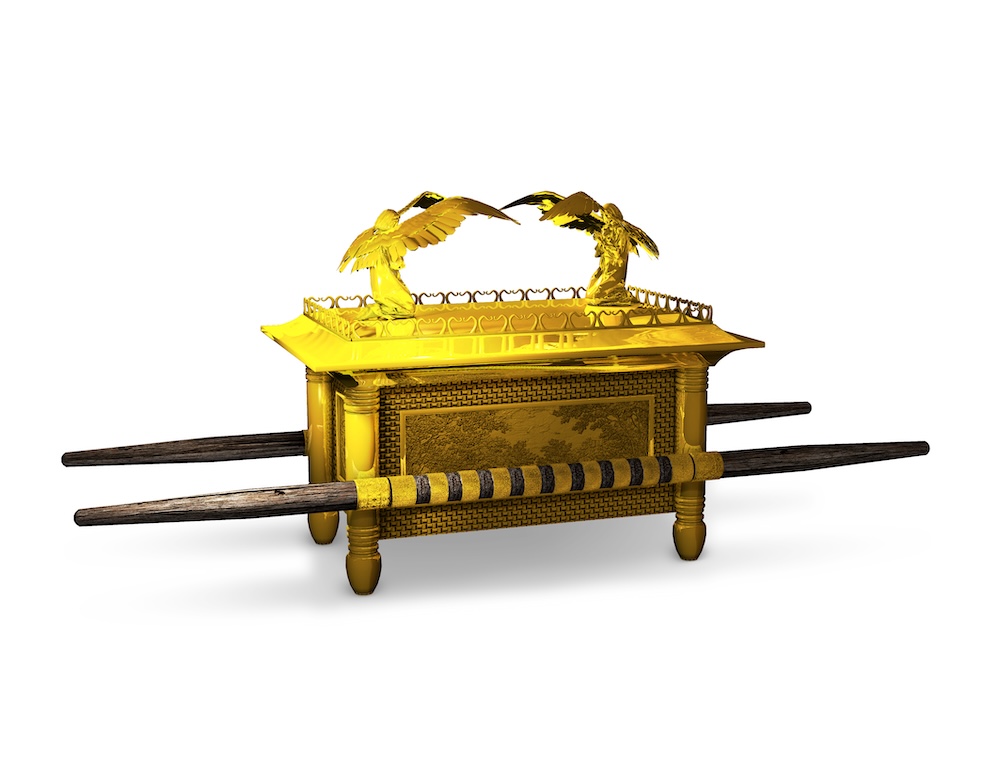
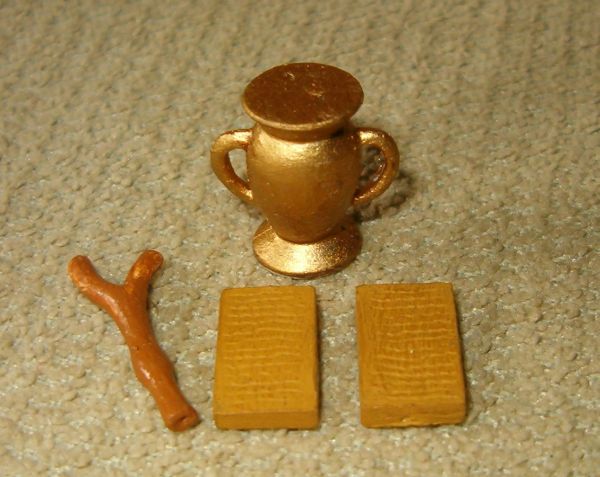
Deuteronomy 31:26, Put it beside the ark. Think of a Torah scroll leaning up against the ark. What is this a spiritual picture of? To answer this, let’s recall what YHVH instructed Moses to place inside the ark. The ark contained the two stone tablets upon which were written the ten statements or commandments, Aaron’s rod that budded and the golden pot of manna. Each of these items in a unique and identifiable way pointed to various aspects of Yeshua the Messiah and his ministry. The Torah scroll leaning up against the ark, in one a very real way, illustrates the fact that without Yeshua the Torah cannot stand on its own. It will fall over. This is true for several reasons. Man can neither understand the Written Torah without understanding who Yeshua, the Living Torah-Word of Elohim, is nor can man live up to the righteous standards of the Written Torah without the example, teachings and spiritual help of Yeshua and the Holt Spirit.

Deuteronomy 31:29, In the latter days. What is the prophetic significance of the phrase in the latter days as used in this verse? Moses is prophesying about apostasy (i.e., turning away from YHVH’s Truth) here. (Compare this with the prophecies of 2 Thess 2:1–12, 2 Pet 2 and Jude.) How were these prophecies fulfilled in the second century of the common era as the early Christian, proto-Catholic church was abandoning its Hebraic, Torah-based roots ? How do these prophecies apply to today’s modern mainstream Christian church?


Nathan’s Commentary on Parashat Nitzvaim (Deuteronomy 29:9–30:20)

Deuteronomy 29

Deuteronomy 29:15, Not here with us today. This verse teaches us that YHVH made his covenant not only with the Israelites of Moses’ day, but with their physical and spiritual offspring forever. What are the implications of this with regard to your life? How does it impact what you do, how you act, your attitude and relationship with your Maker to know that divine covenants were made 3500 years ago that have a bearing on our lives today as members of the members of the commonwealth or nation of Israel and offspring of Abraham through one’s relationship with Yeshua the Messiah (see Rom 11:11–32; Eph 2:11–19 cp. Gal 3:29; Rom 4:16; 9:8–11)? YHVH’s Torah-instructions in righteousness were central to the Abrahamic and Mosaic covenants. These along with the New Covenant are “the covenants of promise” (plural) to which Paul makes reference in Ephesians 2:12, and which he says apply to all Christians.

There are many people in the mainstream church who will say, “Since I’m not an Israelite, but I’m a Gentile Christian, I, therefore, have no obligation toward YHVH’s Torah, and thus the Old Testament laws mean little or nothing to me.” 

My response to this argument is that, with the flick of the hand and the nod of the head, by believing this, one dismisses most of the Old Testament and much of the New Testament, which is the Word of Elohim. The idea that a born again believer is still a Gentile and thus the Torah is irrelevant to them—a lie that the church system has convinced most Christians to believe—is not biblically substantiated. The Scriptures are clear on this point. For example, Paul calls redeemed believers the “one new man” and part of the nation of Israel. And who are the ex-Gentiles to which Paul makes reference who were formerly aliens to the covenants of Israel, but have now been brought into the commonwealth of Israel through the work of Yeshua (Eph 2:11–19)? After all, it is the Abrahamic Covenant that reveals the path to salvation, the Mosaic Covenant that reveals the path of righteousness and the New Covenant, which is the previous two covenants combined but now written on hearts that have been spiritually circumcised. Not only that, let us not forget that no Gentiles will enter the New Jerusalem—a picture of heaven on earth, since there is no Gentile gate into that city—only gates only 12 gates named after the 12 tribes of Israel (Rev 21:12). So to which Israelite do you belong? And how should, could or will this much overlooked Bible truth change  your life?

Now consider this. Some people might challenge the notion that covenants made with one’s forefathers are applicable to future generations. If this is your case, then let us pose the following question: Did the founding fathers of America make laws more than 200 years ago (i.e., the U. S. Constitution) that are legally binding upon Americans today? This can likewise apply to any nation with a constitution or legal governing framework that was established in the past. If this is the case with men’s laws, then how much more applicable upon us are covenants made by our forefathers 3500 years ago with YHVH? Just because our ­forefathers broke their covenant with YHVH does not free us to violate YHVH’s laws any more than if someone in the past violates a nation’s constitutional law frees the future generations from violating that law. Think about it! 

Deuteronomy 29:16–19, Emboldened to sin. As we pass through the spiritual wilderness of the world around us (verse 16) on our way to the Promised Land of our eternal inheritance, it is easy for us sin-oriented humans to justify our personal rebellion, our sinful habits, our lustful and materialistic thoughts on the basis of carnal and sinful rationalizations. Delusions are tempting. It is all too easy to fall prey to such excuses as, “Everyone around me is doing it,” or, “It feels like it’s okay, then to do,” or, “If it feels good, do it,” or “YHVH’s laws don’t apply to me…that was for the people back then, not for us today,” or, “That’s not what the church I belong to teaches,” or, “Surely YHVH doesn’t expect us to keep his commandments…they’re too hard to do…we can’t really do all that stuff today,” or, “We’re under grace today…that stuff has been done away with…Jesus fulfilled it …nailed it to the cross,” and so go the arguments and mental rationalizations of carnal humans. Do these statements square with YHVH’s words of truth? If we have fallen prey to such excuses to disregard the Creator’s commandments, we have, in reality, emboldened ourselves to continue sinning. Rather, the question each person needs to ask themselves is, “Do what I believe and practice square with YHVH’s Word?” Is YHVH pleased with our excuses or our obedience? What did Yeshua say would be an identifying mark of those who would love him? (Read John 14:15, 21.)

YHVH uproots his people because of Torahlessness!

Deuteronomy 29:20–28, Rooted them out of their land. What was YHVH’s response to those who refused to obey him? Are some of the curses (i.e., the bad things happening to you now) in your life possibly related to disobedience of his commandments (or YHVH’s instructions in righteousness) in the past or perhaps even now?

Deuteronomy 29:23, Whole land is brimstone. The areas just west of the Dead Sea where some scholars believe that ancient Sodom and Gomorrah were located is to this day a barren wasteland of gypsum containing little or no vegetation, and, in places, is covered in sulfur balls (brimstone) that one can still pick up. This region is an enduring testimony to the severity of YHVH’s judgments against men’s sin, which speaking loudly to us even now in harsh and warning tones.

Sulphur balls from the Dead Sea region.

Deuteronomy 29:26, Other gods. This is likely referring to the demon-gods (demigod) nephilim of Genesis 6:2–4 (The Great Inception by Derek P. Gilbert, p. 67).

Deuteronomy 29:28–30:1–20, The Final Redemption of All Israel. A time is coming when Israel, including the ten northern tribe will be redeemed and regathered back to the land of Israel after having been exiled into captivity from their land. What is the captivity from which Israel will be returning? 

What Is This Captivity? 

The biblical term captivity is often a reference to Samaria, the capital of the Northern Kingdom or house of Israel, being brought out of captivity by YHVH (Ezek 16:53). Also compare Isaiah 61:1 with Luke 4:18–21 where, while preaching in the region of Galilee and Nazareth (the historic homeland of the Northern Kingdom or House of Israel), Yeshua quotes the Isaiah 61 passage relating it to his ministry to the ten tribes of the lost sheep of the house of Israel (Matt 10:6). Yeshua states that it was his mission “to preach the gospel to the poor … to heal the brokenhearted, to preach deliverance to the captive and recovering of sight to the blind, to set at liberty them that are bound, to preach the acceptable year of YHVH.” 

To what“captivity” is Yeshua referring? Is it a physical or spiritual captivity? Compare this with Revelation 18:4 where YHVH states that his people (the saints) are enslaved to the last days’ Babylon the Great religious-economic-political system and must come out of it. What is this religious part of this system that he is now calling his people to leave?

Deuteronomy 29:28, Cast them into another land. “This verse also alludes to the fate of [those Israelites] who had become so assimilated among other peoples that their [i.e., the Israelite’s] origins had become forgotten. When the final redemption comes, these hidden ones known only to [Elohim] will be reunited with the rest of the nation and be restored to the status of their forefathers” (The ArtScroll Stone Edition Chumash, p. 1090). To whom is this Orthodox Jewish author referring here? Who became assimilated among the peoples and forgot their origins? Who is it that Elohim will bring out of hiding from among the nations where he, in judgment, scattered them and then reunite with the Jews (i.e., the tribe of Judah) in the end times during what the Orthodox Jewish sages refer to as “the final redemption”? In Jewish thought, what is the “final redemption”? (For the answer, read Ezek 34:13; 36:24; Isa 56:8; Matt 24:29–44; Acts 1:6; 1 Cor 15:51–53; Rev 11:15–18.)

Another land. Let’s next notice a quote from the ancient apocryphal Book of 2 Esdras13:40-45(elsewhere known as The Fourth Book of Ezra; quoted from Lange’s Commentary; bracketed phrases are from an alternate translation by James H. Charlesworth in his book entitled, The Old Testament Pseudepigrapha—Apocalyptic Literature and Testaments);Two Esdras is a Jewish work written near the beginning of the Christian era,

[T]hese are the ten tribes which were carried [led] away prisoners out of their own land [into captivity] in the time of Josia[h] the king, whom Salmanasar king of Assyria led captive, and carried them over the river and they were brought over into another land. But they took this counsel [formed this plan] amongst themselves, that they would leave the multitude of the heathen [nations], and go forth into a further country [a more distant region], where mankind never dwelt, that they might there keep their own statutes, which they had not kept in their own land. But they entered into Euphrates by the narrow passages of the river; for the Most High then wrought signs for them, and held still the waves [stopped the channels] of the river till they had passed over. But through that country there was a long journey to make of a year and a half; and the same region is called Arzareth [Hebrew for “another land”].

Arzareth or “another land” is a reference to the prophecy in Deuteronomy 29:28 which states, “And YHVH rooted them out of their land in anger, and in wrath, and in great indignation, and cast them into another land [Heb. eretz acheret], as it is this day.” Acheret in the Hebrew means “another,” but also has the connotation of “new”such as “next year”(or in the “new year,” Gen 17:12), a “another well” (Gen 26:21); “another man” (i.e., a new husband); and so on. Other Hebrew words for “new” include chodesh or chadashah, which can mean either “brand new”or “renewed”such as in “new moon, new heart, or new heaven and new earth”; tiyrowsh, which refers to “new wine” or “new fruits.” These are unique Hebrew words, which specifically describe those things and nothing else; and beriyah, which is used once in Numbers 16:30, describes the earth opening up to swallow Korah and his malcontents. 

The point of this brief word study is that eretz acheret can justifiably be translated into English as “new earth,” or “new world.” The “New World” is a common historical reference to what? North America, of course. Was Deuteronomy 29:28 a cryptic prophecy to one of newly discovered regions where the tribes of Israel would be scattered? Perhaps this is what the rabbinic writings in 2 Esdras13:40–45are suggesting. One and a half years’ travel by foot and boat either west or east of the Euphrates could well lead one to North and South America.

Israel to Be Lost Among the Gentiles

Deuteronomy 29:28 states, “And YHVH rooted them out of their land in anger, and in wrath, and in great indignation, and cast them into another land [Heb. eretz acheret], as it is this day.” How did the ancient Jewish sages understand this passage?

Rabbinic Commentary on this Verse

b. Talmud, Yevamot 17a (c. 500 C.E.) (Soncino Talmud, Soncino):

[T]hey had declared them [i.e. ,the ten tribes of Israel, see rabbinic footnote below]19 to be perfect heathens [or gentiles]; as it is said in the Scriptures, “They have dealt treacherously against YHVH, for they have begotten strange children.20” 

A Rabbinic footnote on this passage states, “(19) The ten tribes; (20) Hos. 5:7.”

The ArtScroll Tanach Series Bereishis/Genesis (an Orthodox Jewish commentary on Genesis) states, regarding Genesis 48:19, Orthodox Jewish sage of the Middle Ages, Ibn Ezra wrote:

Many nations will descend from him [Ephraim]. That is, the word, fullness, melo, connotes “abundance,” the phrase meaning: and his seed will become the abundance of the nations (Neter; Karnei Or)” (p. 2121). According to Radak [R. Dovid Kimchi Torah, a scholar of the Middle Ages], “This refers to the Exile when the lands of others will be filled with his scattered descendants. See also Hosea 7:8: Ephraim shall be mingled among the nations (ibid.).

Deuteronomy 30

Deuteronomy 30:1, It shall come to pass. This is an end time prophecy concerning the people of YHVH.

Deuteronomy 30:1–5; 31:16, Returning to Elohim. Israel’s departure from her covenantal agreements with YHVH was assured. Moses prophesied it. But repentance (verse 2) was always an option—an open door of return back to right relationship with YHVH. Have you repented of straying from his Torah-commands whether out of ignorance or purposely?

Deuteronomy 30:2, You will return unto YHVH. The word return is shuv/CUA, which means “to come back, turn back.” Bear in mind that one cannot turn back to what one never had in the first place. This prophecy says that those who YHVH has scattered because of their disobedience to his Torah-covenants will return to him. To whom is this referring? In Hosea 3:4–5, we find similar language:

For the children of Israel shall abide many days without a king, and without a prince, and without a sacrifice, and without an image, and without an ephod, and without teraphim: afterward shall the children of Israel return, and seek YHVH their Elohim, and David their king; and shall fear YHVH and his goodness in the latter days. (emphasis added)

Relate this to Revelation 18:4 and Malachi 4:4–6 along with Jeremiah 16:19 (read verses 15–21 for context).

Let us not forget that, “Ideal repentance is motivated by the desire to return to [Elohim], not because one seeks to rid oneself of suffering, and benefit from Divine blessings” (The ArtScroll Stone Edition Chumash p, 1091).

With all your heart. Moses makes the heart of man a major focal point in this chapter (see also vv. 6, 10, 17. The subject here is about returning to Elohim after having turned away from him, but this can only happen when the heart of man is willing disposed to do so, and not a minute before that. Repentance is all conditional on the heart of each individual person.

This scriptural passage presents the view that if YHVH’s people will return to him with all their heart and soul from the places he has scattered them because of their disobedience and that of their forefathers (v. 2) that he will begin to gather them together in their foreign lands (vv. 3–4). Eventually this will result in his people returning to the promised land of their inheritance (v. 5). In the process, after his people have inclined their hearts to following YHVH, he will respond by circumcising their hearts and that of their children to love him more, so they can walk in harmony with him by keeping his Torah commands, so he can bless them. This is all predicated upon his people making a choice to obey him (v. 19). Once the choice is made, he will pour out his grace upon his people, so they can continue to obey him with all their hearts. 

Deuteronomy 30:3, From all the nations to which YHVH … has scattered you. The Scriptures over and over again record that the house of Israel (Ephraim) would be scattered over the face of the whole earth (Ezek 34:6, 12; 36:19; 37:21; John 11:52), and that YHVH will regather them in the end times and return them to the land of Israel (Deut 30:3–5). Deuteronomy 32:26 says, “I said, I would scatter them into the corners …” The ArtScroll Stone Edition Chumash comments, “This refers to the exile of the ten tribes who were scattered to an unknown place where they have never been heard from again.

On the phrase of the same verse, “I would make the remembrance of them to cease from among men. …” the same Chumash states, “This is a reference to the exile of Judah and Benjamin, the Davidic kingdom from which today’s known Jews are descended.” It goes on to say that though nations would seek to destroy Israel entirely, YHVH would never allow Israel to become extinct or disappear. Israel’s perpetual existence is a constant reminder of YHVH’s plan and eventually Israel will thrive and fulfill YHVH’s intention for it” (pp. 1105–1106). 

Nineteenth orthodox Jewish scholar S. R. Hirsch in his commentary on the same verse translates the phrase, “I would scatter them into the corners …” as, “I would relegate them into a corner …,” and then says that the Hebrew here refers to the “extreme end of a surface, the side or corner ….” He, too, relates this fate to the Ten Tribes who would be scattered “to some distant corner of the world, where, left entirely to themselves, they could mature towards serious reflection and ultimate return to Me …” (p. 650). 

Some in the Christians deny that these Scriptures passages pertain to the ten tribes of the Northern Kingdom of Israel and instead insist that they are speaking about Judah (the Jews) only. They insist that the return of the Jews to the land of Israel starting in 1948 is the fulfillment of these prophecies and the ten tribes of Israel are lost forever. How can this a correct understanding in light of the Scriptures and the Jewish sages interpretations of those scriptures that states again and again that the ten tribes will return at the end of the age to be reunited with the Jews under the reign of Messiah Son of David (Ezek 37:15–28)?

Deuteronomy 30:6, Circumcise your heart. Obedience to YHVH is all about the heart, all about love and relationship between him and us. Are his commandments too difficult to keep? (See verses 11–14.) Ultimately obedience is about our making choices. What are those choices and what are both the long-term and short-term results of those choices? (Compare verses 29:27–28; 30:9, 20 with 30:15–16, and relate this to what Yeshua told the rich, young ruler in Matthew 19:16–19.)

Deuteronomy 30:6, Will circumcise your heart…and of your seed. This is a prophecy concerning the Renewed Covenant, to which Jeremiah makes reference (Jer 31:31, 33) as does Ezekiel (Ezek 36:26–27), and the writer of Hebrews (Heb 8:8).

Deuteronomy 30:11–14, Is the Torah too difficult to obey? Does YHVH’s Torah set an impossible standard by which we are to live? If so, we are logically compelled to ask ourselves this question: Would a righteous and just Creator who is a loving Heavenly Father give to his chosen people and children a set of standards that were humanly impossible to perform, then curse them for their inability to meet these standards? If so, then we must face the fact that Elohim is an unjust and a wicked tyrant! If Torah isn’t an impossible standard to follow, then what is the Torah’s purpose in our life and why does the Creator impose the Torah upon his people? We believe that the Torah sets a standard of faith, trusting in Elohim, and that if followed it provides a system of repentance and sacrifice for obtaining forgiveness from Elohim and restoring a condition of being considered righteous in his sight. The Torah also teaches man how to achieve peace on earth and good will toward men by showing humans how to love Elohim with all their heart, soul, mind and strength and their neighbor as themselves.

Paul quotes this same Deuteronomy passage in Romans 10:6–8 where he relates the Written Torah to Yeshua, the Living Torah or Word of Elohim incarnate (in the flesh). (Compare with John 1:1, 14.) He shows that they are one in the same and that Messiah Yeshua, through his life, came to reveal to man the righteousness of the Torah-law. This righteousness is available to us if we will but have a heartfelt faith in him (Rom 10:4, 9–10) and allow him to live out his righteousness in us through the empowering work of the Spirit of Elohim. In verses 11 through 21, Paul goes on to relate this very truth to being the central message of the gospel that Isaiah prophesied (Isa 52:7) would be preached to redeem both houses of Israel to Yeshua their Messiah. Furthermore, in Romans 10:4 Paul reveals that Yeshua is the end goal, target of or the full flowering or embodiment of the Written Torah in human form.

Deuteronomy 30:12, 13, That we may hear it. The NAS translates this phrase as: “and make us hear it…” When the Torah is in our heart, no one will have to force us to do it, for man’s love for Elohim will compel him to obey the Torah (see John 14:15), it will be the result, spiritual fruit or “good works” of man’s salvation (Eph 2:10). 

Deuteronomy 30:19, Heaven and earth to bear witness against you. We find this phrase elsewhere in the Scriptures to denote a lack of obedience or awareness to the plans and purposes of YHVH on the part of his people (Deut 4:26; 30:19; 31:28; 32:1; Josh 24:24–27; Luke 19:40). The Scriptures say that in any legal matter a word is to be established in the mouth of at least two or three witnesses (Num 35:30; Deut 17:6; 19:15; Matt 18:16). In an anthropomorphic sense, heaven and earth are two witnesses against the people of YHVH for their disobedience to his covenants. On the earth and under the heaven, from the beginning of time, humans have committed an unending litany of sins, and heaven and earth have seen it all. Prior to his death, Joshua set up a large stone as a witness against the children of Israel that would testify against them if they ever turned away from YHVH and his Torah-covenants.

And the people said to Joshua, “YHVH our Elohim we will serve, and His voice we will obey!” So Joshua made a covenant with the people that day, and made for them a statute and an ordinance in Shechem. Then Joshua wrote these words in the Book of the Torah-law of Elohim. And he took a large stone, and set it up there under the oak that was by the sanctuary of YHVH. And Joshua said to all the people, “Behold, this stone shall be a witness to us, for it has heard all the words of YHVH which He spoke to us. It shall therefore be a witness to you, lest you deny your God.” (Josh 24:24–27)

Over the millennia, the earth’s stones have witnessed much sin. Just think of the human blood that the earth has had to absorb, or how the heavens due to human greed have been polluted in countless ways…and this is only the beginning. But what happens to these two witnesses after the Millennium (or Messianic Era) both of which (anthropomorphically speaking) have seen and heard all the sins of YHVH’s people as well as the whole world? After the white throne judgment (Rev 20:11–15), the wicked whose names are not written in the Book of Life will be cast into the lake of fire (Rev 20:15), and sin will once and for all be expunged from the earth via the cleansing flames. It is at this time that the physical heaven and earth will also be destroyed (2 Pet 3:7, 10; Pss 75:3; 102:25–26; Isa 51:6; Zeph 3:8; Matt 24:35 cp. Rev 21:1)! Elohim will mercifully remove the indicting evidence against man’s sinful rebellion. HalleluYah! Hirsch in his commentary on this verse states that Elohim sends the warning first by means of heaven and earth, and if no notice be taken, uses them as his instruments for the ruin of the guilty ones, even as they are the agents of his blessings when we have made ourselves deserving of them by devotion to our duty (The Pentateuch/Devarim, p. 605). Recognizing that heaven and earth are agents of both YHVH’s blessings and curses upon his people, it behooves us to take notice of the hurricanes, tornados, earthquakes, floods, droughts, forest fires, volcanic eruptions and other natural calamities that are striking our nation and the world as we are increasingly heading down the path of moral and spiritual decay and perversion and outright rebellion and wickedness.


The Tribes of Israel: Their Dispersion and Ultimate Return

My apologies, but in my print version of this article, I have numerous footnote references, which, sadly, don’t come through in this online version. If you need the footnotes, please email me and I’ll send you a pdf of this article with the footnotes. All the footnotes can be found in my longer article (https://hoshanarabbah.org/pdfs/migrations.pdf) that includes the following excerpt.

A Brief History Lesson

When the children of Israel exited Egypt, they were one nation composed of twelve tribes. Contrary to popular opinion, the Jews (from the tribe of Judah) were only one-twelfth of that nation — not the whole nation. At Mount Sinai, that nation made a covenant with YHVH Elohim to obey him and keep his commandments with the Torah as the nation’s constitution. In return, YHVH promised to bless and  protect the nation of Israel. Several hundred years later, the nation of Israel began to turn away from its covenantal promises by not adhering to its Torah-constitution and by worshipping pagan deities. The result of this apostasy was that the nation of Israel split in two becoming two nations: the Northern Kingdom (composed of the tribe of Ephraim and nine other tribes) and the Southern Kingdom (composed of Judah and two other tribes more or less). The tribes of the Northern Kingdom never did come back to YHVH or his Torah, but continued to walk in the ways of the heathen nations around them. As punishment for their disobedience and rebellion against him, YHVH allowed the very nations whom the Northern Kingdom “fell in love with” other than YHVH to take them captive. This resulted in the Israelite dispersion among the nations of the world as Moses predicted would happen in the Torah. Sadly, the same thing eventually happened to the Jews of the Southern Kingdom. Even though the Torah predicted this would occur (Gen 49:16; Deut 28:64; 29:25–28; 30:1–5; 32:21–29), it also predicted that YHVH would regather his people from the lands where they had been scattered (Deut 30:1–5). The Hebrew prophets spoke extensively about the exile and eventual return of all the tribes to the land of Israel. Often these prophecies were coupled with end time, Messianic and millennial prophecies. The prophecies about the return of the Israelites to their land was partially fulfilled by the return of a small remnant of Jews and Levites to the Israel during the time of Cyrus, king of Persia and Babylon. But this historical event didn’t fulfill these prophecies totally even in the least. First, Ezra makes it clear that only those from the tribes of Judah and Levi returned to Israel after the Jews’ seventy-year exile in Babylon. None from the Northern Kingdom returned. Second, the Jews only came from one nation of exile (Babylon), and not from many nations around the world — including even the furthest islands — as the Hebrew prophets predicted would happen. So the remnant of Jews who returned to Israel from Babylon was only a partial fulfillment of the biblical prophecies about all twelve tribes eventually returning to the land of Israel. Why did YHVH allow a remnant of Jews to return to Israel? Simply this. Had there been no Jews in the land of Israel, the Messiah couldn’t have been born in Bethlehem. With no Messiah, then the Messianic biblical prophecies couldn’t have been fulfilled making the Bible — the Word of Elohim — a lie. Not only that, as we shall see below, it was the purpose of the Messiah to regather the lost sheep of the house of Israel by sending out spiritual fishermen with the good news message of redemption and salvation for all those who would repent of sin (i.e., Toarhlessness, see 1 John 3:4) and place their faith in the Yeshua, the Jewish Messiah. As we shall also discuss below, the apostolic writers of the Testimony of Yeshua (the New Testament) were very well aware that the twelve tribes were still extant in their day, and the gospel message needed to be taken to them. Not only that, but in Paul’s mind, the Gentiles were, at least in part, to be viewed as the lost the sheep of the house of Israel (i.e., the Northern Kingdom). The gospel message was to be like a net to draw them back into the spiritual fold of nation Israel — back into a spiritual relationship with YHVH Elohim through Yeshua the Messiah. Paul makes this clear in several places (especially in Eph 2:11–19).

What the Jewish Sages Say

For several millennia, many notable Jewish scholars have been aware of the biblical prophecies pertaining to the return of the Israelite exiles (all twelve tribes) from the lands where they were scattered. Even today, Orthodox Jews still pray daily for and look forward to the regathering of the dispersed of Israel from the four corners of the earth. They see this as something to be fulfilled in the end times with the advent of the Messiah. They refer to this event as the final redemption. Here are some quotes from some of these Jewish sages: The late Menachem Schneerson, the head of the Orthodox Jewish Lubivicher Movement, stated that,

The future King Messiah (Messiah Ben [Son of] David) will not only redeem the Jews from exile, but will restore the observance of the Torah-commandments to its complete state, which will only be possible when the Israelites are living in the land of Israel.

At this same time, according Schneerson while referencing the notable rabbinic sage of the Middle Ages, Moses Maimonides also known as the Rambam,

Continue reading
 

Nathan’s Commentary on Parashat Ki Tavo (Deuteronomy 22:6:1–29:8)

Deuteronomy 26

Deuteronomy chapter 26 discusses the joy of giving financially by people who are called and ordained of YHVH to do his spiritual work on earth. This also includes giving to the poor among us. Heaven blesses those who give (vv. 1–15, 19). Giving is a holy activity (v. 13), and when YHVH’s people obey him in this manner and observe his other commandments as well, he proclaims them to be his special people and promises to promote them high above the nations of the world as his own holy people (vv. 17–20). This YHVH did for ancient Israel when they obeyed him, and he promises to do the same for those who obey him now (2 Cor 1:20). These eternal and immutable principles of the Torah are for all people and for all time; these divine principles have not changed over time regardless of men’s traditions and religious doctrines that say otherwise. 

You may not feel like YHVH has presently exalted you above all those around you, but consider this: What is your salvation worth and what will your status be after you have received your glorified body and are ruling and reigning with King Yeshua over this earth after his return and during his millennial kingdom on  this earth?

Deuteronomy 26:4–11, You shall answer. This was the prayer that one was to make when one brought their tithe to YHVH. Bringing one’s tithe to YHVH was an act of gratefulness and worship and was brought with a joyful heart for the blessings that the Almighty had bestowed upon the tithe-giver. You may not always feel overly blessed, but at the very least, the Creator has given us life. Beyond that, most of us are not starving, nor are we homeless or naked. Most importantly, YHVH Elohim gave us his only begotten Son through whom we have eternal salvation. This is greatest blessing of all! If we pause for a brief moment and reflect on our lives, we will find many things for which to be thankful to the Almighty.

Deuteronomy 26:5, My father was a Syrian. Syrian is the Hebrew word ‘ărammıy for Aramaen and is derived from Aram, the father of Aramaen people and who was the son of Shem, the son of Noah (Gen 10:21–22). Thus both the Israelites and the Syrians or Aramaens were Semites (i.e., descendents of Shem) due to their common ancestry. Moreover, Rachel, Leah and Rebecca were also from the region of the peoples Aram, so technically the descendents of Jacob were part Aramaen.

Deuteronomy 26:11, You shall rejoice. Bringing one’s tithes and offerings to YHVH is to be a joyful event since it is a reflection of our gratitude to him for abundantly blessing us. (Compare this verse with 2 Corinthians 9:6–11.) Giving to YHVH is a form of worship since it allows us to put our treasure where our heart is (Luke 12:34). Please join me in praying this prayer: 

Father, help us to give to you out of the abundance of our hearts joyfully and with gratitude for your blessings and bounty in our lives. Help me not to be a fair-weather giver only, but to give out of obedience, even sacrificially, that we may learn to have faith in your promises of provision and to obey you no matter the circumstances. Amein.

(For a brief study on tithing and giving, please see my teaching entitled, “Is Tithing for Us Today?” which is available on our ministry website at http://www.hoshanarabbah.org/pdfs/tithing.pdf.)

Deuteronomy 26:12, You shall give to the Levite, to the proselyte, to the orphan, and to the widow. Throughout the Tanakh, YHVH has a special place in his heart for the “underdogs” of society, as did Yeshua during his earthly ministry. There are people, who through no fault of their own, and due to their own faults, need help and extra grace and mercy. What is your attitude toward those who fall into this camp? What are you doing to help them if you have the means to do so as YHVH has blessed you?

Deuteronomy 26:13, Have given to the Levite, the stranger, the fatherless, and the widow. Israel’s social welfare system. This reveals Israel’s social welfare system as instituted and commanded by YHVH, who promised to bless the Israelites so abundantly when they obeyed his Torah-instructions that they would not only have plenty for themselves, but their proverbial cup would overflow onto those around them, so that they would be able to give materially to those in the Levitical ministry as well as to the poor. This welfare system was not instituted by the government through legalized extortion enforced at the point of a gun of the state’s legal punitive system. No! Rather, this system of benevolence was powered by the good will of the people from hearts of love and care for one’s neighbor as well as gratitude to YHVH for his blessings. This was the golden rule of loving one’s neighbor as oneself in action on a societal level. In modern socialistic nations, social welfare systems require major governmental expenditure and bureaucratic management including enforcement actions often being taken against “the wealthy” who refuse to pay “their fair share.” Man’s system may benefit the genuinely poor and needy but also rewards those who are lazy plus grifters who refuse to work but choose to take advantage of the largess of others. In YHVH’s system, there was neither a governmental bureaucracy nor a legal structure of forced confiscation of taxes to fund the welfare system, nor punitive enforcement if people fail to pay the mandated tax. Rather, this system was based on love for one’s neighbor, gratitude to YHVH for the blessings received from him, and was community based and reciprocal; that is, if your neighbor needed help and you were able, you helped him, and when you were in need he reciprocated. YHVH’s system is based on people who are motivated by love and godly values as taught in the Torah. On the other hand, man’s system thrives where the spiritual values of people have declined and where government is forced to step in to take up the slack. Moveover, man’s social welfare system is often driven by political operatives who are motivated by their lust for control, power and money. This system not only benefits politician but tends to engender generational poverty among those who are lazy and indolent. This all proves the point that YHVH’s Torah-ways are much higher than those of men when they reject his laws.

Deuteronomy 26:13–15, Prayer offered when giving. This is the prayer that the tithe-payer is to pray upon bringing his tithe to YHVH. Tithing leads to prosperity, but for whom? Just the individual? Notice in verse 15 the wording: “bless your people Israel….” The tithe-payer is praying for blessings not just upon himself, but upon the entire nation. What can we draw from this? Is there room for selfish and self-centered prayers here? What happens when the whole community is tithing and everyone is praying for everyone else’s well-being and blessing?

Deuteronomy 26:17–19, You have distinguished YHVH…YHVH has distinguished you. What does this mean? What is YHVH’s attitude toward Israel? What does the word avouched or distinguished (some translations read: proclaimed or agreeing) mean here? What is transpiring here with the people distinguishing YHVH and YHVH returning the action in verse 18? The resulting action is in verse 19.

Deuteronomy 27

Deuteronomy 27:2–10, Set up for yourselves. Immediately upon crossing the Jordan and entering the Promised Land, YHVH instructed the Israelites to set up a stone monument containing the Torah and to construct an altar for burnt sacrifices. What is the significance of these symbols, and why was it so important that this be Israel’s first order of business upon entering the Land of Promise? Matthew Henry states in his commentary that the Word of YHVH (the Torah) and prayer (the altar) must always accompany each other. How does this relate to Psalms 51:16–19 and Hosea 6:6 and the believer’s spiritual walk? Also, why did YHVH command the Israelites to construct the altar of uncut and whole stones? To whom does this prophetically point? (Read Dan 2:35, 45; Ps 118:22; Matt 21:42; Luke 20:17.) The stones of the altar were rough and uncut. To whom does this point who became our Living (spiritual) Altar and Sacrifice? (See Isa 53:2.)

Deuteronomy 27:2, 4, 8, Set up great stones. On Mount Ebal and on whole, uncut stones, the Israelites were to write YHVH’s Torah-law and then coat these stones with lime plaster. Elohim also told them to build an altar there where they were to make burnt and peace offerings. Why was the Torah written on stones on Mount Ebal—the mountain of the curses? Why not on Mount Gerizim, the mountain of blessing? Certainly this cannot mean that the Torah is a curse, for Paul calls it kadosh (holy), just and good in Romans 7:12. What could these stones represent symbolically? 

First, this symbology tells us that those who do not follow the Torah will come under a curse, for to violate YHVH’s laws is sin (1 John 3:4), and the wages of sin is death (Rom 6:23), and every person has sinned (Rom 3:23). 

Second, Who is the Chief Cornerstone, the Stone that the builders rejected (Ps 118:22; Matt 21:42; Acts 4:11; Eph 2:20), and the stone cut without hands (Dan 2:34)? What was the purpose of these offerings and to whom do the burnt and peace offerings point? The white lime plaster symbolically obviously represent the saints, the bride of Messiah, being clothed in robes of righteousness (see Rev 19:7–8). Who is the King of Righteousness through whom redeemed sinners become righteous? Who is clothed in robes of righteousness once their sins have been atoned for? (Read Heb 7:2, 20–28 cp. Rev 19:7–8 cp. 3:5, 18; Isa 61:10.) Who was wounded for our ­transgressions and bruised for our iniquities, had laid on him the iniquities of us all, and was made an offering for sin (Isa 53:5, 6, 10)? Who was the Living Torah, the Word of Elohim made flesh (John 1:1, 14)? Who redeemed us from the curses of the law (Gal 3:13), which came upon us as a result of our sinning (sin is the violation of YHVH’s law, 1 John 3:4), and thus bringing a death penalty upon us (the wages of sin is death, Rom 6:23)? Obviously, the answer to all these questions is Yeshua the Messiah, the Savior or Redeemer of all those who place their trusting faith in him and volitionally choose to become his disciple and to love him and allow him to become the Master of their lives.

Is it now making sense why the Torah and the altar were placed on Mount Ebal? This is another one of the many prophetic shadow pictures in the Torah pointing to the redemptive work of Yeshua at the cross. Let us give glory to Elohim who knows the beginning from the end and to Yeshua the Messiah, the Lamb of Elohim, who was slain from the foundation of the world for our salvation! 

Does seeing all of these prophetic pictures in the Bible prophesied more than one thousand years before Yeshua’s birth not strengthen your faith that Yeshua is indeed the Messiah, the Lamb of Elohim slain from the foundation of the earth? Who else could have fulfilled these prophecies?

Deuteronomy 27:5–5, An altar of stones…not use an iron tool on them.On the significance and spiritual symbolism of an altar of whole, unmarked or uncarved stones, see notes at Exodus 20:25–26.

Deuteronomy 27:11–28:68, Moses commanded the people. YHVH required the Israelites to recite a “pledge of allegiance” affirming their commitment to him before entering the Promised Land. What can we learn from this? Is this something we should do from time to time in our own spiritual walk: recite pledges of commitment to YHVH and set up spiritual markers or reference points in our lives as tokens of our allegiance to him to which we can harken back from time to time? These are acts of the will that when done can engage the heart and stir up feelings of love, devotion, commitment and remembrance.

Deuteronomy 27:11–16, Freedom versus bondage. Christian author Matthew Henry in his commentary on this verse points out something very interesting that none of the Jewish Torah commentaries I have read mention. The six tribes appointed to read the blessings from Mount Gerizim were all children of free women (Leah and Rachel). What are the spiritual implications of this? (Compare this with Paul’s discussion of the free and bondwoman pertaining to Isaac and Ishmael in Galatians 4:21–31.) To which children do the promises of YHVH’s material and spiritual blessing (namely, eternal life through Yeshua the Messiah) belong? Is it to those who are in bondage to or under the curses of the Torah-law because they walk in sin (which is the transgression of the law, see 1 John 3:4), or to those who walk in obedience to the Torah (i.e., in sinlessness or those who walk in YHVH’s instructions and teachings in righteousness)? This brings up yet another issue. As is taught in the most Christian churches, is the purpose of the Torah simply to condemn people, to bring people into spiritual bondage, and beyond that, the Torah’s main purpose is to point people to the cross after which it is to be discarded like a dirty old rag? While this may be what men’s traditions and doctrines teach, this is not what the Word of Elohim declares. Selah.

Deuteronomy 27:11–26, Cursed. What are the broader principles or remez understanding behind each of these curses? Imagine how much better the world be if people obeyed YHVH’s commandments and what they imply. The Creator gave man his laws to keep the civil peace and order in society. When violated, they result in social upheaval, wars, strife, conflicts, destruction and all sorts of evil consequences between individuals, people-groups and nations.

  • Verse 16—Do not treat your father or mother with contempt. That is, respect your elders and older people in general.
  • Verse 17—Do not move your neighbor’s property line. That is, respect the property rights of others, and do not steal anything from your neighbor.
  • Verse 18—Do not make the blind to wander off the road. That is, take care of the handicapped, disabled and sick among you. Do not take advantage of them.
  • Verse 19—Do not take legal advantage of the stranger, fatherless or widow. That is, do not take advantage of the underprivileged, poor or the helpless people in society.
  • Verse 20—Do not have sexual relations with your step-mother. That is, do not have sexual involvements with any blood related family members.
  • Verse 21—Do not have sexual relations with animals. What more can be added to this command?
  • Verse 22—Do not have sexual relations with your sister. All incest is forbidden.
  • Verse 23—Do not have sexual relations with your mother-in-law. Do not have sexual involvements with any family member.
  • Verse 24—Do not attack your neighbor secretly. That is, have open and honest dealings with everyone around you including your enemies.
  • Verse 25—Do not take a bribe to slay an innocent person. That is, do not pervert justice, lie or twist the truth to your advantage.
  • Verse 26—Do not violate YHVH’s Torah-law. All of YHVH’s commandments are to be followed.

Deuteronomy 27:11–28, Blessing and curses for obedience. In these verses we find listed some of the blessings and cures for Torah obedience. Do you believe the Torah principles (YHVH’s eternal spiritual truths) of blessing for obedience and curses for disobedience to YHVH’s Word are for us today? If not why not? Is it because you are listening to Bible preachers and teachers who claim to know and teach the Word of Elohim, but who are instead teaching the doctrines and traditions of men by which the Word of Elohim has been made of none effect (see Mark 7:13)?

The following are some questions to ask yourself when considering Elohim’s Torah and the blessings and curses that come upon us as a result of our response to these instructions in righteousness, which are a reflection of the character and nature of the Creator. Does YHVH’s character, his Truth or Word change? If the blessings listed in these verses are not being manifested in your life why might that be? Could it possibly correspond to your level of Torah obedience and faith or trust level vis-à-vis YHVH and his Word? What changes could you make in your life that might place you in a more favorable position to receive his blessings for obedience rather than the curses for disobedience?

Deuteronomy 27:15–18, The commandments are all inter-connected. To the casual reader, the admonitions contained in these verses may seem to be arranged in a random order, but this is not the case. Let’s discuss the purposeful design of the order in which Elohim gives these commandments.

Consider the following. The prohibition against idolatry (verse 15) is juxtaposed with that of degrading one’s parents (i.e., not honoring one’s parents, or as S. R. Hirsch states in his commentary, “who outwardly is respectful to his parents but inwardly considers himself vastly superior to them”) along with trespassing against one’s neighbor’s property by removing his neighbor’s boundary markers or landmarks. 

Now consider this. One who does not honor and fear YHVH but turns to idolatry (the second commandments) will not honor one’s parents (the fifth commandment) and vice versa. Such a person will likewise not honor the property of one’s neighbor including his neighbor’s wife. 

Juxtaposed next to these commands is the prohibition against misleading a blind person (verse 18). This means that we should not take advantage of one’s blindness by advising a blind person in a way that is beneficial to us and detrimental to the blind person. 

Following this commandment is the principle about one who steals justice from another by perverting judgment against one who is weaker socially or financially or who is less informed at law than another thereby giving the advantage to the stronger (The ArtScroll Davis Edition Baal HaTurim Chumash/Devarim, pp. 2126–2127). 

Can you see how each command is interrelated with all the others? Does this not give one insight into the curious statement found in James 2:10, which declares that if you have broken one commandment you have broken them all? This should help us to see that in one way or the other, all of YHVH’s commandments are inter-related, all depend on each other, and they all stand or fall together. 

Now relate James 2:10 back to verse eight of the same chapter where James notes that the entire Torah-law can be summarized as the “royal law of love” (Jas 2:8).

As you review YHVH’s list of prohibitions in Deuteronomy 27, can you see any other relationships between these juxtaposed concepts? Learning to exegete (draw truth out of) Scripture in this manner will yield a whole new level of spiritual revelation to the reader.

Deuteronomy 28

Deuteronomy 28:1–68, Blessings and curses for Torah obedience. Are the curses for Torah disobedience and the blessings for obedience still applicable in the life of the redeemed believer today, or because “we’re now under grace” are these blessings and curses irrelevant to us? Or, as some preachers teach, do Christians now only receive the blessings, and not the curses of the law regardless of whether they violate the Torah or not, since Yeshua took away the curse of the law? What is the answer to this question? The short answer is this: Is the law of gravity still in effect if you jump off a cliff? For a further explanation, see my notes at 2 Cor 3:7.

Deuteronomy 28:1, Commandments. Most people with whom I have engaged in discussions about the Torah-law of Elohim have a limited understanding of the breadth, scope and purpose of Elohim’s law. If they were to understand the full ramifications of the Torah, they would likely be less inclined to dismiss its validity in their lives. When discussing the Torah with people who have a traditional Christian view of “the law,” it might be helpful to keep the following truths in mind; they help to “blow the lid” off of people’s theological boxes!

What Is the Purpose of the Torah?

(Excerpted from a larger work by Ya’acov Natan Lawrence entitled, YHVH’s Instructions In Righteousness—A Messianic Believer’s Introduction to the Torah available online at http://www.hoshanarabbah.org/pdfs/torahprimer.pdf)

What is the Torah’s main purpose? It is to reveal the very character and nature of YHVH Elohim, and then to show man how to walk in right relationship (or righteousness) with his Creator becoming like him. YHVH’s Torah instructs us how to love him with all our heart, soul, mind and strength (Deut 6:5; Mark 12:30) and how to love our neighbor as ourself (Lev 19:18; Mark 12:30). Once one is saved by grace through faith (See my teaching article entitled: The Abrahamic Covenant: The Covenant of Salvation, available at http://www.hoshanarabbah.org/pdfs/abracov.pdf.), Torah is the revelation of how to walk in the straight and narrow path that leads to blessings and life and avoids the curses of the law brought on by man’s sin (Deut 30:15; 32:47). The Torah shows man how to avoid sin (which is the violation of YHVH’s Torah-commandments, 1 John 3:4), which is walking contrary to YHVH’s instructions in righteousness that are for our blessing and benefit.

The Torah does not set an impossible standard by which to live. We must ask ourselves, would a righteous and just Creator and a loving Heavenly Father give to his chosen people and children a set of standards that were humanly impossible to perform, and then curse them for their inability to meet these standards? Of course not! Rather, the Torah (including both the Abrahamic and Mosaic Covenants) sets a standard of faith, trusting in Elohim, and of following its system of repentance and sacrifice for obtaining forgiveness from Elohim and restoring a condition of being considered righteous in his sight. After all, Moses, the human instrument through whom YHVH revealed the Torah to the Children of Israel, states in Deuteronomy 30:11–14:

For this [Torah] commandment which I command you this day, it is not hidden from you, neither is it far off. It is not in heaven, that you should say, “Who shall go up for us to heaven, and bring it unto us, that we may hear it, and do it?” Neither is it beyond the sea, that you should say, “Who shall go over the sea for us, and bring it unto us, that we may hear it, and do it?” But the word is very near unto you, in your mouth, and in your heart, that you may do it.

Paul quotes this very passage in Romans 10:6–8 where he relates the written Torah to Yeshua, the Living Torah or Word of Elohim incarnate (in the flesh, see John 1:1, 14). He shows that they are one in the same and that Messiah Yeshua came to live and reveal to us the righteousness of the Torah-law (verse 4) that is available to us if we will but have a heartfelt faith in him (verses 4, 9–10) and allow him to live out his righteousness in us through the empowering work of the Spirit of Elohim. In verses 11 through 21, Paul goes on to relate this very truth to being the central message of the gospel that Isaiah prophesied (Isa 52:7) would be preached to redeem both houses of Israel to Yeshua their Messiah.


The 32 Blessings and Benefits of Obeying YHVH’s Torah-Law

If the Bible is clear on anything, it is this! YHVH’s Torah-law, commonly referred to as “law of Moses,” is much more than a mere list of dos and don’ts as many people have erroneously been led to believe. Contrary to popular belief, the Torah is not a negative thing. How could it be? News flash! It reveals the very heart, mind, will and character of YHVH Elohim, the Creator and Originator of all goodness, purity, holiness, righteousness and love. Elohim created humans in his image to become like him. Torah is the path that leads to him through Yeshua who is the Living Torah Word of Elohim in human form (John 1:1, 14). The more we learn about and live out the Torah, the more we will learn about the nature and character of Elohim, and the more we will become like him. Let us pause for a moment and reflect on this. In YHVH’s loving kindness and mercy, he gave us a window into his heart and mind, and then gave us a path forward to become like him, so that we can eventually adopted into his forever and eternal family. How could this possibly be negative a negative thing? So welcome to the blessedness of YHVH’s Torah—and this is only the tip of the proverbial iceberg concerning the blessings and benefits of the Torah!

Deuteronomy 4:6 reveals that the Torah is a person’s and nation’s wisdom and understanding before the nations of the world. In Deuteronomy 11:8, we learn that the Torah makes us strong. The word strong in Hebrew is chazaq meaning “to be strong, grow strong, to prevail, to be firm, be caught fast, be secure, to grow stout, grow rigid, to restore to strength, give strength, sustain, encourage, make bold, encourage, to repair or to withstand.” This sounds like a good thing! 

Sadly, most Christians have been told again and again ad infinitum and ad nauseam that the law of Moses or God’s Torah-law is against us, that we are not under it, that it was nailed to the cross or done away with. Nothing could be further from the truth as we shall see below.

Contrary to what most people have been told, YHVH’s Torah is not against man; rather, it might be said that God’s (Elohim’s) Torah-law itself is neutral; neither positive nor negative. In reality, it is like a mirror that simply reflects the image portrayed in it. Torah reacts according to human action. Those who obey it are blessed and those who disobey it are cursed. For example, just as the law of gravity is also neutral. Even as it benefits humans by keeping them from floating off to a certain death in outer space, so the same law is against us should we choose to jump off a bridge, a high building or a cliff; the results are death. Again, Elohim’s Torah-law, like his law of gravity is neutral. It can be for or against us depending on whether we acknowledge, respect and then obey it or not. To ignore it is called sin and results in death, for the wages of sin (i.e., the violation of Torah; 1 John 3:4) is death (Ezek 18:4; Rom 6:23). 

The following lists delineate the few aspects of the YHVH Elohim’s Torah-law that are “against” us (that is, against sinners), and them the many aspects of YHVH’s Torah-law that are for man’s blessing and benefit.

On the negative side, when we disobey the Torah…

  • 1) The Torah has the capacity to stir up sin in an individual. This is not the fault of YHVH’s instructions in righteousness or Torah-law, but our fault because we have chosen to go against YHVH’s life-giving commandments. A healthy person thrives in an environment deadly to someone who is ill; likewise, the Torah is beneficial to a righteous person who is living by it and in loving obedience to Yeshua as guided by his Set-Apart or Holy Spirit. Other hand, the Torah is an instrument of death to those who are controlled by their sinful nature.
  • 2) YHVH’s Torah-law acts as a guide to man’s inner spirit or conscience and produces guilt feelings and shame when we violate it, that is, when we sin. The remedy for the guilt and shame that sin brings on is once-and-for-all trust in Yeshua the Messiah’s final atonement for sin (Rom 3:21–26), followed by ongoing confession of and repentance from sins (1 John 1:9).
  • 3) The Torah also provides a framework of justice by which Elohim, the Just Judge of the universe, will judge the actions of men to determine both their level of punishment for its violation and their level of reward for obedience to it.
  • 4) The Torah sets out righteous standards for the sinner to follow, and it points out the fact that they have sinned and how far they have fallen short of the glory of YHVH (Rom 3:23) and hence their need for a Savior or Redeemer. The Torah actually leads us to Yeshua as Paul points out in his epistle to the Galatians (Gal 3:25).
  • 5) The Torah delineates the curses that automatically come as a cause-and-effect judgment against a person or a group of people (e.g., a family, nation or the whole earth) when they fail to live up to its righteous standards (Deut 28:15–68; Ps 119:21) and, instead, give into the negative influences of their fallen sin nature or the influences of the world and the devil. The law of gravity, like YHVH’s Torah, does not harm us until we choose to ignore it and jump off a cliff. It is only then that we feel its negative effect. Until then, gravity keeps us grounded to the earth, so we don’t float off into space. Similarly, the Torah keeps us on YHVH’s straight and narrow path of righteousness and life so that we don’t float off into all sorts of weird notions and beliefs that cause us to sin resulting in death.

On the positive side, when we obey the Torah…

  • 1) YHVH’s Torah shows us what the Truth is (Ps 119:142, 151).
  • 2) The Torah defines YHVH’s standards of righteousness—what YHVH expects from his people (Ps 119:172; Deut 10:12).
  • 3) The Torah defines what sin (1 John 3:4) and righteousness are (Ps 119:172).
  • 4) The Torah provides a framework of grace in which one can live. YHVH’s people are to live within the framework of Torah, so that they will not come under the penalty of Torah as a consequence of violating it. YHVH’s giving of the Torah was in itself an act of grace that the Testimony of Yeshua compares with his sending of Yeshua (John 1:17 cp. Rom 10:1–13).
  • 5) YHVH’s Torah functions as a protective border for the people of Elohim in that the Torah save us from much harm (Ps 119:146, 170). It’s like a fence around a flock of sheep that keeps predators out and from attacking the sheep as well as keeping the sheep from straying into dangerous areas outside of the safe confines of the sheep pasture. The Torah is also like the guardrail on a mountain road that protects motorists from veering to their death over a steep embankment or cliff. 
  • 6) The Torah, as written in man’s heart and in union with faith in Messiah, produces love (Rom 13:8–10; 1 John 2:3–6; 5:3), joy (Pss 19:8; 119:24, 47, 70, 77, 82; 14, 174), peace and hope (Pss 119:81, 114; 130:5–6) resulting in an abundant life. Paul declared that he “was under the law toward Messiah” or literally “in/subject to the law toward Messiah,” (2 Cor 9:21), and this is an aspect of the gospel message of salvation (vv. 22–23).
  • 7) Obeying the Torah brings us physical blessing in this life (Deut 28:1–14; Ps 119:50) as well as eternal rewards (not eternal life, which is by grace through faith alone, see Eph 2:8) in the world to come (Matt 5:19).
  • 8) Obeying the Torah helps deepen our loving and intimate relationship with YHVH-Yeshua and helps us to abide in Yeshua (John 14:15; 1 John 2:3–6).
  • 9) Obeying the Torah helps us to maintain a loving and civil relationship with Elohim (Mark 12:29–30; 1 John 2:3; 5:3) our fellow man, for it shows us how to love one another as ourselves (Mark 12:31; Rom 13:8–10; 1 John 3:23).
  • 10) Obeying the Torah helps to keeps our ways clean (Ps 119:9) by keeping us from sinning (Ps 119:133), for sin is the violation of the Torah (1 John 3:4).
  • 11) Obeying the Torah helps us to stay spiritually pure (1 John 3:3–6).
  • 12) Obeying the Torah protects us from the influence of the devil (1 John 3:8).
  • 10) Obeying the Torah-Word of YHVH helps to perfect YHVH-Yeshua’s love in us (1 John 3:6).
  • 13) Torah-obedience strengthen’s man’s spiritual immune system to protects us from the lethal spiritual disease called sin.
  • 14) YHVH’s Torah-Word acts as the rails to keep a train on its track, or like the rudder of a ship to keep it on course, or like a compass or map to guide an explorer or traveler to his intended destination, or like the radar system on a ship or plane to help it through the fog and to keep it from smashing into the rocks or crash landing, or like a flashlight to reveal one’s path through the darkness of the night (Ps 119:105).
  • 15) The Torah reveals to man how to know Elohim intimately (1 John 2:3), for the Torah is a reflection of the heart, mind, will and character of our Creator. It shows us how to abide in him (1 John 3:24
  • 16) The Torah unifies both the Old and New Testaments (1 John 2:2, 7).
  • 15) The Torah keeps YHVH’s people in the light of Truth (Pss 19:8 119:129–130; Prov 6:23; 1 John 2:9).
  • 17) Obeying YHVH’s Torah helps to insure that our prayers are answered (1 John 3:22).
  • 18) The Torah makes us wiser than our teachers and the ancient sages and philosophers (Ps 119:98–100).
  • 19) Obedience to YHVH’s gives us greater wealth than any money or material possessions can give (Ps 119:14, 72, 127). 
  • 20) Torah obedience revives us spiritually (Pss 19:10; 119:40; Prov 3:13–14; 8:10–11; 16:16 cp. Matt 13:44–46).
  • 21) Our Torah-obedience is a spiritual light to those around us, for they will see us as a wise and understanding people, and perhaps, thanks to our good example, that will draw into or least toward the kingdom of Elohim (Deut 4:6–8).
  • 22 The Torah unifies or binds YHVH’s people together relationally (Ps 119:63).
  • 23) YHVH’S Torah shows his servants how to outwit their enemies (Ps 119:98).
  • 24) The Torah helps us to have compassion for those who are unsaved, who do not have the light of YHVH’s Torah-Truth (Ps 119:136).
  • 25) The Torah provides a framework or basis for YHVH’s divine justice or judgment (Deut 17:11; John 12:48; Heb 4:12 cp. Rev 1:16; 2:16; 18:15, 21).
  • 26) The Torah forms the basis for the jurisprudence system of civil government (Deut 17:11).
  • 27) The Torah is heaven’s revelation of divine grace. It reveals how sinful man can be reconciled to a righteous Elohim; it reveals the path of redemption or salvation from slavery to sin through the idea of substitutionary sacrifice. This all points to Yeshua the Messiah, the Redeemer or Savior of the world.
  • 28) The Torah reveals the concept of covenant between YHVH and man involving YHVH’s chosen people—the nation of Israel. Only through covenantal relationship with the Elohim of Israel and by being grafted into the Israel of Elohim can one have eternal life (Eph 2:11–19). 
  • 29) The Torah—both the Written Torah and Yeshua the Living Torah-Word of Elohim in flesh—is our light in a dark world; the answer to life’s questions and dilemmas (Ps 119:99, 105; Prov 6:23).
  • 31) Obeying the Torah-Word of YHVH helps to perfect YHVH-Yeshua’s love in us (1 John 3:6).
  • 32) The Torah convicts man of sin or lawlessness and brings us to Yeshua by way of the cross (Gal 3:24).YHVH’s Torah points us to Yeshua who is our salvation (Ps 119:174; the word salvation in this verse is the Hebrew word Yeshua).

Deuteronomy 28:4 and 5–12, The fruit of your womb. Please note that the blessings of children are mentioned before material blessings. What does this teach us about how YHVH views children and families? Is such a view reflected in the mores of our current society? Are those with large families more respected than those who have large homes, drive expensive cars and have high social positions?

Deuteronomy 28:15, To the voice of YHVH. What is the voice of YHVH? Is his voice that which uttered the Torah at Mount Sinai? Is it the voice of his Spirit inside of a Spirit-led, redeemed believer? Is it the voice of Yeshua as largely recorded in the red letters of the Testimony of Yeshua, or is it the entire Word of YHVH Elohim called the Scriptures? If the answer to the question is “all of the above,” then should any parts or aspects of Elohim’s voice contradict any other? If we have a Biblical view or theology where we believe that one aspect of YHVH’s voice contradicts another in that we believe a part of it has been “done away with,” then what does this imply about the mind and nature of YHVH? There is a psychological term for this. It is called schizophrenia. What believer, in their right mind, would dare to label YHVH as being schizophrenic? To do so would be blasphemy, right? Yet, in reality, the mainstream Christian church’s doctrine that aspects if not all of YHVH’s Torah-word has been annulled or done-away is unwittingly declaring that YHVH is a liar and a schizophrenic, which is blasphemy! It may be a hard reality to accept that the church system has lied to us and misrepresented if not blasphemed the God of the Bible in some of its false theologies, but it is time that Elohim’s people wake up from their spiritual stupor and face the facts. One thing is certain. YHVH is not a liar, nor does he ever contradict himself. If so, then we can toss the Bible aside as another work of men. If so, let us eat, drink and be merry for tomorrow we die. No! Our faith is based on the fact that Elohim is not a liar and that is word is unalterable and immutable. If there seems to be a problem with inconsistency in YHVH’s Word, the problem is with OUR ­misunderstanding or misinterpretation of it, and NOT with the actual Word or voice of YHVH!

Deuteronomy 28:15–68, Judgment on a nation and a saint’s responsibility. Read the list of punishments for Torah disobedience listed in chapter 28. Are not these curses coming upon America and other formerly Christians nations as thier political leaders enact legislation and its judicial leaders make legal rulings that help to turn YHVH’s people away from their historic Judaic-Christian heritage, while at the same time our religious leaders are largely silent? Few of us have a large voice in our nation, but we do have a small voice. What can we do to help turn the spiritual tide? What are you doing to be the salt and light in this society that Yeshua has called you to be with regard to keeping YHVH’s Torah ­commands?

Deuteronomy 28:47, Ungratefulness versus thankfulness. YHVH states that ungratefulness for the blessings he has given us and failure to obey him out of a joyful and glad heart will bring curses on us. Reflect on this. How much time each day do you spend thanking him for his blessings in your life? When you get up in the morning? Every time you eat? At noonday do you stop to praise him, as David did? Before you go to sleep? Not only is doing so a form of worship, but such a heart attitude and orientation helps us to keep our focus continually upon him so that we will forget not all his benefits (Ps 103:2) and fall into a state of hardened heart and forgetfulness (Deut 29:2–4). Israel forgot what YHVH had done for them, which led to their disobedience, faithlessness and explains why the older generation was not allowed to enter the Promised Land. Will we learn from their examples (1 Cor 10:11)?

Deuteronomy 29

Deuteronomy 29:1, The covenant…besides the covenant…Horeb. 

“The Moab Covenant Vs.” the Sinaitic Covenant

Was the Deuteronomic Covenant (sometimes referred to as “the Moab Covenant”) that Moses (acting as Elohim’s agent) made on the plains of Moab with the younger generation of Israelites who were about to enter the Promised Land simply a renewal of the Sinaitic Covenant that Elohim had made with their forefathers (in Exod 24)? Or was it an entirely new covenant with additional terms? In other words, was this latter covenant merely a “reconfigured Sinaitic Covenant,” which later become known as the “law of Moses” (Josh 8:31) or “this law” (Deut 31:24) or simply, “the law”? In other words, was it different from “the law of Elohim” (Exod 16:4; Deut 4:12, 23) that was originally given at Mount Sinai? 

Scripture reveals that there was no difference between the Sinaitic Covenant and the so-called Deuteromic Covenants for two major reasons. If they were different, then why does Malachi equate “the law of Moses” with the law given at Horeb (Sinai) in Malachi 4:4? In his mind, there was no differentiation between the two. Moreover, why do the Jews have no tradition stipulating that the Torah is to be subdivided into two separate entities, namely, “the law of Elohim” and “the law of Moses” ? 

The fact is that the Moab Covenant was simply a reiteration or renewal of the first Sinaitic Covenant (Exod 19:5–8; 24:3–8), as well as the second Sinaitic Covenant that Elohim made with Israel after the golden calf incident, which was itself a renewal of the first covenant with the additions of the Levitical priesthood and sacrificial system (Exod 34:10–11a). The covenant that Moses made with the Israelites at Moab was simply a tweaking of the first two covenants with some additions to the previous two covenants. The New or Renewed Covenant (Jer 31:31, 33), by contrast, is simply a magnification, expansion or the full flowering of the Torah (Isa 42:21 cp. Yeshua’s Sermon on the Mount teaching of Matthew chapters 5–7) with the elimination of the Levitical priesthood and sacrificial systems, since they were temporary institutions or insertions into the larger Sinaitic Covenant that merely served as prophetic signs pointing to Yeshua’s death on the cross, as the writer of the Epistle to the Hebrews shows us. As such, the Levitical and sacrificial system were no longer needed after the cross, since that to which they prophetically pointed had come in the Person of Yeshua the Messiah. Not only that, the Levitical priesthood and sacrificial systems were what was added to the law (Gal 3:19), which then passed away with Yeshua’s fulfillment of them through his death and resurrection. It is these temporary additions to the covenants that Elohim made with Israel to which Paul makes reference in Galatians 3:19 and to which Jeremiah also makes a prophetic reference in Jeremiah 7:21–22 (see my notes on Gal 3:19).


Nathan’s Commentary Notes on Parashat Ki Tetze (Deuteronomy 21:10–25:19)

Deuteronomy 21

Deuteronomy 21:18–21, Stubborn and rebellious son. Many of the laws of YHVH’s penal code are preventative in nature. Such is the case with the wayward and rebellious son. In ancient Israel, there were no prisons, since it was the goal of YHVH’s Torah-laws to root out evil before it spread like a cancerous tumor endangering society. In the case of the law of the rebellious son, parents’ love for YHVH must supersede even that of their children. This helps to ensure that children will remain on the straight and narrow path when they become adults. What steps are you taking to prevent your children or grandchildren from going down the path of faithlessness and rebellion?

Deuteronomy 21:22, Put to death…hang him on a tree. A man condemned of a crime worthy of capital punishment is to be put to death, and then hung on a tree. He is not killed by hanging. According to S. A. Hirsch, for two crimes only (blasphemy and idol worship) was the command given to hang the bodies. Even though these crimes brought on such an ignominious and shameful end as being hanged, Elohim still requires that the corpse—even of a criminal—to be honored by burial because it was still the life a human, who was created in Elohim’s image. As Hirsch notes, an unburied corpse is to be considered a disgrace and a degradation to all living humans. It also defiles the land, as this verse says. This commandment gives us some insight into how YHVH views the sanctity of life. The abhorrent practice of abortion, for example, degrades life in many ways. This not only includes how the baby is murdered in the mother’s womb, but how it is disposed of afterwards. 

But why not just kill the criminal and then bury him? Why hang him on a tree? Much of Torah’s criminal justice system is based on preventive action. By hanging the criminal’s corpse on a tree, this signaled to all would-be criminals that this would be their fate too should they violate any of YHVH’s Torah commands that required capital punishment. To our modern sensitivities, this seems cruel, gruesome and morbid. But YHVH’s ways are not men’s ways. This preventative measure likely prevented many crimes from occurring in the first place thus alleviating much criminality as well as the necessity for capital punishment. As the old adage goes, “Prevention is the best medicine.”

Deuteronomy 21:23, For a hanging person is a curse of Elohim. Let’s compare this passage with Paul’s statements in Galatians 3:13 and then consider both of these passages in light of Isaiah 53:4–10. 

Messiah hath redeemed us from the curse of the law, being made a curse for us: for it is written, Cursed is every one that hangeth on a tree. (Gal 3:13)

Surely he hath borne our griefs, and carried our sorrows: yet we did esteem him stricken, smitten of Elohim, and afflicted. But he was wounded for our transgressions, he was bruised for our iniquities: the chastisement of our peace was upon him; and with his stripes we are healed. All we like sheep have gone astray; we have turned every one to his own way; and YHVH hath laid on him the iniquity of us all. He was oppressed, and he was afflicted, yet he opened not his mouth: he is brought as a lamb to the slaughter, and as a sheep before her shearers is dumb, so he openeth not his mouth. He was taken from prison and from judgment: and who shall declare his generation? for he was cut off out of the land of the living: for the transgression of my people was he stricken. And he made his grave with the wicked, and with the rich in his death; because he had done no violence, neither was any deceit in his mouth. Yet it pleased YHVH to bruise him; he hath put him to grief: when thou shalt make his soul an offering for sin, he shall see his seed, he shall prolong his days, and the pleasure of YHVH shall prosper in his hand. (Isa 53:4–10)

Rashi, a medieval Jewish Bible commentator, has an interesting comment on Deuteronomy 21:23. “For a hanging person is an insult of God. It is a degradation of the King, for man is made in the likeness of His image, and Israel are His sons. This can be compared to two twin brothers who resembled each other. One became a king, while one became ensnared in banditry, and was hung. Whoever would see him hanging would say, ‘The king is hanging!’” The rabbinical commentary on Rashi’s commentary ponders the meaning of Rashi’s statement as follows: “[Rashi’s] parable seems difficult. Could people really look at a hanging corpse and think that the King of kings [sic] is hanging? Also, what does Rashi add by noting that ‘Israel are his sons’? And finally, why does Rashi say that ‘one became a king,’ rather than ‘one was a king’ After all, God cannot be said to ‘have become’ a king” (The ArtScroll Sapirstein Edition Rashi/Deuteronomy, p. 227). These comments are curious in light of the fact that these Jewish sages were not believers in Yeshua the Messiah. How would you answer the commentator’s question from a Messianic perspective as pertaining to Yeshua?

Deuteronomy 22

Deuteronomy 22:1–4, Caring for a brother’s property. Concern for the property of others is the subject of these verses. In this respect, let us not forget the second half of the shema: You shall love your neighbor as yourself (Lev 19:18). What is often the response of a wicked with respect to concern for their neighbor’s well being? Genesis 4:9 gives us the answer.

And YHVH said unto Cain, Where is Abel thy brother? And he said, I know not: Am I my brother’s keeper?

A lack of love for one’s neighbor has ancient roots in the human history! 

On this passage of Scripture, one rabbinical commentator states: “[T]he commandment to return lost property is ‘fundamental’ and that ‘all society depends upon it.’ It is not just a matter of one person taking care of another’s possessions or of ‘loving’ another. What is important here is the critical matter of ‘trust’ among human beings. A society depends upon the faith people place in one another. Without people feeling that they can rely upon one another—that others are looking out for what belongs to me and I must look out for what belongs to them—society collapses in suspicion, selfishness, and bitter contention” (A Torah Commentary For Our Time, vol. 3, p. 149).

Deuteronomy 22:10, You shall not plow with an ox and with a donkey (that is, a kosher animal with a non-kosher animal). With regard to human relationships, Baal Ha Turim, the ancient Jewish Torah scholar, interprets this verse to mean that a righteous person should not enter into a business partnership with a wicked person. The Mishnah states: “Distance yourself from a bad neighbor; and do not bind yourself to a wicked person. (Avos 1:7, The ArtScroll Baal HaTurim Chumash, p. 2065). Elsewhere and similarly, the Torah and the rest of the Tanakh forbid YHVH’s people from intermarrying with heathens or forming alliances with them. Scripture also records the devastating consequences upon YHVH’s people when the committed this gross error. What does the Testimony of Yeshua say about being unequally yoked with unbelievers? 

Be not deceived: evil communications corrupt good manners. (1 Cor 15:33)

Be ye not unequally yoked together with unbelievers: for what fellowship hath righteousness with unrighteousness? and what communion hath light with darkness? And what concord hath Messiah with Belial? or what part hath he that believeth with an infidel? And what agreement hath the temple of Elohim with idols? for ye are the temple of the living Elohim; as Elohim hath said, I will dwell in them, and walk in them; and I will be their Elohim, and they shall be my people. Wherefore come out from among them, and be ye separate, saith the YHVH, and touch not the unclean thing; and I will receive you, And will be a Father unto you, and ye shall be my sons and daughters, saith the YHVH Almighty. (2 Cor 6:14–18

Deuteronomy 22:5–12, Various laws. Matthew Henry in his commentary says of these various laws: “God’s providence extends itself to the smallest affairs, and his precepts do so, that even in them we may be in the fear of the Lord, as we are under his eye and care…. If we would prove ourselves to be God’s people, we must have respect to his will and to his glory, and not to the vain fashions of the world. Even in putting on our garments, as in eating or in drinking, all must be done with serious regard to preserve our own and other’s purity in heart and actions.” Let’s think and meditate on this.

Deuteronomy 22:6–7, If a bird’s nest. What does this passage teach us about caring for the environment and being good stewards of YHVH’s creation? How about showing mercy to animals and man’s role in preserving the species? What are the broader implications here? What are you doing to protect the environment, and to be good stewards of this earth? This starts with each of us in our own home and garden—the tiny spot on earth that YHVH has given us to tend and keep.

Deuteronomy 23

Deuteronomy 23:2, A child of incest [Heb. mamzêr] shall not. The Hebrew word mamzer (translated in the KJV as bastard; NKJV one of illegitimate birth) means “a child of a prohibited marriage.”Contrary to uninformed opinion, this is not referring to one born out of wedlock (the result of fornication or premarital relations), but rather the fruit of an incestuous or adulterous relationship (The ArtScroll Stone Edition Chumash, p. 1054). According to S. R. Hirsch, a Jewish Torah scholar, a mamzer was disadvantaged legally in no other way except that he was excluded from the assembly or congregation (qahal) of YHVH’s people. According to The Theological Wordbook of the Old Testament, the Hebrew word qahal is equivalent to the Greek word ecclesia,which is commonly translated as church in the NT (ibid., vol. 2, p. 790). What does Torah’s treatment of a mamzer say about YHVH’s view of the sanctity of marriage and the family and the upholding of such as a cornerstone institution within the assembly of the saints? Hirsch comments on this verse, “[A] mamzer accordingly represents, by his existence, a sin against those laws by which God wishes marriage in His qahal to be elevated out of the sphere of simply physical association by that which [the Talmud in] Kiddushin [73a] expresses” (Judaica Press The Pentateuch/Deuteronomy, p. 456). 

In the Torah, premarital sex is not a capital offense. When it happened, the man was either to marry the young lady, or he had to pay a fine to her father. Incest, however, like homosexuality, was an abomination in YHVH’s eyes (Lev 18:6–18, 26–29), thus it would stand to reason that YHVH would take a harder stand on the product of such a sexual union. The point is to teach his people not to get involved in such sinful sexual practices in the first place. 

Deuteronomy 23:9–14, When the army goes out. With regard to the sanctity of the Israelite’s army camp, the Jewish sages teach that whereas other armies triumph by force of numbers and arms, Israel’s success is in the hands of Elohim, and, therefore, its army’s most potent weapon is its righteous behavior (The ArtScroll Stone Edition Chumash, p. 1055). Holiness and righteousness (i.e., obedience to YHVH’s commands coupled with trusting faith in Yeshua and in his blood atonement) can help us to defeat our enemies (see Rev 1:5; 12:11, 17; 14:12). When a saint views himself or herself as the temple of the Holy Spirit, as a holy priesthood, as a witness for Yeshua and his kingdom in this world, and that holiness and righteousness in all that one does, says and thinks, then they will view physical cleanliness as a key component in their daily lifestyle. Although the phrase, “Cleanliness is next to godliness” is not found in the Scriptures, it is nevertheless a true statement in light of this Torah passage.

Deuteronomy 23:9, Keep yourself from every wicked thing. This principle not only applies to physical warfare but also to spiritual warfare. Keeping oneself from wicked things when engaging in spiritual warfare is a subject that many Bible teachers overlook. The focus is usually on the enemy or the battle tactics employed, but, not on the condition of soldier who is going up against the enemy of the people of Elohim. This section of the Torah covers this oft-overlooked subject (vv. 9–14). 

The word wicked verse nine is the generic Hebrew word ra or ra’ah meaning in its most basic sense “evil, bad or distress.” So what does the Torah state in this passage that makes a person evil or bad and unclean and is thus offensive to Elohim? Simply this: bodily emissions that happen to naturally emanate from the human body whether it be human waste or seminal emissions. Such occurrences take a man from a state of ritually purity or being clean (Heb. tahor) to being unclean (Heb. tamay). The solution to the problem, as in the case of nocturnal emissions, is cleansing by water, and in the case of the eliminations of bodily waste, burying the waste. This includes washing one’s hands after using the toilet as well as bathing and washing one’s clothing and bedding regularly. What this teaches us is that if one goes into battle in an unclean state, this is offensive to Elohim, and the soldier may not have the favor of Elohim, while he is engaging the enemy in battle. This is not a good thing for the warrior!

When it comes specifically to spiritual warfare (as outlined in 1 Cor 10:4–6 and Eph 6:10–18), the drash or homiletical level understanding of this passage teaches us that when engaging the enemy in spiritual battle, the saint must be as clean as possible both physically and, more importantly, spiritually. On the  spiritual side, this means that all unconfessed sins need to be repented of and that all illicit behavior must be eliminated from one’s life if one expects the benefits of YHVH’s miraculous aid. One must be continually washed clean of sin by the blood of Yeshua the Messiah and by the water of the Word and the Spirit of Elohim (1 John 1:5–10, esp. v. 9).

Because these principles of ritual and spiritual purity are usually not taught to the saints, it is no wonder that many times our prayers are not answered and that the enemy trounces Christians on the streets, in the courts, in the political arena and many other spiritual battlefields in various venues in our society. 

All this is to say that the saint must clean up his own act and house first before confronting the enemies of Elohim. Both Yeshua and Paul address the hypocrisy of those who point their finger at others while guilty of the same or similar sins.

“Judge not, that you be not judged. For with what judgment you judge, you will be judged; and with the measure you use, it will be measured back to you. And why do you look at the speck in your brother’s eye, but do not consider the plank in your own eye? Or how can you say to your brother, ‘Let me remove the speck from your eye’; and look, a plank is in your own eye? Hypocrite! First remove the plank from your own eye, and then you will see clearly to remove the speck from your brother’s eye. (Matt 7:1–5)

Therefore you are inexcusable, O man, whoever you are who judge, for in whatever you judge another you condemn yourself; for you who judge practice the same things. But we know that the judgment of Elohim is according to truth against those who practice such things. (Rom 2:1–2)

Deuteronomy 23:18, Price of a dog. The price of a dog, according to Keil and Delitzsch, is not the price paid for the sale of a dog, but is a figurative expression used to denote the gains of a male prostitute, who was called thus by the Greeks because of the dog-like manner in which homosexuals debase themselves sexually. YHVH considers homosexuality so abominable that he specifically lists dogs (along with sorcerers, murders, idolators and liars) as being excluded from the New Jerusalem (Rev 22:15).

Deuteronomy 24

Deuteronomy 24:1–4, When a man takes a wife. For an explanation of this passage in light of YHVH-Yeshua’s remarriage to adulterous Israel as sit relates to the gospel message, see notes at Romans 7:1–6.

Deuteronomy 24:1, Write her a bill of divorcement. Divorce laws and a bill of divorcement (Heb. get)is the subject of this passage. This verse forms the basis of the divorce laws of the Torah and the actual get or bill of divorce, which was a written document that a husband gave to his wife because of some immoral activity on her part (The ArtScroll Stone Edition Chumash, p. 1058). The subject of divorce and remarriage is a large subject and is beyond the scope of this present work, yet it is interesting to note that Moses himself, the one who YHVH used to pen the Torah, was very likely divorced and remarried. (We have discussed this subject in Parashat Yitro.) YHVH himself divorced Israel and gave her a get because of her unfaithfulness to him, though he never remarried. (See the teaching below.)

The Real Purpose for Divorce Under Torah

Deuteronomy 24:1–4, Natan’s Notes on the Biblical Reasons for Divorce

Divorce and remarriage is a highly controversial topic due to the emotional nature and its prevalence in society. Thus arriving at a balanced biblical perspective is not always easy. Those who advocate divorce and as well as those who are against it have their favorite scriptures that justify their position, while each side tends to overlooks the Scriptures that disagree with them. In this study, we will look at one aspect of divorce and the reasons that Scripture permitted it under certain circumstances. To be sure, this is a delicate subject that affects the lives of countless people.

Jeremiah 3:14, After YHVH divorced Israel (v. 8), he was still married to her. What’s going on here? Even though YHVH divorced Israel, he still considers himself married to her because he had made a covenantal vow with Israel, and vows can’t be broken (except by death or under very stringent requirements). Period.

Look at Hosea 1:2 cp. 3:1–3. Hosea’s actions toward Gomer, his adulterous wife, is an example of YHVH’s unfailing love for is Israel, who was his spiritual adulterous wife. Marriage is a covenant vow that when broken by adultery requires the death penalty for the offending party. Gomer committed adultery. Yet Hosea brought her back and redeemed her from adultery. He loved her unconditionally and laid his life down for her (as YHVH does for us, see Eph 5:28).

Deuteronomy 24:1 cannot be used as a justification for divorcing under just any circumstances. Only if the wife has committed or is committing sexual immorality (in Hebrew ervah) can her husband put her away. A bill of divorcement, in Hebrew called a get, must first be issued for the purposes of restoring the immoral woman. One cannot put their wife away for any reason. Even Yeshua confirmed this in Matthew 5:32. Ideally, according to the Torah and to Yeshua, some sexual immorality (in Hebrew ervah)has to have been committed for a man legally to divorce his wife according to the Torah-law. I inserted the word ideally because there are seldom ideal situations in life, and humans rarely live up to YHVH’s ideal moral and spiritual standards. As such, Yeshua admits that the Torah as administered by Moses allowed for divorce to occur, sadly, because of the hardness of human hearts (Matt 19:8). What does “hardness of heart” mean? Scripture doesn’t say. The following is simply my speculation on what this means. For example, I would not expect one to be required to stay married if several severe conditions existed such as physical abuse, criminality, drug addictions, abandonment, total dereliction of responsibilities or extreme heathenism. Such sins make it all but impossible for a righteous person to remain in such a spousal relationship. A spouse who is practicing such has violated their contractual marriage vows and thus there legally and technically is no marriage. A believer shouldn’t be forced to remain in such a relationship. Having said this, it is the saint’s duty, as much as possible, to vet out a prospective mate before marrying them to ensure that they have never been involved nor are currently involved in such activities. One should only marry an Elohim-fearing, commandment-keeping, born again faithful believer in Yeshua the Messiah, who has a long fruit-bearing track record of such a lifestyle. Again, this is Natan Lawrence speaking, not Scripture, but it is my best understanding of scriptural principles as they relate to marriage and divorce.

Marriage between two believers is a vow with YHVH. Marriage between two unbelievers is something else. It is simply an agreement or contract between two people. Maybe YHVH is part of it, maybe he is not. It all depends on the vows and the situation. 

Deuteronomy 24 is not a permission to divorce and to remarry. Rather it is a judgment because of sin. It must be viewed in this manner. YHVH’s Torah-laws, statutes and ordinances are for when things go well. The judgments of Torah, on the other hand, were for when things went wrong. A judgment was meted out because some Torah-law had been broken and now a solution to the problem had to be found or worked out within the framework of Torah. This is the situation Deuteronomy 24 is dealing with respect to the marriage covenant that has been violated. A get was a temporary legal measure to protect the adulterous woman from stoning, so that the marriage could be restored.

In the Torah, divorce was to be a temporary situation to bring the sinning wife to repentance and to restore YHVH’s perfect ideal of marriage—to restore order back into the home, to heal the family structure. If the sinning wife refuses to repent and remarries (Deut 24:2–3), and continues in her sin and she becomes divorced again or if her second husband dies, then this severs the marriage covenant permanently. This act on her part renders the marriage covenant null and void forever.

Again, a bill of divorcement or a get under the Torah was a temporary legal measure to protect the adulterous woman from stoning, so that the marriage could be restored. Matthew 1:19 demonstrates this. Joseph acted righteously in not putting Miriam (Mary), his pregnant betrothed wife, away, which could have resulted with her being stoned to death. By all outward appearances, she was guilty of adultery, but Joseph’s act of mercy was an example of his exercising mercy over judgment. It ended up that she was pregnant not by a man, but by the Spirit of Elohim resulting in the birth of Yeshua the Messiah. Thus Joseph’s act of mercy spared the Messiah from potential death.

In Malachi 2:10–17, YHVH addresses the issue of divorce. Here the prophet speaking for YHVH is discussing the treacherous nature and misuse of divorce, which is one of the reasons YHVH says he hates divorce (v. 16). This is because divorce often results in treacherous dealings between people (vv. 10–11, 14), it violates and profanes a sacred covenant (vv. 10), and it profanes the holy institution of marriage, which YHVH loves (v. 11), because it is often the result of adultery (vv. 11–12), and adultery leading to divorce often causes a man to leave the wife of his youth (v. 14) thus breaking the oneness of marriage (v. 15), and divorce covers one’s garments with violence (v. 16). Again, for these reasons, YHVH hates divorce, which is why he refers to it as “evil” and unjust (v. 17).

According to YHVH’s Torah standard, the righteous are to care for widows and orphans, not to create them as a result of the misuse of Torah’s laws regarding divorce.

In Matthew 5:32, Yeshua’s words fit into the above context. Only, ideally under the strictest standards of the Torah, for sexual immorality is divorce permissible. Otherwise divorce is unlawful, since the couple is legally still married and a bill of divorce (in Hebrew, called a get) is simply a temporary measure for the purpose of reconciling the couple and bringing the marriage back together.

In Matthew 19:3, when Yeshua mentions divorce “for just any reason,” he is referring to the Pharisaical schools of Beit Shamai and Beit Hillel of the time. The Pharisees that came to him asking the question were from School of Hillel. Yeshua is taking the Beit Shamai conservative position as was the case when John the Baptist took Herod to task for his adultery. Verse 8 shows that there is a provision for divorce but it is not YHVH’s perfect will. Rather it is a judgement and an indictment against carnal men.

Again, in 1 Corinthians 7:10–11, we see that the primary purpose of divorce is for reconciliation of the marriage, not so that one can justify themselves in getting out of a less than ideal marriage in order to fetch themselves another spouse. Divorce and remarriage, as millions of people will attest to, causes a shipload of unintended negative consequences on the lives of many people and often for generations to come. It is something to be avoided if at all possible.


Yeshua Teaches About Divorce

While on this earth, Yeshua taught on many subjects pertaining to all areas of human existence—136 in all. He taught on everything from angels to worship, from money to taxes, sexuality to celibacy, fasting to food, joy to sorrow and yes, on the subject of divorce as well (see Matt 19:1–12). Malachi says that YHVH hates putting away, a Hebraism for divorce (Mal 2:16). Yet Yeshua says in Matthew 19 that in the Torah divorce was permitted if one of the parties had a hardened heart resulting in irreconcilable differences. Adultery was cause for divorce if the offending party refused to repent.

Marital divorce was far from a popular subject in ancient times even as it is today. Sadly it results in division and strife and usually leads to sorrow and pain that can last a lifetime and beyond involving many people. But how many Christians know that YHVH was married to Israel, and because of her unfaithfulness, he had to divorce her. One biblical prophet after the other lamented this sad affair. Yet, at the same time, YHVH revealed to them a message of hope leading to restoration through—wait or it!—Yeshua the Messiah’s death on the cross! This is a news flash to most Bible believers—a message they have never heard preach from the pulpit on Sunday or any other time, but that has been hidden in plain sight in the pages of our Bibles all along. 

What follows is the revelation of the marriage, divorce YHVH-Yeshua to his ancient Israelite bride, and then the remarriage to his New Covenant Israelite bride at his second coming. This then is the rest of the story of the gospel message—the back story that you probably have never heard before and never knew was even in the Holy Scriptures, yet involves each Christian believer in a beautiful way, for it reveals the sacrificial love YHVH Elohim and Yeshua the Messiah in a deeper and more expansive way than one ever imagined. This understanding should help to stoke the fires of each Christian of their first love for Yeshua the Messiah, their soon coming Heavenly Bridegroom.

The Scriptures are clear, YHVH-Yeshua (while in his pre-incarnate state) married the whole house of Israel (i.e., all twelve tribes) at Mount Sinai and the Torah was the marriage agreement (See The Bible: The Good News – The Story of Two Lovers & YHVH’s Set-Apart Feast Days Are the Outline of that Love Story: A Plan of Redemption where the Jewish wedding is outlined historically and prophetically in a biblical context, available at http://www.hoshanarabbah.org/pdfs/love_story.pdf). Ezekiel describes the marriage between YHVH and Israel succinctly and allegorically in Ezekiel 16:6–8.

Yet because both the houses of Judah and Israel committed spiritual adultery by whoring after foreign gods and lovers and failed to live up to their marital agreements they had made with YHVH at Mount Sinai when they said “I do” three times (Exod 19:8; 25:3, 7). YHVH sent prophet after prophet as recorded in the pages of the Tanakh (Hebrew Scriptures) in attempts to turn the heart of Israel back to him, yet her heart was hardened toward him and she refused to repent of her adulteries; therefore, YHVH was forced to do that which he hates and dissolve the marriage and divorce Israel.

In light of these issues, what are the prophetic implications of the divorce of YHVH from the nation of Israel and his future remarriage to the same nation? To understand this issue and to gain a deeper understanding of YHVH’s wonderful plan of salvation for his people, read “The Prophetic Implications of Divorce in Light of the Two Houses of Israel,” which is available at http://www.hoshanarabbah.org/pdfs/divorce.pdf. In these teaching articles, Nathan reveals the full story of the marriage, divorce and remarriage of YHVH-Yeshua to his people and how this involves each of us. As with everything else in the Bible, Yeshua the Messiah and the message of the cross is central to this story. It is the gospel message expanded in a way that you never imagined, and which ties the whole Bible in a new way from Genesis to Revelation. The Bible is a literal love story!


Deuteronomy 24:4, Her first husband who divorced her shall not take her again to become his wife.The prophetic implications of this are astounding in light of YHVH’s divorce of unfaithful Israel and his eventual remarriage to her. The whole message of the gospel and Yeshua’s death on the cross relate to this verse. (See the teaching below.)

Deuteronomy 24:8–9, Remember what YHVH…did unto Miriam. Moses’ sister Miriam was struck with a skin disease because she spoke evil against her brother. Slander is defined as making false or damaging statements about someone. The Torah keeps returning to the subject of “gossip, slander and other forms of selfish and antisocial behavior” (The ArtScroll Stone Edition Chumash, p. 1060). Obviously such activity was a problem then as it continues to be now. It can literally destroy human relationships, families, marriages, ministries and congregations. The interesting things is that those who commit such sins usually fail to admit their error, yet such is all too clear to those who are their victims. (Read Prov 6:16, 19 and Jas 3:1–12.)

Deuteronomy 24:19–22, When you reap. In many places, the Scriptures command that the righteous give to the poor (the stranger, the fatherless and the widow). Yeshua said that the poor would always be present (Matt 26:11). Let’s never forget that many of us may have once been poor, or could become poor were it not for YHVH’s grace. Therefore let’s be generous and give as we are able to support first the poor of our immediate family, then our larger family, then our spiritual family and then those in the community around us. How charitable are you in your giving? Is your heart open to YHVH to obey him when he directs you to give to someone in need?

Deuteronomy 25

Deuteronomy 25:4, You shall not muzzle. According to S. R. Hirsch, this law applies not only to animals, but to workmen as well. It stands to reason logically, for if YHVH cares about feeding animals while they are working, how much more should employers be concerned for their workmen? Rashi, the Medieval Jewish Torah scholar, disagrees and says it refers only to animals (and not to workmen) and specifically to those animals that are involved in the production of food as would be the case with an ox that was used in treading out grain (to separate the kernel from the chaff). Paul, on the other hand, like Hirsch disagrees with Rashi and views this Torah command as having a broader applicable proverb implying that an employer should not deprive his employees of their wages. He specifically applies this principle to individuals who minster the gospel (1 Cor 9:9; 1 Tim 5:19). Those who work in YHVH spiritual field (i.e., the church), Paul reasons, should be supported by those they serve.

A half shekel

Deuteronomy 25:13–16, Different weights. When the Torah was written there was no money as we know it today. Coinage originated around 600 B.C., about 1000 years after the Torah was written. Prior to coinage, people carried around nuggets of gold and silver and a certain amount would be weighed out using stone weights as a counter balance. Dishonest merchants would carry two sets of stones: a heavy and a light stone. If a stone was represented as weighing one shekel the dishonest merchant would have a stone weighing more than a shekel for cheating a seller when buying goods, and one weighing less than a shekel for cheating a buyer when selling a good. What are some modern parallels of dishonest weights and measures? For example, at your job, do you charge your employer for eight hours when you only worked seven and three quarters hours? Do you give an honest day’s work to your employer or clients (if self-employed)? How many times have you gone to the store to buy some ice cream or a can of juice and you get home and you read the label and it’s a now a smaller volume or weight than in time’s past, but for the same price? How about a box of cereal or chips? The box is large, but in reality it is only half full. The rest is air. This is a form of false advertising. You pay more and get less. The deception of false weights and measures comes in many forms. Inflation is another example. Your money is worth less and less as time goes on. This is due to the fraudulent practices of the greedy mega-bankers and the deceptive fiscal policies of greedy government officials who control the world’s economies. The list goes on and on of examples of diverse weights and measures. This is how most of the mega-rich become wealthy—by cheating others. But the rich are not the only ones guilty of this sin. Various forms of dishonesty, greed, covetousness and deceitfulness occurs at all levels of society and among all people.

Deuteronomy 25:19, Blot out Amalek. The Hebrew name Amalek literally means “I am king.” Remember how the people of Amalek attacked the children of Israel as they were coming out of Egypt (Exod 17:8)? These heathens attacked the weary, stragglers and weak Israelites who were falling behind in the rear ranks (Deut 25:18). For this evil deed, Elohim put a curse on them. What can we learn about Israel’s ancient enemies and how it relates to us today? Who are the modern “Amalekites” and how can the saints defeat them? Both human and demonic entities exist that are continually endeavoring to kill, steal and destroy at  the expense of others.

The Israelites ended up defeating Amalek militarily under the leadership of Moses and Joshua, when Moses stood on a hill with his arms outstretched in the form of a cross (Exod 17:10–13). It was at this spot that Israel learned that YHVH Elohim was their spiritual banner (Heb. Yehovah Nissi; Exod 17:15). 

There is a spiritual lesson in this story for us today. Amalek may be viewed symbolically as representing the perennial enemy of YHVH’s people. That enemy includes this world, the flesh and devil which are intent on destroying the saints as they are exiting spiritual Egypt and beginning their long trek through the wilderness of life en route to Promised Land of our spiritual inheritance, which is the kingdom of Elohim from heaven. 

This reminds us of Yeshua’s Parable of the Sower (Matt 13:3–9) where the good seed of the Word of Elohim was sown on four types of soil. The seed failed to grow in the three types of soil representing the world, the flesh and the devil (Matt 13:18–23). This is another picture of Amalek. What defeated Amalek? Joshua the valiant warrior defeated the Amalekites militarily, while at the same time Moses was perched on a hill overlooking the battlefield with his arms raised to heaven. Both Joshua and Moses are a prophetic picture of Yeshua the Messiah. Joshua’s Hebrew name is Yehoshua, which is the long version of the name Yeshua or Joshua in English. Both names contain the Hebrew word for salvation.

At the same time on the mountain, Moses’ arms grew tired and had to be supported by Aaron and Hur, and in so doing his arms took the form, more or less, of a cross or the even universal sign of surrender. What are these things a spiritual picture of? Moses and Joshua combined form a prophetic picture of Yeshua defeating the world, the flesh and the devil at the cross on Golgatha’s hill. Coincidentally, as Yeshua had two other men crucified with him—one on each side, Moses had a man on each side of him. This is another prophetic picture pointing forward to the Messiah and his death on the cross.

Another way to look at the picture of Moses with his arms upraised is this: When Moses surrendered to the will of YHVH and completely trusted in him, the Israelites experienced victory over their enemies. From this we learn that when we are facing enemies who are intent on destroying us, we too need to surrender to the will of YHVH and trust in Yeshua, who is our salvation. The Bible declares that we are more than conquerors through Messiah and that nothing can defeat us if we are in the will of our Father in heaven (Rom 8:37 cp. vv. 28–29), and greater is he that is in us than he that is in the world (1 John 4:4). And finally, if Elohim is for us, who can be against us (Rom 8:31)?

Only when Moses’ arms were outstretched and raised up to heaven in openness, surrender and supplication to the Almighty did Joshua experience victory over the Amalekites. Similarly, only through prayer and the intercession with arms open and upraised to heaven as we beseech our Heavenly Father, and as we come before his throne through the blood of the resurrected Yeshua the Messiah in heaven, who is acting as our Great High Priest before Elohim’s throne, will we be able to defeat the spiritual enemies that are attempting to prevent us from entering our own eternal Promised Land.

The enemies of our salvation will attempt to destroy us when we are weak, tired and falling behind in our spiritual walk, even as Amalek attacked the weak and straggling Israelites who had fallen behind the camp. However, when we recognize our plight and weakness and then determine to fight, we have Yeshua’s victorious death on the cross as well as his help in heaven to overcome our enemies. 

One of YHVH’s covenant names is Yehovah Nissi or YHVH Is My Banner. A military banner is something used to help build the morale of troops during the battle. YHVH is our strength and morale booster in the time of battle, and through or faith in YHVH-Yeshua, we already have the victory over the world, the flesh and the devil! 

This lesson illustrates the fact that the Scriptures contain many rich and deep spiritual mysteries and truths that if it weren’t for the physical examples or prophetic shadow-types contained therein we might be bereft of the revelatory and powerful lessons contained therein.


Natan’s Commentary Notes on Parashat Shoftim (Deuteronomy 16:18–21:9)

Deuteronomy 16:22, You shall not erect for yourselves a pillar [Heb. matstsebah], which YHVH your Elohim hates.

The Anti-Biblical, Demonic Origins of Obelisks, Steeples and the Christmas Tree

The tentacles of paganism are long and deep. They reach back to the earliest times of recorded history, and forward to modern times. One has to look no further than to church steeples and Christmas trees in the, supposedly, biblically-based Christian church. If the Bible not only forbade the Israelites from copying these pagan customs, but commanded them to destroy them, are past biblical prohibitions no null and void these relics of paganism are suddenly now kosher and acceptable thousands of years later in the Christian church? This is an issue that honest truth-seekers need to explore if they are earnest about aligning their lives with the Word of Elohim.

The word pillar/­VCMMN) in Deuteronomy 16:22 is the Hebrew word matstsêbâh and literally means “stand (upright), be set (over), establish.”One of the derivatives of this word is pillar or standing image. Such pillars were erected for pagan religious purposes (see The TWOT). C.J. Koster in his book The Final Restoration (reprinted as Come Out of Her My People) cites historical evidence that connects these pillars histroically to the Egyptian and Babylonian obelisk, which was connected to sun worship (see also https://en.wikipedia.org/wiki/Obelisk) and the phallic symbol (also https://en.wikipedia.org/wiki/Phallic_architecture). He states that these pillars were commonly erected at the entrances to pagan temples (also see https://en.wikipedia.org/wiki/Obelisk) as fertility symbols in honor of the sun deity (Koster, p. 79). 

Even an Egyptian obelisk of this sort sits in the very center of the Catholic Church’s St. Peter’s Square in Rome, and it is traditional for obelisk-shaped steeples to be found on most Christian churches to this day in the form of a steeple (ibid., p. 81). Richard Rives in his book, Too Long In the Sun,makes the same connection between the Egyptian obelisk, Canaanite standing pillars and the Christian church steeple (p. 136). This then begs the question: why then do we find these pagan symbols associated with Christianity?

What is the point here? YHVH commanded Israel to destroy these pagan symbols and to have nothing to do with them. They were abominations that would defile YHVH’s set-apart people. Have his people heeded his command? Many of these remnants of ancient pagan cultic practices remain in both the Protestant and Catholic churches to this day (e.g., Easter/Ishtar, Christmas/Saturnalia, the Christmas tree/Tammuz tree, the Christmas wreath/a pagan fertility symbol, Lent, Easter eggs and rabbits, and the list goes on and on). Does YHVH’s command in the Book of Revelation to his people of the end times to come out of spiritual Babylon now take on a new relevance to you?

And I heard another voice from heaven, saying, Come out of her [i.e., Babylonian pagan practices and antichrist religious involvements], my people, that ye be not partakers of her sins, and that ye receive not of her plagues. (Rev 18:4)

Pillar. The pillars that the Canaanites erected to worship their gods were actually phallic symbols commemorating when the demon gods (or sons of Elohim) left their “first estate” (Jude 1:6) and had sex with the daughters of men to create their nephilim or demigod children in the pre and post flood world (see Gen 6:2–6). 

The Canaanites were not the only indigenous ancient people to have such a tradition of the gods mating with humans to create supernatural offspring. So did the Yoruba tribes of West Africa as well as the native peoples of Madagascar, Polynesia, New Zealand, along with the Hopi, Acoma, Arihara and Apache of North America, Celts, Japanese, East Indians, Australians and Scandinavians. “Trees were employed…as facilitators, or places of meeting/joining of the gods of heaven with Mother Earth, while their branches reach out to Father Sky, of the gods of heaven…[T]rees form a bridge between heaven and earth and are a symbol of regrowth (reincarnation)…Because trees can live for hundreds and hundreds of years, their extraordinary life span represents the immortality of the gods and the immortal spirit given to the original Nephilim. The World Tree is also the Tree of the Knowledge of both good and evil, for knowledge in pantheistic culture holds the key to immortality and reincarnation” (The Genesis 6 Conspiracy, p. 122, by Gary Wayne). “A Judeo-Christian, then, should be wary of the Christmas tree, for the immortal evergreen represents the meeting place of the gods and Mother Earth and the creation of Nephilim” (ibid., p. 123).

The act of the fallen angelic sons of Elohim mating with the daughters of men (Gen 6:2–4) and the results thereof literally turned the pre-flood world upside down resulting in YHVH’s most severe judgments against these evil-doers and those who followed them. The phallus to this day is the object that represents this act of rebellion and represents the unlawful sexual union between heaven and earth that created demons. Peter and Jude refer to this in their epistles (2 Pet 2:4; Jude 6).

Deuteronomy 16:20, Appoint judges…twist the words of the righteous. Although this verse specifically relates to judges in civil legal matters, the remez or hint of this passage extends into anyone in a position of leadership were decisions and judgments are being made. This would also include pastors or other church leaders and is thus a word of warning to anyone in a position not only of civil but also spiritual authority or leadership where money could be involved. As regards pastors of churches, it is imperative that the tithes and offerings of the so-called “giving units” or donors (especially the wealthier ones) of a congregation in no way influence the preaching and teaching of the word of Elohim one way or the other. This can easily and inadvertently occur if a large donor is guilty of a particular sin and the preacher, so as not to offend that donor, tempers down his preaching against that sin so as not to offend that donor resulting in a loss of revenue to the church or to the pastor if his wages are paid out of church revenues. The twisting of the words of righteousness can easily and almost unwittingly occur in the psyche of a judge or pastor-teacher due to the fallen nature of man which is naturally greedy, materialistic, self-serving and desirous of social acceptance. A true judge and preacher of righteousness must disavow himself of any desire for personal gain from his ministry involvements and acceptance from his peers and be willing to execute the Word of Elohim regardless of who it may offend sinners. He must teach and preach the Word of Elohim and chop away at the trees of sin, unrighteousness and pride regardless of where the proverbial wood chips may fall. 

Deuteronomy 17

Deuteronomy 17:1–3, Sacrifice. Yeshua our Messiah and Redeemer offered himself on the cross for us as a spotless sacrificial Lamb without blemish. In a similar sense, YHVH instructs his saints to be “a living sacrifice, holy, acceptable” in service to him (Rom12:1). Do you give YHVH your best, or do you give him the crumbs and leftovers of your time, talent and treasure? For example, do you give YHVH the best part of the day (the morning) for prayer, Bible reading and devotion, or the end of the day when you are tired and ready for bed? Do you give YHVH the first fruits (tithe) of your income or the leftovers (or none at all)? Moreover, how are you helping to advance his kingdom on earth by using the talents, time and abilities he has given you, or are you using your energies and abilities to satiate the cares of this world and the lusts of your flesh?

Deuteronomy 17:5, Stone to death. The Torah’s commandment to stone individuals reveals the gravity that YHVH places on certain sins. Sadly, our personal view of crime and punishment is largely informed and influenced by the mores of our modern culture. What we consider to be humane or inhumane punishment is dictated by what a fallen, secular humanistic society has deemed to be just or unjust. The idea of a public stoning is anathema to almost everyone, yet this is what the Torah prescribes for certain sins. In reality and based on Jewish tradition, it is likely that this punishment was seldom carried out in ancient Israel; however; to the degree that it was, this would have been a strong deterrence for anyone thinking of committing such a sin in the future. Moreover, the death penalty obviated the necessity of burdening society with a penal system including prisons and the maintaining thereof. But most importantly, death by stoning reveals how serious the Creator was about not allowing certain sins to continue much less become prevalent in Israelite society. Evil was to be rooted out immediately in the most decisive manner and stoning punctuated the gravity of the situation in the collective societal consciousness of Israelite society. Under Torah’s code of law, there was neither the coddling of criminals nor the administering of mere wrist-slapping punitive actions upon those committing crimes. Sin was sin, and it had to be dealt with to protect the greater good and society’s general well-being.

Deuteronomy 17:6 (and 19:15), By the testimony of two or three witnesses. In the Bible, one could not be accused of a crime (i.e., a sin) without the testimony of two or three eyewitnesses. This admonition is repeated in the Testimony of Yeshua:

But if he will not hear you, then take with you one or two more, that in the mouth of two or three witnesses every word may be established. (Matt 18:16)

This is the third time I am coming to you. In the mouth of two or three witnesses shall every word be established. (2 Cor 13:1)

Against an elder receive not an accusation, but before two or three witnesses. (1 Tim 5:19)

He that despised Moses’ law died without mercy under two or three witnesses. (Heb 10:28)

Were this principle practiced today, most gossip and slander would stop if this commandment were followed, and thus much division and strife within the congregation of believers. Many media outlets would have little or nothing to report if they followed this principle since so much of the news that is reported, although it falls under the rubric of “free speech” and “freedom of the press” is, in reality, gossip, hear-say and slander and thus is evil.

How many times have you repeated hearsay and gossip without checking the source? Even if you know it to be true, is it really beneficial and righteous to repeat it to others? How many times have you been hurt personally by lies, gossip and slander by others about you? It is hurtful and destructive, isn’t it? One Jewish sage goes so far as to say that Messiah has not come back because of all the gossip and slander of the people of Israel. Perhaps. At the very least, the Spirit of Elohim is greatly grieved, our intimacy with Elohim is hindered and diminished, and our marriages, families, friendships and congregations are fractured, hurt or destroyed all because we speak things that should not be uttered about others.

How often do we accuse, slander and gossip about other people through use of the “evil tongue” (in Hebrew called lashon hara) without going through proper channels and following proper biblical protocols to resolve interpersonal conflicts as Yeshua instructed in Matthew 18? How often do we attack others and spread evil reports and accusations about others when we were not even eyewitnesses to what occurred or were not involved in the matter? How often do we attack YHVH’s leaders and accuse them of evil when there are no other eyewitnesses, which is against Scripture (1 Tim 5:19)? YHVH hates those who sow discord among brethren and lying false witnesses, and calls this practice an abomination (Prov 6:16–17, 19). So let’s all be more careful with our mouths!

Deuteronomy 17:2–5, Dealing with wickedness. Probably no one reading this is involved in any of the gross, idolatrous practices listed here, but there are those little foxes (or little sins) that spoil the grapes (Song 2:15) and the little bits of leaven (or tiny sins) that sneak into our lives and inflates or sours our lives like leaven that infects a whole loaf of bread. What ­idols or heathen practices, unrighteous world views, worldly attitudes, secular tendencies, profane habits and thought ­patterns or verbal expressions have you assimilated into your life that are keeping you from walking a higher and, hence, a more intimate and anointed walk with YHVH? Ask the Ruach haKodesh (the Set-Apart Spirit) to reveal these spiritual idols and strongholds to you so that you can rid your life of them.

Deuteronomy 17:8–13, Matters of controversy. How respectful and obedient are you to the spiritual leaders YHVH has placed over you? Or do you follow their wise counsel only if and when it suits you? Nowadays if one does not like congregational leadership for any reason, they simply leave that congregation and find a new one. In ancient Israel, this was not an option, nor was it an option in the first century. There was only one congregation in each town, and if there was a disagreement, people had to learn to work out their differences. What if we were in that situation today? How would that change your method of operation if you couldn’t just “cut and run” whenever things didn’t go your way or you got offended?

Rabbinic Justification of the Jewish Oral Torah Known as The Talmud. This Scripture passage has been used by rabbinic Jews as a justification for their so-called “Oral Torah,” or as Yeshua referred to it as “the tradition of the elders.” This oral tradition was eventually put into written form in the second century A.D. and was known as The Mishnah, which eventually evolved into The Talmud, which came hundreds of years later. Other Scriptures the rabbinic Jews use to substantiate their claims regarding the legitimacy of their Oral Torah include Deuteronomy 1:16, Exodus 24:12 and 34:27 (See Everyman’s Talmud, p. 146). Yeshua and the apostolic writers make references to the Oral Torah as well (see Matt 5:21, 27, 31, 33, 38, 43; 12:5; 23:2–3; 1 Cor 14:34; 1 Tim 1:14). 

So what is the bottom line here? Are the saints supposed to follow the Oral Torah or not? Here are some guidelines on how to view any non-Scriptural rabbinic Jewish writings: First, does it contradict or line up with the Written Torah-Word of Elohim? If not, then reject it. Second, does it ultimately, even obliquely, point us to Yeshua the Messiah or away from him? If not, reject it. Third, is it historically accurate or is it fable and legend? If the latter, then it should probably be rejected. Finally, was it written during the Second Temple era or afterwards, when many rabbinic Jewish took a decidedly anti-Christian and anti-Yeshua bent in their writings? If the latter, then take it with a grain of salt and with a high degree of scepticism. 

Frankly, studying the Bible itself with the guiding help of the Spirit of Elohim and Spirit-led, Yeshua-believing and Torah-obedient teachers should be sufficient to give the saints the information they need to have a right relationship with YHVH Elohim through Yeshua the Messiah (see John 14:26; Eph 4:11–16; 1 John 2:27). Extra-biblical sources like the Talmud, many of the Dead Sea Scrolls, the Apocrypha or the pseudepigraphal writings can be helpful for historical background information on a few subjects, but are of little value beyond that. They should never be believed if they contradict the Scriptures, nor should they be used to determine theology and or doctrine.

Finally, the purpose of the judges in Israel, as per Deuteronomy 17:8–13, was to apply and interpret the Torah to everyday life situations, and not to change the Torah or add to and subtract from it, which the Jewish Oral Torah often does. This is elevating the mind and traditions of man above the Word of Elohim, which both the Torah (Deut 4:2; 12:32 cp. Rev 22:18) and Yeshua forbid (Mark 7:8–13), and which, quite frankly, is idolatrous, humanistic and feeding from the tree of the knowledge of good and evil instead of feeding from the tree of life and, therefore, is an evil practice. It is acknowledging and acquiescing to the serpent’s lies at the tree of knowledge to question and then to ultimately twist or reject the divinely revealed Truth of YHVH Elohim!

Deuteronomy 17:14–20, King over you. It is YHVH’s will for Israel to be ruled by a king. In the Messianic Era (or Millennium), King Yeshua the Messiah, the Son of David, will rule not only over Israel but over the entire world from Jerusalem. Moreover, King David will rule over Israel (Ezek 37:24), and the twelve apostles will rule over the twelve tribes of Israel (Matt 19:28). Likewise, the saints are currently preparing to rule and reign with King Yeshua as kings and priests during the Millennium (Rev 1:6; 5:10; 20:6). YHVH ordained righteous leadership to help guide his people in the ways of truth and righteousness. 

When there is no leadership, everyone does what is right in his own eyes as occurred during the time of the judges. The Bible gives numerous examples of the chaos that results in a society or a group of people where there is no leadership. For example, The ArtScroll Stone Edition Chumash points out, “Two of the saddest episodes after Israel arrived in its Land—the graven image of Micah (Judg 17–18) and the atrocity involving the concubine at Gibeah (Judg 19–21)—are described by Scripture as having been possible only because there was no king in Israel (Judg 18:1; 19:1); had there been the leadership and discipline of a righteous king, he would never have permitted such outrages to take place” (pp. 1028–1029). 

Elohim is not the author of confusion (1 Cor 14:33). Nowhere in the Bible does Elohim permit his people to be leaderless whether it was patriarchal leadership, Levitical leadership, the leadership of judges and prophets, kingly leadership, the leadership of apostles and elders culminating in the leadership of King Yeshua and the glorified saints that will be ruling with him as kings and priests in his millennial kingdom. 

Numerous times in Scripture, YHVH not only expects his people to obey the righteous leaders that he has put in place, but even unrighteous civil leaders (at least until those leaders demand that the saints to disobey the higher laws of Elohim).

Many times in the Hebraic Roots Movement, one encounters folks who have been emotionally traumatized and hurt in the past by ungodly church leadership. As a result, many of these people now refuse to come under any leadership at all godly or otherwise. They pride themselves in establishing congregations and fellowships “where no one is the leader.” This is a recipe for disaster. For those of you who adhere to this unbiblical concept of leaderless congregations, I invite you to get back to me in one, two or five years and let me know who your experiment in this ungodly venture worked out. Eventually division and strife will tear such groups apart! After all, if everyone has an equal say and anything can go on, who is going to stand up and say “this is wrong” or “that is unbiblical”? When grievous wolves in sheep’s clothing come in to tear the flock apart, who is going to put these agents of Satan out of the fellowship? 

No, leaderless groups are not a good thing. Those who want this are either naive when it comes to the machinations of human nature, or are they are rebels themselves and really do not Elohim to rule over them, since he is the author of godly, righteous leadership

Do you resist YHVH-ordained leadership? If you have been hurt or “burned” by unscrupulous and self-serving leaders in the past, do you now refuse to recognize YHVH-ordained leadership thus losing the blessings that such leadership could bestow on your life? Let’s not throw the proverbial baby of righteous leadership out with the bath water because of our past hurtful experience. 

Deuteronomy 17:18, He shall write. The king was intimately to know the Torah, so that he could rule righteously based on the Word of YHVH. The Book of Revelation says that the saints will be kings and priest ruling with Yeshua in the Millennium. Do you want to rule with him? If so, what are you doing now to prepare yourself for that position of responsibility? Is the study of YHVH’s Word a priority in your life or does it get bumped to last place after you have completed all the physical things you feel you need to do? How we prepare now for the future will determine our level of reward in YHVH’s kingdom. Will you be the least or the greatest? This will be determined by your study and practice of Torah (see Matt 5:19).

Deuteronomy 18

Deuteronomy 13:1–18 and 18:9–22Moses Prepares the Israelites for Future Prophets

Before his death, Moses, the great prophet who spoke face to face with Elohim, prepared the children of Israel and their succeeding generations for the ministry of The Prophet to come, and warns the Israelites against false prophets. These instructions are as relevant today as they were in Moses’ day.

The Theological Wordbook of the Old Testament (pp. 544–545) lays out Moses’ instructions to YHVH’s people in five steps. In Deuteronomy 18:9–22, YHVH formally proscribes any involvement with the bogus mantic (i.e., relating to divination or prophecy) practices of the surrounding nations (vv. 9–14). Then having stated that a line of prophets would speak or write with the same authority as Moses, he commanded the Israelites to render the prophet the same obedience he had commanded them to give Moses (vv. 9–14). Five certifying signs of a true prophet (Ps 74:9; Matt 12:38; Acts 2:22) were then given:

  • The prophet must be an Israelite or “of the brethren” (vv. 15, 18).
  • He must speak in the name or voice of YHVH (vv. 16, 19, 20), with the death penalty prescribed for those who falsely claimed to do so (v. 20; 18:1ff; 1 Kgs 18:20–40).
  • Supernatural knowledge of the near future was to be a sign of the authenticity of the prophet’s divine appointment (vv. 21–22; 1 Kgs 22; Jer 28, esp. v. 17).
  • The prophet might perform some other miraculous signs (Deut 13:1ff; 1 Kgs 18:24, esp. v. 36).
  • The final test of a true prophet of Elohim was that his prophecies had to be in strict conformity to or in agreement with the previously certified revelations by Moses at first and by the prophets to follow (Deut 13:1–18). The fifth requirement is emphatic, since the entire thirteenth chapter is devoted to it.

Deuteronomy 18:10, One who causes his son or daughter to pass through the fire. 

The Abominable and Idolatrous Practice of Abortion Is Modern Baal Worship!

The ancient Canaanite practice of child sacrifice was done in honor of the Canaanite deity Moloch (see Lev 18:21 and 20:1–6). The name moloch in Hebrew means “king”with the root of the word meaning “to rule or reign.” Child sacrifice (the ancient form of modern abortion or infanticide) though a pagan practice that YHVH abhorred, was practiced by both houses or kingdoms of Israel after they had drifted into apostasy resulting in spiritual syncretism with the heathen cultures around them (see 1 Kgs 11:7; 2 Kgs 16:3; 21:6; 23:10,13; Jer 7:31; 19:5; Ezek 16:20; 23:37). 

Baal, another prominent Canaanite deity,appears to be a synonym of Molach or Moloch (see Jer 19:5 and the Ency. Britan. eleventh edit., vol. 18, p. 676). After the children were sacrificed to this demon entity, the dead bodies were thrown into the garbage dump of the Valley of Hinnom or Tophet just below the Temple Mount in Jerusalem (Jer 7:31; 19:5–6). Apparently, the children were not burned alive, but were slain (by knife) like any other sacrifice before being thrown into the fire and then into the garbage dump (ibid.). The ancients sacrificed their children to appease their bloodthirsty gods of prosperity, sensuality and fertility (The Story of Civilization, vol. 1, by Will Durant, pp. 66–67, 297). 

What can we learn from these random pieces of historical information concerning the ancient practice of child sacrifice? It was done in honor of the pagans’ deities; in other words, their idol was the king that ruled their lives. In our day, what is the chief deity in modern America and most other societies around the world? Is it not the love of money, materialistic wealth along with lustful desire for sex and pleasure combined with a preoccupaton with fun and entertainment? In ancient times, children were killed by a knife, thrown into the fire and then into the garbage dump. Today, what happens in America and many other countries with unwanted children? Parents abort their babies or have them murdered while being born (partial birth abortion) by using burning solutions to kill the baby in the womb. Then, with the aid of scalpels and scissors, the baby is hacked to pieces and then yanked piece by piece from the womb. Afterwards the corpse is tossed into a dumpster or the body parts are sold for “medical” purposes.

What reasons do parents give for murdering their children? “It will cost too much to raise them and it’s too much trouble” (greed, hedonism and selfishness). “It will interfere with my career” (selfishness and greed). “I want to have pleasure ­without ­responsibility” (selfishness, hedonism and greed). Regardless of the excuses, the reasons today are the same as those of the ancients. The motives are the desire for financial prosperity, plus greed, hedonism, selfishness and so on. Are we any different or any more “civilized” than the ancients? YHVH called abortion an abomination (which means he viewed the practice as “disgusting, abominable,abhorrent, detestable or loathsome, see Deut 18:12). 

Make no mistake about it, the modern practice of abortion is still the worship of the ancient murderous demon-god Moloch or Baal whether those practicing abortion know it or not. The reasons for engaging in this egregious and abominable practice are still the same, and the evil, murderous and demonic spirit motivating people to do it is still the same. Humans are no different today than they were thousands of years ago. Only the actors, costumes and venues have changed. Without the transforming power of Word and Spirit of Elohim at work to convert sinful humans from the kingdom of darkness and the worship of and obedience to Baal (Satan) to the kingdom of light and the worship of and obedience to YHVH Elohim, the actions and evil heart of man are the same today as there were yesterday.

Do you abhor that which YHVH calls an abomination? In Scripture, YHVH calls children and the fertile womb a blessing and not a curse (see Deut 28:11 and Ps 127:3–5). Carnal, sinful humans under demonic influences sadly are highly prone to turn that which YHVH good evil and that which is evil good.

Woe unto them that call evil good, and good evil; that put darkness for light, and light for darkness; that put bitter for sweet, and sweet for bitter! (Isa 5:0)


Deuteronomy 18:10–22, One who practices witchcraft…a prophet from your midst…who speaks in the name of other gods. There is a major implicit truth to be learned from juxta positioning these verses that otherwise may seem unrelated. It is this. The rejection of divine authority and the turning to the worship of other gods is witchcraft. This explains Samuel’s statement to Saul regarding the latter’s disobedience to the word of YHVH. 

For rebellion is as the sin of witchcraft, and stubbornness is as iniquity and idolatry. Because thou hast rejected the word of YHVH, he hath also rejected thee from being king. (1 Sam 15:23)

Deuteronomy 18:15, A prophet from your midst, like me, shall YHVH your Elohim raise up for you. 

Jewish and Christian Opposition to Moses’ Messianic Prophecy Moses—A Prophetic Type of the Messiah

To all but the spiritually blind and hard of heart, it is clear that Moses’ Deuteronomy 18 prophecy concerning the coming Messiah was fulfilled in the person of Yeshua. Who else in the history of the world could have fulfilled this prophecy? Despite this, the non-believing religious Jews, to their discredit, run around in philosophical circles attempting to prove that this verse does not apply to Yeshua. Similarly, the Christian church, in its own way, also disbelieves this prophecy in their denouncement of much of “the Mosaic law.” Let us examine some of the arguments attempting to circumvent the simple truth of this messianic prophecy.

On the Jewish side, The ArtScroll Stone Edition Chumash in its commentary states, “Moses told the nation that just as he was one of them, so God would designate future prophets [plural, emphasis added] from among the people to bring them his word” (p. 1033, emphasis added). What is wrong with this statement? Is the verse quoted accurately? Moses said “prophet” singular, not “prophets” plural, as this Orthodox Jewish commentary incorrectly states. So in this manner, the Jewish commentators switch the focus off of a single prophet who would arise, and instead these dishonest and disingenuous rabbinics make it appear as if all the prophets recorded in the Scriptures helped to fulfill this prophecy. This is dishonest biblical interpretation and blatantly deceitful.

On the Christian side, does the “Jesus” of the mainstream church who, it is taught by many church leaders, broke the Sabbath and came to do away with the Torah-law of Moses, fulfill this prophecy? Didn’t Moses say that the prophet would speak only the words that Elohim would give him (and the implication is that those words would not contradict what was given at Mount Sinai)? So did Yeshua come to do away with the Torah-law or not? The answer is an emphatic NO!

Think not that I am come to destroy the law, or the prophets: I am not come to destroy, but to fulfil. For verily I say unto you, Till heaven and earth pass, one jot or one tittle shall in no wise pass from the law, till all be fulfilled. Whosoever therefore shall break one of these least commandments, and shall teach men so, he shall be called the least in the kingdom of heaven: but whosoever shall do and teach them, the same shall be called great in the kingdom of heaven. For I say unto you, That except your righteousness shall exceed the righteousness of the scribes and Pharisees, ye shall in no case enter into the kingdom of heaven. (Matt 5:19–20)

Moreover, in commissioning his disciples in Matthew 28:20, didn’t Yeshua tell them to do and to pass on to others all that he had commanded them? 

Teaching them to observe all things whatsoever I have commanded you: and, lo, I am with you alway, even unto the end of the world. Amen. (Matt 28:20)

Furthermore, didn’t Paul instruct the saints to, “Follow me as I follow the Messiah” (1 Cor 11:1)? So how is it that so many people in the mainstream church believe otherwise about Messiah Yeshua and Paul relative to their teachings on the Torah-law? The point we are trying to make here is that the “Jesus” of the Sunday church who, it is taught, came, to one degree or another, to annul the Torah, does not fit the exact criteria of this prophecy of Deuteronomy 18:15–19. Either the Torah is correct and the mainstream church is wrong or it is the other way around. We choose the former to be the truth, not the latter!


A prophet…like unto me. Let’s now study the parallels between Moses (Heb. Moshe) and Yeshua the Messiah (Heb. Machiach)to see how the latter perfectly fulfilled this prophecy.

  • Moses’ early life seems to foreshadow many details of Yeshua’s life and ministry. This really should not surprise us when we consider the following words from the Epistle to the Hebrews,
  • Then said I, Lo, I come (in the volume of the book it is written of me,) to do thy will, O Elohim. (Heb 10:7 from Ps 40:7).
  • The author attributes informs us that this verse was fulfilled by YHVH-Yeshua. Yeshua himself, when confronting the Pharisees in John 5:46, said “For had you believed Moses, you would have believed me, for he wrote of me.” Here we see both the New Testament drawing parallels between Moses and the Messiah.
  • This of course begs the question, what did Moses write about Yeshua? Of course there are many places in the Torah that speak of the Messiah in types and shadows. This is a section of scripture that definitely verifies the words of Yeshua. Let’s now explore this passage to see how it pointed to the Master.
  • There are similarities between the names Moshe (meaning “drawn from/to draw”) and Messiah (meaning “to smear” [i.e., with oil]). Etymologically there is no connection between the two, and the former terminates in the Hebrew letter hey v and the latter in a chet j, but the similarities in the two names are striking nevertheless. 
  • Moses was the only man in the Scriptures beside Yeshua who was a prophet (Deut 34:10), a priest and a king (Deut 33:5). While there may not be any place that specifically refers to Moses as a priest, he nevertheless was a Levite and held a priestly role as being in a higher office than even Aaron the high priest, for he communicated directly with YHVH and acted as an intermediary between YHVH and man, even as Yeshua acts as a high priest between YHVH and man (Heb 4:14). By contrast, David was a king and a prophet, but not a priest. Samuel acted as a priest and was a prophet, but not a king. Only Yeshua and Moses were as all three: prophet, priest and king.
  • Both Moses and Yeshua were born under the tragic circumstance of the murder of innocent boys. Pharaoh tried to kill all the baby boys including Moses, and Herod tried to do the same when Yeshua was a child.
  • Moses grew up to become the “savior” of Israel in that he led the people out of Egypt. Yeshua, of course, is the greater and spiritual Savior of Israel in that he has delivered his people from sin and the spiritual Egypt of the world, the flesh and devil.
  • Both Moses and Yeshua spent all or part of their childhood in Egypt (Matt 2:13–19), and both left Egypt for the Promised Land.
  • Moses, after growing up into manhood, was rejected by his brethren. Yeshua, of course, was also rejected by his brethren, though more due to the fear of the religious leaders of the day. 
  • Moses began his ministry after 40 years in the wilderness; the Messiah spent 40 days fasting in the wilderness.
  • Then Moses has the burning bush experience. There is much prophetic symbolism in this story. The word “bush” is the Hebrew word ceneh, which is from an unused root meaning “to prick.” This indicates that the bush was most likely a thorn bush. Since the earth was cursed at the fall of man and now brings forth thorns, and since fire is a biblical metaphor for judgment, a burning thorn bush that is not burnt speaks of YHVH’s mercy. It also speaks of our Messiah, who became sin, and was judged, yet by his resurrection was not consumed! That Yeshua wore a crown of thorns points us to the burning bush. Of course, the voice that spoke out of the burning bush was YHVH, or Yeshua in his preincarnate state.
  • At the burning bush, Moses learns the name of YHVH. He will later use this name and make it known among the people. Yeshua did this also in his prayer to the Father in John 17:6 when he declared, “I have manifested your name to the men whom you have given me.”
  • Moses, being a man, felt insecure about his charge to lead the Hebrew people out of bondage. He tried to avoid this divine calling by saying that he was not an eloquent speaker. YHVH answered saying, “Who makes the mute, the deaf, the seeing, or the blind?” Isn’t it interesting, and a testimony to the deity of Yeshua, that Yeshua was able to make a man who was born blind able to see? (John 9:1, see also Luke 7:22) Similarly, Yeshua at Gethsemane asked the Father, like Moses, to release him from his divine mission to suffer and die (Matt 26:39)?
  • Notice that before Moses goes back to his brethren, they must experience the “great tribulation” of the bondage of severe slavery. In the same way, we can infer that the end-time great tribulation period will precede the return of the Messiah (Matt 24:21 and 29–30).
  • In our comparison between Moses and Yeshua, let us consider the story of the circumcision of Moses’ sons. Surprisingly, the sons of Moses, the “stranger in a foreign land,” had been living all these years and NOT keeping the Torah–instruction of Elohim. Then, just as Moses was preparing to “return,” there is recognition that they had been out of covenant with YHVH and had been disobedient to his Torah, including the command to circumcise all male children. Zipporah, possibly depicting the “church,” was offended by this fact. Yet, in this story, Moses is the one who was threatened with death because Gershom, his first born son, was not circumcised. Similarly, Yeshua had to die because for our the sins (or the violation of the Torah), which had separated us from Elohim as we were living in a strange land spiritually (the world) and out of covenantal relationship with Elohim.
  • Twice, Zipporah calls Moses a “bloody husband” (Exod 4:25–26). Is YHVH being redundant here, or is he drawing our attention to this event? Then blood is literally cast upon Moses’ feet (the Hebrew implies this). Surely our Savior when dying on the cross had his own blood upon his feet, which he shed for our transgressions. Gershom (literally meaning “foreigner” or “sojourner”), one of Moses’ two sons, could be viewed allegorically as being representative of a redeemed believer in his pre-converted, unsaved and uncircumcised (of heart) state. It was the blood of Yeshua shed on the cross, in our place, that saved us from the wrath of Elohim and paid the death penalty price for our sins. Likewise, Moses’ sons were “guilty” before YHVH until blood was shed. In an abstract and allegorical way, Moses’ action toward his sons may point to Yeshua redemptive work on the cross.
  • Moses may have had some kind of physical inability to speak well (Exod 4:10). In our comparison between Moses and Yeshua, what are the deeper implications of this? In their Torah commentaries, the Jewish sages hold that Moses was tongue-tied. For the reason of being better able to communicate with Israel, after YHVH had become angry with Moses, Aaron was given to Moses to be his spokesman. In the same way, until he returns to reign in the age to come, Yeshua is physically unable to explain his Word to us in person. In the flesh, he is not present with us. For that reason, he has sent us a Helper or a Comforter or the Spirit of Elohim, who shines spiritual light upon the Word of Elohim through Yeshua the Messiah (John 15 and 16), who is the Word of Elohim in flesh form (John 1:1–14). 

More Parallels Between Moses and Yeshua

As we have just learned, Scripture infers that Moses prophetically foreshadowed Yeshua the Messiah. Perhaps the most notable scripture in this regard is the Deuteronomy 18 passage where Moses, speaking to the Israelites, prophesies that, “YHVH your Elohim will raise up unto you a prophet from the midst of you, of your brethren, like unto me, unto him you shall listen” (verse 15). Below we have compiled a list of similarities between Moses and Yeshua, which are too numerous to be merely coincidental (the majority of these insights are from the book Gleanings In Exodus by A. W. Pink).

  • Both were Israelites.
  • Both were born while their nations were under the dominion of a hostile power.
  • As infants the lives of both were imperiled by the reigning king.
  • Both were adopted (Joseph was the non-biological, adoptive father of Yeshua, whose “biological” Father was YHVH Elohim).
  • Both spent their childhood in Egypt.
  • Both were filled with deep compassion and sympathy for the plight of Israel.
  • Both renounced their kingly glory and took on the form of a servant.
  • Both were rejected by their brethren.
  • Both were shepherds (Exod 3:1 and John 10:11, 16).
  • Before entering into their ministry calling both spent time in seclusion in the wilderness: Moses for 40 years and Yeshua for 40 days.
  • Both were commissioned by YHVH to set the captives free.
  • The commission of both was confirmed by signs and miracles.
  • Moses’ first two miracles involved his demonstrating his power over the serpent and leprosy (Exod 4:6–8. After commencing his public ministry Yeshua’s first miracles were power over the serpent (Matt 4:10–11) and over leprosy (Matt 8:3).
  • Both delivered Israel from captivity. Moses delivered the Israelites from Pharaoh and Egypt (biblical symbols for Satan and the world, the flesh and the devil) and Yeshua delivers his people from the real things.
  • The children of Israel were baptized into Moses (1 Cor 10:1–2) and redeemed believers into Yeshua (Rom 6:3).
  • Both had their authority challenged.
  • The lives of both were threatened.
  • Both experienced deep sorrow over the ingratitude of their people.
  • The love of both for their people was unquenchable.
  • Both were prayerful.
  • Both were faithful (Heb 3:5; Rev 3:14).
  • Both provided Israel with water (Num 20:11; John 4:14).
  • Both were kings (Deut 33:4–5; Luke 1:32–33).
  • Both were prophets (Deut 18:18; John 7:16; 8:28).
  • Both were priests (Ps 99:6; Lev 8:15–16; Heb 9:14).
  • Both were mediators between man and the Creator (Deut 5:5; 1 Tim 2:5).
  • Both were mediators of a covenant (Exod 34:27; Heb 8:6).
  • Both sent out 12 men.
  • Both had seventy elders or witnesses (Exod 24:9, Luke 10:1)
  • Both had intimate communion with their Elohim.
  • Both fasted for 40 days.
  • Both were glorified on a mountain.
  • Both washed their brethren with water (Lev 8:6; John 13:5).
  • Both walked in obedience to Elohim and his laws (Exod 40:16; John 9:4; 14:10).
  • Both erected a tabernacle or temple: Moses a physical one, and Yeshua a spiritual one.
  • Both gave their people an inheritance (Josh 1:10–11; Eph 1:11).
  • Both had to die prior to entering the Promised Land.
  • Moses had a second appearance (Matt 17:3) and Yeshua is coming again.

Can there be any doubt that Yeshua was the Prophet to whom Moses makes reference in Deuteronomy 18:15 that YHVH Elohim would raise up who would be like Moses himself? Those who would deny the Person and work of Yeshua the Messiah have to explain away the many prophetic types and shadows that exist in the Tanakh that were only fulfilled by Yeshua the Messiah. May these truths strengthen your faith in and love for Yeshua, the Sent One from Elohim!

Deuteronomy 18:20, To speak or/and who speaks. The KJV (as does J. P. Green, YLT and LXX in their Bible translations) translates the Hebrew conjunction vav as and, while the NKJV (and NIV, NAS, ASET, JPS, RSV, NEB) translates it as or. The difference between and and or may seem subtle, but it changes the meaning of the sentence. If it is and, then the death penalty falls only on one who speaks presumptuously and in the name of another god. If it is or, then only the prophet who prophesies in the name of another god shall die. The presumptuous prophet who prophesies out of his own will is only to be ignored.

If the meaning of vav is “or,” then both the presumptuous prophet (one who speaks a false word in his own name), and the prophet who speaks in the name of a false god are both to be ignored and given the death penalty. If this is the case then there appears to be an inconsistency in the Scriptures regarding Nathan the prophet, who was not killed for speaking a false prophetic word. Evidently gives grace to a true prophet (e.g., Nathan) who, on occasion, misunderstands the prophetic words they heard from YHVH and thus relayed an incorrect message to the people. As soon as that prophet realizes his mistake, we is duty bound before YHVH to make the correction and transmit the correct word and interpretation to the people. This is what happened with Nathan when he told David to build a house or temple for Elohim, but had to quickly correct his prophetic word once YHVH revealed to him that he had misinterpreted the prophecy and thus had relayed an incorrect word to David. If vav means “and,” then the death penalty would not have fallen on Nathan, and the apparent inconsistency in the Scriptures is resolved. For this reason, we choose the word and and not or as the correct translation of the Hebrew conjunction vav.

Deuteronomy 19

Deuteronomy 19:21, Eye for eye.This is to be interpreted allegorically to mean that the punishment must fit the crime, and that the scales of justice must be balanced. There are no examples in Scripture where eyes were plucked out or teeth knocked out as punishment for a crime that was committed.

Deuteronomy 20

Deuteronomy 20:1, Battle against your enemies.Scripture tells us to oppose the enemies of YHVH, that YHVH’s enemies should also be the enemies his people. Today, our enemies are spiritual (2 Cor 10:3–5; Eph 6:12). This is because behind every physical enemy is an evil spiritual entity. Let’s face it, we are living in a time when the forces of evil are attacking and attempting to eradicate any vestiges of righteousness everywhere. Do you have the will to fight for what is right—to fight YHVH’s enemies and to stand for truth and righteousness? 

The Bible calls YHVH’s people to be warriors—spiritual warriors. Paul talks about the spiritual battle in which the saints are to be engaged (ibid.). One aspect of this battle is to cry aloud for the sake of truth, using biblical metaphors, to be like a light on a hill, and to be a watchman on the wall warning those around you about what is coming. Each of us must ask ourselves what we are doing in this regard. One way to accomplish divinely mandated mission is to support those who are trying to get the truth out, who are on the front lines fighting evil while, at the same time, promoting truth and righteousness. One way to do this is by helping to support those who are on the front lines of this battle financially and through one’s prayers.

Deuteronomy 20:19, Do not destroy its trees. In its commentary on this passage, A Torah Commentary For Our Times states, “While the commandment deals specifically with cutting down trees during a siege, Jewish interpreters extend it to cover all forms of wasteful destruction under the principle of bal tashchit, or ‘do not destroy’…[all w]asteful destruction is condemned. ‘Anyone who deliberately breaks dishes, tears clothing, wrecks a building, clogs up a fountain, or wastes food violates the law of bal tashchit’” (various rabbinical sources are cite vol. 3, p. 143). 

In Genesis 2:15, Elohim commissioned Adam and Eve to “tend [or dress] and keep the garden.” The word tend literally means “to serve, work, dress, labor”in the sense of a servant or steward. The word keep means “to observe, guard, watch over, or preserve.” This was one of Elohim’s first Torah-commands to humans—to take care of or nurture the planet. Gardening is the second oldest profession (after animal husbandry) that was assigned to man by Elohim. Caring for trees and plants is a major aspect of caring for the garden.

Do you view yourself as a steward with a divine mandate to help preserve, watch over, and guard all that YHVH has given you responsibility over including your body, your marriage, your children, your gifts and talents, your car, your job, your home and garden and everything else in your life? Do you view doing this as a good witness to those around you, as leaving a legacy for future generations, and as glorifying your Father in heaven?

Deuteronomy 21–25 Gives 72 Torah Commandments

This section of the Torah (Deut 21:10–25:19) contains 72 commandments, which is more than in any other Torah portion. In this passage there are rules pertaining to all aspects of human relations showing that the “Torah deals with the real world. It does not present a world where all people get along with one another or rush to take care of one another’s property. Instead, it ‘takes into account the grim reality that people do not achieve the desired observance of “you shall not hate others in your heart”’” (A Torah Commentary For Our Time vol. 3, p. 150). 

In studying this portion, one can easily miss the point of a particular command if one views it strictly in its pashat (most literal) meaning. For these commands to have relevance in our day, one must view them as principles that have a broad range of applications. The specific examples Torah gives are merely representative of one of but many life situations to which the principle behind the example could apply. Keeping this in mind, this Torah portion will give you much to ponder pertaining to your day-to-day walk (or halakhah).

In these chapters we see a plethora of laws concerning many seemingly small details regarding human life. Many people in the church have the tendency to broadly sweep away these commandments with such dismissive cliches as, “We’re now under grace…,” or “We’re not under the law anymore…..” But please observe how many of the civil laws of our nation regulating actions between various members of society are based upon YHVH’s laws found in the Torah. 

As many of us make our way back to a more biblical, truth-based lifestyle and orientation, we begin to see that (a) YHVH cares about the details of our lives, and (b) these laws, while sometimes hard to understand, are for our own well-being and blessing. Do you still nurse a “pick and choose” or “have it your own way” mentality with regard to YHVH’s biblical commandments choosing to follow the ones you want and making excuses why you can’t (or don’t want to) follow the rest? By doing so, what blessings are you depriving yourself of, and how are you hindering your love relationship with YHVH?

Some of the laws in these chapters may be hard to observe nowadays. With others, due to our church background, we may have the tendency to spiritualize them away, thus, in essence, rendering them of none effect in our lives and thereby placing ourselves above YHVH’s Torah-law thus becoming a law unto ourselves. This is not a good thing! This is what Adam and Eve did in the garden of Eden at the tree of knowledge. Is this not at the root of secular humanism, where every man is doing what is right in his own eyes instead of obeying YHVH whatever the cost? Who is the Master of your life? You or YHVH? Let us not forget the words of Yeshua, “Not everyone who says to Me, ‘Lord, Lord,’ shall enter the kingdom of heaven, but he who does the will of My Father in heaven” (Matt 7:21), and “But why do you call Me ‘Lord, Lord,’ and not do the things which I say?” (Luke 6:46).

How do you view laws about women wearing men-type clothing, wearing fringes on the corners of your garments, mixing certain types of fibers in your clothing, lending money without interest, caring for the widows and orphans, personal hygiene, the family purity laws (e.g., men not having sexual relations with their wives during their monthly cycles), removing blood from all meat before eating it, men wearing beards, faithfully tithing, following the biblical dietary laws, and observing YHVH’s Sabbaths (weekly and annual), etc.? These are lifestyle-changing laws, many of which go contrary to the current mores of our society. 

Are YHVH’s saints not called to be a kadosh, set-apart, special and peculiar (i.e., treasured) people before YHVH? Following these laws to the best of our ability will help us to be the people that YHVH has called us to be. What progress are you making to bring your life into conformity to his standards of righteousness?

Pursue peace with all people, and holiness, without which no one will see the Lord. (Heb 12:14)

[B]ut as He who called you is holy, you also be holy in all your conduct, because it is written, “BE HOLY, FOR I AM HOLY.” (1 Pet 1:15–16)