Cracking the Case of the Menorah, 12 Loaves of Bread and the Blasphemer as It Relates to the Modern Church

Leviticus 24 Overview

Leviticus 24 is one complete thought. The next thought begins with “And YHVH spoke to Moses in Mount Sinai saying…” in chapter 25. Caring for the tabernacle’s menorah, the 12 loaves of show bread and dealing with a blasphemer upon closer analysis aren’t three disparate and unrelated subjects, but indicate a continuum of thought that eventually relates to the modern mainstream church. Let’s see how.

Leviticus 24 is divided into three subsections: caring for the menorah, baking and placing the show bread, and punishment for the blasphemer. Each new section begins with the Hebrew word vav meaning “and,” which expresses a new thought, but is also a continuation of the previous thought. What do these three sections have to do with each other?

The menorah is a spiritual picture of Yeshua and the redeemed believer. It is also a prophetic picture of Yeshua who is the tree of life to which each redeemed Israelite is attached and draws his spiritual sustenance through the Spirit of Elohim. (Yeshua is the vine and the saints are his branches, John 15:1.) The gold in the menorah represents pure, godly character of righteousness. A menorah produces heat and light through its flame. Light represents the fruit of the Spirit of Elohim, and heat represents the power of the gifts of the Spirit. This is how a saint reaches the world: he is a light in the darkness around him and lets his light shine through the fruit of the spirit, and then reaches the world through the supernatural power gifts of the Spirit. The menorah also represents the Feast of Weeks or Shavuot when YHVH gave his people his Torah instructions in righteousness, and then latter wrote his Torah on their hearts by his Spirit in Acts chapter two on the day of Pentecost.

The show bread is a picture of redeemed Israel (the twelve tribes) bringing the bread of life, the Word of Elohim, to the world. The bread was covered in frankincense representing the prayers of the saints not only praising YHVH, but interceding for those who are spiritually lost.

The death of the young blasphemer is what happens when parents don’t raise their children correctly by reaching out to them with the truth of Torah—they blaspheme Elohim and are killed in judgment. Perhaps the Israelite woman had married an Egyptian who was not a believer in Elohim and the Torah and thus she was unequally yoked with a heathen unbeliever. Perhaps they were both followers of Elohim, but they raised their child incorrectly by not teaching him the lover and fear of Elohim—giving him the spiritual bread of life (represented by the table of  showbread). Either way, the Israelite woman (a picture of the church) was not discipling her child in the word of Elohim and not being a spiritual light to him (represented by the menorah) and she lost her child because of it. How many redeemed believers (and church leaders) spiritually abort their children because they didn’t properly disciple or raise them in the Torah-Word of Elohim?

 

An Overview of the Sacrificial System and Its Relevance to YOU

Leviticus 1–7

Although Jewish and Christian scholars disagree about whether the sacrifices were to cease after the coming of the Messiah, as Edersheim points out, all agree that the object of a sacrifice was substitution for the offender (The Temple – Its Ministry and Service, p. 90). He also notes that the Jewish fathers along with the Scriptures that all these substitutionary sacrifices pointed to none other than the Messiah. This understanding is especially expressed in the proto-rabbinic biblical Aramaic commentaries or Targumim (e.g. Tarum Jonathan and the Jerusalem Targum; ibid., p. 92). Later rabbinic sages, in light of the rise of Christianity, were loath to accept this interpretation and, to this day, pretend it was never the belief of their ancient predecessors. 

As the Tanakh progresses, the concept of the substitutionary sacrifice as it relates to the sinner and to the Messiah expands and unfolds. The unity of the Tanakh in this regard and its progression of revelation on this subject must be taken into consideration when studying the sacrifices listed in Leviticus and the rest of the Torah if we are to understand completely the biblical concept of substitutionary sacrifice as well as the Messianic prophecies. The concept of sacrifice in the Tanakh point us prophetically in progressive stages to the sin atoning death of the Messiah on behalf of sinners. Such passages in the Tanakh as Pss 2, 22, 35, 69, 72, 89, 110, 118 along with Isa 52:13–53:12 (many other scriptural passages could be cited here as well) point undeniably to the Person and work of Yeshua the Messiah including his suffering and glorification. The apostolic writers understood these prophecies and how Yeshua fulfilled them perfectly (e.g. Isa 52:13–53:12 cp. Heb 9:11–15; 10:4–7, 1; etc.), and this understanding forms the basis for the New Testament, which the authors thereof refer to as The Testimony of Yeshua (Rev 1:9; 6:2; etc.). 

Brief Overview: Six Types of Offerings (Heb. korban) Offered on the Altar (Lev 1-7)

Burnt or Elevation (Heb. Olah) Offering (Lev 1:3–17) 

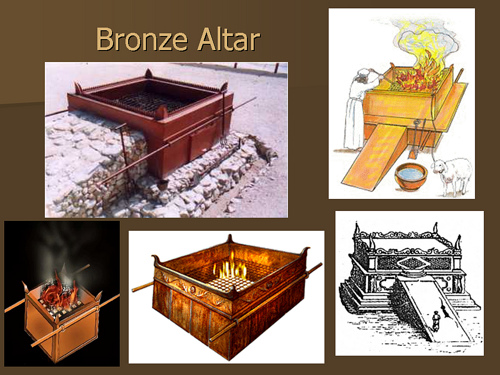
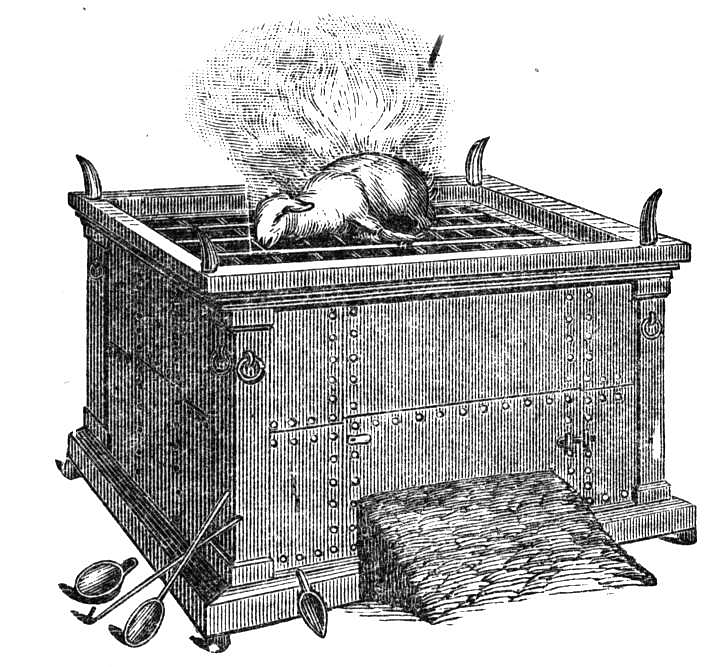
The olah or ascending offering signified the offerer giving himself up totally, wholly ascending or complete surrender to Elohim. The priests offered up this sacrifice up twice daily—the morning and evening (Exod 29:38–42; Num 28:1–8). This offering was always a male animal whose blood was to be sprinkled around the altar. The offerer was to lay his hands on the head of the animal before it was slaughtered symbolizing substitutionary atonement for sins. The offering would be accepted as a sweet aroma by Elohim.

Continue reading →
 

“Thy way, O Elohim, is in the tabernacle”

Exodus 40:1, You set up the tabernacle. This verse implies that Moses set up the tabernacle single-handedly without any help. To what does this point prophetically? (Read Hebrews 3:3–6.)

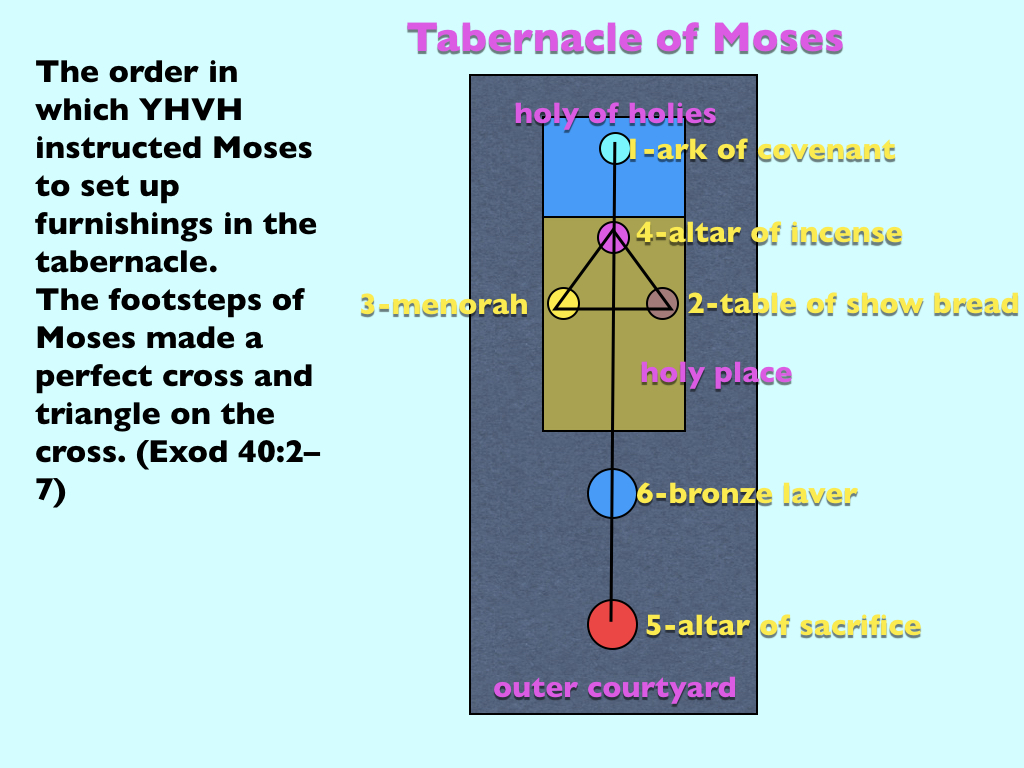
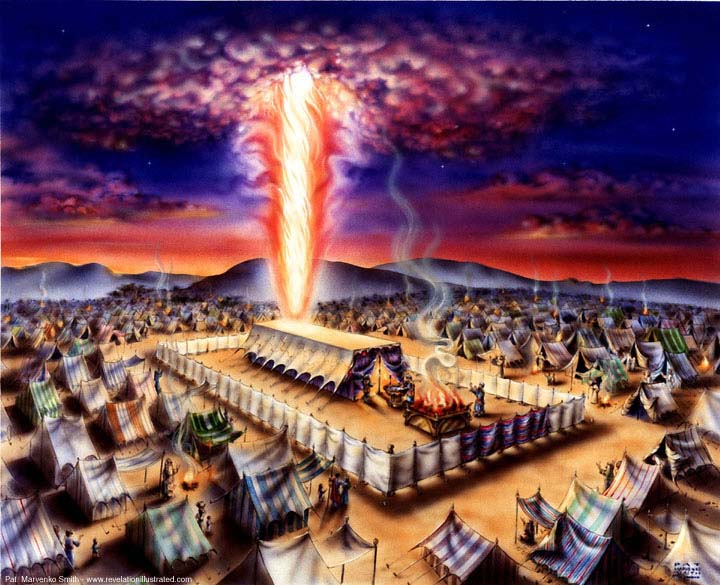
Exodus 40:2–7, Set up the tabernacle. YHVH’s instructions to Moses to set up the furnishings in the tabernacle followed a particular order. In fact, if one traces Moses’s footsteps in doing so, it forms an interesting geometric pattern that is highly significant spiritually. Let’s explore this. 

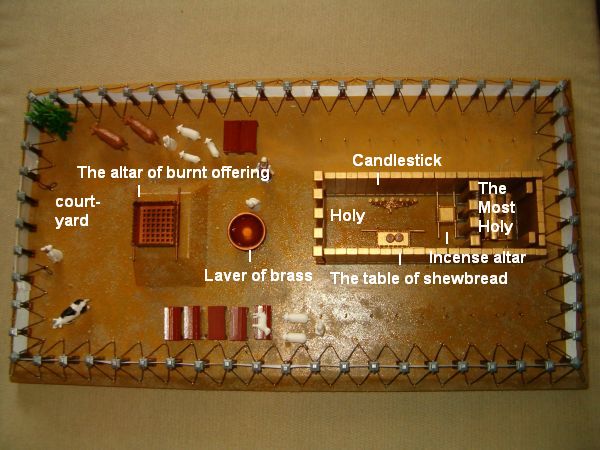
In placing the furnishings in the tabernacle, Moses first started in the holy of holies where he set up the ark of the covenant. After this, he went into the holy place and over to the right side where he set up the table of show bread. He then moved across to the left side of the holy place and set up the menorah. Next, he moved to the center of the holy place in front of the curtain or veil separating the holy place from the holy of holies where he set up the altar of incense. After this, Moses made a straight line and exited out of the tabernacle itself into the outer courtyard we he set up the altar of sacrifice. Having done this, Moses then set up the bronze laver, also in the outer courtyard just in front of the door leading into the tabernacle. If you trace Moses’ steps and make a line in the dirt, what is the outline?

The outline of Moses’ movements makes a triangle on a cross with the base of the triangle forming the arm of a cross. The base of cross corresponds to the altar of sacrifice, while apex of the triangle corresponds to the altar of incense and the top of the cross, which extends past the apex of the triangle is where the testimony in the holy of holies is. Why did YHVH instruct Moses to set up the tabernacle’s furnishings in this order, and not another order? What is the spiritual significance of this particular pattern? How does it relate to you and me? Let’s unpack this.

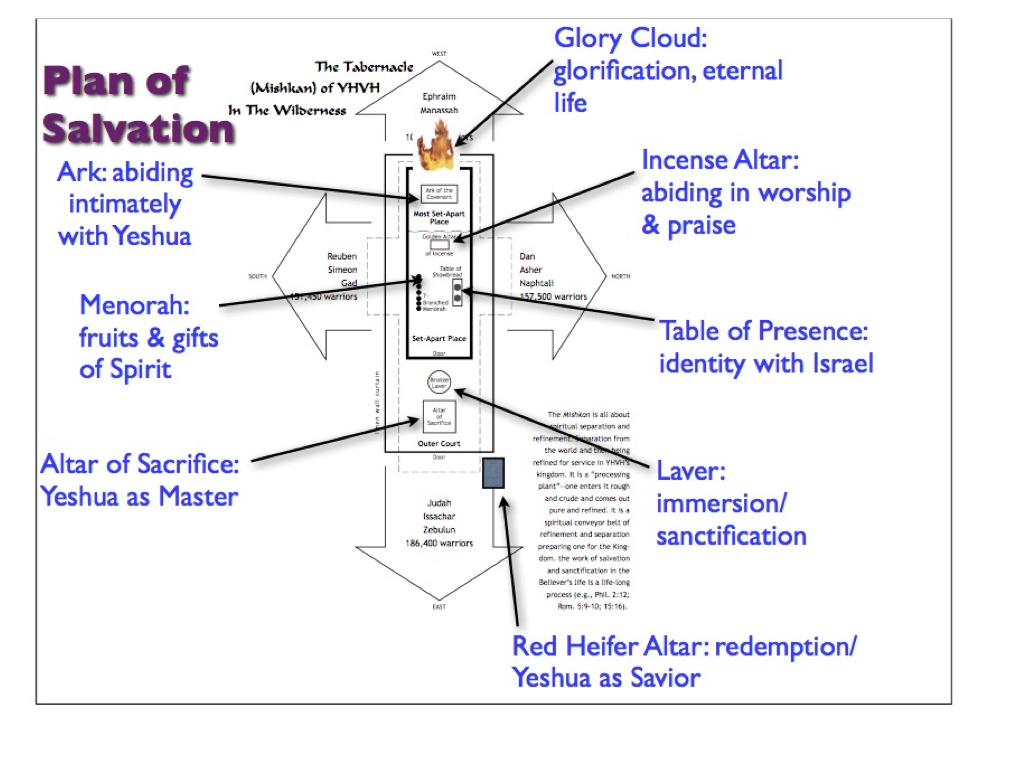
The base of this arrow is at the altar of sacrifice representing Yeshua’s death on the cross atoning for our sins. Next, the arrow points us to the bronze laver picturing a believer’s next step in his spiritual walk which is baptism for the remission of sins and legally identifying with Yeshua’s death, burial and resurrection, as well as receipt of Elohim’s Set-Apart Spirit and the washing of our lives by the water of the Word of Elohim. Next we come to the menorah picturing the Spirit of life in Yeshua the Messiah as the new believer manifests begins evidencing the fruits of the redeemed life, which is the fruits and gifts of the Spirit, which shine like a light into the dark world around us. Next we come to the table of the showbread picturing the regathering and unification of the tribes of Israel around the table of Yeshua’s body in sweet fellowship and covenantal relationship. Through the Messiah of Israel, the scattered tribes are regathered and can pray to and worship Elohim together unified at the altar of incense as they prepare to enter into the eternal kingdom of YHVH Elohim’s presence as pictured by the holy of holies under the glory cloud of YHVH himself.

The way to Elohim through Yeshua the Messiah is laid out in the Tabernacle of Moses making the outline of a cross and an arrow that points heavenward. This goes to show us that the tabernacle is, in reality, a giant gospel tract that shows sinful man the way of salvation leading to his glorification as immortal sons and daughters of YHVH Elohim, our Father in heaven.

Your way, O Elohim, is in the sanctuary; Who is so great a El as our Elohim? (Psalm 77:13)

Exodus 40:34, The glory of YHVH filled the tabernacle. The glory cloud that covered the tabernacle signaled ­YHVH’s approval of the work that was done. Had the Israelites not followed all of YHVH’s minute construction instructions would he have inhabited the tabernacle? Is there a lesson to be learned from this? Could YHVH’s anointing on our lives be greater if our obedience to YHVH’s instructions were greater?


The Priestly Robes, Yeshua and YOU

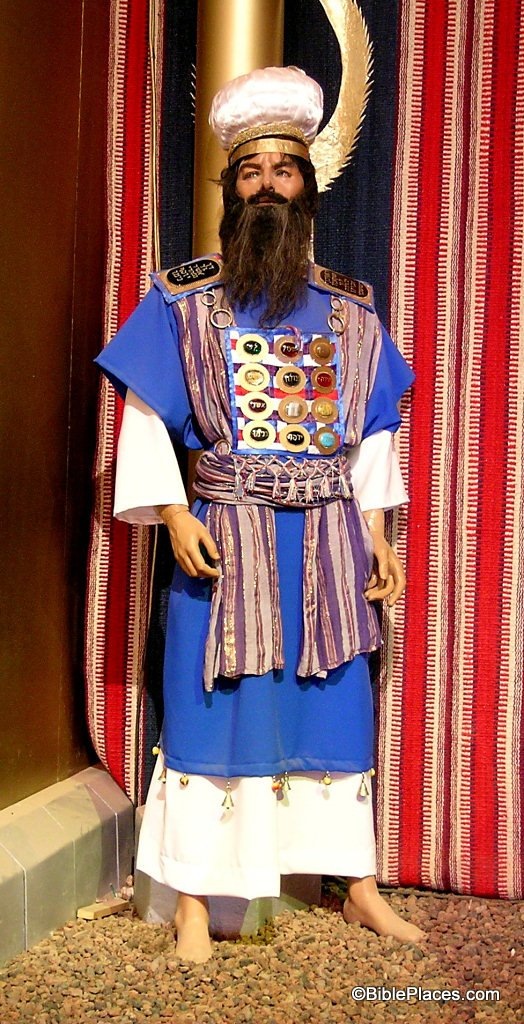
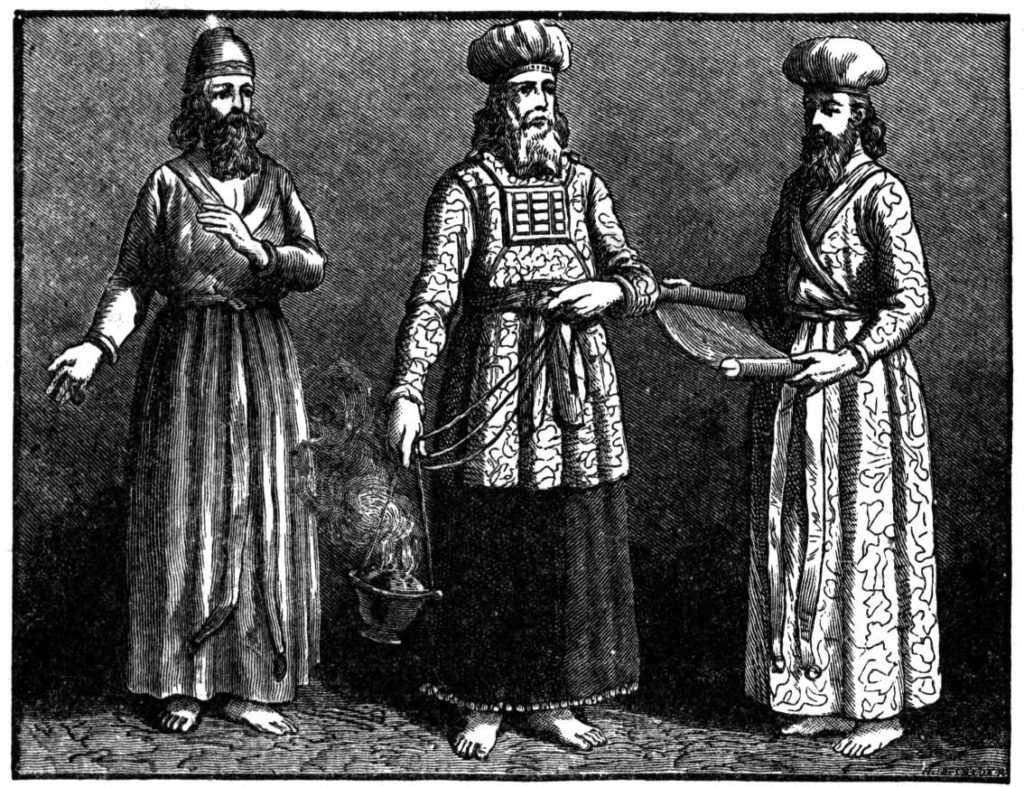
Exodus 39:1, The holy garments for Aaron. The vestments of the high priest (kohen hagadol) are symbolic of the robes of righteousness that saints should be wearing in preparation for the return of the Messiah.

  • Gold symbolizes purity of heart. Blue symbolizes heaven and spirituality.
  • White linen pictures robes of righteousness, purity or sinlessness.
  • Red represents blood—the blood of Yeshua that cleanses us from sin.
  • The high priest wore a belt that represented truth according to Paul (Eph 6:14).
  • The white linen pants represented sexual purity. The white turban represented purity of thought and humility (the opposite of conceit).

The high priest also wore a gold crown inscribed with the words, “Kadosh l’YHVH” meaning “Set-Apart to YHVH.”

The dangling pomegranates attached to the hem of his robe represented the fruits of the Spirit of Elohim, which should be manifesting in the life of the saint. The golden bells, also attached to the hem of his robe, jingled when the high priest walked. These symbolized the righteous walk of the saint: people should hear and see our good spiritual fruits. All of our actions speak loudly and clearly as to who we are and what we believe. Also, Yeshua taught that our words reveal the true condition of our heart (Luke 6:45). How, then, do people really view us? What are we like when we are alone—our thought life and our words—our secret life? Is there a discrepancy between our secret and public lives? If so why? How set apart and righteous are we…in reality?

If YHVH has called us to be his set-apart priesthood, then hadn’t we better get busy cleaning up our act and start acting like one?

Jewish tradition tells us that a rope was tied to the leg of the high priest in Second Temple times so that while ministering in the innermost sanctuary of the temple if he was impure and YHVH struck him dead (as happened to Nadab and Abihu, the sons of Aaron, when they offered up strange fire) the corpse could be dragged out by the rope. This teaches us that we should view being righteous and set apart seriously. Remember Hebrews 12:14 which instructs us to, “Follow peace with all men, and holiness, without which no man will see the Master.”

As YHVH commanded Moses. In chapter 39, please observe the fact that all the work of the tabernacle was done “as YHVH commanded Moses” (or phrases similar to this), and these statements are repeated ten times in this chapter. YHVH gave specific instructions concerning the construction of the tabernacle and expected these instructions to be followed to the letter. The tabernacle was the means by which the Israelites were to approach YHVH. Though the physical tabernacle is long gone, it still serves as a blueprint or pattern showing man the steps to reconciliation with his Creator. There is no other way to be reconciled to YHVH except through the steps of redemption outlined in the mishkan. Furthermore, YHVH never gave any human the prerogative to add or subtract from his instructions. Consider the implications of this with regards to our spiritual walk before our Heavenly Father. How important is it to follow all his instructions in righteousness? How often do we mitigate his instructions and reshape them to accommodate us? Isn’t this what the serpent persuaded Adam and Eve to do at the tree of knowledge, which is how sin entered the world?

Continue reading →
 

The Deeper Message of the Tabernacle of Moses

The Tabernacle and the Deification or Theosis of Man

The Tabernacle of Moses from its front to back represents one’s progression in their spiritual journey starting with their initial salvation leading to the glorification of the physical body and eternal life in YHVH’s eternal spiritual kingdom. This view is from man’s perspective looking into the tabernacle through the front gate.

From YHVH’s view inside the holy of holies above the ark of the covenant in the glory cloud looking outward, the perspective is different. We’ll discus this in a moment.

In the outer court of the tabernacle, all the rituals and furnishings pointed to death, judgment, to washing or cleansing. These prophetically foreshadowed salvation through Yeshua’s atoning death on the cross, with Yeshua being the door to salvation, acceptance of his death on the cross for one’s sins followed by baptism for the remission of sins. In the set-apart (kadosh or holy) place inside the tabernacle, everything pointed to life, light, food, fragrant incense, the fruits and gifts of the Set-Apart Spirit—or life in a spiritual relationship with Elohim subsequent to one’s taking the beginning steps in the salvation process. The outer court speaks of basic salvation for the redeemed believer in Yeshua, while the holy place speaks of spiritual growth and maturity, of moving from spiritual babyhood and growing into spiritual adulthood or maturity. 

To understand this process of growing in spiritual maturity, it is necessary to comprehend the tripartite composition of man. Paul speaks of man being subdivided into three parts—body, soul and spirit (1 Thess 5:23). The tabernacle’s outer court seems to relate more to the physical or bodily realm of the person, while the holy place speaks more of the soul or intellectual, volitional and emotional aspects of man’s inner or psychological makeup. Finally, the holy of holies portrays man approaching YHVH through the realm of a person’s inner personal spirit. 

As one progresses into the tabernacle, it is as if YHVH is drawing a person into an ever deeper relational walk with him starting at the most basic level progressing upward until one is finally communing with YHVH on a Spirit-to-(human personal)-spirit level (in the most holy place). It is the Father’s desire that his children progressively grow until we are communing with him at the highest spiritual level (see John 4:23–24). 

Continue reading →
 

The Twice Daily Sacrifices and the Saints Daily Devotions

Exodus 29:38–42, In the morning…at twilight.(See also Lev 1:1–17 and Num 28:1–15.) Heb. erev meaning “twilight or between the evenings.” According to Alfred Edersheim, the morning sacrifice was offered at 9 AM and the evening sacrifice was offered at approximately 6 PM, since Israel is closer to the equator making the day and night portions on average closer to twelve hours each (The Temple–Its Ministry and Service, p. 108, by Alfred Edersheim). He then goes on the show that by the time of Yeshua, the Jews had changed the time of the evening sacrifice, so that it commenced earlier. By this time, the lamb was killed at about 2:30 PM with the pieces being laid on the altar about 3:30 PM. The whole evening sacrifice service would last until about 4:00 PM (ibid., pp 108–109).


This twice daily offering was known as the continual burnt offering (Heb. olah tamiyd), and was offered at the door of the tabernacle (verse 42). This sacrificial offering has great spiritual implications for the serious disciple of Yeshua and relates to his or her daily life. The word continual (Heb. tamiyd) means “continually.” The Hebrew word for burnt offering is olah meaning “ascent, stairway or steps,” and derives from the basic Hebrew verb, alah, meaning “to go up, climb or ascend.” In this offering, the fire consumes the entire animal, and the word olah refers to the smoke of this whole burnt offering ascending to heaven, which is a “sweet aroma” to YHVH (verse 41). The olah was an offering or gift (Lev 1:2, Heb. qorban)to YHVH and could be a bull, goat, ram, turtle dove or a pigeon as long as it was a perfect specimen without defect (Lev 1). If an Israelite sinned, he could bring this gift-offering to the door of the tabernacle where he would place his hands upon the head of the animal, after which the priests would slaughter it, and sprinkle its blood around the altar of sacrifice just inside the door of the tabernacle (Lev 1:2, 4, 5). The meat was then prepared and arranged on the altar and entirely burnt (Lev 1:6–17). When the sinner laid his hands on the animal, it was as if he were transferring his sins onto the innocent, blemish-free animal, where upon YHVH accepted it as an atonement for the person’s sin (Lev 1:4).

The writer of Hebrews clearly teaches that this offering (along with all the other offerings in the sacrificial system) pointed to Yeshua, our Great High Priest, whose atoning death on the cross fulfilled all the types and shadows of the Levitical, sacrificial system (Heb 4:14–5:7; 7:1–10:18).

Continue reading →
 

The Gospel Message in the Priestly Consecration Ritual

(from Exodus 28–29 ; Leviticus 8)

Now let’s note the seven steps of consecrating the priests and compare them with the steps a believer goes through to become a “chosen generation, a royal priesthood, a set-apart nation, a peculiar people that you should show forth the praises of him who has called you out of darkness into his marvelous light” (1 Pet 2:9). Notice how these seven steps relate to the steps a new believer takes in his conversion process and how they relate to one’s spiritual journey from outside the mishkan where the altar of the red heifer is located representing the cross of Yeshua, then into the door of the tabernacle (i.e. Yeshua who is the door), to the altar of sacrifice (i.e. a prophetic picture of communion) to the bronze laver (i.e. immersion for the remission of sins and being washed in the water of the Word of YHVH), into the set-apart place where the Ruach (Spirit of Elohim) is and onward and upward spiritually into intimate relationship with the Father. In Exodus chapters 28 and 29 we find the following:

Step One: They were taken from among the children of Israel ( Exod 28:1). This prefigures divine election (see John 15:16). YHVH calls or chooses each person. Yeshua called his disciples. They did not call or choose him, but they had to respond to that call.

Step Two: They were brought into the door of the tabernacle (Exod 29:4). The door of the tabernacle is Messiah Yeshua who is the door to the sheepfold. No man comes to the Father except through Yeshua (John 10:1–5, 7, 9) The door is four colors which speak of the person and work of Yeshua: blue, scarlet, white and purple. It also speaks of the four Gospels, which is the door to understanding the Person and work of Yeshua.

Step Three: They were washed (Exod 29:4). Upon accepting the work and Person of Yeshua one must be immersed for the remission of sins (Acts 2:28) to identify spiritually with the death, burial and resurrection of Yeshua (Acts 2:38; Rom 6:3–14), and the washing of the water of the Word (Eph 5:26).

Step Four: They were clothed in their official garments (Exod 29:4–9). The redeemed believer is to put on the robes of righteousness (note Gal 3:27, “For as many of you as have been baptized into Messiah have put on Messiah”). Paul talks about fruits of righteousness through Yeshua in Philippians 1:1. Righteousness is Torah obedience (Ps 119:172) and is a mark of the end time believers/saints (Rev 12:17 and 14:12) and of the bride of Messiah (Rev 19:8).

Step Five: They laid their hands on the head of the animals which were sacrificed (Exod 29:10–26, 32–33). The blood of an animal was shed and sprinkled on Aaron and his sons and matzah (unleavened bread) was waved and burnt and they ate the flesh of the ram and the matzah.

Each born-again believer has to take personal responsibility for his own sins. The sacrifice of Yeshua, the Lamb of Elohim, at the cross must become personal to each person (see Heb 10:19; 13:12; 1 Pet 1:2; 1 John 1:17 and Rev 1:5). Each believer has his own personal relationship with Yeshua. Each must eat the flesh and drink the blood of Yeshua individually (John 6:35–58). Communion is a personal and individual matter.

Step Six: They were anointed with oil (Exod 29:21). Each person must receive the Set-Apart Spirit (Ruach) of Elohim (see Acts 8:17; 19:6).

Step Seven: They are sanctified or set-apart for a special, divine purpose (Exod 29:44). Only after going through these steps is one set-apart unto YHVH as a set-apart priesthood doing the set-apart work of YHVH (see Rom 15:16; 1 Cor 1:2; 6:11; Heb 10:10,14; 1 Pet 2:9).

Only on the basis of following YHVH’s steps, as outlined above, can one have fellowship with the Father. And what was the result of this consecration process? Relationship with the Father! Read Exodus 29:44–46 below,

And I will sanctify the tabernacle of the congregation, and the altar: I will sanctify also both Aaron and his sons, to minister to me in the priest’s office. And I will dwell among the children of Israel, and will be their Elohim. And they shall know that I am YHVH their Elohim, that brought them forth out of the land of Egypt, that I may dwell among them: I am YHVH their Elohim. (emphasis added)

This is all accomplished through Yeshua living in us spiritually. Yeshua is the Chief Cornerstone of our faith (Eph 2:20). He is the end result or goal of the Torah (Rom 10:4). He is the Author and the Finisher of our Faith, the Beginning and the End, the Aleph and Tav (Alpha and Omega) of everything.

To whom coming, as unto a living stone, disallowed indeed of men, but chosen of Elohim, and precious, you also, as lively stones, are built up a spiritual house, a set-apart priesthood, to offer up spiritual sacrifices, acceptable to Elohim by Yeshua the Messiah. Wherefore also it is contained in the Scripture, “Behold, I lay in Tzion a chief corner stone, elect, precious, and he that believes on him shall not be confounded. Unto you therefore which believe he is precious, but unto them which be disobedient, the stone which the builders disallowed, the same is made the head of the corner, and a stone of stumbling, and a rock of offence, even to them which stumble at the word, being disobedient: whereunto also they were appointed. But you are a chosen generation, a royal priesthood, a holy nation, a peculiar people; that you should shew forth the praises of him who has called you out of darkness into his marvelous light, which in time past were not a people, but are now the people of Elohim, which had not obtained mercy, but now have obtained mercy. (1 Pet 2:4–10)

Our faith in Yeshua stays alive and vibrant because of the sacrifices of devotion and praise we offer up daily, morning and night. We are called to do the same work the priests of old did, but in a spiritual or fuller sense.