The Bronze Altar in the Tabernacle and YOU

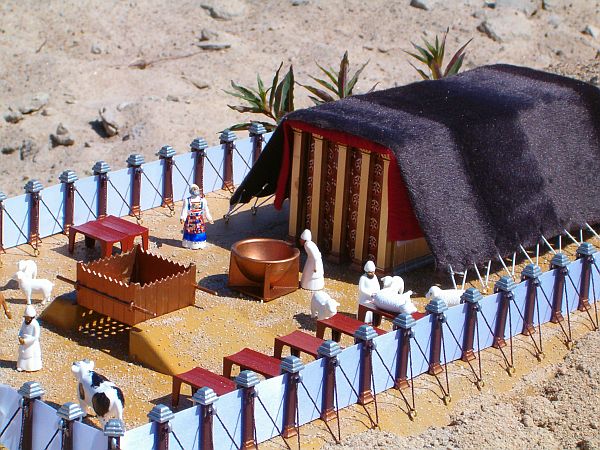
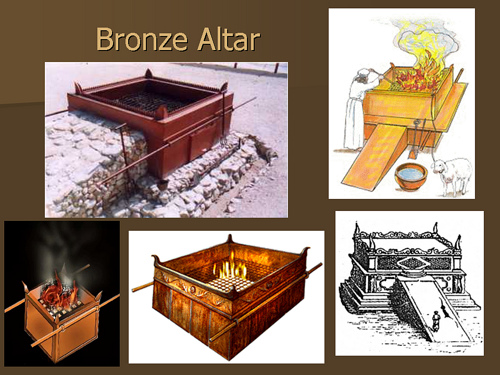
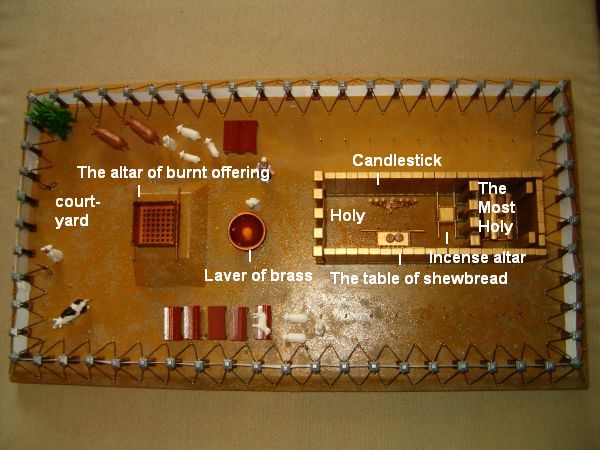
Exodus 27:1–8, An altar. As we continue our tour of the Tabernacle of Moses, the Torah takes us next to the bronze altar of sacrifice just inside the tabernacle’s door. Everything occurring in the tabernacle revolved around this altar—EVERYTHING! This fact is highly significant, since this altar points to the “altar” of the cross on which Yeshua the Messiah died for our sins. This is one truth that the mainstream church has gotten wonderfully right: the cross and what happened there is the central point of the gospel message. One cannot read the writings of the apostles and fail to see this unless one is sadly spiritually naive and spiritually blind! 

Just inside the door of the tabernacle was the altar of sacrifice. It was made of acacia wood overlaid with bronze, which is a prophetic picture of Yeshua the Messiah bearing the judgment for men’s sins on the cross. The blood of the sacrifice was poured out on the ground at the base of the altar symbolically picturing Yeshua shedding his blood at the cross. Two lambs were offered at the altar morning and evening (Exod 29:38–42). This pictures our need to come humbly before our Father in heaven morning and evening in prayerful devotion as living sacrifices to confess our sins, to praise and thank him for saving us from the penalty of our sins, which is death (Ps 51:16–17; Heb 13:15; 1 John 1:7–9; Rom 6:23).

The Altar of Sacrifice in More Details. Upon understanding that the Person and work of Yeshua is the way into spiritual life, light and truth, one must also recognize that one’s sin liability keeps one from a having personal relationship with one’s Creator. The broken fellowship with our Father in heaven due to our uncleanness because of our sin is the reason for this. For one to have a relationship with a sinless, perfect, totally set-apart or holy Elohim,the sin problem has to be dealt with. Sin must be atoned for along with the resulting guilt, shame and penalty (i.e. death) that sin brings. In the Tabernacle of Moses, the liability and effect of sin is dealt with at the altar of the red heifer outside the gate of the tabernacle, which represents the work of Yeshua at the cross (Heb 13:10–13). There one was purified and made ready to come into the actual tabernacle. Upon doing so, the first thing one encountered when entering the tabernacle was the altar of sacrifice where both kosher animals and unleavened bread (made of the finest flour and the purest olive oil) were offered, and a wine libation was poured out twice daily (morning and afternoon, Num 28:1–8). These all picture the body of Yeshua being broken and slain for sinful man and our need to “eat” his body and “drink” his blood in a spiritual sense to which the communion elements of the Lord’s supper taken on the Passover during the seder meal symbolically point (John 6:35–58). 

Continue reading
 

The Door of the Tabernacle and YOU

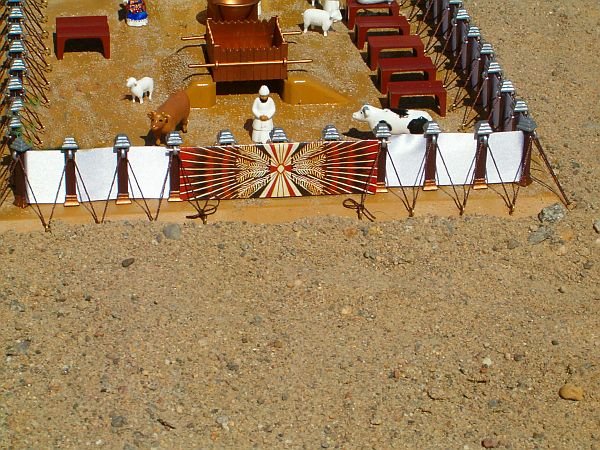
Exodus 26:36–37, Door of the tent.As with every other part of the tabernacle, the door is rich is rich in symbolic and prophetic significance pointing to Yeshua the Messiah and relating to the glorious message of the gospel in its full ramifying panoply.

This door had the same colors as the door to the outer courtyard (blue, crimson, white and purple) and was also woven of fine linen. The door was the same size in area, though it was a different dimension than the first door, for it was taller and narrower. This teaches us that the view of Yeshua becomes higher, and the way to the holiest place becomes narrower and the requirements become more stringent as one draws closer in proximity to YHVH’s glorious presence.

Five wooden pillars covered in gold supported by bronze bases held the curtains up. Again, the wood-covered gold speaks of the righteousness of the saints. Bronze speaks of Elohim’s judgment and five can speak of both the five books of YHVH’s Torah as well as the five-fold ministry the purpose of which is to ground YHVH’s people in his Torah-instructions in righteousness. In so doing, the Saints will become like Yeshua, who was the physical embodiment of the Torah—or YHVH’s Torah-Word made flesh (the Living Torah, John 1:1, 14).

The Door of the Tent in More Detail

This door had the same coloring as the outer door: purple, white, crimson and blue. This door had different ­dimensions as the outer door, but occupied the same area. This door was about half the width, but twice as high as the outer door. This speaks of the fact that as one grows and matures spiritually, the way of life, the path of righteousness and the way to intimacy with the Father gets narrower and the standards are elevated.

It was held up by five pillars picturing the fivefold ministry (Eph 4:11), which is likened to a hand: The apostle is like the thumb. The other fingers cannot work properly without it. It has more flexibility than the rest and can do things the others can’t. The prophet is like the index finger and points out people’s faults and points the direction people are to walk in, yet he must be very gracious, humble and self-effacing in his activity since he has three fingers pointing back at himself. The evangelist represents the middle finger which extends or reaches outward the farthest to bring people to YHVH. The shepherd (pastor) is the ring finger representing gentleness and love. The teacher, like the little finger that is used to dig stuff out of one’s nose and ears, digs out nuggets of truth in hard to reach places (e.g. ear and nose).

The five pillars were made of acacia wood overlaid in gold, which speaks of Yeshua’s humanity and his divinity. The pillars were set in bases of bronze speaking of YHVH’s righteous judgments and that all judgment will be left up to Yeshua who is over all and has judged and will judge all (Heb 2:8; Eph 1:22). Furthermore, Yeshua as head of the body of believers, the gates of hell will not prevail against his elect (Matt 16:18; Heb 3:6).


The Golden Menorah and YOU

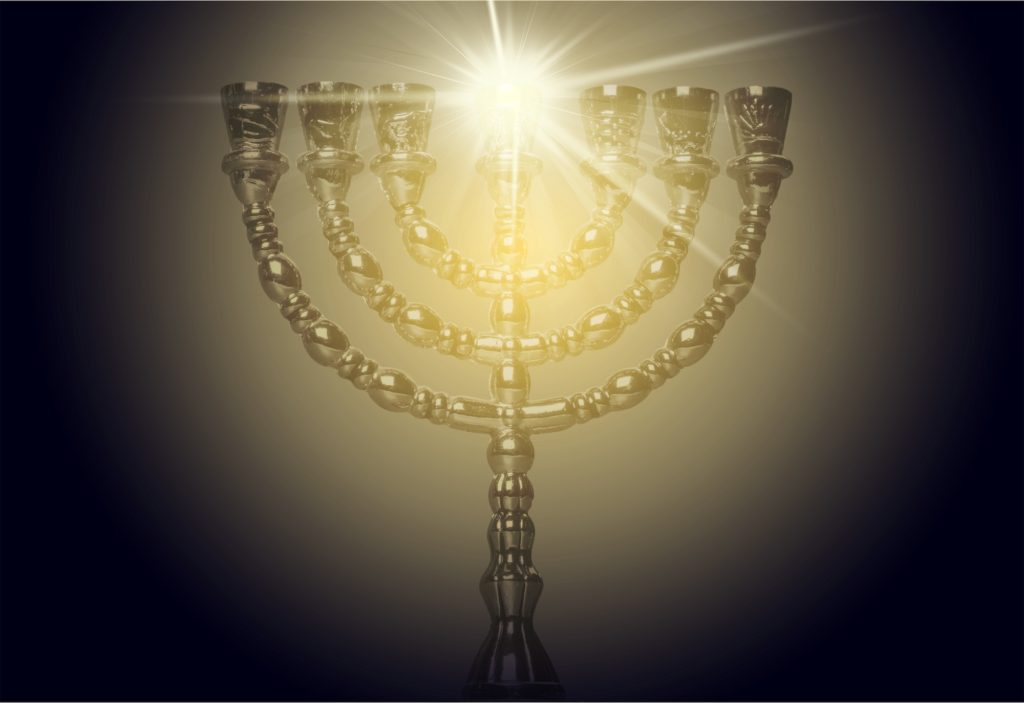
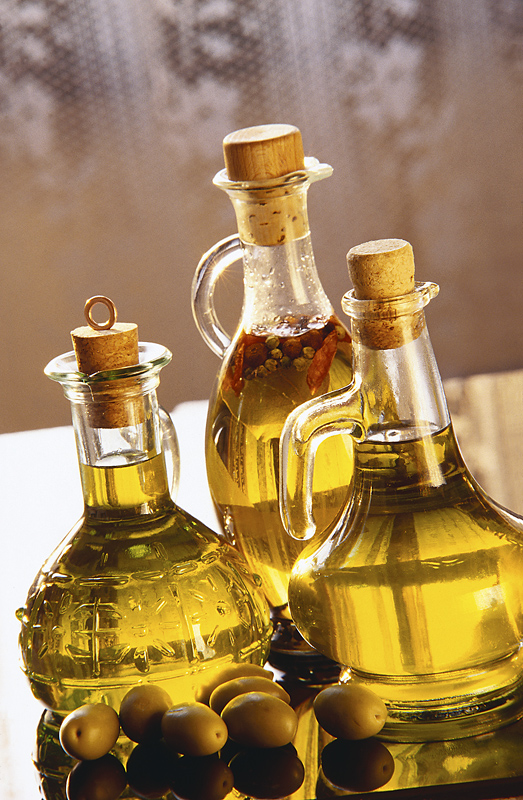
Exodus 25:31–39, Menorah of pure gold.The menorah was beaten out of a solid ingot of pure gold and stood on the left side of the holy place inside the tabernacle. It was the only light in the holy place. The menorah had seven branches with three on either side of a central stem. Each branch had three decorative cups, a knob and a flower resembling that of an almond flower. The cups were called lamps and each was filled with the purest olive oil and contained a wick that was lit. The menorah was lit each day, and each of the six outer lamps were designed so that when lit its flame pointed toward the central stem. The menorah had tools—tongs and spoons—to tend the wick. These implements were used to clean and to prepare the lamps and to remove the previous day’s ashes.

The menorah is a picture of Yeshua, the Tree of Life, who likened himself to a vine and his followers to branches” (John 15:1–7). It also pictures the idea that the saints are members of the body of Yeshua (1 Cor 12:12) and are established in him (2 Cor 1:21). His followers are connected to him, draw sustenance from him, and the spiritual light of their lives point toward him in all that they do. Believers are to be “on fire” for doing the work of Yeshua. The Spirit of Elohim directed by the Torah—both pictured by the olive oil—fuels that fire. On the Day of Pentecost, the believers in the upper room received fire of YHVH’s Spirit and had his Torah-law written in their hearts. Through the empowerment of the Spirit—both the fruits and the gifts—the saints were able take the light of the gospel out to the world. The significance of the menorah in the believer’s life is evidenced by the fact that Scripture reveals that it (not the cross) is the actual symbol for assembly of believers in Yeshua (Rev 1:12,20).

The Golden Menorah in More Detail

The menorah represents the tree of life; the oil represents the Spirit of Elohim in the believer’s life. It also represents Yeshua the tree or vine with believers as the branches grafted in to the “trunk” of the tree or Yeshua and receiving the Spirit of life from him. As a result of Yeshua’s Spirit in the believer’s life the fruits and gifts of the Spirit of Elohim shine like a menorah on a hill into the surrounding darkness of this world. Gold represents the pure (divine) character of Yeshua and the believer, and oil represents the Spirit of Elohim through whose work in the believer’s life that pure gold-like character is formed and refined. Prophetically the menorah points to the Day of Pentecost or Feast of the Harvest of First Fruits (Shavuot) when the Spirit of Elohim was poured out upon YHVH’s people and the Torah-law was written on their hearts empowering them to walk in the paths of Torah-light/righteousness (Ps 119:105, 172) and to share the good news or gospel with others.

It is estimated that the menorah was constructed of 90 pounds of gold, which is 1440 ounces. If gold is $1200 per ounce the menorah would have been worth $1,728,000 in the value of the gold alone, not including the workmanship to construct it.

Some believe that the light of the menorah was reflected to point only forward. It was the only light in the set-apart place. We are to go forward only in our spiritual walk, not backward. Advance spiritually in light, but retreat and you do so in darkness (Ps 119:105).

The almond tree is the first fruit tree that blossoms in the spring in Israel. Yeshua is the firstborn among many brethren. The seven branches of the menorah, which are a picture of Yeshua, corresponds to the seven spirits of YHVH in Isaiah 11:2 and Revelation 4:5.

The wicks of the menorah were made from the priest’s worn out or discarded garments. From this we learn that we can’t discard the work of yesterday’s ministers, for we stand on their shoulders and use what they put into us to light our path spiritually to see what is ahead for us. What are we leaving behind us for the next generation?

Matthew Henry says in his biblical commentary on Exodus 27:20 that the pure oil signifies the gifts and fruits of the Set-Apart Spirit which all believers receive from Messiah (Mashiach) who is the oil-anointed One. Mashiach is the vine to which we are attached, for we are the arms and branches (John 15:1–2) and the branches are attached to the sustenance-carrying vascular system of the main trunk (as pictured by the hollow-tubed seven-branched gold menorah). The menorah is another picture of Yeshua who is the tree of life to which we must be attached. Only then will we be lights shining the fruits and gifts of the Spirit into the darkness of men’s lives as Yeshua commanded us to be (i.e. menorahs on a hill, Matt 5:14–16). That is why the symbol of the elect body of believers is the menorah as we see in Revelation 1:13 and 20.


The Ark of the Covenant, the Presence of Elohim and YOU

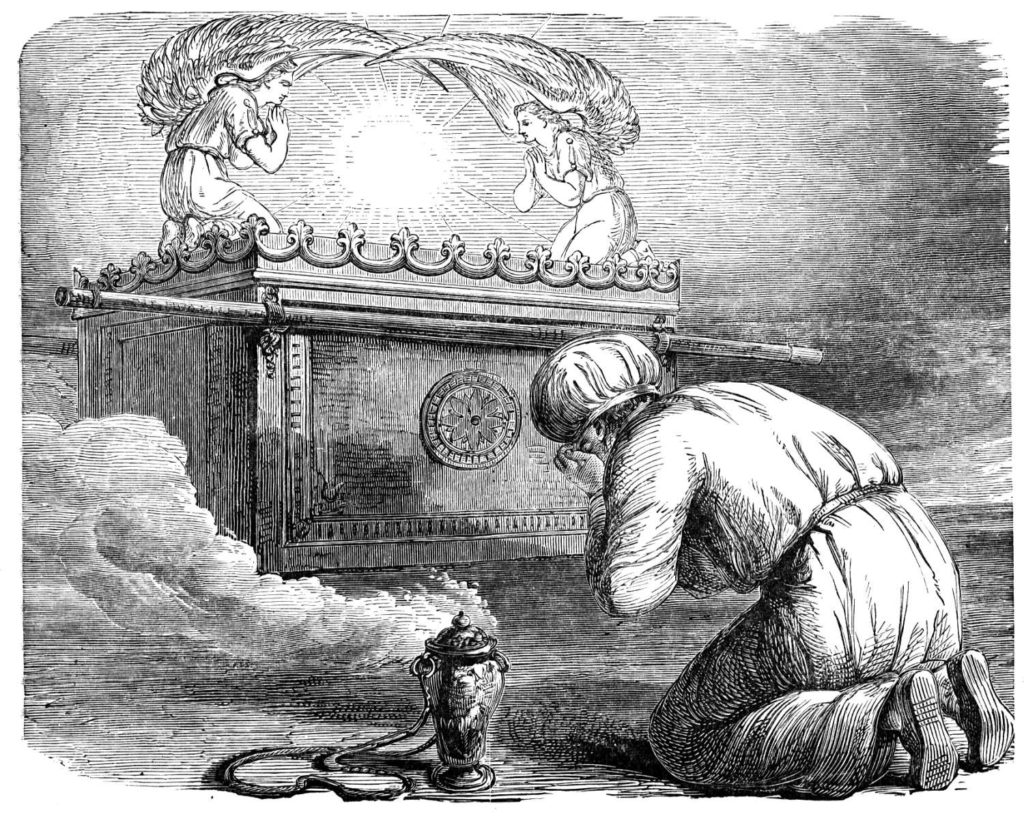
Exodus 25:22, There I will meet with you. Between the two cherubim was the glowing, anointed, manifest presence of YHVH called the Shekinah. This was the earthly throne room of Elohim. It also pictures the glories of the New Jerusalem and life happily ever after for Yeshua and his spiritual bride.

The manifest presence of Elohim is the last of seven “items” in the tabernacle and it is also the one ingredient that is missing in all the other religions of the world. Yes, many of the world’s false religions have their signs, wonders and supernatural experiences, but these are cheap demonic counterfeits that only imitate the real thing—the actual Presence of the Almighty Creator—Yehovah Elohim. In the end, despite all that these false religious systems promise, they bring shame, confusion, guilt and eventual death and eternal separation from Elohim.

In the Tabernacle of Moses, the first six items were made with human hands. Six is the number of man. YHVH’s Presence cannot be constructed by the hand or mind of man. It just is, and it doesn’t come as a result of anyone conjuring it up. It comes as a result of repentance, holiness, obedience and humans seeking Elohim with all their hearts, while following the protocols he has laid out, which, when followed, lead to him. There is no other way. 

The Presence of Elohim is what is missing in every other of the world’s religious systems. It was even missing in the Second Temple! 

In YHVH Elohim’s Presence, a human is miraculously and powerfully changed and transformed spiritually from the inside out. 

Continue reading
 

Why study about the Tabernacle of Moses?

Exodus 25:8–9, A sanctuary … tabernacle

The Tabernacle of Moses

If you were the Creator of the universe, what means would you use to communicate with those that you had created through love in your likeness and image? In a remote way, it’s like a human standing over an anthill trying to communicate with the ants. How do you do it? Similarly, how does an all powerful, Spirit Being, loving Father in heaven relate to his mortal children who are but mere specks of dust without vaporizing them with his raw power? The difficulty is compounded when fearful humans don’t want to hear the voice of Elohim, which is what happened when YHVH Elohim’s voice thundered from Mount Sinai. The children of Israel begged him not to talk to them, lest they die. They asked the Almighty One to speak to them instead through Moses (Exod 20:19). 

When man sinned at the tree of knowledge, and YHVH kicked them out of the Garden of Eden, direct communications between man and his Maker were hampered, if not all but cut off. However, Elohim had a plan to restore the loving relationship he had with man before the rebellion. But if men refuse to hear you when you speak, what are you do?

For certain, the Almighty doesn’t lack for ways to communicate with men. Man is without excuse when it comes to hearing Elohim, for even the heaven’s declare the glory of the Creator and the plans he has for mankind. The visible things of this creation shout loudly about the spiritual mysteries heaven desires to reveal to its earthly subjects. Furthermore, from time to time over the millennia, Elohim has chosen to speak directly to some select servants through dreams, visions, signs, wonders, angels, and even once through a donkey! But how does he speak to a whole nation, if that nation is plugging its ears and refusing to hear its Master’s voice?

Enter into the picture the Tabernacle of Moses, which was literally a three-dimensional gospel message tract. It is the visual demonstration of the whole salvation message of the Bible in a building—the blueprint of the plan of redemption of wayward, sinful man. It was a functioning masterpiece of artwork demonstrating the Father’s love for his people, and of his desire to commune and to communicate with Israel—his treasured possession, those he had hand picked and called out from the 70 nations of the world. Not only did the tabernacle involve the sense of sight, but the other four senses as well: sound, smell, touch, and taste. It also engaged and even challenged the heart, emotions, mind and spirit of man to focus on his need to be spiritually reconciled to his Creator. The Tabernacle of Moses was a vehicle for the Creator of the universe to communicate with man using a panoply of communication devices all of which pointed to the coming Messiah, the Redeemer of mankind who would die for the sins of the world to restore man into a loving relationship with his ever-loving, gracious, and longsuffering Father in heaven.

This is the story of the tabernacle, which, in every way, resembles a theatrical play, even a pageant, containing costumed actors each performing his carefully choreographed role on cue. Even a child can comprehend the message of this play, yet it contains mysteries and truths so deep that only in eternity itself will they be revealed to those who have been initiated into higher spiritual levels through the tabernacle’s spiritual paradigms of which its rites and ceremonies were mere prophetic shadows of things to come. To understand it, is to understand the message of the whole Bible from Genesis to Revelation.

Let’s now enter into the world of the Tabernacle of Moses. Welcome! (Please note, over the next several parshiot, we will be discussing the tabernacle in great detail. Later, when we get into Leviticus, we will explore the sacrificial system as well as the other tabernacle rites and ceremonies, and we will learn how they all pointed to Yeshua and how it relates to us.)

Why Study the Tabernacle (or Temple)?

Continue reading
 

Tabernacle of Moses Resources

If I didn’t post anything more on this blog until we’re finished with Exodus, the resources posted below would be sufficient to keep most people busy for a while. That’s how much there is to learn about the Tabernacle of Moses!

Written teachings by Natan: https://www.hoshanarabbah.org/teaching.html#tabernacle

See my video play list on the Tabernacle of Moses on my YouTube channel at https://www.youtube.com/HoshanaRabbah

Happy studying. There’s enough to keep you busy here for a few days. The Tabernacle of Moses is one of my most popular video series on our YouTube channel.

Please enjoy and be blessed!