The Tabernacle of Moses when viewed from the outside looking in reveals one spiritual mystery relating to the redeemed believer, but when viewed from the inside looking out, it reveals another spiritual mystery. This video also explains how the number three in the tabernacle relates to the human makeup and that of the Godhead, as well our theosis, or our union with Elohim as his adopted and glorified children.
Category Archives: Weekly Scripture Readings
Holiness — the Dominant Theme in Leviticus
The focus of Leviticus is holiness and holy living. Holiness is the chief attribute of Elohim and the most defining aspect of his character. It has to do with the fact that Elohim is entirely good and without evil and moral defect and sinless. This is why the spiritual beings around his heavenly throne are constantly crying, “Holy, holy, holy” in his Presence (Isa 6:3; Rev 4:8). This is why one of his titles is The Holy One of Israel,which is used more than thirty times in the Tanakh (e.g., 2 Kgs 19:22; Ps 71:22; Isa 1:4; Jer 50:29).
The Hebrew word for holy and holiness is kadosh, which is defined as “sacredness, consecrated, set-apartness or separateness.” That which is holy or kadosh relates to that which belongs to the sphere of the sacred, godly or heavenly and is distinct or separate from the sphere of the common, profane, defiled or polluted. Everything about Elohim is holy or set-apart compared to man who is completely polluted and defiled by sin and is thus unholy (Jer 17:9; Rom 3:23; Isa 64:6).
The Tabernacle of Moses had two rooms: the holy place and the holy of holies. The nomenclature of these rooms relates to the chief attribute of Elohim, which is his holiness.
Elohim gave Moses, Aaron, the priests and Levites strict protocols to follow to insure that the tabernacle stay holy and keep from becoming profane, polluted or defiled. This involved caring for and properly handling the building and its furnishings as well as the priestly attire and their bodily, ritualistic and spiritual cleanliness. If these protocols weren’t followed, there were penalties — sometimes involving the death of the violator. If they were followed, the result was a blessed relationship with Elohim.
The requirements for coming into and ministering in the Tabernacle of Moses, the dwelling place of Elohim’s Presence (Exod 25:8) teach us several things.
First, Elohim is holy and undefiled and is thus transcendent above the earthly and human plane. He is pure, set-apart and undefiled by.
Second, heaven and the Presence Elohim is a holy and undefiled place. The tabernacle was the earthly dwelling place of Elohim’s Presence (Exod 25:8). It and everything about it was to remain holy or set-apart. Nothing was to defile it.
Third, maintaining a high standard of holiness with regard to everything pertaining to the tabernacle teaches us that no one can come into the Presence of Elohim without first going through proper protocols to become undefiled.
Forth, there was a death sentence upon those who refused or neglected to follow these protocols. This teaches man to fear, honor, respect and even to dread Elohim who has the power over life and death. Man cannot come into Elohim’s Presence in a casual, cavalier or arrogant manner in a defiled or polluted state.
Fifth, the Tabernacle of Moses was a “processing center” to aid man in going from an unholy, polluted and sinful state to progressively becoming more and more holy and sinless. Eventually, man could come to a place — by following YHVH’s protocols of holy living — of intimate fellowship with Elohim. This is pictured by the inner room, or holy of holies, of the tabernacle where the Presence or Kavod of Elohim was dwelt. The holy of holies is representative of Elohim’s heavenly throne room.
Sixth, man was created in Elohim’s image to have an intimate relation with him and with the capability of reflecting his divine character. When man sinned in the garden, man’s relationship with Elohim was cut off. The Tabernacle of Moses shows man how to deal with the pollution or defilement of sin through blood atonement and the eventual sacrifice of Yeshua on the cross to which all the bloody, sacrificial rituals of the tabernacle pointed.
Seventh, there is no other way for man to come into the Presence of Elohim except through the protocols that he has established. Man has to recognize his sinfulness, turn away from his state of unholiness or pollution by making the proper sacrifices. He must then turn to and embrace Elohim’s holy or righteous standards for living a sinless life.
Holiness is the greater message of Leviticus as it relates to the redeemed believer coming into conformity with the exalted and righteous standards of a holy Elohim. This occurs when one recognizes their unholiness or sinfulness, puts their faith in the blood atoning sacrifice of the Lamb of Elohim, Yeshua the Messiah who died on the cross in payment for men’s sins, and then turns from sin by adhering to Elohim’s standards of righteousness as outlined in the Torah and the rest of the Scriptures, and as lived out by Yeshua and his immediate disciples.
Holiness involves heeding Elohim’s call to become his special and treasured possession by following him and allowing him to separate us from the defilement or pollutions of the heathen nations around us (Lev 20:26; Deut 7:6; 14:2; 26:19).
This message of holiness — and the message of the entire Bible — can be succinctly summed up by Elohim’s loving and longing cry to his people on several occasions to be holy as he is holy (Lev 11:44, 45; 20:7, 26; 1 Pet 1:16). The Torah shows us how to be holy (Lev 20:7–8). The Torah (and the rest of Scripture) shows us that being holy not only involves behavior, but man’s thoughts and attitudes, words and physical cleanliness as well as the observance of holy times (e.g., the Sabbath and biblical festivals), and respect of things that are dedicated to Elohim. Men must learn to make a division or separation between the spheres of the holy and the profane and to keep them separate (Ezek 44:23; 22:26), and to not let the latter pollute the former.
The message of holiness has serious implications for each individual, for as the writer of the Epistle to the Hebrews declares, without holiness, no one will see Elohim (Heb 12:14 cp. Ps 15:2ff).

How the Burnt Offering Pointed to Yeshua
Burnt or Elevation (Olah) Offering (Lev 1:3–17)
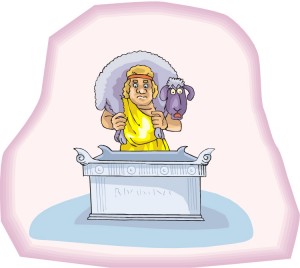
This offering involved the burning of the entire animal. This was not a partial burning with what remained to be eaten by the priests and/or worshippers. The burning of the animal prophetically pictures the sufferings of Yeshua, the Son of Elohim, for the sins of the world. The burning of the animal was but a faint representation of the punishment that all sinners deserve and that which unrepentant sinners will experience in the lake of fire at the end of the Millennium (Rev 20:11–15). Yeshua took that punishment upon himself at the cross.
Here are some examples of how the burnt offering pointed to Yeshua (and how he fulfilled it):
- The animal sacrificed was a clean or kosher male bull, ram, goat, or pigeon or turtledove, that was without blemish. Similarly, Yeshua was the perfect and proper Lamb of Elohim who was, in his sin-free state, without spiritual defect.
- The owner of the animal was to offer it of his own free will. Messiah willingly offered himself for us.
- It was to be offered at the door of the tabernacle—another picture of Yeshua—where the brazen altar was located, for the sinner was unworthy to enter the tabernacle. This shows that without the shedding of blood—without faith in Yeshua’s shed blood to pay for one’s sins—the sinner can have no communion with YHVH.
- The offerer was to lay his hand upon the head of the animal to be sacrificed signifying a transfer of guilt for sin to the innocent animal, so that now the animal represented himself and was making atonement for him. Redeemed believers must identify with the death, burial and resurrection of Yeshua to have salvation and eternal life (Rom 6:3–14; Gal 2:20; 2 Cor 5:17). It is possible that the significance of the individual offerer laying only one hand upon the offering speaks to the idea that only one sinner was seeking atonement, while the high priest laying both hands on the head of the azazel goat (Lev 16:21) signifies atonement not only for the individual, but for the whole nation (i.e., hands, plural), since the high priest was acting as a representative for the whole nation.
- The animal was to be killed before YHVH signifying that the sinner’s flesh must be crucified with its corrupt affections and lusts. The offerer slaughtered the animal while the priest sprinkled the blood on the altar. The offerer would then skin the animal and wash its parts before giving it to the priest to lay on the altar for it to be totally burned up.
- The priests’ sprinkling the blood upon the altar is significant, for the Scriptures teach us that the life of the animal is in the blood, and that it is the blood that makes an atonement for sin (Lev 17:11). It is Yeshua’s blood shed at the cross when spiritually sprinkled on sinners that atones for their sins.
- The animal was to be divided, laid on the altar and burned. This pictures the intense sufferings of Yeshua prior to and while on the “altar” of the cross.
- This offering was a sweet savor to YHVH, even as the offering of Yeshua was well-pleasing to the Father (Isa 53:10).
- The olah offering could be offered in times of joy, celebration or spiritual rededication (2 Chron 29:20–24) as a gift to express joy and reverence to YHVH (Gen 8:20; 1 Sam 6:14). The olah could also accompany petitions for Elohim’s intervention in time of need (Judg 21:4; Jer 14:12). In all these cases, there is an overriding awareness for the need to give homage and honor to a righteous and set-apart Elohim.
Where was Yeshua crucified?
Leviticus 1:16, Beside the altar on the east part. It is interesting to note that in Jerusalem on the Temple Mount, the east side of the altar of sacrifice in the temple faced the Mount of Olives, the base of which is only a few minutes walk (less than 1000 feet) down from the Temple Mount and across the small Kidron Valley.
This is the same area where the Garden of Gethsemane is located (also at the base of the Mount of Olives just above the Kidron Valley) where Yeshua prayed before his crucifixion and sweat great drops of blood (Luke 22:44).
Directly above this same spot is where the altar of the red heifer was located (see Mishnah Parah 3:6c and The Temple, Its Ministry and Service, p. 283, by Alfred Edhersheim).
Furthermore, the writer of Hebrews links the place of Yeshua’s crucifixion to the spot where the red heifer was killed (Heb 13:12–13 cp. 9:13).
And finally, we know that from the place of the crucifixion, the front of the temple was clearly visible (Luke 23:45, 47).
We see that the sprinkling of the blood on the east side of the altar (on the side of the altar facing the exact spot where Yeshua died on the cross) is a prophetic shadow picture pointing to the eventual death of Yeshua the Lamb of Elohim slain from the foundation of the world to take away the sins of the world once and for all!
Overview of the Book of Leviticus/Vayikra
Outline of Leviticus
Leviticus is divided into to main parts. Chapters one to 16 deal with laws of sacrifice and purification. In the second section (chapters 17–25), Elohim sets forth his demands for holy living that his people might maintain a right relationship with him. Chapter 26 lays out the blessings and curses for obedience to YHVH’s commands. The final chapter of the book ends with some miscellaneous laws.
- The five main offerings (Lev 1–7)
- The ordination of priests (Lev 6:8–7:38)
- Laws of cleanliness (food, childbirth, diseases, etc.) (Lev 11–15)
- Day of Atonement (Lev 16–17)
- Moral laws regulating relationships between humans (Lev 18–20)
- Regulations for priests, the offerings of the annual feasts (Lev 21:1–24:9)
- Punishment for blasphemy, murder, etc. (Lev 24:10–23)
- The Sabbatical year, Jubilee, land laws, slavery (Lev 25)
- Blessings and curses (Lev 26)
- Regulations pertaining to vows made to YHVH (Lev 27)
Themes and Main Points of Leviticus
- Leviticus stands at the center of the Torah, and there’s a reason for this, since it shows man how to come into relationship with Elohim.
- Holiness (or set-apartness) is the key theme of Leviticus. The set-apartness of YHVH and the need for man to become set-apart (Heb. kadosh, Lev 11:44). Leviticus lays out the terms are laid out by which an unholy, profane, polluted or sinful people can come into a spiritual and even contractual relationship with their holy, morally pure and sinless Creator. It spells out the terms of the contract including penalties for its violation and blessings for adherence to it.
- Leviticus carries on to completion the giving of the Torah-law, which started in Exodus 20 and left off in Exodus 25, which firmly established Israel’s covenant constitution with Elohim with the Torah being the terms or legal corpus of that constitution.
- This book, for the first time in detail, shows man the way of expiation and forgiveness of sin, thus pointing the way in major detail to Yeshua the Messiah, the Lamb of Elohim, who was yet to come and who would ultimate take away men’s sin by his sacrifice on the cross.
- Its narrative covered probably only a month.
- It is the first book of Torah rabbinic Jews started teaching their young children, since it is believed that those who are pure in heart (i.e., children) should be engaged in the study of purity (i.e., the laws of purification and atonement—central themes of Leviticus).
- Even today, Leviticus remains the foundation for Jewish life, since it includes the laws pertaining diet, the feasts, sex, marriage, family purity, and our relationship with our fellow man.
- Leviticus is at the heart of the modern Jewish synagogue service, and forms the basis for the daily devotions of religious Jews. Jewish liturgical prayer is largely based on the Tabernacle service outlined in this book.
- The offerings and other ceremonies served to show the holiness of YHVH.
- YHVH can only be approached through proper and prescribed protocols.
- In Leviticus, spiritual set-apartness (holiness) is symbolized by physical perfection. All blemishes or defects symbolize man’s spiritual defects, which break his spiritual wholeness. Therefore, the religious system in Leviticus required:
- Perfect animals for sacrifices (Lev 1–7)
- Priests without physical deformity (Lev 8–10)
- A woman to be ritually purified from hemorrhaging after birth (Lev 12)
- Ritual purification from sores, burns, baldness (Lev 13–14)
- Ritual purification from a man’s bodily discharges (Lev 15:1–18
- Ritual purification after a woman’s menstrual cycle (Lev 15:19–33)
- Those with certain diseases or ailments had to leave the camp (symbolic of leaving YHVH’s Presence—like Adam and Eve leaving the Garden of Eden after they had sinned). Israelites could be readmitted to the camp (symbolic of returning to YHVH’s Presence) only after certain protocols had been performed and the person had been pronounced whole by the priests.
- In Exodus 19:6, YHVH’s call for Israel to be a kingdom of priests. As such, they were to be a light to the nations and to show Elohim’s glory to the world (Deut 4:4–8). Israel was to be YHVH earthly representation of YHVH’s kingdom on earth. Leviticus showed Israel how to walk in a set-apart (kadosh or holy) manner before YHVH and the world.
Blog Scripture Readings for 3-15 Through 3-21-15
Aside
THIS WEEK’S SCRIPTURE READINGS FOR STUDY AND DISCUSSION:
Parashat Vayikra — Leviticus 1:1 – 5:26 (6:7)*
Haftarah — Numbers 28:9-15; Exodus 12:1-20; Ezekiel 45:16-46:18**
Prophets — Isaiah 9:1 – 18:7
Writings — Proverbs 15:1 – 21:31
Testimony — John 13:17 – 18:40
Most of this week’s blog discussion points will be on these passages. If you have general comments or questions on the weekly Scripture readings not addressed in a blog post, here’s a place for you to post those. Just use the “leave a reply” link below.
The full “Read Through The Scriptures In A Year” schedule, broken down by each day, can be found on the right sidebar under “Helpful Links.” There are 4 sections of scripture to read each day. One each from the Torah, the Prophets, the Writings, and from the Testimony of Yeshua. Each week, the Torah and haftarah readings will follow the traditional one-year reading cycle.
* Verse numbers in parenthesis refer to the verse number in Christian Bibles when it differs from the Hebrew Bible or Tanakh.
** A different Haftarah is read when it is a special sabbath in Jewish tradition. This week is Shabbat HaChodesh.
Weekly Blog Scripture Readings for 3/15 through 3/21/15.
A Final Word on the Tabernacle of Moses and Theosis
The process of man going from being a physical and human creature to becoming an immortal and glorified child of the Most High, in theological terms, is called theosis. This is an ancient Christian concept that is still held by the Eastern Orthodox Church referring to the spiritual process that occurs resulting in the deification of man. The goal of theosis is to become like Elohim and to become eventually united with him spiritually. Theosis is the biblical concept of a redeemed or spiritually regenerated individual becoming a partaker YHVH’s divine nature (2 Pet 1:4), and being adopted into the family of Elohim (see verses below). It is about man becoming like Elohim — becoming part of the family of Elohim as a son of Elohim (John 10:34; Ps 82:1; 1 John 3:1–3).
This is our theosis, that as the Ruach haKodesh (the Holy Spirit) identified Yeshua as the Son of Elohim at his baptism, so we too become a son of Elohim at our baptism, when we become a new creation through Yeshua and the work of the Holy Spirit (Gal 2:20; 2 Cor 5:17). At that time, one is begotten into the family of Elohim, and when one receives one’s glorified body at the resurrection one will be fully born or adopted into the family of Elohim as a full-fledged son of Elohim, for, as the Scripture says, we will be like him, for we will see him as he is (1 John 3:1–3).
Paul refers to theosis in several places when he uses the term adoption. Continue reading