There is freedom of choice, but there are also consequences!

Which way will you choose?

Which way will you choose?

Deuteronomy 11:26–28, A blessing and a curse. This passage begins with the words, “Behold, I set before you this day a blessing and a curse; a blessing, if you will obey the commandments of YHVH your Elohim, which I command you this day; and a curse, if you will not obey the commandments of YHVH your Elohim, to go after other gods, which you have not known” (Deut 11:26–28).

After this, in verse 29, YHVH instructs the Israelites that upon entering the Promised Land, they are to stop between the mountains of Gerizim and Ebal, which are located at the entry point of the land. The former mountain represents a blessing, while the later represents a curse. The town of Shechem is located between the two mountains. The Hebrew word Shechem means “shoulder” or “back” (Strong’s H7927). The shoulder supports the head, which through the disposition of the mind and the direction in which the head is pointed, determines the path a person will walk whether good or evil.

It was at Shechem, between the two mountains representing good and evil, that Israel renewed its covenant with YHVH before entering the Promised Land (Josh 8:30–35). The power of the covenant that the people made with YHVH on that day thousands of years Continue reading

 

Blog Scripture Readings for 8-28 Through 9-3-16

Aside

THIS WEEK’S SCRIPTURE READINGS FOR STUDY AND DISCUSSION:

Parashat Re’eh — Deuteronomy 11:26 – 16:17
Haftarah — Numbers 28:9–15 | Isaiah 66:1–24**
Prophets — Hosea 12:1 – 14:9
Writings — 1 Chronicles 10:1 – 16:43
Testimony — 2 Thessalonians 1:1 – 3:18; 1 Timothy 1:1 – 4:16

Most of this week’s blog discussion points will be on these passages. If you have general comments or questions on the weekly Scripture readings not addressed in a blog post, here’s a place for you to post those. Just use the “leave a reply” link below.

The full “Read Through The Scriptures In A Year” schedule, broken down by each day, can be found on the right sidebar under “Helpful Links.” There are 4 sections of scripture to read each day. One each from the Torah, the Prophets, the Writings, and from the Testimony of Yeshua. Each week, the Torah and haftarah readings will follow the traditional one-year reading cycle.

** A different Haftarah is read when it is a special sabbath in Jewish tradition. This week it is Shabbat Rosh Chodesh on the traditional calendar. Otherwise, Isaiah 54:11 – 55:5 would be read.

Weekly Blog Scripture Readings for 8/28 through 9/3/16.


Do I believe in the rapture? Yes, but…

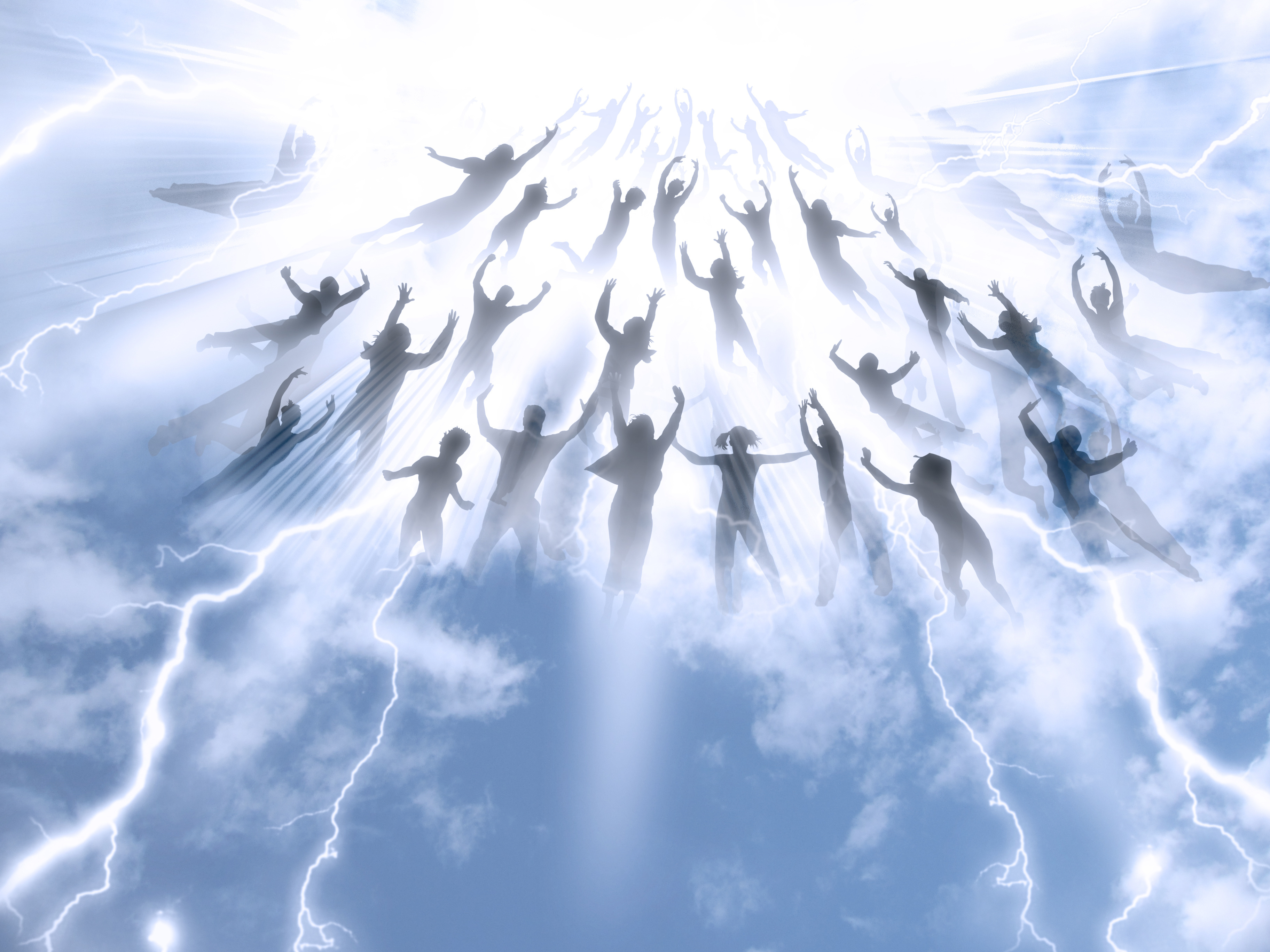
The Rapture

1 Thessalonians 4:17, Be caught up. Do I believe in the rapture? Yes, but not as many in the Christian church teach it. For them, the resurrection of the righteous dead occurs before the great tribulation — called the pre-trib rapture.

As you probably know, the word “rapture” is from a Latin word for being “caught up” (or resurrected) as found in 1 Thess 4:17 — “Then we which are alive and remain shall be caught up together with them in the clouds to meet the Lord in the air …” Therefore, a better question to ask would be, do I believe in the resurrection of the dead? Most emphatically I do. The only question is when do I believe the resurrection will occur? As far as I can tell, there are only three obvious answers to that question: before the great tribulation (as much of the Christian church teaches), after the great tribulation, but before the wrath of Elohim is poured out on the earth (what I believe) or after the great tribulation and the wrath (which is what some believe, including some Messianics), which is called the “post trib” position.

The word “caught up” is the Greek word harpazo (Strong’s 726/TDNT 1:472) which is Continue reading


Are you feeding on fresh or stale manna?

Moldy bread. Isolated

Deuteronomy 11:13, If you will hearken. In the Hebrew, this phrase literally reads, “If hearken, you will hearken….” Rashi interprets the double usage of this verb to mean, “If [you] listen to the old, you will listen to the new” meaning that if one listens to what one has already learned by taking care to review and understand it, one will gain new insights or fresh insights into the Torah (The ArtScroll Sapirstein Edition Rashi—Devarim, p. 110; The ArtScroll Stone Edition Chumash, p. 995).

What does this teach us about studying YHVH’s Word consistently and regularly? YHVH gave the Israelites fresh (not stale) manna every day and watered the land of Israel with the early and latter rains so that it would be fruitful without the need of man-made irrigation systems.

Manna and rain both came from heaven and are used as figures of speech Hebraically to represent Torah-truth. Is your life being renewed regularly with fresh revelation and insights into the Word of YHVH, into his very heart and character? Does this not refresh, nourish and sustain the ground of your life so that it yields an abundant spiritual crop of joy, shalom, intimacy with the Father and anointing? Is your life a place of fresh manna and constant rain, or a place of stale bread and drought? If so, what changes do you need to make in your life to change this situation?


An Amazing End Times Prophecy in Hosea 5 and 6

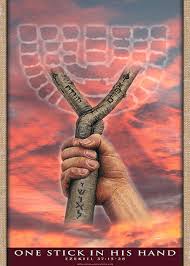
Two Sticks Prophecy

Hosea 5:15–6:3, I will go and return to my place. This passage is a clear prophecy concerning the resurrection of the righteous dead of which Messiah Yeshua is the first to raise.

Verse two contains a Hebrew parallelism, which is a Hebraic literary device where the same thought is expressed differently back-to-back. The word revive is the Hebrew word chayah and is the basic Hebrew root verb meaning “to live or to have life.” The word raise up is the Hebrew word quwm meaning “to rise, arise, stand, stand up.” According to The TWOT, the basic meaning of this word “denotes rising up from a prostrate position (e.g. Josh 3:16).”

YHVH is speaking here in the broader context of this passage concerning his Messianic role as the lion of Judah (Rev 5:5). After presenting himself as such to both houses of Israel (Ephraim [i.e., the Christians] and Judah [i.e., the Jews]) at his first coming, verse 14 states that Messiah would “go away … and none shall rescue him.”

Then in verse 15 we read that, “I [Messiah speaking] will go and return to my place till they [Ephraim/the Christians and Judah/the non-believing Jews] acknowledge their offense and seek my face ….” (This refers to Yeshua’s absence from the earth between his first and second comings.) What is their offense? Isaiah 8:14 states that that which offends both houses of Israel is “the stone of stumbling and … rock of offence.” Who is this Rock of offense? Verses 8 and 10b identifies it as Immanuel (El with us), which is one of the Continue reading


Allusions to Torah-Obedience in the Book of First Thessalonians

Torah Scroll  21075453

The following exercise can be applied to all of the New Testament books including all the other books written by Paul.

Connecting the Gospel to Its Pro-Torah Hebrew Roots

When I was taking a college level biblical Greek class a few years back, the Christian professor and I had a few discussions about the Torah. It was his belief that the epistles in the New Testament contained very few references to the Torah. In his mind, therefore, the Torah wasn’t a very prominent idea in the minds of the apostolic writers. I tried to enlighten him otherwise.

While the epistles might not contain very many outright references to the Torah — especially direct commands to be obedient to the Torah’s standards of righteousness, the apostolic writers weave the fundamental concepts of the Torah through their writings and make countless allusions to the Torah as we shall see in the study below. The Torah was just part of their spiritual and social fabric and background. It was their spiritual foundation, and to them Yeshua the Jewish, Torah-obedient Messiah, who was the Living Word of Elohim incarnate, was simply an extensions or expression of this basic idea of Torah truth and righteousness, and whose example they expected the saints to follow as his disciples.

1 Thess 1:2, Labor of love. (Hard work, intense labor or toil of charitable/agape love, benevolence, good will). Biblically speaking, is love merely an emotion, or is it something more? The Bible presents love as an action. Yeshua said, “If you love me, keep my commandments” (John 14:15). This action involves obedience to YHVH’s Torah-commandments. Elsewhere, Yeshua sums up the Torah when he quotes the biblical shema, which states that the duty of man is to love YHVH with all one’s heart, soul, mind and strength and one’s neighbor as oneself (Mark 12:28–31 cp. Deut 6:4 and Lev 19:18). The shema is a summation of the ten commandments the first four of which show us how to love YHVH, while the last six how to love our neighbor. These ten statements form the foundation or cornerstone of the entire Torah, which expand out of them.

1 Thess 1:9, Turn from idols … serve the living Elohim. The Tanakh (Old Testament) views idolatry as anything that takes one away from worshiping and serving YHVH by obeying his Torah commandments. The biblical prophets were continually warning the Continue reading


Yehovah sometimes chooses the lesser of two evils…Hmm!?!

La decisin correcta

This morning I was reading the Torah portion for the day and I came across this:

“Do not think in your heart, after Yehovah your Elohim has cast them out before you, saying, ‘Because of my righteousness Yehovah has brought me in to possess this land’; but it is because of the wickedness of these nations that Yehovah is driving them out from before you. It is not because of your righteousness or the uprightness of your heart that you go in to possess their land, but because of the wickedness of these nations that Yehovah your Elohim drives them out from before you, and that He may fulfill the word which Yehovah swore to your fathers, to Abraham, Isaac, and Jacob.” (Deut 9:4–5)

YHVH chose the lesser of two evils when he chose the Israelites. His choice was between the more sinful pagans and the less sinful Israelites.

Let’s be real here. He made the same choice when he chose you and me!

Yes I get the fact that he chose the Israelites ultimately because he was bound to his covenant with Abraham, but let’s not forget one thing. After the golden calf incident, YHVH threatened to destroy all the Israelites and fulfill his promises through Moses’ seed. So he could have circumvented the majority of the sinful Israelites and still fulfilled his promises to Abraham through Moses’ offspring.

Bottom line. But for the grace of Elohim none of us stand a chance. When he extended a call to you and me to receive salvation, he made a choice between the lesser of two evils!

Now let’s kick this ball into a different arena.

When voting for elected officials, we will never have the perfect candidate. It will always be a vote for the lesser of evils until King Yesahu returns to this earth and sets up his world-ruling government at which time voting won’t even be an option. His government will be forcibly imposed on humanity and enforced with a rod of iron! But you hopefully get my point.

For this reason, I have no choice at this point but to vote for Donald Trump. If YHVH sometimes has to make the choice between the lesser of two evils, who am I to say that I’m better than the Creator by refusing to vote, while waiting for the perfect candidate? I wasn’t the perfect candidate, yet he “voted” for me?

(I can’t wait to see the comments that come about this post. There will probably be some doozies!)