The prophetic-gospel implication of Isaac’s “sacrifice”

akeidah-6-21408719

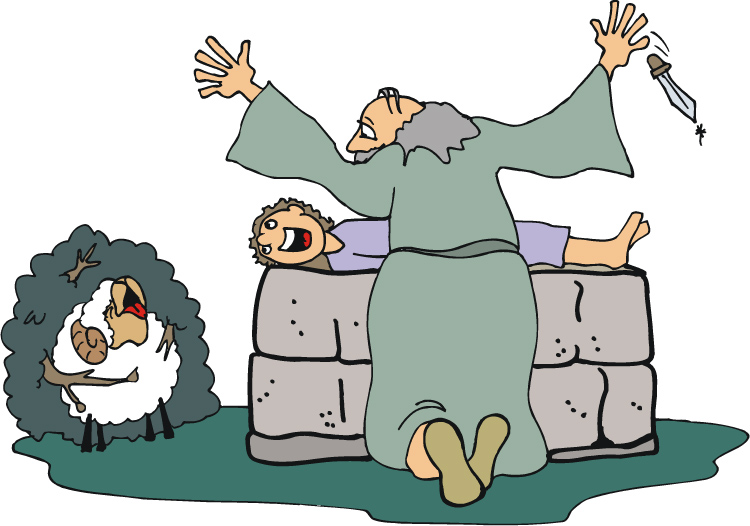
Genesis 22:13, A ram caught in a thicket by his horns. See the study below on the prophetic implications of the two horns of the ram and on how the binding of Isaac (called in Hebrew, the Akeidah) pointed prophetically to Yeshua.

The “Sacrifice” of Isaac at Mount Moriah. 

YHVH credited to Abraham’s spiritual account his willingness to sacrifice Isaac as if he had actually done so. In fact, there is an ancient rabbinical tradition that states Isaac actually died and was resurrected as the midrash comments on this passage: “As the knife reached his throat, Isaac’s soul flew away and left [e.g., he died]. But when a voice went forth from between the angels saying, ‘Do not stretch out your hand against the lad’ (Genesis 22:12), his soul returned to his body” (Pirkei DeRabbi Eliezer 31 as quoted in The ArtScroll Davis Edition Baal HaTurim Chumash Bamidbar, p. 1417) (bracketed comments are in the original).

The Jewish sages also note that Scripture states that both Abraham and Isaac ascended the mountain, but that it is recorded that only Abraham descended (22:19). Isaac’s absence from the Genesis narrative until many years latter (Gen 24:62) has given rise to much speculation on the part of the sages as to Isaac’s whereabouts in the interim (The ArtScroll Bereishis Vol. 1a, pp. 812–813).

Regardless of the rabbinic interpretations, does Scripture leave Isaac out of the narrative as if to highlight his absence, and to give the impression (albeit a prophetic allegorical one) that he was actually sacrificed? After all, what was the ram caught in the thorn bush thicket (wearing a crown of thorns) by its two horns all about? That ram was a substitute sacrifice picturing Yeshua the Messiah dying on the cross while wearing a crown of Continue reading


 

Why did Yeshua allow Moses to permit divorce?

Marriage - Divorce signpost in a beach background

In the study below, we will discuss why Moses added the divorce clause to the Torah, and why Yeshua permitted it and what he had to say about it. (For the record, I am not divorced and thus have no dog in the fight. I am simply analyzing what the Bible has to say to say on the subject and attempting to accurately report my findings. — Natan)

Matthew 19:8, Moses permitted. From Yeshua’s statement here, it would seem that Elohim gave Moses certain freedom and latitude to redefine certain Torah principles to accommodate the needs and realities of fallen and sinful man.

In the case of marriage, even though it was Elohim’s highest ideal for a man to leave his parents and cleave to one wife for the rest of his life or until she died (Gen 2:24), the reality is that man too often is incapable of living up to the Creator’s highest ideal because of the hardness or sinfulness of his heart. It is important to note that YHVH gave the marriage command before the fall of man had occurred (Gen 2:24 cp. Gen 3:1–6). In light of the fact of the fall of man when sin entered the world thus negatively affecting the marriage relationship, YHVH allowed Moses to permit divorce under certain circumstances (see Deut 24:1–4).

Had Moses not made allowances for the sinfulness and hardness of the human heart and forbad all divorce in Israel in an effort to strictly adhere to YHVH’s highest letter-of-the-law ideal for marriage, then the societal results might have been unimaginably chaotic. For example, people would Continue reading


What good thing must you do?

Money rain

Matthew 19:16, What good thing. Yeshua’s answer to the rich young ruler when he asks him what he must do to have eternal life might, in a cursory reading, appear that Yeshua is promoting a works based salvation. However this is not the case. Yeshua cleverly shows the young man that he is incapable of obtaining eternal life through good works, for man isn’t capable of perfectly following the Torah. In the case of the young man, he thought himself to be perfectly righteous, when in reality, Yeshua showed him that he was covetous, and therefore still an unrighteous sinner thus disqualifying himself from reward of eternal life. Yeshua, on the contrary, instead of promoting a works-based salvation model, instructs the young man to deal with his sin by selling his possessions and giving the proceeds to the poor, and then becoming a follower of him. The lesson here is that salvation and eternal life can come only as we turn from our sin and become a follower of Yeshua.

What Yeshua is really saying when he answers the young man’s question in verse 21 is this: “If you want to be perfect [Gr. teleios meaning “brought to its end, finished; wanting nothing necessary to completeness”],” turn from sin by obeying the Torah more completely, but also follow the Messiah by becoming his disciple. Remember, to hear and to obey (Heb. shema) the Messiah was a command of the Torah as well (Deut 18:15), and to not believe in him is sin (John 16:9 cp. 3:18). So according to the Bible, to be spiritually perfect or complete one must, as Yeshua said, love him by keeping his (Torah) commandments (John 14:15). It is the Torah that shows us how to love Elohim (and our fellow man as well).

Yeshua makes a similar point in his exchange with a scribe in Mark 12:28–34. While extolling the virtues of Torah-obedience, and commending the scribe for his understanding of the deeper heart issues of Torah-obedience, Yeshua makes an interesting concluding statement. He tells the scribe, “You are not far from the kingdom of Elohim (v. 34) as if to tell him, “You’re on the right spiritual track with regard to your Torah-obedience, and you’re heading for the kingdom, but that alone won’t get you into the kingdom. You must also become a disciple of Yeshua.


Yeshua, the Book of Enoch and the Nephilim

statue romaine dtoure

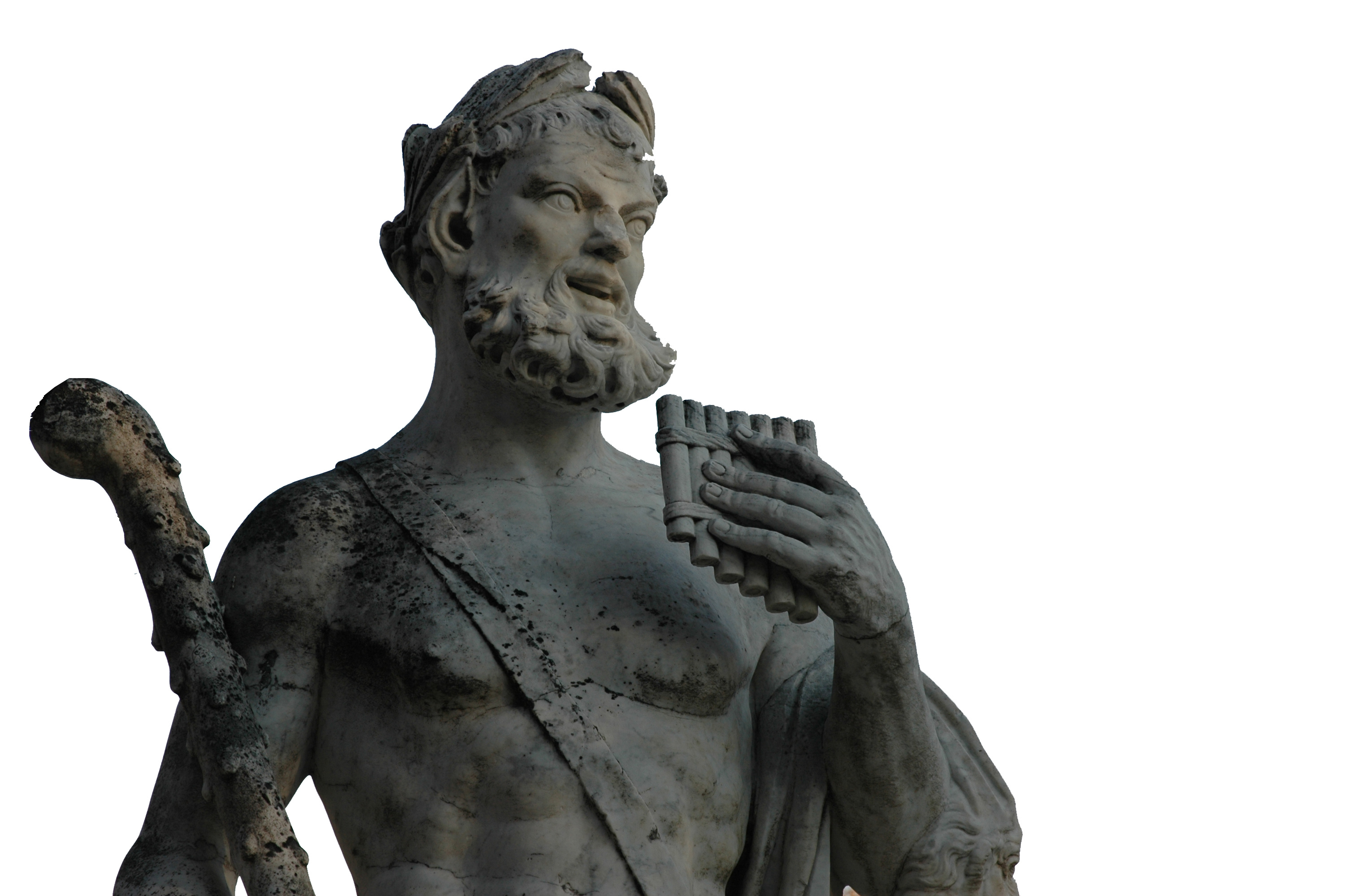
Matthew 16:13, Caesarea Philippi. This Roman city (also known as Caesarea Paneas) was located at the southwest base of Mount Hermon. It was here that the ancients built temples to various deities. The heathens typically built altars and temples on high places, which they considered to be gateways or portals to heaven, and Mount Hermon was the highest high place in the entire region with an elevation of 9,232 feet above sea level. At this place, the Greeks worshipped their god Pan. In the same area at the base of Hermon, the Canaanites worshipped Baalgad (Josh 13:5;  cp. Josh 11:17).

It is interesting to note that according to the modern Book of Enoch, which touts to be the one referred to in the Bible, purportedly 200 fallen angels descended upon Mount Hermon and there made a pact to seduce the beautiful daughters of men the result of which, allegedly, were the nephilim or giants (Enoch 7:1–11), thus corrupting the genetics of the human race. These hybrids  were destroyed in flood. These demons apparently taught their offspring sorcery and incantations (v. 10).

It is at Caesarea Philippi that Yeshua proclaimed his messiahship, as a prophetic warfare declaration or form of spiritual warfare against Satan and his demons at the very spot the heathen demon worshippers venerated as their highest high place.

Moreover, some biblical scholars believe that Yeshua’s transfiguration occurred on Mount Hermon, since the account of this event occurs immediately afterwards in Matt 17.

The tribe of Dan settled at the foot of Mount Hermon in the area of Tel Dan where they erected a pagan temple dedicated to golden calf worship. Jacob in his final prophecy to his sons connects Dan to a serpent. Additionally, Moses prophesies that Dan would be a lions whelp or offspring who would inhabit Bashan, which is an area to Mount Hermon in the north (Deut 33:22). Some Bible researchers speculate that when these two prophecies are combined, it is revealed that Dan will be the serpents seed and from him will come the false, demon-inspired antichrist who claims to be the lion of Judah. Perhaps this is why the tribe of Dan isn’t mentioned in Rev 7, since this tribe as defected to Satan.


What Really Was the Sin of Sodom & How It Relates to Us

sodom

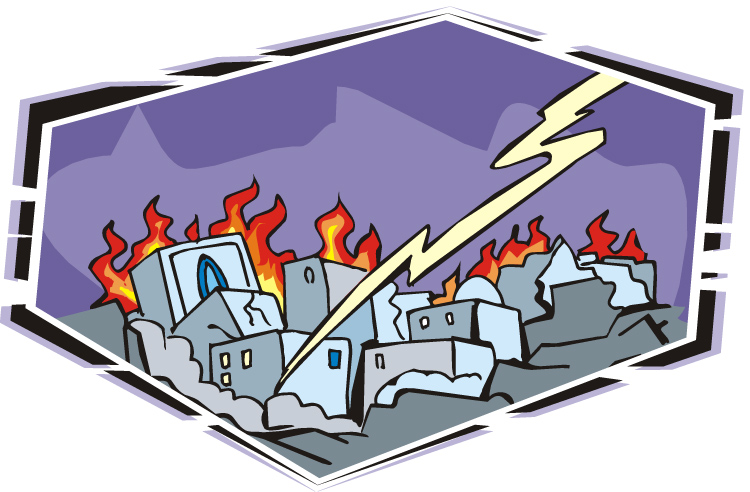
Genesis 18:20, Their sin [Sodom and Gomorrah’s] is very grievous. What was the sin of Sodom? Genesis 19:5 gives us the answer. The men of Sodom were so morally perverted that Paul says of such a human condition in Romans 1:24–29,

Wherefore Elohim also gave them up to uncleanness through the lusts of their own hearts, to dishonor their own bodies between themselves: who changed the truth of Elohim into a lie, and worshipped and served the creature more than the Creator, who is blessed forever. Amen. For this cause Elohim gave them up unto vile affections: for even their women did change the natural use into that which is against nature, and likewise also the men, leaving the natural use of the woman, burned in their lust one toward another; men with men working that which is unseemly, and receiving in themselves that recompense of their error which was meet. And even as they did not like to retain Elohim in their knowledge, Elohim gave them over to a reprobate mind, to do those things which are not convenient; being filled with all unrighteousness, fornication, wickedness, covetousness …

Ezekiel 16:49–50 speaks of the symptoms of a society that has given itself over to a spirit of sodomy (homosexuality) because it has become abundantly wealthy, proud and obsessed with idleness (entertainment and pleasure). As a result it has become inwardly focused and self-absorbed, which leads to an obsession with self-gratification instead of helping the poor and needy.

It shouldn’t be hard to see parallels between Sodom’s society before it was judged and the moral and spiritual decline we see occurring in America and the rest of the western world. America, for example, has become obsessed with the concept of pride—especially since September 11, 2001. Notice, for example, the many car bumper stickers expressing the idea of national “pride” since 9/11?

Not only that, our culture has also become obsessed with promoting “gay” (homosexual or sodomite) rights and agendas calling it “gay pride.” It’s Sodom all over again!


Another Appearance of the Pre-Incarnate Yeshua in the Torah

abrahamsarah-laughing

YHVH Appears to Abraham and Sarah and Promises Them a Son

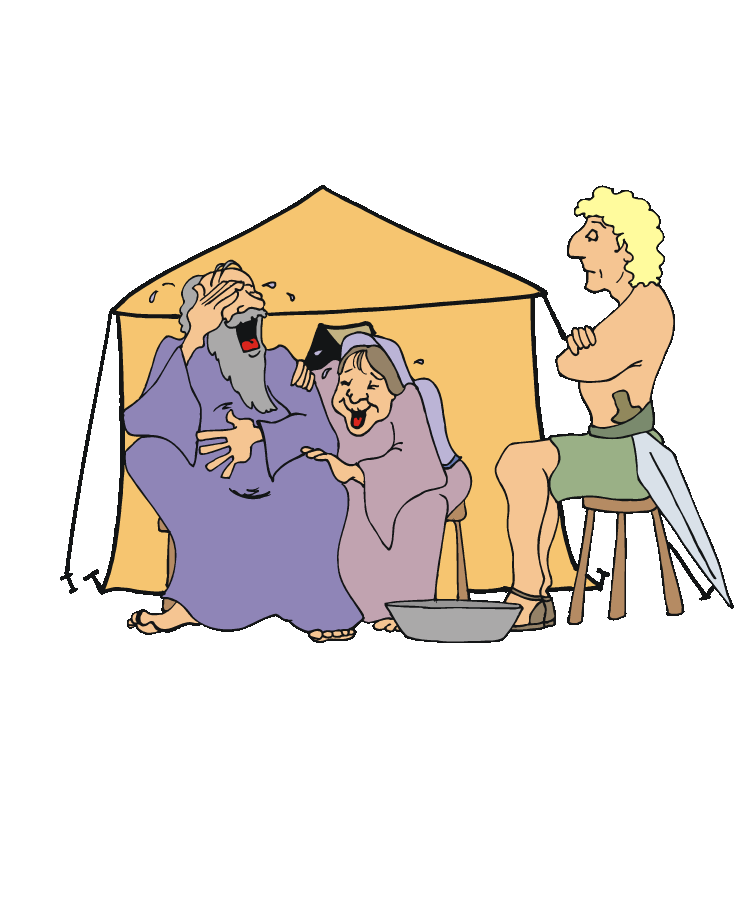
1 And YHVH appeared [ra’ah, which is the common Hebrew word meaning “see, look, behold, show, appear, observe, have vision, present oneself, be seen”] unto [Abraham] in the plains of Mamre: and he sat in the tent door in the heat of the day. 8 And [Abraham] took butter, and milk, and the calf which he had dressed, and set it before them; and he stood by them under the tree, and they [i.e. YHVH and the two other malakim/heavenly messengers] did eat. 13 And YHVH said unto Abraham, Wherefore did Sarah laugh, saying, Shall I of a surety bear a child, which am old? 14 Is any thing too hard for YHVH? At the time appointed I will return unto thee, according to the time of life, and Sarah shall have a son. 15 Then Sarah denied, saying, I laughed not; for she was afraid. And he said, Nay; but thou didst laugh. 33 And YHVH went his way, as soon as he had left communing [rcs, the common Hebrew word meaning speak, say, talk, promise, tell, pronounce, utter, command] with Abraham: and Abraham returned unto his place.

In this passage of Scripture, we find YHVH appearing in visible form to Abraham (verse 1), most likely eating a meal with Abraham (verse 8), conversing with Abraham and Sarah (verse 13–14), and having an ongoing discussion with Abraham over the fate of Sodom and Gomorrah (verse 16ff), and finally leaving Abraham after this lengthy time of communing or conversing with Abraham (verse 33).

The literal or peshat meaning of this scripture passage should be very clear. There are no hidden meanings, no metaphors or symbolisms. There is no allegorical language. It is simple historical narrative of the events that occurred. The writer presents it in a literal, matter-of-fact manner. Nothing could be more straight forward. YHVH appears to Abraham in some “diminished,” less potent form that humans can physically endure, he interacts at length with them through the partaking of a meal and conversation. But to Continue reading


New Video: Gen 18:1– 22:24 Parashat Vayera (A Gospel-Oriented Torah Study)


For a free, printable adult and youth Torah study guide on this Torah portion (parashah), please go to http://www.hoshanarabbah.org/parshiot.html