Our new annual Scripture Reading Schedule for 2019-2020 with daily readings is available to download and print. If you are still working through 2018-2019’s Scripture Reading Schedule, the link will still be available on the right sidebar under “Helpful Links”. If you are using a mobile device or tablet, the link may be below, meaning you’ll need to scroll down instead.
Most of this week’s blog discussion points will be on these passages. If you have general comments or questions on the weekly Scripture readings not addressed in a blog post, here’s a place for you to post those. Just use the “leave a reply” link or the “share your thoughts” box below.
The full “Read Through The Scriptures In A Year” schedule, broken down by each day, can be found on the right sidebar under “Helpful Links.” There are 4 sections of scripture to read each day: one each from the Torah, the Prophets, the Writings, and from the Testimony of Yeshua. Each week, the Torah and haftarah readings will follow the traditional one-year reading cycle.
Weekly Blog Scripture Readings for 1/19 through 1/25/2020.
Pornography is unredeeming filth. There is nothing positive about it ever, especially for young children.
Pornography is highly addictive, since it stimulates the pleasure center of brain like a drug. The desire for more pornography, like cocaine, for example, never gets satisfied. It leaves the brain craving for more and more, for an increasingly higher “high.” Therefore, pornography leads one into a never-ending downward spiral of addictions; it’s a deep, dark hole with no bottom.
Pornography destroys children, men and women and then marriages and families, which are the bedrock of society. When this foundation is destroyed, the whole society collapses.
Pornography can lead to all sorts of sexual perversions and deviant behaviors such as pedophilia, bestiality, necrophilia, homosexuality, masochism, incest, sadism and to sexual crimes such as rape, sex abuse and other criminality.
Pornography promotes lust, which is a sin. According to biblical definition, lust is the strong desire for something that’s illicit or illegal or, in other words, for someone or something that isn’t yours to have or doesn’t belong to you.
Pornography undermines the dignity of both men and women. It downgrades the value of sex by turning women and men into sex objects and the sex act because merely about sensual and selfish gratification. Pornography profanes the holy and divine purpose of the physical union between a man and his wife for the purpose of intimacy and to propagate the human race for the purpose of producing potential sons and daughter for the heavenly kingdom of Elohim (God).
The birth rate in western nations is going down. This is due to many factors, but pornography is one of them.
Pornography can cause sexual confusion, gender confusion, sexual dysfunction, sexual frustration, false sexual expectations.
Due to chemical reactions that occur in the human brain while viewing pornography, these images are powerfully stamped into a person’s brain forever. They are difficult if not impossible to erase.
Pornography is a form of prostitution.
Pornography feeds the sex trafficking industry. This is a form of slavery.
Pornography destroys children. Thanks to the smart phone, many young children are exposed to this evil. It adversely affects their impressionable and developing brain. Evil thoughts and ideas are put into their brains. Morals are eroded and often children will act out what they see, and such things will adversely affect them and those around them for the rest of their lives and for generations to come.
Pornography often promotes dissatisfaction and sexual dysfunction in marriage, since it raises one’s sexual expectations in marriage to unrealistic levels.
When young boys are exposed to pornography, it hampers if not destroys their ability to relate to girls, since they compare themselves to the male porn stars they see and feel that somehow they’ll fall short in looks and acts. Moreover, they’re scared of girls, who don’t look as good as the fake female porn stars they see on film. Likewise, young girls who are exposed to pornography compare themselves to the made up female porn stars they see, and feel that they don’t compare favorably in looks, so this affects their ability to relate to boys.
When boys view pornographic image on a computer screen and react sexually to that, their brain is conditioned to react to these fake, idealized virtual reality image. Their first sexual encounter with a women, in effect, is through a screen. Then when they’re with a real person, and when that person doesn’t live up to the idealized images and expectations of the screen, they’re unable to perform sexually.
For those of you struggling with addiction to pornography, offer up to YHVH Elohim your sincere and deep heartfelt repentance of this sin, and then ask Yeshua the Messiah to take away from you the desire for it, and he will. Then make a covenant with your heart and eyes that you will no longer view it. Them make sure that this stuff doesn’t come over your screens by activating all the security controls and filters possible. (I use electronics multiple times every day, and pornography doesn’t come across my screen, thus eliminating the possibility for temptation.) Then be accountable to someone else who will check in with you periodically and pray with you to insure that you stay clean and pure.
May YHVH Elohim strengthen and bless you as you walk down his path of holiness and righteousness!
Luke 7:36–37, The Pharisees…a woman…who was a sinner. The name Pharisee itself tells much about this sect or denomination within the first-century religious Jewish landscape. It derives from the Hebrew word perushim meaning “separatist,” and was born out of the fact that Pharisees didn’t associate with Am Ha-Eretz or the common people (Yeshua: a Guide to the Real Jesus and the Original Church, p. 86, by Ron Mosely), who in their view who were impure by the standards of the Levitical law (The Jewish Background of the New Testament, p. 203, by J. Julius Scott Jr.), and their high standards of holiness (Mosely, p 86).
Acting like an elite religious fraternity (The Sketches of Jewish Life, p. 208, by Alfred Edersheim), the Pharisees were known for their strict observance of the Torah or the law of Moses, as well numerous additional laws or “traditions of the elders” that were added to the Torah along the way (From the Maccabeees to the Mishnah, p. 149, by Shaye J. D. Cohen; Scott, pp, 206–207; Edersheim, p. 217).
Though this sect probably numbered only 6,000 at the time of Yeshua (Cohen, p. 146), they wielded a great deal of power and influence in Jewish society, since they were they viewed as the most accurate interpreters of the Torah (Scott, p. 203; Mosely, p. 92), and they were the leaders and teachers of the masses in the local synagogues (Cohen, pp. 147, 148).
For the Pharisee, personal holiness was a badge of honor. To remain a member of this elite sect, one was required to maintain a high standard of holiness relating to tithing, piety, cleanliness and ritual purity, or one would face demotion within the social status of this community, or worse yet, face excommunication and shunning (Mosely, p. 86).
It can be safe to say that the Pharisaic religious system promoted an elitist and holier-than-thou religious demeanor among many of its members who hyper-focused on legalism and religious form and trappings. The result was “a system of pure externalism, which often contravened the spirit of those very ordinances, the letter of which was slavishly worshipped” resulting in hypocrisy (Edersheim, p. 217).
For these reasons, this is maybe why the woman in Luke 7:37 was labeled as a sinner. It wasn’t that she was a sinner any more than anyone else, but that she was not part of any recognized religious sect that labeled her as being righteous as a opposed to being a sinner. Because she was probably outside of the accepted religious system of her day, she was automatically given the label of a sinner. In our day, this would be like a church-going Christian viewing a non-church going person as a heathen.
The problem is this. Can we know for certain the condition of a person’s heart and their relationship with the Almighty simply because of their external religious involvements? This is what Yeshua is addressing in this passage—the condition of the heart. To Yeshua, the woman who was labeled as a sinner was much more righteous, in a certain sense, than those of the most preeminent religious club of the day. Look at her humble and repentant demeanor at the feet of Yeshua!
Yeshua was known for shining the precise laser-light of truth on a situation and then turning that situation on its head. The end result was that those who thought they were in first place spiritually, were now in last place, and those who were in last place were first. This gives added meaning to Yeshua’s words, “In the regeneration, when the Son of Man sits on the throne of his glory…many who are first will be last, and the last first” (Matt 19:28–30).
When confronting the religious leaders of his day, Yeshua was skilled at upending spiritual apple carts, slaughtering sacred cows, demolishing the wisdom of the world and revealing it for the lie that it was. We are now Yeshua’s representatives on earth carrying out his same work and should be doing the same. This is because truth doesn’t change over the ages and YHVH is still on his throne regardless of conventional wisdom, popular opinion to the contrary or the labels or categories to which some humans ascribe others who are not of their stripe or party.
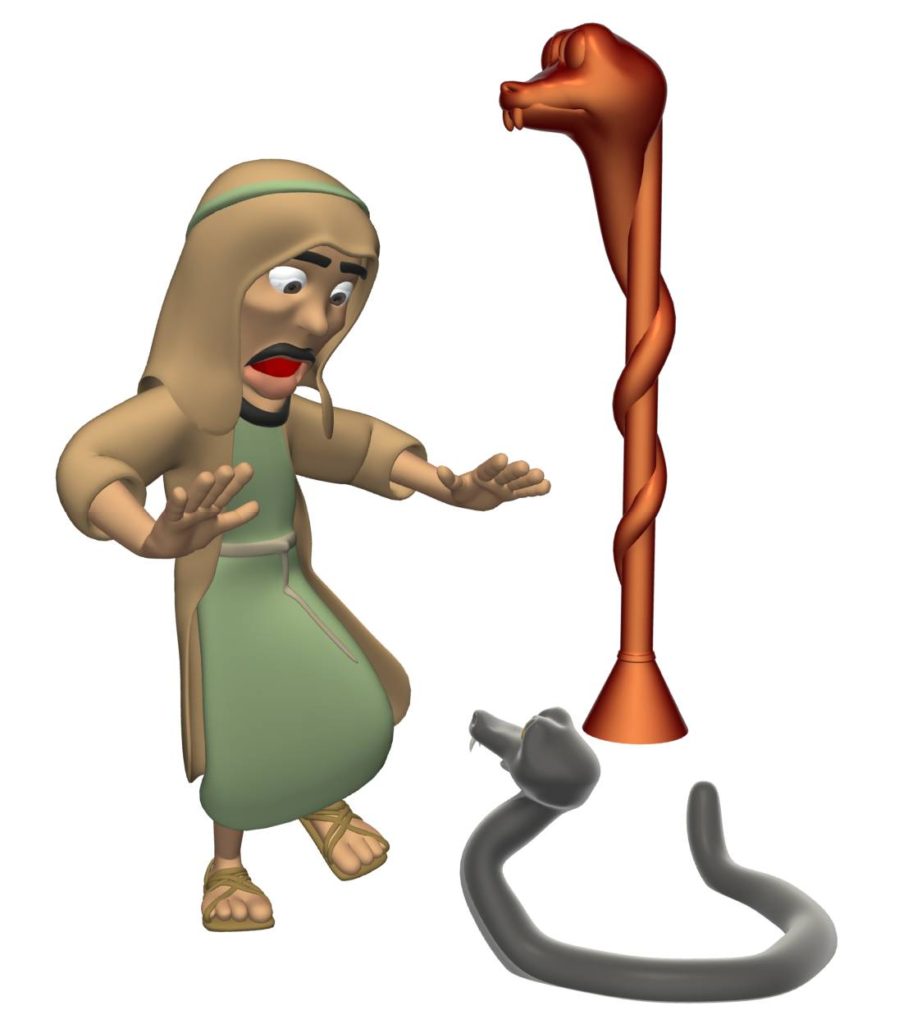
Exodus 4:3,Serpent. Serpents and staffs were powerful symbols and metaphors for spiritual realities. What lessons can we learn from Moses’ power encounter with Pharaoh’s magicians?
A serpent is often a biblical metaphor for Satan or demonic powers (e.g. Gen 3:1; Luke 10:19 cp. 9:1 and Mark 16:18; Rev 12:9; 20:2). Pharaoh as ruler over Egypt (a metaphor for this world) was a type of Satan who is the ruler of this world. A rod or a staff can be a biblical metaphor for power, authority, rulership or judgment (Gen 38:18; Exod 4:17, 20; Ps 2:9; Rev 19:15).
In this verse, it seems evident that YHVH was giving Moses authority over the powers of Satan and his forces. When Moses cast down his rod, it became a serpent, and Moses was immediately able to assume control over the serpent at will for the purposes of advancing YHVH’s spiritual kingdom. This seems to have been YHVH’s way of showing Moses that he was giving him supernatural authority over Pharaoh (Satan) in fulfilling his divine commission to liberate the children of Israel.
The staff changing into a serpent reminds us of the authority Yeshua gave his disciples to cast out demons and to heal diseases (Luke 9:1; 10:19; Mark 16:15–18).
Furthermore, YHVH instructed Moses to construct a bronze serpent and place it on a pole, which when the Israelites looked on it, they were healed of the bites of the fiery serpents (Num 21:8). The serpent represents sin, since it is Satan the serpent who introduced sin to man in the Garden of Eden, which brought upon man the curse of death. Yeshua took that curse on himself when he was lifted up on the cross of judgment as Moses lifted up the bronze serpent in the wilderness (John 3:14). Yeshua defeated Satan the serpent at the cross (Col 2:15; Gen 3:15; Rom 16:20), even as Moses’ serpent defeated the serpents of the satanic Pharaoh’s magicians. Likewise, we as the servants of Yeshua the Messiah have the same authority over demonic powers (Luke 9:1; 10:19; Mark 16:15–18).
From your profession to ? in the kingdom of Elohim.
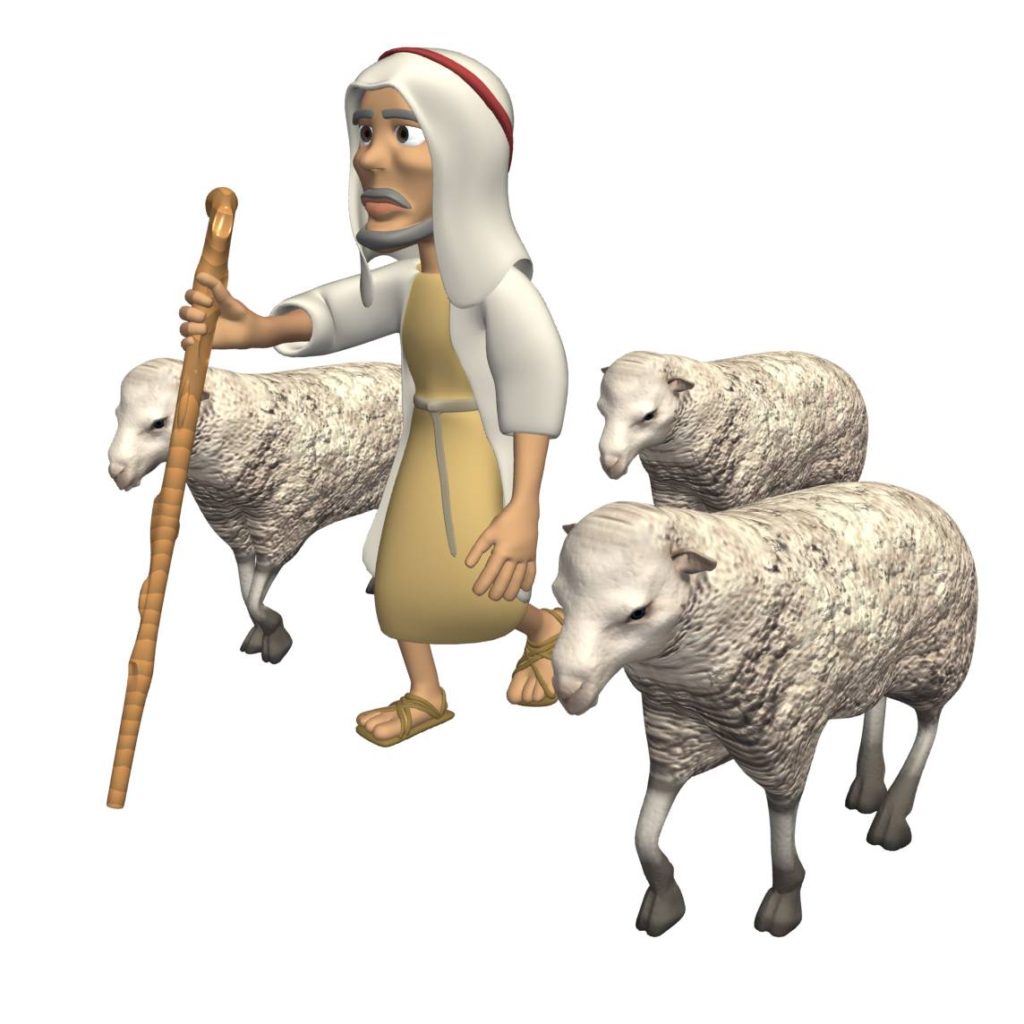
Exodus 3:1,Tending the flock. Moses spent forty years in the wilderness of Midian tending the flocks of Jethro, his father-in-law. After this phase of his life, YHVH called and commissioned Moses to lead the children of Israel out of Egypt and then to shepherd them through the wilderness en route to the Promised Land. This was the very same wilderness where Moses had shepherded Jethro’s sheep for forty years. Moses’ job as a physical shepherd prepared him for the next phase of his life—his ministry as a spiritual shepherd.
Often YHVH chooses individuals as his servants based on their vocational background, which provides training for the spiritual ministry to which he then calls them. For example, David was a shepherd before he became the king over Israel. Amos was a picker of fruit and a shepherd who called the nation of Israel back to become good spiritual fruit and to come back to Elohim, Israel’s true spiritual Shepherd. John the Baptist was a priest calling the Jews to repent of sin and to become a holy nation. Yeshua was a carpenter before he became a builder of the spiritual house of Israel (Heb 3:3–6; 1 Pet 2:5), and several of Yeshua’s disciples were commercial fishermen before becoming “fishers of men” or apostolic evangelists. Paul was a tent maker helping to raise up the fallen tabernacle of David. Sometimes our physical vocations may be an indicator of what our spiritual calling is.
Being a shepherd of physical sheep is a most suitable profession to prepare one for tending YHVH’s spiritual sheep. A shepherd has to put the needs, comfort, care and protection of the sheep above his own needs and wants. This is one reason why the Scriptures refer to those who care for and protect YHVH’s spiritual sheep as shepherds or pastors.
There are many similarities between physical and spiritual shepherds, and physical and spiritual sheep. Unless one has been a physical shepherd and cared for physical sheep or even children, it is unlikely these reasons will be readily apparent. This is why being a parent is a one of the qualifications for being an elder or deacon in the church (1 Tim 3:2, 4, 12; Tit 1:6).
Exodus 2:22,Gershom. A sad piece of Bible trivia is that some of Moses’ descendants didn’t follow in his righteous steps. Gershom’s sons became idol worshipers (Judg 18:30–31). Many of the children of righteous men in the Bible didn’t follow in the footsteps of their fathers in remaining faithful to Elohim.
Examples rotten apple children falling from good fruit trees include Isaac (Esau), Aaron (Nadab and Abihu), Samuel (1 Sam 8:1–3), and David and many of the other righteous kings of Judah.
What’s more, the Bible tells us nothing about the spiritual status of the sons of any of the prophets or apostles. Whether they remained faithful to YHVH or not, we don’t know. If they had been notable in their service to YHVH, it seems that Scripture would have some record of it.
One thing seems certain. Most of the high visibility servants of YHVH were solitary figures. Little if anything is known about their spouses, families or children who seemed to play no major role in the key figure’s ministry activities.
Interestingly, there are also several examples of righteous sons coming from unrighteous fathers and vice versa. This is the case with several of the kings of Judah.
All this is to say that just because a child was raised well in a godly family doesn’t guarantee they will continue to serve Elohim and walk in righteousness. Likewise, just because a child was raised in an ungodly, even wicked family, doesn’t mean they will be wicked and ungodly.
Salvation is an individual matter. YHVH calls and chooses whom he will, and it’s up to the individual to respond to that calling. Some will respond, but most will not. As Yeshua said, many are called, but few are chosen (Matt 22:14), the gate is wide that leads down the wrong path, while the one that leads down the straight path is narrow (Matt 7:13). One thing is certain though. The Father’s arms are open wide for his prodigal children to return to him, and so should ours (Luke 11:15–31).
Luke 6:37–45, Judge not…Give…Can the blind…a good tree. What can we learn from these seemingly unrelated statements of Yeshua? Simply this: When we are a giver, not only does the Divine Giver repay us from his heavenly storehouse, but other people will bless us in our bosom—in the depths of our innermost being. This is the law of reciprocity at work: You reap what you sow.
Now what does Yeshua’s discussion of the blind leading the blind have to do with giving? Let’s connect the dots. When we’re not a giver or being river of life to others, but are stingy, niggardly, selfish and self-absorbed, and it blinds us from seeing our way forward. It also hinders us from helping others to see their way forward. Therefore, the blind are leading the blind.
Our stinginess and lack of generosity brings bad fruits, which then leads us to the next point that Yeshua makes. A tree is known by its fruits. Those who are generous will be like trees that produce good fruit, while those who are stingy and selfish will be like trees that produce bad fruit. We see the law of reciprocity at work here—you reap what you sow.
Yeshua concludes by saying that when one has an evil (or stingy) heart, then the result or fruits of one’s life will be evil, for the words of one’s mouth are the window into the heart or the fruits that reveal the true condition of one’s innermost being.
Now let’s wrap this back around to verse 37 to where Yeshua warns us against judging other. When our heart is evil, our heart will be blinded to our own sinfulness or spiritual blindness, and we will be unable to render accurate or righteous judgment (John 7:24) on any matter. Instead, we will be rendering unrighteous, blind or hypocritical judgment, and, as such, we’ll stand in danger of being judged ourselves.
Luke 6:40, Perfectly/fully trained. Those disciples of Yeshua, the Master-Teacher, who are properly trained, fit out, prepared or equipped can become like Yeshua the Master-Teacher. Those who aren’t properly equipped or trained to teach are like the blind leading the blind and will cause others to fall into a spiritual ditch (Luke 6:39).