An Overview of YHVH’s Marriage to Israel as Fulfilled in the Lives of Redeemed Believers
YHVH married the children of Israel at Mount Sinai.
Read Ezekiel 16:1–14.
Redeemed believers are preparing to be the spiritual bride of Yeshua.
For I am jealous over you with godly jealousy: for I have espoused you to one husband, that I may present you as a chaste virgin to Messiah. (2 Cor 11:2)
Let us be glad and rejoice, and give honour to him: for the marriage of the Lamb is come, and his wife hath made herself ready. And to her was granted that she should be arrayed in fine linen, clean and white: for the fine linen is the righteousness of saints. And he saith unto me, “Write, Blessed are they which are called unto the marriage supper of the Lamb.” And he saith unto me, “These are the true sayings of Elohim.” (Rev 19:7–9)
What are the prophetic implications of and spiritual parallels between YHVH’s first marriage to ancient Israel and YHVH-Yeshua’s upcoming marriage to his bride—the saints who keep his (Torah) commandments and have faith in him (Rev 12:17; 14:12)? In his Parable of the Ten Virgins (Matt 25:1–13), Yeshua likens his bride to the five wise virgins who had oil in their lamps. Oil is a Hebraism for the Spirit of Elohim and the Torah. In other words, the prospective bride of Yeshua will walk in the Spirit of Elohim and the truth of Torah, which Yeshua tells us is a mandatory requirement if one is to have a relationship with YHVH (John 4:23–24; 1 John 2:3–6). We learn from the fact that since five foolish virgins who weren’t allowed into the wedding supper that not all redeemed believers will be the bride of Yeshua. Some believers will be the least in YHVH’s kingdom and some will be the greatest (Matt 5:19). According to Yeshua, how obedient one is to the Torah will determine one’s level of rewards in his eternal kingdom (Matt 5:19).
Between Exodus 19 and 24, we find recorded the steps Israel took to enter into a marital or covenantal agreement with YHVH. In chapter 19, we discover what the pre-marital preparations YHVH required of Israel before he would marry her. In Exodus 20–23 are recorded the terms of the marriage covenant. These were the marriage vows or ketubah to which Israel agreed to live by, and which would determine the nature of Israel’s and YHVH’s spiritual marital relationship. In three places (Exod 19:8; 24:3, 7), Israel agreed to these terms when she said “I do.” Finally, in Exodus 24, we find the covenant or marriage contract committed to writing and ratified or signed.
Now let’s review the specific details of this marriage agreement between YHVH and ancient Israel, and see how this relates to us as redeemed believers. What are the parallels between the events at Mount Sinai,the day of Pentecost in Acts 2 and Yeshua’s second coming?
Exodus 19:1, YHVH gave the Torah to Israel at Mount Sinai most likely at the Feast of Weeks (Shavuot or Pentecost, Lev 23:15–21). On the day of Pentecost, the Spirit of Elohim wrote the Torah on the hearts of redeemed believers in fulfillment of Jeremiah’s prophecy (Jer 31:31–33; Acts 2:37).
Exodus 19:2, Mount Sinai symbolized the exalted Presence and heavenly government of Elohim. Israel camped before the mount positioning themselves to receive a spiritual blessing from YHVH. Likewise, Yeshua instructed his disciples to tarry or position themselves in Jerusalem until they were endued with power from on high (Luke 24:49). Once empowered by the Spirit, they would be able to walk out the Torah and to be a spiritual light to the nations (Acts 1:8).
Exodus 19:3, Moses acted as YHVH’s intermediary to prepare the Israelites for their marriage to him. Malachi prophesied that in the last day YHVH would send his forerunners in the spirit of Elijah to turn the hearts of the children back to the foundations of their faith including the Torah before the return of Yeshua, thus preparing the saints to be the bride of Yeshua (Mal 4:1–6).
Exodus 19:5, YHVH presents the terms of the marriage covenant (or ketubah) to Israel. Those conditions are the Torah. If they chose to accept YHVH’s terms, they would be his treasured possession (or am segulah), and would be above all the people of the earth.
Exodus 19:6, They would become not only his wife, but a kingdom of priests or kings and priests to lead the rest of the world into relationship with YHVH. That will be the role of the resurrected saints or bride of Yeshua during the Millennium according to the Book of Revelation (Rev 1:6; 5:10; 20:6).
Exodus 19:8, The people said “I do” to YHVH. This was the bride of Israel accepting YHVH’s ketubah or Torah and their promise to be faithful to the Torah. On the day of Pentecost, 3000 new believers said “I do” to YHVH-Yeshua when they repented of their sins (i.e. Torahlessness; see 1 John 3:4; Acts 2:38), put their faith in Yeshua the promised Messiah, and were baptized for the remission of sins (Acts 2:41). In so doing, they became the betrothed to Yeshua, and began preparing for marriage.
Exodus 19:9, YHVH indicated that he would came in thick clouds. Yeshua ascended in the clouds and will come back in thick clouds (Acts 1:9–11).
Exodus 19:10, Until the coming of YHVH, Israel was to prepare or sanctify herself by washing her clothes. YHVH is not coming back for a bride with spot and wrinkle (Eph 5:27), but one who will be wearing pure white robes of righteous deeds of the Torah (Rev 19:8 cp. Matt 5:19), and the righteousness of Yeshua (Rom 5:21; 8:1–4, 10; 1 Cor 9:21; Eph 2:6, 10; Gal 2:20; 2 Cor 5:17; Eph 4:22–24; Phil 1:11; Tit 2:14; Heb 13:21).
Exodus 19:11, As the Israelites were given two days to prepare for YHVH’s coming on the third day, so the bride of Yeshua has been given 2000 years to prepare for his second coming, and he will come in the third millennia after Yeshua’s first appearance.
Exodus 19:15, In preparation to meet YHVH, the Israelites were to abstain from all carnal relations with their wives. Similarly, the end times saints must be preparing to wed Yeshua by keeping themselves spiritually pure from any carnal activities that might take their focus and attention off him. Additionally, YHVH is presently calling his bride out of spiritual fornication with the world system or Babylon the Great (Rev 18:4; 2 Cor 6:17).
Exodus 19:16, 19, As there was lightning, thunder, clouds and smoke at YHVH’s Presence when he came down from the mountain, so was a rushing wind and fire on the day of Pentecost, and there will be that and much more at Yeshua’s second coming when he comes down from heaven for his bride (Matt 24:29–30; Rev 11:14–19). As the shofar blast announced YHVH’s arrival at Mount Sinai (Exod 19:16), even so, the shofar will also sound at Yeshua’s second coming for his bride (Matt 24:31; 1 Thess 4:16; 1 Cor 15:51–53; Rev 11:14–19). This speaks prophetically of the shofar blast signaling the new moon of the seventh month on Yom Teruah when the saints or the bride of Yeshua will be resurrected (changed in the moment of a twinkling of an eye at the last or seventh shofar blast) to meet Yeshua in the air (1 Cor 15:51–53; Rev 11:14–19).
Exodus 19:17, Moses brought the people out to meet YHVH. Those coming in the spirit of Elijah are presently preparing the bride of Yeshua to meet him, and then they will present her to Yeshua at his second coming.
Exodus chapters 20–23, The ketubah or marriage contract, which contains the terms of the Mosaic or Sinaitic Covenant (i.e. Israel’s marriage vows, i.e. the Torah), is presented in these chapters.
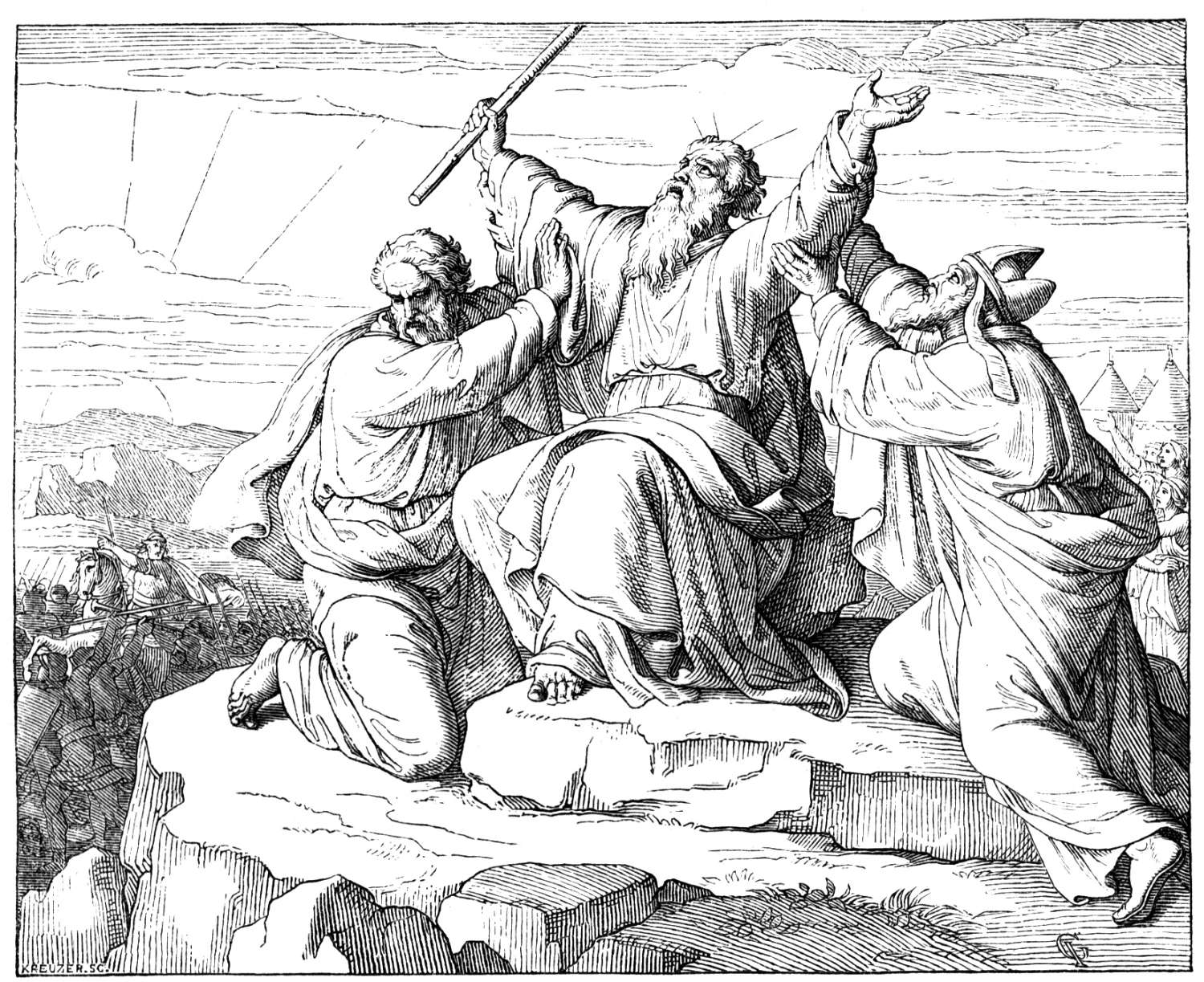
Exodus 24:1, The leaders of Israel (Moses and the 70 elders) and the priests (Aaron and his sons) went up to meet YHVH. This group prophetically represents the wise virgins and saints who keep YHVH’s commandments and have the testimony of Yeshua (Rev 12:17; 14:12), who will be the bride of Yeshua, and who will also rule as kings and priests in Yeshua’s millennial kingdom (Rev 1:6; 5:10; 20:6).
Exodus 24:3, Israel the bride agreed to the terms and conditions of the ketubah (the Torah) that YHVH offered her.
Exodus 24:4, The ketubah was written out. This marriage agreement involved all 12 tribes. YHVH made no agreements with Gentiles. Similarly, the New or Renewed Covenant is made only between YHVH and redeemed Israelites from the houses of Israel and Judah (Heb 8:8). Only redeemed Israelites from the 12 tribes of Israel will be allowed into the New Jerusalem, for that city contains no Gentile gate (Rev 21:12). Strangers and sojourners from the nations (the Gentiles) are welcome to join (or be grafted in to) Israel if they agree to follow YHVH Elohim, keep his Torah-commands, and to put their faith in and become disciples or followers of Yeshua the Redeemer of Israel (Exod 12:49; Rom 11:16–32; Eph 2:11–19).
Exodus 24:5, The firstborn of each family were originally the priests of their homes (before YHVH instituted the Levitical priesthood in Exod 32:26–29). Presently, fathers and husbands are to be the priests over their homes with Yeshua as the Great High Priest over everyone (1 Pet 2:9 cp. Eph 5:23).
Exodus 24:6, Moses sprinkled half the blood of a sacrificed animal on the altar, which prophetically pointed to Yeshua shedding his blood on the cross, so that we might enter into covenantal relationship with YHVH. The wine Yeshua drank at the last supper thus ratifying the New Covenant signified the blood he was about to shed at the cross (Matt 26:26–28). When we as redeemed believers drink the third cup (i.e. communion) at the Passover seder and eat of the unleavened bread of communion, we are signifying our marital commitment to YHVH-Yeshua. We are accepting the terms or ketubah of the covenant—the New Covenant, which includes the Torah being written on our hearts by the Spirit of Elohim (Jer 33:31–33; Heb 8:8–10).
Exodus 24:7, Israel agreed to the terms of the ketubah the third time. As Israel pledged loyalty and obedience to YHVH, even so, we also must confess with our mouths and believe in our hearts that Yeshua was raised from the dead, and then walk in righteousness, which is obedience to the Torah (Rom 10:4–13; Ps 119:172).
Exodus 24:8, Moses sprinkled the blood of an innocent animal over the people, which is a prophetic picture of Yeshua shedding his blood at the cross for the redemption of sinners from the penalty of sin, so that they might enter in a sinless state into a covenantal relationship with YHVH (Heb 9:18–22).
Exodus 24:9–12, Only after the blood of the sacrificed animal was shed and sprinkled over the people were the elders permitted access into the Presence of Elohim. Only through the shed blood of Yeshua and through the veil of his flesh are we able to come boldly to Elohim’s throne of grace (Heb 10:19–20; 4:16).
Exodus 24:11, The elders eating and drinking in the Presence of Elohim is a prophetic picture of the marriage supper of the Lamb (Rev 19:9).
Exodus 24:12, The Torah-law or ketubah was written on tablets of stone then. Now it is written on the tablets of the hearts of redeemed believers by the Spirit of Elohim (Jer 31:31–33; Heb 8:8–10).
Exodus chapters 25–31, Once married, YHVH instructed the Israelites to build a house for the newly married couple where they could live together in a peaceful marital relationship. The saints are now the temple of the Set-Apart Spirit, and YHVH wants to dwell in the set-apart temple of our hearts and minds. We stay set-apart by following YHVH’s Torah, by loving, obeying and abiding in Yeshua through the empowerment of his Spirit of Elohim in our heart, thoughts and actions. If we do these things, we will be the chaste, virgin and righteous bride ready to meet Yeshua at his second coming.