Category Archives: Scripture
Did Yeshua Eat Leavened Bread During the Passover/Last Supper Communion Service?
There has been a perennial question among many Christians as to whether Yeshua ate leavened or unleavened bread during his last supper Passover communion service. This is because of the Greek words for bread that appear in the Greek NT manuscripts. The excerpt below answering this question is from a larger article I wrote years ago entitled “Passover…When Do We Celebrate It? At the Beginning OR the End of Aviv 14?” available at https://www.hoshanarabbah.org/pdfs/psvr_dy.pdf .
I take the position that Yeshua didn’t eat leavened bread during communion, since it would have violated biblical (Tanakh or OT) types and shadows pointing to Yeshua’s sinlessness. I cannot and will not eat leavened bread in communion because I don’t want in any way to imply or even remotely suggest that Yeshua was a sinner. In this excerpt from my article, I explain the reasons for my position.
Unleavened Bread Versus Leavened Bread
At this point, many questions arise for the honest Bible student. Whatever Yeshua was doing with his disciples Passover-wise, it was before he was to suffer, as Luke 22:15 states. Was he eating an actual Passover lamb? Or just eating bread that was now to become an emblem of his body, a picture of the sacrificial lamb itself? If he was eating bread, and not lamb itself, then why is the term for the bread that he ate with his disciples that night a reference to generic bread (see Matt. 26:26; Mark 14:22; Luke 22:9; 24:30; 24:35; John 13:18), and not unleavened bread, which is a totally different word in the Greek language? To be sure, unleavened bread, not leavened bread, was eaten during the Passover meal in accordance with the Hebrew Scriptures (Num. 9:10-11; Josh. 5:11).
Could this reference to generic (leavened) bread, to which the Gospel writers make unanimous reference in all of their accounts, have been referring to Yeshua as “the bread of life?” Yeshua refers to himself as the “bread of life” (the same Greek word [artos, Strong’s G740] for generic, leavened bread is used in Yeshua’s “Last Supper” accounts as well as in his references to his being the bread of life) in several places in the Gospel of John (6:31, 33, 34, 35, 41, 48, 50, 51, 58). If Yeshua was keeping an early Passover meal with his disciples, that is, early on the fourteenth of Abib instead of late on the fourteenth, which is when the Jews kept it and when the Passover lamb was sacrificed in the temple, which corresponded to when Yeshua was hanging on the cross, then it would have been permissible to eat leavened bread. Torah commands that only unleavened bread be eaten during the seven-day Feast of Unleavened Bread between the fifteenth and the twenty-first days of the first month (Exod. 12:15; 13:6-7; 23:15; 34:18; Lev. 23:5-6; Num. 28:17; Deut. 16:3, 8). Leavened bread is not prohibited from being eaten on the fourteenth (although the Hebrew Scriptures or Tanakh does forbid its being eaten during the actual Passover ceremony itself [Num. 9:10-11; Josh. 5:11], which would have started at the end of the fourteenth and overlapped into the fifteenth, which was the first day of the Feast of Unleavened Bread), though it is safe to say, that most Israelite homes had already been de-leavened by then. The Jews kept Passover (and still do to this day) at the end of the fourteenth and ate their Passover meal actually at the beginning of the fifteenth, which is the beginning of the time when Torah forbids the eating of leavened bread for seven days.
So Yeshua could have eaten leavened bread at the beginning of the Passover day as an object lesson to his disciples (and to us) that he was the bread of life, to which the Passover lamb pointed, and he would not have violated Torah.
That Yeshua ate leavened bread is one line of reasoning that some students of Scripture use to attempt to disprove that his last supper was a Passover Seder. However, to counter this point, some will refer to the Scripture passage in 1 Corinthians 11:17-34, which is a reference to the last meal that Yeshua had with his disciples. There is no mention specifically here of a Passover Seder, but only a meal and the term for bread here is artos, the Greek word for generic, leavened bread. Does this, passage therefore prove that what Yeshua did with his disciples was not a Seder, even though Yeshua himself referred to it as such? If so, why the usage of the word artos and not the Greek word azumos (Strong’s G106) for unleavened bread? Furthermore, some find it unimaginable that Yeshua would be partaking of leavened bread and likening it to his body, when leavened bread contains yeast or sour dough, a type of sin, and we know that Yeshua had no sin in him. Others say that it was appropriate for him to eat leavened bread, since he took our sins upon himself and that he went to the cross with leaven (a picture of our sins) in him. It might also be added that using the generic term for bread (in reference to the last supper) does not prove conclusively that it was indeed leavened bread. It could have been unleavened. Unleavened bread is still bread. It’s simply a flat bread. But why doesn’t Scripture say so then? If we believe that every detail of Scripture is divinely inspired, we have reason to be confused when certain things do not seem to add up.
We take the position that Yeshua did not eat leavened bread during his Paschal meal, and for a very good reason. In the levitical sacrificial system, YHVH forbad the offering of leavened bread with the sacrifices on all occasions except on the Feast of Pentecost when two leavened loaves were lifted up representing Israel. Even the twelve loaves of bread on the Table of Showbread in the Tabernacle (representing Israel in a purified or sin-free state) were unleavened. Leaving is clearly a picture of sin. Yeshua, the perfect sacrificial Lamb of Elohim fulfilled the sacrificial system types perfectly. It seems unthinkable that the Lamb of Elohim, slain from the foundation of the world, who was sin-free, could have eaten leavened bread and had leavening, a picture of sin, in him when he went to the cross. For this reason, we believe Yeshua ate unleavened bread.
Mary and Elizabeth: Godly Women Produce Godly Sons!
A brief discussion from the Gospel of Luke about Mary (the mother of Yeshua) and Elizabeth (the mother of John the Baptist) may shed some clues on why their sons attained such high spiritual stature. Behind godly sons are often godly mothers!
Luke 1:6, Righteous…blameless. Zachariah and Elizabeth (Heb. Elishevah) were totally Torah-observant to the point of being blameless in YHVH’s eyes. This confirms Moses’ words in Deut 30:11–14 that Torah-obedience isn’t outside the realm of human possibility as some in the church erroneously teach today.
Luke 1:28, Blessed are you among women. These words of Gabriel were repeated verbatim in Elizabeth’s prophecy concerning Yeshua (verse 42). Doubtless this was a supernatural confirmation to Mary concerning her role as the mother of the Messiah, for how could her cousin have known what the angel had spoken to her previously?
Luke 1:36, Elizabeth your relative. While Mary was of the royal lineage of David through her father, she also was a relative on her mother’s side of Elizabeth, the priest-wife of Zacharias, who was a daughter of Aaron (Luke 1:5). In Matthew one and Luke three two different genealogies are given for Yeshua, both of which go back to King David. One is presumed to be that of Joseph and the other is that of Mary. In this way, Yeshua was a direct descendant of David legally through Joseph, his step-father, and genetically through Mary, his mother. Does this mean that Mary was of priestly as well as Davidic lineage. Yes, but not patrilineally, only matrilineally. In the Scriptures, tribal lineage was determined through the father’s family line and not the mother’s.
In the case of Mary and Elizabeth, they would have shared common grandparents making them cousins. Their grandfather would have been a priest. In the case of Elizabeth, her father—the son of her priestly grandfather—would have carried the priestly line making her a daughter of Aaron (Luke 1:5). In the case of Mary, her mother would have been her priestly grandfather’s daughter meaning that she was of priestly lineage but not her children, unless she married a priest.
It seems that Yeshua would have carried some priestly blood in his genes, but he was not legally a priest through patrilineal descent. To be sure, Yeshua was a priest, but not one of Aaronic lineage but after the order of Melchizedek, which was the priesthood of the firstborn son passed on generationally. Yeshua was the first born son of Elohim eternally, which is why he is presently at the right hand of Elohim acting as our Great High Priest (Heb 1:3 cp. 3:1; 4:4; 8:1).
Therefore, Mary laid claim to a Davidic as well as a priestly lineage (Jesus the Messiah, by Edersheim, p. 105). This means that Yeshua was not only of direct Davidic lineage but was of priestly lineage as well.
Luke 1:39, Now Mary arose. Those with similar divine missions or callings naturally want to be with others like them. Such divine encounters are too unbelievable and incomprehensible for those who haven’t encountered something similar that it is hard to relate to those who have. This is probably why, in part, the prophets of old, at times, lived together in a community. Those who see into the spiritual realm and operate by faith are constricted spiritually when they have to be around those who don’t.
Luke 1:41–45, When Elizabeth heard. During this greeting, Elizabeth had a spiritual encounter that helped her to connect the dots to understand what was going in YHVH’s divine plan for John and Yeshua. Zechariah would have revealed to her the angel’s previous message (vv. 13–17). Now when the babe leapt in her womb at Mary’s arrival and she was filled with the Spirit (a visceral experience), and then prophetic words came out of her mouth, this was evidence and confirmation to both of them of YHVH’s plans for their sons. YHVH has supernatural ways of conveying his divine will to his people, so that only people of faith will see and understand. All others, unless confronted with visible signs and empirical evidence (as verified by logic, or observable evidence or experience), will dismiss these spiritual revelations and circumstances as delusion. The unbelievers usually resort mockery and scoffing ridicule. Those who walk by faith and hear the voice of YHVH and know his ways of communication are undeterred, however, as they follow the Elohim wherever he leads them.
Mark 16:15–18: In or Out of the Bible?
Mark 16:9–20, The Great Commission. Many modern scholars call into question the genuineness of these last twelve verses. For a discussion on whether these verses of Mark’s Gospel should be included in the Bible, see E. W. Bullinger’s (1837-1913) The Companion Bible (appendix 168).
Bullinger states that the two oldest Greek manuscripts of the Testimony of Yeshua (from the fourth century) don’t contain these verses. On the other hand, more than six hundred other Greek manuscripts do contain them as do the oldest Syriac manuscript known as the Peshitto (which Bullinger believes is from the second century) and the Curetonian Syriac (from the third century). He notes that Jerome when translating the Bible into Latin (The Vulgate, A.D. 382) had access to Greek manuscripts older than any now extant,which is why he included these twelve verses in his Bible. Additionally, he notes that the Gothic Version (A.D. 350), the Coptic (fourth or fifth century), the Armenian (fifth century), Ethiopic (fourth to seventh centuries) and Georgian (sixth century) versions all contain these last twelve verses. Bullinger goes on to say that there are nearly one hundred ecclesiastical writers before the oldest extant Greek manuscripts who attest to the authenticity of these verses. Moreover, between A.D. 300 and 600 there are about two hundred more writers who do.
Bullinger gives two reasons why he believes these verses may have been omitted from several of the oldest Greek NT manuscripts. After the destruction of Jerusalem in A.D. 70 extending forward one hundred years, there is a complete blank regarding the history of the early church and a complete silence about this era from Christian writers. Therefore, no one knows what was going on in the church during this period including whether such signs and wonders as enumerated in these last verses in Mark’s Gospel were still occurring. He speculates that when later translators came to the last twelve verses of Mark and saw no trace of these spiritual gifts currently being manifested in the church (in the fourth century), some marked them as doubtful, spurious or even omitted them altogether. This same doubt has been passed on to modern scholars.
Genesis 42–46 Two Brothers and the Two Houses of Israel in End-Time Prophecy (Pt 2)
To read part one of this post, go to https://hoshanarabbah.org/blog/2017/12/12/genesis-42-46/
Judah Approaches Joseph (Gen 44:18)
Judah came near to Joseph was willing to lay down his life for his younger brother (Gen 44:18–34). This is another prophetic picture of the future Messiah who would come to this earth in willingness to give his life as a ransom to save his brothers. The Scriptures call Yeshua the “Lion of the tribe of Judah” (Rev 5:5) who initiated the process in seeking to save his brothers who were spiritually lost (Rom 5:8; Luke 19:10; Matt 18:11; ), and who Yeshua referred to as the lost sheep of the house of Israel (Matt 10:6; 15:24).
Joseph Had to Reveal Himself (Gen 45)
The brothers didn’t recognize Joseph because he resembled an Egyptian; he had to reveal himself to them. Today, Christians (the descendants of Joseph according to Gen 48:16, 18 and Rom 9:24–27 and the descendants of Abraham according Eph 2:11–19; Gal 3:7, 14, 28, 29), are revealing themselves to their brother Judah through several ways:
- Through donating money to Jewish relief agencies.
- Through Christian tourism of Israel.
- Through Christian interfaith organizations (Bridges for Peace, Christians United for Israel, Christian Friends of Israel, etc.).
- Through the Messianic Jewish Movement
- Through the Messianic Israel Movement.
- Through America’s (and Britain’s) military, political and economic support of the nation of Israel.
Two Messiahs in One Story
Judah and his brothers didn’t recognize Joseph; he had to reveal himself to them (Gen 45:1–4). They were “blinded” to Joseph’s identity. Most of Judah has spiritual blindness to this day (Rom 11:25). They are largely blind to Yeshua the Messiah, son of Joseph, and to the fact that Christians (many of whom are the descendants of Abraham through Joseph) are their long lost brothers. So in our story, Judah plays a dual role: that of spiritually blind Judah and that of the Messiah, the Lion of the tribe of Judah. His former role is prophetically emblematic of the Jewish nation including the modern Jews who have been largely blind to their Messiah (the Son of Joseph), and in the latter role as Yeshua the Messiah who was willing to lay down his life to save his brothers.
Even as Judah was a prophetic antetype of the Jewish people and the Jewish Messiah, likewise Joseph also fulfilled an antetypical role of the Messiah. He too was the spiritual father of his people—Ephraim and Manasseh—the dominate tribes of the Northern Kingdom of Israel who went into apostasy and become as “lost sheep” among the nations of the world (Hos 7:8; 8:8; Ezek 34:16 and numerous other scriptures). Therefore, Joseph prophetically represents the “lost sheep of the house of Israel” and the Messiah who would come and seek out those sheep.
The Jewish sages have seen a prophetic picture of the coming Messiah Son of Joseph (Mashiach ben Yosef), the Suffering Servant in the story of Joseph. They have written about the Suffering Servant Messiah figure, who they felt would be a descendant of Ephraim and who would come to redeem the lost sheep or exiles of the house of Israel in preparation for a second Messiah to come. They refer to him as the Conquering King or the Messiah the Son of David (Mashiach ben David). Although I have found no instances where they also identify Judah with the coming Messiah, it is not hard to see some allusions to this in the interplay between Joseph and Judah. Let’s note what the sages write about Joseph as well as the descendants of his grandsons, Ephraim and Manasseh. Notice the striking similarities between modern Christians and those the Jewish sages viewed would be the followers of Messiah Son of Joseph?
What kind of blessing was this prediction that one day [Jacob’s] descendants—the Ten Tribes—would be scattered among the nations? R. Munk explains: while it is true that the dispersion was caused by the unfaithfulness and sinfulness of Ephraim’s descendants (Hos 7:8ff), Jacob’s blessing was not in vain for “they will return to God” and will have their share in the world to come ([Talmud] Sanhedrin 110b). And R. Eliezer adds: ‘Even the darkness in which the Ten Tribes were lost will one day become as radiant as the day’ (according to the version of Avos d’Rabbi Nosson 36). And in the perspective of history, did not these exiled children of the Patriarchs enlighten the nations among whom they were scattered? They did so by teaching their conquerors the fundamental ideas of the knowledge and love of God, ideals they had never forsaken. Hence they too have a messianic vocation and their Messiah the … Messiah son of Joseph (Succah 52a), also called Messiah son of Ephraim (Targum Yonasan on Exodus 40:11), will play an essential role in humanity’s redemption, for he will be the precursor of the … Messiah Son of David…. (emphasis added, note bolded part).
The Family of Israel Is Finally Reunited/Regathered (Gen 46:1–7)
These verses recount the move of Jacob and his family to Egypt where they were reunited with Joseph and his family. This event prophetically foreshadows a time in the future that the Jewish sages call the final redemption, which is to occur at the coming of Messiah Son of David as he comes to establish the Messianic Era (Millennium). The sages teach that an aspect of that final redemption includes the reunification of the two houses of Israel into one kingdom under Messiah Son of David, which is prophesied in Ezekiel 37:15–28. Interestingly, from antiquity, the Jewish sages have chosen Ezekiel’s prophecy as the corresponding scripture passage from the biblical prophets (called the Haftorah) which, in their understanding, best correlates to the Torah portion (parashah) that includes Genesis 46. These sages understood that the events recorded here in the lives of the patriarchs are indications of future events that would occur in the lives of their descendants.
The final redemption or regathering and then the reuniting of Judah and Ephraim at Messiah’s return is mentioned numerous times in the Scriptures (e.g., Hos 5:15–6:4; 1:11; Acts 3:21; Ezek 37:25). This will be a supernatural work of the Spirit of Elohim (Ezek 36:19–32).
Life in the Land of Goshen (Gen 46:34)
After the reunification of the divided family, the Israelites settled in Goshen, which was in the Nile River delta area and was, and to this day is, the prime farm land of Egypt. It was a veritable promised land compared to the arid regions of Canaan.
Prophetically, could Israel’s settling in Goshen after being reconciled and reunited be a spiritual shadow picture of the Millennium? I believe so.
The Jewish sages have long taught that history for the people of Israel is continually repeating itself in cyclical patterns as YHVH accomplishes his purposes among his people over and over again. He is continually endeavoring to reveal his plan of redemption and reconciliation to those who have eyes to see. He is continually reaching out the loving hand of redemption to the next generations of Israelites. This cycle, like a wheel that keeps turning around and around, will turn one more time in the last days in what the sages refer to as the final regathering of the exiles or the final redemption of Israel. This will involve not only the resurrection of the dead, but the reuniting of the divided kingdom of Israel, the regathering of the Israelite scattered exiles back to the land of Israel, and the coming of the Messiah who will set up his reign over this earth called the Messianic Era. This is even better known in Christians circles as the Millennium. The Jewish sages have taught this for thousands of years—and still teach it—because they had read and believed what the biblical prophets have written in this regard.
Conclusion
I believe that the story of the reuniting of Joseph with his brothers a prophetic antetype speaking to the future reunification and redemption of the two houses of Israel with the Messiah as the initiator and focal point of this redemptive process. This process began to occur at the first coming of Yeshua and will culminate at his second coming and it involves the regathering of the lost sheep of the house of Israel. This process will climax at the end of the age where the children of Israel will be regathered and reunited to worship YHVH in spirit and in truth (John 4:23) under the rulership of King Yeshua the Messiah, Son of Joseph/David (Ezek 37:15–28) during the one-thousand-year-long Millennium.
Joseph, Ephraim, Manasseh and Benjamin in End Times Prophecy
Here are a few of my thoughts on who Joseph, Ephraim, Manasseh and Benjamin represent in end times Bible prophecy.
In studying the Jewish sages of old, I am amazed at how prescient they were about end time events. They gained this understanding often as they studied the lives of notable biblical characters.The sages had the strong sense that history would repeat itself— often again and again for the people of Elohim. This they observed in the cyclical patterns of Israel’s own history where YHVH gave them the truth, they remained faithful to it for a while, and turned from it, were punished and then returned to Elohim only to have the cycle repeat itself again and again.
As I have studied their method of predicting the future based on past events in Israel’s history, this has led me to some of my own speculations, which I present to you below.
Joseph, Ephraim and Manasseh Antetypical of Christianity
Joseph’s wife was the daughter of an Egyptian priest. Jospeh married into the religious system of Egypt. He is a picture of Christian church, which has married itself to Babylon by syncretizing itself with certain pagan traditions and belief systems. Joseph is a picture of the end time lukewarm church. Ephraim and Manasseh were products of the union of Joseph (an Israelite) and Potifera (an Egyptian). Though they were Israelite, they were genetically a mixture of both Israelite and Egyptian blood. In fact, they resembled Egypt so much that Jacob, when blessing them, didn’t even recognize who they were. They were strangers to him. Though they were spiritual mulattos, their spiritual destiny was to identify wholly with their Israelite heritage, which would necessitate their renunciation of their Egyptian ties. In the end times, YHVH is calling Christians to renounce the pagan ties they have through their association with the harlot church system and to come completely out of spiritual system of Babylon, which is a mixture of biblical truth with pagan traditions and traditions of men the make of non-effect the word of Elohim.
Benjamin Is Antetypical of the End-Time Bride of Yeshua
Benjamin was the “son of my [Jacob’s] right hand.” He was Jacob’s youngest and most beloved son (after Joseph’s departure). Judah was willing to lay down his life for his youngest brother. Because of the love Judah had for Benjamin, the descendants of both tribes never separated, and the tribe of Benjamin stayed permanently identified with the tribe of Judah. Even Paul, the Jew and an apostle to the Gentiles, was from the tribe of Benjamin.
In the end times, Christians are like Joseph and his two sons. Most Christians take after Manasseh, which means “forgetful” in that they have forgotten the Torah. Those Christians who love Yeshua and keep his (Torah) commandments take after Ephraim, which means “doubly fruitful” in that they have both Yeshua and the Torah. Judah is both a picture of the Jews and of Messiah Yeshua, while Benjamin could also be a picture of the remnant of Torah-keeping believers who have permanently attached themselves to their Hebrew roots, to the Torah, to Yeshua and who have no involvement with the spiritual Babylon.
Joseph Is a Type of the American Government
Joseph became ruler of Egypt. In the end times, America, which is the largest Christian nation and hence contains the largest number of Joseph’s descendants (through Ephraim), is the leader of spiritual Babylon. In Egypt there were seven years of plenty, then seven years of famine. Egypt was the greatest nation of the world at the time. When the world (and Egypt) fell on hard times economically due to famine, Joseph turned Egypt into a socialistic state. This he accomplished through the Egyptian government’s purchase of all the means of production, the land and by indebting the world to it and by turning its own people into serfs working for the government. Is this same scenario happening in America? We have had our years of prosperity, and now we are entering into seven lean years where the government’s answer to these problems is to socialize this nation at a rapidly expanding rate including the nationalizing, in part, of more and more of the private business sector.
Communion or the Lord’s Supper Explained in Its Hebraic Context

The Importance of Memorials and Symbols
Obedient and truth-seeking disciples of Yeshua will want to love him by keeping his commandments (John 14:12), and by teaching and doing everything he commanded (Matt 28:20). They will be following Paul’s example to imitate Yeshua (1 Cor 11:1) as well heeding John’s admonition “to walk just as [Yeshua] walked” (1 John 2:6).
With regard to obeying YHVH’s commands, symbols and memorializations figure prominently in YHVH Elohim’s spiritual economy. Why is this? They are teaching aids. Physical humans need physical things to help them to comprehend spiritual truths and ideals. Using symbols, commemorations and memorializations is a method of teaching and relates to pedagogy, which is “the method and practice of teaching, especially as an academic subject or theoretical concept.” A effective teacher endeavors to build bridges of understanding between what the student knows and what the teacher wants to teach the student— between the known and the unknown, between what the student understands now and what the teacher wants his students to learn. A successful teacher learns the skill of building bridges of understanding with his students to bring them to a higher level of understanding. The same is true of YHVH Elohim as we works with humans to teach them about spiritual things.
On a spiritual level, YHVH Elohim, our Heavenly Teacher, employes similar pedagogic or teaching techniques as he endeavors to bring men to a higher level of understanding heaven’s spiritual truths and realities. The use of symbols and memorials as teaching tools is essential to this process of teaching and learning.
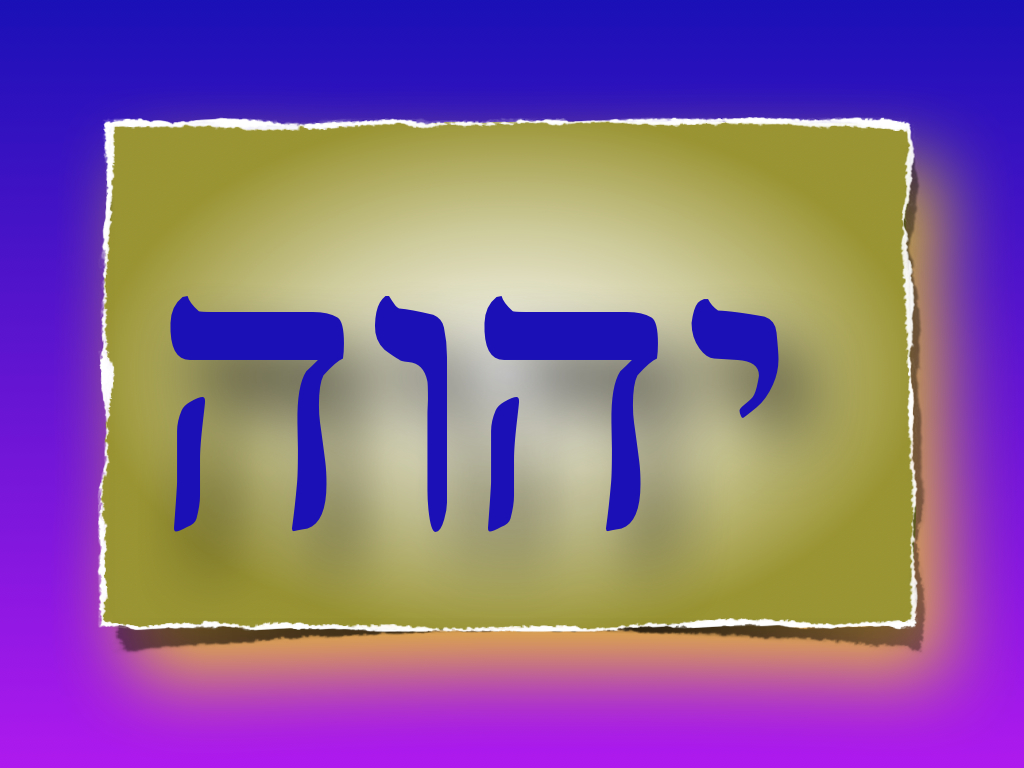
The Bible is full of symbols and memorials that represent or point to something else and act as teaching aids to assist humans in learning about Elohim and what he requires of us. For example, the very name of the Creator, YHVH (Yehovah), is a memorial, symbol or remembrance (Heb. zeker from zakar) of who Elohim really is (Exod 3:15). His name is a Continue reading
Blog Scripture Readings for 12-17 Through 12-23-17
Aside
THIS WEEK’S SCRIPTURE READINGS FOR STUDY AND DISCUSSION:
Parashat Vayigash — Genesis 44:18 – 47:27
Haftarah — Ezekiel 37:15-28
Prophets — 1 Samuel 25:1 – 31:13; 2 Samuel 1:1-27
Writings — Psalms 77:1 – 82:8
Testimony — Mark 14:53 – 16:20; Luke 1:1-66
Our annual Scripture Reading Schedule for 2017-2018 is available to download and print.
Most of this week’s blog discussion points will be on these passages. If you have general comments or questions on the weekly Scripture readings not addressed in a blog post, here’s a place for you to post those. Just use the “leave a reply” link below.
The full “Read Through The Scriptures In A Year” schedule, broken down by each day, can be found on the right sidebar under “Helpful Links.” There are 4 sections of scripture to read each day: one each from the Torah, the Prophets, the Writings, and from the Testimony of Yeshua. Each week, the Torah and haftarah readings will follow the traditional one-year reading cycle.
Weekly Blog Scripture Readings for 12/17/17 through 12/23/17.