Is your house built on sand or rock?

Matthew 7:24–27, House on the Rock. What is Yeshua saying here? The Bible equates Torah with wisdom (e.g. Deut 4:5–6; Ps 111:10; Prov 2:6). Therefore, a wise man is one who walks in the Torah. The same man will be called “greatest in the kingdom of heaven” (5:19), referring to one who keeps the Torah-commandments of Elohim and teaches men to do them, whereas the one who rejects Torah the Messiah Yeshua will reject him (verse 23).

A “house” in Hebrew thought is a reference to the temple of Elohim (1 Chr 6:48; 9:13, 26, 27; 22:2; 23:28; 28:21; 2 Chr 4:19; 5:1; Ezr 4:24; Is. 2:3; Matt 12:4; Mark 2:26) that was built upon Mount Moriah (originating from the Hebrew word moreh meaning “to teach”) from which the Torah-law (the righteous teachings or instructions) of Elohim was to go forth to the nations (Isa 2:3; Mic 2:4). We know from the Testimony of Yeshua that the saints are called the spiritual temple (or house) of Elohim (1 Tim 3:15; Heb 10:21; 1 Pet 4:17; 1 Cor 3:16; 6:19; 2 Cor 6:16; Eph 2:21). What we see here is that the “teachings” or “instructions in righteousness” (i.e. the Torah) of YHVH go forth from the temple or house of Elohim located on Mount Moriah for the benefit of the spiritual house or temple of the saints. Clearly stated, Yeshua is saying that the Torah-law of Elohim is for redeemed believers today during the so called “Church Age.”

The “rock” is a clear reference to Yeshua (Ps 18:31,46; 78:35; Rom 9:33; 1 Pet 3:8). He is a Rock and a House (Ps 31:2). He was the Rock in the wilderness from which the water of life flowed and that followed them (referring to the pillar of fire over the Tabernacle of Moses; 1 Cor 10:4; John 4:13–14). He was the Rock that is the Creator (Deut 32:18). As the Rock of Israel, his work was perfect and all of his Torah-ways (instructions, precepts, teachings in truth and righteousness) are judgment and truth (Deut 32:4). He is the Rock of Israel’s salvation (Deut 32:18; Ps 62:2,6; 89:26; 95:1). In Jacob’s dream of a ladder to heaven (which we discussed above), the rock or stone upon which Jacob rested his head and from which the ladder to heaven ascended is mentioned several times (Gen 28:11, 18, 22). This is a clear reference to Yeshua. He is the Stone that the builders rejected and which has become the Head of the corner (Ps 118:22). He is the Stone of stumbling and the Rock of offense (Isa 8:14), and he is the Stone that was laid in Zion for a foundation a stone, a tried stone, a sure foundation (Isa 28:16). Yeshua is the Torah-Word of Elohim made flesh ( John 1:1, 14), and as we have already seen, he was the one who spoke out the Torah-instructions in righteousness to Israel at Mount Sinai. And upon what were those instructions written? Upon two tablets of stone.

So how could we summarize what Yeshua is teaching in his parable about the house on the rock? Does it give us any insights into how he viewed the Torah-law of Elohim that was given to the Israelites at Mount Sinai? Was Yeshua negative in his view of the Torah? Was he indicating that it would be replaced with another (new) law for his disciples—one that would supersede the Torah? Or as Paul the apostle said in the book of Romans, “Do we make void the Torah of Elohim by faith?” (Rom 3:31 cp 6:15). We all know Paul’s immediate response in the same verse to his rhetorical question. “Elohim forbid!”  Yeshua’s teaching of the house on the rock validates the Torah and therein he states clearly that the man whose spiritual house is not built on Torah is a foolish man and that his house will fall. Such individuals will be the ones who will hear the words of Yeshua, the Living Torah, on judgment day, “Depart from me, you that work Torahlessness. I do not know you” (Matt 7:21–23). This warning is totally consistent with Yeshua’s words of Matthew 5:17–19 where he forcefully upholds the legitimacy of the Torah of Elohim. In Yeshua’s Sermon on the Mount (Matt 5–7), he nowhere contradicted himself, nor deviated from his core teaching of upholding the Torah—the instructions, teachings, precepts in righteousness of Elohim, which was had been the standard of righteous living that ruled both the national life of Israel and that of the individual. Yeshua, Paul the apostle along with numerous other biblical writers affirm over and over again that Elohim’s standards of righteousness never changed for ancient Israel (and for all humans), and never will change to this day.

 

What REALLY is the narrow gate?

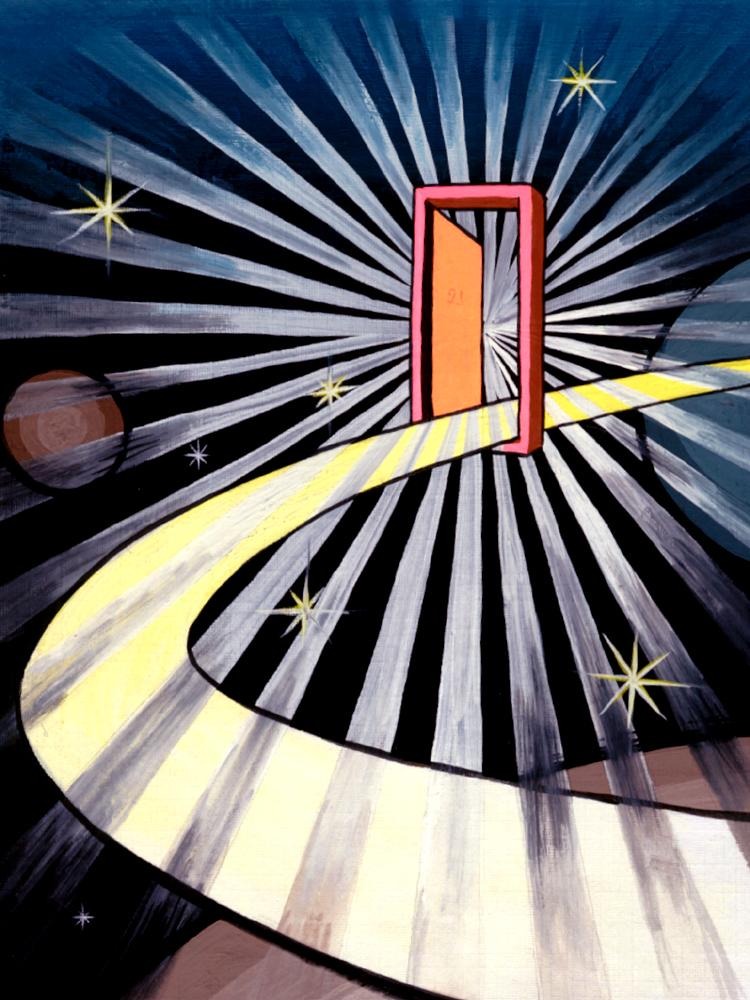
Matthew 7:13, Enter the narrow gate. Here Yeshua speaks of the straight gate and the narrow way that leads to life versus the wide and broad gate that leads to destruction. This narrow gate relates to Jacob’s dream of a ladder to heaven.

In Genesis 28:10–22, we have the account of Jacob’s dream of a ladder reaching into heaven. The dream greatly amazed Jacob and afterwards he concluded that he had experienced a divine encounter. He named the spot where he had the dream Beth El meaning “House of El (God),” and he concluded that this spot was “the gate of heaven” (verse 17). In Hebraic thought, “the ladder” to heaven is equivalent to the Tree of Life, which is another term for the Torah of Elohim. We know that Yeshua was the Torah-Word of Elohim made flesh ( John 1:1,14). Not only that, Yeshua likened himself to a ladder reaching to heaven (John 1:51). 

Furthermore, we see both Moses and Joshua describing the Torah-law of Elohim as a (narrow, by implication) path from which one must turn neither to the left nor to the right (Deut 5:32; 17:11, 20; 28:14; Josh 1:7; 23:6). In Proverbs, the path of wisdom (i.e. Torah) is also likened to a (narrow, by implication) path from which one must not turn either to the left or to the right (Prov 4:27). 

The term “gate” (or door) itself in Matthew 7:13 is a Hebraism referring to the means by which one enters into the Tabernacle or Temple of Elohim (Exod 27:14, 16; 32: 35:17; Ezek 40:3, 6, 7, 8, 9, 10, 11, 13 etc.). The Tabernacle (or Mishkan) of Moses was representative of the pathway to redemption or salvation. Before actually entering the tabernacle, one encountered the altar of the red heifer, which is a prophetic picture of the cross of Yeshua. To enter the tabernacle, one passed through a multi-colored gate. One of the colors was crimson, which represented the blood of lamb on the door posts of the Israelites’ homes on Passover eve. After that, one would come to the brazen alter of sacrifice, which pictures the new believer dying daily, after the example of Yeshua on the cross, and daily ingesting of the “blood” and “body” of Yeshua (pictured by the Christian ritual of communion), the Lamb of Elohim. 

Yeshua fulfilled all these prophetic types and shadows. He said that he is the door or gate ( John 10:7, 9, 10) by which all must enter to have salvation (Acts 4:12), in order to have access to the Father in heaven (John 14:6). Yeshua told the rich young ruler that the Torah (both the Written Torah and Yeshua the Living Torah-Word of Elohim) was the path to eternal life (Matt 19:16–17). Moreover, the Torah points to Yeshua who was the “aim” or “goal” (not the “end” or “termination” of the Torah, as Rom 10:4 is often mistranslated as in most of our English Bibles) of the Torah who is the Living Torah-Word of YHVH ( John 1:1, 14). Yeshua said that he was the way (to the Father in heaven), the truth and the life ( John 14:6), and that the Word of Elohim is truth ( John 17:17). The only Word of Elohim that existed when Yeshua spoke these words was the Tanakh (or Old Testament).

Yeshua defined himself as the truth, so what is truth? How does Scripture define “truth”? In Psalm 119:142 and 151, David says that the Torah-law and Torah-commandments of Elohim are truth. It’s this simple! Any religious theology that attempts an end run head face into the truth of Torah. Period!

We see the concept of gates in the messianically prophetic verses of Psalm 118:19 and 20. Here the Messiah (Yeshua) is likened as gates of YHVH and gates of righteousness (Ps 119:172 defines “righteousness” as “all of thy Torah-commandments) which all the righteous shall enter.”

So Yeshua is the gate, or the straight way of life and truth, the door to salvation or redemption and the way to the Father in heaven. He is the Word of Elohim made flesh or the Living Torah (John 1:1, 14).


The Gospel Preached Through Noah and the Flood

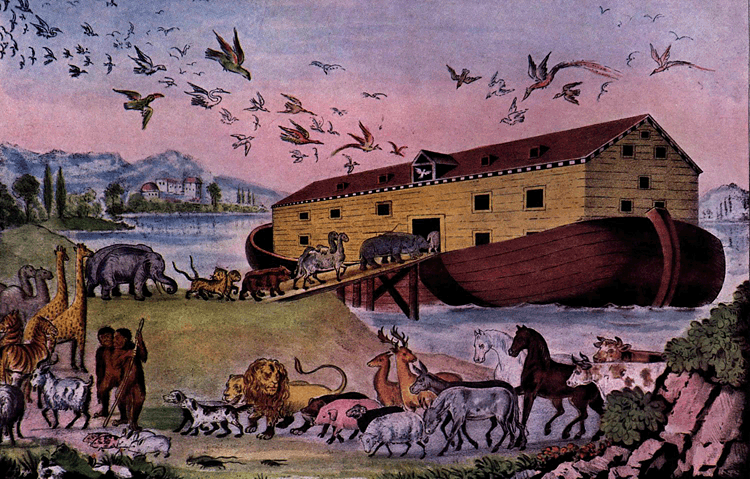
Genesis 6–8, Noah’s flood provides allegorical insights relating to end-times prophecy. In Matthew 24:37, Yeshua compares the end times to the days of Noah. The story of Noah has allegorical implications that give hints about end-times prophecy.

In 1 Peter 3:18–22, we learn that the story of Noah is also a picture of salvation and water baptism. Noah is a prophetic antetype of Yeshua.

To start with, Noah building the ark is a prophetic picture of the redeemed believer working out his own salvation (Phil 2:12), yet while doing so according to YHVH’s exact plans or specifications (e.g. repentance from sin, faith in Yeshua, baptism for the remission of sins, and faithful obedience to YHVH’s commandments).

Noah builds an ark of safety from Elohim’s wrath or judgments against sinful man. The ark is a metaphorical picture of the believer’s salvation, and Noah is a spiritual picture of Yeshua. The flood is also a picture of water baptism for the remission of sins, which ceremonially pictures the death of the old sinful man, and the birth of the new spiritual man (Rom 6:3–6). Water can both clean one of dirt and kill. The same water cleanses the repentant sinner but kills the unrepentant sinner. Unregenerated sinful or carnal men perished in the floodwaters in Noah’s day, while the new, redeemed man (as pictured by Noah and his family) who had found grace in the sight of Elohim (Gen 6:8) found refuge on the ark. While the flood is a judgment against sinful man who has violated the Torah-laws or divine instructions of YHVH, the ark is a picture of the grace that YHVH offers to those who will repent of their sins (i.e. Torahlessness, see 1 John 3:4) and will turn to him through Yeshua. Since Noah found grace in the eyes of YHVH because he was “perfect in his generations” (Gen 6:8, 9), he was spared from YHVH’s judgments against sin (or the wages of sin which is death, Rom 6:23). YHVH offers the same gift of grace to all men today (2 Pet 3:9).

The ark had three levels indicating the three levels of salvation rewards that YHVH offers to his saints, which is analogous to the three sections in the Tabernacle of Moses. The highest level where Noah lived is the section of the ark that was the closest to heaven, where YHVH abides, and is a picture of the kadosh hakadoshim (the holy of holies, also known as the d’veer meaning “oracle”), which was the place in the tabernacle from which Elohim spoke to the Moses and the Israelites. It is in that highest place that one hears Elohim’s instructions directly from him.

The unclean animals are a picture of lost and scattered Israelites returning to YHVH in the end times from the beast or heathen nations to where they have been scattered and where they have become like beasts of the field (Hos 2:16–19 cp. Acts 10:12, 28). In Peter’s vision of the sheet (Acts 10:12, 28), the Gentiles are likened to unclean animals that YHVH has redeemed (Acts 10:12, 28 cp. with the great and innumerable multitude of Rev 7:9, the lukewarm believers of Laodicea in Rev 3:14–21, the thief on the cross, and the foolish virgins in Yeshua’s parable in Matt 25:1–13). The clean animals may represent the 144,000 of Revelation 7 and 14, and who are those saints who have remained faithful in keeping YHVH’s Torah commandments, while at the same time maintaining faith in Yeshua the Messiah (Rev 12:17; 14:12).

Noah escaping the wrath of Elohim may be a antetype of the second exodus of end-times Israelites from the nations of the world. As a mixed multitude joined Israel in the exodus from Egypt, so even within Noah’s family there was a mixed multitude containing a spiritual tare; namely, Ham who later fell into sin (Gen 9:22–27) and become the father of the evil Nimrod (Gen 10). Even Yeshua had Judas, a tare, among his select group of disciples, and Yeshua teaches that the tares would coexist with the wheat up until the end times (Matt 13:24–30).

The waters that flooded the world gushed up from out of the bowels of the earth and rained down from heaven (Gen 7:11). Water can be a biblical metaphor for the spoken word (e.g. Deut 32:2; Eph 5:26); namely, it represents both the Word of Elohim from above, and the word (philosophies, thoughts, ideas, religions) of man that are counter to the Word of Elohim that have their source from below. In the last days, knowledge shall be increased, the devil shall spew out his mouth words or philosophies like a flood in an effort to spiritually drown the world and even the saints (Rev 12:15; Matt 24:14). Water can also be a judgment against men. YHVH will judge men for their words, philosophies and religions. Those who followed YHVH’s Word from heaven will be spared his wrath, while those who have subscribed to the words or philosophies of men from below will perish or be judged in a sea of men’s words that are often founded on doctrines of demons. Those who feed spiritually from the tree of knowledge (i.e. secular humanism and all the false religions and ideologies that have spawned from it) will die, while those who spiritually feed from the tree of life or the word of Noah (i.e. a prophetic picture Yeshua), the preacher of righteousness (i.e. the Torah, see Ps 119:172 and 2 Pet 2:5) will live. In the last days, the Word of YHVH will judge men, for when Yeshua returns to the earth on his white war stallion, the sword of the word of Elohim will be coming out of his mouth with which he will judge the nations (Rev 19:11–15). 

It rained 40 days. This is another picture of judgment, since biblically, forty is the number of trials, testing or spiritual refinement.

The ark came to “rest” (Heb. nuach meaning “repose, settle down, be quiet”) on the mountains Ararat (Gen 8:4). From there, Noah built an altar and begin to rule the earth. This is a prophetic picture of Yeshua, at his second advent, coming to Zion or the Temple Mount where he will have his temple and will establish his kingdom on earth, and it will be a time of peace on earth.

The word Ararat means “the curse is reversed.” The ark came to rest on Ararat during the Feast of Tabernacles or Sukkot. This is a prophetic picture of the saints coming to a place of spiritual rest at the beginning of the Millennium after the judgments of Elohim have been poured out on this earth against sin and the wicked have been destroyed.

The dove is a picture of the bride of Yeshua who follows the Spirit of Elohim. The dove coming from the top window of the ark symbolizes the bride of Yeshua coming back to earth from the first heaven to rule with Yeshua on earth. The dove left and came back on the seventh day—the Shabbat. This is a picture of the Millennium or the seventh millennia of man’s existence on earth. Several times in the story of Noah, it is mentioned about the dove finding rest or not finding rest. This is another picture of the Millennium—a time of rest for the saints or the bride of Yeshua (Heb 4:1–10).

The raven who feeds on carrion is a metaphor for the devil who feeds off of dead meat, and who is actively trying to kill, steal and destroy (John 10:10) like a ravenous lion (1 Pet 5:8). Satan will be active at the end of the Millennium, as well, when he will be loosed from the pit for a short season from which he will go to incite Gog and Magog to come against Yeshua and the saints in Jerusalem (Rev 20:7–10).

Noah’s altar may well be a picture of the third temple (or Ezekiel’s temple, Ezek 40–48).

According to Christian commentator Matthew Henry, Noah’s ark was an early Christian metaphor for salvation and YHVH’s delivering his people form evil and judgment against wickedness. We see this allusion in 1 Peter 3:20–22 where the flood is a picture of salvation, deliverance by baptism and the resurrection of Yeshua.

The ark was covered with pitch, which is a picture of the redeemed believer being covered by the blood of Yeshua to keep the spiritual ark of his life from sinking under the judgment of Elohim against men’s sin. This truth of this imagery is revealed the Hebrew words for pitch and atonement,which share the same root word.

The name Noah means “rest.” Yeshua bids all who are heavy laden and need rest to come to him (Matt 11:28–30).

Noah was 600 years old when he went into the ark and the flood came. YHVH’s final judgment against wicked men will be at the end of the 6000 years of men’s rebellious tenure on this earth.

Noah didn’t leave the ark and set foot on the earth until YHVH bade him to do so (Gen 8:15). Likewise, Yeshua won’t return to the earth from heaven until the Father permits it.

The Noachic Covenant that Elohim made with all humanity (Gen 9:1) is a picture of the New Covenant being ratified in the Millennium with “all Israel.” No non-Israelites (i.e. no sinners) will be permitted to live, but will be burned up in the lake of fire at the end of the Millennium (Rev 20:11–15). 


A Psalm by a 20 Year-Old Man of Elohim

At our Sukkot celebration this year in Central Oregon, we had an exercise where I asked the people to go out into nature, to tune into their personal spirit and then to write a psalm of praise or worship to YHVH Elohim. This psalm came from the spirit of a 20 heart-old man of Elohim. Please enjoy…

O most High King,
Praise be to you. Father of fathers,
I proclaim your majesty,
I set it on high.
O father, look not away ashamed from your servant,
Father forgive I beg the sins whose company I have kept.
Only you can reach down and draw me from the bog of evil.
It is up to my neck;
It has nearly flooded my ears.
It threatens to choke me–
To line the inside of my stomach,
So that evil sinks within me.
I call out to you Father,
Do not leave me alone in the dark,
But blow the trumpet,
That the walls of my heart will shake and fall down.
Surely Elohim, your glory and majesty are known to your creation!
Day and night they proclaim it,
And you delight in it, Father.
I pray, may we be like the eagle
Whose wings are lifted by the Ruach.
May we be like the fish
Whose scales shine in the suns light
As they jump up against the rush of the world.
Honor and glory alone are yours;
I keep none of it,
For I am too lowly even to touch the hem of your garment.
Oh most High King, Father of fathers, hear my prayer.
Adorn me with jewels, and make me acceptable in your sight.
I praise you father, for I have tried to hide from your loving gaze,
Yet, it pierces through my veil,
You see me, and only you know my heart.
It is wicked, it is stained with the paint of sin.
But YHVH is good, despite my efforts,
He has not let his servant slip through the cracks of his strong right hand. Praise Adonai, the most Kadosh one. Amen.
A Psalm by Kaleb Pace (20 years old)
Note from Natan: I have been a spiritual mentor and father to Kaleb since he was two or three years old. He is like a son to me, an employee of mine and a precious friend. It blesses me greatly to see this young righteous man pick up both the yoke and mantle of Yeshua and his Torah-Word and to be an up and coming torch-bearing next-generation leader for Yeshua. Way to go Kaleb!
 

The Deity of Yeshua

The Preeminence and Deity of Yeshua

Phinehas, the grandson of Aaron the high priest, thrust a spear through Zimri the Israelite man and Cozbi the Midianite woman as they were bringing the curse of YHVH upon the nation of Israel by fornicating with each other within the camp of Israel. With the same righteous zeal as Phinehas, today’s righteous spiritual leaders must rise up and stand against secular philosophies that threaten to bring YHVH’s judgment upon redeemed Israel. In the face of evil in his day, David asked, “Who will rise up for me against the evildoers, or who will stand up for me against the workers of iniquity?” (Ps 94:16) The present issue relates to the dangerous and damnable trend within the body of redeemed Israelites believers to question and even deny the deity of Yeshua.

You’ve all heard the Christian axiom, “In essentials unity, in non-essentials liberty, and in everything else, charity.” What are the essentials of our faith that we must unite in, and around which we must draw the line in the sand and defend that turf until death?

As one who has been walking in the Torah for more than 40 years, who has spent time fellowshipping and ministering in both traditional Sunday Christian as well as Sabbatarian churches, and then pastoring and teaching in pro-Torah/Hebrew roots congregation for many years, it has become clear to me which issues are essential, and which are not. Those biblical truths that are salvational in nature are the essentials. These are the hills on which we must plant the flag of truth and be willing to defend at all costs! What are these immutable essentials?

  • YHVH Elohim (in Hebrew a plural word) is the Sovereign of the universe and the God of the Bible. He is one (Heb. echad, i.e. a compound unity), yet the Bible reveals the Godhead is comprised of three spiritual entities: the Father, the Spirit and the Son.
  • The Bible is the Word of Elohim from Genesis to Revelation.
  • The Torah is for all believers for all time.
  • Yeshua the Messiah, the Word of Elohim, is Elohim and is the Son of Elohim who was manifested incarnate on this earth being born of the virgin Mary. 
  • Yeshua lived a sinless life, died on the cross as an atonement for the sins of man, was buried and resurrected on the third day where he is now at the right hand of Elohim, and at the same time is on the throne of Elohim as Elohim.
  • Salvation is by the grace of Elohim through faith in Yeshua the Son of Elohim. As a result of one’s salvation, one will love Yeshua by keeping his commandments or word (the Torah), which will produce in his life the fruits of righteousness as defined by the Torah.

These are the essentials of our faith on which there can be no compromise. To take a weakened position on any of these issues is to begin down a spiritually slippery slope that can only lead to eternal separation from YHVH Elohim! Leaders must be quick to lift up the spiritual sword of the Word of Elohim against those who teach otherwise. In this brief treatise, I will deal with the major issues raised by those who want to diminish or eliminate the deity status of Yeshua the Messiah.

“The Earth Did Quake”

When the life of Yeshua, the divine Light of Elohim that pierced the spiritual darkness of this world, was being poured out while he was hanging dying on the cross, the earth was plunged into darkness (Matt 27:47). After Yeshua yielded up his spirit and died, the veil in Continue reading


Blog Scripture Readings for 10-7 Through 10-13-18

Aside

THIS WEEK’S SCRIPTURE READINGS FOR STUDY AND DISCUSSION:

Parashat Noach — Genesis 6:9 – 11:32
Haftarah — Isaiah 54:1 – 55:5
Prophets — Joshua 8:1 – 14:15
Writings — Psalms 8:1 – 14:7
Testimony — Matthew 6:16 – 10:26

Our new annual Scripture Reading Schedule for 2018-2019 is available to download and print. If you are still working through 2017-2018’s Scripture Reading Schedule, the link will still be available on the right sidebar under “Helpful Links”.

Most of this week’s blog discussion points will be on these passages. If you have general comments or questions on the weekly Scripture readings not addressed in a blog post, here’s a place for you to post those. Just use the “leave a reply” link below.

The full “Read Through The Scriptures In A Year” schedule, broken down by each day, can be found on the right sidebar under “Helpful Links.” There are 4 sections of scripture to read each day: one each from the Torah, the Prophets, the Writings, and from the Testimony of Yeshua. Each week, the Torah and haftarah readings will follow the traditional one-year reading cycle.

Weekly Blog Scripture Readings for 10/7/18 through 10/13/18.


Genesis 6:2–4, “the Sons of Elohim” and “the Giants”

Genesis 6:2, Sons of God. We find here an interesting construction in the Hebrew text. Literally, the Hebrew reads, “sons of the gods” or beney–ha-elohim. Usually, the word elohim, when referring to the Creator, doesn’t have the definite article, but simply Elohim. The word elohim not only can refer to the Godhead, but can also mean “angels, gods, rulers or judges.” The phrase, “the gods/ha-elohim” referring to pagan demon-deities is also found in Exod 18:11, “Now I know that the LORD is greater than all the gods/ha-elohim; for in the very thing in which they behaved proudly, He was above them.” Is it possible then that the phrase, “sons of the gods” in this verse can refer to fallen angels? I believe so.

Genesis 6:3, My Spirit shall not strive [Heb. deen]. The LXX, Targums, Aramaic and Latin Vulgate all say abide instead of strive, which is an alternate translation from the MT. This is the translation that Philo presumes in his commentary on this passage (Allegorical Interpretation, “On the Giants,” chap. V.19). From this verse based on this alternate translation, it appears that the Spirit of Elohim was endeavoring to convict man of sinfulness and bring him back to the paths of righteousness, but that man was so evil and reprobate that Elohim gave up on this endeavor and had no choice but to pronounce divine judgment upon man as the final solution in dealing with the problem. Perhaps this gives us a clue as to what the “restrainer” of 2 Thess 2:7 is that Elohim will take away from the earth before the apotheosis of evil occurs in the last days just prior to Elohim pouring out his divine wrath on mankind as foretold in the Book of Revelation and elsewhere.

Genesis 6:4, Giants. Heb. Nephilim. This Hebrew word is found only one other place in the Bible. This is in Num 13:33 where it is used twice and where the nephilim are called to the descendants of Anak (see also Num 13:28; Deut 9:2; Josh 15:14; Judg 1:20). Scholars most often translate this word either as giants, mighty ones or fallen ones. Scholars disagree as to meaning of the root form of this verb and whether the stem means “those that cause others to fall down” or “fallen ones.” BDB confesses that the basic etymology of the word is questionable. At issue, according to The TWOT, is whether the root of nephilim is nepel meaning “untimely birth or miscarriage” (resulting in the production of superhuman monstrosities), or the more likely from the root napal, which relates to other Hebrew words meaning “be wonderful, strong or mighty.” The LXX (as apparently do the majority of the Targums) translates nephilim as giants, though The TWOT admits this may be misleading. This word is of unknown origins and may even mean “heros” or “fierce warriors.”

Adding to the confusion of this passage is the ambiguity as to whether the nephilim are the sons of Elohim or their offspring.

Whatever the meaning of nephilim and/or sons of Elohim may be, two schools of thought have prevailed in Jewish and Christian circles as to who these people were. One line of reasoning asserts that they were the children of Seth, while another presents the idea that the sons of Elohim were the offspring of sexual unions between fallen angels or demons and the daughters of men (called incubus) resulting in half-breed demon-humans (called Continue reading