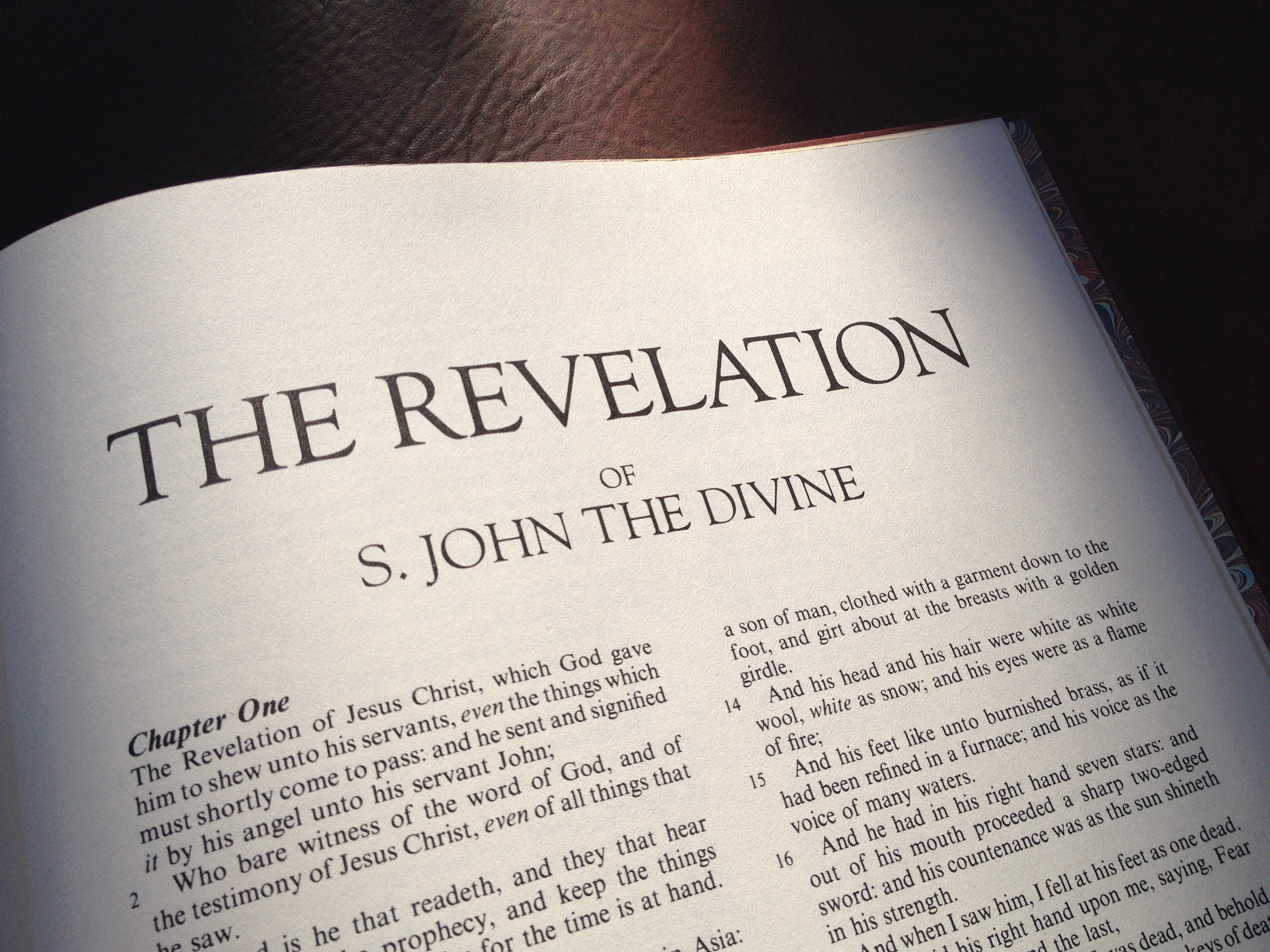
Genesis 49 Prophesies Yeshua the Messiah

I post this article on my blog almost every year at this time, since it’s such a cool prophecy concerning Yeshua the Messiah. I hope you agree after you’ve read it. —Natan

Genesis 49:10–12, The scepter. Below is my commentary on these verses.

The scepter shall not depart from Judah, nor a lawgiver from between his feet, until Shiloh come; and unto him shall the gathering of the people be. Binding his foal unto the vine, and his ass’s colt unto the choice vine; he washed his garments in wine, and his clothes in the blood of grapes: His eyes shall be red with wine, and his teeth white with milk.

This passage is a clear reference to the Messiah and the Messianic Age (the time when Messiah would come to rule the earth) and has been so recognized by the Jewish sages from time immemorial (The ArtScroll Stone Edition Chumash, p. 279). “The general consensus (with few exceptions) of Rabbinic interpretation is that this phrase [Until Shiloh arrives] refers to the coming of the Messiah …” (The ArtScroll Bereishis/Genesis Torah commentary, p. 2152). In fact, Onkelos [a second-century scholar who translated the Torah (Pentateuch) into Aramaic] in his Aramaic version of the Torah translates this version as follows: “Until the Messiah comes, to whom the kingdom belongs” (ibid.). Rashi (b. 1040 and recognized by Jewish scholars as probably the preeminent Torah commentator Continue reading


Can We Ever Fully Understand End-Time Bible Prophecy?

A couple of days ago, someone emailed me a commentary on the book of Revelation and asked me to review it. I began reading it, and realized that it was nothing more than one man’s speculations about what he thought that this enigmatic book means. 
That same day I went to the post office to get my mail, and I picked up a cardboard tube sent to me by an admiring follower of our ministry. Inside the tube was a kind and complimentary letter along with a paper chart when unrolled was more than five feet long! It was basically another man’s interpretation—a timeline chart—of how he thought the events of the book of Revelation would play out in the last days. It contained ideas cobbled together from many sources including a number of well-known Christian prophecy pundits who have little or no idea about the Torah or Hebraic biblical understandings, meaning their biblical understanding—including their interpretations on the book of Revelation—is incomplete and not to be trusted. The man asked me to critique his work. After looking at this chart for a couple of minutes, I rolled it back up, stuck it back in the tube and shelved it.
To the kind gentleman  who had emailed me the pdf commentary on the book of Revelation requesting my opinion, I wrote the following:

We all have our hunches about how Bible prophecy along with the book of Revelation will play out, but we’re all wrong. Some of us may have parts and pieces of the truth, but most Bible prophecy will not be fully understood until after it happens. 

For the most part, those prophecy pundits and Bible students who formulate timelines, charts and write commentaries on the book of Revelation and other end time Bible prophecies in an attempt to explain the exact meaning of the metaphorical symbols and to predict how these prophecies will be fulfilled, by whom and when are engaging in folly. No one knows these things exactly, and know will know, again, in most cases, until after they have come to pass, and even then, most people will not even understand the prophecies at that time.
Here is a case in point: Even Yeshua’s disciples didn’t understand what his role was to be or how he was to fulfill the many Old Testament Messianic prophecies about him until after his resurrection. Do we really think that our biblical understanding and spiritual perspicacity is greater than theirs? If so, than this is not only folly on our part, but extreme arrogance and hubris! Perhaps we need to explore the biblical meaning of humility and faith. Let me explain what I mean.

Regarding faith, if we were to know the exact details concerning the fulfillment of biblical prophecy including the book Revelation, then our spiritual walk would no longer be a faith walk as per the biblical definition of faith in Hebrews 11:1, would it?

Now faith is the substance of things hoped for, the evidence of things not seen.

We’d now be walking by sight, not by faith, which is the opposite of what Scripture enjoins us to do (2 Cor 5:7).

No, the main purpose of Bible prophecy isn’t to provide us with a sort of crystal ball to know what’s going to happen in the future. It’s purpose is only to raise our hope by providing us with a shadowy understanding of future events, like looking through a glass darkly (1 Cor 13:12), even as the ancient Jews had a shadowy understanding about the coming of Messiah, but they didn’t know the full or exact details of how biblical prophecies concerning him would play out. The exact fulfillment of those prophecies was hidden from the majority of Jews, which is why they killed him. YHVH divinely revealed only to a few of Yeshua’s closest associates how he perfectly fulfilled the Old Testament prophecies concerning him.

Now this brings us to the main purpose of Bible prophecy, as I see it. It’s not so that humans can use the Bible as a sort of crystal ball or as a means to divine or augur the exact details of the future, but so that after the prophecies have been fulfilled, and the understanding of them is divinely revealed to YHVH’s faithful saints (as occurred to Yeshua’s disciples after his resurrection) that the omniscience and glory of YHVH Elohim will be manifested causing humans to glorify, praise and worship him. Please not: Even an understanding of the fulfillment of the prophecies is by divine revelation and will not be understood by the vast majority of people. For example, what majority of the Jewish population understood that Yeshua the Messiah was who he was in his day…or even today? 

What, therefore, should be the main focus of our spiritual walk as Bible believers? Namely this: We need to pursue holiness and righteousness through a spiritual relationship with Yeshua as we love him by obeying his Word. Our future is in his hands, and the just shall walk by faith, not by sight (2 Cor 5:7; Heb 11:1). In his hands, we are safe and secure no matter how the prophecies of the Bible play out.

What is the bottom line here? Keep your eyes on Yeshua and have faith in him, and not on how you think Bible prophecy is going to play out, because no one knows these things. Make no mistake about it, the vast majority of those people who “understand” Bible prophecy are those who have something to sell you; they want to make a name for themselves for the purpose of human pride, control and mammon. Beware!


 

Are you spiritually naked?

Mark 14:51, A certain young man…naked. The reason for the inclusion of this detail in the Gospel record has puzzled many commentators. For example, Matthew Henry suggests that it was added to show the barbarous nature of the Jewish gang that arrested Yeshua, and how narrow was the disciples’ escape from their hands.

There seems, however, to be a greater spiritual lesson to be learned from this story. Previous to this, Yeshua, as he and his disciples were coming into the Garden of Gethsemane, admonished them to sit and pray with him (v. 32), to stay and watch (v. 34), to watch and pray so as not to fall into temptation because of the weakness of the flesh (v. 38). Instead, the disciples slept (vv. 37, 40).

Elsewhere, Yeshua instructs the elect saints of the last days to endure tribulation and spiritual apostasy to the end (Matt 24:13), and to watch vigilantly and be ready for his second coming (Matt 24:42, 44; 25:13).

These warnings are in the context of his Parable of the Ten Virgins. All slept while awaiting the bridegroom’s arrival. While five were spiritually prepared, five were not. Those who were unprepared were dubbed as foolish and weren’t allowed into the wedding.

Likewise, in the end times, there will be believers who YHVH views as wretched, miserable, poor, blind, and naked because they have grown lukewarm spiritually (Rev 3:14–17).

The point of this discussion is this: If the disciples of Yeshua fail to maintain a state of spiritual preparedness (by watching, praying, keeping oil in their spiritual lamps, enduring to the end) while awaiting his return, they, like the young man in Gethsemane and the Laodiceans in the Book of Revelation, will be found to be spiritually naked lacking robes of righteousness on the day of his return and thus unprepared to meet him (Rev 19:7–9 cp. Matt 22:2, 11–12).


Who are the modern descendants of Ephraim?

Genesis 48:14 and 16, Jacob’s Prophecy Over Ephraim and Manasseh

While prophesying over Joseph’s sons, Ephraim and Manasseh, Jacob crossed his hands over their heads making the symbol of the Paleo-Hebrew letter tav  (like the letter t or x in the alphabet), which resembles a cross and in that ancient Hebraic script and according to some Hebrew scholars pictographically means “sign of the covenant.” Jacob then spoke of the Heavenly Messenger (the Hebrew word malak mistranslated as “angel” in most Bibles) of YHVH (i.e. the preincarnate Yeshua) who had redeemed him from all evil (see Gen 31:11–13). Jacob then prophesied that the descendants of Ephraim and Manasseh would become like “fish in the midst of the land” (literal translation of Gen 48:14–16; see The ArtScroll Stone Edition Tanach).

In light of this prophetic symbolism, which present day religious group would qualify as having fulfilled Jacob’s prophecy as to who the descendents of Ephraim and Manasseh would be? Which religion on earth uses the fish as their symbol, speaks of a Messenger from YHVH as their Redeemer, and has the sign of the Paleo-Hebrew letter tav, which looks like a cross? The Buddhists? The Moslems? The Hindus? Even the Jews? No! Only Christianity fits this enigmatic criteria. Many Christians are without Continue reading


Blog Scripture Readings for 12-16 Through 12-22-18

Aside

THIS WEEK’S SCRIPTURE READINGS FOR STUDY AND DISCUSSION:

Parashat Vayechi — Genesis 47:28 – 50:26
Haftarah — 1 Kings 2:1–12
Prophets — 2 Samuel 1:1 – 7:29
Writings — Psalms 76:1 – 81:16
Testimony — Mark 14:1 – 16:20

Most of this week’s blog discussion points will be on these passages. If you have general comments or questions on the weekly Scripture readings not addressed in a blog post, here’s a place for you to post those. Just use the “leave a reply” link below.

The full “Read Through The Scriptures In A Year” schedule, broken down by each day, can be found on the right sidebar under “Helpful Links.” There are 4 sections of scripture to read each day: one each from the Torah, the Prophets, the Writings, and from the Testimony of Yeshua. Each week, the Torah and haftarah readings will follow the traditional one-year reading cycle.

Weekly Blog Scripture Readings for 12/16/18 through 12/22/18.


Your good works will not save you!

Mark 12:34, You are not far from the kingdom. Yeshua makes this complimentary statement to the scribe who had correctly and succinctly summarized the message of the Torah (both its letter and spirit intent) in verses 32–33.

However, note that Yeshua didn’t say, “You are in the kingdom of Elohim (i.e. “you have eternal life”).”

What was the one thing that was keeping this scribe from being in the kingdom? It was doubtless the same thing that kept the rich young ruler from obtaining the eternal life that he sought (Matt 19:16). After having obeyed the Torah the best that he could, the young ruler still needed to surrender all to Yeshua the Messiah, and to follow him unreservedly (Matt 19:18–22).

Not only is it difficult for humans to surrender all to the Master, and then to follow him wherever he leads, but after having followed the Torah the best we can, we must still humbly recognize that without the righteousness of Yeshua in the equation, our best efforts at Torah-obedience will still miss the mark of YHVH Elohim’s acceptable standard of righteousness, thus leaving us maybe not far from the kingdom, but definitely not in the kingdom of Elohim.


Jacob’s End Times Prophecies

Genesis 47:28–49:28, Jacob’s end times prophecy. The Jewish sages recognize that this final portion of Genesis chronicles Jacob’s wish to reveal to his sons some prophetic understandings pertaining to Israel’s long and numerous exiles, culminating in “the Final Redemption” or “the Second Exodus” (i.e. the return of Israel [all twelve tribes, not just the Jews] from her exile in “Babylon” at the end of the age just prior to and after the return of Messiah at which time the two houses of Israel will be reunited under Messiah Son of David).

Jacob states the timing of his prophecies regarding his sons in Genesis 49:1 when he predicts what will befall them “in the last days.”

The Jewish sages believe that prior to the establishment of the Messianic Age (or Millennium), all Israel will go into a time of darkness, gloom and exile.

The sages deduct the timing and tenor of this prophecy from the fact that the Torah scroll fails to place the customary nine spaces between the last word of the previous parashah (or Torah portion), which ends in verse 27 and the next parashah, which begins in verse 28. There is only a one space gap in the Hebrew letters between these two Torah portions, which predicts the “closing in” of Israel as they go into exile and captivity in Egypt.

The sages believe that these prophecies not only predicted Israel’s first exile into  and redemption from Egypt but also a latter, end times one as well because biblical history often repeats itself. This is evident by the fact that some of these prophecies weren’t fulfilled until Messiah came the first time and afterwards. More on this latter, so stay tuned.