Luke 9:1–2, Gave them power. (See also Luke 10:19.) Spiritual power and authority over demons and sickness is manifested in no greater way than when exercised in conjunction with the preaching of the gospel. It is here on the ragged edge between the kingdoms of light and darkness that YHVH wishes to demonstrate his power most through his servants in an effort to draw outsiders into his spiritual kingdom. Healing from sickness and deliverance from demonic powers is a great enticement for those on the outside to become part of YHVH’s kingdom where they will experience freedom resulting in joy,peace and hope.
Luke 9:28, Eight days. Eight is the biblical number of new beginnings and the symbol for infinity. When Yeshua comes back in power and glory to establish his kingdom universally on this earth of which the transfiguration was a prophetic foreshadow, it will be a new beginning lasting for eternity.
Luke 9:41, Faithless and perverse. Faithlessness and perversity go hand-in-hand with the ability to cast out demons and to heal the sick. To the degree that one is faithful to and Continue reading →
The exact timing of the Passover has sparked much controversy over the years among believers. In the early Christian church it was known as the “Quartadeciman Controversy.” Concerning this debate, which continued into the fourth century a.d. and was finally settled at the famous Council of Nicea in a.d. 325, church historian Philip Schaff in noted multi-volumed History of the Christian Church states, “Respecting the time of the Christian Passover … there was a difference of observance which created violent controversies in the ancient church [resulting in questioning] the genuineness of John’s Gospel” (vol. 2, p. 210). The Quartadeciman Controversy, although slightly different in nature to the subject of this present work, only serves to underscore the volatility of issues of dogma. With this in mind, let us not forget what Yeshua referred to as the “weightier matters of the law”: judgment, mercy and faith (Matt. 23:23). Now let’s begin our study of the timing of Passover.
First, there are some absolutes that Scripture gives regarding Passover:
Scripture states that Pesach/Passover is on the fourteenth day of the first month (Lev. 23:5), and is called the month of Abib (Exod. 12:2,5–14; 13:4) of Elohim’s biblical calendar (Hag HaMatzot/Feast of Unleavened Bread starts on the fifteenth).
For Messiah Yeshua to be the literal fulfillment of the Passover Lamb he had to die at the same moment in time that the Passover lamb was slain.
When Is Passover and When Was the Passover Lamb Sacrificed in the Temple?
Exodus 12:6 says,
And you shall keep it [the lamb] until the fourteenth day of the same month, then the whole assembly of the congregation of Israel is to kill it at twilight [Heb. erev, marginal notes in KJV: between the two evenings].
According to ancient rabbinical sources, at the time of Yeshua, the term between the evenings or twilight had taken on a broader meaning than just twilight as in accordance with the literal meaning of the Hebrew word erev. For the Pharisees, it referred not just to the approximately 45-minute time period just before darkness that we in the west call twilight, to the time period from noon onward when the sun begins to decline from its Continue reading →
Someone wrote the following in the comments section of this blog mildly taking me to task for something I just posted.
According to Jewish thought, Sodom and Gomorrah’s main sin was allowing people to die at the gates of those cities. The gates would be closed at sunset and would not re-open until morning. Since they were desert communities, many people waiting to get in would die of thirst or starvation by the time the gates re-opened in the mornings. Sexual sins sure were a big problem there but was not the main reason those cities were destroyed. They were destroyed mainly because of they’re hardness of hearts. Sound familiar? Does history always have to repeat itself like this?
Here is my response to them:
With all due respect, if you intend to post on my blog, you’d best have your facts straight and represent the Bible correctly, or you’ll be called on it. Moreover, instead of looking to Jewish thought for our biblical understanding, how about going directly to the Bible? Jewish thought also declares that Yeshua is NOT the Messiah. So “Jewish thought” must be taken with a huge grain of salt, and, in most cases, can’t totally be relied on as the basis for biblical understanding.
Now to the point:
It is a myth and a misunderstanding of Scripture to say that YHVH Elohim primarily destroyed Sodom for its lack of hospitality. This argument was raised to justify homosexuality, and is based on a mis-reading of Ezek 16:49. Those who proffer this myth not only overlook all the other biblical scriptures that talk about the sins of Sodom, but also overlook the context of Ezek 16:48 including the very next verse—Ezek 16:50. Here it is stated that Elohim overthrew Sodom because they proudly committed abominations, which was in addition to their lack of hospitality. What abomination is this? The Bible only calls a few sins abominations. Homosexuality is one of them (Lev 18:22).
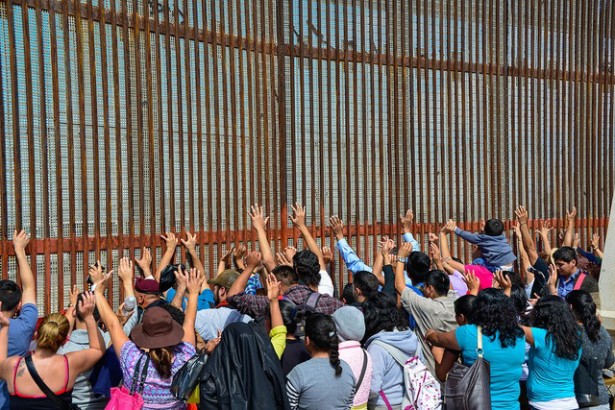
Now let’s address America shutting its borders to illegal immigration.
First let’s address the issue from a secular perspective. A nation has to have laws or there will be anarchy, mayhem and it will not be a safe place for its inhabitants to live. A nation also has to have borders, or there is no nation. Period.
True, our nation is one of immigrants. My grandmother was born in Germany, and my great-grandfather in Sweden. Both came here legally. They didn’t crash the border. And when they got here, they went to work and assimilated into the American culture; they even refused to speak their mother tongue in favor of English. They didn’t come here with their hands outstretched looking for public assistance in the form of welfare benefits. They also weren’t full of diseases and with criminal backgrounds. Such people were turned away at Ellis Island and sent back home. Those who were deemed to be an asset to this country were allowed in.
This is not the situation with many, if not most, of those currently crashing America’s southern border illegally. Few of them seem to care about our laws and legal immigration. They feel it is their right to come to the US simply because they want to. Many of them are criminals, drug runners and will go on the public dole as they can get here. The US can’t handle this economically or socially. Currently 27 percent of all criminals in the US Federal Prison System are foreigners from our south.
Second, let’s address immigration from a biblical perspective. (This is a quick overview and a brief study, and not a comprehensive discussion of this subject.) Did Israel have borders? Yes. Did the Israelites defend these borders from foreign invasion? Yes, and by Elohim’s instructions. Did Israel have laws? Yes. That body of laws was called the Torah, which tells us how to love Elohim with all of our heart, soul, mind and strength and our neighbor as ourself. Read the Bible. It’s all there.
Now, under what conditions were foreigners allowed to immigrate into Israel? First, they were to be treated with respect, but they had to accept YHVH Elohim, the God of Israel, and to follow the laws of Israel, namely the Torah of Elohim (Exod 12:43–49; 22:21; 23:9; Lev 24:22; Num 15:16, 29).
Second, they didn’t come into Israel as welfare dependents or criminals, nor were they allowed to bring in their foreign cultures or satanic religious systems. They had to assimilate into the tribes of Israel and once there they went to work, while, at the same time, accepting the God of Israel and his laws. They weren’t working to overthrow the borders, language and culture of Israel, or the God of Israel, nor were they sucking the economic resources out of Israel. If they fell onto hard times, like any other Israelite native or foreign born, they sold themselves into temporary servitude to their debtor and worked until their debts were paid off. There was no free lunch here!
To use the Bible to justify allowing anyone to come into America illegally for any reason, frankly, demonstrates biblical naivety if not ignorance of the facts.
How did Yeshua the Messiah perfectly fulfil all the types and shadows of the first Passover in Egypt?
According to the laws of statistical probability, what are the chances of an event happening and then fifteen hundred years later another event occurring bearing an uncanny resemblance to the first one? Now suppose that not only did fifteen hundred years separate the two events, but that they occurred in two different countries several hundred miles apart, which in the ancient world may as well have been halfway around the globe. Now suppose that the second event involved the death of a person, and that the events leading up to their death including the manner and timing of that death was beyond the control of the individual dying so that in no way could the person dying stage his death to mirror the first event. In fact, those killing the individual possessed no foreknowledge of the event that had occurred fifteen hundred years earlier. What are the chances of this occurring?
This is not a fictional story! Truth is stranger than fiction. The details of these two events are chronicled in the pages of the Bible. The first event occurred in ancient Egypt and is recorded in the Book of Exodus chapters eleven and twelve. There we find recorded the details of the Continue reading →
The murder of unborn babies is the Democrats’ top agenda! By their fruits you shall know them. The facts speak for themselves (see below). Make no mistake, this is ungodly, Satanic to its core and pure evil!
Democrats take control of House, immediately introduce bill to fund abortions worldwide
WASHINGTON, D.C., January 3, 2019 (LifeSiteNews) – Democrats wasted no time asserting their priorities upon taking over the U.S. House of Representatives this week, proposing legislation to fund the federal government which would at the same time reverse one of President Donald Trump’s earliest pro-life accomplishments.
The federal government has been partially shut down since Trump, facing pressure from conservatives, decided at the last minute in December to reject a government funding bill that didn’t include $5 billion to begin constructing the southern border wall he campaigned on. While the media is filled with distress over the shutdown and uncertainty over whether Democrats or Republicans will blink first, most of the government was already funded and remains in operation.
Following her return to the office of House Speaker Thursday, Democrat leader Nancy Pelosi announced that her party would be “offering the Senate Republican Appropriations [Committee] legislation to reopen the government later today,” Fox Newsreports. The proposal would fund the Department of Homeland Security until February 8 and other federal departments until the end of September.
The bill has been a political non-starter because it lacks wall funding, however, and pro-lifers are warning that it would also repeal the Mexico City Policy (now called Protecting Life in Global Health Assistance) that Trump reinstated shortly after taking office and later expanded. That would make foreign entities that commit or promote abortions once again eligible for foreign aid.
The plan would also give $37.5 million to the United Nations Population Fund, from which Trump withdrew in 2017 over its participation in China’s forced abortion regime.
“This move shows the House Democrats are so radically pro-abortion that they are more concerned with pushing their abortion agenda on the American people than finding common ground to end the government shutdown,” Live Action president Lila Rose responded. While Trump and Senate Republicans “failed last session to pass a law preventing the American taxpayer from funding Planned Parenthood,” they “now have a duty to stand firm and block such outrageous attempts to have the American taxpayer fund and promote abortion programs across the globe.”
“News that abortion is the leading cause of death worldwide is a tragedy of international proportions, but asking U.S. taxpayers to pay for it is an offensive misuse of scarce resources,” Students for Life of America president Kristan Hawkins said. “Taxpayers have had enough of the abortion industry’s vision of abortion as the United States’ number one export. As a bipartisan matter, we should help women and children at home and abroad, without making ending life the goal of U.S. policy.”
Senate Majority Leader Mitch McConnell has already rejected the proposal as a “political sideshow,” declaring that the Senate “will not waste its time considering a Democratic bill which cannot pass this chamber and which the president will not sign.”
How the shutdown standoff will end remains unclear. Conservative pundit Ann Coulter, who was one of Trump’s earliest and most passionate supporters, predicted this week the president “will fold in the end,” though others argue he can satisfy supporters by funding the wall through other revenue sources not reliant on Congress.
In July 2017, Rep. Steve King (R-IA) suggested the federal funding that goes to Planned Parenthood be directed to the border wall instead.
As for abortion policy under the new Congress, pro-lifers are largely resigned to two more years without direct legislation to defund Planned Parenthood or otherwise restrict abortion, though they remain optimistic that Trump will continue to find incremental steps for life via executive action, and hope Republicans’ expanded Senate majority will enable the confirmation of judges with clear pro-life credentials.
Democrat opposition to Pelosi’s re-election as speaker falls flat
Pelosi is a self-declared “Catholic” with a 100 percent pro-abortion voting record, who has said that promoting “diversity” among Capitol Hill staff will be one of her priorities in the new Congress. On multiple occasions, however, she has also displayed the political acumen to deemphasize left-wing causes like abortion for the sake of winning over Americans on economic or healthcare grounds.
After the November midterms, the New York Timesrevealed that Pelosi helped Democrats return to power in part by counseling “restraint” against fighting over things like Planned Parenthood in favor of a focused message on more mainstream concerns. “Those things are in our DNA, but they are not in our talking points,” she reportedly said on multiple occasions.
In April, she defended her support of “pro-life” Democrats like Illinois Rep. Dan Lipinski on the grounds that his election would count toward a “pro-choice gavel when we win the Congress,” and during the campaign downplayed Democrat calls to impeach President Donald Trump. Conservatives suspect such assurances were merely meant to hide Democrats’ true intentions so as not to provoke GOP voter turnout.
The Hillreports that 15 House Democrats, most of whom were just elected, opposed Pelosi’s re-election as speaker, though they didn’t agree on a single alternative and their ranks were far short of the “dozens” who had previously distanced themselves from her.
“On day one of the new Congress, Nancy Pelosi and House Democrats are already trying to foist a radical pro-abortion agenda on the nation,” Susan B. Anthony List President Marjorie Dannenfelser said. “The House’s spending bill would…[make] taxpayers complicit in the exportation of abortion and destruction of countless unborn children around the world. This is unconscionable and we oppose the bill in the strongest terms.”
——————————————————————————————————————Here’s another article on this subject:
House Minority Leader Nancy Pelosi holds a news conference on the upcoming budget reforms and legislation on Capitol Hill in Washington, October 1, 2015. | (Photo: REUTERS/Gary Cameron)
The newly sworn-in Democrat-led House of Representatives plans to vote Thursday on a spending bill to end the federal government shutdown that includes a provision to provide funding to Planned Parenthood and other abortion groups.
Pro-life groups and prominent conservatives are speaking out against Speaker of the House Nancy Pelosi and House Democrats for slipping language into the Consolidated Appropriations Act of 2019 that would among other things restore federal funding to overseas organizations that provide and promote abortion.
Such funding was stripped from organizations like International Planned Parenthood by one of President Donald Trump’s first acts as president when he expanded what was known as the Mexico City Policy preventing foreign aid dollars from being used to fund organizations that perform abortions overseas.
Trump’s policy is called Protecting Life in Global Health Assistance and forces NGOs to agree as a condition of receiving federal funding that they will not “perform or actively promote abortion as a method of family planning.”
Abortion advocates lambasted the move and labeled it a “global gag rule.” But on the first day of the new Congress, the Pelosi-led House are trying to repeal that provision.
According to the Washington Examiner, the spending bill will also increase funding by $5 million for the United Nations Population Fund, which has been criticized by pro-life organizations and the Trump State Department who say that the entity participates in a program of “coercive abortion or involuntary sterilization.”
“On day one of the new Congress, Nancy Pelosi and House Democrats are already trying to foist a radical pro-abortion agenda on the nation,” Marjorie Dannenfelser, president of the national pro-life grassroots organization Susan B. Anthony List said in a statement. “A strong majority of Americans oppose taxpayer funding of abortion. Acting on the clearly expressed will of the American people, President Trump and his administration have taken a bold stand for life by stopping billions of dollars in foreign aid from being used to push abortion overseas.”
Dannenfelser said that the House spending bill would again make “taxpayers complicit in the exportation of abortion and destruction of countless unborn children around the world.”
“This is unconscionable and we oppose the bill in the strongest terms,” she said.
Republican Sen. Marco Rubio of Florida, a former presidential candidate, slammed the House bill in a statement posted to his website. He assured that such a bill has “no chance” of actually becoming law.
“Apparently, Democrats in their first day as the House majority intend on pushing divisive, pro-abortion policies that would allow taxpayer dollars to flow to international organizations that promote and perform abortions,” Rubio stressed. “This is nothing more than far-left wing theater as these policies have no chance of passing the Senate or being signed by the President.”
Rubio vowed to ensure that the bill is defeated.
Pro-lifers and conservatives were elated when Trump reinstated the Mexico City Policy in 2017 and many viewed it as a fulfillment of part of his campaign promise to advance pro-life policies.
According to the Christian conservative advocacy group Family Research Council, the House will vote on two spending bills Thursday. The second is a short-term continuing resolution to keep the government running until Feb. 8.
As the federal government has been in a partial shut down for 12 days over Trump’s desire to build a border wall, the House spending bill does not include funding for the wall.
Although the Democrats have the votes to pass the legislation, Senate Majority Leader Mitch McConnell, R-Ky., has vowed to block the bill in the Senate.
“The legislation that House Democrats are reportedly planning to introduce would not be a serious contribution to these negotiations. It isn’t comprehensive. It ignores the needs of border security,” McConnell said in a statement. “It’s exactly the kind of proposal you’d expect if the incoming House Democrats were choosing to stage a political sideshow rather than do the hard work of helping to govern the country. A total non-starter.”
“Will these new Democrats come to Washington ready to roll up their sleeves, work together, and make laws?” McConnell asked. “Or are they going to waste time on partisan show votes that will do nothing to move the country forward? That’s the question: Political performance art or responsible governance? We’ll get an early signal in the next few days.”
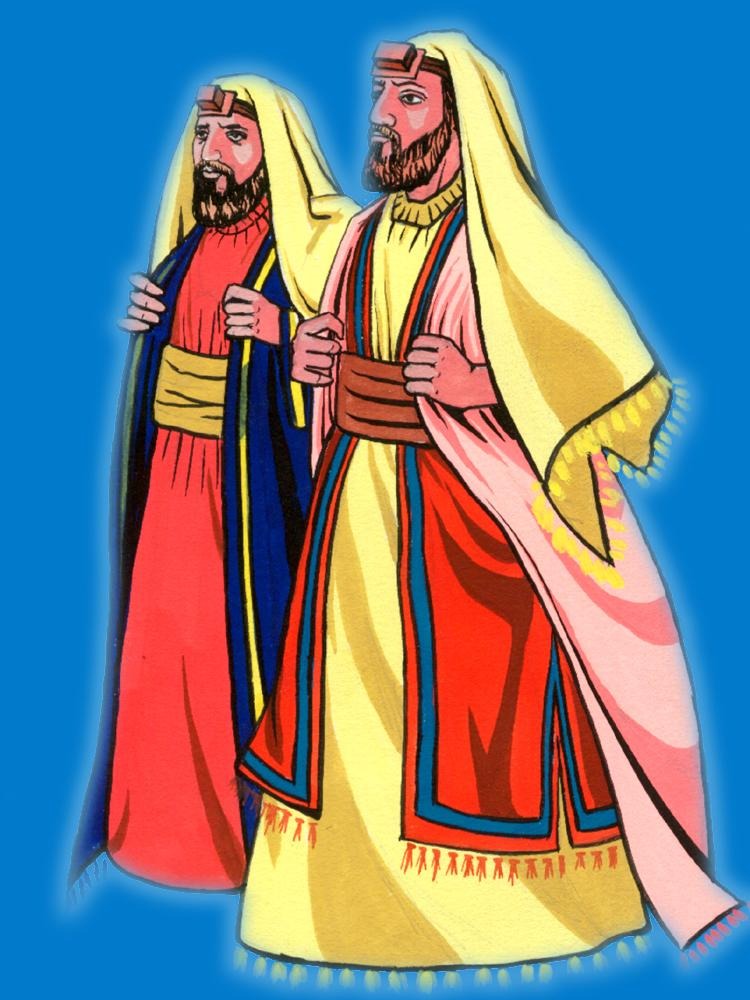
Luke 7:36–37, The Pharisees…a woman…who was a sinner. The name Pharisee itself tells much about this sect or denomination within the first-century religious Jewish landscape. It derives from the Hebrew word perushim meaning “separatist,” and was born out of the fact that Pharisees didn’t associate with Am Ha-Eretz or the common people (Yeshua: a Guide to the Real Jesus and the Original Church, p. 86, by Ron Mosely), who in their view who were impure by the standards of the Levitical law (The Jewish Background of the New Testament, p. 203, by J. Julius Scott Jr.), and their high standards of holiness (Mosely, p 86). Acting like an elite religious fraternity (The Sketches of Jewish Life, p. 208, by Alfred Edersheim), the Pharisees were known for their strict observance of the Torah or the law of Moses, as well numerous additional laws or “traditions of the elders” that were added to the Torah along the way (From the Maccabeees to the Mishnah, p. 149, by Shaye J. D. Cohen; Scott, pp, 206–207; Edersheim, p. 217). Though this sect probably numbered only 6,000 at the time of Yeshua (Cohen, p. 146), they wielded a great deal of power and influence in Jewish society, since they were they viewed as the most accurate interpreters of the Torah (Scott, p. 203; Mosely, p. 92), and they were the leaders and teachers of the masses in the local synagogues (Cohen, pp. 147, 148). For the Pharisee, personal holiness was a badge of honor. To remain a member of this elite sect, one was required to maintain a high standard of holiness relating to tithing, piety, cleanliness and ritual purity, or one would face demotion within the social status of this community, or worse yet, face excommunication and shunning (Mosely, p. 86).
It can be safe to say that the Pharisaic religious system promoted an elitist and holier-than-thou religious demeanor among many of its members who hyper-focused on legalism and religious form and trappings. The result was “a system of pure externalism, which often contravened the spirit of those very ordinances, the letter of which was slavishly worshipped” resulting in hypocrisy (Edersheim, p. 217).
For these reasons, this is may be why the woman in Luke 7:37 was labeled as a sinner. It wasn’t that she was a sinner any more than anyone else, but that she was not part of any recognized religious sect that labeled her as being righteous as a opposed to being a sinner. Because she was probably outside of the accepted religious system of her day, she was automatically given the label of a sinner. In our day, this would be like a church-going Christian viewing a non-church going person as a heathen.
The problem is this. Can we know for certain the condition of a person’s heart and their relationship with the Almighty simply because of their external religious involvements? This is what Yeshua is addressing in this passage—the condition of the heart. To Yeshua, the woman who was labeled as a sinner was much more righteous, in a certain sense, than those of the most preeminent religious club of the day. Look at her humble and repentant demeanor at the feet of Yeshua!
Yeshua was known for shining the precise laser-light of truth on a situation and then turning that situation on its head. The end result was that those who thought they were in first place spiritually, were now in last place, and those who were in last place were first. This gives added meaning to Yeshua’s words, “In the regeneration, when the Son of Man sits on the throne of his glory…many who are first will be last, and the last first” (Matt 19:28–30).
When confronting the religious leaders of his day, Yeshua was a master at upending spiritual apple carts, slaughtering sacred cows, demolishing the wisdom of the world and revealing it for the lie that it was. We are now Yeshua’s representatives on earth carrying out his same work and should be doing the same thing he did. This is because truth doesn’t change over the ages and YHVH is still on his throne regardless of conventional wisdom and popular opinion to the contrary.
Exodus 10:3,Thus says YHVH Elohim of the Hebrews. What Moses did would be similar in our day to going to the president of the U.S., who is the head of the most powerful and advanced nation on earth, and saying, “The Elohim of the people of El Salvador says to you….” How much impact would such a demand have on the U.S. president? However, when YHVH deputizes a person for a divine mission, YHVH, the Creator of the universe, and just one person make a majority! The size of the country of the messenger no longer means anything.
How long will you refuse to humble yourself before me?The sovereign Creator ultimately demands that everyone submits to his will and purposes. Those who refuse to do so imperil themselves. The Scriptures record that YHVH also held other political leaders in addition to Pharaoh accountable for exalting themselves against him and for refusing to humble themselves before him. These include Nebuchanezzar (Dan 4:19ff), Belshazzar (Dan 5:22), Zedekiah (2 Chron 36:12), Lucifer (Isa 14:13ff) and Herod (Acts 12:21–23).
Furthermore, those who put their trust in false gods will come under the judgment of the one supreme and true Elohim or Mighty One of the Bible. Elohim uses men’s false gods or idols as a judgment against sinners to help them to see the futility of their idolatrous delusions and to bring them to repentance (e.g. Isa 66:4–5; Prov 10:24). As Elohim judged the false gods of Egypt one by one and brought that arrogant nation down, he will do the same in the end days with Babylon the Great and the gods or idols of this world. We see a striking parallel between the plagues YHVH brought upon Egypt and those he will bring upon the rebellious inhabitants of earth just prior to Yeshua’s second coming. For example, the seventh plague of the seventh vial is an ultimate expression of the fierceness of Elohim’s wrath upon a rebellious and still blaspheming world (Rev 16:17–21). Seventy five pound hailstones will fall from heaven and the earth will quake beneath. There will be no hiding place from Elohim’s wrath. Additional end-time plages that replicate those of Egypt include grievous sores to come upon men (Rev 16:2), the seawater and fresh water turning to blood (Rev 16:3–4), and darkness upon the earth (Rev 16:10). After this, Babylon the Great will fall (Rev 18:2), even as ancient Egypt fell under the mighty blows of YHVH’s judgment.
Psalm chapter two summarizes the rebellious arrogance of men, and their conspiracy against the Creator to keep control of their earthly kingdoms. Elohim will laugh at them from heaven and will send his Son to judge them and to break their kingdoms in pieces with a rod of iron. Kiss Messiah the Son now and worship him if you expect to escape these judgments (v. 12)!
What gods or idols do we have in our lives that we are holding on to? Each of the plagues against Egypt was a direct strike against one of the many gods of Egypt (Exod 12:12; Num 33:4). Elohim will destroy all pretenders and imposters who dare to challenge his sovereignty. (See notes at Exod 7:14.) The god of self will is the most powerful false god each human will ever face!