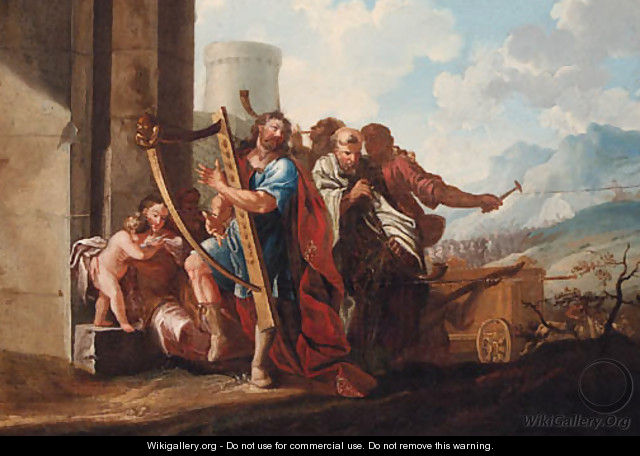
Natan’s Notes on Deuteronomy 27

Deuteronomy 27

Deuteronomy 27:2–10, Set up for yourselves. Immediately upon crossing the Jordan and upon entering the Promised Land, YHVH instructed the Israelites to set up a stone monument containing the Torah and to construct an altar for burnt sacrifices. What is the significance of these and why was it so important that this be Israel’s first order of business upon entering the Land of Promise? Matthew Henry states in his commentary that the Word of YHVH (the Torah) and prayer (the altar) must always accompany each other. Discuss this and relate it to Psalms 51:16–19 and Hosea 6:6 and the believer’s spiritual walk. Also, why did YHVH command the Israelites to construct the altar of uncut and whole stones? To whom does this prophetically point? (Read Dan 2:35, 45; Ps 118:22; Matt 21:42; Luke 20:17.) The stones of the altar were rough and uncut. To whom does this point who became our Living (spiritual) Altar and Sacrifice? (See Isa 53:2.)

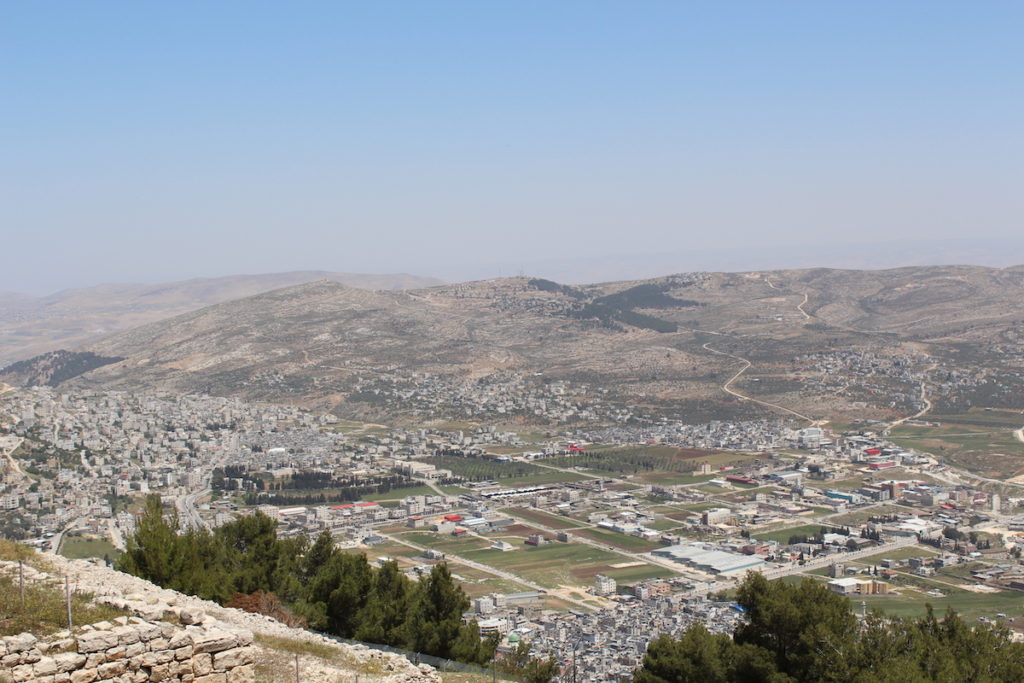
Deuteronomy 27:2, 4, 8, Set up great stones. On Mount Ebal on whole, uncut stones, the Israelites were to write the Torah-law and then coat these stones with lime plaster. Elohim also told them to build an altar there where they were to make burnt and peace offerings. Why was the Torah written on stones on Mount Ebal—the mountain of the curses? Why not on Mount Gerizim, the mountain of blessing? Certainly this cannot mean that the Torah is a curse, for Paul calls it kadosh (holy), just and good in Romans 7:12. What could these stones represent symbolically? 

First, this symbology tells us that those who don’t follow the Torah will come under a curse, for to violate it is sin (1 John 3:4), and the wages of sin is death (Rom 6:23), and every person has sinned (Rom 3:23). 

Second, Who is the Chief Cornerstone, the Stone the builders rejected (Ps 118:22; Matt 21:42; Acts 4:11; Eph 2:20), and the stone cut without hands (Dan 2:34)? What was the purpose of these offerings and to whom do the burnt and peace offerings point? Could white lime plaster symbolically represent the saints, the bride of Messiah, being clothed in robes of righteousness (see Rev 19:7–8)? Who is the King of Righteousness through whom redeemed sinners become righteous? Who is clothed in robes of righteousness once their sins have been atoned for? (Read Heb 7:2, 20–28 cp. Rev 19:7–8 cp. 3:5, 18; Isa 61:10.) Who was wounded for our ­transgressions and bruised for our iniquities, had laid on him the iniquities of us all, and was made an offering for sin (Isa 53:5, 6, 10)? Who was the Living Torah, the Word of Elohim made flesh (John 1:1, 14)? Who redeemed us from the curses of the law (Gal 3:13), which came upon us as a result of our sinning (sin is the violation of YHVH’s law, 1 John 3:4), and thus bringing a death penalty upon us (the wages of sin is death, Rom 6:23)? 

Mount Ebal

Is it now making sense why the Torah and the altar were placed on Mount Ebal? This is another one of the many prophetic shadow pictures in the Torah pointing to the redemptive work of Yeshua at the cross. Let us give glory to Elohim who knows the beginning from the end and to Yeshua the Messiah, the Lamb of Elohim, who was slain from the foundation of the world for our salvation! 

Does this strengthen your faith that Yeshua is indeed the Messiah, the Lamb of Elohim slain from the foundation of the earth? Who else could have fulfilled these prophecies?

Deuteronomy 27:11–28:68, Moses commanded the people.YHVH required the Israelites to recite a “pledge of allegiance” affirming their commitment to him before entering the Land. What can we learn from this? Is this something we should do from time to time in our own spiritual walk: recite pledges of commitment to YHVH and set up spiritual markers or reference points in our lives as tokens of our allegiance to him to which we can harken back when the going gets tough? These are acts of the will that when done can engage the heart and stir up feelings of love, devotion and remembrance.

Deuteronomy 27:11–16, Freedom versus bondage. Christian author Matthew Henry in his commentary on this verse points out something very interesting that none of the Jewish Torah commentaries I have read mention: The six tribes appointed to read the blessings from Mount Gerizim were all children of free women (Leah and Rachel). What are the spiritual implications of this? (Compare this with Paul’s discussion of the free and bondwoman pertaining to Isaac and Ishmael in Galatians 4:21–31.) To which children do the promises of YHVH’s material and spiritual blessing (namely, eternal life through Yeshua the Messiah) belong: those who are in bondage to or under the curses of the Torah-law because they walk in sin (which is the transgression of the law, see 1 John 3:4), or to those who walk in obedience to the Torah (i.e. in sinlessness or who walk in YHVH’s instructions and teachings in righteousness)? This brings up yet another issue. Is the purpose of the Torah simply to condemn people, as is taught in the mainstream church, and to bring people into spiritual bondage, and beyond that, the Torah’s only purpose is to point people to the cross after which it is to be discarded like a dirty old rag? This may be what men’s traditions and doctrines teach, but this is not what the Word of Elohim declares. Selah.

Deuteronomy 27:11–26, Cursed. What are the broader principles or remez understanding behind each of these curses? Imagine how much better the world be if people obeyed these commandments and what they imply. The Creator gave man these laws to keep the civil peace and order in society. When violated, they result in social upheaval, wars, strife,  conflicts, destruction and all sorts of evil consequences between individuals and people-groups.

  • Verse 16—Do not treat your father or mother with contempt: Respect your elders and older people in general.
  • Verse 17—Do not move your neighbor’s property line: Respect the property rights of others, and do not steal anything from your neighbor.
  • Verse 18—Do not make the blind to wander off the road: Take care of the handicapped, disabled and sick among you. Do not take advantage of them.
  • Verse 19—Do not take legal advantage of the stranger, fatherless or widow: Do not take advantage of the underprivileged, poor or the helpless people in society.
  • Verse 20—Do not have sexual relations with your step-mother: Do not have sexual involvements with any non-blood related family member.
  • Verse 21—Do not have sexual relations with animals: What more can be added to this command?
  • Verse 22—Do not have sexual relations with your sister: All incest is forbidden.
  • Verse 23—Do not have sexual relations with your mother-in-law: Again, do not have sexual involvements with any non-blood related family member.
  • Verse 24—Do not attack your neighbor secretly: Have open and honest dealings with everyone around you including your enemies.
  • Verse 25—Do not take a bribe to slay an innocent person: Do not pervert justice, lie or twist the truth to your advantage.
  • Verse 26—Do not violate YHVH’s Torah-law: All of YHVH’s commandments are to be followed.

Deuteronomy 27:11–28, Blessing and curses for obedience. In these verses we find listed some of the blessings and cures for Torah obedience. Do you believe the Torah principles (spiritual truths) of blessing for obedience and curses for disobedience to YHVH’s Word are for us today? If not why not? Is it because you are listening to Bible preachers and teachers who claim to know and teach the Word of Elohim, but who are instead teaching the doctrines and traditions of men by which the Word of Elohim has been made of none effect (see Mark 7:13)?

The following are some questions to ask yourself when considering Elohim’s Torah and the blessings and curses that come upon us as a result of our response to these instructions in righteousness, which are a reflection of the character and nature of the Creator: Does YHVH’s character, Truth or Word change? If the blessings listed in these verses are not being manifested in your life why might that be? Could it relate possibly to your level of Torah obedience and faith or trust level vis-à-vis YHVH and his Word? What changes could you make in your life that might place you in a more favorable position to receive his blessings rather than the curses?

Deuteronomy 27:15–18, The commandments are all inter-connected. To the casual reader, the admonitions contained in these verses may seem to be arranged in a random order, but this is not the case. Let’s discuss the purposeful design of the order in which Elohim gives this commandments.

Consider the following: The prohibition against idolatry (verse 15) is juxtaposed with that of degrading one’s parents (i.e. not honoring one’s parents, or as S. R. Hirsch states in his commentary, “who outwardly is respectful to his parents but inwardly considers himself vastly superior to them”) along with trespassing against one’s neighbor’s property by removing his neighbor’s boundary markers or landmarks. 

Now consider this: One who does not honor and fear YHVH but turns to idolatry (the second commandments) will not honor one’s parents (the fifth commandment) (and vice versa) will likewise not honor the property of one’s neighbor (including his neighbor’s wife). 

Juxtaposed next to these commands is the prohibition against misleading a blind person (verse 18). This means that we should not take advantage of one’s blindness by advising a blind person in a way beneficial to us and detrimental to him. 

Following this commandment is the principle about one who steals justice from another by perverting judgment against one who is weaker socially or financially or who is less informed at law than another thereby giving the advantage to the stronger (The ArtScroll Davis Edition Baal HaTurim Chumash/Devarim, pp. 2126–2127). 

Can you see how each command is interrelated with all the others? Does this not give one insight into the curious statement found in James 2:10, which declares that if you have broken one commandment you have broken them all? This should help us to see that in one way or the other, all of YHVH’s commandments are inter-related, all depend on each other, and they all stand or fall together. 

Now relate James 2:10 back to verse eight of the same chapter where James notes that the entire Torah-law can be summarized as the “royal law of love.” 

As you review YHVH’s list of prohibitions in Deuteronomy 27 can you see any other relationships between these juxtaposed concepts? Learning to exegete (draw truth out of) Scripture in this manner will yield a whole new level of spiritual revelation to the reader.


Deuteronomy 26 on the Joys of Charitable Giving

Deuteronomy 26

Deuteronomy chapter 26 discusses the joy of giving financially to those who are called and ordained of YHVH to do his spiritual work on earth as well as to the poor among you and the blessings that come on the giver as a result (vv. 1–15, 19). Giving is a holy activity (v. 13), and when YHVH’s people obey him in this area and observe his other commandments as well, he proclaims them to be his special people and promises to promote them high above the nations of the world as his holy people (vv. 17–20). This YHVH did for ancient Israel when they obeyed him, and he promises to do the same for those who obey him now (2 Cor 1:20). These eternal and immutable principles of the Torah are for all people for all time and have not changed over time regardless of men’s traditions and religious doctrines that say otherwise. 

You may not feel like YHVH has presently exalted you above all those around you, but consider this: What is your salvation worth and what will your status be after you’ve received your glorified body and are ruling and reigning with King Yeshua over this earth after his return?

Deuteronomy 26:4–11, You shall answer.This was the prayer that one was to make when one brought their tithe to YHVH. Bringing one’s tithe to YHVH was an act of gratefulness and worship and was brought with a joyful heart for the blessing the Almighty had bestowed upon the tithe-giver.

Deuteronomy 26:11, You shall rejoice.Bringing one’s tithes and offerings to YHVH is to be a joyful event since it is a reflection of our gratitude to him for abundantly blessing us. (Compare this verse with 2 Corinthians 9:6–11.) Giving to YHVH is a form of worship since it allows us to put our treasure where our heart is (Luke 12:34). Please join me in praying this prayer: 

Father, help us to give to you out of the abundance of our hearts joyfully and with gratitude for your blessings and bounty in our lives. Help me not to be a fair-weather giver only, but to give out of obedience, even sacrificially, that we may learn to have faith in your promises of provision and to obey you no matter the circumstances. Amein.

(For a brief study on tithing and giving, please see my teaching entitled, “Is Tithing for Us Today?” which is available on our ministry website at http://www.hoshanarabbah.org/pdfs/tithing.pdf.)

Deuteronomy 26:12, You shall give to the Levite, to the proselyte, to the orphan, and to the widow.Throughout the Tanakh, YHVH has a special place in his heart for the “underdogs” of society, as did Yeshua in his ministry. There are those, who through no fault of their own, and some due to their own faults, need help and extra grace and mercy. What is your attitude toward those who fall into this camp? What are you doing to help them?

Deuteronomy 26:13–15, Prayer offered when giving. This is the prayer that the tithe-payer is to pray upon bringing his tithe to YHVH. Tithing leads to prosperity, but for whom? Just the individual? Notice in verse 15 the wording: “bless your people Israel…” The tithe-payer is praying for blessings not just upon himself, but upon the entire nation. What can we draw from this? Is there room for selfish prayers here? What happens when the whole community is tithing and everyone is praying for everyone else’s well-being and blessing?

Deuteronomy 26:17–19, You have distinguished YHVH…YHVH has distinguished you.What does this mean? What is YHVH’s attitude toward Israel? What does the word avouched or distinguished (some translations read: proclaimed or agreeing) mean here? What is transpiring here with the people distinguishing YHVH and YHVH returning the action in verse 18? The resulting action is in verse 19.


Deuteronomy 23 and 25—Natan’s Commentary Notes

More from Deuteronomy 23

Deuteronomy 23:9, Keep yourself from every wicked thing. An aspect of physical warfare or, more importantly as it pertains to the saint, in spiritual warfare that many Bible teachers who teach on the subject fail to cover is the spiritual state of the warrior.  The focus is usually on the enemy or the battle tactics employed, but, again, not on the condition of soldier who is going up against the enemy of the people of Elohim. This section of the Torah covers this oft-overlooked subject (vv. 9–14). 

The word wicked as found in this verse is the generic Hebrew word ra or ra’ah meaning in its most basic sense “evil, bad or distress.” So what does the Torah state in this passage that makes a person evil or bad and unclean and is thus offensive to Elohim? Simply this: bodily emissions that happen to naturally emanate from the human body whether it be human waste or seminal emissions. Such occurrences take a man from a state of ritually purity or being clean (Heb. tahor) to being unclean (Heb. tamay). The solution to the problem is, in the case of nocturnal emissions, cleansing by water, and in the case of the eliminations of bodily waste, burying the waste. What this teaches us it that if one goes into battle in an unclean state, this is offensive to Elohim, and the soldier may not have the favor of Elohim while he is engaging the enemy in battle. This is not a good thing for the warrior!

When it comes specifically to spiritual warfare (as outlined in 1 Cor 10:4–6 and Eph 6:10–18), the drash or homiletical level understanding of this passage teaches us that when engaging the enemy in spiritual battle, the saint must be as clean as possible spiritually. That means that all unconfessed sins need to be repented of and that all illicit behavior must be eliminated from one’s life if one expects the benefits of YHVH’s miraculous aid. One be continually washed clean of sin by the blood of Yeshua the Messiah and by the water of the Word and the Spirit of Elohim.

Because these principles of ritual and spiritual purity are usually not taught to the saints, it is no wonder that many times our prayers are not answered and that the enemy trounces Christians on the streets, in the courts, in the political arena and many other battlefields in various venues in our society. 

All this is to say that the saint must clean up his own act and house first before confronting the enemies of Elohim to do the same. Both Yeshua and Paul address the hypocrisy of those who point the fingers at others while guilty of the same or similar sins.

Judge not, that you be not judged. For with what judgment you judge, you will be judged; and with the measure you use, it will be measured back to you. And why do you look at the speck in your brother’s eye, but do not consider the plank in your own eye? Or how can you say to your brother, ‘Let me remove the speck from your eye’; and look, a plank is in your own eye? Hypocrite! First remove the plank from your own eye, and then you will see clearly to remove the speck from your brother’s eye. (Matt 7:1–5)

Therefore you are inexcusable, O man, whoever you are who judge, for in whatever you judge another you condemn yourself; for you who judge practice the same things. But we know that the judgment of Elohim is according to truth against those who practice such things. (Rom 2:1–2)

Deuteronomy 25

Deuteronomy 25:4, You shall not muzzle. According to Hirsch, this law applies not only to animals, but to workmen as well. It stands to reason logically, if YHVH cares about feeding animals while working, how much more should employers be concerned for their workmen? Rashi disagrees and says it refers only to animals (and not to workmen) and specifically to those animals that are involved in the production of food as would be the case with an ox that was used in treading out grain (to separate the kernel from the chaff). Paul disagrees with Rashi and views this Torah command as a more broadly applicable proverb implying that an employer should not deprive his employees of their wages. He specifically applies this principle to individuals who minster the gospel (1 Cor 9:9; 1 Tim 5:19). Those who work in YHVH spiritual field (the church), Paul reasons, should be supported by those they serve.

Continue reading
 

19 Tips to Surviving Evil’s Onslaught Against Us

2 Timothy 3:1, Last days…perilous times.

Standing Like a Rock in the End Times! 

In these increasingly dark and evil days in which we are now living where evil is made to appear to be good, down is up and black is white, and where YHVH’s people are being increasingly marginalized, persecuted and even killed, what can and should we be doing in the face of evil’s onslaught against us? The following list provides the answers from the Scriptures.

Watch and pray (Matt 26:41; Mark 13:33; 14:38; Luke 21:36).

  • Pray that you might be counted worthy to escape YHVH’s judgments that will be coming on the earth because of wickedness (Luke 21:36).
  • Endure to the end (Matt 24:13; Mark 13:13).
  • Keep your eyes on Yeshua the Lamb and follow him wherever he goes (Rev 14:4).
  • Occupy until Yeshua comes (Luke 19:13). Be busy doing what Yeshua has called you to do to help advance his kingdom on earth.
  • Engage in intercessory prayer, though at this time, it may not do much good, since biblical prophecy has to be fulfilled as end time events occur. This means that things will be getting worse and worse until Yeshua returns and destroys Babylon the Great New World Order. We can still intercede for individuals however.
  • Be an overcomer in every way possible. Be not overcome by evil, but overcome evil with good (Rom 12:21). Those who overcome spiritual evil will experience great rewards (Rev 2:7, 11, 17, 26; 3:5, 12, 21)
  • Be prepared to engage in civil disobedience as a last resort, if necessary. If civil laws violate YHVH’s laws, the Bible tells us to obey YHVH’s laws over men’s laws (Acts 4:19; 5:29; Ps 94:16).
  • Be prepared to help persecuted brothers and sisters in any way possible. You might be next the next one to be persecuted and may find yourself needing help from others, so pay it forward! If you sow, you will reap.
  • Continue to be salt and light to those around you in every way possible (Matt 5:13–16).
  • Don’t expect things on earth to get better. Yeshua never said it would get better, but only darker before his return. He’s coming at the midnight hour when evil will be the most pervasive and rampant on the earth.
  • Expect intense persecution of Bible believers (2 Tim 3:12; Matt 5:10–12; 10:22–25; 23:34; Mark 10:30; John 15:19–21; 16:2, 33; 17:14; 1 Thess 3:3–4; 1 Pet 4:12–16; Rev 7:14). Yeshua in the book of Revelation prophesies that this will occur in the end times.
  • Be wise as serpents (Matt 10:16). Find ingenious ways to circumvent Caesar’s evil and unbiblical mandates without getting caught, while at the same time being obedient to YHVH’s higher laws.
  • Love not your lives unto death (Rev 12:11). Be willing to lose some or all of yourself for Yeshua including your material possessions. Greater rewards await you for your faithful obedience to Yeshua (Matt 10:39; 16:25).
  • Be inspired by the great faith of the biblical and Christian heros who have gone before us (Heb 11).
  • Come out of the end times Babylon the Great world system more completely (Rev 18:4) starting with the spiritual aspects of this evil and ungodly worldwide system.  Eventually, this may mean leaving the cities and going into communal situations into the wilderness with other like-minded believers. Some of the Roman Catholic monasteries were started by those fleeing the corruption of Rome.
  • The more evil intensifies against you, love the light of YHVH’s truth, love Yeshua more and run to him and hold on to him—the Rock of your salvation—more tightly.
  • Love your enemies, do good to those who despitefully use you and pray for them (Matt 5:44).
  • And finally…

Watch, stand fast in the faith, be brave, be strong. Let all that you do be done with love (1 Cor 16:13).  Let the following scriptures admonish you:

“Put on the whole armor of Elohim, that you may be able to stand against the wiles of the devil.  For we do not wrestle against flesh and blood, but against principalities, against powers, against the rulers of the darkness of this age, against spiritual hosts of wickedness in the heavenly places. Therefore take up the whole armor of Elohim, that you may be able to withstand in the evil day, and having done all, to stand. Stand therefore, having girded your waist with truth, having put on the breastplate of righteousness, and having shod your feet with the preparation of the gospel of peace; above all, taking the shield of faith with which you will be able to quench all the fiery darts of the wicked one. And take the helmet of salvation, and the sword of the Spirit, which is the word of Elohim; praying always with all prayer and supplication in the Spirit, being watchful to this end with all perseverance and supplication for all the saints….” (Eph 6:11–18)

“For though we walk in the flesh, we do not war according to the flesh. For the weapons of our warfare are not carnal but mighty in Elohim for pulling down strongholds, casting down arguments and every high thing that exalts itself against the knowledge of Elohim, bringing every thought into captivity to the obedience of Messiah, and being ready to punish all disobedience when your obedience is fulfilled.” (2 Cor 10:3–6)


Natan’s Notes on 2 Timothy 1

2 Timothy 1

2 Timothy 1:6, Stir up. What in us needs stirring up from time to time? Simply this: boldness to share the gospel with those around us as we discuss in the next verse. 

2 Timothy 1:7, Spirit of fear [Gr. deilia]. Deilia denotes “timidity or cowardice.” The opposite of deilia is shame (v. 8), but shame of what? The context is clear here. It shame of the testimony or gospel of Yeshua and of standing up for those who are being persecuted for preaching the gospel (v. 8). For fear of what others will think, too many believers fail to share the gospel with those around them. Yeshua referred to this as putting one’s lamp under a bushel basket when, instead, he called his disciples to be like light on a hill (Matt 5:13–15) and commissioned them to take the gospel to the world (Matt 28:18–20; Mark 16:14–18). For too many saints, the great commission has become the great omission!

For the sons of Elohim, there is nothing to fear!

What have the saints to fear when Yeshua has given them the victory over sin and death (1 Cor 15:54–56)? Nay, through Yeshua the Messiah, the saint can do all things (Phil 4:13), and has become more than a conqueror (Rom 8:37), for greater is he that is in us than he that is in the world (1 John 4:4). After all, if Elohim is for us, who can be against us (Rom 8:31)? This means that YHVH will give us the boldness to share the gospel message with those around us, even as he gave the early disciples the boldness to do so when they asked him for it in the face of life threatening persecution (Acts 4:23–31).

Power [Gr. dunamis]…love [Gr. agapē]…sound mind [Gr. sōphronismos]. Dunamis refers to miraculous power or strength. Agape denotes “affection or benevolence” and, in Scripture, refers to the love of Elohim for his Son, for the human race, believers for Yeshua, the saints for one another, and is a fruit of the Spirit. 

Sōphronismos denotes “a well-balanced, self-controlled or disciplined mind.” In other words, YHVH has equipped the saint with everything he needs to counteract the natural tendency toward fear in difficult situations. We have the miraculous power of the Spirit of Elohim working within us, the fruit of the Spirit of love, and a well-balanced and self disciplined mental state that will give in neither to irrational nor to naturally occurring human fear in the face of difficult situations. 

What is Paul saying here in contrast to the spirit of fear or timidity and being ashamed of the testimony of Yeshua (v. 8)? He is declaring that Elohim has given his saints the means, power and ability to share the gospel with those around them and to stand up for the testimony of Yeshua in the face of persecution rather than succumbing to the natural tendency to pull away in timidity or cowardice. 

Elsewhere, John declare that there is no fear in love, that perfect love casts out fear, and that the saint’s source of love is from the Father in heaven (1 John 4:18–19). If we are full of the love of Yeshua for others, then we will neither be afraid of what they think nor will we be ashamed to share the gospel with them, for our desire to see them saved will override all fear including that of criticism, mocking or rejection by others. The example of this can be illustrated by a house that is on fire and that contains sleeping occupants who are unaware of the fire that is about to kill them. Without thinking and in total boldness, a good Samaritan will break into the house, rush in yelling and screaming for the people to wake up and escape. He will do so boldly and without concern for what those in the house may think. In a sense, this should be our approach to those around us who are spiritually lost and in danger of being cast into the lake of fire.

2 Timothy 1:9, Before time began.YHVH Elohim established his plan of salvation for mankind through the redemptive life and death of Yeshua the Messiah before the world began (Rev 17:8; Acts 15:18; Rom 16:25; Tit 1:2; 1 Pet 1:20). Additionally, YHVH has chosen each saint through Yeshua before the foundation of the world (Eph 1:14; Rom 87:29–30; 11:2; Acts 18:38). That is, he knew each person by name who would accept his gift of salvation (Rev 13:8; 17:8) and, by implication, he also knew those who wouldn’t. Moreover, the kingdom of Elohim or heaven has been prepared for the saints from or before the foundation of the world (Matt 25:35).

2 Timothy 1:10, Life [Gr. zoe] and immortality [Gr. aphtharsia]. Zoe refers to life in it all of its aspects both in physical and spiritual dimensions. Aphtharsia denotes “incorruptibility or generally unending existence.” Through Yeshua, the saint has both physical and spiritual life that will extend past the final curtain of physical death and will continue unendingly into eternity. This is the message and power of the gospel in a person’s life through a relationship with Yeshua.


Is eating biblical kosher a doctrine of demons as some in the Church teach?

1 Timothy 4:1–3 Doctrines of demons…forbidding to marry…abstain from foods [Gr. broma]. 

Asceticism—A Doctrine of Demons

When Paul speaks of “doctrines of demons” and then goes on to mention “to abstain from foods which Elohim created” is he referring to the biblical dietary laws as many Christians scholars assert? If not, that what social and cultural forces of that day were affecting the saints such that Paul had to instruct them to beware of “doctrines of demons” that were encouraging them not to marry and to abstain from eating certain types of food? 

To answer this question, we must first define some terms. Is the Greek word food (Gr. broma) as used in verse three a reference to “articles allowed or forbidden by the Jewish law” (i.e. Elohim’s Torah-law or law of Moses) as the well known Strong’s Concordance claims? Is The Theological Dictionary of the New Testament (The TDNT)correct in its definition of this Greek word, when it declares that broma relates to the “cultic and ascetic prescriptions of Judaism which are declared to be religiously indifferent by Jesus and early Christianity…[thus the] distinction between clean and unclean meats is done away” (vol 1. p. 642)—a claim that Arndt and Gingrich do not even make in their touted Greek lexicon (nor do the lexicons by Vine or Thayer)? 

Clearly, contrary to what some biblical scholars assert, Paul cannot be referring to the Torah here, since the Torah-law of Elohim neither prohibits marriage, but encourages it, nor does it command the abstention of eating biblically approved meats. In fact, the whole Levitical and tabernacle system revolved around the sacrifice and eating of kosher animals. To say these are doctrines of demons (as some Christian teachers claim) is blasphemy against YHVH Elohim’s Torah, which is the Creator’s very instructions to humans on how to live righteously and without sin (Ps 119:172; Deut 10:12; 1 John 3:4; 2:3–6; John 14:15) .

The word foods or meats as found in 1 Tim 4:3 is the Greek word broma referring to “food in general.” However, contextually, Paul is using a narrower definition of foods or meats based on his statement in verse four where he refers to “every creature of Elohim” (v. 4). Creature is the Greek word ktisma, which literally means “creature,” and, as used in the NT, refers to living and breathing creatures as opposed to all other creations of Elohim such as plants and rocks (i.e. ibid.; also see Jas 1:18; Rev 5:13; 8:9). Therefore, Paul is not referring to food in general (plants and animals) but specifically to food which edible animal meat as biblically defined. 

Once again, if Paul is not referring to the Torah when he is condemning these doctrines of demons that are calling for celibacy and the abstention of meat eating, then to what is he referring?

Continue reading
 

Ecclesiastes 5 and 6—Natan’s Commentary Notes

Ecclesiastes 5

Ecclesiastes 5:1, Walk prudently [keep thy foot, KJV]. Once again, the Preacher teases the reader by inserting another “God principle” into his monologue on the ultimate meaninglessness of life. It is as if he is toying with us by, on the one hand, repeatedly demonstrating to his reader the vanity of life, yet, on the other hand, giving his reader a glimpse into another reality, another dimension that is outside of this time-space continuum—this prison spaceship called life on earth. He is telling us in bits and pieces that there is a bigger picture, a better way, but one has to factor Elohim into the equation for that picture to come into view. As long as one does not, then there is no hope, purpose or meaning to life. If one does, however, then a whole new picture begins to emerge out of the obscurity of the dark fog of this physical existence.

So how does one walk prudently, or keep one’s foot, so that one does not stumble over the conundrums of trying to squeeze meaning out of one’s physical, seemingly pointless life? 

Go to the house of Elohim. When we think of the “house of God” what immediately comes to mind? Probably the ancient temple of Elohim in Jerusalem. But that temple is long gone. So what is the house of Elohim now? A church? A cathedral? Some manmade chapel somewhere where one is surrounding by religious icons and an artist’s conception of God that somehow stirs the emotions of man into a state of worship and awe? Or is it something much deeper and simpler than that? What if one does not have a church building to go to? Then what? Is it impossible to find Elohim because some man or men somewhere have not constructed a physical building and placed a label on it called “a church”? 

The fact is that if one digs deeply into the meaning and purpose of the biblical concept of “the house of Elohim” one will find that the Tabernacle of Moses and the Temple of Solomon were representations of the composite human being comprised of a physical body housing a soul (the mind, will and emotions) and a spirit (the deep, inner part of man that is immaterial and connects us to Elohim who is a Spirit). In the Testimony of Yeshua, we learn that the saint is now the temple of the Spirit of Elohim or “the house of God.” As the ancient Israelite temple was “the house of Elohim” on this earth housing the glory of Elohim’s presence within its inner most chamber (the holy of holies), even so the presence of Elohim now resides in the innermost part of man—his personal spirit.

Draw near to hear. So when the Preacher tells us to go into the house of Elohim and “to draw near to hear,” he is telling us to go carefully, prudently and not to rush in. Stop, quiet down one’s continuos roiling thoughts and emotions, and listen. Listen to the Spirit of Elohim speaking to us through our personal spirit. 

Ecclesiastes 5:2, Do not be rash. Once again, the Preacher continues to give us more clues on how to find Elohim­—how to escape the endless hamster wheel called life which ends in death, which is vanity or ultimately meaningless emptiness. Slow down! Think before you speak. Say less. Stay humble and small before Elohim. These are keys to finding Elohim. These instructions seem overly simplistic, yet how elusive they really are in this modern world—especially for those who live and work in urban settings.

Ecclesiastes 5:3, Dreams. Anyone can dream big ideas and con people into thinking that they are on track to achieving great things. In reality, many words and a multitude of dreamy ideas mean little or nothing.

Ecclesiastes 5:4–5, Do not make a vow. Elohim is not impressed by talkers; he wants doers. It is better not to open one’s mouth, to give one’s word and to make commitments, than to spout off grandiose promises and ideas that will never come to fruition.

Ecclesiastes 5:6–7, Do not let your mouth. The proper control and use of one’s mouth is a key to finding Elohim, for it is the mouth’s misuse that engenders much grief and conflict that makes this somewhat life on this earth even more difficult, stressful, full of conflict and ultimately meaningless. Moreover, as stated elsewhere, in the multitude of words there is no lack of sin, which only takes us further away from Elohim and our only escape from this wearisome and tedious physical existence. A foolish and godless person gives little thought to the words that come from his mouth, which only leads him little-by-little deeper into the pit of despair of this physical life. 

Fear Elohim. The Preacher continues to give us clues in the form of a trail of delectable bread crumbs that will lead us upward and out of the vanity of vanities of this physical existence. In the Psalms and Proverbs we learn that the fear of Elohim is the beginning of both knowledge and wisdom. Fear is a safety mechanism that preserves life. The fear of death keeps one from stepping off a tall ledge or from ingesting a poisonous substance. Likewise, the fear of Elohim will keep us on the straight and narrow path morally and spiritually, so that we are less likely to sin and bring the miserable consequences thereof upon ourselves in this life and the next life.

Ecclesiastes 5:8–9, The oppression of the poor. Do not be overly worked up over the oppression of the poor and social injustice. , for these are part of the human condition. It always has been and always will be, and there is little or nothing one can do about it, so why stress yourself out over it and make your already vain life more meaningless? After all, it is to the advantage of government officials to address oppression and injustice , or else they will lose their lofty and lucrative positions of power from which they rule their people. Disgruntled people eventually rise up and overthrow their rulers.

Ecclesiastes 5:10–17, He who loves silver. In this section of his discourse, the Preacher continues to demonstrate the ultimated empty meaninglessness of making the acquisition of wealth and material possessions one’s chief goal. While such a person pursues riches, he is actually impoverishing himself in many ways. On the other hand, the one who humbly labors in his profession will sleep well at night, for he has worked hard and honestly and can feel good about it (v. 12).

Ecclesiastes 5:18–20, Here is what I have seen. At this point in his discourse, the Preacher gives a summary of what he has learned and preliminary conclusion to finding some measure of happiness in life without factoring in Elohim. Work hard and enjoy the fruits of your labor including good food and drink. These are gifts from Elohim to all humans to blunt the ultimately reality of the meaninglessness of this life. So rejoice in these things and be grateful. Even thought the Preacher does not spell this exactly, perhaps one can read between the lines and surmise that a few thoughtful and grateful individuals will stop for a moment form their labors, and in gratitude look upward to heaven and discover Elohim. In so doing, they have taken a first step to finding an escape from the endless and seemingly pointless cycles of life on this earth.

Ecclesiastes 6

Ecclesiastes 6:1–12, More hopeless despair over the seeming pointlessness of life. The next twelve verses are a continuation of the main theme of Ecclesiastes: the pointlessness of life without Elohim.

Ecclesiastes 6:9, Better is the sight of the eyes. One in the hand is worth two in the bush. Enjoy and be thankful for what you have now instead of always wanting more and never being satisfied.