Before his death, Moses, the great prophet who spoke face to face with Elohim, prepares the children of Israel and their succeeding generations for the ministry of the prophet to come, as well as warns them against false prophets. The Theological Wordbook of the Old Testament (pp. 544–545) lays out Moses’ instructions to YHVH’s people in five steps. In Deuteronomy 18:9–22, YHVH formally proscribes any involvement with the bogus mantic (i.e. relating to divination or prophecy) practices of the surrounding nations (vv. 9–14). Then having stated that a line of prophets would speak or write with the same authority of Moses, he commanded the Israelites to render the prophet the same obedience he had commanded them to give Moses (vv. 9–14). Five certifying signs of a true prophet (Ps 74:9; Matt 12:38; Acts 2:22) were then were then given:
The prophet must be an Israelite or “of the brethren” (vv. 15, 18).
He must speak in name or voice of YHVH (vv. 16, 19, 20), and the death penalty being for those who falsely claimed to do so (v. 20; 18:1ff; 1 Kgs 18:20–40).
Supernatural knowledge of the near future was to be a sign of the authenticity of the prophet’s divine appointment (vv. 21–22; 1 Kgs 22; Jer 28, esp. v. 17).
The prophet might perform some other miraculous signs (Deut 13:1ff; 1 Kgs 18:24, esp. v. 36).
The final test was strict conformity to or agreement with the previously certified revelations by Moses at first and by the prophets to follow (Deut 13:1–18). The fifth requirement is emphatic, since the entire thirteenth chapter is devoted to it.
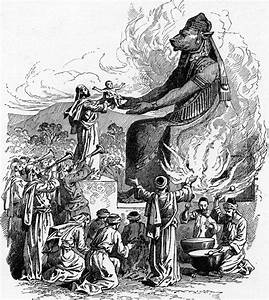
Deuteronomy 18:10,One who causes his son or daughter to pass through the fire.
The Abominable and Idolatrous Practice of Abortion Is Modern Baal Worship!
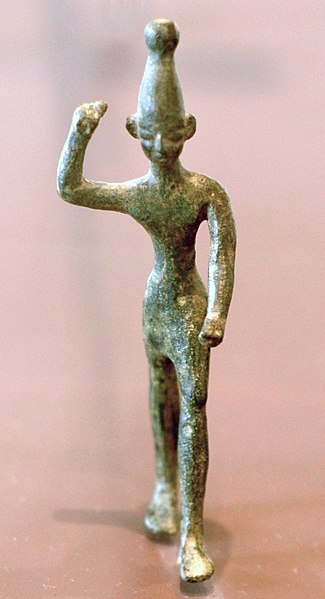
The ancient Canaanite practice of child sacrifice was done in honor of the Canaanite deity Moloch (see Lev 18:21 and 20:1–6). The name moloch Hebrew means “king”with the root of the word meaning “to rule or reign.” Child sacrifice (the ancient form of modern abortion or infanticide) though a pagan practice that YHVH abhorred, was practiced by both houses or kingdoms of Israel after they had drifted into spiritual syncretism with the heathen cultures around them (see 1 Kgs 11:7; 2 Kgs 16:3; 21:6; 23:10,13; Jer 7:31; 19:5; Ezek 16:20; 23:37).
Baal appears to be a synonym of Molach or Moloch (see Jer 19:5 and the Ency. Britan. eleventh edit., vol. 18, p. 676). After the children were sacrificed to this demon entity, the dead bodies were thrown into the garbage dump of the Valley of Hinnom or Tophet just below the Temple Mount in Jerusalem (Jer 7:31; 19:5–6). Apparently, the children were not burned alive, but were slain (by knife) like any other sacrifice before being thrown into the fire and then into the garbage dump (ibid.). The ancients sacrificed their children to appease their bloodthirsty gods of prosperity, sensuality and fertility (The Story of Civilization, vol. 1, by Will Durant, pp. 66–67, 297).
What can we learn from these random pieces of historical information concerning the ancient practice of child sacrifice? It was done in honor of their deity; in other words, their idol was the king that ruled their lives. What is the chief deity in modern America and most everywhere else in the world? Money and wealth? Sex and pleasure? Fun and entertainment? In ancient times, children were killed by a knife, thrown into the fire and then into the garbage dump. Today, what happens in America and many other countries with unwanted children? Parents abort their babies or have them murdered while being born (partial birth abortion) by using burning solutions to kill the baby in the womb and scalpels and scissors to hack the baby to pieces to aid in its extraction. Afterwards the dead baby is tossed into a dumpster or body parts are sold for “medical” purposes.
What reasons do parents give for killing their children? “It will cost too much to raise them and it’s too much trouble” (greed, hedonism and selfishness). “It will interfere with my career” (selfishness and greed). “I want to have pleasure without responsibility” (selfishness, hedonism and greed). Regardless of the excuses, the reasons today are the same as those of the ancients: prosperity, greed, hedonism, selfishness and so on. Are we any different or any more “civilized” than the ancients? YHVH called abortion an abomination (which means he viewed the practice as “disgusting, abominable,abhorrent, detestable or loathsome,” Deut 18:12).
Make no mistake about it. The modern practice of abortion is still the worship of the ancient murderous demon-god Moloch or Baal whether those practicing abortion know it or not. The reasons for engaging in this abominable practice are still the same, and the evil, murderous and demonic spirit motivating people to do it is still the same. Humans are no different today than they were thousands of years ago. Only the actors, costumes and venues have changed. The actions and evil heart of man remains the same without the transforming power of Word and Spirit of Elohim at work to convert sinful humans from the kingdom of darkness and the worship of and obedience to Baal (Satan) to the kingdom of light and the worship of and obedience to YHVH Elohim.
Do you abhor that which YHVH calls an abomination? In Scripture, does YHVH call children and fertility a curse … or a blessing? (See Deut 28:11 and Ps 127:3–5.)
Deuteronomy 18:15, A prophet from your midst, like me, shall YHVH your Elohim raise up for you.
Jewish and Christian Opposition to Moses’ Messianic Prophecy
Moses—A Prophetic Type of the Messiah
Obviously, Moses’ Deuteronomy 18 prophecy concerning the Messiah was fulfilled in the person of Yeshua. Who else in the history of the world could have fulfilled this prophecy? Despite this, the non-believing religious Jews, to their discredit, run around in philosophical circles attempting to prove that this verse does not apply to Yeshua. Similarly, the Christian church, in its own way, also disbelieves this prophecy. Let us examine some of the arguments attempting to circumvent the simple truth of this messianic prophecy.
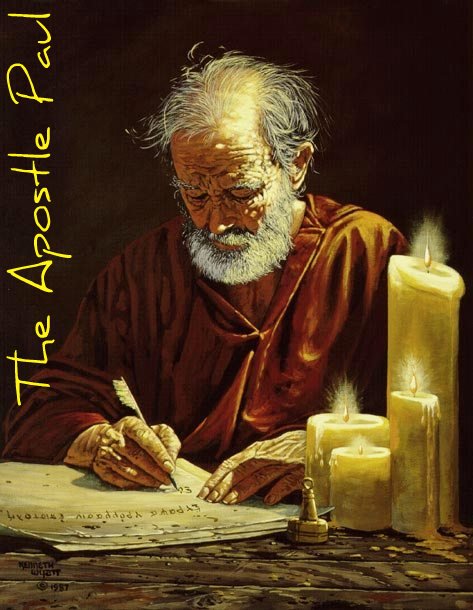
The church has lied to YOU about Paul and his epistle to the Galatians!NOW learn the truth…
An Important Question
When addressing the lies that the mainstream church has been dishing out like a load of dung against Paul and the Word of Elohim (i.e. Yeshua the Messiah, the Word of Elohim) since the time of the early church fathers, let us first ask an important question that has far-reaching implication including whether you can trust the Bible and whether you are saved or not. In the Epistle to the Galatians. It is this: Is Paul advocating the abrogation of the Torah-law as mainstream Christianity teaches or not?
This is the lens through which most Christians view Galatians. For example, the chapter subheadings in my NKJV Bible reveal the antitorah bias of mainstream Christianity. The heading above Galatians 2:11 reads, “No Return to the Law,” and the heading over Gal 3:10 reads, “ The Law Brings a Curse.” When Christians study their Bibles and encounter these subheadings that are written by men and not inspired by the Spirit, what are they to think? Most don’t questions the scholars who translate the Bible or the publishers sell the Bibles. Most readers will automatically thinks to themselves, “After all, these translators and publishers are Bible experts, they know more than I do, so who am I to question them?”
Interestingly, the same author of Galatians elsewhere admonishes us to, “Prove/test all things; hold fast to that which is good” (1 Thess 5:21). This is the responsibility of each saint as he studies the word of Elohim. Therefore, it behooves us to have a touch of intellectual scepticism when studying the Scriptures to insure that we’re not unwittingly putting our faith in the traditions and doctrines of men by which the word of Elohim has been made of none-effect (Mark 7:9, 13), and that we haven’t inherited lies that have been passed on down to us from our spiritual fathers (Jer 16:19). Let us instead be like the righteous Bereans who “searched the Scriptures daily to find out whether these things were so” (Acts 17:11).
Instead of looking at Galatians as a stand-alone book, let’s view it in the broader context of all the New Testament writers’ and Yeshua’s view of the Torah. After all, the Scriptures cannot contradict themselves. The Bible doesn’t lie, Elohim doesn’t change, and Yeshua declared that the Scriptures can’t be broken (or loosened, untied, dissolved, annulled, John 10:35).
In 1 Cor 11:1, Paul instructed us to imitate him as he imitated Messiah. So let’s follow Paul’s advice.
What did Yeshua teach and do vis-à-vis the Torah?
He never violated the Torah (or sinned), or else he couldn’t have been our sin-free Savior and taken upon himself the consequences or penalty of our sins, which is death.
Paul goes on to tell us to imitate him as he imitates Yeshua. This includes obedience to the Torah.
Elsewhere, in many places, Paul advocates Torah obedience as we will see next.
How Did Paul View the Torah (“Law”)?
In answering this question, let us allow Paul to speak for himself in order to establish his predisposition with regard to the Torah-law. Was he a proponent or opponent of it? Several Scriptural quotations from his own pen should suffice in answering this question:
Wherefore the law [Torah] is holy, and the commandment holy, and just, and good. (Rom 7:12)
For we know that the law [Torah] is spiritual: but I am carnal, sold under sin. (Rom 7:14)
For I delight in the law [Torah] of Elohim after the inward man… (Rom 7:22)
What shall we say then? Shall we continue in sin [i.e. violation of the laws/Torah of YHVH, see 1 John 3:4], that grace may abound? Elohim forbid. How shall we, that are dead to sin, live any longer therein? (Rom 6:1–2)
Do we then make void the law through faith? Elohim forbid: yea, we establish the law. (Rom 3:31, Romans was written in about A.D. 56)
But we know that the law [Torah] is good, if a man use it lawfully…(1 Tim 1:8, First Timothy was written just before Paul’s martyrdom in about A.D. 66)
But if, while we seek to be justified by Messiah, we ourselves also are found sinners [i.e. violators of the law/Torah], is therefore Messiah the minister of sin [lawlessness/Torahlessness]? Elohim forbid. (Gal 2:17, Galatians was written between A.D. 55 to 56)
Toward the end of Paul’s life and ministry when, according to many Christian theologians, Paul was supposed to have already liberated the first-century believers from the “shackles and bondage” of the Torah-law, yet in the Book of Acts we read the following:
And when they heard it, they glorified YHVH, and said unto him, Thou seest, brother, how many thousands of Jews there are which believe [in Yeshua the Messiah]; and they are all zealous of the law [Torah]: And they are informed of thee, that thou teachest all the Jews which are among the Gentiles to forsake Moses, saying that they ought not to circumcise their children, neither to walk after the customs. What is it therefore? The multitude must needs come together: for they will hear that thou art come. Do therefore this that we say to thee: We have four men which have a vow on them; them take, and purify thyself with them, and be at charges with them, that they may shave their heads: and all may know that those things, whereof they were informed concerning thee, are nothing; but that thou thyself also walkest orderly, and keepest the law [Torah]. (Acts 20:20–24, written in about A.D. 58 to 60)
While he answered for himself, Neither against the law [Torah] of the Jews, neither against the temple, nor yet against Caesar, have I offended any thing at all. (Acts 25:8; Paul made this statement in a court of law about A.D. 62.)
And it came to pass, that after three days Paul called the chief of the Jews together: and when they were come together, he said unto them, Men and brethren, though I have committed nothing against the people, or customs of our fathers, [i.e. the Torah] yet was I delivered prisoner from Jerusalem into the hands of the Romans. (Acts 28:17, written about A.D. 63)
Viewing Galatians Through a Different Lens
In view of the fact that Paul instructed us to imitate him as imitated Yeshua, who was Torah observant, and in light of the fact in numerous places in Paul’s own writings and in the Book of Acts we see that Paul was Torah observant to the end of his life, what conclusion can we come to in light of these facts? Either the Bible is consistent, and the Torah is for all people for all time, or Paul was an inconsistent liar in telling us, on the one hand, to follow the Torah, and on the other hand, telling us not to obey it. Which is it? If Paul is inconsistent, then the truth of the Bible is inconsistent, the Scripture is broken, Yeshua is a liar and the Bible is a lie. Which one is it?
There is another answer to this dilemma. Perhaps the mainstream church has misinterpreted Paul in the Book of Galatians and has come to a skewed view in believing that Paul abrogates the Torah in Galatians. We take the position of the inerrancy of Scripture, that it can’t be broken, that Elohim and Yeshua don’t lie, and that Paul wasn’t a duplicitous schizophrenic. Instead of viewing Galatians as an antitorah tirade courtesy of Paul, maybe there is something else going on here that needs to be discovered—the real message of Galatians that in no way contradicts the rest of the Bible.
2 Corinthians 3:11, Passing away. This is not a reference to the Torah-law itself, but to the old or former covenant (i.e. the agreement or contract YHVH and Israel made with each other) as it phases into the new or renewed covenant. Yeshua initiated the new covenant at his last supper, but it will be finalized with the two houses of Israel (see Jer 31:31, 33 and Heb 8:8) at his second coming when the two sticks or houses of Israel are reunited (see Ezek 37:15–27) at which time he will finalize the new covenant with a reunited Israel (v. 26; see also Isa 54:10; 55:3; 59:21; Ezek 34:25; Jer 32:40; 50:5; Hos 2:18–23). We are presently in the intermediate phase between the two covenants. To view it differently, Yeshua betrothed himself to his spiritual bride (redeemed Israel, spiritual Israel or the Israel of Elohim, see Gal 6:16) at his last supper, but will marry her at his second coming. The saints who are now in Yeshua are under the new covenant as the betrothed bride of Yeshua, but all Israel will be brought into the new covenant at his second coming at which time he will finalize the covenant that he initiated with his disciples before his death.
Attaining Spiritual Maturity in the New Covenant—On Being a Spiritual Mountain Climber
(This manna from heaven was revealed and downloaded to Natan in the back country of Alaska while sitting, Bible in hand, prayerfully, overlooking Little Port Walter on Baronov Island [75 miles SE of Sitka], and while on a boat in the Pacific Ocean in the Chatham Straights between Baronov and Admiralty islands.)
On Being Spiritual Mountain Climbers
From the time that YHVH revealed himself to the children of Israel while they were enslaved in Egypt, he has been calling his people to be spiritual mountain climbers. He first called the Israelites out of Egypt and up to Mount Sinai, and then up to Mount Zion in Jerusalem. He then called his people to come even higher yet to the upper room on the day of Pentecost, and he is now calling his people to come up even higher to the New Jerusalem that is above us and is “the mother of us all” (Gal 4:26).This highest mountain of YHVH is the ultimate source of our spiritual sustenance, the source of the river of life along which the trees of life are situated (Rev 22:1–2). From this spiritual wellspring comes all divine revelation and ultimately immortal life as children of the Most High. What does it mean to be a spiritual mountain climber?
The beginning of the upward spiritual journey of YHVH’s people is memorialized in the counting of the omer, which starts on First Fruits Day occurring during the Feast of Unleavened Bread and culminates fifty days later with the Feast of Weeks or Pentecost (Heb. Shavuot; Lev 23:4–16). Each new step in this journey is a stepping stone or a launch pad to the next. For the Israelites, the journey started at sea level in the flat-land Nile River delta area of Egypt (a metaphor for this world, Satan and death) and then continued climbing higher and higher until it finally reaches heaven itself—the abode of Elohim. YHVH gave Jacob a similar perspective when he gave him the vision of the ladder to heaven in Genesis 28.
The problem is that most people only climb so far in their spiritual journey and then stop, or they grow weary along the way, or they become comfortably complacent at the level they have thus far attained and never move past that spot. Merely treading water while in the river of life means that one is making no forward movement; they may, in fact, be pulled backwards by the downward current. This is dangerous because while we think we are moving forward, we may actually be going backward! Yeshua warned the Laodicean church about such an attitude of self-assurance and complacency in Revelation chapter three.
To not move forward spiritually is to stagnate and to die. YHVH wants a people that are on the move, who will obediently follow him wherever he leads, and not stop and park along the way only to construct their religious monuments with their fossilized customs, rituals and traditions. Heaven is a far above the earthly plane, and YHVH wants children who will seek him no matter what, who have a heart to follow him no matter where, and no matter the cost. Although eternal life is a free gift from heaven, it will not be given easily. It costs nothing, but, at the same time, it costs everything! Each of us must be willing to sacrifice his all—to lose his earthly life—to gain eternal life. YHVH refuses to give out his priceless gift of eternal life willy-nilly to anyone and everyone! YHVH requires that his saints be determined, tough and gritty mountain climbers who refuse to give up until that summit is reached. He has no pleasure in those who turn back, or refuse to go on. The older generation of Israelites found this out the hard way while trekking through the wilderness—a symbolic metaphor for this physical life—en route to the Promised Land (a metaphor for eternal life or heaven on earth). Their hearts were sin-hardened and they lacked the faith in YHVH to make it all the way. Thus they perished in the wilderness just short of their goal and ultimate reward (read Heb 3:7–19; 4:1–11). Only those who doggedly overcome the world, the flesh and the devil remaining lovingly loyal and obedient to him will receive the highest reward he has to offer. As Yeshua said,
But he that shall endure unto the end, the same shall be saved. (Matt 24:13)
The Spirit Versus the a Letter of the Law—The Two Covenants
Let’s now explore what it is to climb the mountains that YHVH has placed before us to ascertain where we are at on the journey and how far we have to go to reach the ultimate summit.
WARNING! It is time for the saints of the Most High Elohim to boycott the corporate entity called The Church Inc. Just walk away from it! This is part of the harlot system that YHVH Elohim is calling his people out of that has tickled ears and made people spiritually drunk for far too long. Wake up saints and come out of her!
2 Corinthians 2:17, Peddling the word of Elohim.Are you as fed up with peddlers of the Word of Elohim as I am? It’s everywhere you go—people standing along the highways of biblical religion with their hands out panhandling. Even in Paul’s day as in our, the ministry of the gospel has “many” gospel peddlers.
Show me just about any big name in Christianity, Messianic, the Hebrew Roots Movement and, in most cases, I’ll show you someone who has built their ministry on shameless self promotion, hype, glitz, corporate marketing techniques and their ability to cleverly woo people to their book seller’s table or website that is chalk full of wares that promise to fill your head with the latest prophetic insights, esoteric biblical head knowledge, pop-psychological, self-help, humanistic, new-age, ear-tickling pap. It’s all yours, if you’ll only plunk down some of your hard-earned cash.
Well, I’m not the only one who’s fed up with these modern-day merchandizers of the gospel. The Apostle Paul was too. Evidently it was rampant in his day as well as we have seen in the scripture verse quoted above: “For we are not, as so many, peddling the word of Elohim…” The word peddling there means “to be a retailer, to make money by selling anything, to get sordid gain by dealing in anything, to do a thing for base gain, to trade in the word of God, to try to get base gain by teaching divine truth, to corrupt, to adulterate, peddlers were in the habit of adulterating their commodities for the sake of gain.”
These guys don’t need to bother knocking on the door of the congregation I pastor, nor at the events our ministry sponsors. The welcome mat isn’t out for them!
Haven’t these spiritual beggars read the word of Elohim? Don’t those who support them know that this was not the way of Yeshua and the apostles? How many examples in the Bible are there of the true servants of Elohim peddling the Word of Elohim, and then living off the proceeds? None! Didn’t Yeshua tell his disciples when he sent them out to preach the gospel, “Freely you’ve received, freely give?” (Matt 10:8). What about this don’t we understand? Remember how Yeshua turned the money-changers tables over in the temple, and how he lambasted the greed of the Jewish religious leaders of his day who “devoured widows houses” (see Matt 21:12; 23:14)? Sadly, little has changed in religious circles since then.
Now I’m not opposed to people freely and without coercion giving to ministries who feed them by preaching and teaching the Word of Elohim. This is totally copacetic to the biblical norm. But selling, peddling and merchandizing is another thing. Of course, none of the offending parties are doing this are they? Just ask them, as they adroitly polish their 14 karat gold-plated hallows. The problem is that the gold plating is wearing thin, and the pot-metal is showing through. The discerning person see this and avoids such people.
The truth of Elohim cuts like a sword to reveal these characters for who and what they are—soulish, greedy, carnal and lazy bums who desire to live of the fat of YHVH’s sheep instead of submitting to the Spirit, truth and Word of YHVH Elohim (Heb 4:12). Go read, if you dare, what the prophet Ezekiel had to say about these guys in Ezekiel 34. YHVH’s judgments are coming against them (verse 20)! This is an end-times prophecy (see verses 23–25).
Other scriptures deal with this issue as well. Speaking of the qualifications of a spiritual overseer, Paul writes,
Not given to wine, no striker, not greedy of filthy lucre [covetous]; but patient, not a brawler, not covetous… (1 Tim 3:3)
Speaking of the qualifications of a spiritual overseer, Paul writes,
Likewise must the deacons be grave, not doubletongued, not given to much wine, not greedy of filthy lucre [money]… (1 Tim 3:8)
Paul continues,
For a bishop must be blameless, as the steward of God; not selfwilled, not soon angry, not given to wine, no striker, not given to filthy lucre [money]… (Tit 1:7)
Speaking of false teachers, Paul writes,
Whose mouths must be stopped, who subvert whole houses, teaching things which they ought not, for filthy lucre’s sake [dishonest gain].”(Tit 1:11)
Peter instructs,
Feed the flock of God which is among you, taking the oversight thereof, not by constraint, but willingly; not for filthy lucre, but of a ready mind… (1 Pet 5:2)
Interestingly, the problem of spiritual pan-handling peddlers and money-grubbers persisted in the early church even after the death of Paul. The Didache, which is one of the earliest, non-canonical documents that exists from the apostolic age from the late first-century A.D., contains some warning, which are as cogent in our day as then. It lays down some guidelines pertaining to the traveling Bible teachers of that day, which we would do well to follow.
Let every apostle [and prophet] that comes to you be received as the Lord. And he shall remain one day, and if there be need the second also; but if he remains three days, he is a false prophet. And when the apostle departs let him take naught, save provision of bread till he be lodged. But if he ask for money, he is a false prophet.
Numbers 23:4,Seven altars. Rashi, the Jewish Torah scholar, says these seven altars refer to the altars built by Israel’s ancestors—four of which were built by Abraham (The ArtScroll Sapirstein Edition Rashi/Numbers, p. 288). Whether this is true or not, this story can serve to teach us a lesson. Perhaps Balaam superstitiously thought that by returning to some place where humans in times’ past had encountered the Presence of YHVH he could actually find YHVH there. Matthew Henry in his commentary on this verse states, “Oh the sottishness of superstition, to imagine that God will be at man’s beck!” To resort to programs, rituals or methodologies to “conjure” up the Presence of YHVH can lead to idolatry and witchcraft. What “attracts” the Spirit of YHVH? Is it worship, praise, a repentant and humble heart, faith in him with obedience to his Word, and love for him or rituals, charms, incantations and religiosity? You know the answer.
Numbers 23:21,Perverseness in Israel. Balaam tried to find some iniquity, or some perversion in Israel that would give him legal grounds to curse Israel, but could find none. Remember, a curse causeless shall not land (Prov 26:2). Satan, the accuser of the brethren (Rev 12:10) has no legal grounds with which to attack the righteous of Yeshua who are submitted to the authority, will, Word and Spirit of YHVH (Jas 4:7), and who are under the blood of Yeshua, the Lamb of Elohim (Rev 12:11). How do we stay in such a spiritual state so that the attacks of the enemy have no legal ground to stick in our lives, and so that the fiery darts of Satan are instantly quenched? (Read compare and discuss Eph 6:10–18; Col 2:15; Luke 9:1; 10:19.)
Numbers 23:15–25, The arrogant hypocrisy of Balaam. Balaam calls YHVH “the Most High” and “the Almighty.” He had great respect for YHVH (as does Satan as we learn from James 2:19, “You believe that there is one Elohim, you do well: the devils also believe and tremble.”), but he did not have enough fear of, faith in and love for YHVH to obey him. Does this describe you? How much do you hold back loving YHVH with all your heart, soul, mind and strength?
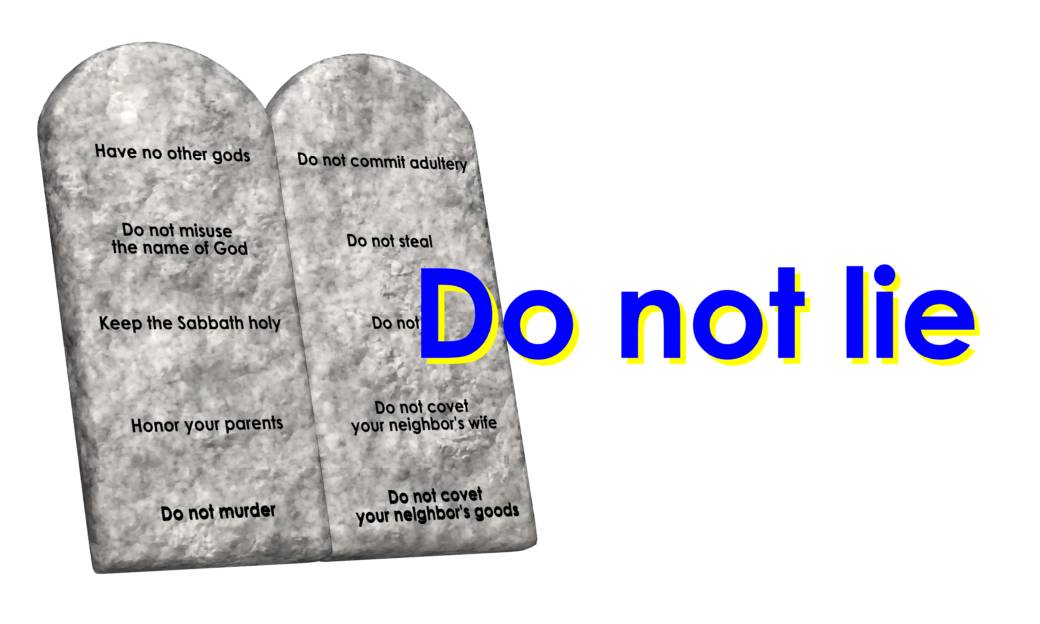
Numbers 23:19, El is not a man that he should lie. Read the rest of this verse, which speaks about the immutable character of Elohim. (Also see Mal 3:6; Heb 13:8.) From the beginning in the Garden of Eden (thanks to the lies of Satan the serpent, see Gen 3:1–4), man has been under the spiritual delusion that Elohim changes his word, laws or commandments and that he doesn’t really mean what he says. That is to say, when YHVH gives a command, later on he may change his mind and his commands are no longer applicable to subsequent generations or people-groups. Down through the ages, church leaders have bought in to this lie of the enemy with regard to validity of the Torah as pertaining to the life of the redeemed believer. But by saying that the Torah is “done away with,” “has been nailed to the cross” “has been fulfilled in Jesus” meaning “he did it for us so that we don’t have to do it,” isn’t this really calling Elohim a liar? Now consider the numerous places throughout the Bible, the Word of Elohim, where the Torah is revealed as YHVH’s unalterable standard of righteousness for all time and for all people everywhere. (In this regard, read the following scriptures: Ps 119:44, 142, 144, 160, 172; Matt 4:4; 5:18–19; Rom 3:31; 7:12.) Who is really the liar? Man or Elohim?
Numbers 23:36, Balaam the man-pleaser. Balaam is desirous of pleasing Balak, even though he pretends to please YHVH. At heart Balaam is a man-pleaser, not a YHVH-pleaser. Yeshua castigated the religious hypocrites of his day for the same thing (John 12:43). What truly motivates you? Do you care more what men think when it comes to obeying the truth of YHVH? Do you often take the easy way out and the path of least resistance, which pleases the flesh and those around you rather than YHVH?
Numbers 24
Numbers 24:2, The Spirit of Elohim came upon him. We see from the Scriptures that the Spirit of YHVH can come on just about anyone, but this doesn’t mean that the Spirit dwells in them, leads them, or that such a person has a heart to love, serve and obey Elohim. For example, the Spirit of Elohim came upon King Saul who prophesied (see 1 Sam 10:9–11; 19:20–24), but Saul didn’t serve YHVH with his whole heart and eventually became a murderous, apostate occultist. Not only does the Bible warn us to beware of prophets who prophecy falsely (e.g. Deut 13:1–5; Jer 23:9–40; Ezek 13:2; 22:24; Isa 28:7; Matt 24:4–5; 2 Pet 2:1–3), but to beware false prophets or unrighteous individuals who YHVH may use to prophecy correctly—not because they are filled with the Spirit of Elohim, but simply because the Spirit of Elohim temporarily comes upon them to accomplish YHVH’s purposes.
Numbers 24:3, Balaam…hath said. In this statement, we see another character flaw of Balaam revealed. Here he gives no credit to YHVH for his prophetic word, but seeks his own glory. It’s as if he is saying, “I have heard the word of Elohim” with emphasis on himself rather than on Elohim, the source of the word. In the church world, how many times have you heard people declaring that “God told ME this…” and “God told ME that…”? It is almost as if they are trying to emphasize how spiritual they are, how close to Elohim they are, and how he somehow favors them above others. What caution does the Word of Elohim give us in this regard? (See Jer 9:23–24.)
Numbers 24:17, A Star out of Jacob. To what notable, kingly biblical figure is this prophecy referring? (See Matt 2:2; Rev 22:16 cp. Ps 2:1–12; Rev 17:14; 19:16. See also Rev 2:27; 12:5; 19:15.) This prophecy can have a double meaning in that it also pointed to King David who smote the Moabites and took possession of Mount Seir, the land of the Edom (vv. 17–18 cp. 2 Sam 8:2,14).
However, both Christian and Jewish scholars have recognized the Messianic implications of this verse. For example, Akiva Ben Yosef, the rabbinic Jewish leader of the second century, applied this verse to Simon Bar Kosiba (whose name he changed to Kokhba meaning “son of the star” after the Star Prophecy of Num 24:17) who presumed to be the Messiah when he unsuccessfully attempted to defeat the Romans in the Second Jewish revolt. Additionally, Adam Clarke notes in his commentary on this verse that Moses Ben Maimon (or Maimonidies), the Medieval Jewish Torah scholar applied this verse to the future Messiah as do the Onkelos Targum and Jerusalem Targum (the ancient Jewish Aramaic translations of the Tankah). Rashi (the medieval JewishTorah scholar) and Sforno (the renaissance Jewish Torah scholar) in their Torah commentaries note the Messianic implications of the star of Balaam’s prophecy as well (Sforno Commentary on the Torah, ArtScroll Mesorah Series).
One thing is certain, only Yeshua the Messiah can make the claim to having fulfilled this biblical prophecy!
Balaam—A Subverter of Divine Gifts and a Prophet of Babylon
The name Balaam means “destruction of people.” The Hebrew word bela means “destruction, confuse, confound.” The Hebrew word am means people, tribe, nation. The name Balak means “waster, to annihilate.” He was king of Moab; distant cousins to Israel through Lot, Abraham’s nephew. The world, as well as the modern Christian church, is full of such prophets.
Balaam was from Pethor, a city located on the northern Euphrates and Tigress Rivers areas called Mesopotamia in modern Syria and including modern Iraq to the south.
Balaam was a soothsayer or diviner (one who foretells or predicts events, Josh 13:22). The ArtScroll Stone Edition Chumash says that Balaam was a sorcerer, necromancer or wizard (one who consults evil spirits) and that the sublime prophecies he uttered over Israel were but temporary aberrations that YHVH granted him for the honor of Israel (ibid., p. 863). These prophecies also served to glorify YHVH in the eyes of the nations. Other commentators consider Balaam to have been a true prophet of YHVH gone bad. One may consider him to have been a bad prophet going good (i.e. learning obedience to YHVH). One could also consider him to have been a false prophet seeking personal fame and fortune but who, at the same time, had prophetic abilities that he misused by mixing paganism and the truth of YHVH. This seems to be the Scriptures’ view of Balaam, for 2 Peter 2:15 indicates that Balaam had some knowledge of the truth, but turned away from it loving instead the “wages of unrighteousness.” In the book of Revelation, we learn that Balaam attempted to lead the children away from Elohim and into idolatry. According to the Torah, this makes him a false prophet (Deut 13:5). YHVH commands false prophets to be put to death (Deut 13:5), and indeed, we read of Balaam’s death at the hands of the Israelites in Numbers 31:8.
YHVH used Balaam to instruct Israel in the righteousness of YHVH (Mic 6:5). YHVH can use anyone, even a secular or a false prophet or one’s enemy, to speak his words. He can even use a donkey to speak his word, as Balaam found out! YHVH is sovereign, all-powerful and always in control of everything.
The Jewish sages teach that the blessings from Balaam weren’t his, but were rather what YHVH put into his mouth and then drew out with a hook (Talmud Sanhedrin 1056). Jeremiah the prophet says that YHVH’s Word is like fire shut up in one’s bones and that one isn’t released or unburdened from it until it is given.
The Scriptures never paint Balaam in a positive light, but rather as a deceptive, greedy schemer and a very dangerous man (A Torah Commentary For Our Times, vol 3, p. 70b, Feldman Library, UAHC Press).
The Ramban, a Jewish Torah Medieval commentator, writes that it was YHVH’s intention to use Balaam, a “prophet” of the nations, to bless Israel all along.
There are many comic aspects to the story of Balaam (ibid., p. 68). YHVH actually mocks this famous, renowned “prophet” of the nations and “prophet” to kings by speaking to him through his ass. This “prophet or seer” could not even see the angel until YHVH opened his eyes. YHVH is always in control and he let Balaam know it in a most curious, humbling and demonstrative way.
Balaam was a also perverter of divine gifts (ibid., p. 68).
The story of Balaam shows the sovereignty of YHVH. He will even use lying spirits to do his bidding (see 2 Chr 18:19–21) or Satan to test and refine the character of a saint (as in the case of Job). Furthermore, he confounds the wise and turns their wisdom into foolishness and lifts up the simple and unlearned (Mic 6:5; 5:7–6:8 for context).
Men in the world want to be like YHVH’s saints and be recipients of the blessings of Israel and some even want to be numbered among YHVH’s chosen, but few want to walk the path of righteousness required to receive these blessings and privileges. Many will “court YHVH” by getting as close to him as possible without actually crossing over (becoming an Ivrit or Hebrew) and surrendering their all to him. This seems to have been Balaam’s demeanor. However, the sacrifice of laying aside fame and fortune was too great for Balaam to totally commit to obeying YHVH. Balaam could not leave the world and cross over from “Babylon” to Israel.
As YHVH, in love, sometimes denies the prayers of his people, likewise he sometimes grants the desires of the wicked in wrath (to accomplish his agenda that is bigger than them and which they know nothing about, Num 22:15–21).
Imagine the wickedness and foolishness (or arrogance!) of Balaam to think that YHVH would give him a curse against Israel, YHVH’s own people! YHVH, who made the ass to speak, pried out of a stubborn jackass of a man words contrary to the man’s own heart desires, making him to speak a prophetic word in accordance with divine will (Num 23:5, 9–10).
Balaam offered seven sacrifices on seven altars on a mountain high place used for Baal worship. Here we see a blend of the religion of YHVH (offering sacrifices to YHVH on rock altars) and paganism (seven altars instead of one, Num 23:4).
Balaam called YHVH “Most High” and “the Almighty.” He had great respect for YHVH (as does Satan, Jas 2:19), but he had no faith, fear or love of him to obey him (Num 23:15–25).
Balaam was desirous of pleasing Balak, even though he pretended to please YHVH. At heart he was a man-pleaser, not a YHVH-pleaser.
The story of Balaam is that of a man who had divine prophetic gifts, but who used these gifts for unrighteous, selfish and materialistic purposes. Though the Scriptures reveal that he heard the voice of YHVH, he was willful and disobedient, and did not fear YHVH enough to walk fully in obedience. False prophets (who attempted to entice Elohim’s people to follow false gods) and carnal prophets (who worshipped Elohim but who followed the dictates of their own hearts when prophesying) repeatedly plagued ancient Israel, and Yeshua stated that they would be active among his people in the last days (Matt 7:15; 24:11, 24; see also 2 Pet 2:1; 1 John 4:1).
Many people today, like Balaam, have prophetic gifts that they are misusing for personal, unrighteous or misguided purposes. Many such individuals will ply their trade within or on the fringes of the spiritual body of redeemed believers in these end times. Beware of such people!
In this brief study, we will examine the characteristics of a society that is spiritually backslidden. Jeremiah the biblical prophet more than 2500 years ago talked about such society (Jer 2:19) that had forsaken YHVH Elohim, the God of the Bible (Jer 1:16; 2:3, 19), and turned, from one degree or another, to Baal worship (Jer 1:16; 2:8, 23, 28; 5:19; 7:8, 17; 9:14; 11:13, 17; 12:16; 23:13). What does this have to with those living in the twenty-first century and what can we learn from this?
Though the prophet Jeremiah is specifically addressing societal conditions of ancient Israel who had turned away from fully following YHVH Elohim, the main issues still apply to any society, ancient or modern, that forsakes biblical spiritual values for secular and materialistic ones. Down through the ages humans are still driven by the same fleshly passions. Although the theater, costumes and actors may have changed, it is still the same play. Human nature has never changed! When a society fails to learn the lessons of history, it will repeat the same mistakes of the past again and again.
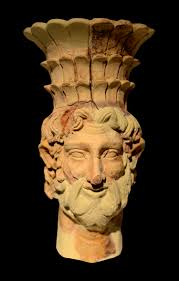
While the name Baal — one of the gods of the ancient biblical Canaanites — may mean nothing to modern people, the Hebrew word baal simply means “lord” or “master.” In modern terms, whatever mores, principles or ideals a society has given itself over to and therefore dominates that society become de facto the lord, master (or Baal) or god of that society.
Human history tends to repeat itself over and over again. What has happened before will happen again, because human nature remains the same. We can learn many valuable lessons from mistakes of those who have preceded us. If we don’t, we will make the same mistakes and suffer the same consequences (judgments) as our forefathers.
YHVH Elohim is every-loving and gracious and he constantly warned his people in biblical times to repent of their sins and turn back to him. He is doing the same thing in our day if we will admit our stubborn pride, humble ourselves, and turn back to obeying his ways that bring healing, peace and eternal life.
In the past, the ancients worshiped concrete images that represented the depraved and dark side of man where physical idols represented the ideas behind Baal worship. Today’s Baal worshipers are more sophisticated. They don’t need the physical idols. They have simply bypassed the idols representing the ideas, and worship the ideas themselves. Just because the concrete images (or literal idols) may have gone by the wayside doesn’t mean the concepts don’t still exist.
Baal worship simply represents the dark and depraved side of human nature. For example, Baal Peor was the god of sexual license, and represented the sexually depraved inclinations of man’s nature. Molech was the Baal of child sacrifice. There’s a Baal for every depravity of man. In America, the sexualization of everything, including the premature sexualization of children, which leads to the act of child sacrifice called abortion is an aspect of Baal Peor, which is perhaps the grossest aspect of society’s bent toward the dark side and depraved side of human nature.
Following Baal is very tempting and seductive, since it appeals to the baser inclinations of men’s depraved nature. Men are naturally attracted to Baal worship. This is why the Bible warns us against it.
What is the appeal of Baal worship? Simply this, it takes a lot of energy to move upward, against the force of gravity. Conversely, it takes no effort to slide downward, since gravity naturally pulls us downward. Baal is like a spiritual gravity that pulls us downward effortlessly. Baal is like descending into the dark and dingy basement of a high-rise apartment building, while the penthouse in the same building is like following the path of God, which leads men upwards. It takes more effort to ascend upward than to descend. In fact, descending requires no effort. One doesn’t have to do anything to descend into the darker abysses of man’s baser nature. It takes a lot of energy, however, to move upward to a place of light and hope. In the Bible, Elohim is leading men upward against his base nature. The worship of Baal is everything that leads men downward against his better nature to fulfill his bodily appetites.
Numbers 22:5,Pethor…by the river. Balaam was from the land of Pethor, which is “by the River.” This is a reference to the Euphrates River, the great river of Babylon (The ArtScroll Stone Edition Chumash, p. 857). Thus Balaam was a Babylonian, although he may have been a transplanted Edomite according to some Jewish scholars (see The ArtScroll Bereishis/Genesis Commentary on Gen 36:32).
One of the aspects of Babylon of the last days is her religious system (Rev 13:11ff) the head of which is the false prophet (Rev 16:13; 19:20; 20:10). The Babylonian religious system of the end days is a blend of both good and evil (reminiscent of the tree by that name in Eden from which the serpent beguiled Adam and Eve away from YHVH’s path of truth and righteousness into a false religious system).
In the last days, YHVH is calling his people out of that false religious system (Rev 18:4) with its false prophets who prophesy a mixture of good and evil.
Is not modern traditional Christianity a mixture of good and evil, truth and error (i.e. doctrines and traditions of men along with some paganism mixed in)? Reflect on the implications of this. To what degree have you heeded YHVH’s call to “come out of her”—namely, any man-made religious or church systems that has components that are contrary to the Word of Elohim?
Like many people who are a part of mainstream Christianity, the Scriptures seems to indicate that Balaam had some knowledge of the truth of YHVH, but he refused to wholeheartedly submit to YHVH’s word and will (2 Pet 2:15).
Let us not forget Yeshua’s warning about false prophets arising in the last days who might deceive the very elect (Matt 24:24).
Numbers 22:10ff,Crossing over. Many carnal people—especially those playing at religion—want to be like YHVH’s saints, and to be the recipients of the blessings of Israel, and to be numbered among YHVH’s chosen, but few want to walk the difficult walk of holiness and righteousness required to receive these blessings and privileges. These may very well be the spiritual tares that surreptitiously exist along side the saints within their congregations.
Many people will “court YHVH” by getting as close to him as possible without actually crossing over that spiritual river that divides the land of Israel from the rest of the world. Those who actually cross over become an Ivrit or a Hebrew—a word which means “to cross over.” Abraham was one who crossed over. He forsook Babylon and crossed over the Euphrates and Jordan Rivers in his journey westward en route to the Promised Land as he followed YHVH’s leading. He was the first Hebrew (Ivrit) or “one who crossed over.”
Crossing over means going from being a worldly Babylonian to becoming the Israel of Elohim (Gal 6:16; Eph 2:11–13) and a child of Abraham (Gal 3:29). It also means surrendering one’s life totally to the Elohim of the Hebrews who is YHVH.
The sacrifice of crossing over is too great for most people to make and requires the payment price of a high price—the death of self, pride, one’s own will and perhaps a change in lifestyle and the loss of one’s friends and status in the world. To leave the world or spiritual Babylon and to cross over the Jordan River to YHVH’s side and come into the land of Israel as a spiritual Hebrew means that the fame and fortune that this world has to offer must be laid aside and one must become a servant-slave of YHVH. Moreover, it means embracing YHVH’s Torah as the law of life—Elohim’s instructions in righteousness.
Balaam couldn’t cross over all the way. He still preferred the riches and fame Babylon had to offer. He was willful, carnal and greedy (Jude 11).
Many religious game-players or cultural Christians in the mainstream church are like Balaam. They want the Savior part of Yeshua, but not the Lord part. How serious are you about serving YHVH?