Sorry about your inability to post comments. We’re working at trying to solve the problem. Not sure what’s going on. Thank you for your patience…


Sorry about your inability to post comments. We’re working at trying to solve the problem. Not sure what’s going on. Thank you for your patience…
I came down with COVID two weeks ago. It started with a fever, nausea, vomiting, inability to eat little if any food. Within several days, the fever left, but the nausea continued making it difficult if not impossible to eat. I was physically weak and felt totally wiped out. I could barely get out of bed. I had little or no desires to do anything except lay there day and night. As they say, my get up and go got and and went! I lost 15 pounds.
In the mean time, Sandi contracted COVID as well—a few days after me. She recovered much quicker than I did. Perhaps her getting the Pfizer shot helped so that her symptoms were not as severe as mine. Several of my other family members have gotten COVID as well, and they got the shot, and they got over it much quicker than I did. Please don’t argue with me about this. I don’t have the patience for this. II’m just giving you the facts. Until you’ve had it, or been around those who have, all you have to offer me is your speculations and theories, which I could care little or nothing about. I’ve heard it all, and now have been through it.
Yes, prior getting this perilous pestilence, I was daily taking since April 2020 every anti-COVID and immune boosting nutraceutical recommended by every knowledgeable naturopath and holistic medical doctor I could find. I was hand sanitizing religiously and following every other known hygienic protocol including social distancing, and being a good little sheeple peasant and wearing my hated mask. Despite all of this, I still get it.
Now that I’ve been through it all, I am going to get injected! NO! Although there is evidence that the injection can help some people, I’m still not interested in being Big Pharma’s Guinea pig for an experimental gene therapy drug the long term results of which no one still knows.
In the mean time, thank you for all of your prayers. And my prayers and heart of compassion goes out to all those who are struggling with this evil, demonic plague.
Why did I get COVID? I still don’t know. I’m seeking YHVH’s wisdom from above on this.
For the past week, I have been battling COVID. The fever is long gone, but I have no strength, and the slightest activity wipes me out. Pretty much don’t feel like doing anything except sleep, I’m eating very little food, appetite is gone, nothing sounds good and have lost a bunch of weight. Sandi is also battling COVID. We’re not in danger of dying, but we just feel weak and miserable—very ragged. Please pray for us. Thank you.
Donna Nash and Natan Lawrence are inviting you to a scheduled Zoom meeting.
Shalom Everyone,
Another Shabbat is almost here. What a way to start off 2022! We will give the first fruits of our worship and devotion to Elohim on the first day of the gregorian calendar, hallelujah. Earlier this week I was strongly impressed to meditate on Isaiah chapter 23. Take a look and bring your thoughts to the table as we seek Yah with all our heart, soul and might as to what He is trying to tell us through it for the times in which we are living now. If there is something He has laid on your heart, we welcome you to share that also. This is an “iron sharpening iron” type of fellowship and we want to build up and edify the Body of Messiah to be ready now and for all eternity.
If someone you know would like to join us, feel free to share this email. If you are new to Zoom, be sure to download the app to your device and sign up; it is free. May YHVH bless and keep you. —Donna Nash
Topic: Zoom Shabbat FellowshipTime: Jan 1, 2022 02:30 PM Eastern Time (US and Canada)
Join Zoom Meetinghttps://us02web.zoom.us/j/83961236043
Meeting ID: 839 6123 6043One tap mobile+13017158592,,83961236043# US (Washington DC)+13126266799,,83961236043# US (Chicago)
Dial by your location +1 301 715 8592 US (Washington DC) +1 312 626 6799 US (Chicago) +1 929 205 6099 US (New York) +1 253 215 8782 US (Tacoma) +1 346 248 7799 US (Houston) +1 669 900 6833 US (San Jose)Meeting ID: 839 6123 6043Find your local number: https://us02web.zoom.us/u/kbhe1aPifM
Invite Link Join our Cloud HD Video Meeting
Join our Cloud HD Video MeetingZoom is the leader in modern enterprise video communications, with an easy, reliable cloud platform for video an…
James and Donna NashOpen Door Missions International
(910)713-5554

2 Samuel 7
2 Samuel 7:9, I have…cut off all your enemies.YHVH informed David through Nathan the prophet that he had cut off all David’s enemies. However, this didn’t occur by David sitting on his thumbs and doing nothing, while, at the same time, expecting YHVH to defeat his enemies for him. No. David had to actively and aggressively literally fight against his enemies. Only then did YHVH help David to defeat them. There is a lesson here for us. If we need deliverance from our enemies (e.g., sin, addictions, sickness, poverty, demons, persecution, evil people or whatever), we have to do our part. Sometimes, YHVH will give us novel and unconventional ways to defeat our enemies as he did on many occasions with David and the Israelites at other times. Nevertheless, for YHVH to intervene miraculously on behalf of his saints, they still needed to be doing their part: seeking him and trusting in, obeying him and sometimes even physically battling their enemies. Although it appears nowhere in the Scriptures, it would seem that the old adage that Elohim helps those who help themselves has some merit.
2 Samuel 7:12–14, After. A Messianic prophecy. After(in verse 12) is the Hebrew word acharmeaning “following, hereafter, afterwards, behind.”Was this prophecy of Nathan fulfilled in Solomon, David’s son and the subsequent king over Israel? Certainly Solomon’s reign followed, was after or behind David’s kingly reign. Furthermore, when this prophecy was given Solomon was not yet born. This did not happen until David’s liaison with Bathsheba in chapter 11. So it appears that this prophecy could have been fulfilled by Solomon…until we come to verse 13, 16 and Whoever the subject of this prophecy is, it is said that his kingdom will last forever (verses 13 and 16). This certainly was not the case with Solomon. The biblical record shows us that the kingly line of David ceased in 586 B.C. (lasting only a little more than 400 years) with the conquering of Judah by the Babylonians.
Furthermore, this prophecy speaks in verse 19 of David’s house lasting “a great while to come”(KJV).The ArtScroll Stone Edition Tanach renders the same passage as follows: “in the distant future.”The Complete Jewish Biblereads “on into the distant future.”Additionally, it was said of David’s descendant who would build this house (temple) and establish a throne that it would last a long while into the future and that YHVH would be his father and he would be YHVH’s son (verse 14). This was the case with Solomon for a while until he became apostate in his latter years. There is no clear biblical record that he ever returned to YHVH, his father.
It is true that YHVH promised to establish Solomon’s throne forever (1 Kgs 2:45; 9:5; 10:9; 1 Chron 17:12, 14; 22:10), but conditional only upon Solomon’s faithful obedience to YHVH (1 Kgs 9:4, 6–9). This Solomon failed to do and his throne was not established forever.
There was one Person, however, who descended from David who was obedient to all of YHVH’s commandments, whose father was YHVH-Elohim, and who established the throne of David forever: It was Yeshua the Messiah. In fact, 2 Samuel 7:14 even speaks of the virgin birth of this Messianic figure when it says quite literally, “I will be his father, and he shall be my son.”
To add more validity to our contention that 2 Samuel 7:12–19 is a prophetic reference to the Messiah, let us look at Psalm 45:6ff (cp. Heb 1:8), which is a notable messianic passage: “Thy throne, O Elohim, is for ever and ever: the scepter of thy kingdom is a right scepter.” Isaiah 9:6–7 contains a similar messianic prophecy: “For unto us a child is born, unto us a son is given: and the government shall be upon his shoulder: and his name shall be called Wonderful, Counsellor, The mighty Elohim, The everlasting Father, The Prince of Peace. Of the increase of his government and peace there shall be no end, upon the throne of David, and upon his kingdom, to order it, and to establish it with judgment and with justice from henceforth even for ever. The zeal of the YHVH of hosts will perform this.
It is our belief in light of the above facts that Nathan the prophet gave David a prophecy about his throne being established forever through the yet unborn Solomon who, had he remained obedient to YHVH’s commandments, would have been the recipient and fulfiller of this prophecy. However, since Solomon turned away from YHVH the prophecy of Nathan defaulted to its secondary and more important fulfillment, that is, Yeshua the Messiah would become the eventual recipient of King David’s throne forever.
2 Samuel 10
2 Samuel 10:5, Beards have grown.Obviously it was the custom for all Israelite men to have beards in biblical times. If not, then these men would not have been ashamed simply to shave off the other half of their beards and return to Israelite society clean shaven.
2 Samuel 12
2 Samuel 12:8, Your master’s wives into your bosom.This phrase can’t be construed as YHVH’s carte blanche approval or promotion of polygamy. According to The TWOT, bosom (קיח/khake) in Hebrew has a variety of meanings (depending on context). It can be a euphemism for sexual intimacy (Gen 16:5), or can represent a variety of other abstract or figurative ideas from family intimacy (Deut 28:54; Mic 7:5), tender care or concern for a pet animal (2 Sam 12:3), a mother’s care her child (1 Kgs 17:19; Ruth 4:16), and YHVH’s caring for his people by carrying them figuratively in his arms (next to his breast, Isa 40:11). In the case of 2 Samuel 12:8, YHVH giving the old king’s wives into the new king’s bosom showed the new king’s authority over the old king, since that which belonged to the previous king now belongs to the new king. In accordance with khake meaning “to care for,” some English Bibles have translated the phrase “into your bosom” (KJV) as “into your care” (see NAS95), or “into your keeping” (NKJV).
2 Samuel 15
2 Samuel 15:7, Forty years.This is impossible. This is likely a copyist error in the Masoretic Text. Some LXX manuscripts, the Aramaic and Josephus say “four years.” The rabbinic sages admit that this could not have meant the fortieth year of David’s reign, since that was the year he died, and as the last chapters of 2 Samuel show, he lived for at least another several years after this incident. The Jewish sages say that this 40 years is reckoned from the time that Samuel anointed David king (The ArtScroll Rubin Edition 2 Samuel Commentary).
This is not the only place in the Tanakh where the some LXX manuscripts, the Aramaic and sometimes the Dead Sea Scrolls are odds with the Masoretic Text. (See note at 1 Sam 6:19.)
2 Samuel 15:23, Brook Kidron.This brook which flowed in the Kidron Valley, which is east of the old city of Jerusalem and is at the base of the Mount of Olives, is about 39 feet higher today and is located about 89 feet to the east than in ancient times because of the rubble that was dumped therein. At that time, run-off and flash floods during the rainy season would drain down into the Kidron Valley making it a seasonal watercourse. The rest of the time, it was dry. At the base of the Kidron Valley, the Cheesemongers (or Tyropoeon) and the Hinnom Valleys merge into the Kidron (International Standard Biblical Encyclopedia, vol. 3, p. 14). In ancient Jerusalem, the Cheesemongers Valley that ran west of the present Temple Mount’s western wall served as a drain for the runoff and sewage of the temple area (Golden Jerusalem, by Menashe Har-El, p. 59). Blood from the temple sacrifices and sewage flowed down the Cheesemongers Valley into the Kidron Valley where the it acted as fertilizer for the luxurious King’s Garden (2 Kgs 25:4; Neh 3:15; ibid., p. 159). Excess water from the Gihon spring also flowed into the lower section of the Kidron Valley and into the King’s Garden International Standard Biblical Encyclopedia, vol. 3, p. 14).
The Kidron Valley begins at the watershed of the Judean mountains and flows east in a twisting and turning manner to the Dead Sea south of the Qumran ruins (Golden Jerusalem, by Menashe Har-El, p. 92). On the opposite side of the water-divide and the west of the Kidron Valley is Nahal Sorek, which flows to the Mediterranean Sea. Both of these valleys serve as roadways. The western valley connected to Sea Road (Via Maris) along the Mediterranean and Jaffa, while the eastern valley connected to the King’s Road near the Jordan Valley. When the Messiah comes, Jerusalem will be a source of living waters which will flow in these valleys to the east and west all year long (Zech 14:8; ibid. p. 89).
The Kidron Valley drained the Mount of Olives and Mount Scopus in the east and much of Jerusalem on the west and formed the borderline between the tribes of Benjamin and Judah.
The Kidron Valley is subdivided by name into several smaller valleys. The section of the valley directly below the Mount of Olives is called Valley of Gethsemane. The next section of the Kidron Valley is considerably deeper and is called the Valley of Jehoshaphat (Joel 3; 2, 12). This is the present area of the Absalom and Zechariah’s tombs or monuments. The next section is called the Valley of Shiloach, since the Gihon Spring flowing into the Pool of Shiloach overflows into this part of the valley. This is the present site of the Arab village known as Silwan (ibid. pp. 92–93).
Various events and activities took place in different sections of the Kidron Valley and it was vital to the social and economic life of Jerusalem. For example, 2 Kings 23:4 mentions “the fields of Kidron, which referred to the grain fields that grew there. According to the Mishnah, the omer offering was brought to the temple from this area (Menahot 10:2–5; 8:1). The southern slope of these fields are warmed by the sun most of the day and produces the earliest barley crop in Jerusalem. In the years when the barley crop didn’t ripen in time for the omer offering, the barley was brought from elsewhere as far away as Shechem (ibid. pp. 93–94). Other grain crops such as wheat and oats that were used in the temple service were cultivated in the Kidron Valley and other valleys in the area as well (ibid., p. 161).
The Kidron Valley was also used as a dump for dead bodies and ashes (Jer 31:40; ibid. p. 93).
2 Samuel 16
2 Samuel 16:22, All Israel. (Also see notes at Zech 14:2.)All is the Hebrew word (kol, kal/לכ) depending on grammatical construction and context can mean “all, every, any, whole, none, the whole of something, all kinds of, all sorts of, a great variety of” according to The TWOT. In this case, clearly, every single person in the entire country of Israel did not watch Absalom have sex with his father’s concubines. All Israel is Hebraic hyperbole meaning “all Israel that was there and saw it.” There are many other examples in the Scriptures where all doesn’t mean all in the sense we mean it in English. For example,
See Ezra 10:5 cp. 8:25 where “all Israel” means “all/ those of Israel who were present.” In this case, only representatives from the southern kingdom primarily comprised of the tribes of Judah and Levi were present. This we know for Ezra lists those who returned from Babylon in chapter two.
Matthew 3:5 records that “all Judaea” went out to see Yeshua. If all is to be taken literally, then every man, woman and child (including the old, infirm and crippled) went out to see Yeshua. This is impossible. This is another example of a hebraism meaning “all those that were present.”
In Romans 11:26, Paul states that “all Israel will be saved.” Unless one believes in the concept of universal salvation where even the devil will be saved, this cannot mean that every Israelite who has ever lived will be saved. Paul’s statement is taken to mean, “all those who will be saved, will be saved.”
2 Samuel 18
2 Samuel 18:18, A pillar [monument].In the Kidron Valley at the base of the Mount of Olives in Jerusalem, there is a 47-foot tall rock monument known as Absalom’s Tomb or Pillar. Tradition says that this was the tomb of Absalom, though modern scholars date the tomb only to the first century. In 2003, a fourth-century inscription in ancient Greek letters in the tomb’s interior was deciphered, which reads, “This is the tomb of Zachariah, the martyr, the holy priest, the father of John.” This tomb is to be distinguished from the Tomb of Zachariah the son of Johoiada also in the Kidron Valley near the Garden of Gethsemane at the base of the Mount of Olives. (See note at Matt 23:35.)
2 Samuel 21
2 Samuel 21:1–14, David avenges the Gibeonites.This story lends credence to the concept of generational curses. In this case, Saul failed keep Joshua’s vow to the Gibeonites to protect and to preserve them when he killed some of them. Years later, YVHH brings a famine on the nation of Israel, which David, somehow, links back to Saul’s sin as its cause. David repents to the Gibeonites for Saul’s sin, makes restitution and YHVH blesses Israel and the famine ceases. One can only wonder how many of Elohim’s judgments our nation has brought upon itself for failing to acknowledge various national sins such as abortion, the legalization and endorsement of homosexuality and other perverse lifestyles along with homosexual “marriages,” and other vile activities our government has perpetrated against its own citizens and those of other countries for the advancement of its Babylon the Great New World Order agendas for the purposes of power and money.

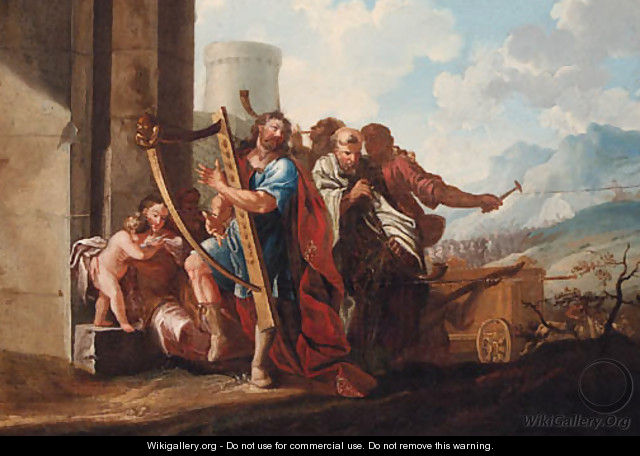
David, the author of the majority of the psalms in the Bible, along with several other psalmists, were men who followed hard after Elohim. No less than Elohim himself called David a man after his own heart (1 Sam 13:14–16). The spiritual cup of David’s heart as well as the hearts of other psalmists were full and overflowing with passion for Elohim, which expressed itself in quantifiable, extreme and radical ways by today’s Western standards. What can we learn from such individuals, and how can we come to this same place of passionate and enthusiastic (meaning “inspired or possessed by God”) devotion to YHVH Elohim?
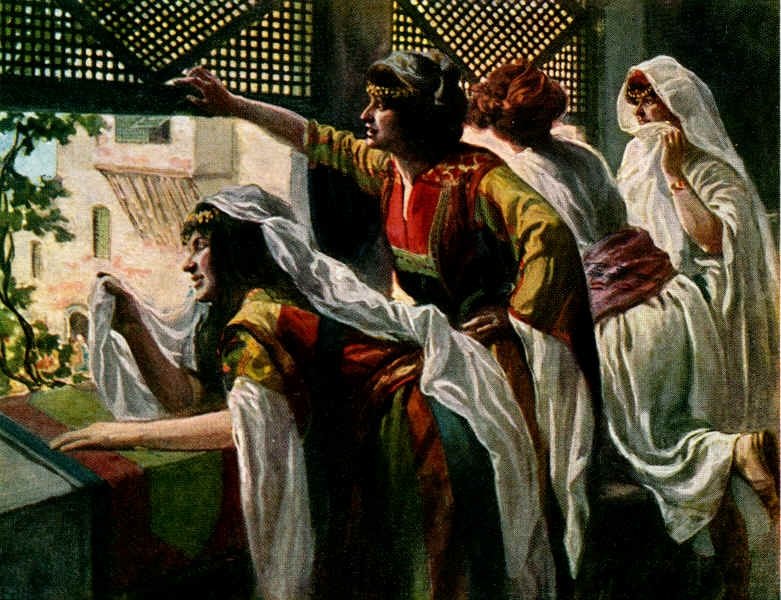
David did not merely express his passion for Elohim intellectually in the psalms through music and poetry, for Scripture records that in one case he actually removed his kingly robes that hindered the movement of his arms and legs, and danced leaping and whirling, almost naked, with all of his might in the streets of Jerusalem praising and worshipping YHVH to the disdaining scorn of his less than passionate wife. Needless to say, after that incident, David refused to have intimate relations with his wife ever again to the day of her death (2 Sam 6:23). This was likely because her heart was in a very different place than that of her husband, and he could never get close to her again. This incident demonstrates the seriousness with which David took his passion for YHVH and how he viewed those close to him who were of a dissimilar or antithetical passionate disposition.
To be sure, David was not the only Hebrew given to outward displays of passion. The Hebrews, in general, like many inhabitants of the Near East to this day, were a dynamic and emotionally passionate people, whose lives were a river that customarily overflowed its banks with a emotionally enthusiasm for their Creator. David was a quintessential stereotype of this cultural norm. But many of the Hebrew prophets demonstrated a similar emotional exuberance when urging the Israelites to return to YHVH and to worship and obey him only. This passion worked itself out in many seeming bizarre stunts in their attempts to capture the attention of a people who had lost their passion for Elohim. For example, on one occasion, Isaiah prophesied virtually naked through the streets of his city for three years warning Israel of its impending doom (Isa 20:3). One prophet even adorned himself with iron horns and then prophesied to the kings of Israel and Judah (1 Kgs 22:11). Once Jeremiah prophesied with a wooden yoke wrapped around his neck (Jer 22:11). Another time, YHVH instructed Ezekiel to build a model city of Jerusalem and to construct siege walls and battering rams to symbolize the fall of Jerusalem at the hands of the Babylonians (Ezek 4:1–4). After that, YHVH commanded Ezekiel to lay on his left side for 390 days and then on his right side for another 40 days to symbolize YHVH’s judgment against Israel (Ezek 4:4–6). If that was not enough, during this time, YHVH instructed Ezekiel to eat only beans, lentils, millet and spelt baked on a fire fueled by human excrement (Ezek 4:9–12). These are just several example of the extreme passion with which the biblical people of Elohim were willing to serve and obey their Creator.
Admittedly, in our day, YHVH is seldom asking his people to engage in such extreme practices as the ancient biblical prophets did in service to him. But sadly, most people are not even passionate enough to do the minimum that YHVH expects. For example, how many people are willing to put aside their electronic devices to which they are addicted along with their other secular activities long enough to pray for an hour a day as Yeshua instructed (Matt 26:40–41)?
Make no mistake, we are capable of becoming passionate about many things that are of interest to us—things that we really want to do, and we definitely make time in our busy schedules for these things. We can spend hours glued to our television and computers screens watching movies, engaged in social media on our electronc devices, listening to podcasts, watching sports events, playing video games and the like. In fact, today how many people hoot and holler acting crazy cheering their favorite sports team, but when it comes to being fanatical for YHVH, well, “that’s emotionalism” and “I’m not that kind of person,” we tell ourselves. “What will people think of me?”
There is no lack of distractions out there whose octopus-like arms laden with suction cups will grab us and suck us in to its jaws, while drawing us away from seeking YHVH. Why is this? Its is because too many of us have let our hearts become hard and cold for Elohim and as a result of this we have fallen into a state of lukewarmness, lost our first love for Yeshua along with the joy of our salvation.
So what is the aim and goal of this brief written homily? It is to hold up in front of each of us a mirror in which to see ourselves, and then to compare what we see with what pleases YHVH Elohim as recorded in Scripture, and thus hopefully to challenge each us to repent of our lassitude and incite us to “break up your fallow ground: for it is time to seek YHVH, till he come and rain righteousness upon you,” (Hos 10:12). Our as Jeremiah chides us to do, “For thus saith YHVH…Break up your fallow ground, and sow not among thorns. Circumcise yourselves to YHVH, and take away the foreskins of your heart, ye men of Judah and inhabitants of Jerusalem: lest my fury come forth like fire, and burn that none can quench it, because of the evil of your doings,” (Jer 4:3–4). Or as Yeshua warns us, “Nevertheless I have somewhat against thee, because thou hast left thy first love. Remember therefore from whence thou art fallen, and repent, and do the first works; or else I will come unto thee quickly, and will remove thy candlestick out of his place, except thou repent,” (Rev 2:4–5). These are sober and challenging warning words from our Messiah!
Do you long to see and experience spiritual revival in these days of overwhelming darkness and evil? Well, revival starts in the heart of each individual as each of makes the conscious and determinate decision to seek YHVH and to allow him to revive us. Revival starts with YOU! Selah and amein.
How intense is YOUR worship of YHVH Elohim?
Shout joyfully to YHVH, all the earth; break forth in song, rejoice, and sing praises.…Shout joyfully before YHVH, the King. (Ps 98:4, 6)
Seven times a day I praise You, because of Your righteous judgments. (Ps 119:164)
Oh come, let us sing to YHVH! Let us shout joyfully to the Rock of our salvation.… Let us shout joyfully to Him with psalms.…Oh come, let us worship and bow down; let us kneel before YHVH our Maker. (Ps 95:1–2, 6)
And her saints shall shout aloud for joy. (Ps 132:16)
Lift up your hands in the sanctuary, and bless YHVH. (Ps 134:2)
I will praise You with my whole heart; before the gods [or mighty ones] I will sing praises to You. (Ps 138:1)
Let them praise His name with the dance. (Ps 149:3)
Let the high praises of Elohim be in their mouth, and a two-edged sword in their hand… (Ps 149:6)
Praise Him with the timbrel and dance… (Ps 150:4)
How intensely passionate are YOU in seeking YHVH Elohim?
Continue reading