Notes on 1 Corinthians 1 and 2

Corinthians 1

1 Corinthians 1:12, I am of Paul. Truly it is amazing how many scriptural admonitions and truths which many in the Christian church totally ignore and walk in direct opposition to. For example, note how many denominations are named after men (e.g. Lutheran, Wesleyan, Mennonite, Amish) and how many follow doctrines named after men (e.g. Calvanist, Arminian)—a practice that is exactly what Paul condemns in this passage. Similar to this is the use of ecclesiastical titles (e.g. father, teacher or rabbi), which Yeshua condemns in Matthew 23:8–10. What does this teach us when people engage in such practices that Scripture forbids? Simply this. Many if not most people don’t take the Word of Elohim that seriously. These people  view the commands and instructions of Scripture more as suggestions than as actual rules and boundaries by which to live. Such people lack a sufficient fear of Elohim and don’t tremble before his Word (Isa 66:2). They also lift up and glory in men and the doctrines and traditions of men, which Jeremiah admonishes us not to do (Jer 9:23), and which Paul alludes to in verse 30, and which Yeshua warns against in Mark 7:13.

1 Corinthians 1:18, The message of the cross is foolishness. Anyone who has preached the gospel to those who are spiritually lost will appreciate Paul’s statement in this verse that the preaching of the cross is foolishness to those who are perishing. Why is this? It is because of the mind of man and human pride, which convinces a person (a) that they don’t need saving from their sins because they really aren’t that bad of a person, or (b) because it is incredulous to think that Elohim become a man who died for the sins of the world. 

1 Corinthians 1:21, The wisdom of Elohim. In so many ways, the world has inverted the truth of Elohim. What Elohim calls truth, the world calls error. What Elohim calls riches and life, the world calls poverty and death. Similarly, what Elohim calls light and wisdom, the world calls darkness and foolishness. This teaches us that the carnal mind is in direct opposition to the wisdom, truth and laws of Elohim (Jer 17:9; Rom 8:7).

1 Corinthians 1:22, We preach Messiah crucified. This is the essence of the gospel. It is interesting to note that Paul didn’t say, “We preach the Torah-law” or something similar. This is because the Torah cannot save a person; only Messiah can save. In their zeal for restoring the truth of the Torah and their aversion to mainstream Christianity (or churchianity), sadly many Hebraic-minded individuals have forgotten this important truth.

1 Corinthians 2

1 Corinthians 2:1, 3–4, Excellence of speech…persuasive words. A preacher’s oratorical, persuasive or rhetorical skills are not prerequisite to bring a person to conviction of their sins and to faith in Yeshua the Messiah. Rather, it is the message of the gospel itself, the Word of Elohim, when preached that brings conviction, repentance and salvation. This is because the Word of Elohim doesn’t return void, but carries its own powerful anointing regardless of the weakness or inabilities of the human vessel doing the preaching. Elohim can use any willing vessel or “Balaam’s donkey” to preach the gospel. 

Spirit and power. The gospel is efficacious not because of one’s ability to preach, but because one is filled with the Spirit of Elohim and is preaching in the dynamic power thereof. Therefore, YHVH can use nearly anyone to preach the gospel, as long as they are full of his Spirit. As the saying goes, Elohim isn’t looking for ability in a person, but availability—a willing human vessel to “go ye therefore into all the world and to preach the gospel.”

1 Corinthians 2:16, Mind of Messiah. (See also Phil 2:5 cp. 1 Pet 4:1.) Mind is the Greek word nooce meaning “1) the mind, comprising alike the faculties of perceiving and understanding and those of feeling, judging, determining, the intellectual faculty, the understanding, reason in the narrower sense, as the capacity for spiritual truth, the higher powers of the soul, the faculty of perceiving divine things, of recognizing goodness and of hating evil, the power of considering and judging soberly, calmly and impartially; a particular mode of thinking and judging, i.e thoughts, feelings, purposes, desires.” The implications of this truth, that the redeemed believer has the literal mind of Messiah is astounding. We must, by YHVH’s grace and by faith, appropriate (pray to receive) and then live out this reality.

 

The Case of Korah the Heretic, a Godly Response and the Prophetic Implications

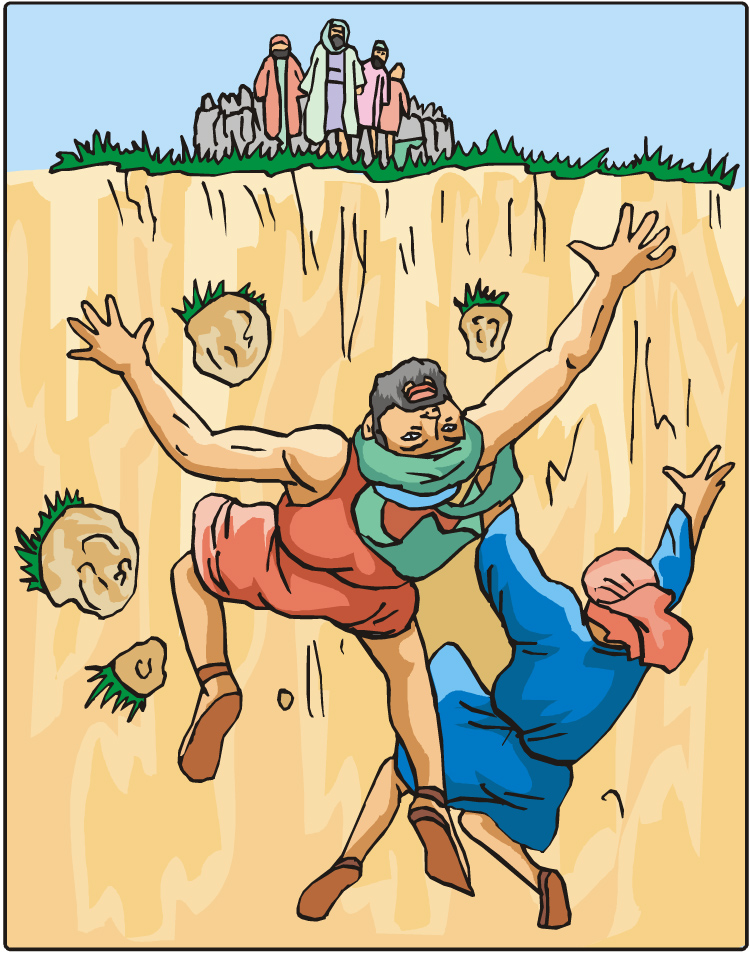
Numbers 16:1–3, Took men…rose up…gathered together against. Notice a progression (or downward spiral) of actions on the part of Korah and his rebels. They separated themselves from fellowship, rose up against Moses, gathered together others of like mindand falsely accused leadership of wrong doings. This is the world’s formula for achieving political (humanistic) power and domination. It is the opposite method of advancing in YHVH’s kingdom where the way down is the way up; that is, when one lays one’s life down in service, spiritual reward, advancement and blessing will occur for that person (Matt 20:27; 23:10).

Rebels, like Korah, tend to separate themselves from fellowship, seek out other like-minded rebels, and then rise up in defiance and accusation against godly leadership. Again, this leads to political power. The way of spiritual power is laid out in Acts 2:42–47 where the followers of Yeshua continued steadfastly in the apostles’ doctrine, in fellowship, breaking bread together, in prayer and sharing their goods with one another. The result was real spiritual power authority and anointing from heaven, and not power based on usurpation, human pride, degradation of others and self-promotion. This can only happen as people forsake not the assembling of themselves together (Heb 10:25), function according to the place and spiritual calling within the spiritual body of Yeshua submitted one to another as they walk in the spiritual light YHVH’s instructions in righteousness—the Torah.

Additionally, Yeshua taught that true power in the kingdom of Elohim is a result of one laying one’s life down for his brother and serving him in love and humility. Such a person will be elevated to a position of influence and authority because he has learned to serve others in love and selflessness rather than seeking to be served, which stems from a heart of selfishness and pride (Matt 20:25–28; 23:11–12).

The Jewish sages note that Korah and his band of malcontent had come under the power of resentment, which grew and festered until open rebellion broke out. Korah was a fellow Levite and cousin of Aaron who was among those “overlooked” for the priesthood and who were relegated to being “mere” assistants to the priests. He was also a firstborn of his household (Exod 6:21), and when the tabernacle sacrificial service was inaugurated Aaron’s sons replaced the firstborn Israelites in offering sacrifices. Furthermore, Dathan, Abiram and On were of the tribe of Reuben, the first-born child of Jacob. These men had their own grudge, since Reuben had lost his birthright as the firstborn son to the sons of Joseph because of sin (note 1 Chron 5:1). 

What do we see here? Resentment (a function of pride and selfishness) leads to bitterness, which then leads to separation, then to uprising, then to accusation, then to rebellion against YHVH-ordained authority, then to attempted usurpation of authority, and eventually it leads to judgment and death. Is this not the path Lucifer took in his rebellion against YHVH Elohim? (Read Isa 14:12–23.)

Numbers 16:5–6, Who is his…take censers. Incense is a biblical metaphor for the prayers of men coming up before YHVH’s throne (Rev 5:8; 8:3). YHVH accepts some men’s prayers as holy and rejects the prayers of other men whom he deems not to be holy. The story of Korah teaches us that YHVH doesn’t hear the prayers of self-centered, self-seeking, prideful and jealous rebels such as Korah et al (Prov 15:29). YHVH’s ears are open to the prayers of the righteous (Ps 34:15; 1 Pet 3:12; Jas 5:16; Heb 11:6). The prayers of a righteous man can be hindered, as well, due to unrighteous behavior such as not treating his wife in a godly manner (1 Pet 3:7) or because we have ought with our brother (Matt 5:23–24).

Numbers 16:14, You have not brought us. The sinful pride of the rebels blinded their ability to see why they had been permitted to come into the Promised Land. Instead of taking personal responsibility for their sin and rebellion as the cause of their plight, they accused and blamed Moses. This is a typical ploy of carnal men who don’t get their way—get the heat off of themselves, pass the buck and blame others.

Numbers 16:19, The glory of YHVH appeared. May the day come soon when the glory of YHVH will begin to appear, so that everyone can see who are his true servants and who are not.

Continue reading →
 

The Satanists and Luciferians—A No Show!

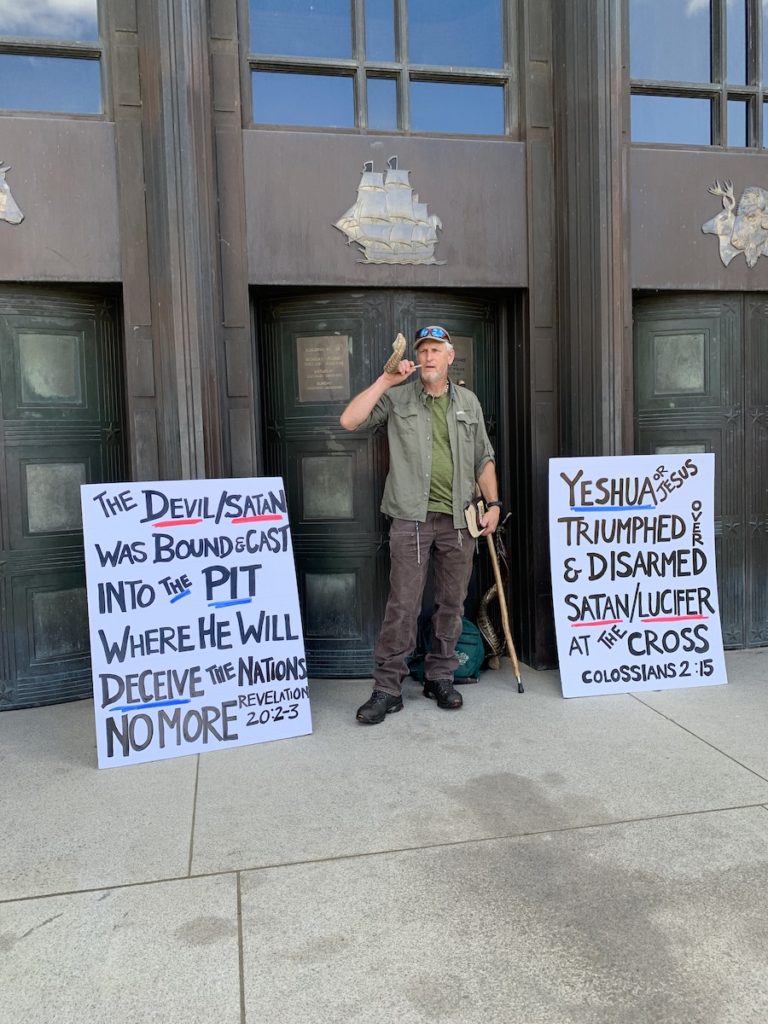
Various local and national Satanic/Luciferian groups announced that they would hold a rally and march at about a dozen state capitals and other cities across America, including Salem, Oregon near where I live. Their purpose was to declare the arrival of the Luciferian/Satanic New World Order that the book of Revelations talks about. They stated on their web sites that, basically, Lucifer was the true Messiah and that he is love—an invasion of the truth. They referenced the book of Revelation in their public announcements. That ticked me off!

Back in the 1990s, I used to be a street activist, a street preaching urban missionary in Portland, Oregon and surrounding areas. In 1998, YHVH released me from that ministry to start and pastor a local congregation, which I did until retiring from that in 2016. Since 1998 I had not taken to the streets until yesterday.

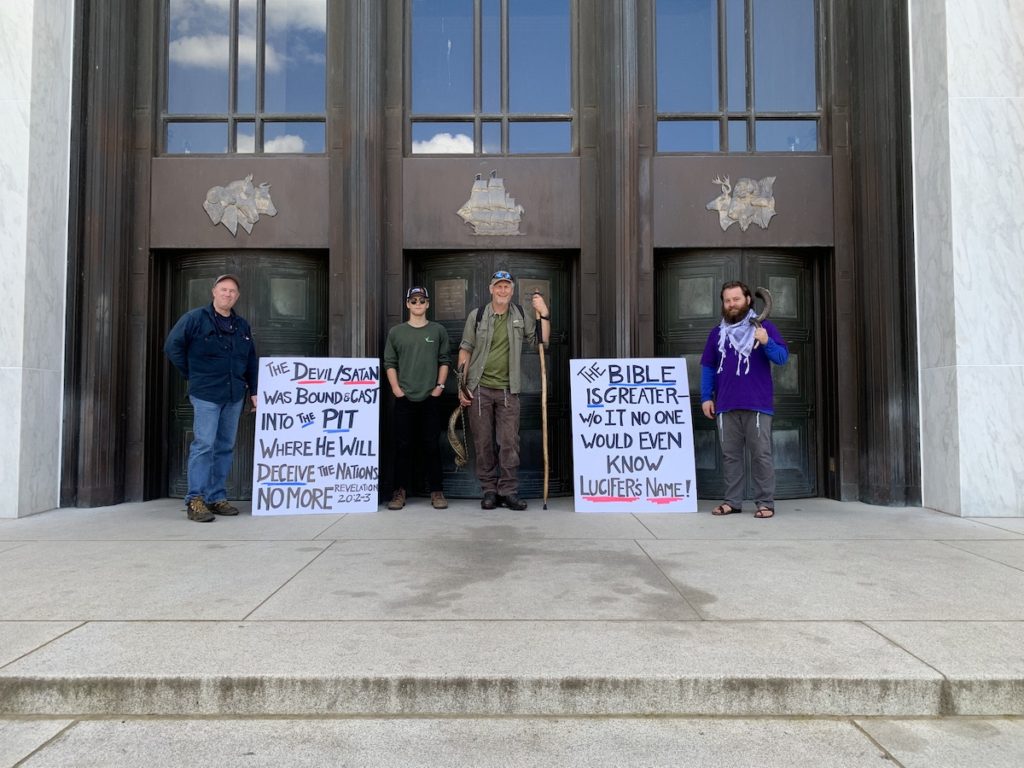
I spent Shabbat praying and making some large signs with Bible verses to hold up in the face of the Luciferians/Satanists at the rally they planned to have on the steps of our state capital building. Then on Sunday morning, my son Jared and I along with a lifelong Christian friend of mine loaded up our stuff and headed for Salem. We were in prayer all the way and doing spiritual warfare. We got to the capital building early. There were no Satanists yet. There was another Hebraic brother already there with tzitzits and shofar in hand. We quickly connected and began praying. Pretty soon, some other Sunday Christians began showing up. By 2 PM, when the rally was supposed to starts, there were about 30 to 40 Christians from various local churches. We were all waiting for the Satanists to arrive.

Shortly after 2 PM, Aaron (the Hebraic brother and I) decided to mount the steps of the capital building—to take the high ground—and we positioned ourselves in front the the huge bronze doors of the capital building. I placed my signs up against the doors. From that vantage point, we began to lead the Christians in prayer, praise, worship and spiritual warfare. Everyone joined in, arms raised in worship of Yeshua/Jesus and declaring his sovereignty over that area. More Christians flowed in. Still no Satanists.

By now it’s 2:30 PM and we’re having our own rally. In between praying, from my pulpit of the steps of the capital building, I gave several short teaching talks. I explain the spiritual and prophetic significance of the shofar, and I even slip in the concept of the Torah, the importance of following YHVH’s commandments as a way to love Elohim and our neighbor and, oh by the way, I just happen to mention in the concept of Shabbat. Aaron then sings the shema in Hebrew, and I translated into English and explain the significance of the shema. I then invited some other believers to come up and to pray, and we stepped down and let them do so while we come into agreement. Still no Satanists!

We did a Jericho prayer walk around the capital building. By now, there are 40 to 50 believers present. Still no Satanists. Were they trolling us? Did they get scarred off? Don’t know. All I know is that we had our own prayer and praise rally. I lifted up the name of Yeshua and Elohim, introduced our Sunday brothers to a more Hebraic understanding of things, and the body of Yeshua from many churches assembled to confront the forces of darkness. We prayed for our state and national leaders. We lifted up our nation in prayer and united to praise Yeshua the Messiah and declare our faith in him and the defeat of Satan and his minions. It was all good! HalleluYah!

Finally, a BIG thank you for all of you who prayed for our venture. Things went differently than we expected, but we know that YHVH Elohim was in charge and his grander schemes and purposes were accomplished. For sure, he was glorified and Yeshua was lifted up and for that we are grateful.


Blog Scripture Readings for 6-21 Through 6-27-20

Aside

Parashat Korach — Numbers 16:1 – 18:32
Haftarah — 1 Samuel 11:14 – 12:22
Prophets — Jeremiah 45:1 – 51:64
Writings — Esther 3:1 – 9:32
Testimony — 1 Corinthians 1:1 – 7:24

Our new annual Scripture Reading Schedule for 2019-2020 with daily readings is available to download and print. If you are still working through 2018-2019’s Scripture Reading Schedule, the link will still be available on the right sidebar under “Helpful Links”. If you are using a mobile device or tablet, the link may be below, meaning you’ll need to scroll down instead.

Most of this week’s blog discussion points will be on these passages. If you have general comments or questions on the weekly Scripture readings not addressed in a blog post, here’s a place for you to post those. Just use the “leave a reply” link or the “share your thoughts” box below.

The full “Read Through The Scriptures In A Year” schedule, broken down by each day, can be found on the right sidebar under “Helpful Links.” There are 4 sections of scripture to read each day: one each from the Torah, the Prophets, the Writings, and from the Testimony of Yeshua. Each week, the Torah and haftarah readings will follow the traditional one-year reading cycle.

Weekly Blog Scripture Readings for 6/21 through 6/27/2020.


Why wear tassels on the corners of your garments?

Someone reading this post may ask the question, “Natan, do you wear tassels or tzitziot on the corners of your garments?” The answer is yes I do, and I have done so since the late 1990s. I try to practice what I preach. The Torah tells me to do it, so I do it. Period. End of discussion. I have a set of fringes to wear with my work clothes and another set for my more dress-up clothes. For me it is a holiness and an obedience issue. — Natan

Numbers 15:37–41. Tassels on the corners. (See notes at Exod 26:1 for a discussion on tekelet blue.) The command to wear tzitzits on the corners of one’s garment was to act as a reminder to keep one from committing intentional sins, even as a wedding ring worn on the finger serves to remind one of one’s marriage covenant, and help keep one from committing adultery. This is why this command is placed directly after the warning against committing intentional sin (vv. 30–31), and the example of the man who committed intentional sin by gathering sticks on the Sabbath (vv. 32–36).

Corners. The ancient Israelites wore four cornered tunic-like garments. Why did YHVH instruct them to wear tzitzits on the four corners? This was likely to teach them that the Israelites’ Torah-based covenant with Elohim was there to box them in, to surround them, to remind them of their sworn obligations to Elohim,to keep them on the right path spiritually, and to protect them, so that they would receive Elohim’s blessings and be his representatives to the surrounding nations. With this view in mind, the shape of the garment is no longer the issue. That happened to be the style of clothing of that day. We no longer wear four-cornered garments. What matters is to wear four tzitzits on one’s four sides to represent our spiritual commitments to Elohim and our allegiance to his word, the Torah, and our understanding that his word will guide, direct, protect and bless us is we treasure it and adhere to it. Tzitzits are to our relationship with Elohim what a wedding ring is to our spousal relationship.


Don’t work on the Sabbath—No excuses!

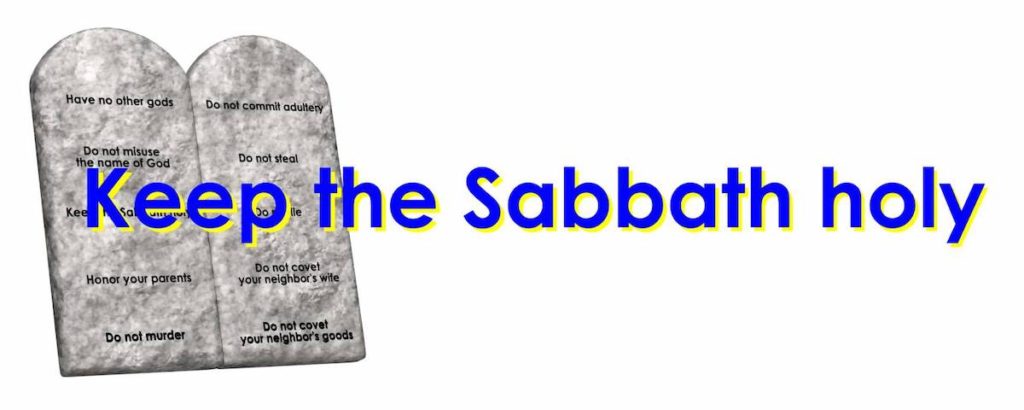
Numbers 15:32–36, On the Sabbath day. Let’s take a closer look at the Sabbath desecration in the wilderness.The Torah juxtaposes the sins of idolatry and Sabbath desecration because they represent the same concept. Just as the idolater denies the sovereignty of Elohim, so too, one who flouts the Sabbath, which testifies to Elohim’s creation of the universe, declares his lack of faith in the Creator. Because of the vital place of Sabbath in the constellation of Jewish belief, the Torah places this incident here, although it did not necessarily happen immediately after the rebellion of the spies (The ArtScroll Stone Edition Chumash, p. 815).

Working on the Sabbath is evidence of lack of faith in the Creator to provide for our needs on the other six days so that we will not have to work on the seventh day. Working on the Sabbath is also a result of unbelief (faithlessness), which is fear (the antithesis of faith; see 2 Tim 1:7). It is doubt, unbelief and fear (faithlessness) that prevented Israel from entering into the Promised Land for 40 years (Heb 4:1–11). 

As we see from Hebrews chapter four, the Sabbath is a prophetic picture of entering YHVH’s spiritual rest and is symbolic of the Promised Land and the Millennium. When we rest from our physical labors on the seventh day we demonstrate that we have the requisite faith to enter the spiritual or millennial rest that YHVH has prepared for us, unlike the ten evil Israelite spies who lacked the faith in YHVH’s word necessary to go in to possess the Promised Land. Joshua and Caleb had this faith and they were able to enter the Promised Land. 

Remember that the Sabbath is the sign of the Sinaitic Covenant (Exod 31:7, 13). If one walks in the righteousness of that covenant, one will be a recipient of the promised blessings of the New Covenant, which also includes the blessings of Torah-obedience as found in the Sinaitic or Mosaic Covenant. Perhaps this is why the Sabbath incident is juxtaposed with the spy incident in this section of the Torah. It shows the connection between keeping the Sabbath and entering the Promised Land.

Numbers 15:32. A man gathering sticks. A man gathering sticks. The man gathering sticks on the Sabbath is an example of intentional sin, for which there is no sacrifice (atonement or forgiveness; Num 15:30–31).

Furthermore, the act of gathering sticks on the Sabbath teaches us something else. Sticks are used to start fires, something that the Torah commands us not to do on the Sabbath—especially if it relates to our work, business or secular activities such as building the tabernacle (Exod 35:3 cp. vv. 4–35 or cooking food, see Exod 16:23).

A fire is a biblical metaphor for strife and division, which is usually caused by the misuse of the tongue (Prov 16:27; 26:20–21; Jas 3:5–6). Those who stir up the fires of strife and division must be put out of the camp, even as the man who was gathering sticks on the Sabbath to build a fire had to be put out of the camp of Israel.

Similarly, Paul gives instructions about putting individuals outside of the camp or congregation of redeemed Israel in several places (Rom 16:17–18; Tit 3:10 cp. 1 Cor 5:9–11 in reference to a reviler).

Why should such individuals be treated as a pariah to the congregation of the righteous? Simply this, with smooth words and flattering speech they will deceive the hearts of the simple (Rom 16:17–18) and destroy the congregation. Paul calls such individuals who use their tongues to draw a following grievous or savage wolves and perverse men (Acts 20:29–30).


Passing the Test of Laying One’s Life Down for a Weaker Brother

Romans 15:4, Patience and comfort of the Scriptures. Just before this passage, Paul enjoins the spiritually strong to follow the example of Yeshua to support those who are spiritually weak (Rom 15:1–3). This can be especially trying when they are of one’s own physical or spiritual household—they are always present and there is no escape from them. Patience or perseverance in such cases is required and is a spiritual test that those who are strong must pass. It may take years or decades to pass this test if one has, for example, a spiritually weak marriage partner or other family member with which one has constant interaction. 

In this verse, Paul offers advice on how to cope with this situation. 

First, those who would seek the higher ground of spiritual maturity must learn patience, which can become a great jewel in one’s spiritual crown. Patience or longsuffering is perhaps the chief attribute of love (1 Cor 13:4), which is a fruit of the Spirit—doesn’t come easily, but only through the fiery refinement process of hardships brought on by people constantly rubbing us the wrong way. In this passage (Rom 13:4), Paul appeals to the example of Yeshua who endured much and mastered patience as he was reproached for sinners’ (that’s you and me) sake. If we want to strive for the high mark of being like him, we should endeavor to follow his example. 

Second, in dealing with weak people, Paul encourages us to find comfort in the Scriptures (Rom 15:4). By immersing ourselves in the Word of Elohim and letting it renew and transform our thinking through the work of the Set-Apart Spirit in our hearts, we can endure the reproaches of weak and difficult people. The Scriptures are a world of their own—a refuge and island of peace in the midst of the roiling seas of adversity, and a firm rock to stand on in the billowing waves of life’s troubles. 

May the hope of becoming more like Yeshua and conforming ourselves to the wise instructions of the Scriptures and examples of righteous people found therein give us hope to persevere through our difficulties and come out the other side more conformed to the image of Yeshua who is the epitome of loving patience toward us.