How Does the Bible Define “Judaizer”?

Who Is the Real Judaizer?

Mainstream Christians often label those believers in the gospel and who adhere to the Torah Judaizers. Is this a correct label and is the biblical historical origin of this term?

The term Judaizing or Judaizer as the mainstream Christian understands it today isn’t found in the New Testament per se. However, church historians and Bible teachers have applied this term retrospectively to those in the primitive Christian church as well as to modern saints who advocated adherence to the Torah. This is ironic since Paul advocated Torah obedience to the believers in Rome (who were both Jewish and Gentile). So while Paul teaches Torah observance on the one hand, many believe that Paul was teaching liberty from the Torah (in book of Galatians, for example) on the other hand. This has led to much confusion about what Paul really believed. Was he conflicted in his beliefs being both for and against the Torah? Or maybe he gradually changed his opinion from pro-Torah to anti-Torah. This latter proposition seems unlikely since Bible scholars tell us that Romans and Galatians were written nearly at the same time. So the term Judaizer as used by modern Bible scholars seems to be a canard ­— a fabricated concept, or a concept built on a false premise.

The term Judiazer is found only in two verses in the entire Bible. The first place is in Esther 8:17 where the Greek Old Testament (LXX) uses the Hebrew verb yachad meaning “to become a Jew,” or “to profess oneself to be Jewish.” It was used in reference to those Persians who suddenly “converted” to Judaism to escape Jewish persecution. The final reference is found in Galatians 2:14 were Paul was accusing Peter, not of being Torah-obedient, but rather of adhering to non-biblical Jewish traditions, which forbad Jews and Gentiles from eating together. In reality, adherence to these extrabiblical Jewish traditions was Judaizing — a fact that seems to be missed by the majority of Christian scholars from the second century to this day! This isn’t a new thing, for Yeshua accused the learned Jewish religious leaders of his day of the same thing: “making the word of Elohim of no effect through your traditions which you have handed down” (Mark 7:15). Earlier he said, “You reject the commandment of Elohim, that you may keep your tradition” (Mark 7:9).

In reality, what Paul was fighting against was not the Torah, which he advocates, defends and claims to follow himself in a number of places in his writings, but he rejects the idea that one can be saved by their works including circumcision. After all, this issue was the focus of the debate of the first Jerusalem council in Acts 15. In combatting the false notion that circumcision, for example, must be a prerequisite to salvation, Paul opposes this idea in grand and logical step-by-step fashion in the book of Romans, and again in the book of Galatians in a knock-out-the-opponent-quickly manner. So if we’re to apply the term Judaizer to anyone, it must be applied to those advocating a works-based salvation formula, not to those who teach that salvation is by grace alone through faith in Yeshua with the spiritual fruits of conversion being love toward Elohim and one’s fellow man as defined by the Torah — something this author strongly advocates. Sadly, this fundamental truth of who a Judaizer really seems to have been missed by the majority of early church fathers and modern mainstream church theologians who have continued to repeat the anti-Semitic viewpoints handed down to them from the second century church fathers, and who fear rejection from their peers and supporters if they go against millennia of church tradition.

 

Blog Scripture Readings for 5-18 through 5-24-14

Aside

THIS WEEK’S SCRIPTURE READINGS FOR STUDY AND DISCUSSION:

Parashat B’midbar — Numbers 1:1 – 4:20 
Haftarah — Hosea 2:1 (1:10)* – 2:22 (20)*
Prophets —Jeremiah 24:1 – 30:24
Writings — Job 41:1 – 42:17; Song of Songs 1:1 – 5:16
Testimony — 1 John 1:1 – 5:21; 2 John; 3 John

Most of this week’s blog discussion points will be on these passages. If you have general comments or questions on the weekly Scripture readings not addressed in a blog post, here’s a place for you to post those. Just use the “leave a reply” link below.

The full “Read Through The Scriptures In A Year” schedule, broken down by each day, can be found on the right sidebar under “Helpful Links.” There are 4 sections of scripture to read each day. One each from the Torah, the Prophets, the Writings, and from the Testimony of Yeshua. Each week, the Torah and haftarah readings will follow the traditional one-year reading cycle.

* Verse numbers in parenthesis refer to the verse number in Christian Bibles, which can at times differ from verse numbers in Hebrew Bibles.

Weekly Blog Scripture Readings for 5/18 through 5/24/14.


Are you a Baal worshiper? Think twice before you answer.

In this brief study, we will examine the characteristics of a society that is spiritually backslidden. Jeremiah the biblical prophet more than 2500 years ago talked about such society (Jer 2:19) that had forsaken YHVH Elohim, the God of the Bible (Jer 1:16; 2:3, 19), and turned, from one degree or another, to Baal worship (Jer 1:16; 2:8, 23, 28; 5:19; 7:8, 17; 9:14; 11:13, 17; 12:16; 23:13). What does this have to with those living in the twenty-first century and what can we learn from this?

21658260

Though the prophet Jeremiah is specifically addressing societal conditions of ancient Israel who had turned away from fully following YHVH Elohim, the main issues still apply to any society, ancient or modern, that forsakes biblical spiritual values for secular and materialistic ones. Down through the ages humans are still driven by the same fleshly passions. Although the theater, costumes and actors may have changed, it is still the same play. Human nature has never changed! When a society fails to learn the lessons of history, it will repeat the same mistakes of the past again and again.

While the name Baal — one of the gods of the ancient biblical Canaanites — may mean nothing to modern people, the Hebrew word baal simply means “lord” or “master.” In modern terms, whatever mores, principles or ideals a society has given itself over to and therefore dominates that society become de facto the lord, master (or Baal) or god of that society.

Human history tends to repeat itself over and over again. What has happened before will happen again, because human nature remains the same. We can learn many valuable lessons from mistakes of those who have preceded us. If we don’t, we will make the same mistakes and suffer the same consequences (judgments) as our forefathers.

YHVH Elohim is every-loving and gracious and he constantly warned his people in biblical times to repent of their sins and turn back to him. He is doing the same thing in our day if we will admit our stubborn pride, humble ourselves, and turn back to obeying his ways that bring healing, peace and eternal life.

In the past, the ancients worshiped concrete images that represented the depraved and dark side of man where physical idols represented the ideas behind Baal worship. Continue reading


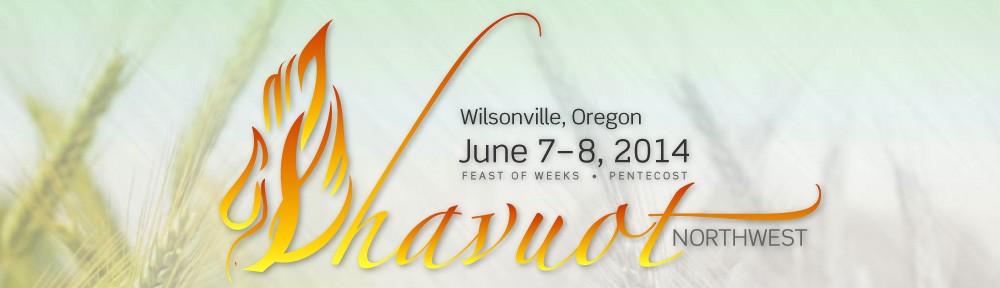
What are you doing to celebrate the Feast of Shavuot (Pentecost)?

What will you be doing on Sunday, June 8, 2014? Washing your dirty laundry? 21843349Mowing the grass? Just hanging out with your secular family or friends? Going to church and learning how the Torah is irrelevant and passé?

cropped-shavuot-nw-2014-header

How about coming to the higher spiritual level and joining us for Shavuot Northwest 2014 at the Stein-Boozier Barn at Murase Plaza in Wilsonville, Oregon? Not only can you celebrate the biblically commanded Feast of Weeks (Hebrew: Shavuot; Greek: Pentecost) and be pleasing to your Father in Heaven by getting in sync with His times and seasons, but there are many other benefits as well.

  • You will have the satisfaction of knowing that you’ll be doing the right thing as commanded by the Torah and as practiced by the early church (Acts 2) by gathering with like-minded believers who love the truth of Scripture and want to draw closer to YHVH-Yeshua by walking out his commands in love and grace.
  • This event will be a double-header. Not only will we be celebrating Shavuot on June 8, but we will be gathering for a full day of events on Saturday, June 7 as well as we lead up to the climax of Pentecost on Sunday.
  • Hear anointed and Spirit-led and filled teachers talking about the past, present and future ramifications of this important biblical feast.
  • Experience the outpouring of the Holy Spirit (Ruach HaKodesh) during the bread waving ceremony as you walk through the marriage chuppah (canopy) after having renewed your covenantal vows with Yeshua, your Heavenly Bridegroom.
  • Lots of food and fellowship.
  • This is a family event and an opportunity for folks of all ages to make new friends and to deepen exiting relationships.
  • There will be much live Hebraic praise and worship and Davidic worship dance.
  • We will have a healing and spiritual empowerment service. Every years, many people receive divine healing and their spiritual gifts on this day. You don’t want to miss this. Those who come seeking will find!

For more information and to register, go to ShavuotNW.org


Do you know how to add? If so, you’re on the road to perfection.

2 Peter 1:5–7, Add to your faith. This list of seven character qualities shows us the progressive steps one must go through to become mature spiritually.

Faith: First there is initial faith in YHVH Elohim, which is the starting point in our spiritual walk. This is the same faith Abraham had when YHVH told him to leave Babylonia, and it was accounted to him for righteousness sake (Gen 15:6; Rom 4:3).

32248505

Virtue: Next, initial faith in Elohim is “filled out with” (as J. P. Green translates it) virtue, which is defined as “moral excellence.” This is can be no less than one’s learning to conform our lives to the high standards of the Torah, which tells us how to walk in relationship with Elohim (as summarized by the first four of the ten commandments) and our fellow man (as summarized by the last six of the ten commandments). Virtue is the opposite of sin, and the Torah shows us what sin and moral excellence are by showing us what to do (the path of blessing and life) and what not to do (the path of curses and death).

Knowledge: Second, as one begins to walk out Torah-obedience, one gains a deeper and more perfect understanding of the heart, will and mind of Elohim as expressed in the Creator’s instruction manual for living — the Torah, which is the path that leads to life. At the same time, one gains an understanding of the opposite side, which is that of sin that leads to death.

Self-control: Third, as one gains a fuller understanding of the difference between good and evil, right and wrong as defined by YHVH’s instructions in righteousness, the Torah, and as one fortifies oneself morally by choosing consistently to do the right thing, one gains self-control. One learns to control or master one’s fleshly passions and desires including selfishness, pride, greed, anger and lust and all the other works of the flesh (Gal 5:19–21).

Perseverance or patience: Fourth, as one becomes proficient and consistent in self-control, one begins to learn patience or perseverance, which is steadfastness, constancy and endurance. At this stage in one’s spiritual development, one becomes less likely to be buffeted or thrown off balance by one’s own carnal impulses or by those of other people that are directed at us (persecution).

Godliness: Fifth, as our life more consistently begins to reflect the heart, mind and will of YHVH Elohim as exemplified in his Torah and as walked out by Yeshua, the Living Torah-Word, then our words, thoughts and actions will begin to reflect the very character and nature of our Father in heaven, which is godliness, to those around us, even as the moon reflects the light of the sun into the darkness of the night world. At this point, who we are is more defined by the character of Elohim than by the carnal, sin nature of the typical man.

Brotherly kindness: Sixth, obedience to the Torah naturally results in our being kinder and gentler to those around us, since the Torah demands that we treat others how we want to be treated (Matt 7:12; Rom 13:8–10).

Love: The seventh step to spiritual maturity is love, which is the summation of all the fruit of the Spirit (Gal 5:22–24) and is the highest level of spiritual attainment (1 Cor 13:1–13). This type of love is unconditional, and is an unselfish love for others even when there is no personal benefit to be gained. This is the love of Elohim — the love that he has for men, and the love that he wants us to develop, so that we will be like him, so that he can live with us forever in his eternal kingdom. After we have matured through these seven steps, we become spiritually and morally complete or perfect and are ready to spend eternity with YHVH Elohim in the New Jerusalem of heaven on earth.