What Is a “Worker of Iniquity”?

Matthew 7:21–23, What is the meaning of the word “iniquity” or “lawlessness” (in verse 23)? It is the Greek word anomia (Strong’s G458) meaning “unrighteousness” or “lawlessness.” Righteousness by biblical definition is “adherence to the Torah-commandments of YHVH” (Ps 119:172).
When the Jewish writers of the Testimony of Yeshua (NT) use the word “law” is almost always a reference to the Torah. In Hebrew thought then (and now), there was no other law except the Law of Moses. This “law” or Torah came from Elohim through the “Angel” or  more properly the Messenger from heaven who gave the Torah to Moses, and who was none other than the pre-incarnate Yeshua (Acts 7:37–38). So the word “iniquity” or “lawlessness,” as used in our verse could quite simply be understood to mean “Torahlessness.” In fact, Torahlessness would be an apt translation of the Greek word anomia, which is behind the word iniquity or lawlessness (depending on the English translation).

Quite clearly, In Matthew 7:21-23, Yeshua is speaking to those who claim or profess to be his followers, who claim or profess his name, claim his miraculous power, claim to speak by his authority and even claim, no doubt, to love him, but in reality they fail to love him (according to the biblical definition of love) by obeying his word or Torah-commandments (John 14:15). In other words, they are sinners, walking in sinfulness, for John defines sin in his epistle as “the transgression of the Torah-law of Elohim” (1 John 3:4).

Of these same people, in the day of judgment, Yeshua will say, “Depart from me, you that work [do] Torahlessness, I never knew you.” Yeshua will not accept these people on the basis of their verbal professions or claims, nor will he accept them on the basis of their prophetic or miracle-working abilities. Yeshua, the Living Torah of Elohim made flesh, will accept them only on the basis of their obedience to and orientation toward the Torah-law of Elohim.

Is Yeshua here abrogating or nullifying the Torah-law given to Moses or is he reaffirming it to his followers? The language of this scripture is very clear to those who have ears to hear and to those who are truth-seekers. He is loudly and clearly validating the Torah and its relevance upon the lives of his disciples or followers!

If you are a true follower of Yeshua, the Messiah, THEN you will be making every effort to love him by obeying his Torah as best you can by his grace and the power of his Set-Apart Spirit. So help us Elohim!!!

 

Some Nuggets from Matthew

Matthew 1:21, Call his name Yeshua. (Also see notes at Mark 5:41; Luke 19:9.) This verse is proof that Matthew was not originally written in Greek, since the word Jesus (Gr. Iesous a transliteration from the Hebrew word Yeshua, in English Joshua or, in Hebrew, Yehoshuah meaning “YHVH is salvation”) is an unintelligible word in Greek. Only if it were originally written in Hebrew would the name Yeshua, and the corresponding angelic declaration “for he shall save his people from their sins” make any logical sense.

Matthew 3:7, Brood/offspring of vipers. John is calling the religious leaders of his day offspring or children of the n’chashim [Heb. serpents], which was another name for the devil (Gen 3:1 cp. Rev 12:9; 20:2). Yeshua labeled the same thusly in Matthew 23:33 where he accused them of devouring widows houses (verses 14). The serpent was cursed to eat dust (Gen 3:14). As the serpent eats dust (loose earth or admah), the devil’s religious pawns “eat”man (adam) who is made of dust. False religious systems prey on man/dust—especially the widows and the poor (who, like the dust of the earth, are at the lowest strata economically), and who have no one to protect them from these false systems. The nachash was a liar and used smooth words to entice man into sin and rebellion against Elohim to satisfy his own arrogance and avarice, not unlike the silver and split tongued preachers of today who are cunning in their abilities to separate people from their money.

Matthew 4:17, Repent…at hand. Yeshua continued preaching the repentance message of John, and this became the essence of the gospel message (see verse 23). When Yeshua sent out his disciples two-by-two, he instructed them to preach the same message (Matt 10:7; Luke 9:6), the same message of repentance became part of the great commission (Luke 24:47). On the day of Pentecost, Peter preached the same message of repentance (Acts 2:38).

“Repent for the kingdom of heaven is at hand” is a message that is seldom heard in the Christian churches today, nor has it been consistently preached for a long time. In the late nineteenth century, Charles Haddon Spurgeon, the great English preacher, complained in his day that “Repentance is an old-fashioned word not much used by modern revivalists” (The Soul Winner, p. 27 published in 1895!). If this was true in Spurgeon’s day, how much more so today?! Yet, this seldom used word in the lips of today’s Christian preachers was the first word out of John and Yeshua’s mouths when they began their preaching careers. Even so, if we are to be imitators of Yeshua, repent must be the first word out of our mouths when sharing the gospel to a sinful world!

Why should “repentance from sin” to be the first words out of the gospel preacher’s mouth? Quite simply, Adam and Eve fell out of fellowship with Elohim because of sin, and the only way for man to restore relationship with his Creator is to go back to the place where our first parents got off of YHVH’s spiritual path, to repent of that sin and to — from that point on — walk in obedience to his Word. Yeshua, as the Second Adam, leads man in that restoration process to undo the evil that the first Adam did. Repentance is the first step.


The Bible on Divorce (and Remarriage)—A Sticky Wicket!

Matthew 19:8, Put away your wives. Most churches allow for divorce, but some do not permit remarriage under any circumstances. This is may seem like an extreme position, those who teach this can make a strong case that this is the Bible’s position.

Some churches teach that divorce and remarriage is acceptable in some instances, but not in others. This is where it gets sticky and depends on the interpretations of many clear as well as some unclear biblical passages. The truth is that each marriage and divorce case is unique. Each situation needs to be evaluated case by case based on biblical guidelines. My thoughts (below) on the subject of divorce and remarriage are only general in nature.

Some churches take the approach that all sins can be forgiven except the sin of divorce and remarriage. This would mean that divorce and remarriage is the unpardonable sin for which the blood of Yeshua is ineffective. This is a biblically untenable position.

The Scriptures say that YHVH hates divorce (Mal 2:16). Why? Because he had to divorce his own (spiritual) wife, Israel, because of her adultery against him (e.g., Jer 3:8). But he’s going to remarry her again, but this time it will be to redeemed Israel, which is a new, spiritually regenerated bride. Furthermore, Yeshua died to pay the price for Israel’s capital sin of adultery. On our website (http://www.hoshanarabbah.org/pdfs/divorce.pdf), I have a teaching about the prophetic implications of divorce where I discuss this issue.

The Torah allows for divorce and remarriage following certain protocols (Deut 24:1–4). Yeshua acknowledges this in the Gospels and accepts this fact due to of the hardness of people’s hearts (Mark 10:4–5).

The issue of divorce and remarriage becomes sticky, since in Matthew 5:32 and 19:9 no one knows the exact meaning of the word “fornication.” Even the Jews of Yeshua’s time debated about its meaning, and the two Pharisaical schools of the day defined pornea (Greek) or ervah (Hebrew, see Deut 24:1, uncleanness) differently. Continue reading


The Righteous Will Shine Like the Sun

Matthew 13:43, Shine forth as the sun. The reward of the resurrected righteous will cause them to shine forth like the sun or stars (Dan 12:3), and like Yeshua (1 John 3:2), whose face shines like the sun (Rev 1:16), for he is the Sun of Righteousness (Mal 4:2), who will be the light of the New Jerusalem shining in place of the physical sun (Rev 21:23; 22:5; Isa 60:20).

Paul speaks of the resurrection of the saints or their glorification that will occur at that time, and he also likens the saints’ appearance to the stars. As stars have different levels of brightness, so to will the saints (1 Cor 15:41–43) in accordance with their levels of rewards based on their level of obedience to the Torah (Matt 5:19; 16:27; Rom 2:6–11; 2 Cor 5:10; Eph 6:8; 1 Pet 1:17; Rev 19:8; 22:12–15).


Did Yeshua Die on a Cross or a Stake?

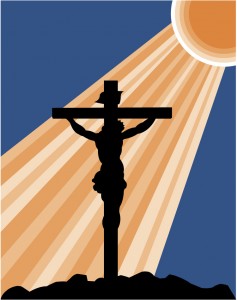
Matthew 10:38, Cross. This is the first place in the Scriptures where the word cross is mentioned. There is often a spirited debate among those returning to the Hebrew roots of the Christian faith as to whether Yeshua was crucified on a cross, a stake, tree or gallows. For the reason that the cross is a symbol that has been tainted by ancient pagan connotations, many Hebraic believers have an aversion to seeing it as the instrument upon which Messiah Yeshua was crucified. This being the case, we must ask the obvious question: which came first? Was the cross first a pagan symbol or was it a God-ordained symbol that was later corrupted by apostate men?

We may never, with certainty, know the answer to this question. But one thing is certain, the origins of the cross as a redemptive symbol are ancient—perhaps as ancient, if not more so, then its uses as a pagan religious symbol. This is proven in the ancient Paleo-Hebrew script, which predates the current square-lettered Hebrew script, where the final letter in the Hebrew alphabet is the letter tav, which looks like our letter “t,” and is shaped like a cross. Because the letters in this ancient Hebrew script were actually pictorial symbols, they were thus descriptive in nature (much like Egyptian hieroglyphics), so the letter tav literally means “ownership, to make a sign, to seal, to make a covenant.”

In the Scriptures we see the symbol of the cross reoccurring numerous times. For example, when Jacob on his deathbed blessed Joseph’s sons, Ephraim and Manasseh, he crossed his arms (making the cross symbol) as he laid his hands on their heads to bless them (Gen 48:14). He then made mention of the Angel or Messenger of Elohim (the pre-incarnate Yeshua) redeeming him from evil (v. 16). This is an obvious reference to YHVH saving Jacob from Esau and Laban (Gen 31 and 32), but is also a future prophetic allusion to the redemptive work of the Messiah at his crucifixion, since Jacob calls on the Redeemer Messenger of Elohim (or the Messiah) to bless his grandsons and their future offspring (v. 16). We know that in Yeshua, the Seed of Abraham, all the nations of the earth were to be blessed (Gal 3:16 cp. Gen 22:18). Certainly, Jacob must have had at least a vague awareness of the future implications of this promise that YHVH had made to Abraham and the redemptive work of the coming Messiah.

Another reference to the cross can found in Exodus 12:7 where YHVH commands the Israelites to kill the Passover lamb and smear the blood therefrom on the side posts and top of their door frames. This is a perfect picture of the cross outlined in blood that flowed from the seven places in Yeshua’s body while he hung on the cross.

We see another outline of the cross in Numbers chapter two in how YHVH instructed the tribes of Israel to be configured around the mishkan (Tabernacle of Moses). If one were to view the encampment from the air as is described in this chapter, we see the outline of a perfect cross. Furthermore, within the tabernacle itself, the furnishings were laid out in the shape of a cross. In essence we see a cross on a cross! Since the tabernacle and all therein was a prophetic shadow-picture of Yeshua himself, we see not so much a cross on a cross, but a picture Yeshua on the cross.

Many more examples could be given, but one will suffice to make the point. In Ezekiel chapter eight, we see YHVH instructing one of his angels to write in ink a mark (literally, a tav or cross) on the heads of his righteous saints in Jerusalem. This tav would preserve them from the destruction that was about to fall on that city (Ezek 9:4). Similarly, in the Book of Revelation in the end times, YHVH will place a seal or mark upon the foreheads of his saints to preserve from his judgments of wrath that will fall upon the earth prior to Yeshua’s second coming (Rev 7:3–4; 14:1). These same end-time saints are those who obey the Torah and who have the testimony or faith of Yeshua who died on a cross to redeem us (Rev 12:17; 14:12). Is this seal a cross? Only time will tell.

In John 20:25 we find another proof that the stake upon which Yeshua was crucified had a horizontal cross beam. There Thomas declares, “Except I shall see in his hands the print of the nails, and put my finger into the print of the nails, and thrust my hand into his side, I will not believe.” The word nails being in the plural in all major English Bible translations indicate that more than one nail was used to secure Yeshua’s hands to the “crucifixion stake.” Had Yeshua been crucified on a stake minus a cross beam, then his hands would have been over his head and nailed to the post with one nail only. The fact that Thomas mentions nails (plural) indicates that Yeshua’s arms were outstretched when attached to the stake requiring a nail in each wrist. This fact seems to favor the idea that Yeshua was crucified on a traditional rather than a simple upright post.

In reality, whether Messiah died on a cross, stake or some other contraption is irrelevant. The fact is that he died for our sins and we must place our trusting faith in him if we are to have eternal life. That is the bottom line! But for those who are adamant that he was not crucified on a cross, they have some ­cross­ reference Scriptures to explain.


The Torah—The Elephant in the Room of the NT

The Torah in the Testimony of Yeshua (New Testament)

Though the primary theme of the Testimony of Yeshua (the name John gives to the New Testament in the Book of Revelation—e.g. Rev 1:2; 6:9; 12:17; 20:4) is the testimony of Yeshua the Messiah, the Torah is, nevertheless, the elephant in the room.

Though not mentioned outrightly as often as one would think in the Testimony of Yeshua, the Torah is implied, assumed, or referred to in on countless occasions using coded Hebraisms. Why, one might ask, is this the case with the apostolic writers? The answer is simple: They were writing to Jews as well as to non-Jewish people who either already operated within a Torah-centric religious paradigm or were being brought into it. The obvious didn’t have to be mentioned over and over again, for Torah was not a strange or foreign thing to the first century believers as it is to most in the church today. The Torah was their way of life and frame of reference for all that they thought and did!

The word law as used in the Testimony of Yeshua is the first aspect of this “elephant” we need to examine. It is the Greek word nomos which in the Septuagint (the third century B.C. Greek translation of the Tanakh [Old Testament Scriptures]) is used in place of the Hebrew word Torah. Therefore, we know that the Jewish scholars who translated the Tanakh into the Greek language considered the words Nomos and Torah to be equivalent. Also, contextually, in the Testimony of Yeshua, we can see that the word law means Torah. To the Messianic Jews who wrote the entire Testimony of Yeshua, when the Greek word nomos is used this is not a reference to Roman, Greek or Babylonian law, but to the biblical Hebrew law or the Torah, or Torah-law of Moses.

Let us not forget that the Bible was written, for the most part, if not totally, in the Hebrew (or Aramaic) language by Hebrew people who spoke Hebrew, lived in a Hebrew culture, practiced the Hebrew religion and worshipped and served YHVH Elohim, the God of the Hebrews. What defined the Israelites’ spiritual relationship to their God – YHVH Elohim? It was the Torah, which by definition and to the Hebrew mindset of the first-century referred specifically to the instructions in righteousness of Elohim as delivered through his servant and prophet Moses to his people, the children of Abraham, Isaac and Jacob (Israel), known as Israelites. As noted above, the Torah is recorded in what is commonly called the Books of the Law, the Books of Moses, the Pentateuch or the Chumash, or what we would call the first five books of the Hebrew Bible: Genesis, Exodus, Leviticus, Numbers and Deuteronomy. These books contain YHVH’s instructions in righteousness, which were delivered letter-for-letter and word-for-word from the very mouth of Elohim to Moses and the Hebrew children of Israel and forms the foundation for the entire Bible: both sections which Christians commonly call the Tanakh and the Testimony of Yeshua.

For the people of Israel in Yeshua’s day, including the apostles who, under the inspiration of the Ruach HaKodesh (the Spirit of Elohim), the Torah of Elohim, given through Elohim’s servant Moses, formed the central teaching document that regulated and governed every aspect of life, culture, family relationship, marriage, society, religion and relationship with surrounding nations. Therefore, law for them was Torah. Nothing more nor less.

Keep in mind that the concept of Torah, to the Hebrew mind, did not have the pejorative connotation that the term law has to the traditional Christian mindset which tends to read a legalistic bias into the word law when reading the Testimony of Yeshua.

Although Yeshua, the Living Torah, and not the Law of Moses or the Written Torah, is the main theme of the Testimony of Yeshua, it can’t be denied that the Written Torah is woven throughout the fabric of the Testimony of Yeshua. In fact, it would be negligent of me to pass over the pro-Torah themes and statements found throughout the apostolic writings.

Examples of References to the Torah in the Testimony of Yeshua

Continue reading


Yeshua— The Pre-eminent Theme of the NT

Have you ever wondered what the apostolic writers themselves called that part of the Bible the Christian church refers to as “The New Testament”? Assuredly the apostles didn’t call it “The New Testament” — a term that originated much later! John the apostle and the final canonizer of the Apostolic Scriptures (sorry folk, the early church fathers and the Catholic Church didn’t canonize the apostolic writings) in five places in the Book of Revelation refers to the “Old Testament” as the “Word of God [Elohim]” and the “New Testament” as the “Testimony of Yeshua” (Rev 1:2,9; 6:9; 12:17; 20:4). Since “The Testimony of Yeshua” was the title John the apostle under the inspiration of the Set-Apart Spirit of Elohim applied to this portion of the Scriptures, just perhaps the work and Person of Yeshua was its most important theme!

 For example, the proper name “Yeshua” [Hebrew for “Jesus”] is found 943 times in the Testimony of Yeshua (the New Testament). This number doesn’t include the use of personal pronouns (e.g., he, him, his) or any indirect references to, or other names that the Testimony apply to him (e.g., the Lamb, the Alpha and Omega, Chief Cornerstone, King of kings, Rabbi, Master, etc.). The title “Christ” (in Hebrew Maschiach or “Messiah” in English) is used 533 times. The title “Lord” is found 670 times in the Testimony of Yeshua and usually is a direct reference to Yeshua. In the Testimony of Yeshua (NT) there are 260 chapters and 7,958 verses. According to these statistics, the names Yeshua, Messiah, or Lord are found in more than one-quarter of the verses of the Testimony of Yeshua. This number doesn’t include the use of pronouns (who knows how many such references there are), or other descriptive titles (some 326 references!) and other names that the apostolic writers use for Yeshua. If it did, the references to Yeshua in relationship to the number of verses in the Testimony of Yeshua would be much higher! By comparison, direct references to the Torah (i.e., law, laws, commandment, commandments) occur only about 260 times in the Testimony of Yeshua, or on average, one time per chapter. God forbid that I should in any way demean the importance or centrality of the Torah in the redeemed believer’s life, but the statistics speak for themselves: the subject of Yeshua was front and center in the Testimony of Yeshua. His supernatural power in us enables us to live the Torah properly — in truth or letter and in spirit, and his life was a living testimony and example of how to walk out the Torah. John and Paul the apostles sum it up this way:

And hereby we do know that we know him, if we keep his commandments. He that says, I know him, and keeps not his [Torah] commandments, is a liar, and the truth is not in him. But whoso keeps his word, in him verily is the love of Elohim perfected: hereby know we that we are in him. He that says he abides in him ought himself also so to walk, even as he walked. (1 John 2:3–6)

Elohim sent his only begotten Son into the world, that we might live through him. (1 John 4:9)

And this is the record, that Elohim has given to us eternal life, and this life is in his Son.

(1 John 5:11)

He that has the Son has life; and he that has not the Son of Elohim has not life.… And we know that the Son of Elohim is come, and has given us an understanding, that we may know him that is true, and we are in him that is true, even in his Son Yeshua the Messiah. This is the true Eternal, and eternal life. (1 John 5:11–12,20)

I am crucified with the Messiah: nevertheless I live; yet not I, but the Messiah lives in me: and the life which I now live in the flesh I live by the faith of the Son of Elohim, who loved me, and gave himself for me. (Gal 2:20)

The subject of the Person and work of Yeshua was so important that YHVH Elohim through his Set-Apart Spirit inspired four books of the Bible (i.e., the four Gospels) to be written all testifying to the life of Yeshua on earth based on eye witness accounts.

During his ministry on this earth, Yeshua spoke and taught about many subjects (136 to be exact) as recorded in the Gospels. What were the subjects he talked most about? The number one subject was himself! In Matthew’s and John’s Gospel accounts, there are 316 references to Yeshua speaking about himself as the way to the Father, the light of the world, the bread of life, the door to the sheepfold, the truth, the good shepherd, the one who would die to redeem man, and so on. Next, Yeshua talked about his Father (184 times). The Torah comes in seventh place with 44 direct or indirect references! Now I love the Torah and have devoted much of my life to teaching and writing about the Torah, but this subject was not number one on the list of important topics Yeshua or the apostles wrote or talked about. To be sure, they lived the Torah all the time although they weren’t always talking about it, unlike many in our day who talk about it all the time, but don’t live it! Obedience to the Torah is the result of coming into a loving relationship with Yeshua, and not the starting place according to the apostolic writers.