Genesis 12:1, Get thee out of thy country.
The story of Abraham leaving Babylon reveals an important biblical truth: the great mercy that YHVH Elohim—our Father in heaven—has for his children despite their weaknesses and failures. Although YHVH has a perfect will or plan for the life of each individual, even when a person strays from it, he still continues working with his child leading her or him forward in spite of their missteps and failures. This was the case with Abraham. Although he was a man of faith, he still took some wrong turns along the way, yet his heart was right and YHVH continued to lead him forward despite his missteps. We can learn much from Abraham and be encouraged by his example and YHVH’s mercy.
In studying the life of Abraham, there is an important principle from Romans 12:2 concerning finding the good, better and perfect will of Elohim for our lives.
And be not conformed to this world: but be ye transformed by the renewing of your mind, that ye may prove what is that good, and acceptable, and perfect, will of God. (KJV)
Do not be conformed to this age, but be transformed by the renewing of your mind, so that you may discern what is the good, pleasing, and perfect will of God. (Christian Standard Bible)
And be not conformed to this age, but be ye transformed by the renewing of your soul that ye may experience what is that good and well pleasing and perfect will of God. (Jubilee Bible 2000)
As much the Bible respect and even venerate Abraham as the father of the faithful (read Romans chapter four), it appears that he did not follow Elohim’s instructions perfectly at first. It wasn’t that Abraham was out of the will of Elohim, rather that he may not always have been in the absolute perfect will of Elohim, although in the overall sense he was headed in the right direction. What can we learn from this? Despite human weakness and reluctance to follow the Creator’s instructions immediately and perfectly, YHVH was still merciful and gracious with the spiritual father of our faith because the intent of his heart was inclined on obeying his Creator. Thus, there is still hope for each of us when we stray briefly from YHVH’s perfect will for our lives.
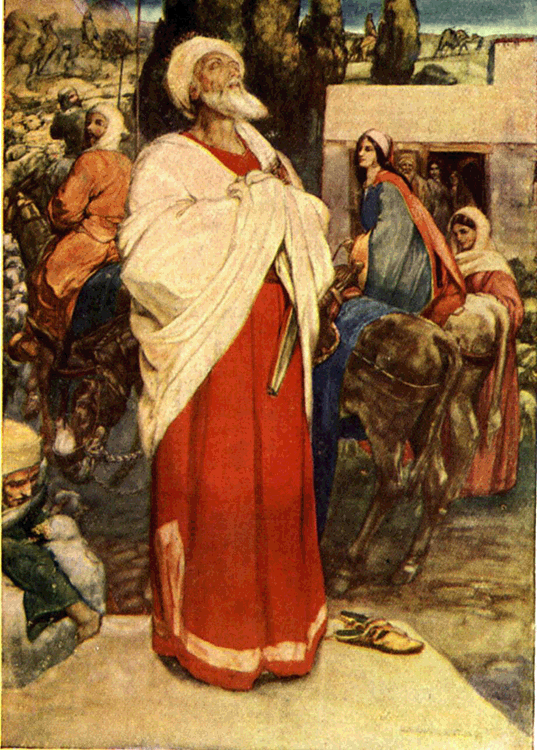
Although Abraham was obedient to YHVH to leave Babylonia, he did not immediately leave his father’s house and go directly to the country that YHVH would show him, but did so in incremental steps. (Compare Gen 11:31 with 12:1.) Moreover, Abraham did not leave his father’s family completely, but he took part of his father’s house with him including his father and nephew. What’s more, he first went to Haran which is located in northern Mesopotamia and is nowhere near Canaan. When Abraham finally made his way to Canaan minus his father, he still had some members of his larger family with him, something YHVH instructed him to leave behind (Gen 12:1). As we discover later, his nephew Lot proved to be a continuous thorn in Abraham’s side in fulfilling YHVH’s mission for his life in a new land (Gen 113:5-13; 14:1ff; 19:1ff).
What lessons can we learn from this account? First, YHVH is gracious to his children even when they do not obey him completely and immediately. Scripture still refers to Abraham as the father of the faithful or faithfulness (Rom 4:12, 16). Second, Abraham was a man of prominence in Babylon (or Chaldea), who was recognized as a mighty prince (Gen 23:6), yet when he was 75 years old, YHVH asked him to leave the comforts of life and his prestigious social position in Babylon—the New York City of its day, and trek some 600 miles by foot across the desert to the backwoods region of Canaan. No doubt, this was not an easy move for Abraham at his age.
Similarly, Yeshua tells his disciples that they may have to make similar sacrifices if they want to follow him including leaving family and loved ones (Matt 10:35–39). Despite the difficult choices that Yeshua’s followers have to make, he promises that their eternal rewards will be greater than anything the had to leave behind (Matt 19:29). What physical obstacles stand in your way of fulfilling YHVH’s spiritual calling, and his mission and destiny for your life?
Presently, YHVH is calling his people out of the spiritual Babylon (Rev 18:4) of man-made religious systems that, to one degree or another, have supplanted or even made of none effect the simple truths of YHVH’s word by doctrines and traditions of men (Mark 7:9, 13). Anything that takes precedence in the hearts and minds of men that is contrary to the Bible is, by biblical definition, an idol. End times spiritual Babylon is full of idolatry. It is a confused mixture of truth and lies. YHVH called Abraham out of the Babylon of his day, and he is now calling his people out of the Babylon of our day to worship and obey him in Spirit and truth (John 4:23–24). YHVH’s end time saints will be those who follow Yeshua the Messiah unconditionally wherever he goes and whatever he asks of them (Rev 14:4–6; Mark 8:34). Their chief identification mark is that they follow the Torah-commandments of Elohim and have the faith of Yeshua, that is, their lives have been transformed by the message of the gospel (Rev 14:17; 12:14).
What were the consequences of Abraham not following YHVH’s will perfectly when commanded to leave Ur? First, YHVH did, in a sense, chastise Abraham in that he suffered the consequences of not heeding Elohim’s instructions to leave Ur immediately by leaving everything including his family behind. Had he left Lot behind, his headaches in Canaan would have been fewer. Lot proved to be a thorn in Abraham’s side. First, Lot greedily took the best pastures for his flocks away from Abraham, even though YHVH had promised the whole land of Canaan to Abraham. Second, Abraham had to imperil himself and his men in rescuing Lot from the Babylonians. Third, Lot’s offspring, Moab and Ammon, would prove to be continual enemies of the Israelites for hundreds of years afterwards—another consequence of Abraham not following Elohim’s instructions perfectly. In this case, the sins of the fathers had generational consequences for hundreds of years.
Romans 12:2 teaches us that each saint has to prove what is the good, better and best will of Elohim for their lives. When Abraham left Ur and only partially followed Elohim’s instructions, he was in the good or better will of Elohim, but not his perfect will. Nevertheless, Abraham’s heart was still in the right place and he was headed in the right direction. Elohim still counted that act of faith toward Abraham’s righteousness (Gen 15:6; Rom 4:22). Nevertheless Abraham still suffered the consequences of his not walking in Elohim’s perfect will, and this also happens to us sometimes as well.
Nonetheless, YHVH is gracious to those who have a heart to follow him, though we may only be walking is his good and better will, not his perfect will for our lives. The point is this: to the degree that we obey Elohim, we will be blessed, and to the degree that we do not obey him we will not be blessed. There are degrees and stages to obedience and divine judgment. When we do not fully obey YHVH, the consequences of our actions that we suffer may, in fact, help to bring us back into Elohim’s perfect will. This is because as a loving Father, YHVH sometimes has to discipline us as a form of guidance to bring us to his perfect will for our lives. The writer of Hebrews discusses this:
And ye have forgotten the exhortation which speaketh unto you as unto children, My son, despise not thou the chastening of the Lord, nor faint when thou art rebuked of him: for whom YHVH loveth he chasteneth, and scourgeth every son whom he receiveth. If ye endure chastening, Elohim dealeth with you as with sons; for what son is he whom the father chasteneth not? But if ye be without chastisement, whereof all are partakers, then are ye bastards, and not sons. Furthermore we have had fathers of our flesh which corrected us, and we gave them reverence: shall we not much rather be in subjection unto the Father of spirits, and live? For they verily for a few days chastened us after their own pleasure; but he for our profit, that we might be partakers of his holiness. Now no chastening for the present seemeth to be joyous, but grievous: nevertheless afterward it yieldeth the peaceable fruit of righteousness unto them which are exercised thereby. Wherefore lift up the hands which hang down, and the feeble knees; and make straight paths for your feet, lest that which is lame be turned out of the way; but let it rather be healed. Follow peace with all men, and holiness, without which no man shall see YHVH. (Heb 12:6–14)